1) Not felt. Smoke still rises vertically. In sensitive individuals, déjà vu, mild amnesia. Sea like a mirror.
2) Detected by persons at rest or favourably placed, i.e. in upper floors, hammocks, cathedrals, etc. Leaves rustle.
3) Light sleepers wake. Glasses chink. Hairpins, paperclips display slight magnetic properties. Irritability. Vibration like passing of light trucks.
4) Small bells ring. Small increase in surface tension and viscosity of certain liquids. Domestic violence. Furniture overturned.
5) Heavy sleepers wake. Public demonstrations. Large flags fly. Vibration like passing of heavy trucks.
6) Large bells ring. Bookburning. Aurora visible in daylight hours. Unprovoked assaults on strangers. Glassware broken. Loose tiles fly from roof.
7) Weak chimneys broken off at roofline. Waves on small ponds, water turbid with mud. Unprovoked assaults on neighbors. Large static charges built up on windows, mirrors, television screens.
8) Perceptible increase in weight of stationary objects: books, cups, pens heavy to lift. Fall of stucco and some masonry. Systemic rape of women and young girls. Sand craters. Cracks in wet ground.
9) Small trees uprooted. Bathwater drains in reverse vortex. Wholesale slaughter of religious and ethnic minorities. Conspicuous cracks in ground. Damage to reservoirs and underground pipelines.
10) Large trees uprooted. Measurable tide in puddles, teacups, etc. Torture and rape of small children. Irreparable damage to foundations. Rails bend. Sand shifts horizontally on beaches.
11) Standing impossible. Widespread self-mutilation. Corposant visible on pylons, lampposts, metal railings. Most bridges destroyed.
12) Damage total. Movement of hour hand perceptible. Large rack masses displaced. Sea white.
Looking at the title of this paper you might be tempted to dismiss it on the grounds that warp drives are the stuff of science fiction (which they are), but this paper is really a rigorous technical study of the dynamical evolution and stability of spacetimes that violate the null energy condition, inspired by the idea of a warp drive. As soon as I announced this paper on social media it started to get attention. That will probably increase because there is now a press release to accompany the paper. I’ve taken the liberty of reproducing the text of the press release here:
–o–
Imagine a spaceship driven not by engines, but by compressing the spacetime in front of it. That’s the realm of science fiction, right? Well, not entirely. Physicists have been exploring the theoretical possibility of “warp drives” for decades, and a new study published in the Open Journal of Astrophysics takes things a step further – simulating the gravitational waves such a drive might emit if it broke down.
Warp drives are staples of science fiction, and in principle could propel spaceships faster than the speed of light. Unfortunately, there are many problems with constructing them in practice, such as the requirement for an exotic type of matter with negative energy. Other issues with the warp drive metric include the potential to use it to create closed time-like curves that violate causality and, from a more practical perspective, the difficulties for those in the ship in actually controlling and deactivating the bubble.
This new research is the result of a collaboration between specialists in gravitational physics at Queen Mary University of London, the University of Potsdam, the Max Planck Institute (MPI) for Gravitational Physics in Potsdam and Cardiff University. Whilst it doesn’t claim to have cracked the warp drive code, it explores the theoretical consequences of a warp drive “containment failure” using numerical simulations.
Dr Katy Clough of Queen Mary University of London, the first author of the study explains: “Even though warp drives are purely theoretical, they have a well-defined description in Einstein’s theory of General Relativity, and so numerical simulations allow us to explore the impact they might have on spacetime in the form of gravitational waves.”
Co-author Dr Sebastian Khan, from Cardiff University’s School of Physics and Astronomy, adds: “Miguel Alcubierre created the first warp drive solution during his PhD at Cardiff University in 1994, and subsequently worked at the MPI in Potsdam. So it’s only natural that we carry on the tradition of warp drive research in the era of gravitational wave astronomy .”
The results are fascinating. The collapsing warp drive generates a distinct burst of gravitational waves, a ripple in spacetime that could be detectable by gravitational wave detectors that normally target black hole and neutron star mergers. Unlike the chirps from merging astrophysical objects, this signal would be a short, high-frequency burst, and so current detectors wouldn’t pick it up. However, future higher-frequency instruments might, and although no such instruments have yet been funded, the technology to build them exists. This raises the possibility of using these signals to search for evidence of warp drive technology, even if we can’t build it ourselves.
Dr Khan cautions “In our study, the initial shape of the spacetime is the warp bubble described by Alcubierre. While we were able to demonstrate that an observable signal could in principle be found by future detectors, given the speculative nature of the work this isn’t sufficient to drive instrument development.”
The study also delves into the energy dynamics of the collapsing warp drive. The process emits a wave of negative energy matter, followed by alternating positive and negative waves. This complex dance results in a net increase in the overall energy of the system, and in principle could provide another signature of the collapse if the outgoing waves interacted with normal matter.
This research pushes the boundaries of our understanding of exotic spacetimes and gravitational waves. Prof Dietrich comments: “For me, the most important aspect of the study is the novelty of accurately modelling the dynamics of negative energy spacetimes, and the possibility of extending the techniques to physical situations that can help us better understand the evolution and origin of our universe, or the avoidance of singularities at the centre of black holes.”
Dr Clough adds: “It’s a reminder that theoretical ideas can push us to explore the universe in new ways. Even though we are sceptical about the likelihood of seeing anything, I do think it is sufficiently interesting to be worth looking!”
The researchers plan to investigate how the signal changes with different warp drive models and explore the collapse of bubbles travelling at speeds exceeding the speed of light itself. Warp speed may be a long way off, but the quest to understand the universe’s secrets continues, one simulated crash at a time.
The other day I slipped in the garden and fell into a flowerbed. It wasn’t serious as it was a raised bed so I didn’t fall far, though I did get a bit of a gash on my leg where I hit the little wall around it. It had been raining so everything was wet and I needed to clean myself up as well as clean my wound. I think it’s fair to say, though, that only my dignity really suffered (and a few plants got a bit squashed).
When I was safely back inside the house I got thinking about the difference between “to fall” and “to have a fall”. It seems to me that when someone is young you would say that they fell, but for an older person it would be that they “had a fall”. I’m not sure at what age the transition occurs, but I insist that I fell. I didn’t have a fall.
Thinking a bit more about it, perhaps it’s not the age of the person falling per se but the seriousness of the event. The likelihood of injury of course increases with age. If you fall you get up reasonably quickly afterwards. If you have a fall then you would probably be injured, possibly seriously, and might need assistance. If you have a great fall, of course, not even all the King’s horses and all the King’s men could help you.
All of which nonsense leads me to reflect on one of my phobias. I often say that I’m scared of heights, but it’s really not as simple as that. I have a fear of edges, i.e. sudden drops, even if they’re not particularly high. It gets worse with height – I had problems on my terrace in Barcelona, for example. This fear is irrational because I know I’m at no risk of falling, but there you go. Curiously, I don’t think I ever had this when I was a child.
Years ago when I was having therapy, this subject came up. The therapist guessed that it started when I got beaten up in Brighton back in the 1980s. During that event, I fell and, I think, hit my head on the edge of the pavement which knocked me out and scrambled my wits for some time afterwards. It’s possible being near a visible edge triggers some sort of flashback to this event.
I hope my more recent tumble doesn’t leave me with a fear of flower beds.
It’s Saturday morning, so once again it’s time for an update of activity at the Open Journal of Astrophysics. This week we have published another batch of four papers, the same number as last week, which takes the count in Volume 7 (2024) up to 64 and the total published altogether by OJAp up to 179.
Before announcing the week’s papers I’ll add three other updates you might find interesting:
When I looked at NASA/ADS this morning to help construct this post I saw that papers published in OJAp have now garnered over 2500 citations between them;
Last week we received a significant (unsolicited) cash donation from a higher education institution based in Europe to help with our work in Diamond Open Access. If any other organizations or individuals would like to do similar then please contact me!
Now, in chronological order, the four papers published this week, with their overlays, are as follows. You can click on the images of the overlays to make them larger should you wish to do so.
First one up is: “Widespread disruption of resonant chains during protoplanetary disk dispersal by Bradley M S Hansen (UCLA), Tze-Yeung Yu (UCLA) and Yasuhiro Hasegawa (JPL), all based in California, USA. The paper presents a discussion of the effect of a dispersing protoplanetary disk on the evolution of low-mass planets around a Solar mass star. It was published on 21st July 2024 and is in the folder marked Earth and Planetary Astrophysics.
Here is a screen grab of the overlay, which includes the abstract:
You can find the officially accepted version of the paper on the arXiv here.
The second paper to announce is “Using A One-Class SVM To Optimize Transit Detection” by Jakob Roche of the University of South Florida, also in the USA (but not in California). This articles discusses the advantages of One-Class Support Vector Machines (SVMs) over Convolutional Neural Networks (CNN) in the context of exoplanet detection. Its in the folder called Instrumentation and Methods for Astrophysics and was published on 25th July 2024.
You can see the overlay here:
The accepted version of this paper can be found on the arXiv here.
The next paper, also published on 25th July 2024, is in the folder marked High-Energy Astrophysical Phenomena. Its primary classification on arXiv is General Relativity and Quantum Cosmology (gr-qc), but it is cross-listed on astro-ph so we considered it for publication and had it refereed, with favourable results. It is entitled “What no one has seen before: gravitational waveforms from warp drive collapse” and is by Katy Clough (QMUL, UK), Tim Dietrich (Potsdam, Germany) and Sebastian Khan (Cardiff, UK). Looking at the title of this paper you might be tempted to dismiss it on the grounds that warp drives are the stuff of science fiction (which they are), but this paper is really a rigorous technical study of the dynamical evolution and stability of spacetimes that violate the null energy condition, inspired by the idea of a warp drive.
Here is the overlay:
You can find the full text for this one on the arXiv here.
Last, published on 26th July 2024, we have a paper with the title “A study of gamma-ray emission from OJ 287 using Fermi-LAT from 2015-2023” by Vibhavasu Pasumarti and Shantanu Desai of the Indian Institute of Technology, Hyderabad, India. It is an investigation of the properties of gamma-ray emission from OJ287 (a BL Lac object) using the Fermi Large Area Telescope (LAT). This one is also in the folder marked High-Energy Astrophysical Phenomena; here is the overlay
You can find the officially accepted version of this paper on the arXiv here.
That’s all for this week. Stay tuned for another update next week.
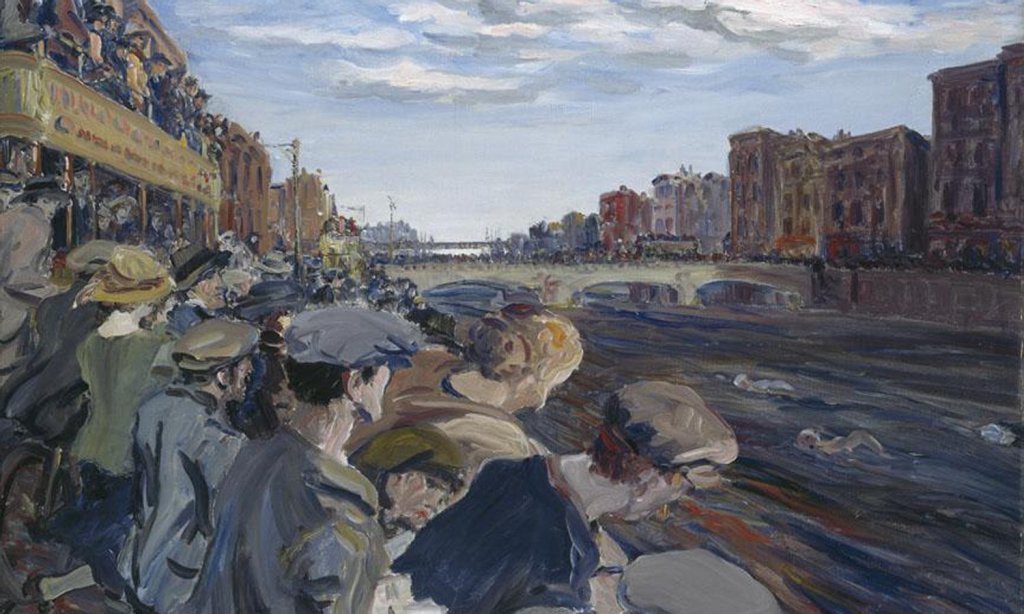
Ahead of the opening ceremony of the 2024 Paris Olympic Games, I thought I’d post a reminder of Ireland’s first ever Olympic medal. A silver medal was awarded to Ireland at the 1924 Olympic Games for this painting by Jack Butler Yeats, brother of the poet William Butler Yeats:
The Liffey Swim, by Jack B. Yeats (1923, 61cm x 91cm, oil on canvas)
Ireland only gained independence in 1922 so 1924 was the first Olympics at which Ireland competed as a separate nation. It may surprise you to learn that art competitions were a part of the Olympic Games from 1912 until 1948, as were competitions in music and literature. The 1924 Gold Medal for painting was won by an artist from Luxembourg called Jean Jacoby who specialized in sporting themes.
Although it was a style Yeats only started to experiment with around 1920, The Liffey Swim (which you can see in the National Gallery of Ireland) is clearly an Expressionist work – the unusual colour palette and texture of the paint are characteristics of that movement – but it also serves as an interesting bit of social history. The Liffey Swim is a regular event in Dublin (except during the Covid-19 pandemic) but only began in 1920 so it was fairly new when Yeats painted it. He captures the excited atmosphere surrounding the event by placing the viewer in the middle of a huge crowd struggling to get a good view, with the swimmers only shown in cursory detail. You see far more of the spectators than you do of the race!
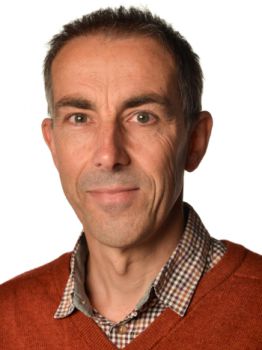
Peter Thomas (left) joined the University of Sussex as a lecturer in the Astronomy Centre in 1989 and remained there for his entire career. I know from my own time as Head of School that he was an excellent colleague. who made huge contributions to the University and indeed to his research discipline of cosmology.
Peter studied Mathematics at Cambridge University, graduating in 1983 and then did Part III (also known as the Certificate of Advanced Study) which he obtained in 1984. He stayed in Cambridge to do a PhD in the Institute of Astronomy under the supervision of Andy Fabian on Cooling Flows and Galaxy Formation, which he completed in 1987. He then spent a couple of years in Toronto as a Postdoctoral Fellow at the Canadian Institute for Theoretical Astrophysics (CITA) before taking up his lectureship at Sussex in 1989. His main research interests were in in the areas of galaxy formation, including numerical and semi-analytic models, and computer simulations of the formation of clusters of galaxies. He was a widely known and very highly respected researcher in the field of theoretical cosmology and extragalactic astrophysics.
I was a PDRA in the Astronomy Centre at Sussex when Peter joined in 1989; he was Professor in the Department of Physics & Astronomy when I returned there as Head of School of Mathematical and Physical Sciences in 2013, a position he himself subsequently held. He was a much-valued member of staff who made huge contributions to the Astronomy Centre, the Department of Physics & Astronomy, the School of Mathematical and Physical Sciences, and the University of Sussex as a whole. I also remember him as a colleague on various panels for PPARC and then STFC on which he served diligently.
Having known Peter for 35 years, and being of similar age, it was a shock to hear that he passed away. I understand that he had been suffering from cancer for over a year. I send my deepest condolences to his family, friends and colleagues. I understand that his funeral will be a private family affair, but there will be a more public occasion to celebrate his life at a later date.
This morning I saw a news item that describes a new law in Ireland that would ban the use of Non-Disclosure Agreements (NDAs) in sexual harassment cases. The law is being considered by Cabinet today but, with the summer recess imminent, the earliest the legislation can be passed through the Oireachtas is in the autumn, after the Dáil returns. That is unless a General Election intervenes.
The legislation will amend the Employment Equality Act to state that an employer shall not enter an NDA with an employee where the employee has made allegations of discrimination, harassment or sexual harassment.
Such agreements have been used quite frequently to prevent victims of harassment from speaking publicly about their experiences thus enabling harassers to move elsewhere without anyone knowing what they had done. This ploy is also seen by Management as a way of preventing reputational damage, although it does not seem to me to be a good way of doing that as the truth has a way of coming out anyway and the effect of hiding the misconduct when it does causes more reputational damage than the harassment itself.
This reminds me of things I wrote a while ago in connection with a case at Leiden University where the Management decided not to name a professor involved in such a case (who was subsequently identified as Tim de Zeeuw). I thought this was a nonsense, for at least two reasons. The first is that I think someone who has behaved in such a way should be named as a matter of principle, so that potential collaborators and future employers know what he has done. In previous posts on this topic I had defended confidentiality (e.g. here) during an investigation, but I still think that once it has been decided that a disciplinary offences have been committed there should be full disclosure.
The second is that failing to identify the individual concerned led to a proliferation of rumours inside and outside Leiden (none of which I am prepared to repeat here). As a result, the finger of suspicion was pointed at the wrong people until the name of the abusive Professor is revealed. That made for a very difficult working environment for everyone concerned.
Of course the new law, when passed, will only apply to cases in Ireland. In Astronomy, as in many other parts of academia, there is a great deal of international mobility. The new legislation would not prevent someone who has engaged in such misconduct in, for example, the United Kingdom applying for a job in Ireland without this coming to light. One could hope that other countries follow suit, but the wheels of the legislature are known to turn quickly in any country that I know of.
Finally, I think it’s an important question whether or not this legislation is retroactive. If it is, and past NDAs are declared null and void then it will blow open many cases. I can imagine rather a lot of people getting rather nervous at this prospect…
Posted in Uncategorized on July 23, 2024 by telescoper
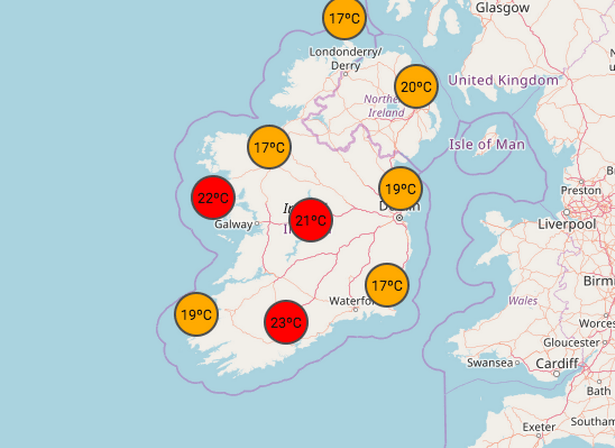
I like the helpful way that Irish weather forecasts warn the public that a summer heatwave is on the way by showing the regions of excessively high and potentially dangerous temperatures in red, like this:
The full paper can be found here (Open Access). In case you weren’t aware the word anomie according to Durkheim, being a state of “normlessness”, in general means the lack of social cohesion and solidarity that often accompanies rapid social change. I’d say there’s a lot of that about these days.
The study relates directly to UK universities, many of which are struggling and some of which are on the verge of collapse as a result of several factors, not just those stemming from the Covid-19 pandemic. One of the surprising (and depressing) things about Ireland is that the people in charge of third level education here seem to be determined to repeat here the terrible decisions being taken across the Irish sea despite all the evidence of the damage they have done in the UK. Many of the comments made by individuals mentioned in the paper will definitely resonate with colleagues in Maynooth.
This bit particularly caught my eye:
All too often dangerous managers simply skip from one university to the next causing havoc wherever they go. (RS2 – Male, former Senior Lecturer, pre-1992 institution)
No prizes for guessing what I’ll be watching this afternoon. Today’s the day of the All-Ireland Senior Hurling Championship Final at Croke Park, between Clare and Cork. The weather isn’t too bad; it’s overcast and a bit cool but there’s no rain forecast and it’s not windy. I’m hoping for a good match.
Clare (An Clár) versus Cork (Corcaigh) is not the final I would have predicted before the semi-finals. I thought Limerick and Kilkenny would be the finalists but that just goes to show how little I know. Cork are favourites with the bookies, by the way (4/7 on Cork, 11/8 against Clare) despite the fact that Clare of won the last two encounters between these teams.
If you’ve never been in Ireland for this occasion you won’t realize what a huge event it is. The atmosphere on this very special day is very much like it used to be in England for the FA Cup Final when I was a kid and the build-up just as long, with constant references on both radio and TV. Maynooth is on the railway line going through Croke Park so we see a lot of supporters in their team colours heading to the match. County Clare (which is in the West of Ireland, straddled by Limerick to the South and Galway to the North) is a bit closer to us than County Cork, which perhaps accounts for the preponderance of blue and gold over red and white.
You can watch the whole game live on BBC2 if you’re in the UK. Throw-in is at 3.30pm.
Update: The attendance is 82,300.
Update: HT score Clare 1-12 Cork 1-12. It’s been a much more open game than I expected. Cork started out the stronger team, finding lots of space in the Clare half and shooting very accurately. Robert Downey scored a memorable goal at which point it looked like Cork might overrun Clare, but that didn’t happen and as the half drew to a close Clare became more confident. It’s all square and poised for an exciting second half.
Update: FT score Clare 3-21 Cork 1-27. What an epic game this is! All square on points after Clare conceded a silly free in the dying seconds to allow Cork to equalize. We go to extra time!
Update: Final Score Clare 3-29 Cork 1-34. Drama to the last second, a long free from the Cork goalie lands in the area but Robbie O’Flynn’s shot to tie the game goes agonizingly wide. Clare are the All-Ireland Champions by one-point. What a breathtaking match. Hats off to both teams for serving up a classic! I wouldn’t have complained if it had gone to a replay though…
Here is a clip of Clare’s amazing 3rd goal, scored by Tony Kelly…
The views presented here are personal and not necessarily those of my employer (or anyone else for that matter).
Feel free to comment on any of the posts on this blog but comments may be moderated; anonymous comments and any considered by me to be vexatious and/or abusive and/or defamatory will not be accepted. I do not necessarily endorse, support, sanction, encourage, verify or agree with the opinions or statements of any information or other content in the comments on this site and do not in any way guarantee their accuracy or reliability.




 In the Dark