Mini-Heatwave

Posted in Barcelona, Biographical on April 15, 2024 by telescoper

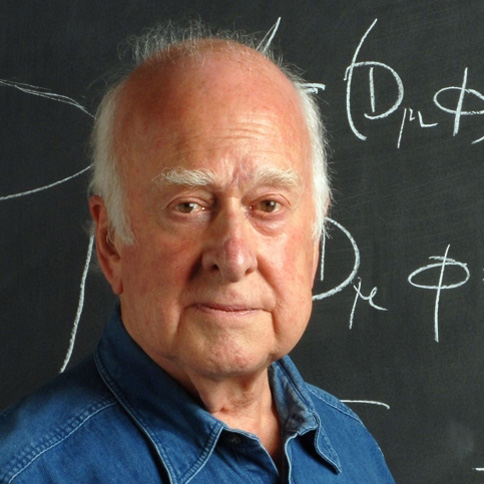
If it was warm on Saturday it was even warmer on Sunday. I went for an afternoon walk down to the harbour but was unfortunately unable to remember which of the yachts is mine so instead of putting out to sea, I had an ice cream and returned home for a siesta.

Obviously 27°C isn’t really hot by the standards of Barcelona but it is only mid-April and the temperature at the weekend in some areas did get up to 29.1°C, which is the highest temperature in April since 1914. It was about 10°C higher at the weekend than last week. The forecast for this week is similar to last week, around 18°C

Torre de Comunicacions de Montjuïc

Posted in Barcelona on April 14, 2024 by telescoper

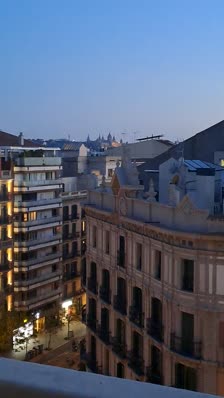
It was rather warm yesterday, even near sunset, so I found myself sitting out on my balcony, staring out into the distance, with a small bottle of wine by my side, and decided to record the view. Off in the distance, with the flashing lights, is the Montjuïc Communications Tower, which was built to transmit television signals from the 1992 Barcelona Olympics. To the left you can see the dome and spires of the Palau Nacional. The traffic noise is authentic.

No ERC Advanced Grants for Ireland…

Posted in Politics with tags , , , on April 14, 2024 by telescoper

I noticed last week that the results of the latest round of ERC Advanced Grants under the European Union’s Horizon Europe programme have been announced. This is the outcome of the 2023 round of applications.

First of all, many congratulations to the 255 recipients of almost €652 million in grants across all disciplines! There are some names I recognize among the awardees, which is very nice to see.

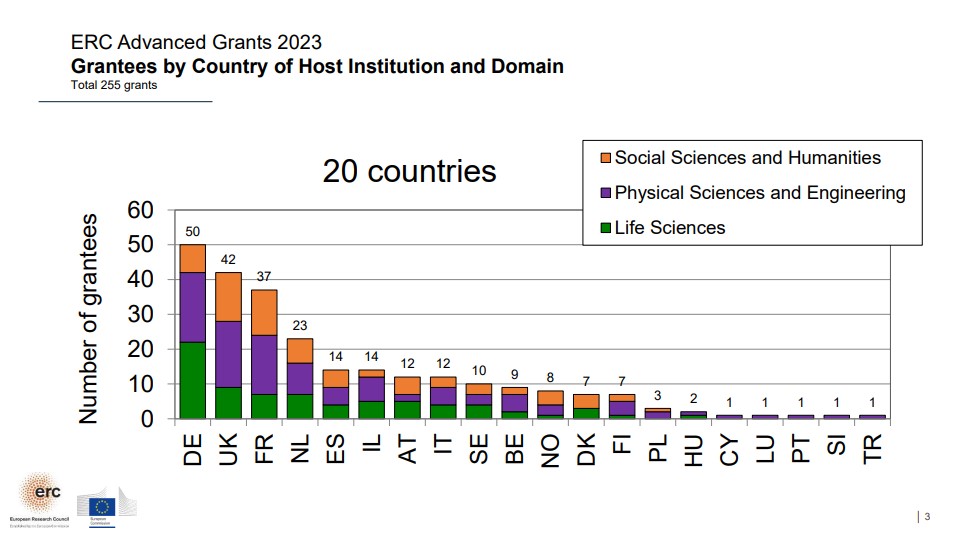
Unfortunately, not one cent of that money will be coming to Ireland as not one researcher based in Ireland is among the winners. Here’s the breakdown of awards:

Germany heads the table, with the UK in second – though, if I understand correctly, there is no ERC money attached to the UK awards in this round because the association agreement between the UK and Horizon Europe was only signed in September 2023 and will only come into play from the 2024 round onwards. Funds for these grants will have to be provided by the UK Government.

The outcome for Ireland is dismal but hardly surprising. Ireland spends only around 1% of its GDP on Research and Development, and only a small part of that is in research grants. There simply isn’t a funding stream to nurture a environment that would allow research to flourish here as it does in other countries. It is true that Ireland is a much smaller country than those at the top table, but it is massively out-performed by nations of a similar size such as Denmark, Finland and Norway. Advanced Grant winners represent the tip of the research pyramid, but they require a solid platform on which to build. In Ireland that platform simply doesn’t exist.

It often seems that Irish politicians think Ireland’s universities exist for the sole purpose of training people to work for Google. At any rate they are unconvinced that academic research is important enough to fund adequately, and this is unlikely to change in the near future as this issue is unlikely to be on the agenda at all for forthcoming election campaigns. The systemic failure of successive governments to invest in R&D, even when running a healthy budget surplus, is just one example of the short-termism that plagues Irish politics. Until attitudes change, talented young researchers, who could contribute so much to the scientific, technological and cultural landscape here, will continue to leave to carry out their research elsewhere.

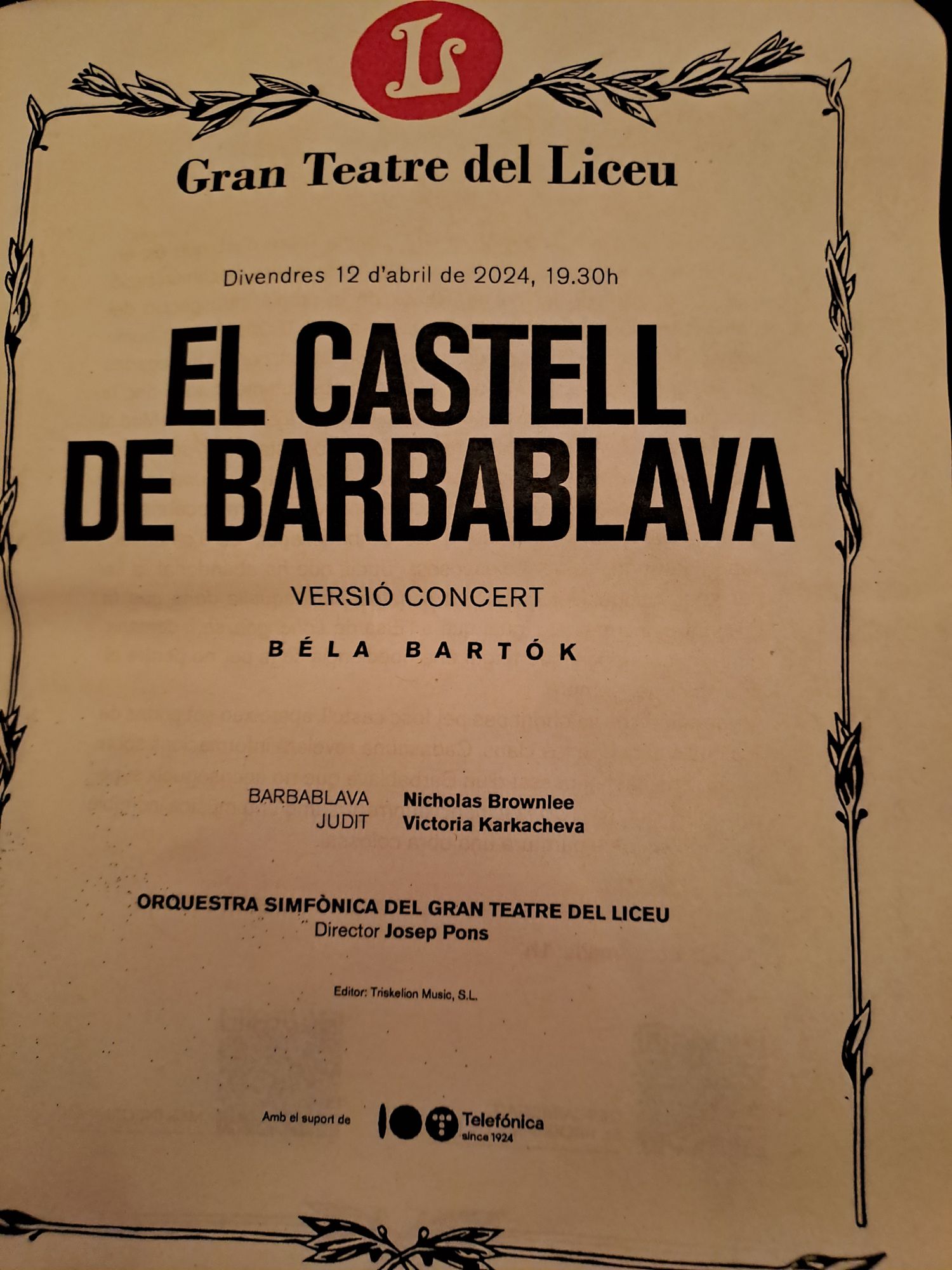
El Castell de Barbablava – Teatre del Liceu

Posted in Barcelona, Opera with tags , , , , , on April 13, 2024 by telescoper

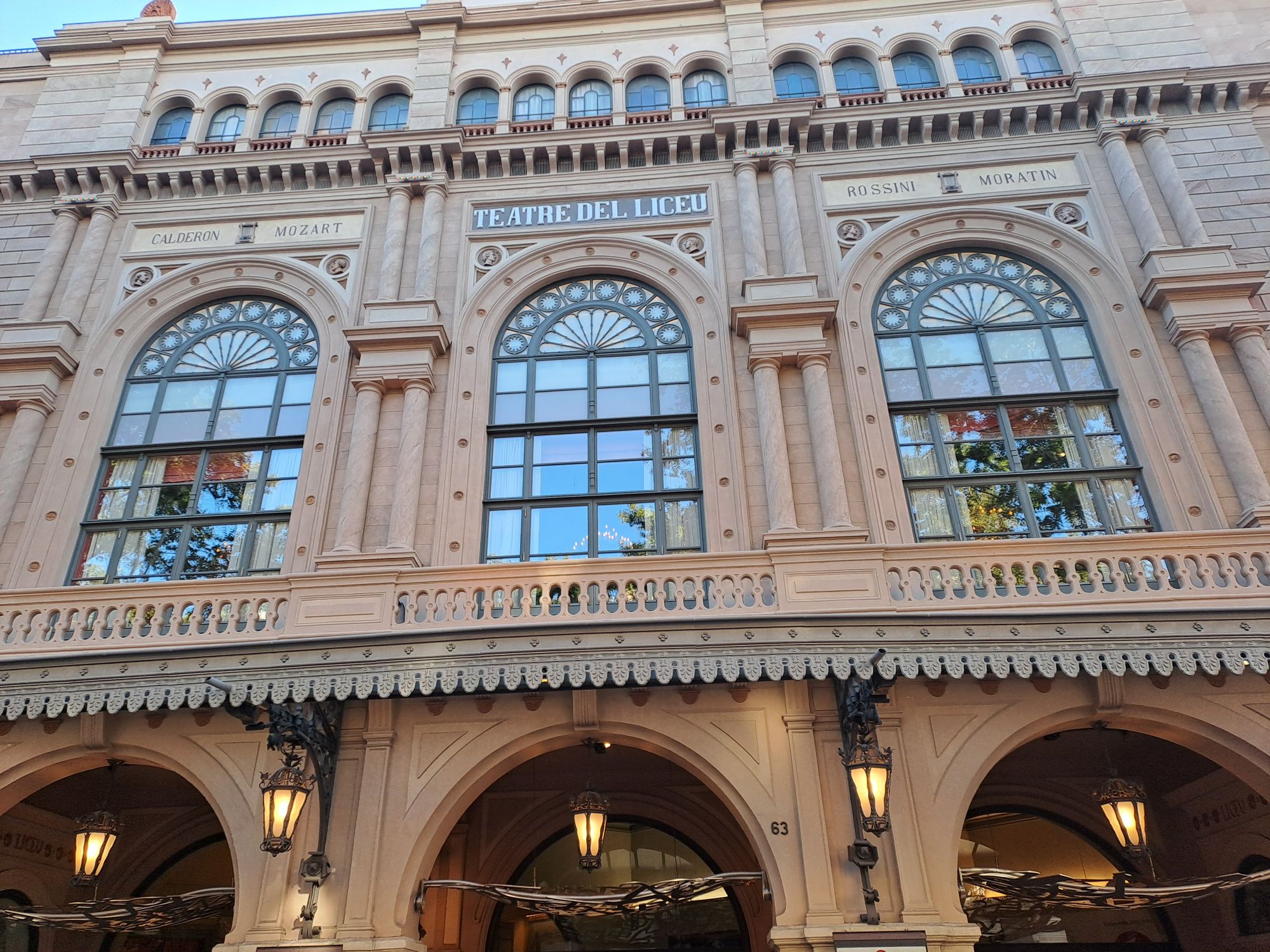
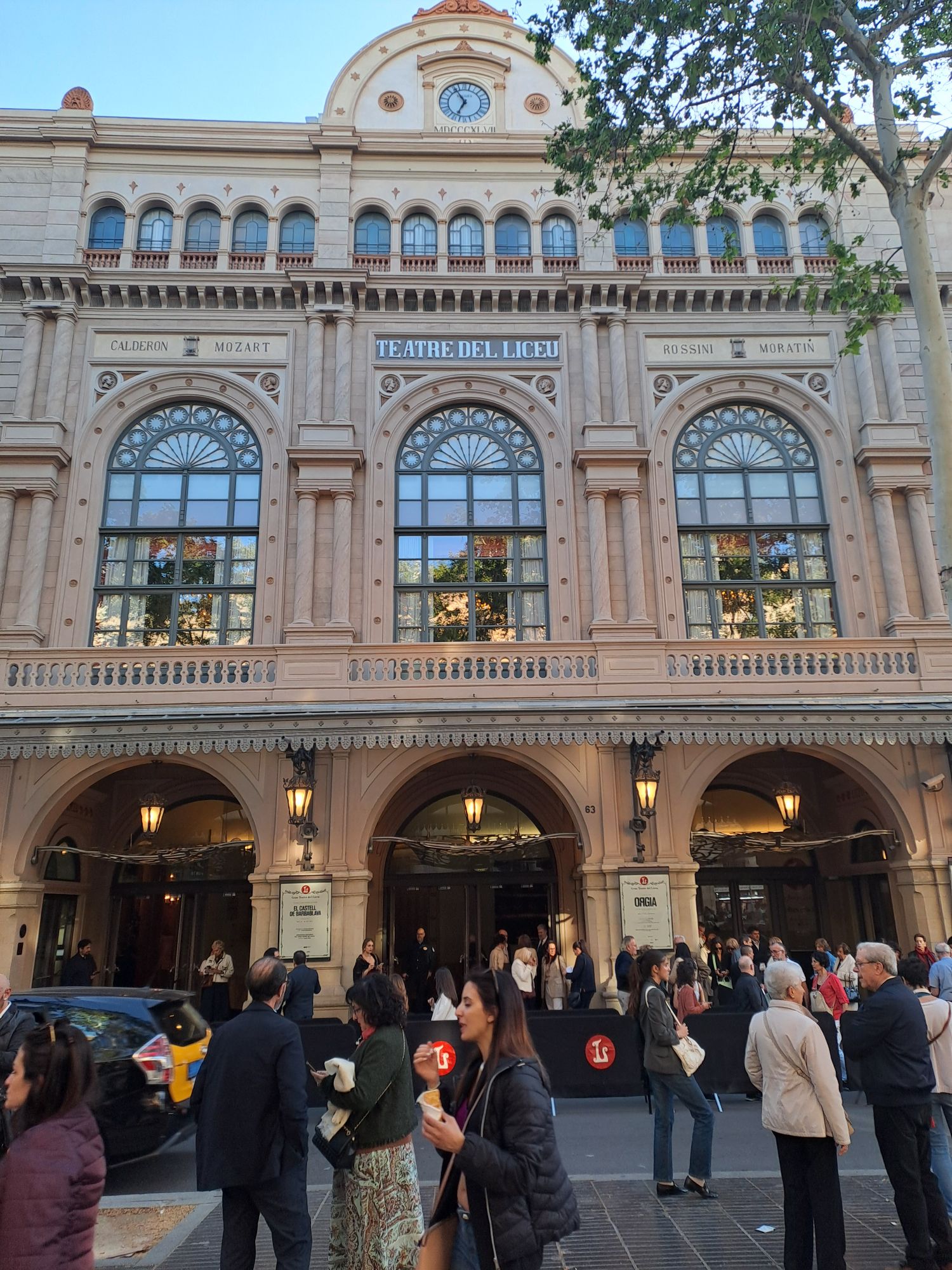
I was thinking last weekend that in, all the time I’ve spent in Barcelona this year, and all the times I’ve travelled through the Metro station called Liceu, I’ve never been inside the Gran Teatre del Liceu. I decided to remedy that by booking a ticket to see last night’s performance of Bluebeard’s Castle, a one-act Opera by Béla Bartók. The theatre is actually on La Rambla, and I had to dodge through the hordes of tourists to get there, but it’s an easy walk from my apartment.

El Liceu is indeed very beautiful inside and deserves its reputation as one of the world’s finest opera houses. The main hall is about the same size as that of the Royal Opera House in Covent Garden, with a seating capacity of over 2,000, and it does have a similar decor, with red and gold everywhere. When I booked my ticket (on Monday) there were plenty of seats available to choose from, so I wondered what the attendance would be like. As it turned out, it wasn’t quite full but there was a good crowd in.

I have seen Bluebeard’s Castle a couple of times before, but it surprises me that there are no old reviews in my back catalogue on this blog. From that observation I deduce that both times I saw it were before 2008, which is when I started blogging. I do think it’s a masterpiece, however, which is why I jumped at the chance to see and hear it again. Last night’s was a concert performance, i.e. without staging, which works well with this Opera as there are only two principals and it sometimes it’s good to leave a lot to the listener’s imagination. The performance was in the original Hungarian language, with surtitles provided in Catalan, Spanish and English.

The Opera is based on a French folk legend of Bluebeard, a murderous character foreshadowing Jack the Ripper, and Judith, who has for some reason fallen in love with him, despite it being widely believed that he murdered his previous wives. She travels with him to his castle and, when they arrive, she starts to ask Bluebeard some uncomfortable questions as she makes her way through the dark castle. Seven doors appear to which Bluebeard holds the keys. Each one will reveal information about the personality and past of a Bluebeard. The first door opens to reveal a blood-soaked torture chamber, for example. And that’s just the start…

The final door reveals his former wives, apparently still alive. But are they ghosts? Who knows? Judith doesn’t seem to mind. She becomes the fourth wife and disappears into the darkness enfolding the other three. That’s the end.

The Opera doesn’t really have that much to do with the folk story. It is really an allegory – the rooms contain secrets of Bluebeard’s past, including past relationships, which he has locked away deep inside himself. Only Judith’s persistent questioning can persuade him to reveal them.

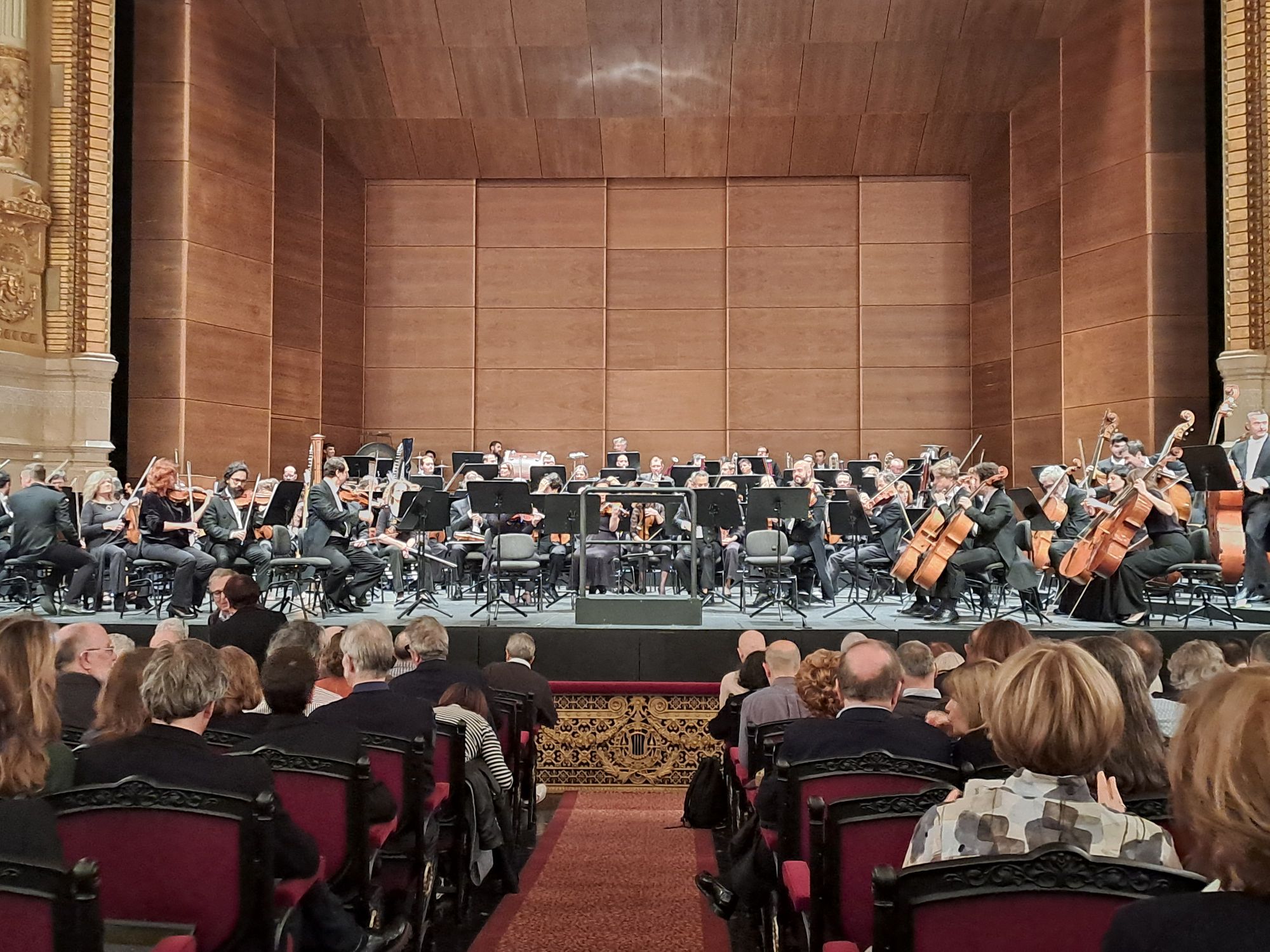
The music for Bluebeard’s Castle is extraordinarily rich and varied, changing as each door is opened. A large orchestra is needed to produce these changes of texture, as you can see in the picture I took before the performance. The musicians, under the direction of Josep Pons, played superbly as well as supplying eery sighs when the libretto demanded it. Vocals were supplied by bass-baritone Nicholas Brownlee as Bluebeard and mezzo soprano Victoria Karkacheva; both were excellent.

The performance lasted only about an hour. One of the things about going to an Opera in the evening is that one usually has to have something to eat before the performance, because it’s likely to be too late afterwards to find anywhere still serving food. That doesn’t apply here in Spain, where people generally eat rather late. I was thinking as I left last night that it was the first time I had been to an Opera that started at 7.30pm after which it was still too early to have dinner!

In Praise of the Public Thesis Defence

Posted in Barcelona, Education, The Universe and Stuff with tags , , , , , on April 12, 2024 by telescoper

The ICCUB is quite large, which means that there are quite a few talks to go to, including seminars and colloquia but also thesis defences, such as one I attended this morning. The format for these events is a talk by the candidate in the presence of a panel of experts, who ask questions at the end, but the whole thing is open to the general public. After the panel questions there is an opportunity for questions from the audience, but only from those who have a doctorate. I was tempted, but didn’t put my hand up.

Anyway, this morning’s talk was well attended and of very high quality and, as usual, the whole event lasted getting on for two hours. It’s a very different experience from the form of viva voce examinations used for PhDs in the UK and Ireland.

I like to attend these public thesis defences because they’re a very good way of finding out about the research going on in areas away from my own specialism. In physics the people who are really working at the coal face are the PhD students so one often learns more about the details from such talks than from colloquia from senior folk, which are usually cover a wider area but at a more superficial level.

Another nice thing is that there is a little gathering afterwards (on the right) with a selection of food and drink available to celebrate the candidate’s success. In fact it was a double celebration as the candidate was offered a postdoctoral research position just two days ago. I abstained from the champagne as alcohol at lunchtime usually sends me to sleep in the afternoon, and I have a lot to do in the rest of today.

Citations from Beyond the Grave

Posted in Uncategorized with tags , , , , , , , on April 11, 2024 by telescoper

It seems to be widely believed (by those responsible for research assessment) that what is important about research papers and their authors is not the research they describe but how many citations they attract. Thinking about this recently yet another anomaly in this attitude struck me arising from the fact that papers continue to attract citations long after the authors are dead. It seems surprising therefore institutions have not tried harder to use the citations of deceased researchers to boost their research profile. The last Research Excellence Framework in the UK allowed institutions to claim some credit for work by researchers who had moved on to another institution. Why then not allow institutions to claim credit for researchers who passed away?

The obvious problem with this idea is that it might encourage University managers to do even more than they do already to work their staff into an early grave. It seems to me the answer to that is obvious. Researchers should be allowed to stipulate in their last will and testament whom they would like to benefit from post-mortem citations. Or indeed carry some form of donor card…

The free market solution would of course be to set up a market to allow the citations accrued after death of a researcher to be traded.

Another anomaly is that the deceased are generally – though see here for an exception – not allowed to be authors on new papers. I think this is highly discriminatory. You might argue that a dead person can contribute neither to the writing of a paper nor contribute to the scientific discussions that led to it, nor even read a draft of the text, yet I have first-hand experience of many living people who do none of those things yet still manage to appear in the author lists of many papers…

In future the only mark of recognition allowed on a researcher’s headstone will be their H-index

Finally, let me remark that a researcher’s H-index, a quantity often used by institutions to inform decisions about promotion, also continues to increase after the researcher has kicked the bucket. Why, then, should the dead be barred from promotion? Perhaps there should be a new job category of PHR (PostHumous Researcher)? The departed could even take up senior management positions where they could do just as good a job as those in such positions already without incurring any salary costs. This approach could address many of the grave problems facing modern universities.

It is high time institutions adopted a much more inclusive approach to their late researchers who, instead of merely pushing up the daises, could be used to push up the citations.

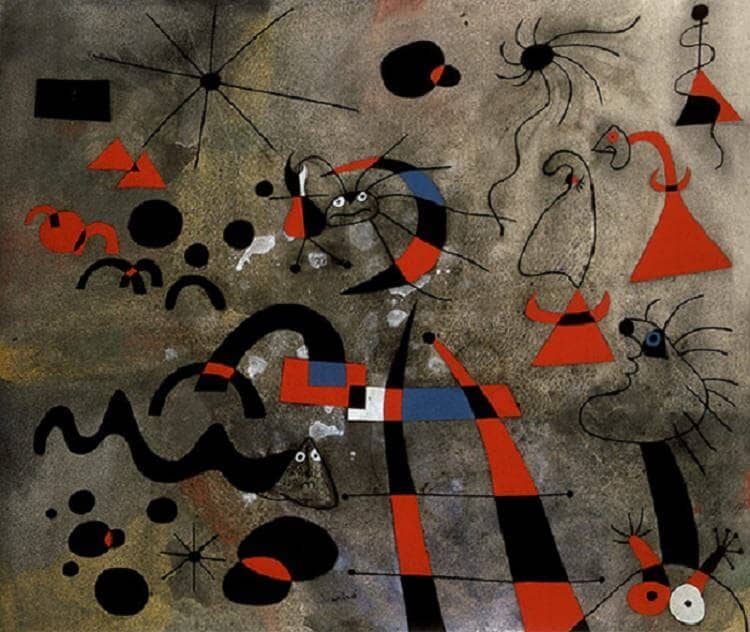
The Escape Ladder – Joan Miró

Posted in Art with tags , , , on April 10, 2024 by telescoper
The Escape Ladder

by Joan Miró (1940, gouache, watercolor, and ink on paper, 38cm × 46 cm, The Museum of Modern Art, New York City )

R.I.P. Peter Higgs (1929-2024)

Posted in Barcelona, Maynooth, R.I.P., The Universe and Stuff with tags , , , , , on April 9, 2024 by telescoper

I was very sad this afternoon to hear of the death of theoretical physicist Peter Higgs, on Monday 8th April 2024, at the age of 94. I never met Peter Higgs but I know how greatly liked and respected he was (see, e.g. here) and that he leaves an important legacy as a physicist, particularly the work that led to the award of the 2013 Nobel Prize for Physics (jointly with François Englert) . Condolences to his family, friends and colleagues.

You can read the very nice Guardian obituary here; there are many others published in media from elsewhere in the world (including Ireland and Barcelona).

I’ll add two extremely slight connections. One is that Peter Higgs visited Maynooth University in 2012, not long before his Nobel Prize was announced. The other is that he was born in the Elswick area of Newcastle upon Tyne, not far from Benwell, where I grew up.

The Gates Foundation and Open Access

Posted in Open Access with tags , , , , , on April 9, 2024 by telescoper

There has been quite a lot of reaction (e.g. here) to the recent announcement of a new Open Access Policy by the Bill & Melinda Gates Foundation, which is one of the one of the world’s top funders of biomedical research. This mandates the distribution of research it funds as preprints and also states that it will not pay Article Processing Charges (APCs). The essentials of the policy, which comes into effect on 1st January 2025, are these:

  1. Funded Manuscripts Will Be Available. As soon as possible and to the extent feasible, Funded Manuscripts shall be published as a preprint in a preprint server recognized by the foundation or preapproved preprint server which applies a sufficient level of scrutiny to submissions. Accepted articles shall be deposited immediately upon publication in PubMed Central (PMC), or in another openly accessible repository, with proper metadata tagging identifying Gates funding. In addition, grantees shall disseminate Funded Manuscripts as described in their funding agreements with the foundation, including as described in any proposal or Global Access commitments.
  2. Dissemination of Funded Manuscripts Will Be On “Open Access” Terms. All Funded Manuscripts, including any subsequent updates to key conclusions, shall be available immediately, without any embargo, under the Creative Commons Attribution 4.0 International License (CC BY 4.0) or an equivalent license. This will permit all users to copy, redistribute, transform, and build on the material in any medium or format for any purpose (including commercial) without further permission or fees being required.
  3. Gates Grantees Will Retain Copyright. Grantees shall retain sufficient copyright in Funded Manuscripts to ensure such Funded Manuscripts are deposited into an open-access repository and published under the CC-BY 4.0 or equivalent license.
  4. Underlying Data Will Be Accessible Immediately. The Foundation requires that underlying data supporting the Funded Manuscripts shall be made accessible immediately and as open as possible upon availability of the Funded Manuscripts, subject to any applicable ethical, legal, or regulatory requirements or restrictions. All Funded Manuscripts must be accompanied by an Underlying Data Availability Statement that describes where any primary data, associated metadata, original software, and any additional relevant materials or information necessary to understand, assess, and replicate the Funded Manuscripts findings in totality can be found. Grantees are encouraged to adhere to the FAIR principles to improve the findability, accessibility, interoperability, and reuse of digital assets.
  5. The Foundation Will Not Pay Article Processing Charges (APC). Any publication fees are the responsibility of the grantees and their co-authors.
  6. Compliance Is A Requirement of Funding. This Open Access policy applies to all Funded Manuscripts, whether the funding is in whole or in part. Compliance will be continuously reviewed, and grantees and authors will be contacted when they are non-compliant.
    • As appropriate, Grantees should include the following acknowledgment and notice in Funded Manuscripts:
    • “This work was supported, in whole or in part, by the Bill & Melinda Gates Foundation [Grant number]. The conclusions and opinions expressed in this work are those of the author(s) alone and shall not be attributed to the Foundation. Under the grant conditions of the Foundation, a Creative Commons Attribution 4.0 License has already been assigned to the Author Accepted Manuscript version that might arise from this submission. Please note works submitted as a preprint have not undergone a peer review process.”

Reactions to this new policy are generally positive, except (unsurprisingly) for the academic publishing industry.

For what it’s worth, my view is that it is a good policy, and I wish more funders went along this route, but it falls short of being truly excellent. As it stands, the policy seems to encourage authors to put the “final” version of their articles in traditional journals, without these articles being freely available through Open Access. That falls short of goal establishing a global worldwide network of institutional and/or subject-based repositories, linked to peer review mechanisms such as overlays, that share research literature freely for the common good. To help achieve that aim, the Gates’ Foundation should to encourage overlays rather than traditional journals as the way to carry out peer review. Perhaps this will be the next step?

Presentation of the BAO DESI results at ICCUB Uni Barcelona – by Licia Verde & Héctor Gil Marin

Posted in The Universe and Stuff with tags , , , , on April 8, 2024 by telescoper

Last week, when I wrote about the new results from the Dark Energy Spectroscopic Instrument (DESI) I mentioned that there would be a seminar here at ICCUB about that very topic. Well, the seminar, by Licia Verde & Héctor Gil Marin, was recorded and here it is: