Archive for Cosmology and NonGalactic Astrophysics

New Publication at the Open Journal of Astrophysics

Posted in OJAp Papers, Open Access, The Universe and Stuff with tags , , , , , , on December 1, 2023 by telescoper

It’s Friday and I thought I’d take  the opportunity before the weekend to announce yet another new paper at the Open Journal of Astrophysics.

The latest paper is the 46th so far in Volume 6 (2023) – just four to go for a half-century – and it’s the 111th altogether. This one was actually published on Wednesday November 29th.

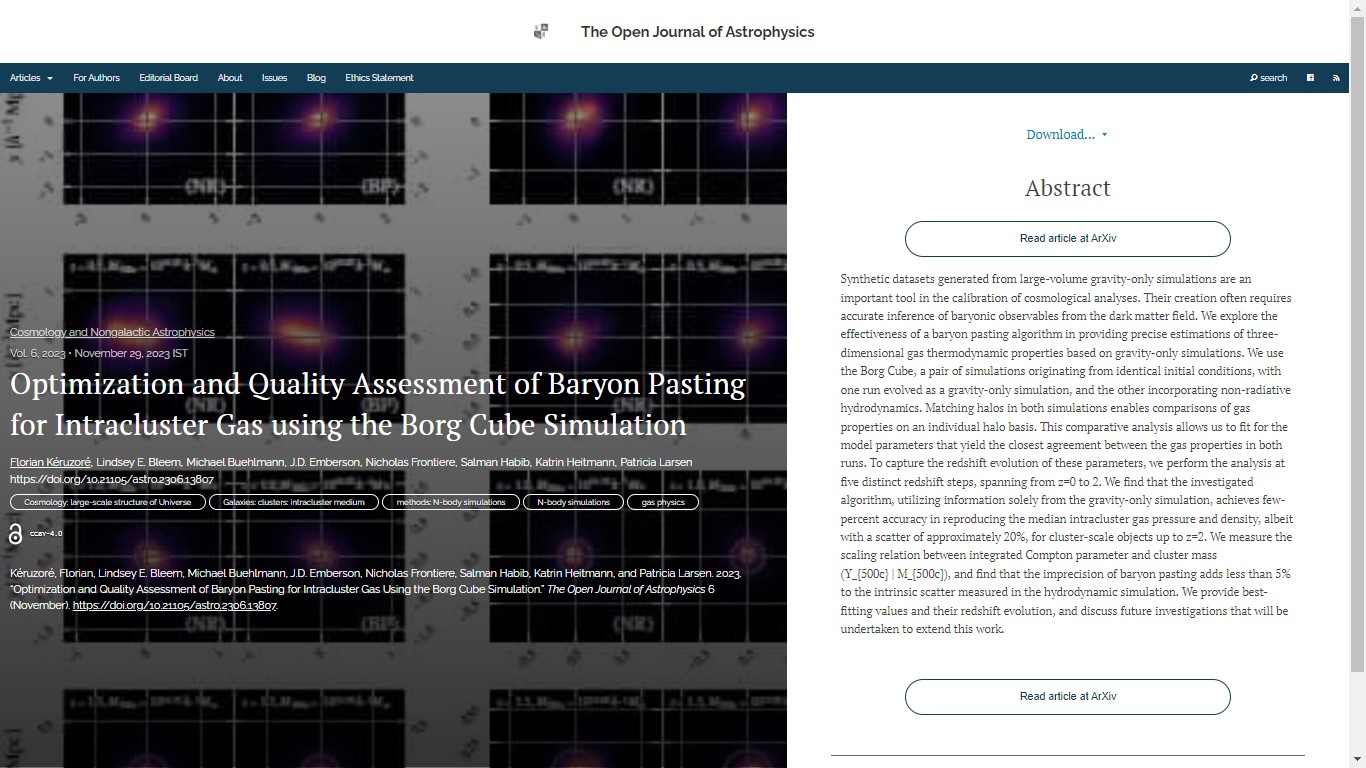
The title is “Optimization and Quality Assessment of Baryon Pasting for Intracluster Gas using the Borg Cube Simulation” and it presents an algorithm for adding baryons to gravity-only simulations via a “pasting” approach. It is in the folder marked Cosmology and Nongalactic Astrophysics.

There are 8 authors: F. Kéruzoré;  L. Bleem; M. Buehlmann;  J.D. Emberson; N. Frontiere; S. Habib; K. Heitmann; and P. Larsen;  all of them based at the Argonne National Laboratory, in Illinois (USA).

Here is the overlay of the paper containing the abstract:


You can click on the image of the overlay to make it larger should you wish to do so. You can find the officially accepted version of the paper on the arXiv here.

Three New Publications at the Open Journal of Astrophysics

Posted in OJAp Papers, Open Access, The Universe and Stuff with tags , , , , , , , on August 30, 2023 by telescoper

Not unexpectedly because of holidays, August has been rather a quiet month at the Open Journal of Astrophysics, but with people returning to work this week business has picked up again and it’s time to announce the last batch (all published this week).

In fact, this week we have published three papers, which I now present to you here. These take the count in Volume 6 (2023) up to 34 and the total published by OJAp up to 99. Who will be the author(s) of the 100th? We will just have to wait and see! I’ll do a special post for whichever paper wins that honour.

In chronological order, the three papers published this week, with their overlays, are as follows. You can click on the images of the overlays to make them larger should you wish to do so.

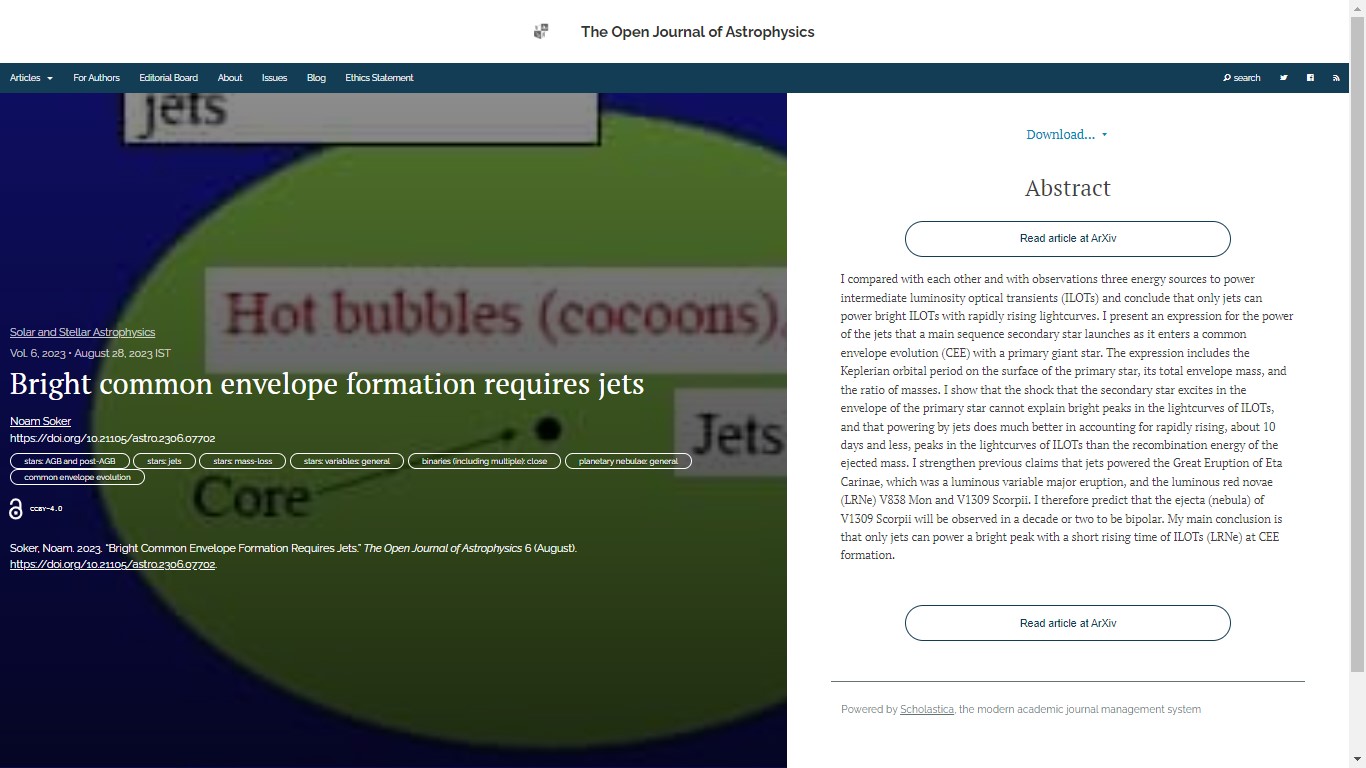
First one up is “Bright common envelope evolution requires jets” by Noam Soker of Technion, Haifa in Israel. This is a discussion of the role of jets that a main sequence secondary star launches as it enters a common envelope evolution (CEE) with a primary giant star. The paper was published on 28th August, is just the fifth item in the folder marked Solar and Stellar Astrophysics and can be found here.

Here is a screen grab of the overlay, which includes the abstract:


You can find the officially accepted version of the paper on the arXiv here.

The second paper to announce is “Almanac: MCMC-based signal extraction of power spectra and maps on the sphere” by Elena Sellentin (Leiden), Arthur Loureiro (Stockholm); Lorne Whiteway (UCL); Javier Lafaurie (Leiden); Sreekumar Balan (UCL); Malak Olamaie (York); and Andrew Jaffe & Alan Heavens (Imperial).  This presents a new software tool called Almanac , which uses Hamiltonian Monte Carlo sampling to infer the underlying all-sky noiseless maps of cosmic structures, together with their auto- and cross-power spectra.

This one is  in the folder marked Cosmology and Nongalactic Astrophysics. The paper was also published on 28th August 2023 and you can see the overlay here:


The accepted version of this paper can be found on the arXiv here.

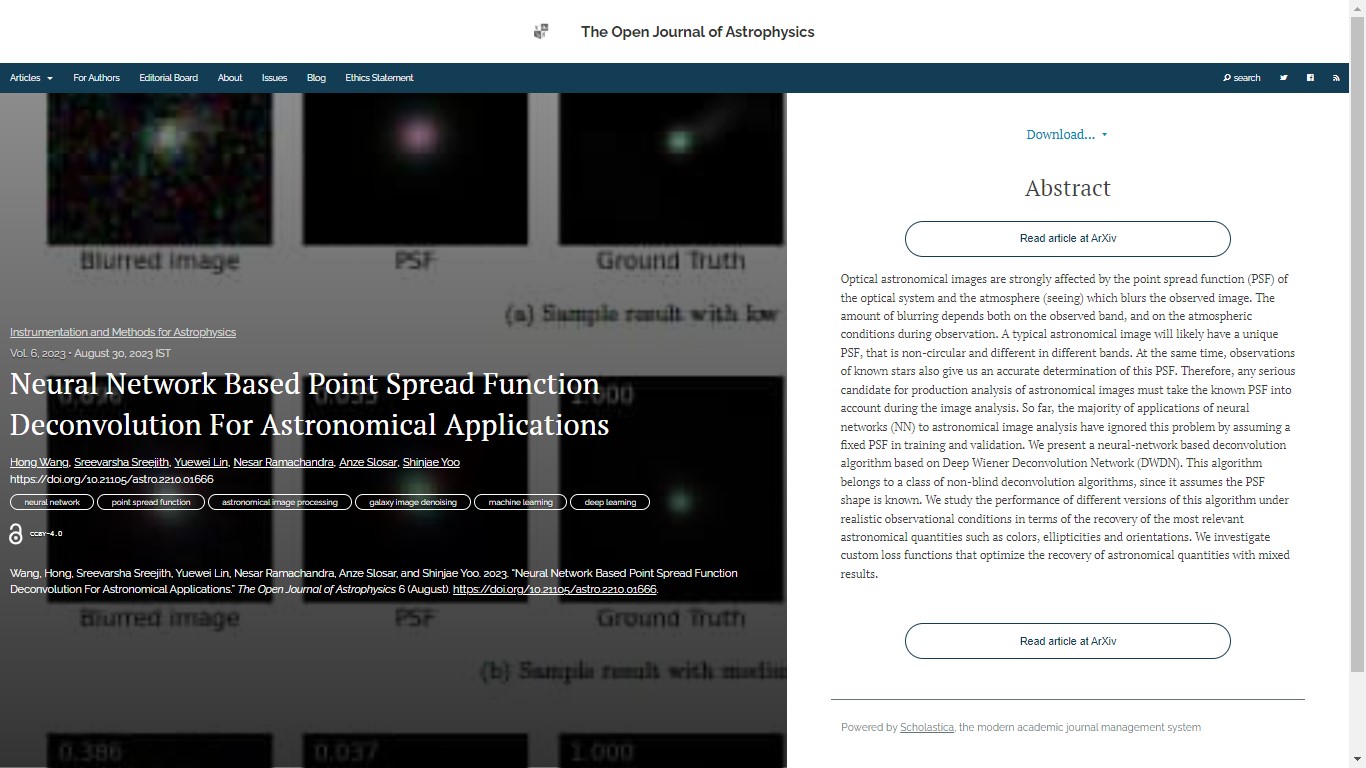
The last paper of this batch paper is in the Instrumentation and Methods for Astrophysics folder. It is entitled “Neural Network Based Point Spread Function Deconvolution For Astronomical Applications” and the authors are: Hong Wang, Sreevarsha Sreejith, Yuewin, Nesar Ramachandra*, Anze Slosar & Shinjae Yoo, all of the Brookhaven National Laboratory (NY) except * who is at the Argonne National Laboratory (IL), all based in the USA. This paper discusses a neural-network based deconvolution algorithm based on Deep Wiener Deconvolution Network (DWDN) and its performance in an astronomical context.

Here is the overlay:


You can find the full text for this one on the arXiv here.

Four New Publications at the Open Journal of Astrophysics

Posted in OJAp Papers, Open Access, The Universe and Stuff with tags , , , , , , , , , , , , , , , , on July 29, 2023 by telescoper

The rate of publication at the Open Journal of Astrophysics has now reached the point at which I think I’ll have to limit myself to weekly updates here rather than announcing every paper as it appears. We still announce individual papers on social media of course, meaning Mastodon, Facebook and the platform formerly known as Twitter…

This week we have published four papers which I now present to you here. These four take the count in Volume 6 (2023) up to 31 and the total published by OJAp up to 96. I speculated earlier this year that we might reach 100 before the end of 2023, now it looks certain we will reach the century mark as early as August! It is gratifying to see the range of papers published increasing, with all four of these in different categories.

In chronological order, the four papers published this week, with their overlays, are as follows. You can click on the images of the overlays to make them larger should you wish to do so.

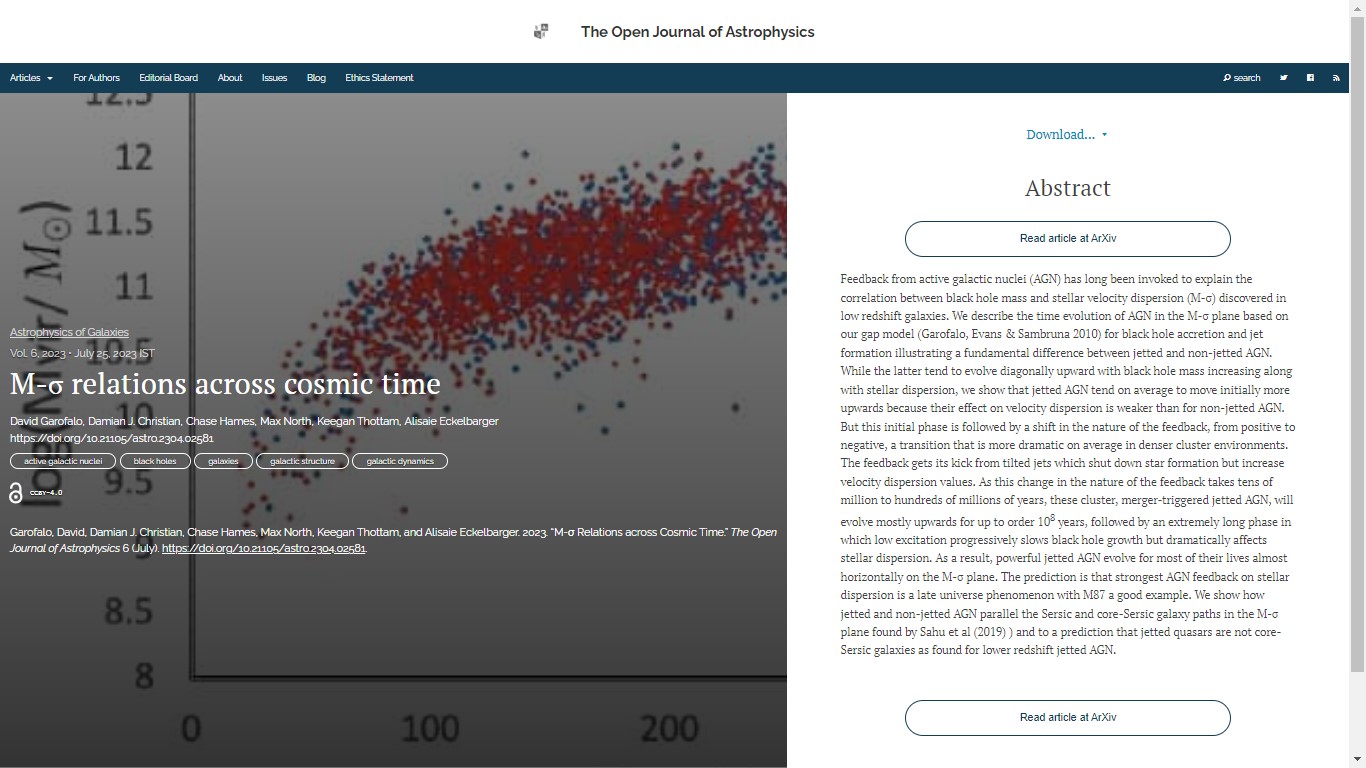
First one up is “M-σ relations across cosmic time” by David Garofalo (1), Damian J. Christian (2), Chase Hames (1), Max North (3), Keegan Thottam (1) & Alisaie Eckelbarger (1). The author affiliations are: (1) Department of Physics, Kennesaw State University, USA; (2) Department of Physics and Astronomy, California State University, Northridge, USA; (3) Department of Information Systems, Kennesaw State University, USA. This is a discussion of the relationship between black hole mass and stellar velocity dispersion discovered in low redshift galaxies and its evolution with cosmic time. The paper was published on 25th July, is in the folder marked Astrophysics of Galaxies and can be found here.

Here is a screen grab of the overlay, which includes the abstract:

You can find the officially accepted version of the paper on the arXiv here.

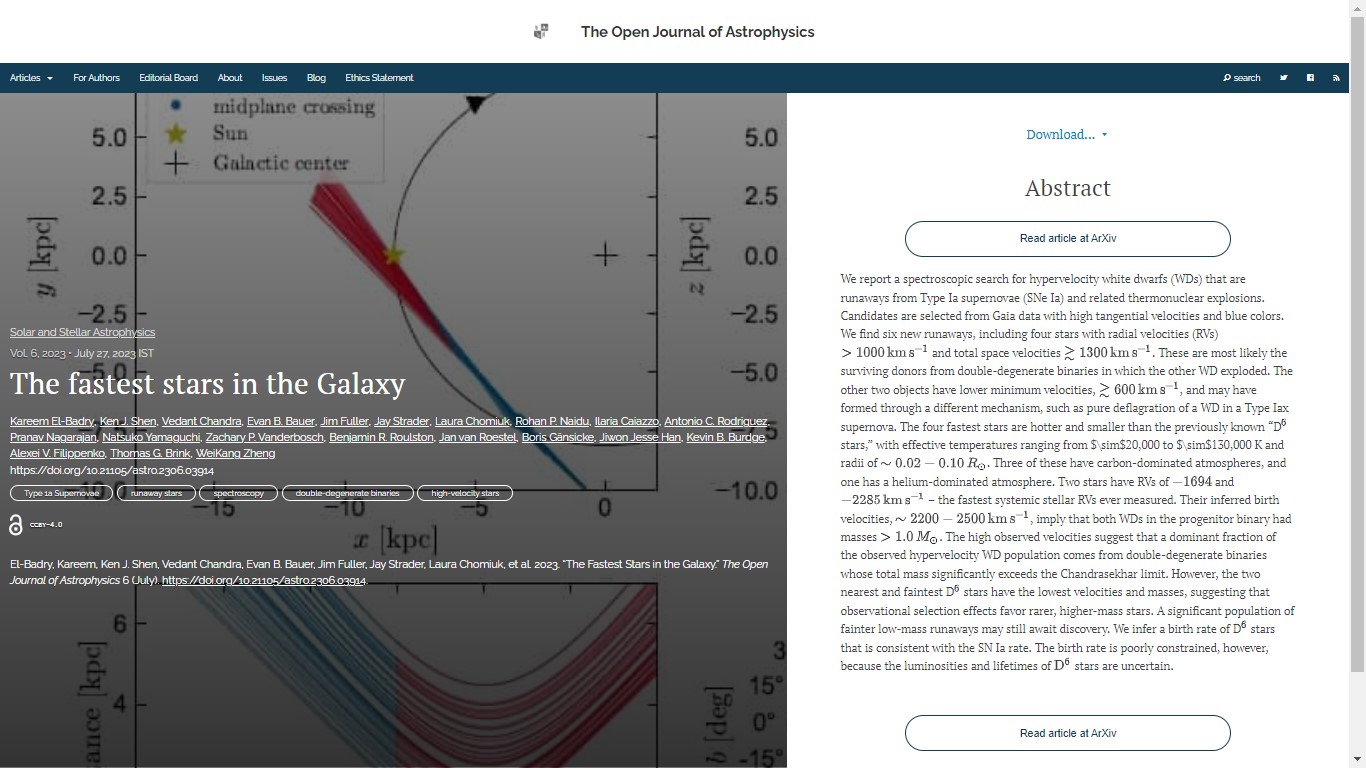
The second paper to announce is “The fastest stars in the Galaxy” by Kareem El-Badry et al. (21 authors. This one is the fourth item in the folder marked Solar and Stellar Astrophysics and it reports the spectroscopic discovery of 6 new “runaway” stars, probably the surviving members of binary star systems in which one star exploded in a Type 1a supernova. The paper was published on 27th July 2023 and you can see the overlay here:

The accepted version of this paper can be found on the arXiv here.

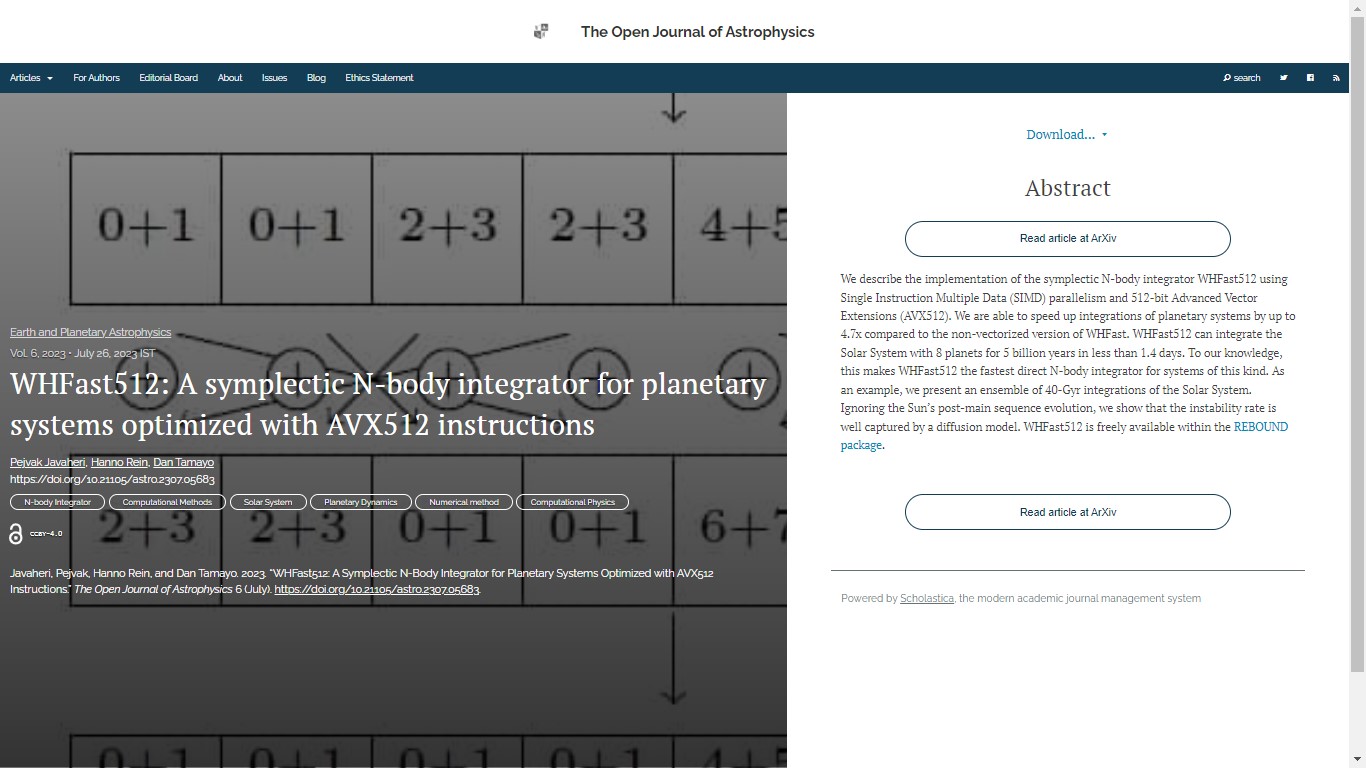
The next paper is in the Earth and Planetary Astrophysics folder. It is in fact only the second paper we have published in that area. It is entitled “WHFast512: A symplectic N-body integrator for planetary systems optimized with AVX512 instructions” by Pejvak Javaheri & Hanno Rein (University of Toronto, Canada) and Daniel Tamayo (Harvey Mudd College, USA). This paper presents a fast direct N-body integrator for gravitational systems, and demonstrates it using a 40 Gyr integration of the Solar System.

Here is the overlay:


You can find the full text for this one on the arXiv here.

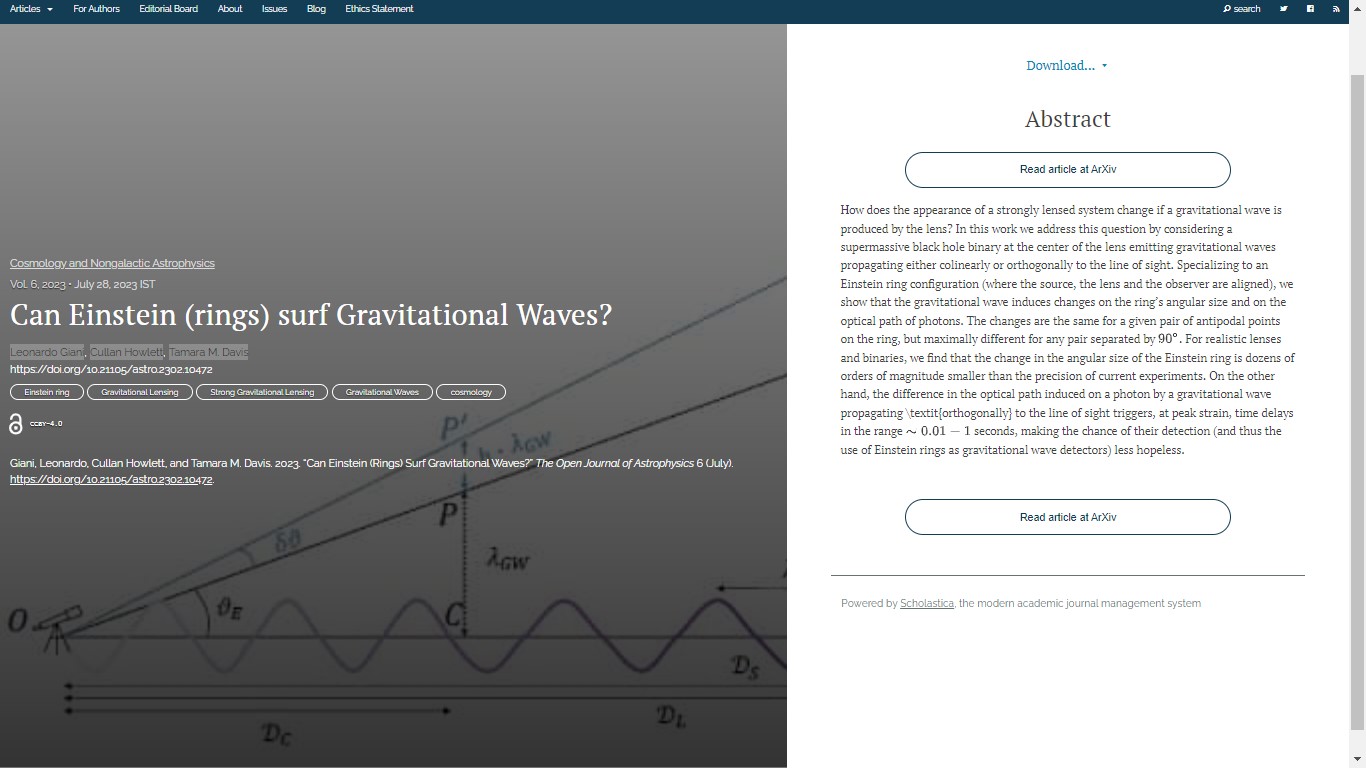
Last but by no means least, published yesterday (29th July), we have a paper that asks the question “Can Einstein (rings) surf Gravitational Waves?” by Leonardo Giani, Cullan Howlett and Tamara M. Davis of the University of Queensland, Australia. The primary classification for this one is Cosmology and Nongalactic Astrophysics and it discusses the possible effect(s) of gravitational waves on gravitational lensing observations.


You can click on the image of the overlay to make it larger should you wish to do so. You can find the officially accepted version of the paper on the arXiv here.

Four New Publications at the Open Journal of Astrophysics

Posted in OJAp Papers, Open Access, The Universe and Stuff with tags , , , , , , , on July 19, 2023 by telescoper

Time for an update at the Open Journal of Astrophysics. Owing to a well-deserved holiday by a member of the OJAp team, we were unable to register DOIs and associated metadata for a couple of weeks so refrained from announcing new papers during this period while other functions of the journal continued. Anyway, this week we have caught up with the backlog of four papers, which I now present to you here, all published on 17th July 2023. These four take the count in Volume 6 (2023) up to 26 and the total published by OJAp up to 91.

In no particular order, the four papers published this week, with their overlays, are as follows. You can click on the images of the overlays to make them larger should you wish to do so.

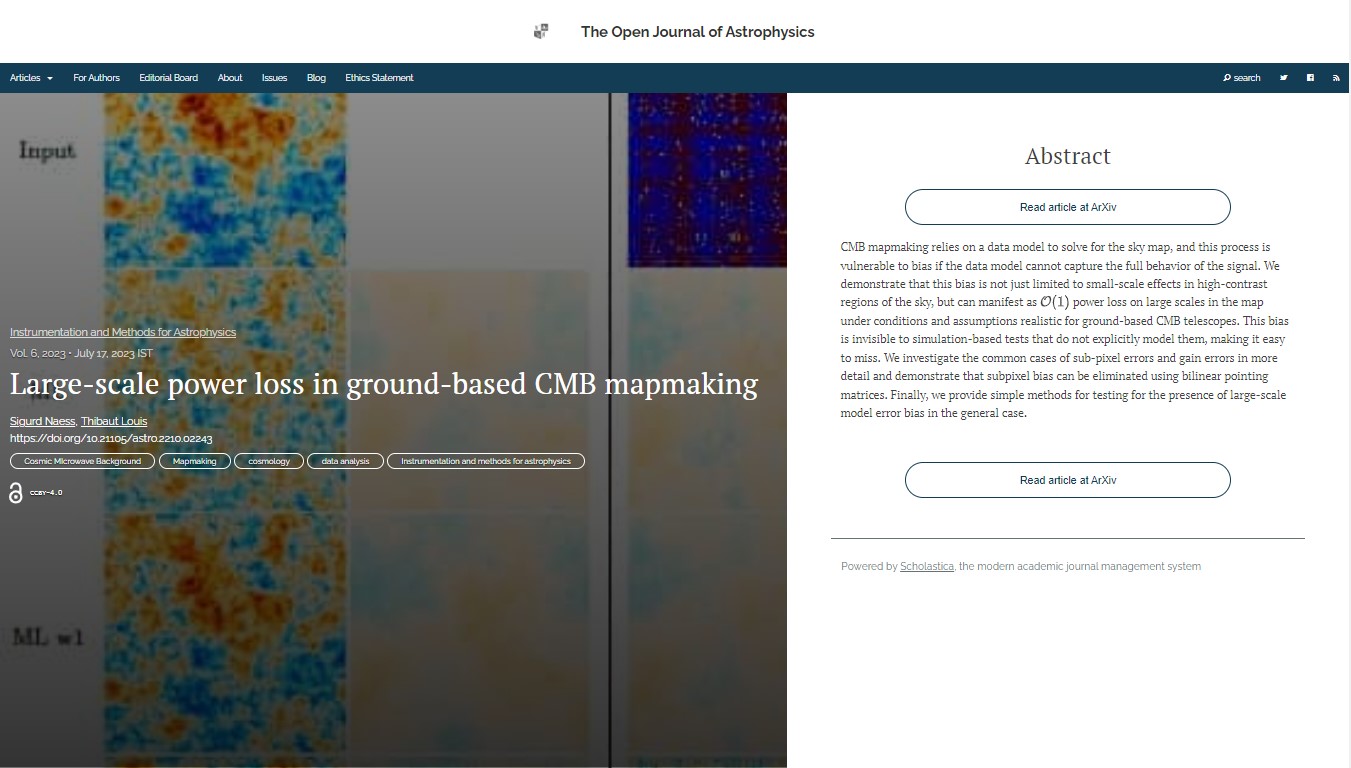
“Large-scale power loss in ground-based CMB mapmaking” by Sigurd Naess (Oslo, Norway) and Thibaut Louis (Saclay, France). This one is a discussion of the possible biases introduced by using a data model to create sky maps of CMB temperature fluctuations and is in the folder marked Instrumentation and Methods for Astrophysics.

Here is a screen grab of the overlay, which includes the abstract:


You can find the officially accepted version of the paper on the arXiv here.

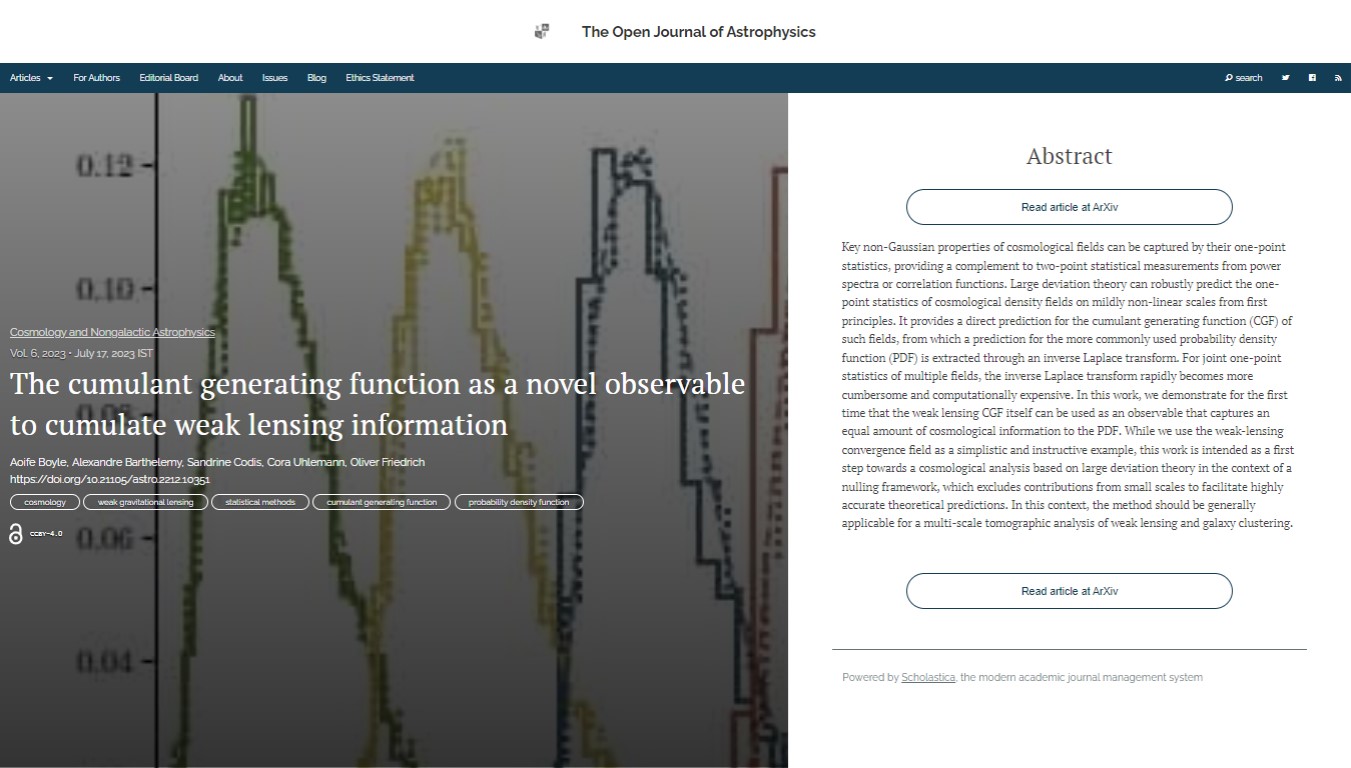
The primary classification for the next paper paper is Cosmology and Nongalactic Astrophysics and its title is “”The cumulant generating function as a novel observable to cumulate weak lensing information”. The authors are Aoife Boyle (Saclay, France), Alexandre Barthelemy (LMU, Germany), Sandrine Codis (Saclay, France), Cora Uhlemann (Newcastle, UK) & Oliver Friedrich (LMU, Germany). The paper explores the use of the cumulant generating function (CGF), from which the probability density function (PDF) can be obtained, in the context of weak gravitational lensing information.

You can click on the image of the overlay to make it larger should you wish to do so. You can find the officially accepted version of the paper on the arXiv here.

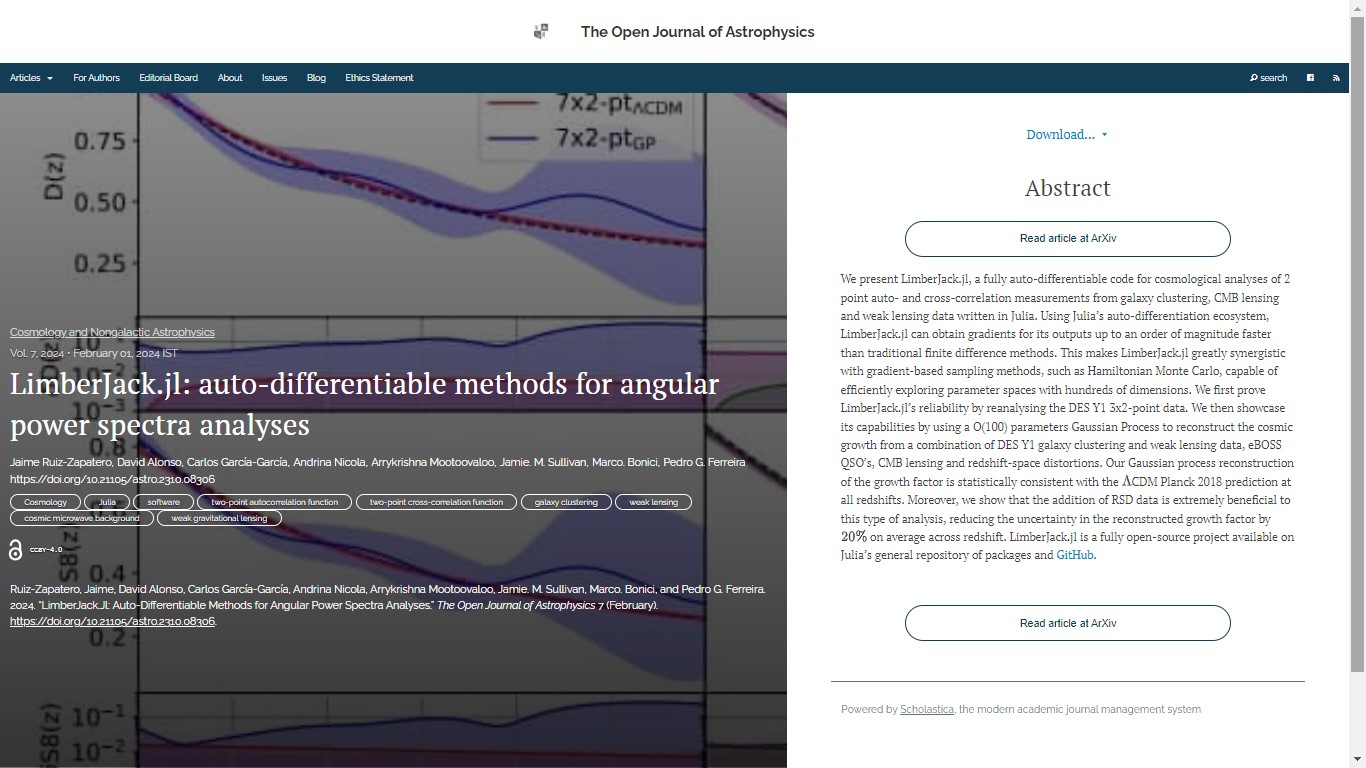
Also in the folder marked Cosmology and Nongalactic Astrophysics is the third paper “Cosmology with 6 parameters in the Stage-IV era: efficient marginalisation over nuisance parameters” by B. Hadzhiyska (Berkeley, USA), K. Wolz (Trieste, Italy), S. Azzoni (Oxford, UK; Tokyo, Japan), D. Alonso (Oxford, UK), C. García-García (Oxford, UK), J. Ruiz-Zapatero (Oxford, UK) and A. Slosar (Tokyo, Japan). This presents an efficient analytical method to speed up marginalization over nuisance parameters introduced to model systematic effects in large-scale structure data.

Here is a screen grab of the overlay which includes the abstract:
 

You can find the officially accepted version of the paper on the arXiv here.

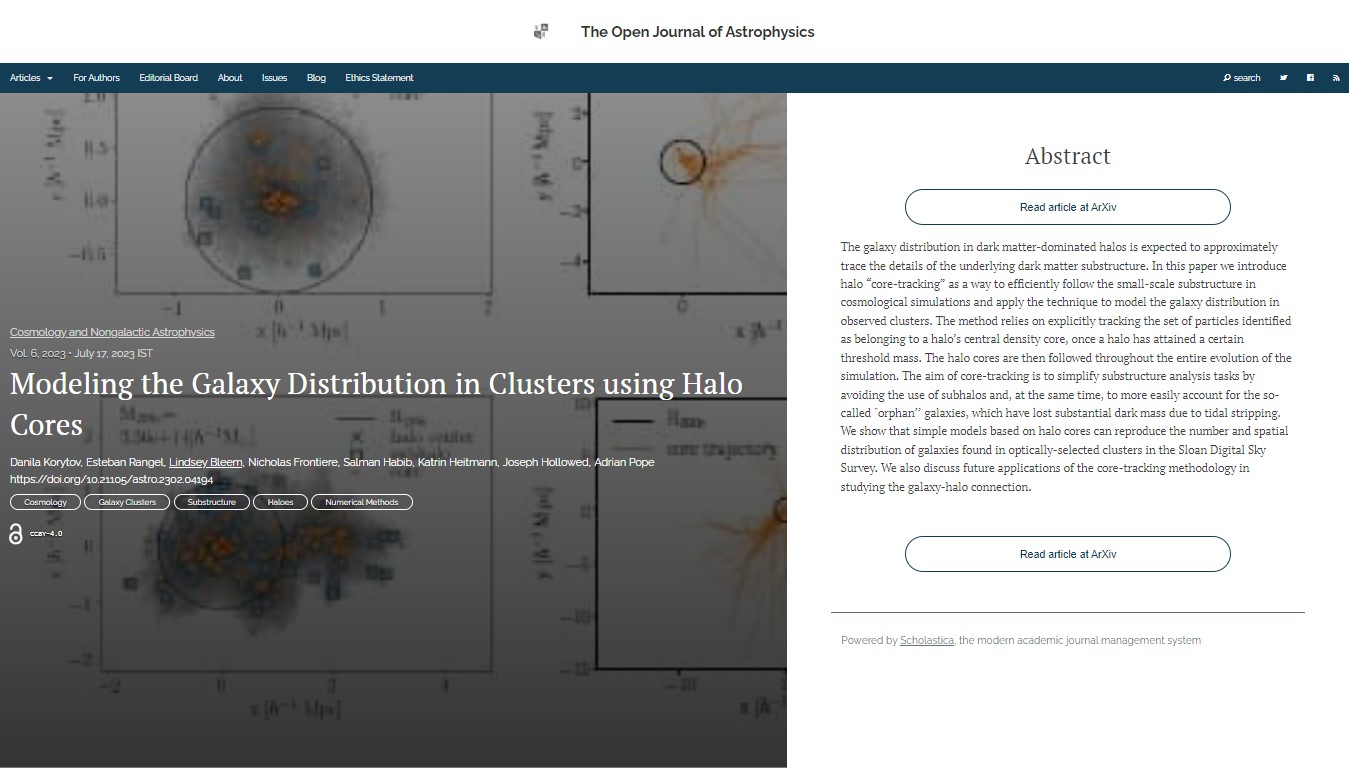
The final paper in this quartet, also in Cosmology and Nongalactic Astrophysics, is “Modeling the Galaxy Distribution in Clusters using Halo Cores” by D. Korytov, E. Rangel, L. Bleem, N. Frontiere, S. Habib, K. Heitmann, J. Hollowed, and A. Pope (all of the Argonne National Laboratory, USA). This presents a new method to speed up numerical simulations using a method of simplifying the handling of substructure in galaxy clusters using halo ‘core-tracking’.

The overlay of this one is here:


You can find the officially accepted version of the paper on the arXiv here.

Two New Publications at the Open Journal of Astrophysics

Posted in OJAp Papers, Open Access, The Universe and Stuff with tags , , , on June 28, 2023 by telescoper

Time to catch up with a couple of recent publications at the Open Journal of Astrophysics.

The first paper was published on Friday 23rd June. It is the 21st in Volume 6 (2023) and the 86th in all.

The primary classification for this paper is Cosmology and Nongalactic Astrophysics and its title is “CosmoPower-JAX: high-dimensional Bayesian inference with differentiable cosmological emulators”. The paper is about a new method, based on machine learning, to construct emulators for cosmological power spectra for the purpose of speeding up inference procedures. The software described in the paper is available here.

The authors are Davide Piras (of the University of Geneva, Switzerland) and Alessio Spurio Mancini (of the Mullard Space Sciences Laboratory, University College, London, UK)

Here is a screen grab of the overlay which includes the abstract:
You can click on the image of the overlay to make it larger should you wish to do so. You can find the officially accepted version of the paper on the arXiv here.

The second paper was published yesterday. It is the 22nd in Volume 6 (2023) and the 87th in all. Although 87 is an unlucky number for Australian cricketers – 13 short of a century – we’re still well on track to reach 100 papers by the end of the year.

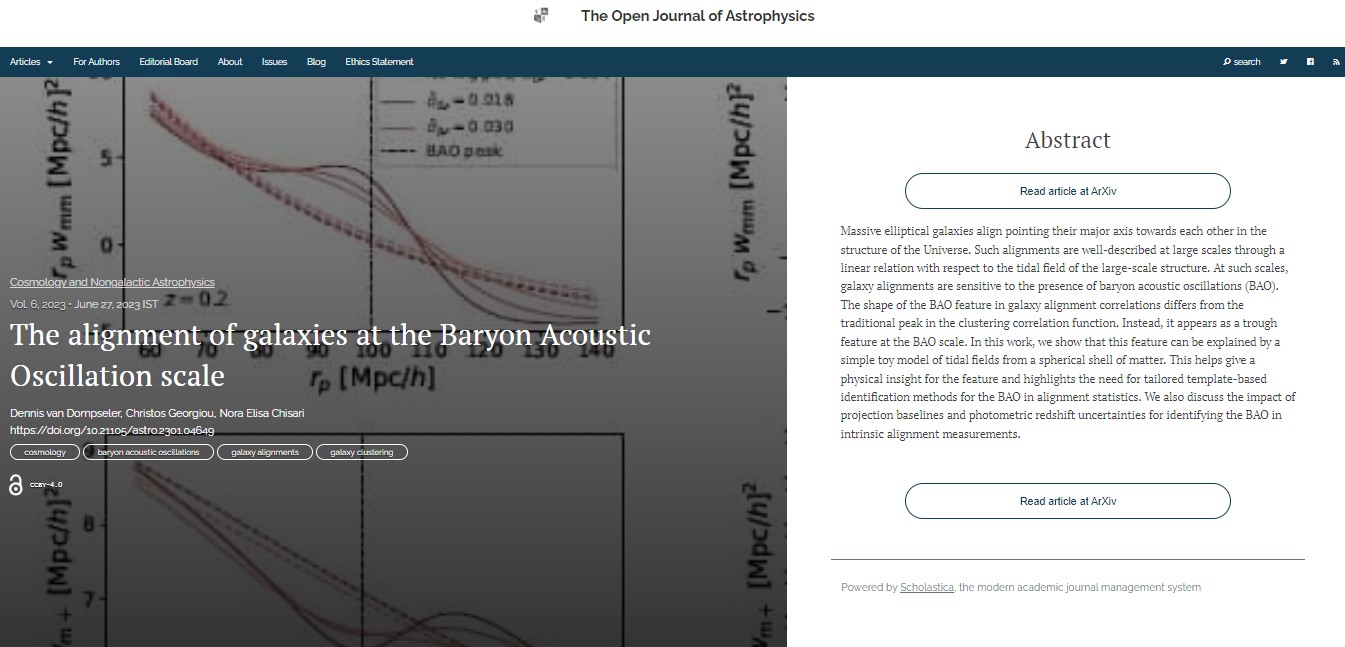
Once again the primary classification for this paper is Cosmology and Nongalactic Astrophysics. The title of this one is “The alignment of galaxies at the Baryon Acoustic Oscillation scale” by Dennis van Dompseler, Christos Georgiou & Nora Elisa Chisari all of Utrecht University, in The Netherlands.

Here is a screen grab of the overlay which includes the abstract:


You can click on the image of the overlay to make it larger should you wish to do so. You can find the officially accepted version of the paper on the arXiv here.

Two New Publications at the Open Journal of Astrophysics

Posted in Open Access, The Universe and Stuff with tags , , , , , , on May 29, 2022 by telescoper

Last week was rather busy. Amongst other things I managed to complete the publication process for two more papers in the Open Journal of Astrophysics (one on Tuesday and one on Thursday) although there was a small delay in registering the metadata so I didn’t fully announce them until yesterday. I’ve only just managed to find time today to advertise them here. These two are the sixth and seventh papers in Volume 5 (2022) and the 54th and 55th in all respectively. Both the new papers are in the folder marked Cosmology and Nongalactic Astrophysics.

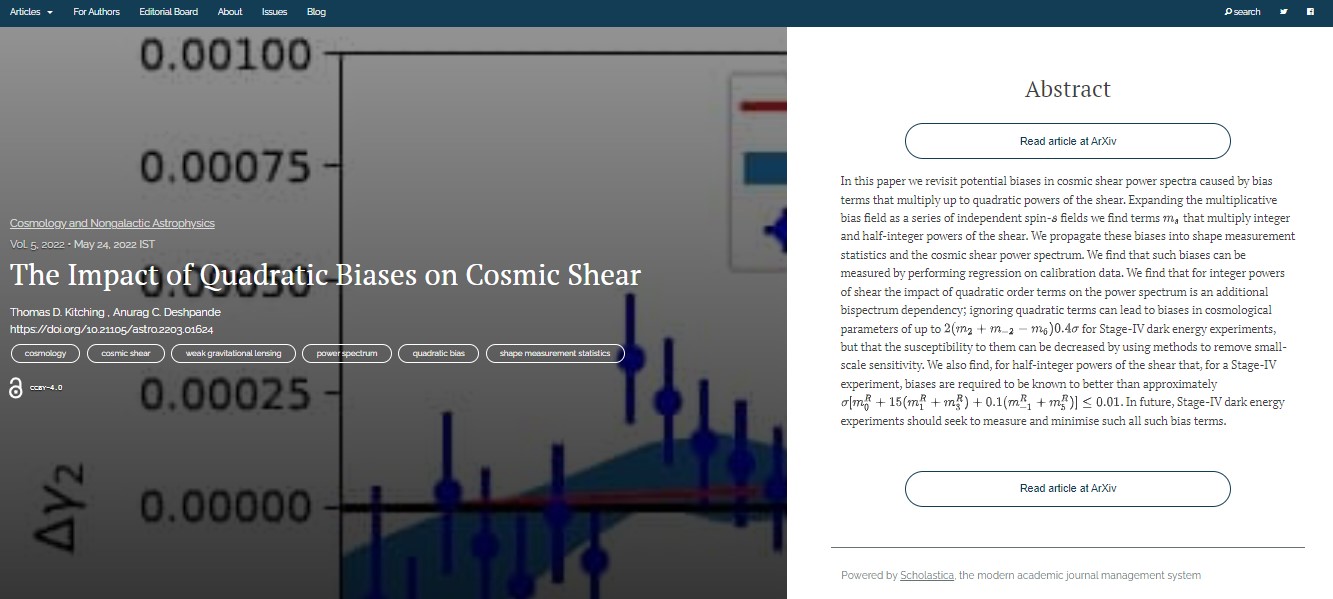
The first of these two new publications is entitled “The Impact of Quadratic Biases on Cosmic Shear” and is written by Tom Kitching and Anurag Deshpande of the Mullard Space Science Laboratory in Surrey (UK).

Here is a screen grab of the overlay which includes the abstract:

You can click on the image to make it larger should you wish to do so. You can find the arXiv version of this paper directly here.

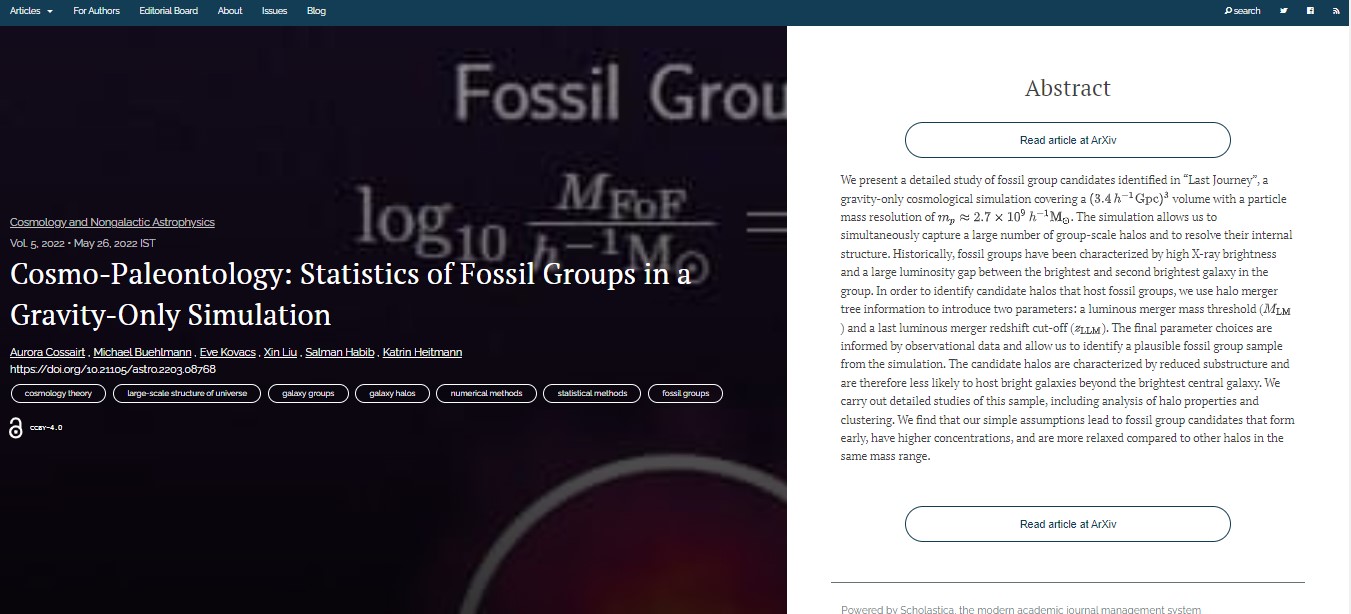
The second new publication is entitled “Cosmo-Paleontology: Statistics of Fossil Groups in a Gravity-Only Simulation” and is written by Aurora Coissairt, Michael Buehlmann, Eve Kovacs, Xin Liu, Salman Habib and Katrin Heitmann all from the Argonne National Laboratory which is just outside Chicago in the USA.

Here is the overlay of that paper which includes the abstract:

Once again You can click on the image to make it larger should you wish to do so. You can find the arXiv version of the paper here.

We have quite a few more papers in the pipeline so expect to be announcing more quite soon, probably early next month.

New Publication at the Open Journal of Astrophysics!

Posted in OJAp Papers, Open Access, The Universe and Stuff with tags , , , , , , , , on September 10, 2020 by telescoper

Another new paper  has been published in the Open Journal of Astrophysics! This is another for the folder marked Cosmology and Nongalactic Astrophysics and is entitled Low-scatter galaxy cluster mass proxies for the eROSITA all-sky survey.

The authors of this paper are Dominique Eckert of the University of Geneva, Alexis Finoguenov (Helsinki), Vittorio Ghirardini (MPE Garching), Sebastian Grandis (LMU), Florian Käfer (MPE Garching), Jeremy Sanders (MPE Garching) and Miriam Ramos-Ceja (MPE Garching).

For those of you unfamiliar with eROSITA, it is an X-ray instrument that was built at the Max Planck Institute for Extraterrestrial Physics, where several of the authors work.

Here is a screen grab of the overlay:

You can click on the image to make it larger should you wish to do so.

You can find the arXiv version of the paper here.

New Publication at the Open Journal of Astrophysics!

Posted in OJAp Papers, Open Access, The Universe and Stuff with tags , , , , on August 4, 2020 by telescoper

Another new paper has been published in the Open Journal of Astrophysics! This one was actually published last Friday but it being the Bank Holiday weekend I just got round to blogging about it today. This is another one for the Cosmology and NonGalactic Astrophysics section. It’s called Cosmic event horizons and the light-speed limit for relative radial motion and is a sort of pedagogical review of the subject aimed at dispelling some common misconceptions about radial velocities and horizons. The author is Markus Pössel of the Max Planck Institute for Astronomy at Heidelberg.

Here is a screen grab of the overlay:

I’ve taken the liberty of adding the background teaser image in full here, as it is rather groovy:

You can click on the image to make it larger.

You can find the arXiv version of the paper here.