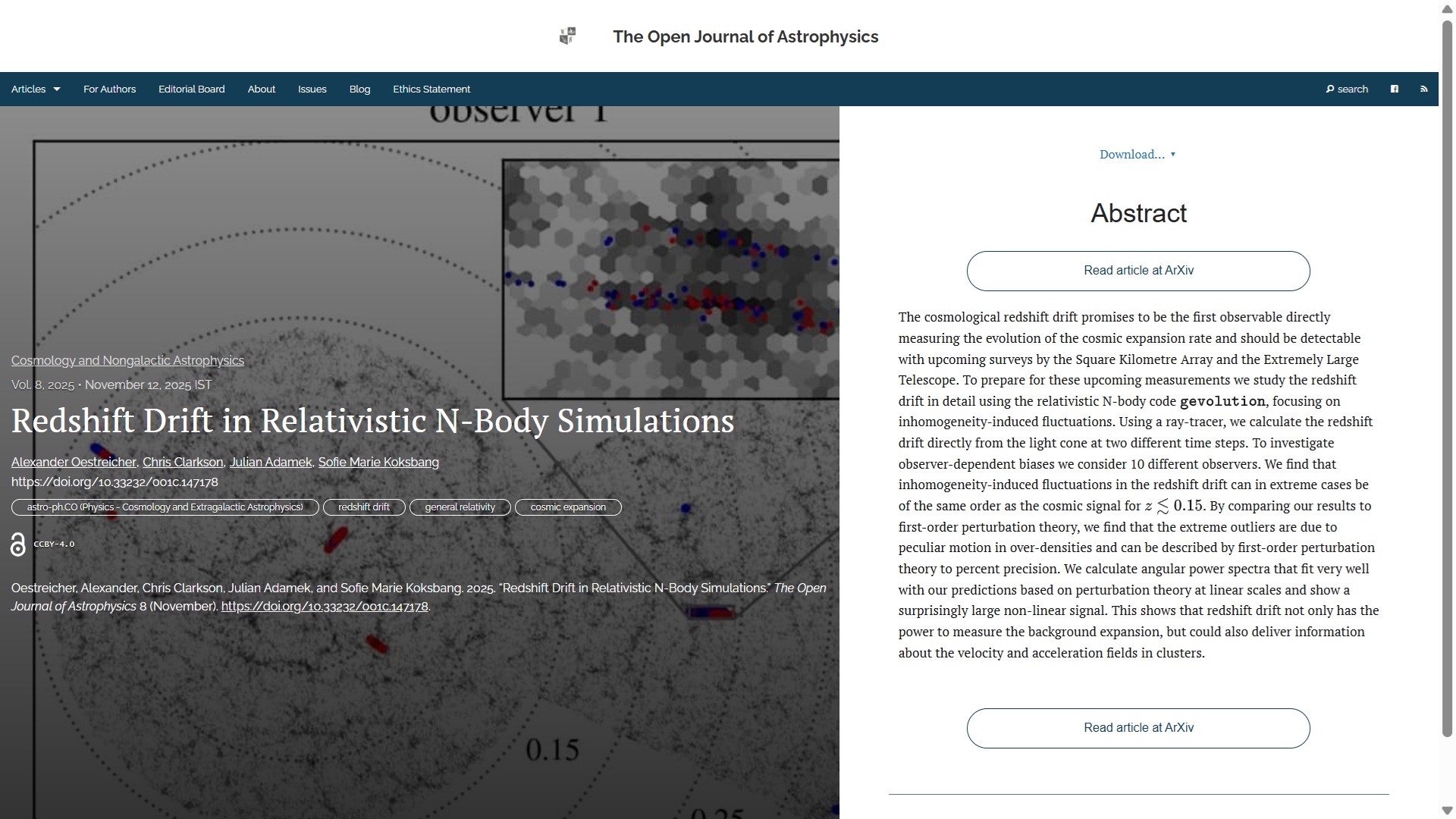
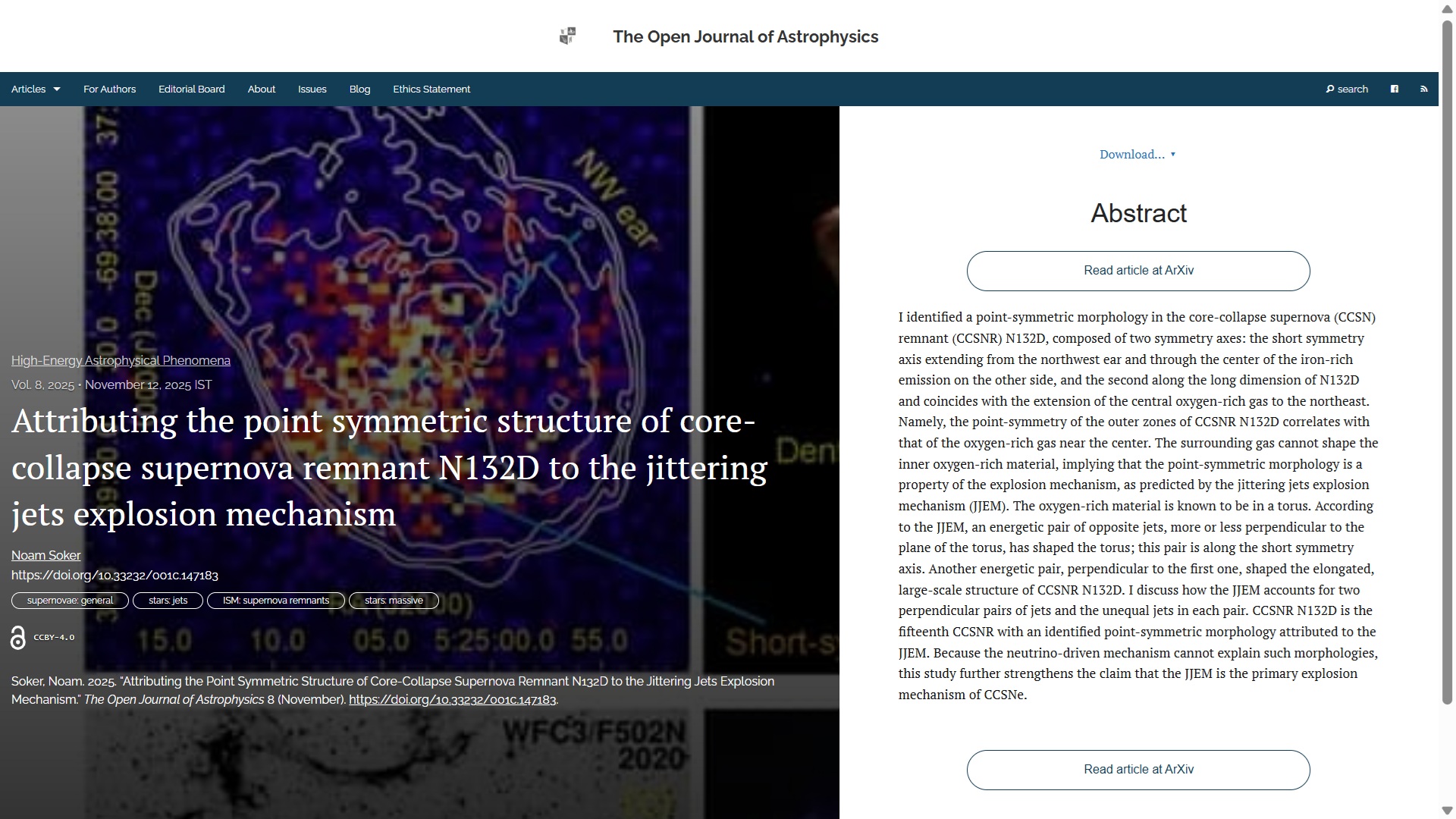
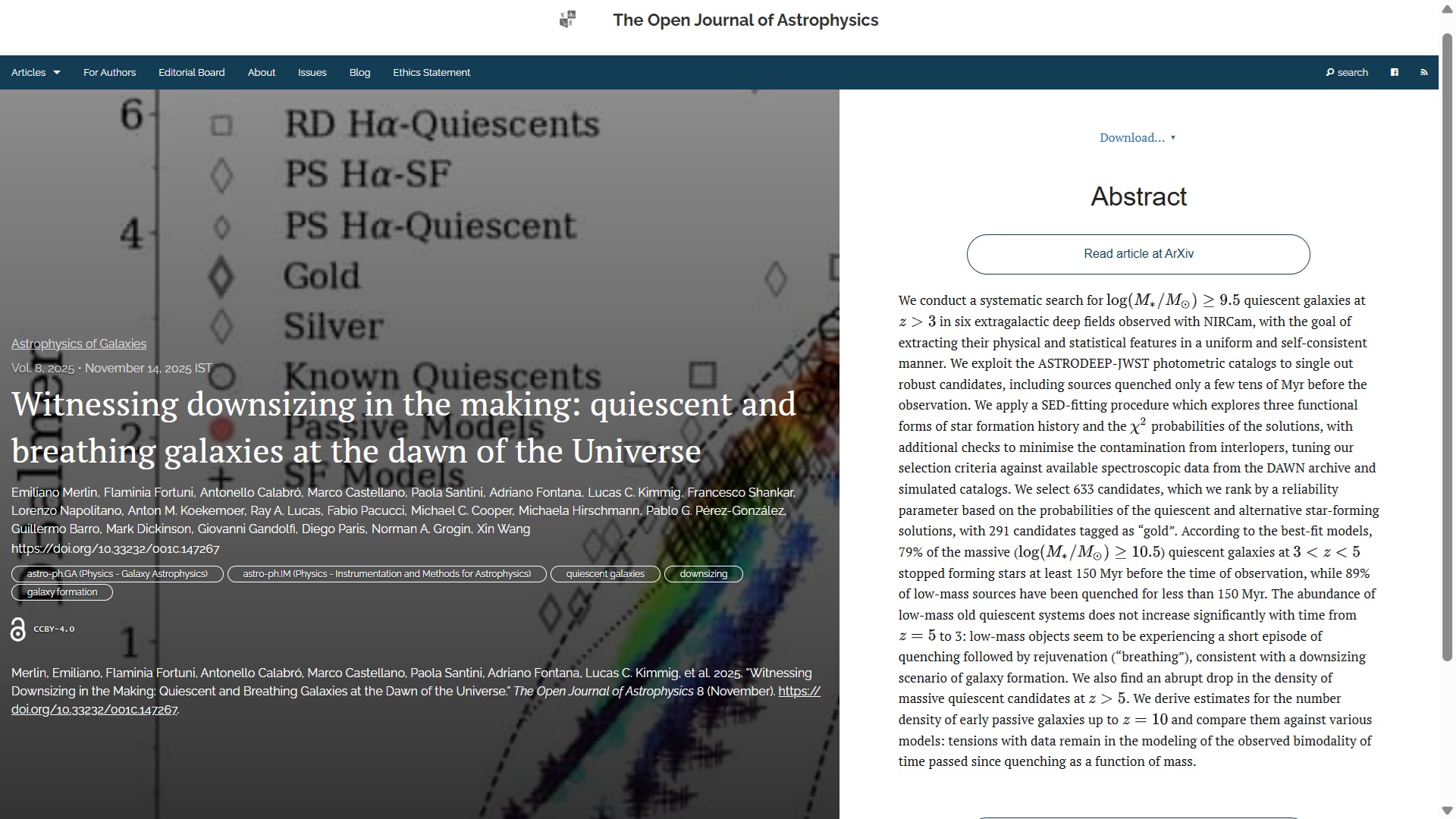
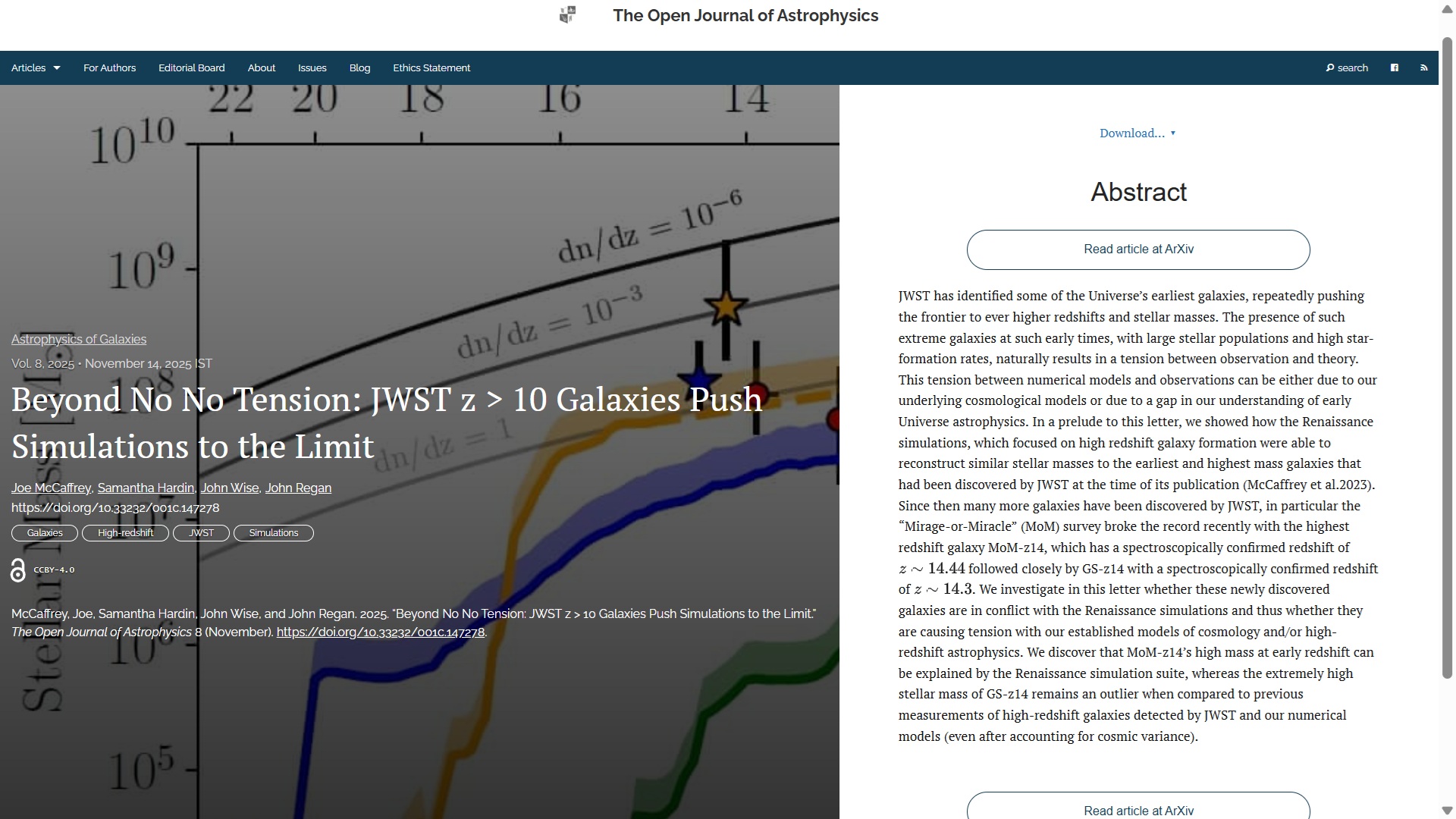
Archive for galaxy formation

Weekly Update from the Open Journal of Astrophysics – 10/05/2025

Posted in OJAp Papers, Open Access, The Universe and Stuff with tags , , , , , , on May 10, 2025 by telescoper

It’s time for another update Saturday morning update of activity at the Open Journal of Astrophysics. After the record-breaking stats described in the last update , this week has been on the slow side with just one paper published. This brings the number in Volume 8 (2025) up to 55 and the total so far published by OJAp up to 290.

The paper to report is “Late-time growth weakly affects the significance of high-redshift massive galaxies” by Qianran Xia & Dragan Huterer (U. Michigan, USA) and Nhat-Minh Nguyen (U. Tokyo, Japan). This paper, which was published on Wednesday 7th May 2025,  is published in the folder Cosmology and NonGalactic Astrophysics. It presents an argument that changes in the growth rate of perturbations at low redshift do not have much effect on predictions of the abundance of lassive galaxies at high redshift.
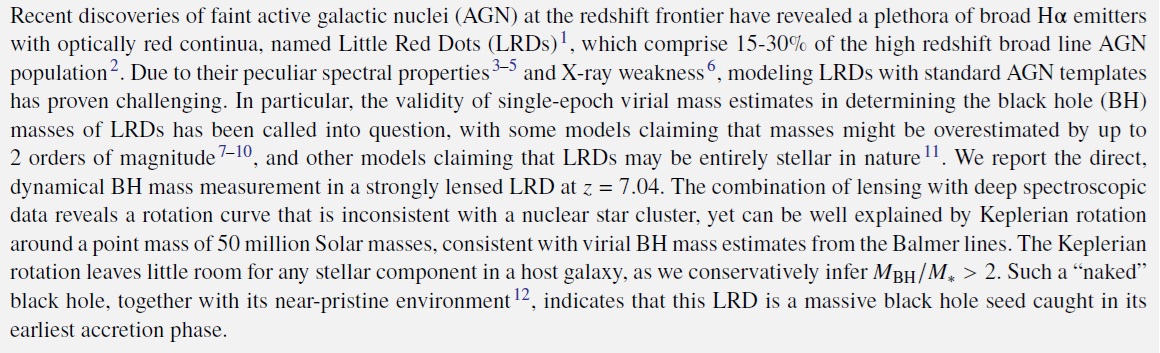
The overlay is here:


You can find the officially accepted version on arXiv here.

That’s all for now. I’ll do another update next week.

R.I.P. Jerry Ostriker (1937-2025)

Posted in R.I.P., The Universe and Stuff with tags , , , , , , on April 9, 2025 by telescoper

Once again I find myself using this blog to pass on sad news. This time it is of the death of renowned astrophysicist Jerry Ostriker (pictured left in 2012), who passed away on Monday 6th April 2025 just a week before his 88th birthday.

Jeremiah Paul Ostriker (to give his full name) was an extremely energetic, versatile and influential theorist who worked on a wide range of problems in diverse areas of astrophysics and produced a number of classic papers. Close to my own specialism I would quote two in particular: one written with Jim Peebles in 1973 about the stability of galactic disks; and the other with Martin Rees in 1977 about the role of gas cooling and fragmentation in determining the size of galaxies and clusters. He also did much to establish the use of hydrodynamic simulations in cosmology and was an early adopter of the current standard cosmological model, including a cosmological constant. He worked on many other things too, including pulsars and galactic nuclei.

I only met Jerry Ostriker a few times, mainly at conferences – where he was never shy to contribute to discussions after talks – but also once back in the 1990s when I was a visitor Princeton (where he was Professor). I didn’t have much time to talk to him then as he always seemed to be on the go, so I never really got to know him personally. After spending most of his career in Princeton, including a spell as Provost, in 2001 Ostriker moved to Cambridge for a short stint as Plumian Professor, before returning to Princeton.

There is a very nice obituary of Jerry Ostriker by Dennis Overbye in the New York Times.

Rest in peace, Jerry Ostriker

Weekly Update from the Open Journal of Astrophysics – 05/04/2025

Posted in OJAp Papers, Open Access, The Universe and Stuff with tags , , , , , on April 5, 2025 by telescoper

It’s time once more for the regular Saturday morning update of papers published at the Open Journal of Astrophysics. Since the last update we have published one new paper. The number of articles in Volume 8 (2025) is now up to 33 and the total so far published by OJAp up to 268.

The paper concerned, published on 2nd April 2025, is “The molecular gas content throughout the low-z merger sequence” by Mark T. Sargent (ISSI, Bern), S. L. Ellison (U. Victoria, Canada), J. T. Mendel (ANU), A. Saintonge (UCL), D. Cs. Molnár & T. Schwandt (U. Sussex), J. M. Scudder (Oberlin College, USA) and G. Violino (U. Hertfordshire). It is published in the folder Astrophysics of Galaxies and it discusses the observed properties of molecular gas in post-merger galaxies and interacting pairs and the physical origin of these properties.

Here is the overlay:

You can read the officially accepted version of this paper on arXiv here.

That’s all for this week. I’ll do another update next Saturday.

Weekly Update at the Open Journal of Astrophysics – 22/03/2025

Posted in OJAp Papers, Open Access, The Universe and Stuff with tags , , , , , , , , , , , , on March 22, 2025 by telescoper

It’s Satuday morning once again, and time for another update of papers published at the Open Journal of Astrophysics. Since the last update we have published two papers, which brings the number in Volume 8 (2025) up to 29 and the total so far published by OJAp up to 264.

The papers we have published this week are connected by the theme of black holes and their role in galaxy formation, which is a very hot topic nowadays!

The first paper to report is “Hawking Radiation from non-evaporating primordial black holes cannot enable the formation of direct collapse black holes” by Jonathan Regan, Marios Kalomenopoulos and Kelly Kosmo O’Neil of the University of Nevada, USA. This paper, which is based on an undergraduate thesis, is a study of the irradiating effects of primordial black holes and a discussion of whether these might influence the subsequent formation of supermassive black holes. It is in the section marked Astrophysics of Galaxies, and was published on Tuesday  18th March.

The overlay is here:

and you can find the final accepted version on arXiv here.

The second paper, which was published on Wednesday 19th March and is also in the folder Astrophysics of Galaxies, is “First Light and Reionization Epoch Simulations (FLARES) – XV: The physical properties of super-massive black holes and their impact on galaxies in the early universe” by Stephen Wilkins & Jussi K. Kuusisto (U. Sussex, UK), Dimitrios Irodotou (Institute of Cancer Research, UK), Shihong Liao (Beijing, China) Christopher C. Lovell (Portsmouth, UK), Sonja Soininen (Insitute of Cancer Research), Sabrina C. Berger (Melbourne, Australia), Sophie L. Newman (Portsmouth, UK), William J. Roper (Sussex), Louise T. C. Seeyave (Sussex), Peter A. Thomas (Sussex) and Aswin P. Vijayan Sussex). This paper uses cosmological hydrodynamical zoom simulations to study the formation of supermassive black holes and their impact on star formation in the early Universe.

Here is the overlay, which you can click on to make larger if you wish:


You can read the officially accepted version of this paper on arXiv here.

That’s all for this week. It’s been a bit frustrating for me as Managing Ediutor, because we have built up a backlog of several papers that were accepted for publication some time ago, but are still waiting for the authors to place the final version on arXiv. I hope these won’t take too long to appear, not least because I would like to clear my workflow on the Scholastica platform!

New Publication at the Open Journal of Astrophysics

Posted in OJAp Papers, Open Access, The Universe and Stuff with tags , , , , , on December 28, 2024 by telescoper

I wasn’t planning to do the usual weekly update of activity at the Open Journal of Astrophysics this morning as I thought we wouldn’t publish any more papers between last week’s update and the Christmas break. However, one final version did hit the arXiv on Christmas Eve so I decided to publish it straight away. This brings the total for Volume 7 (2024) to 120 – a neat average of ten a month – and the overall total to 235.

Here’s a table showing the sequence of papers published over the last six years and the series formed from the aforementioned sequence:

Year201920202021202220232024
Papers1215171750120
Total16314865115235

Anyway, the new paper is “Galaxy evolution in the post-merger regime. II – Post-merger quenching peaks within 500 Myr of coalescence” by Sara Ellison (U. Victoria, Canada), Leonardo Ferreira (U. Victoria), Vivienne Wild, (St Andrews, UK), Scott Wilkinson (U. Victoria), Kate Rowlands, (STScI, USA) & David R. Patton (Trent U., Canada). It was published on 24th December 2024 in the folder marked Astrophysics of Galaxies. It comprises an investigation of the possibility that quenching of star formation is a consequence of galaxy-galaxy interactions and mergers. The overlay is here:

You can find the officially accepted version on arXiv here.

Well, that definitely concludes the updates for 2024. I’ll be back on January 4th with the first update of 2025.

Four New Publications at the Open Journal of Astrophysics

Posted in OJAp Papers, Open Access, The Universe and Stuff with tags , , , , , , , , , , , on December 7, 2024 by telescoper

It’s Satuday morning once again so here’s another quick update of activity at the Open Journal of Astrophysics. Since the last update a week ago we have published  four papers, which takes the count in Volume 7 (2024) up to 110 and the total published altogether by OJAp up to 225.
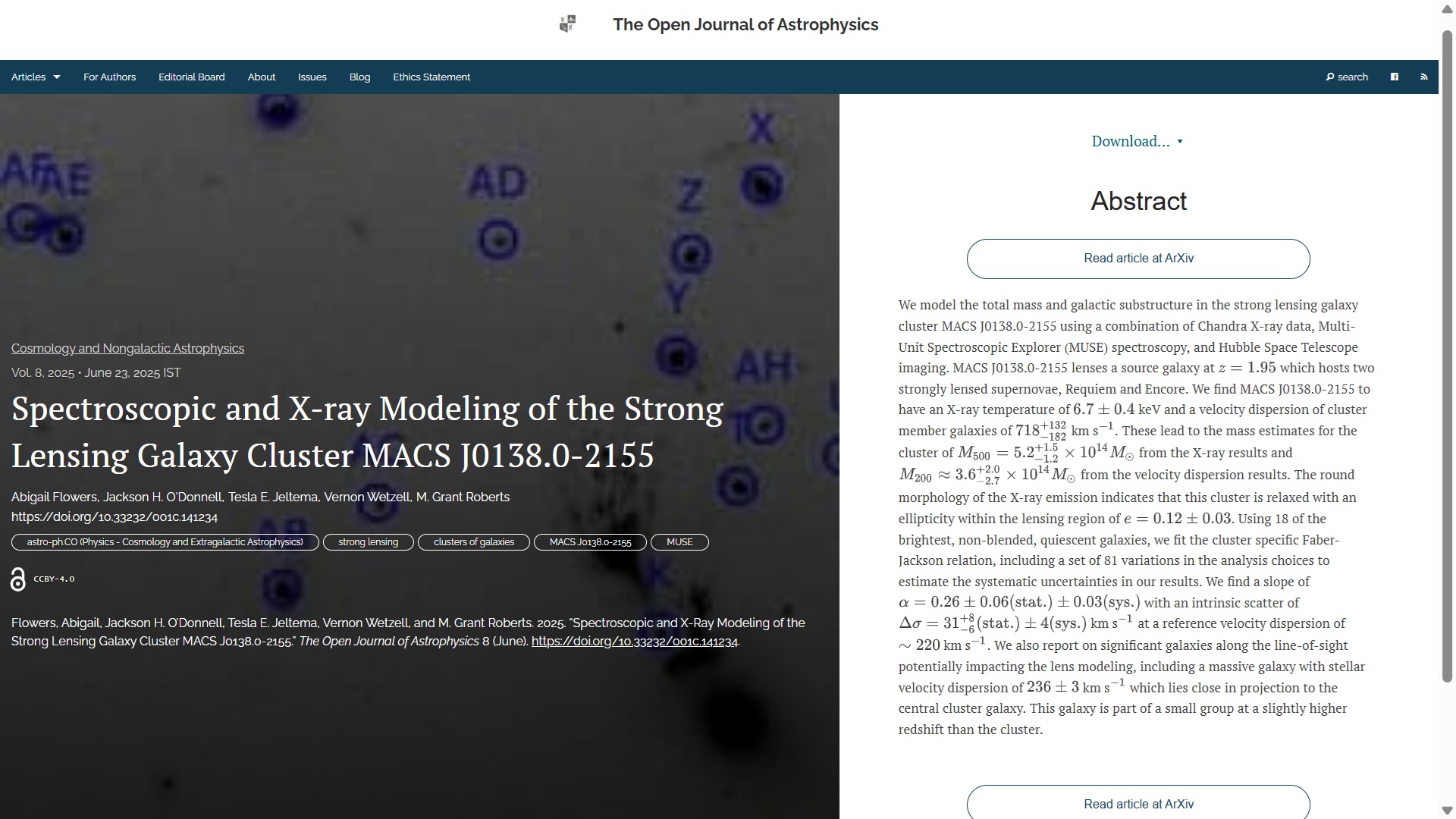
In chronological order of publication, the four papers published this week, with their overlays, are as follows. You can click on the images of the overlays to make them larger should you wish to do so.

First one up is “The impact of feedback on the evolution of gas density profiles from galaxies to clusters: a universal fitting formula from the Simba suite of simulations” by Daniele Sorini & Sownak Bose (Durham University, UK), Romeel Davé (University of Edinburgh, UK), and Daniel Anglés-Alcázar (University of Connecticut, USA). The paper, which is in the folder marked Astrophysics of Galaxies, presents a study of the effects of stellar and/or AGN feedback on the shape and evolution of gas density profiles in galaxy haloes using the SIMBA simulations. It was published on Tuesday 3rd December 2024.

Here is a screen grab of the overlay, which includes the abstract:


You can find the officially accepted version of the paper on the arXiv here.

The second paper to announce, also published on 3rd December 2024, and is also the folder “Astrophysics of Galaxies, is “Self-regulated growth of galaxy sizes along the star-forming main sequence” by Shweta Jain (U. Kentucky, USA), Sandro Tacchella (U. Cambridge, UK) and Moein Mosleh (Shiraz University, Iran).  This paper suggestes an identification of a possible self-regulating mechanism in galaxy size growth involving the interplay between feedback from star formation and newly accreted gas.

You can see the overlay here:


The accepted version of this paper can be found on the arXiv here.

The third paper, published on Thursday 6th December 2024 in the folder marked Cosmology and NonGalactic Astrophysics, is called  “BLAST: Beyond Limber Angular power Spectra Toolkit. A fast and efficient algorithm for 3×2 pt analysis” by Sofia Chiarenza, Marco Bonici & Will Percival (Waterloo, Canada) and Martin White (Berkeley, USA). It presents BLAST, an efficient algorithm for calculating angular power spectra without employing the Limber approximation or assuming a scale-dependent growth rate, based on the use of Chebyshev polynomials. The code is written in Julia.

Here is the overlay


The final version accepted on arXiv is here.

Last in this batch, published on 6th December 2024, and in the folder Astrophysics of Galaxies, is “On the universality of star formation efficiency in galaxies” by Ava Polzin & Andrey V. Kravtsov (U. Chicago) and Vadim A. Semenov & Nickolay Y. Gnedin (CfA Harvard), all based in the USA. The paper presents an argument that the universality of observational estimates of star formation efficiency per free-fall time can be plausibly explained by the turbulence-driven and feedback-regulated properties of star-forming regions.

You can find the official accepted version on the arXiv here.

We seem to have recovered from a small Thanksgiving lull and, looking at the OJAp workflow, I think we’ll have a similar number of publications next week. I’ll do another update next weekend!

Two New Publications at the Open Journal of Astrophysics

Posted in OJAp Papers, Open Access, The Universe and Stuff with tags , , , , , , , , on November 16, 2024 by telescoper

Once again it’s time for a Saturday morning update on activity at the  Open Journal of Astrophysics.  Since the last update we have published two more papers, taking  the count in Volume 7 (2024) up to 104 and the total published by OJAp up to 219.
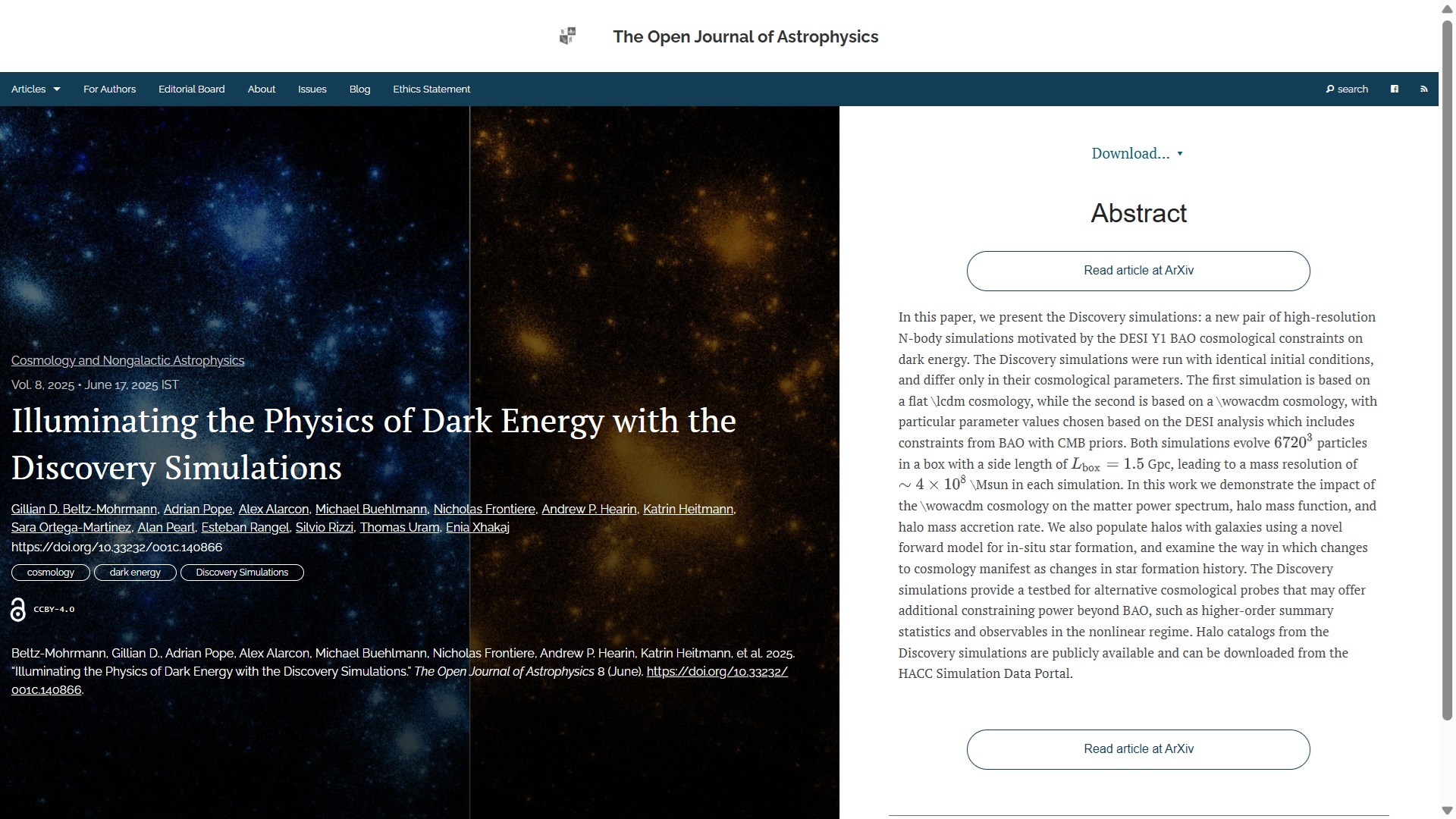
The first paper of the most recent pair, published on November 13 2024,  in the folder Cosmology and NonGalactic Astrophysics, is “Stochastic Super-resolution of Cosmological Simulations with Denoising Diffusion Models” by Andreas Schanz, Florian List and Oliver Hahn (all based in the University of Vienna, Austria). It presents a  discussion of denoising diffusion in generative models for achieving super-resolution in simulations of cosmic large-scale structure.

Here is a screen grab of the overlay which includes the abstract:


You can click on the image of the overlay to make it larger should you wish to do so.  You can find the officially accepted version of this paper on the arXiv here.

The second paper to be published this week is also in the folder marked Cosmology and NonGalactic Astrophysics. It was published on November 14 and has the title “Halo mass functions at high redshift” by Hannah O’Brennan, John A. Regan, Chris Power (*), Saoirse Ward, John Brennan, and Joe McCaffrey. Five of the six authors are colleagues of mine from the National University of Ireland, Maynooth; Chris Power (marked with a *) is from the University of Western Australia.
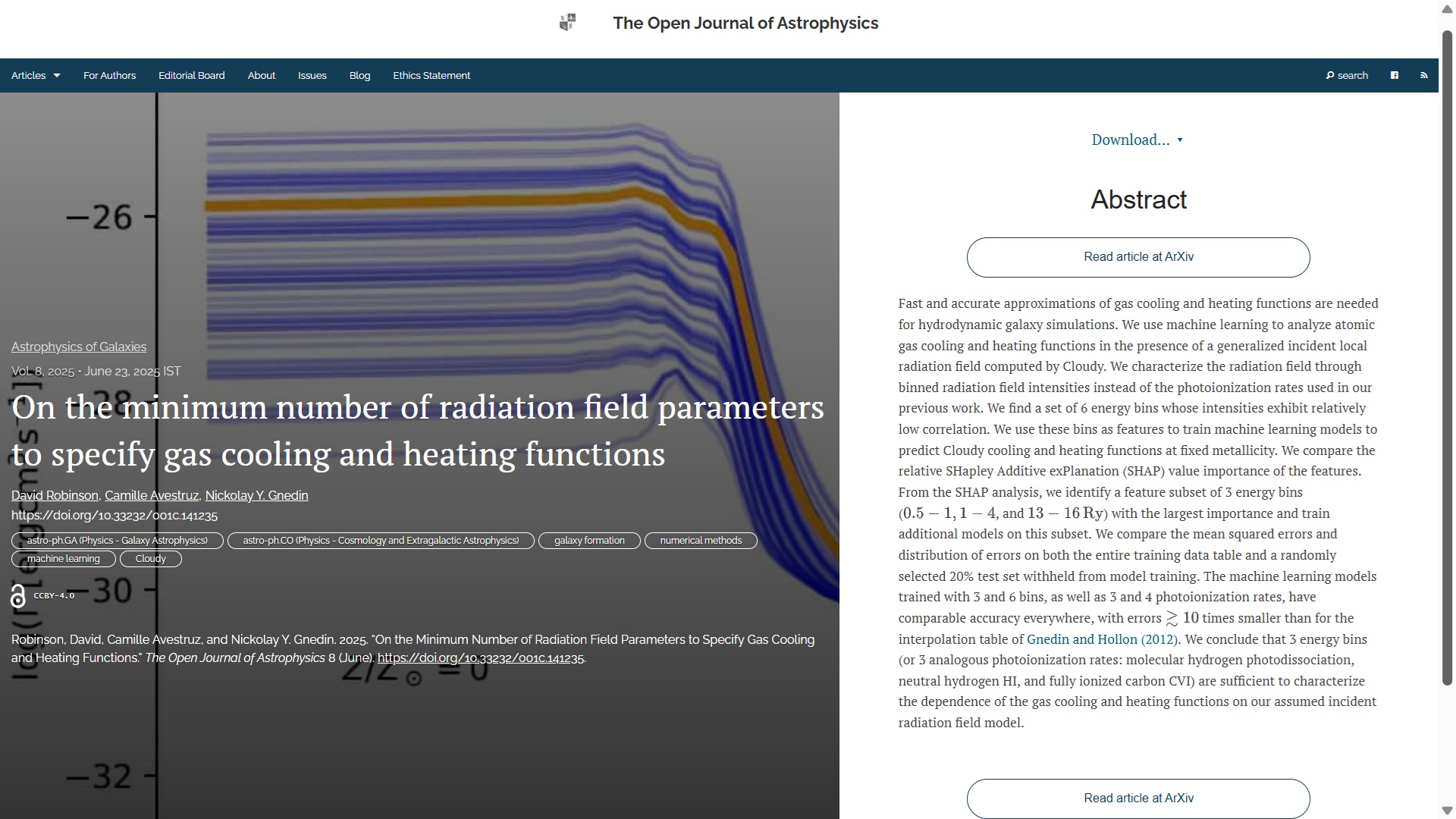
Here is a screen grab of the overlay which includes the abstract:


You can click on the image of the overlay to make it larger should you wish to do so. You can find the officially accepted version of the paper on the arXiv here.

That concludes this week’s update. More  next week!

Two New Publications at the Open Journal of Astrophysics

Posted in OJAp Papers, Open Access, The Universe and Stuff with tags , , , , , , , , on July 13, 2024 by telescoper

Another Saturday, another update of the  Open Journal of Astrophysics.  Since the last update we have published two more papers, taking  the count in Volume 7 (2024) up to 56 and the total published by OJAp up to 171.  Both these papers were published on Thursday 11th July 2024.
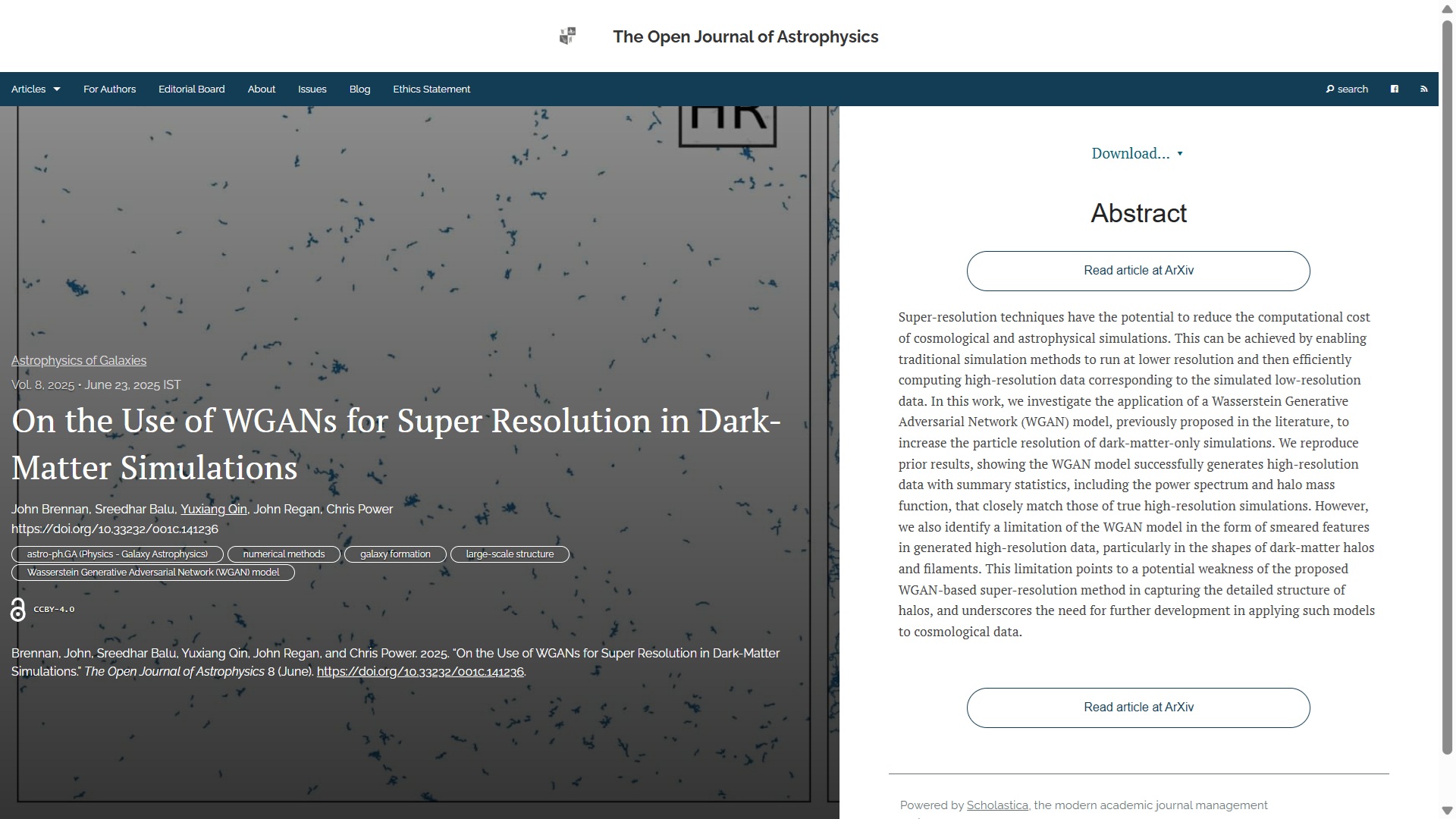
The first paper of the most recent pair, published on July 3rd 2024,  is “Sunyaev-Zeldovich signatures from non-thermal, relativistic electrons using CMB maps” by Sandeep Kumar Acharya of The Open University of Israel, Ra’anana, Israel.  This article presents a discussion the possible effects of non-thermal electron energy distributions on the form of Sunyaev-Zeldovich distortions and how they might be measured. The paper is in the folder marked Cosmology and NonGalactic Astrophysics.
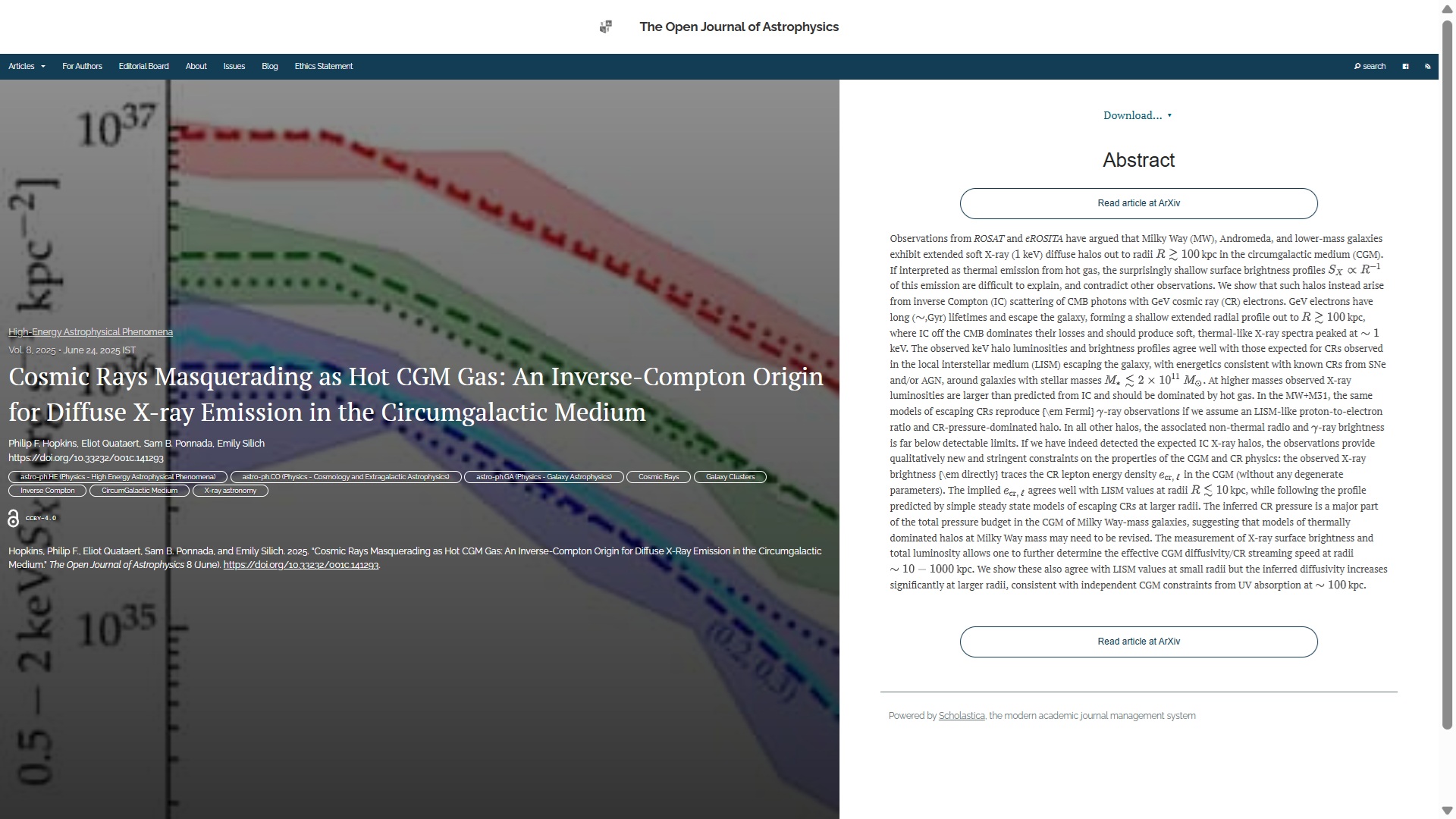
Here is a screen grab of the overlay which includes the abstract:


You can click on the image of the overlay to make it larger should you wish to do so. You can find the officially accepted version of the paper on the arXiv here.

The second paper has the title “On the contribution of dwarf galaxies to reionization of the Universe” and is by Zewei Wu and Andrey Kravtsov of the University of Chicago in the USA. This paper, which is in the folder marked Astrophysics of Galaxies, presents a model of galaxy formation that suggests that radiation from very faint galaxies may contribute significantly to the reionization of the Universe.

Here is a screen grab of the overlay which includes the abstract:


You can click on the image of the overlay to make it larger should you wish to do so. You can find the officially accepted version of the paper on the arXiv here.

That concludes this week’s update. No doubt I’ll have more for you next week!

Three New Publications at the Open Journal of Astrophysics

Posted in OJAp Papers, Open Access, The Universe and Stuff with tags , , , , , , , , , , , , , on April 27, 2024 by telescoper

It’s time for the usual  Saturday roundup of business at the  Open Journal of Astrophysics. The latest batch of publications consists of three papers, taking the count in Volume 7 (2024) up to 30 and the total published by OJAp up to 145.
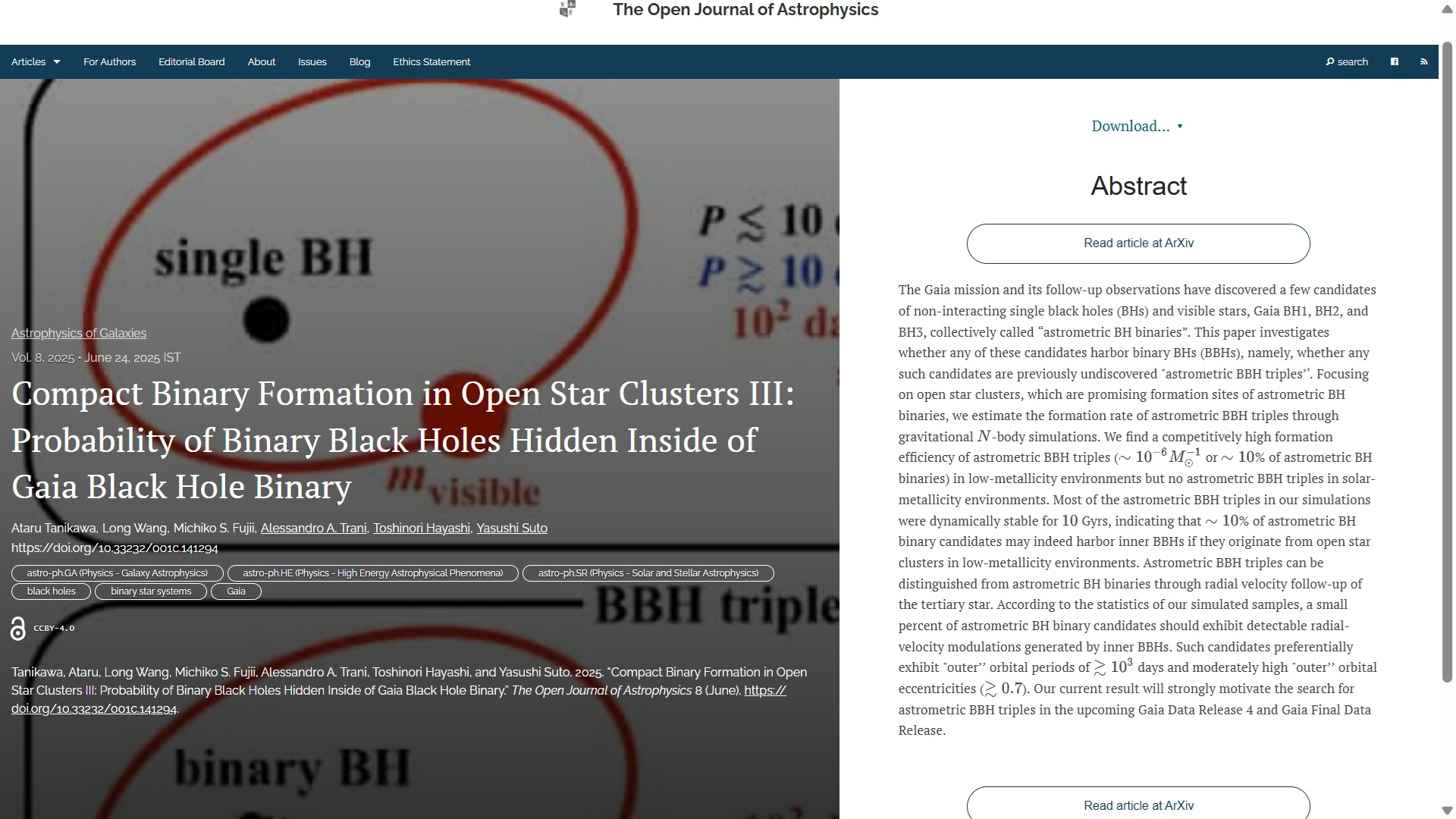
First one up is “Baryonic Imprints on DM Halos: the concentration-mass relation and its dependence on halo and galaxy properties” .  The authors, Mufan Shao and Dhayaa Anbajagane of the University of Chicago, USA, use  a non-linear model informed by simulations to study the imprint of galaxy formation physics on the concentration-mass relationship using various different choices of halo selection criteria. This one is in the folder marked Astrophysics of Galaxies and was published on 24th April 2024.

Here is a screen grab of the overlay, which includes the abstract:


You can read the paper directly on arXiv here.

The second paper to announce is “Variability in SSTc2d J163134.1-240100, a brown dwarf with quasi-spherical mass loss” which describes a search for variability in a brown dwarf star known to be losing mass and the implications of the lack thereof for the reason for the outflow therefrom. The authors are Aleks Scholz (St Andrews, UK),  Koraljka Muzic (Lisbon, Portugal), Victor Almendros-Abad (Palermo, Italy), Antonella Natta (DIAS, Ireland), Dary Ruiz-Rodriguez (NRAO, USA), Lucas Cieza (Uni. Diego Portales, Chile), Cristina Rodriguez-Lopez (IAA-CSIC, Granada, Spain)

This one is in the folder Solar and Stellar Astrophysics and was also published on 24th April 2024. The overlay looks like this:


You can read this paper directly on the arXiv here.

The last paper of this batch, also in the folder marked Astrophysics of Galaxies, is  entitled “MAGICS I. The First Few Orbits Encode the Fate of Seed Massive Black Hole Pairs”  and is a computational study of the process by which massive black holes are formed by merging smaller seed black holes. It was published on April 26th 2024 (i.e. yesterday). The authors are: Nianyi Chen, Diptajyoti Mukherjee and Tiziana Di Matteo (all Carnegie Mellon University); Yueying Ni (Harvard); Simeon Bird (University of California, Riverside); and Rupert Croft (Carnegie Mellon University). All authors are based in the USA.

Here is a screengrab of the overlay:


To read the accepted version of this on the arXiv please go here.
That’s all for now. More news in a week or so!


Two New Publications at the Open Journal of Astrophysics

Posted in OJAp Papers, Open Access, The Universe and Stuff with tags , , , , , , , , , , on April 20, 2024 by telescoper

It’s Saturday, and it’s time to post another update relating to the  Open Journal of Astrophysics.  Since the last update we have published two more papers, taking  the count in Volume 7 (2024) up to 27 and the total published by OJAp up to 142.
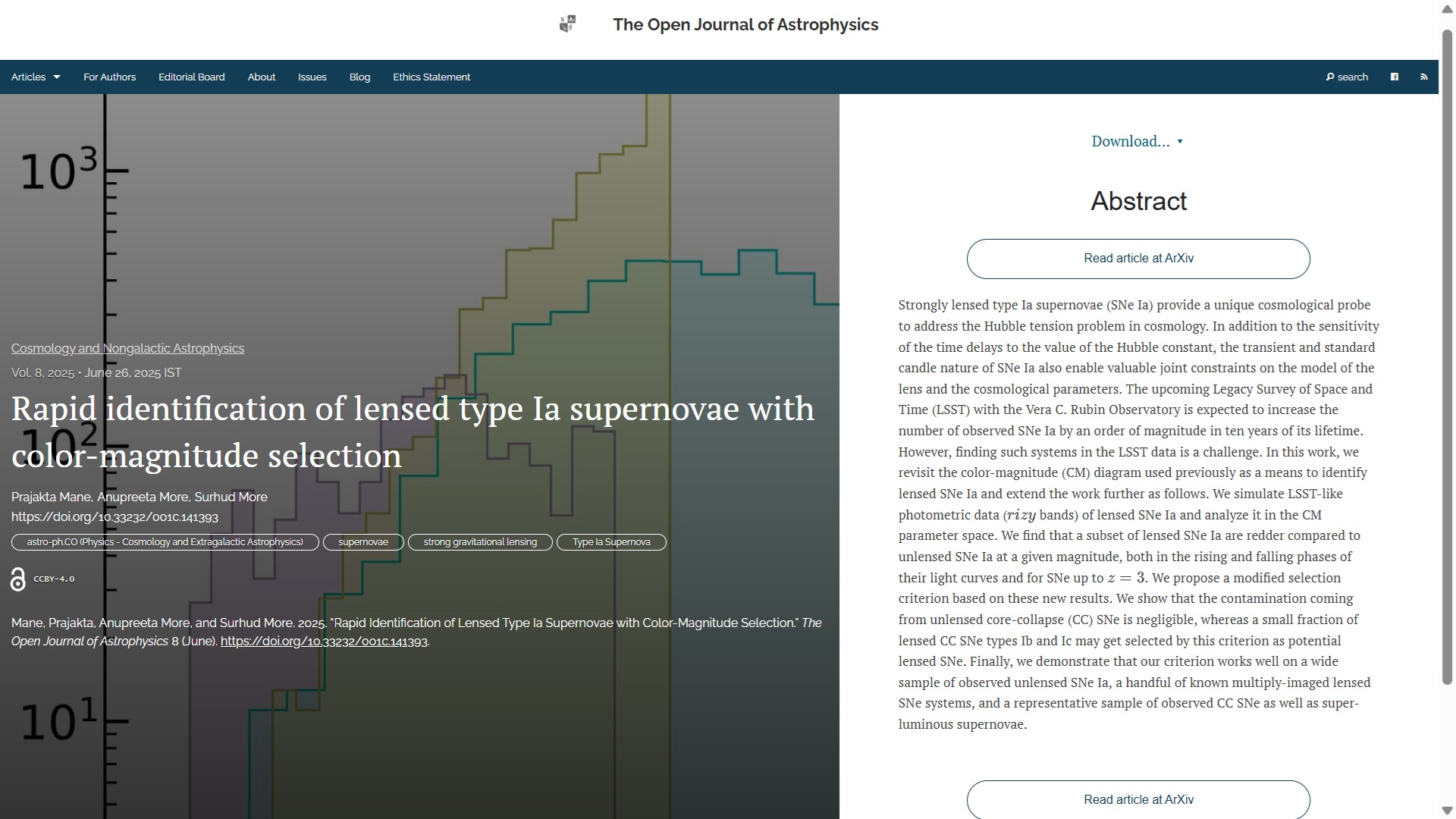
The first paper of the most recent pair – published on  Tuesday April 16th – is “An Enhanced Massive Black Hole Occupation Fraction Predicted in Cluster Dwarf Galaxies” by Michael Tremmel (UCC, Ireland), Angelo Ricarte (Harvard, USA), Priyamvada Natarajan (Yale, USA), Jillian Bellovar (American Museum of Natural History, New York, USA), Ray Sharma (Rutgers, USA), Thomas R. Quinn (University of Washington, USA). It presents a  study, based on the Romulus cosmological simulations, of the impact of environment on the occupation fraction of massive black holes in low mass galaxies. This one is in the folder marked “Astrophysics of Galaxies“.
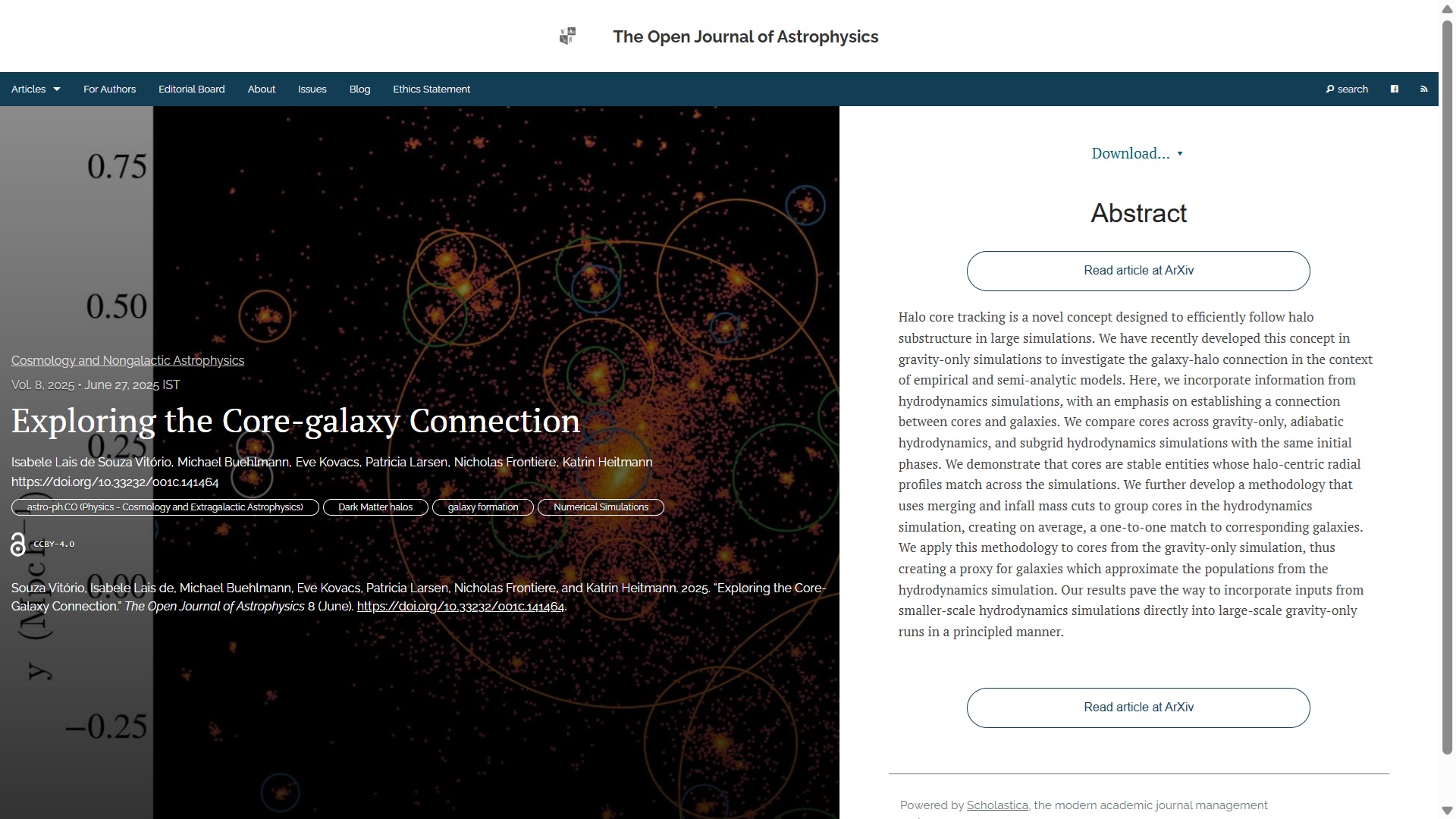
Here is a screen grab of the overlay which includes the abstract:


You can click on the image of the overlay to make it larger should you wish to do so. You can find the officially accepted version of the paper on the arXiv here.

The second paper was published on Wednesday 17th April and has the title “A 1.9 solar-mass neutron star candidate in a 2-year orbit” and the authors are: Kareem El-Badry (Caltech, USA), Joshua D. Simon (Carnegie Observatories, USA), Henrique Reggiani (Gemini Observatory, Chile), Hans-Walter Rix (Heidelberg, Germany),  David W. Latham (Harvard, USA),  Allyson Bieryla (Harvard, USA),  Lars A. Buchhave (Technical University of Denmark, Denmark),  Sahar Shahaf (Weizmann Institute of Science, Israel),  Tsevi Mazeh (Tel Aviv University, Israel), Sukanya Chakrabarti (University of Alabama, USA), Puragra Guhathakurta (University of California Santa Cruz, USA), Ilya V. Ilyin (Potsdam, Germany), and Thomas M. Tauris (Aalborg University, Denmark)

This one, which is in the folder marked Solar and Stellar Astrophysics, presents a discussion of the discovery of a 1.9 solar mass neutron star candidate using Gaia astrometric data, together with the implications of its orbital parameters for the formation mechanism.

Here is a screen grab of the overlay which includes the abstract:


You can click on the image of the overlay to make it larger should you wish to do so. You can find the officially accepted version of the paper on the arXiv here.

That concludes this week’s update!