Archive for Binary Black Holes

Weekly Update from the Open Journal of Astrophysics – 06/06/2026

Posted in OJAp Papers, Open Access, The Universe and Stuff with tags , , , , , , , , , , , , , , , , , , , , , , on June 6, 2026 by telescoper

Another Saturday, another update of activity at the Open Journal of Astrophysics. Since the last update we have published a further five papers, bringing the number in Volume 9 (2026) to 119 and the total so far published by OJAp up to 567.

I will continue to include the posts made on our Mastodon account (on Fediscience); these announcements also show the DOI for each paper.

The first paper to report this week, published on Tuesday 2nd June, is “The impact of the formation channel on gravitational-wave-galaxy cross-correlations” by Kabir Chakravarti (Chennai Mathematical Institute, India) and Federico R Urban (CEICO-FZU, Czech Republic). This article, published in the folder Cosmology and Nongalactic Astrophysics, explores how uncertainties in binary formation affect the cross-correlation signal between gravitational wave events and galaxy catalogues, finding that time-delay distribution significantly impacts the signal.

The overlay for this paper is here
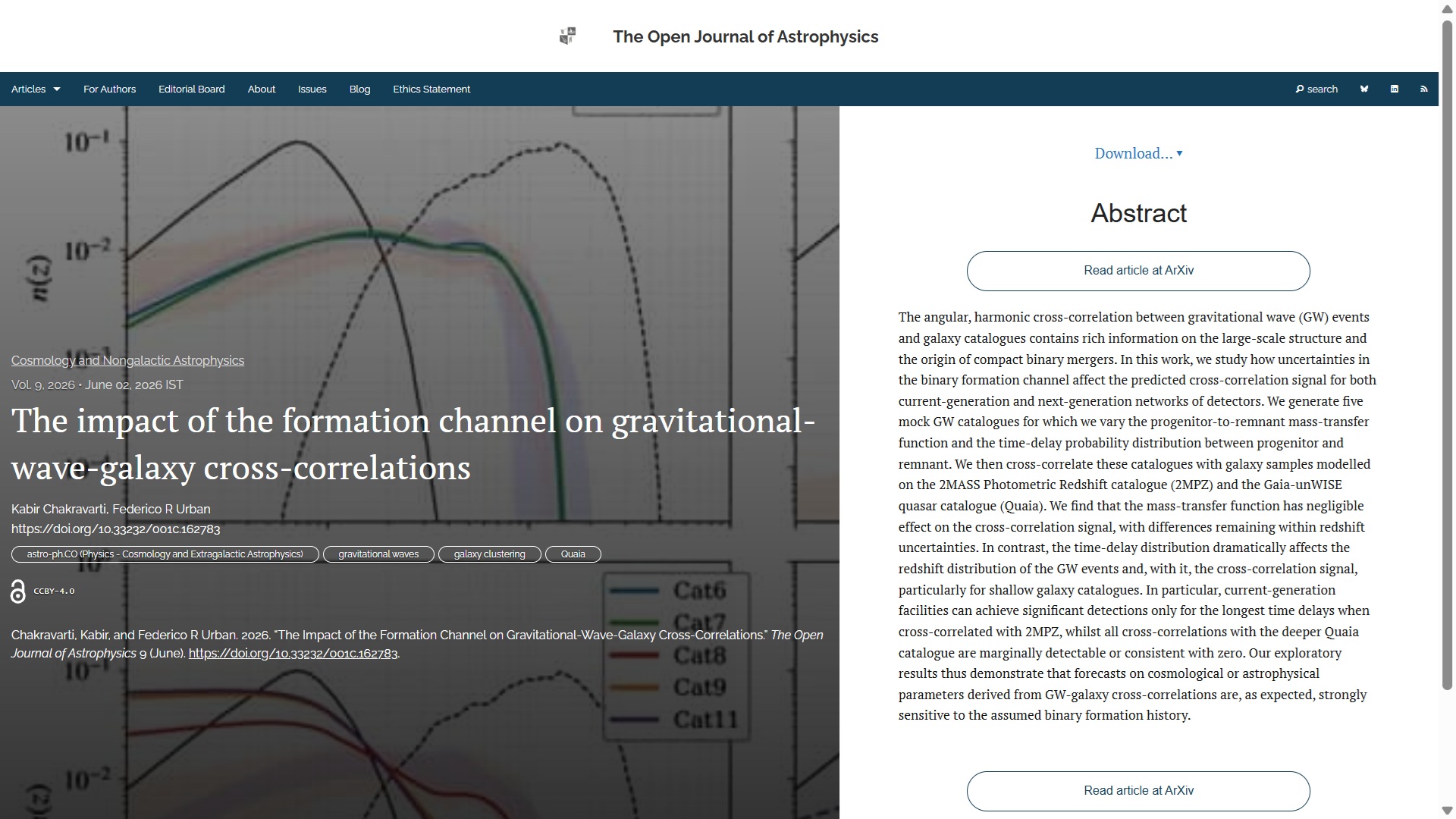
You can find the officially accepted version on arXiv here and the announcement on Fediverse here:

Open Journal of Astrophysics

New Publication at the Open Journal of Astrophysics: "The impact of the formation channel on gravitational-wave-galaxy cross-correlations" by Kabir Chakravarti (Chennai Mathematical Institute, India) and Federico R Urban (CEICO-FZU, Czech Republic)

doi.org/10.33232/001c.162783

June 2, 2026, 7:22 am 1 boosts 2 favorites

The second paper for this week, also published on Tuesday 2nd June but in the folder High-Energy Astrophysical Phenomena, is “Transient X-ray Sources as Extremely Eccentric Mass-Transfer Binaries with Compact Companions” by Jonathan I Katz and Michael A Nowak (Washington University, St Louis, USA). This article suggests that X-ray transients, similar to tidal disruption events, are produced in eccentric stellar-compact object binaries, with their frequency gradually increasing over time.

The overlay for this one looks like this:
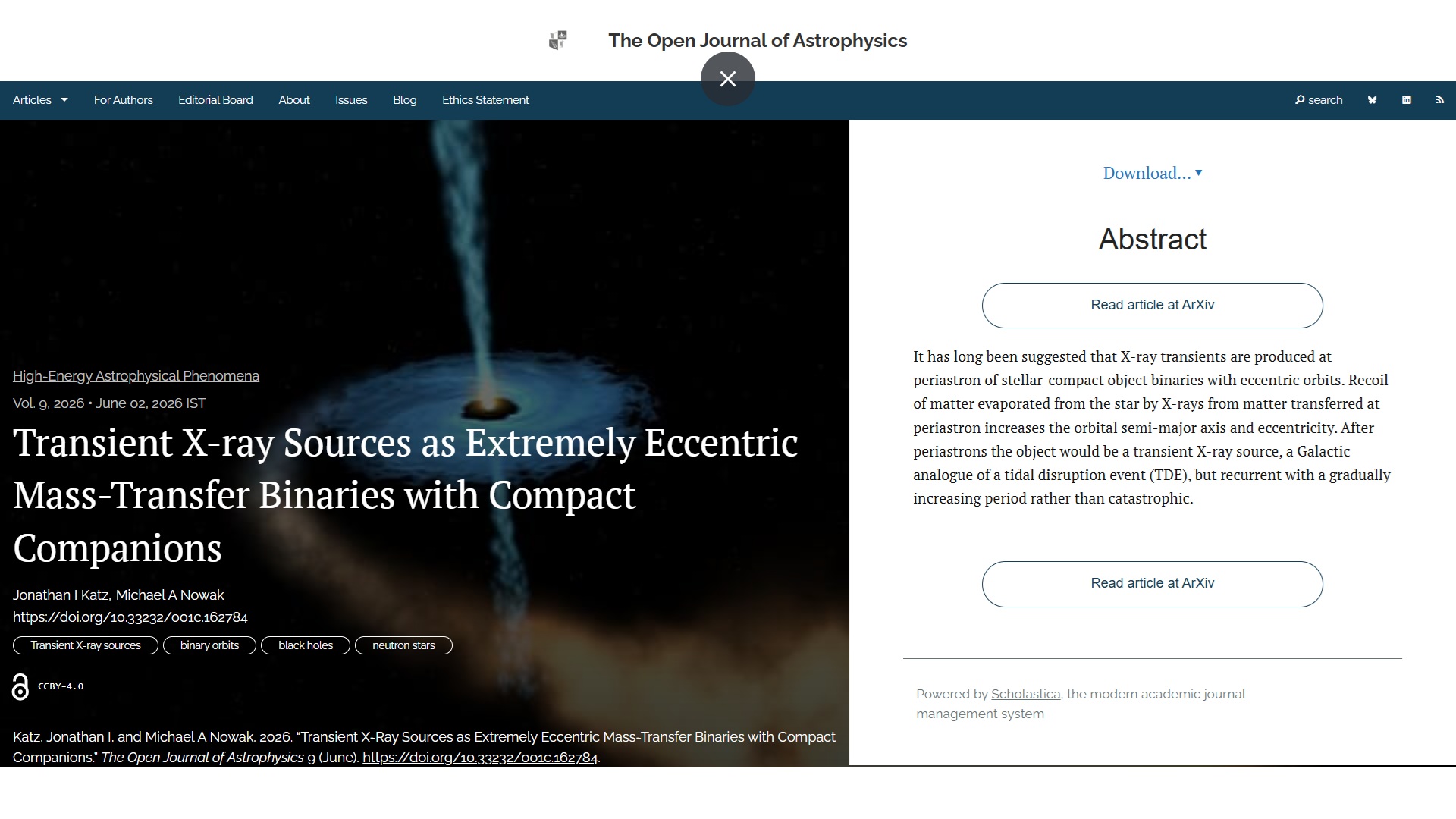
The official version of the paper can be found on arXiv here and the Fediverse announcement here:

Open Journal of Astrophysics

New Publication at the Open Journal of Astrophysics: "Transient X-ray Sources as Extremely Eccentric Mass-Transfer Binaries with Compact Companions" by Jonathan I Katz and Michael A Nowak (Washington University, USA)

doi.org/10.33232/001c.162784

June 2, 2026, 7:44 am 1 boosts 1 favorites

Next one up, the third paper of the week, also published on Tuesday 2nd June in the folder High-Energy Astrophysical Phenomena is “Resolving the (Debate About) Nozzle Shocks in Tidal Disruption Events” by Zachary L. Andalman & Eliot Quataert (Princeton U., USA), Eric R. Coughlin (Syracuse U. USA) and C. J. Nixon (U. Leeds, UK). This paper presents a model to understand the role of nozzle shocks in the circularization of stellar debris during a tidal disruption event when a star approaches a supermassive black hole (SMBH)

The overlay for this one is here:
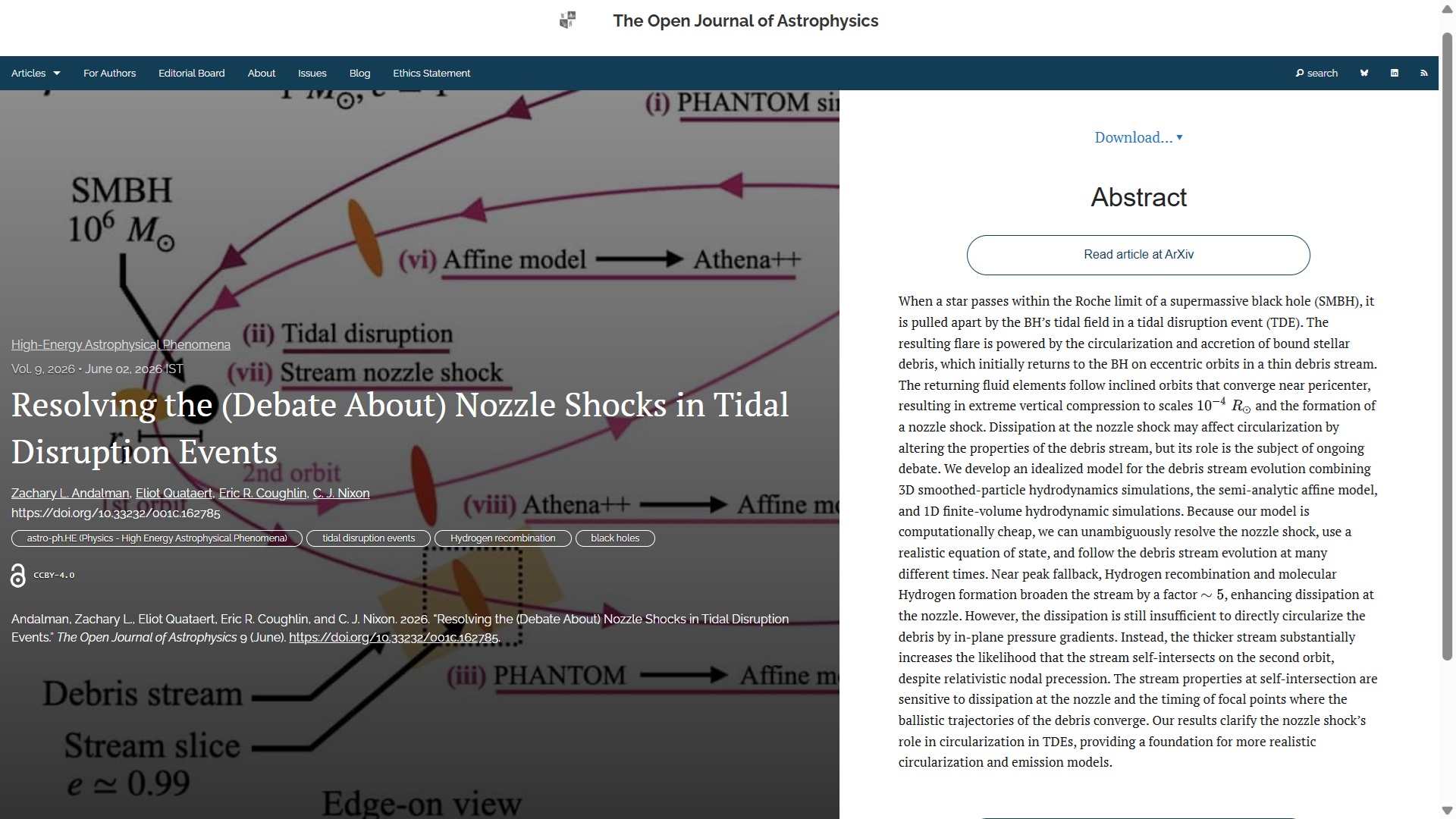
The final, accepted version can be found on arXiv here and the Mastodon announcement is here:

Open Journal of Astrophysics

New Publication at the Open Journal of Astrophysics: "Resolving the (Debate About) Nozzle Shocks in Tidal Disruption Events" by Zachary L. Andalman & Eliot Quataert (Princeton U., USA), Eric R. Coughlin (Syracuse U. USA) and C. J. Nixon (U. Leeds, UK)

doi.org/10.33232/001c.162785

June 2, 2026, 7:52 am 1 boosts 1 favorites

The fourth paper this week, published on Wednesday 3rd June in the folder Cosmology and Nongalactic Astrophysics, is “Validating Digital Twins of the Local Universe with the Thermal Sunyaev-Zel’dovich Signal” by Richard Stiskalek (University of Oxford, UK) and Harry Desmond (University of Portsmouth, UK). The thermal Sunyaev-Zel’dovich effect and constrained simulations are used to analyze the thermal pressure of ionized gas in galaxy clusters and produce a set of digital twins for cosmological study.

The overlay is here:
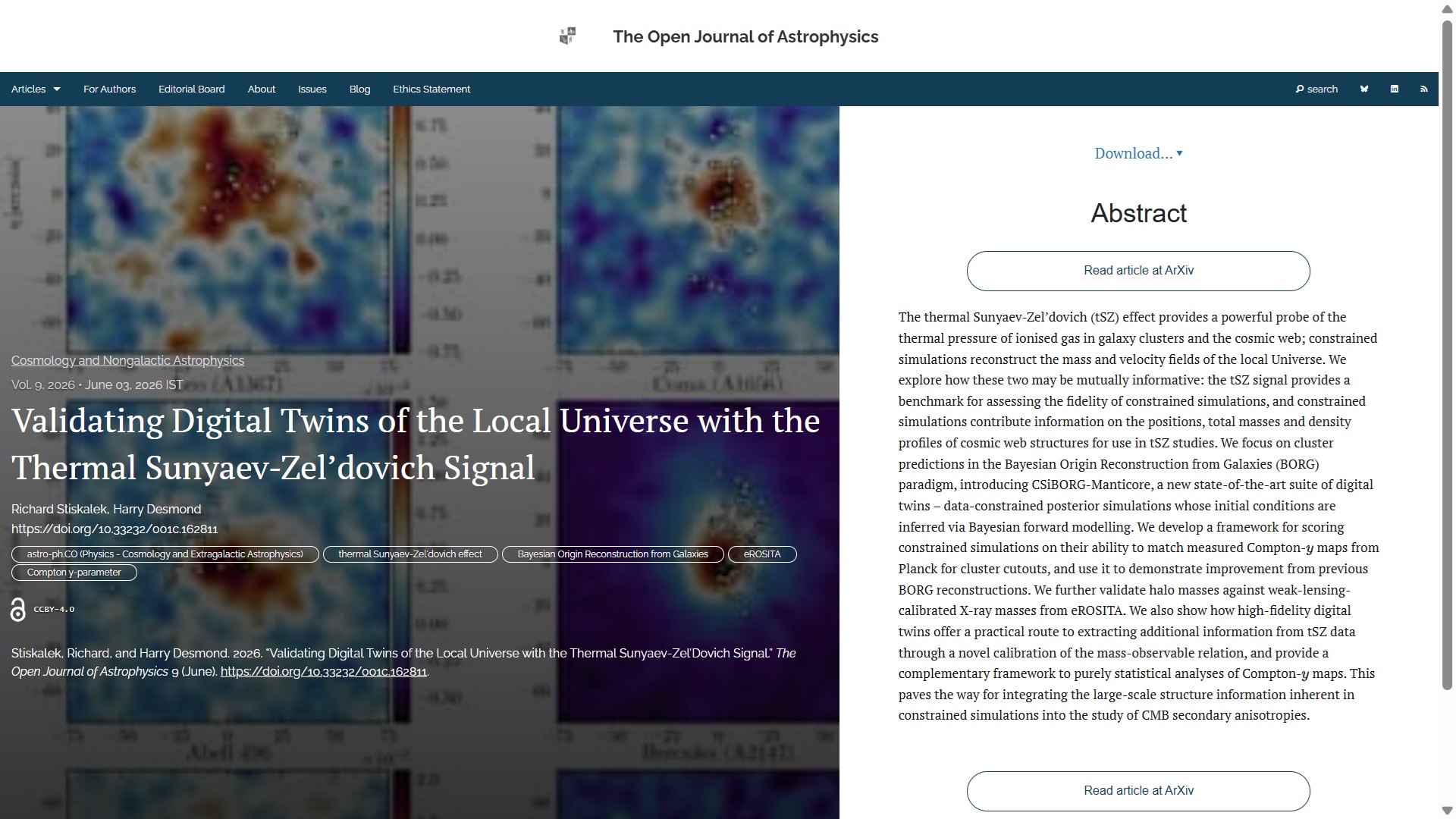
The officially accepted version can be found on arXiv here and here is the Mastodon announcement:

Open Journal of Astrophysics

New Publication at the Open Journal of Astrophysics: "Validating Digital Twins of the Local Universe with the Thermal Sunyaev-Zel’dovich Signal" by Richard Stiskalek (U. Oxford, UK) and Harry Desmond (U. Portsmouth, UK)

doi.org/10.33232/001c.162811

June 3, 2026, 5:15 am 1 boosts 1 favorites

The fifth and final paper this week, published on Thursday 4th June in the folder Cosmology and Nongalactic Astrophysics is “Photon (Non)Conservation in the Reduced Speed of Light Approximation and How to (Almost) Fix It” by Nickolay Y. Gnedin (University of Chicago, USA). The “Reduced Speed of Light” approximation in cosmological simulations can lead to photon non-conservation, and while some missing photons can be counted, adding them back is challenging.

The overlay for this one is here:
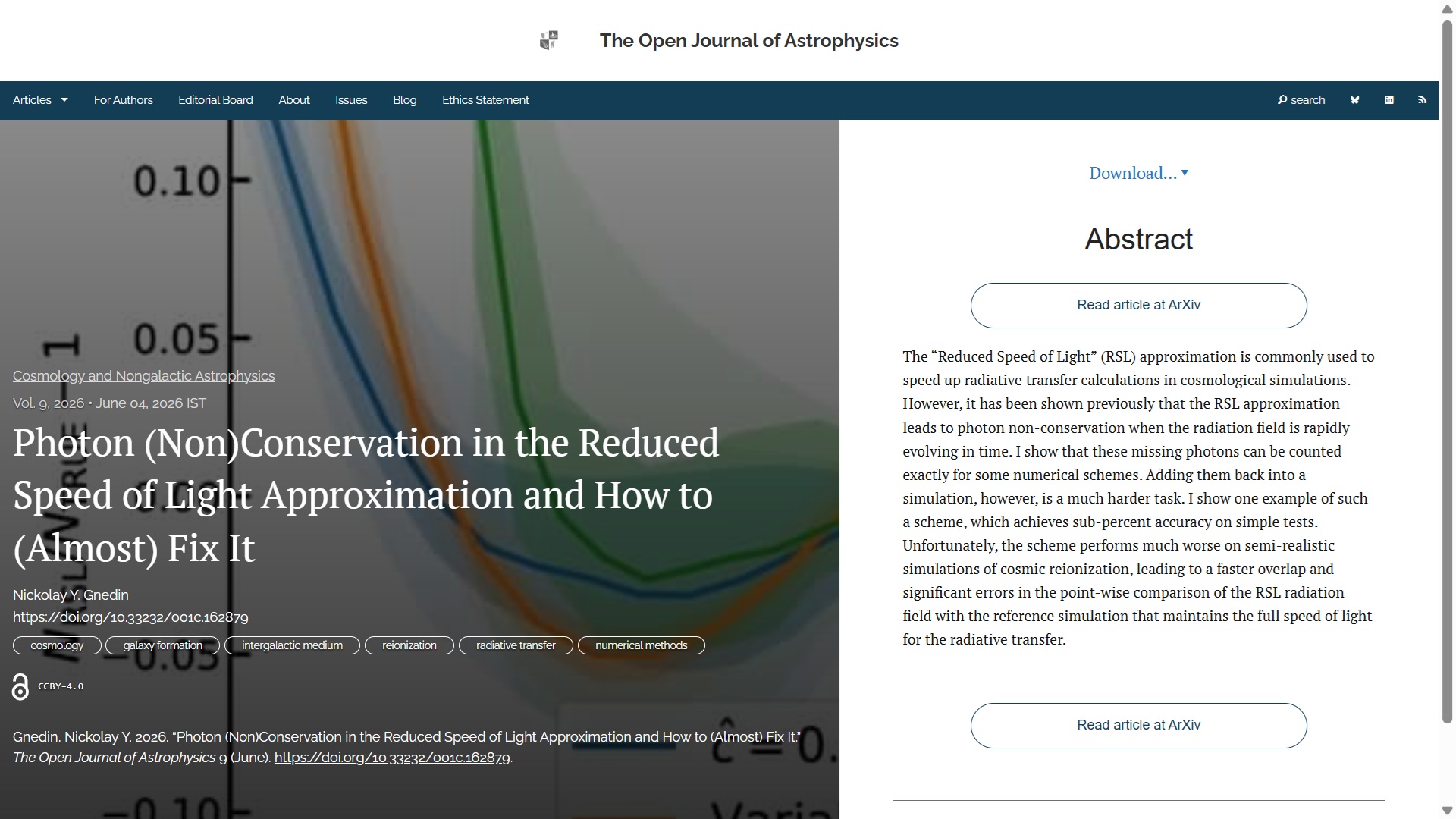
The officially accepted version of this paper can be found on arXiv here and Mastodon announcement here

Open Journal of Astrophysics

New Publication at the Open Journal of Astrophysics: "Photon (Non)Conservation in the Reduced Speed of Light Approximation and How to (Almost) Fix It" by Nickolay Y. Gnedin (U. Chicago, USA)

doi.org/10.33232/001c.162879

June 4, 2026, 11:20 am 2 boosts 1 favorites

And that concludes this week’s update. I’ll do another one next Saturday.
Weekly Update from the Open Journal of Astrophysics – 28/06/2025

Posted in OJAp Papers, Open Access, The Universe and Stuff with tags , , , , , , , , , , , , , , , , , , , , , , , , on June 28, 2025 by telescoper

It’s Saturday morning again so time for an update of papers published at the Open Journal of Astrophysics. Since the last update we have published eight new papers, which brings the number in Volume 8 (2025) up to 82, and the total so far published by OJAp  up to 317. With about half the year gone, we’re on target to published around 160 papers this year.

The papers published this week, with their overlays, are as follows.  You can click on the images of the overlays to make them larger should you wish to do so.

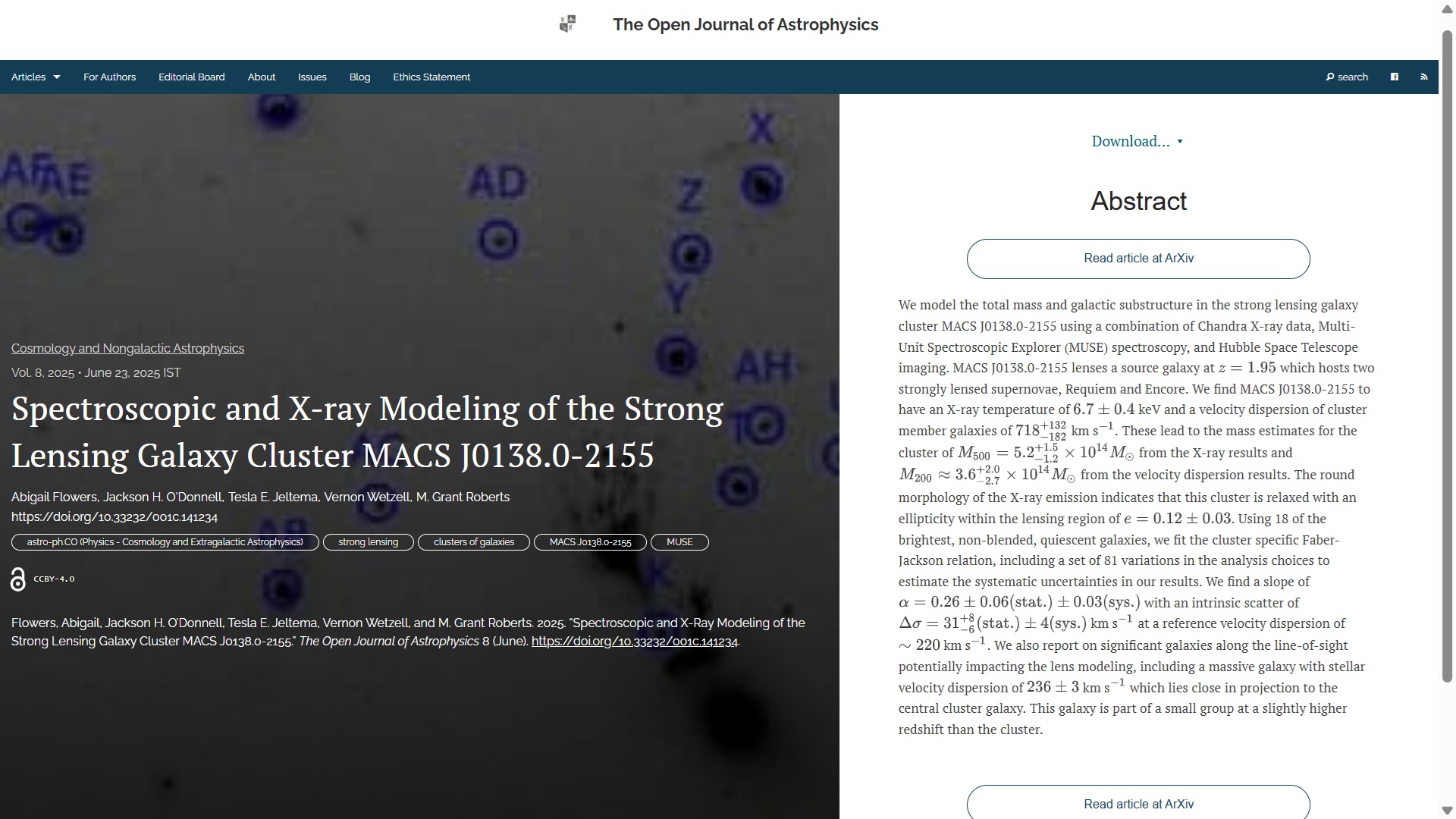
The first paper to report is “Spectroscopic and X-ray Modeling of the Strong Lensing Galaxy Cluster MACS J0138.0-2155” by Abigail Flowers (University of California at Santa Cruz; UCSZ), Jackson H. O’Donnell (UCSZ), Tesla E. Jeltema (UCSZ), Vernon Wetzell (U. Pennsylvania) & M. Grant Roberts (UCSZ). This artticle, which is in the folder marked Cosmology and NonGalactic Astrophysics, presents a study of the mass distribution and substructure of a galaxy cluster that acts as a gravitational lens for a source galaxy at z=1.95 that contains two supernovae. It was published on 23rd June 2025. The overlay is here:

The officially-accepted version can be found on arXiv here.

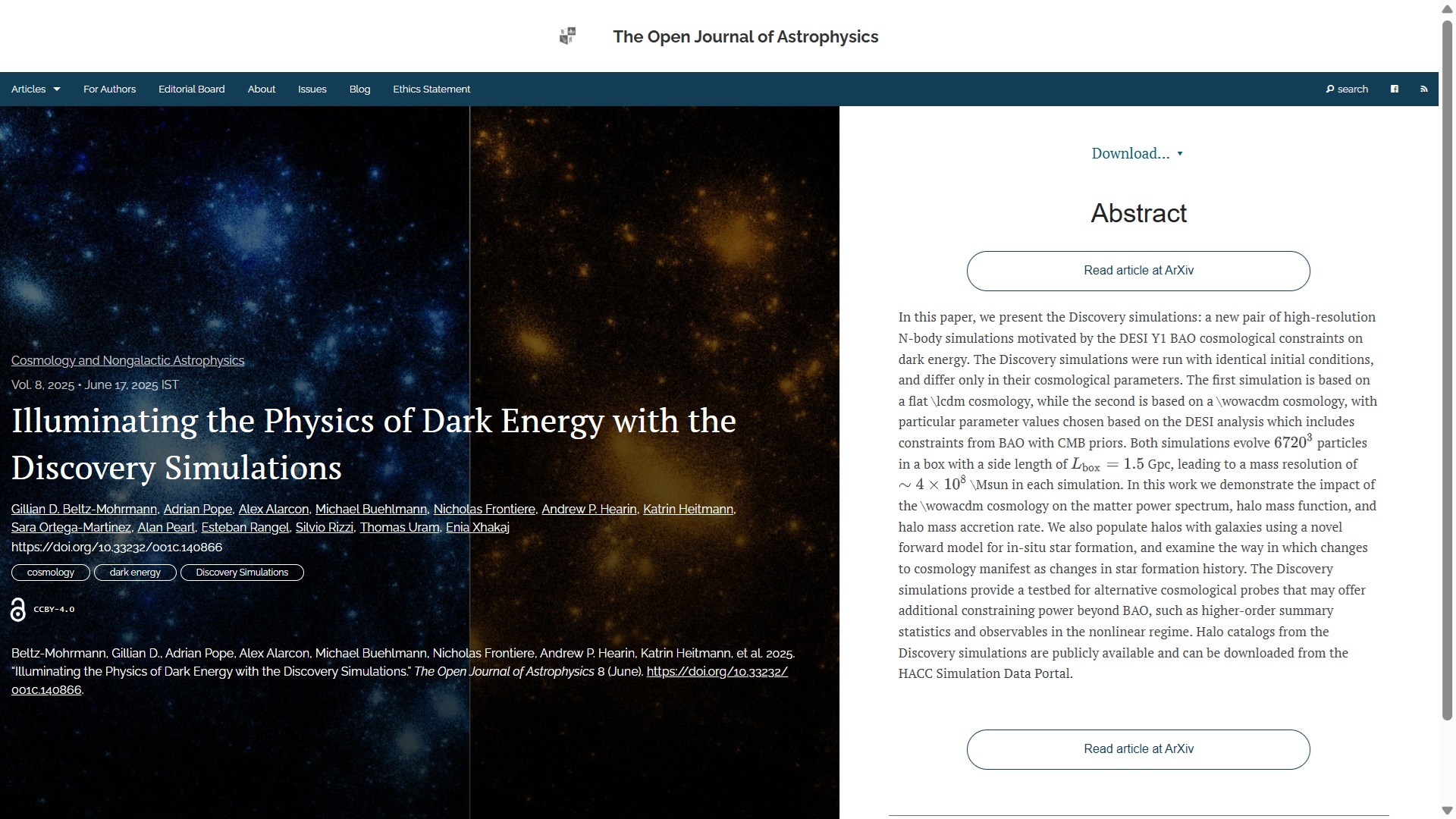
Illuminating the Physics of Dark Energy with the Discovery Simulations” by Gillian D. Beltz-Mohrmann (Argonne National Laboratory, USA) and 12 others based in the USA and Spain. This describes new high-resolution cosmological simulations providing a testbed for alternative cosmological probes that may offer additional constraining power beyond Baryon Accoustic Oscillations. It is filed in the folder marked Cosmology and NonGalactic Astrophysics.

The overlay is here:

You can read the final accepted version on arXiv here.

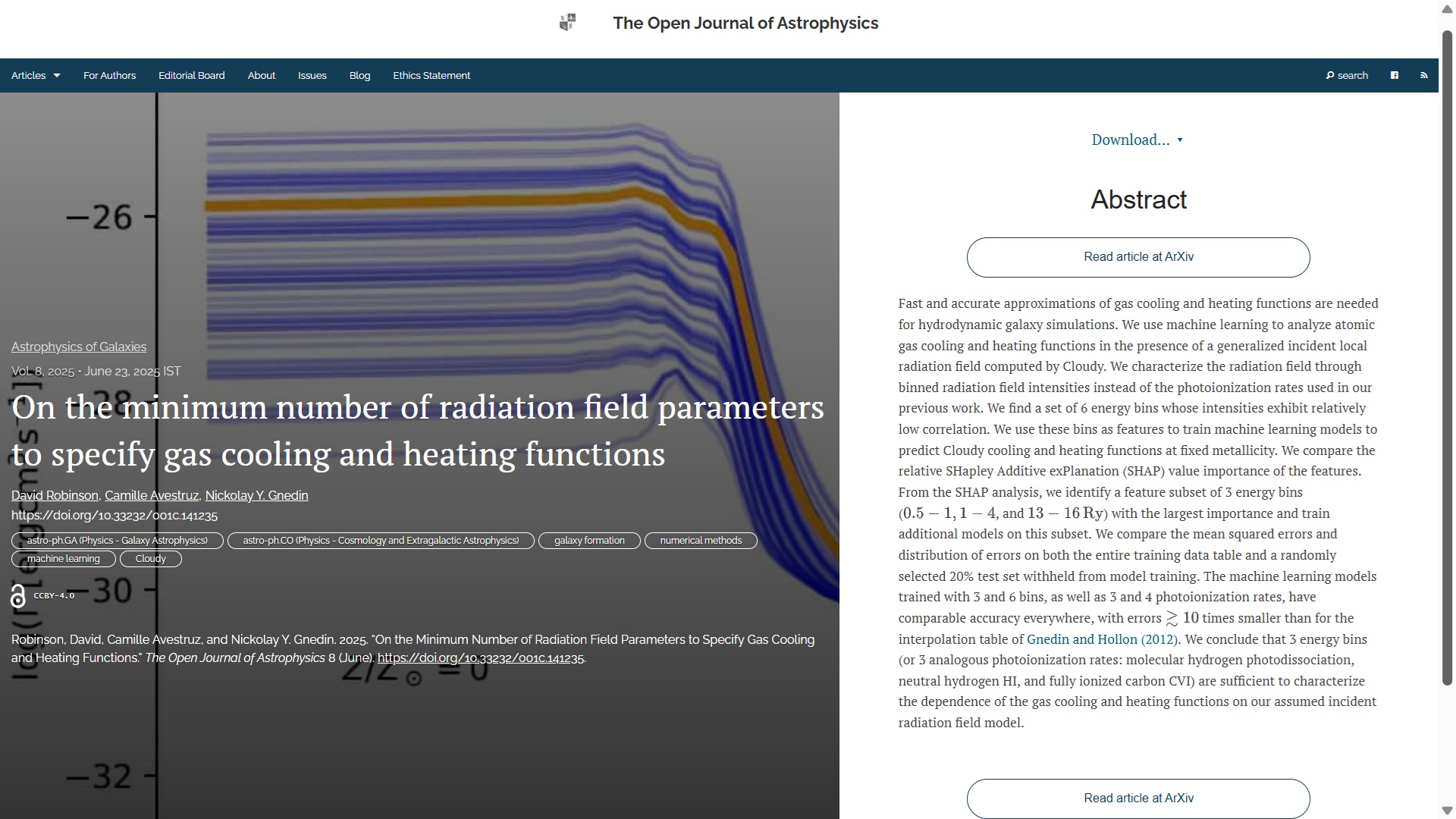
Next one up is in the folder marked Astrophysics of Galaxies. The title is “On the minimum number of radiation field parameters to specify gas cooling and heating functions” and it is by David Robinson & Camille Avestruz (U. Michigan) and Nickolay Y. Gnedin (U.Chicago) and was published on 23rd June 2025. It presents an analysis using machine learning of atomic gas cooling and heating functions computed by the spectral synthesis code Cloudy.

The overlay is here:


You can find the officially-accepted version of the paper on arXiv here.

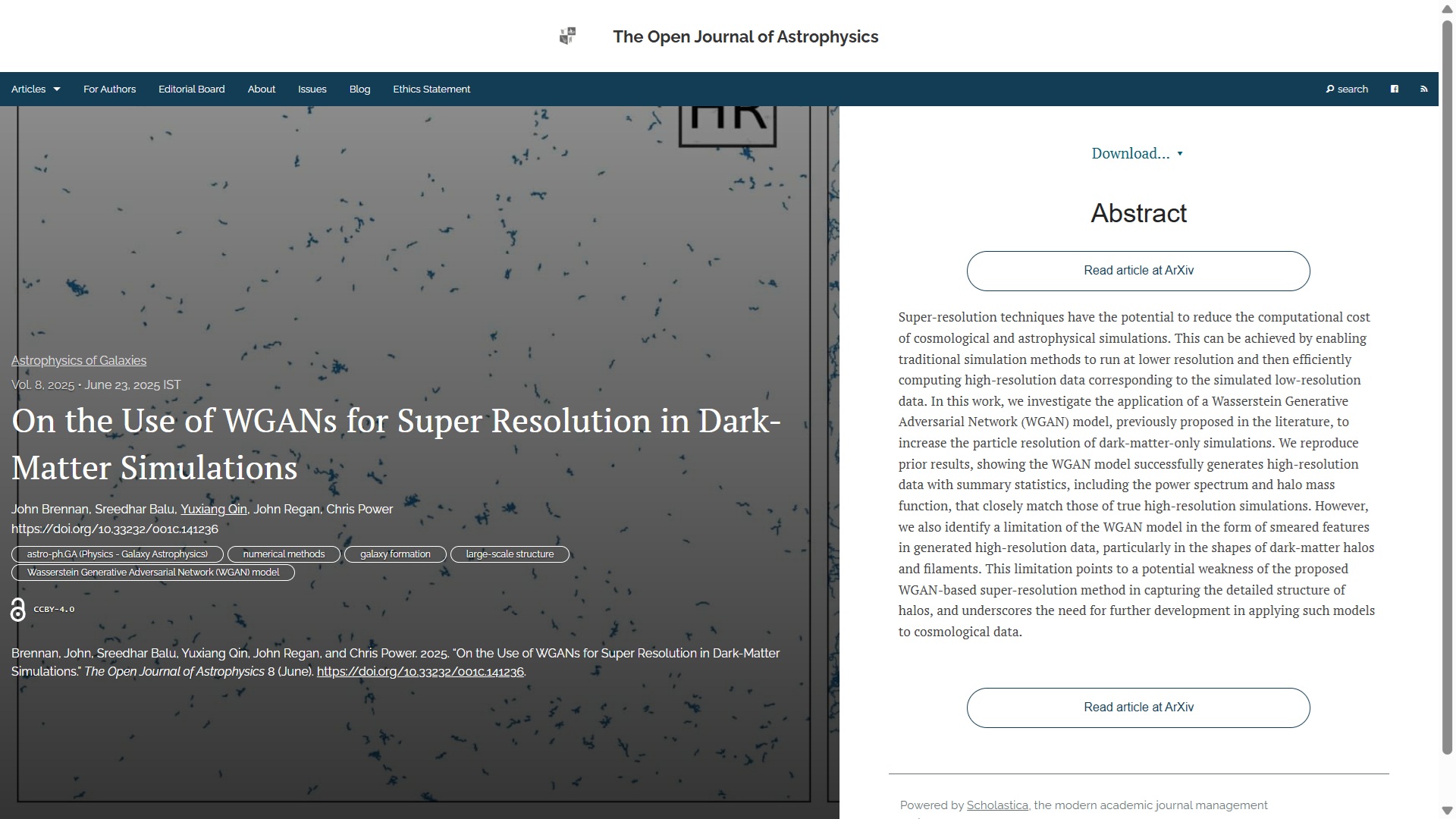
The thirtd paper is “On the Use of WGANs for Super Resolution in Dark-Matter Simulations” by John Brennan (Maynooth), Sreedhar Balu (U. Melbourne), Yuxiang Qin (ANU), John Regan (Maynooth) and Chris Power (U. Western Australia). This one is also in the folder marked Astrophysics of Galaxies and was also published on Monday 23rd June. It is about using the Wasserstein Generative Adversarial Network (WGAN) model to increase the particle resolution of dark-matter-only simulations of galaxy formation. The overlay is here:

You can find the officially-accepted version of the paper on arXiv here.

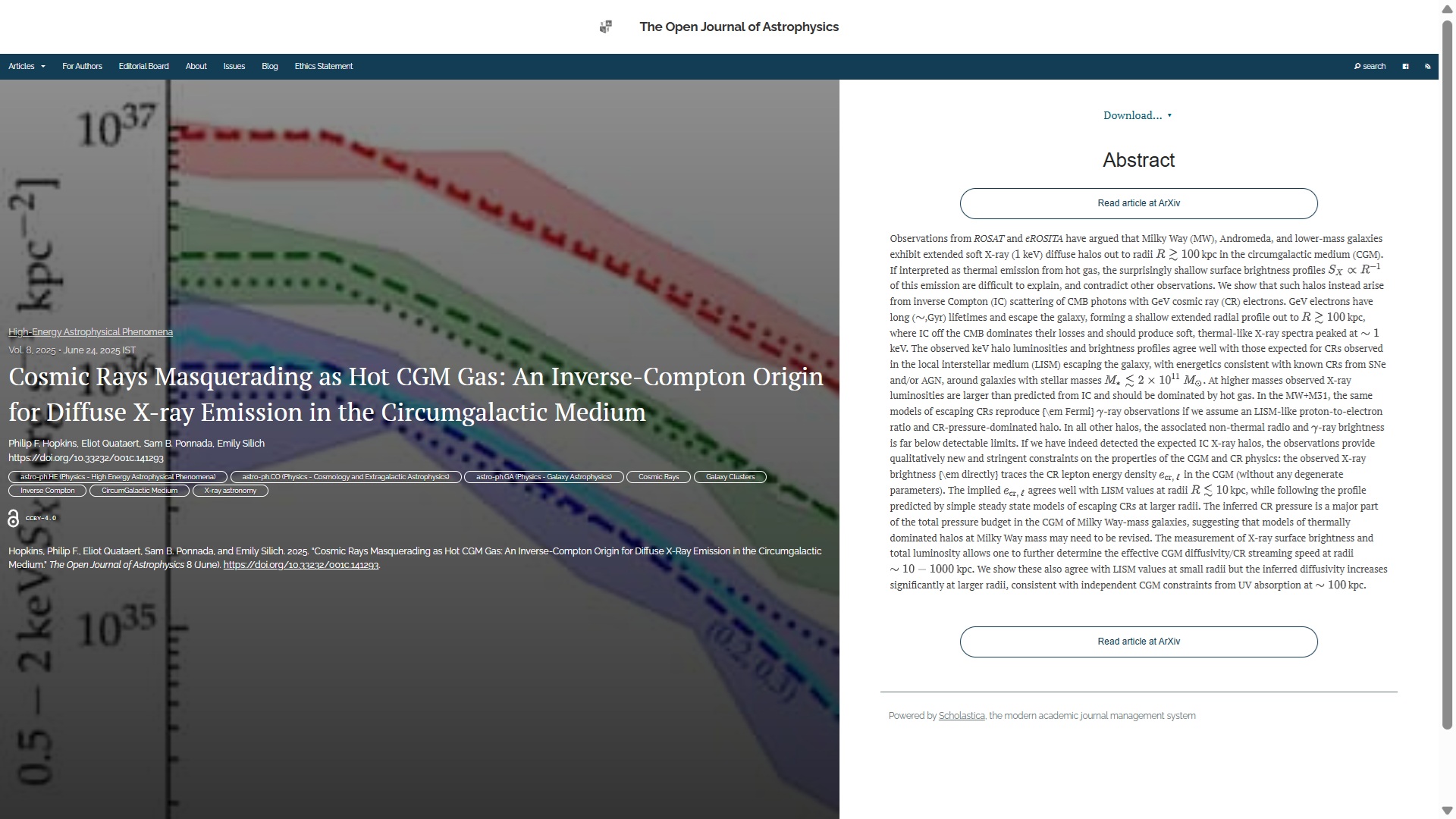
Next we have “Cosmic Rays Masquerading as Hot CGM Gas: An Inverse-Compton Origin for Diffuse X-ray Emission in the Circumgalactic Medium” by Philip F. Hopkins (Caltech), Eliot Quataert (Princeton), Sam B. Ponnada (Caltech) and Emily Silich (Caltech), all based in the USA.  This one was published on 24th June 2025 in the folder High-Energy Astrophysical Phenomena

You can find the officially-accepted version on arXiv here.

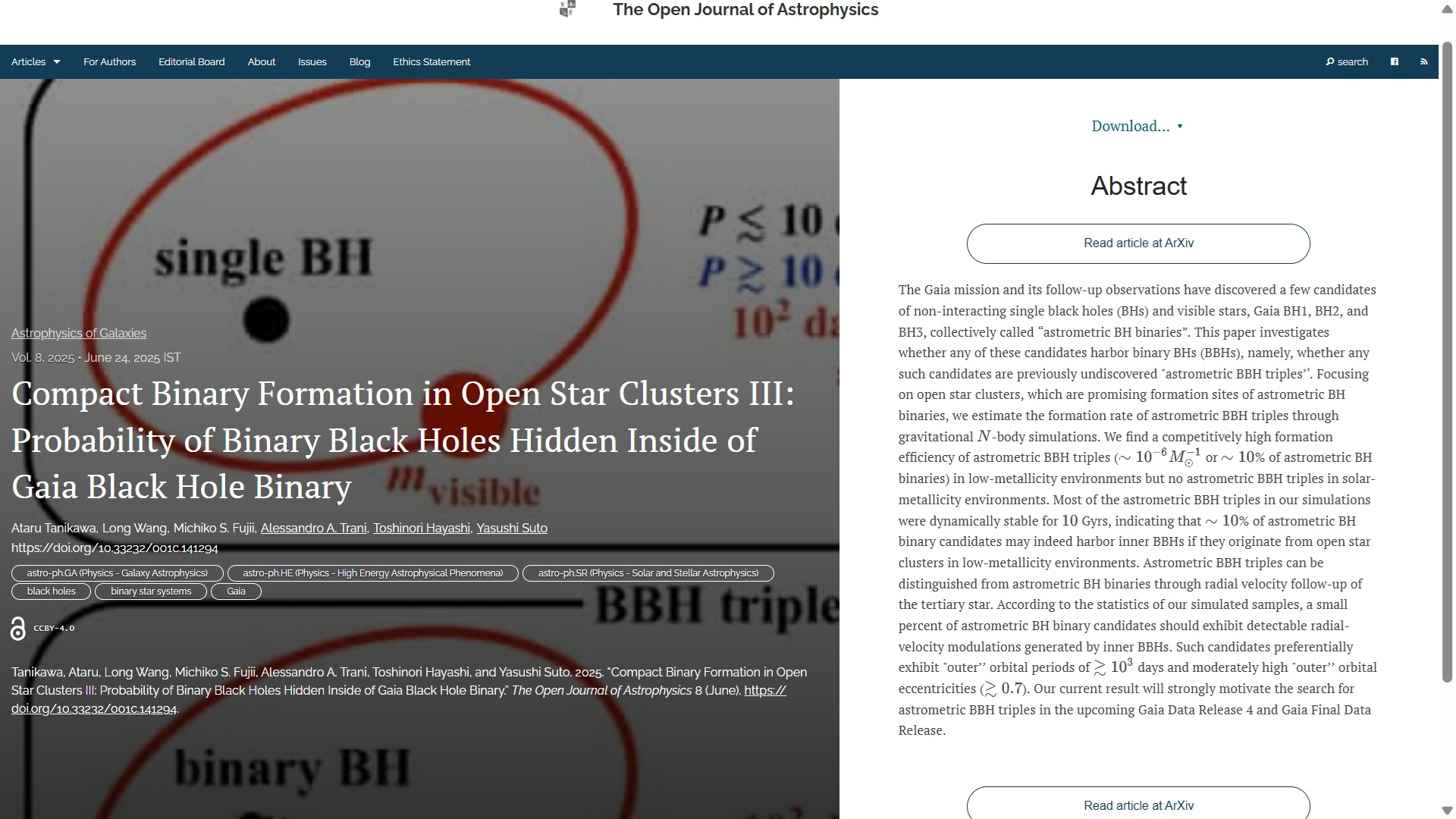
The fifth paper this week is “Compact Binary Formation in Open Star Clusters III: Probability of Binary Black Holes Hidden Inside of Gaia Black Hole Binary” by Ataru Tanikawa (Fukui Prefectural University, Japan), Long Wang (Sun Yat-sen University, China), Michiko S. Fujii (University of Tokyo, Japan), Alessandro A. Trani (Niels Bohr Institute, Denmark), Toshinori Hayashi (Kyoto University, Japan) and Yasushi Suto (Kochi University of Technology, Japan).  This one is in the folder marked Astrophysics of Galaxies and was published on Tuesday 24th June. It presents an investigation into whether some Gaia black hole binary systems may in fact involve three black holes, including a pair too compact to be resolved astrometrically. Here is the overlay:

You can find the officially-accepted paper on arXiv here.

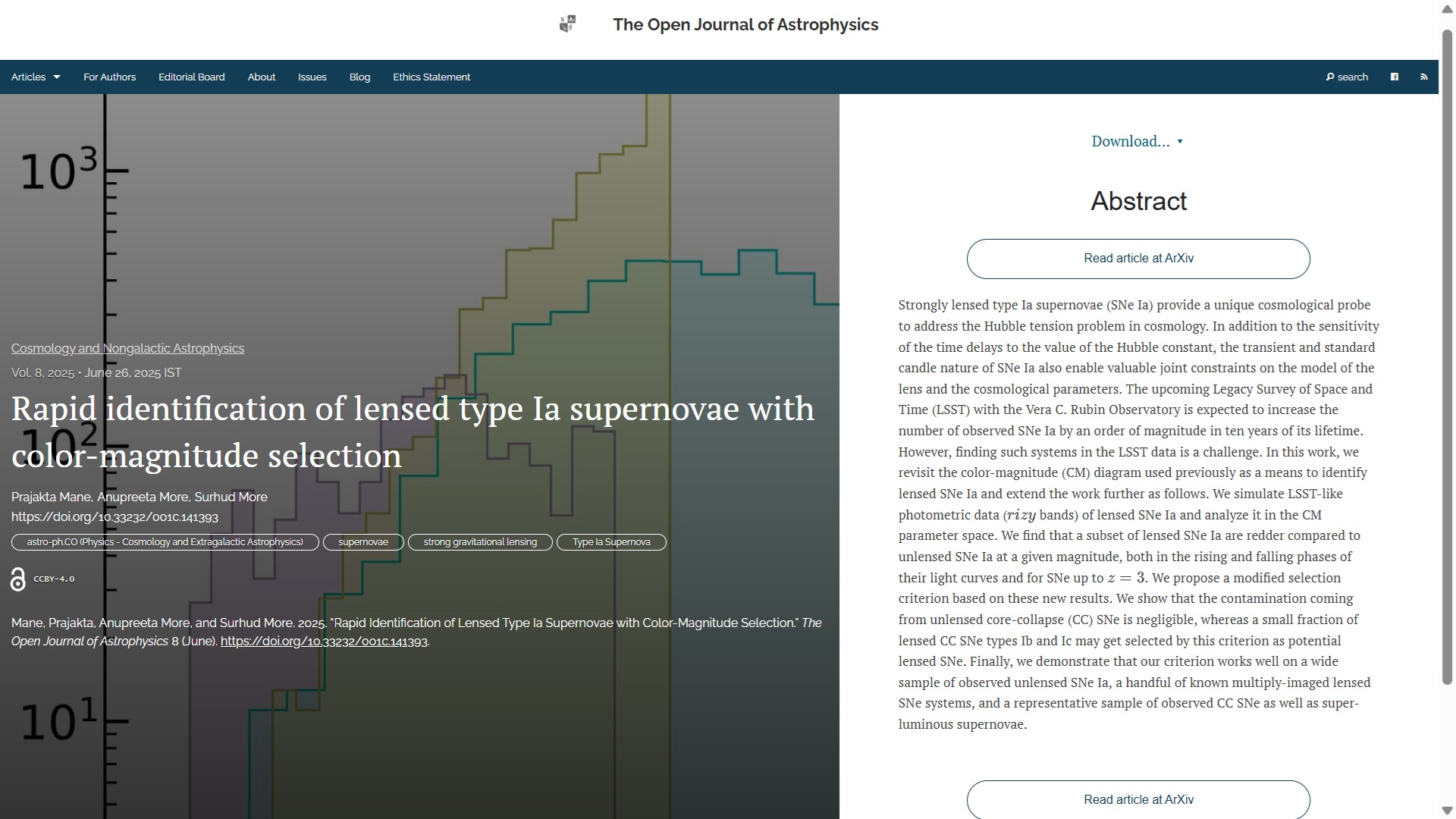
Next we have “Rapid identification of lensed type Ia supernovae with color-magnitude selection” by Prajakta Mane (IISER) and Anupreeta More & Surhud More (IUCAA), all based in India. This paper presents an  extension of the use of color-magnitude diagrams, used previously as a means to identify lensed supernovae, with applications to LSST-like photometric data. It is in the folder marked Astrophysics of Galaxies and was published on Thursday 26th June.

The officially-accepted version of the article can be found on arXiv here.

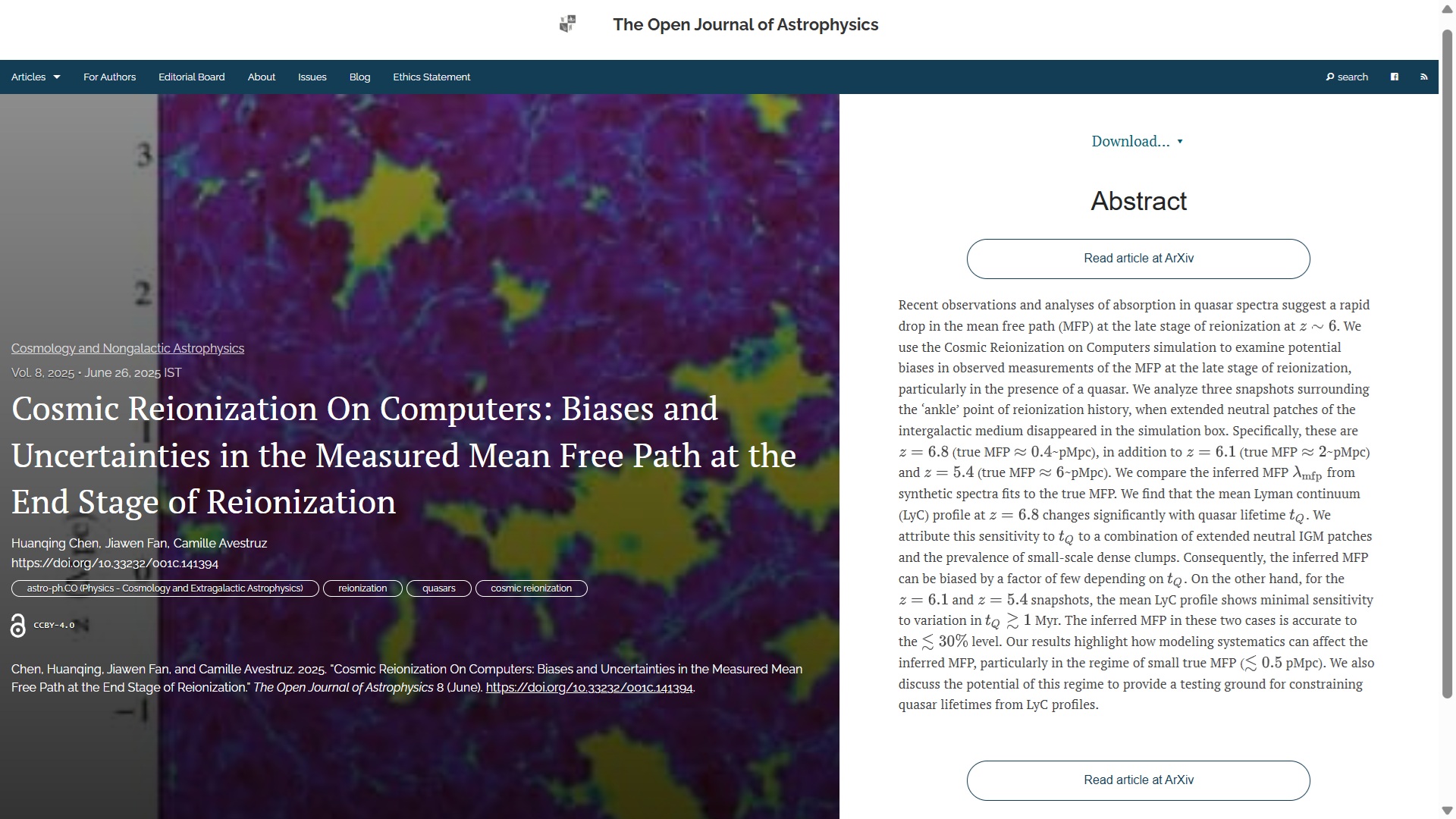
The penultimate article this week is: “Cosmic Reionization On Computers: Biases and Uncertainties in the Measured Mean Free Path at the End Stage of Reionization” by Huanqing Chen (U. Alberta, Canada), and Jiawen Fan & Camille Avestruz (U. Michigan, USA). This one is in the folder Cosmology and Nongalactic Astrophysics and was published on 26th June 2025.  This paper studies possible systematic effects in computer simulations of cosmic reionization especially when it results from quasar radiation.

The overlay is here:

You can find the officially-accepted version on arXiv here.

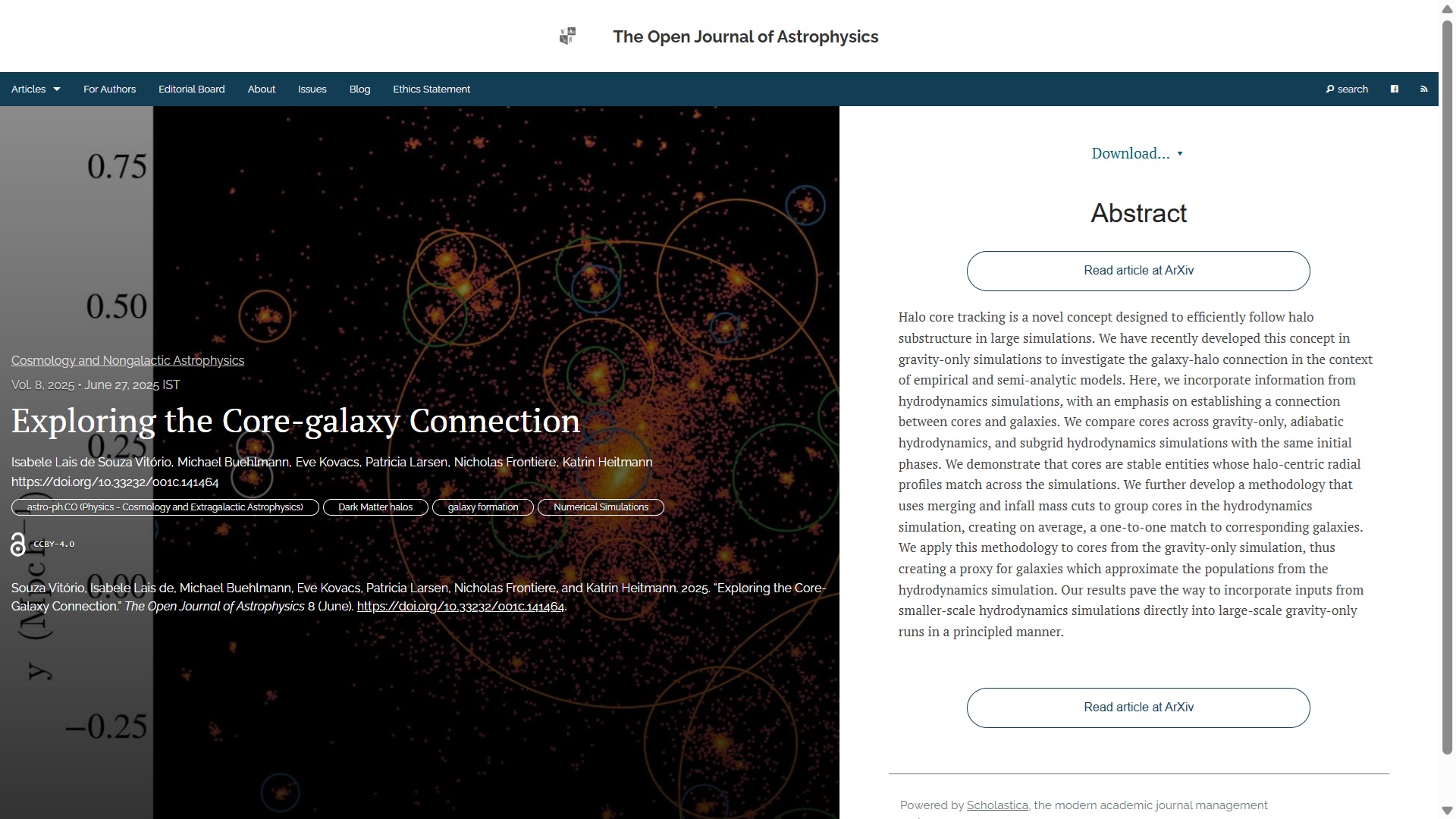
Eighth and last paper this week is “Exploring the Core-galaxy Connection” by Isabele Lais de Souza Vitório (U. Michigan) and Michael Buehlmann, Eve Kovacs, Patricia Larsen, Nicholas Frontiere & Katrin Heitmann (Argonne National Laboratory, USA).  This one is in the folder Cosmology and Nongalactic Astrophysics and was published on Friday 27th June 2025 (i.e. yesterday).

The overlay is here:


You can find the officially-accepted version on arXiv here.

And that’s all the papers for this week. I do, however, have some more news to pass on. We are delighted to welcome two new recruits to our Editorial Board,  Dr Foteini Oikonomou of the Norwegian University of Science and Technology, who specializes in the application of particle physics theories to  high-energy astrophysical phenomena, and Dr Heloise Stevance of Oxford University (UK), who specializes in the interface between Machine Learning and Astrophysics.

Gravitational Wave Flash!

Posted in The Universe and Stuff with tags , , , , on April 9, 2019 by telescoper

The third observing run for Advanced LIGO – O3 – started on April 1 2019, after 19 months upgrading the detectors. Last night, April 8, saw the first new detection of a candidate gravitational wave source, apparently another black hole binary, dubbed S190408an.

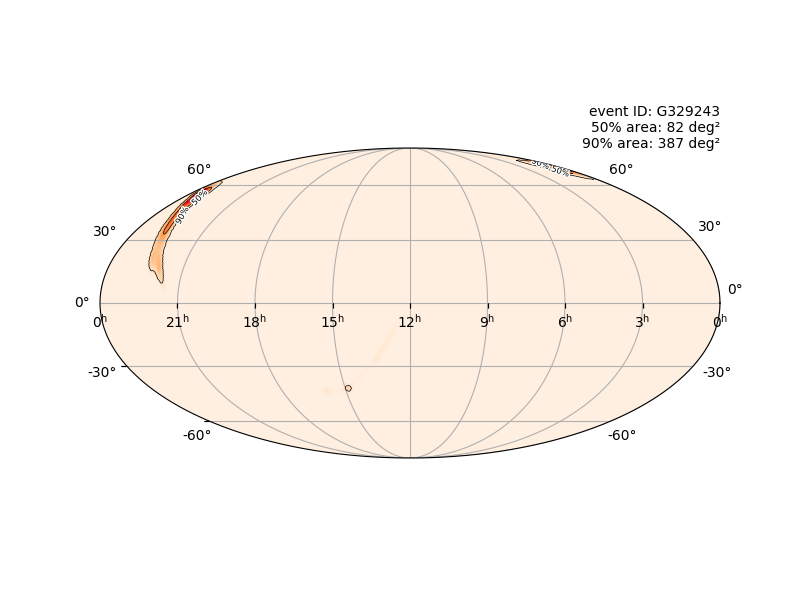
It is anticipated that sources like this will be discovered at a rate of roughly one per week for the (planned) year-long run. Given the likely rate of events the policy of LIGO is now to make data publicly available directly without writing papers first. You can find the data entry for this event here, including this map of its position.

Whether the LIGO Scientific Collaboration will release sufficient data for others to perform a full analysis of the signal remains to be seen, but if the predicted detection rate matches reality, the field is going to move very rapidly from studies of individual events to statistical analysis of large populations. Such is the way of science!

A LIGO Orrery

Posted in The Universe and Stuff with tags , , , , on December 5, 2018 by telescoper

Following yesterday’s post here is a nice video visualization of all the black hole binary mergers so far claimed to have been detected by Advanced LIGO. They’re computer simulations, of course, not actual black holes (which you wouldn’t be able to see). I always thought an Orrery was a clockwork device, rather than a digital computer, but there you go. Poetic license!

I can’t say I’m very keen on the music.