Archive for Holyhead

Passing the Ports

Posted in Biographical with tags , , , , , on July 15, 2026 by telescoper

I’ve been thinking for some time whether to renew my (expired) British passport, and finally decided to do so. No longer being resident in the UK I thought this would require a trip to the Embassy in Dublin, but that isn’t the case these days. One has to apply online, including supplying a digital photograph, send the old passport off by courier, then wait for the new one to arrive (by courier).

One problem with doing this is that the format of digital picture required for a British passport is not the same as for an Irish one, so most of the automatic machines (“Photo-Me”, etc) in Ireland are no use. I was able to take advantage of a recent trip to London, however, by using such a machine in Paddington station. I had plenty of time for that given the train delays. I got a few printed photos at the same time, in case I need them, but all you need for the passport is a photo code. The images are stored until used in the passport application.

And so it came to pass that today I completed the online application, paid the fees, and went to the local Post Office to send the old one to HM Passport Office. Now I have to wait and see how long it takes for my new passport to arrive. About a month, they say. We’ll see.
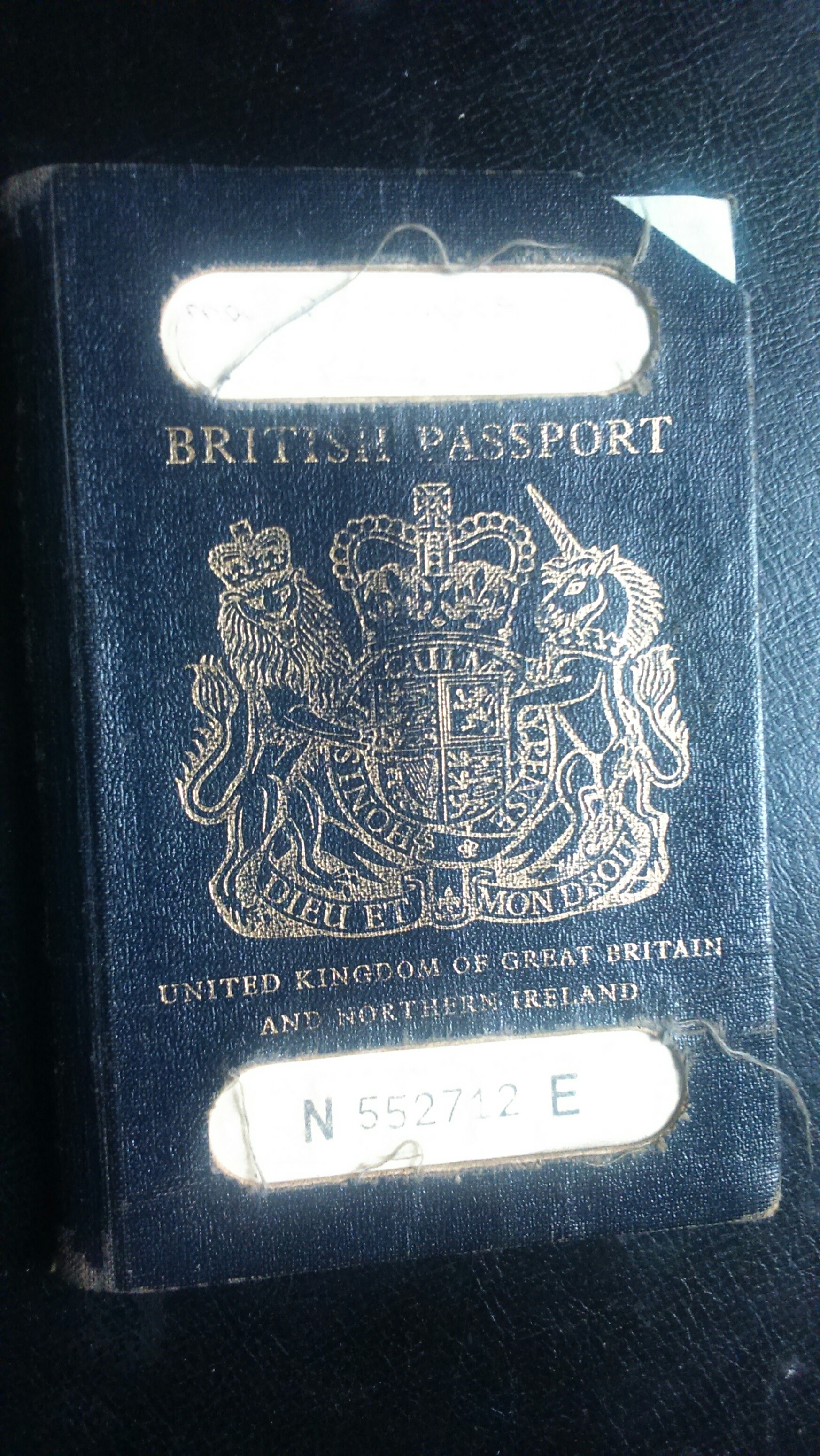
The new one will be dark-blue or black, like the very first one I ever had (left). That one was issued in 1986 and expired in 1996. I leave it as an exercise the reader to calculate how many I have had since then!

Whatever its design it will not allow me the right to live, work and retire freely within the European Union, so it will be of considerable less value than my Irish one.

I was for a time under the impression that having a British passport would make it easier should I ever want to enter the UK from somewhere other than Ireland, but I don’t think this is true. Unlike other EU citizens, according to the provisions of the Common Travel Area (CTA), Irish citizens do not require an ETA to enter the UK. They just need a valid Irish passport. Still, I think it will be useful to have a spare and I’m now used to having multiple identities!

I recently travelled to the UK and back by ferry. That journey being within the CTA a passport is not strictly required – other forms of photo-ID are acceptable – but I took mine anyway, as I don’t have a driver’s licence and we don’t have official government-issued ID cards in Ireland so I wasn’t sure whether they would accept any of the cards I have with my picture on it (e.g. my Maynooth staff card). As it happened the ID checks were very cursory. When I checked in at Dublin Ferry Port, the assitant there only wanted my ticket number and didn’t ask to see my ID at all. It was the same coming back from Holyhead. On arrival at Holyhead, there was a border post staffed by several officers, but they waved most passengers through (including me). On returning to Dublin the check was even more perfunctory: there was just one guy and he seemed more interested in welcoming everyone to Dublin than looking at any documents.

The CTA means that if you fly from Dublin to the UK you generally arrive at a place in the airport dedicated to such passengers. This is particularly convenient flying to Heathrow Terminal 2: on arrival you just walk through the Baggage Reclaim and out into the airport without passing any checks. You still need a passport, though, as airlines require this form of identification and it is scrutinized when you check in and when you board the plane. The only airport I know of that doesn’t have a simplified arrival system for CTA passengers is Dublin. They have no separate facilities, so you have to go through passport control with all the other passengers. That can be a bit inconvenient if lots of flights have arrived at the same time. I suppose the people who run Dublin Airport do not think it’s worth having a CTA arrivals facility.
Ferried Across

Posted in Biographical with tags , , , , , , , on July 11, 2026 by telescoper

I took another ferry back from Holyhead to Dublin last night. The outbound journey was via Irish Ferries but I returned on the Stena Line. I left Holyhead at 22.15 and arrived at the Ferry Terminal at Dublin Port at 1.45am. I was a bit unsure what it would be like on such a late-night trip but the trip was uneventful. I’d had a very tiring day getting to Holyhead so I toyed with the idea of sitting in the bar and having a few drinks, but I thought better of that. Instead I found a quiet corner in one of the lounges where there was a bench seat, and managed to stretch out enough to get about an hour’s sleep.

I think quite a few passengers had booked cabins for the crossing. I didn’t think it was worth doing that for less than four hours aboard, but I will consider that next time I take a late-night ferry. There’s not much to see out of the window in the dark!

The disadvantage of being a foot passenger on these ferries is that you have to wait until all the people with vehicles have disembarked before getting a bus back to the terminal building, which adds about 30 minutes to the time. Anticipating the probability that I would be knackered topo fed up to try getting home by public transport with all my luggage in the early hours of the morning, I had booked a taxi to meet me at 1.45, the scheduled arrival time, but I didn’t actually meet the driver until after 2am. Sitll, I got home to Maynooth quickly and was tucked up in bed by 3am. I had to open all the windows as the house was very stuffy, but other than that all was well.

While I was staying in London I took a few trips by train here and there, most of them very shambolic. All the direct trains from London Paddington to Oxford were cancelled, so passengers had to get on very overcrowded trains that went through Oxford to other destinations. To get back to London I used a train to Marylebone which I didn’t know existed. It was slow, but got me back.

With these problems in mind I took an earlier train from Euston to Holyhead than I originally intended. I’m glad I decided that because even the earlier train was delayed by > 45 minutes leaving Euston. Worse, some other trains goint to Manchester and beyond were cancelled so passengers were advised to get on the train I was on and change at Crewe or Chester. The seat reservations weren’t working so the result was a very sweaty overcrowded train with standing room only, at least until Chester where many people got off. The uncomfortable journey made me break a 195-day blogging streak as I just couldn’t be bothered even when I got a seat. Instead I just relaxed and looked out of the window as we travelled along the coast of North Waves.

My train from Holyhead to London was delayed by over an hour as was the train back yesterday. The upshot of all that is that I get a 100% refund of the fare for the entire journey so it was effectively free (if you don’t count the cost of the stress and discomfort).

Anyway, this trip was my first experience of ferry+train to the UK and back. My summary of the experience is “Ferry Good, Train Bad”.

The Leinster Disaster

Posted in History with tags , , , , on October 10, 2018 by telescoper

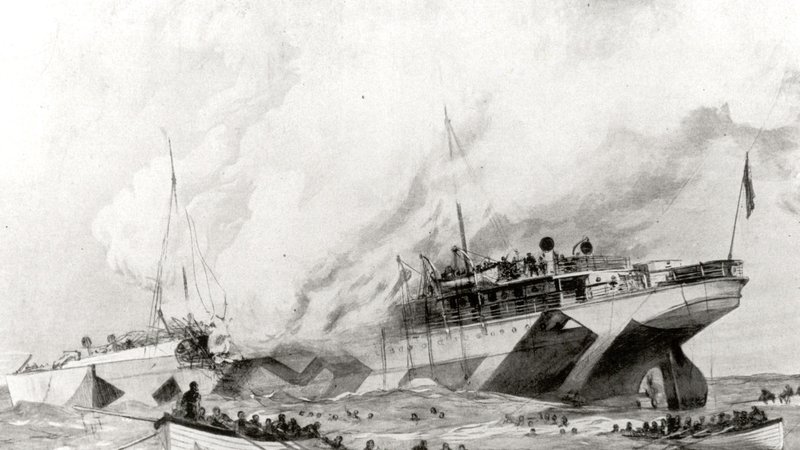
The radio news this morning reminded me that  solemn commemorations were taking place today to mark the centenary of the greatest maritime disaster ever to occur in the Irish Sea.


A little before 9am on 10th October, the Leinster serving as the Royal Mail Ship RMS Leinster, set out from Dún Laoghaire (then named Kingstown), which is about 8 miles south of Dublin, en route to Holyhead, with an estimated 771 people on board. About an hour into her journey, a few miles from the Kish Lighthouse, the Leinster was struck by three torpedoes from German submarine UB-123 and sank. At least 500 people lost their lives in this disaster, and some estimates put the death toll as high as 591. It wasn’t particularly cold that day but the Irish Sea was still rough after a storm had passed through. The survivors of the sinking were largely those who made it into lifeboats, but many of the people who had to attempt to cling to floating wreckage could not hold on until help arrived and were drowned.

To complete this horrible illustration of the tragedy of war, nine days later on 19th October 1918, the U-boat UB-123 struck a mine in the North Sea and went down with all hands.

You can read a fuller account of the Leinster disaster here.