Some time ago I posted a piece of music by Dick Twardzik from the mid-50s. The jazz piano scene in those days was so heavily dominated by Thelonious Monk and Bud Powell that pianists seem to struggle to find their own voice in the space created by those two. Twardzik certainly succeeded, though he died very young. Well, here’s another track from roughly the same period (1957) featuring another underrated musician who solved this problem in a different way. This fine track, undoubtedly influenced by Monk and Powell, but at the same time with its own sound, is by Herbie Nicholls, playing his own composition 45° Angle with the excellent George Duvivier on bass and Dannie Richmond on drums. Enjoy!
Follow @telescoperArchive for Jazz
45° Angle
Posted in Jazz with tags 45 degree angle, Dannie Richmond, George Duvivier, Herbie Nichols, Jazz on February 24, 2018 by telescoperR.I.P. Hugh Masekela (1939-2018)
Posted in Jazz with tags apartheid, Hugh Masekela, Jazz on January 23, 2018 by telescoperI woke up this morning to the very sad news that South African jazz trumpeter Hugh Masekela had lost the long and courageous battle he had been fighting against cancer and has passed away at the age of 78. Hugh Masakela did a huge amount to establish a uniquely South African jazz tradition and much of his music was a response to the struggle against apartheid. Although some “serious” jazz fans have criticised him for `selling out’ in his forays into pop – for which he simplified his playing style considerably – this approach definitely succeeded in bringing many new people to his music. His was exactly the same approach as Louis Armstrong, actually, and I for one don’t begrudge either his commercial success.
I was fortunate to hear Hugh Masekela live many years ago at Ronnie Scott’s Club. He had a wonderful stage presence, and played a typically eclectic mix of music and it was a wonderful night that I’ll remember for the rest of my life.
Here’s a clip of him playing and singing that gives an idea of what the man and his music were like and just how much he will be missed.
R.I.P. Hugh Masekela (1939-2018).
Follow @telescoperHold ’em Joe – Sonny Rollins
Posted in Jazz with tags calypso, Hold 'em Joe, Jazz, Sonny Rollins on January 6, 2018 by telescoperSo I’m in Dublin airport waiting to board a (delayed) flight. Since it’s cold and dark outside I thought I’d take the opportunity to use the free airport Wi-fi to share something that put a bit of a spring in my step when I heard it on the radio a couple of days ago. It’s a truly phenomenal performance on tenor saxophone by the great Sonny Rollins over an infectious calypso rhythm generated by Mickey Roker on drums. Enjoy!
Follow @telescoper
The Fable of Mabel
Posted in Jazz with tags Dick Twardzik, Jazz, Serge Chaloff, The Best of Jazz, The Fabel of Mabel on December 22, 2017 by telescoperNow, as a special Christmas treat, I present for you one of my all-time favourite pieces of music. It was recorded by Serge Chaloff Octet in Boston, in September 1954 and I’ve loved it ever since I first heard it on The Best of Jazz, the radio show that was presented by Humphrey Lyttelton for many years on Radio 2, way back in the 1980s. Humph had eclectic musical tastes and I am forever in his debt for introducing me to relatively obscure pieces such as this which have given me so much pleasure over the years. I can see I’m not the only WordPress blogger who loves this track too!
The lineup for this track is Serge Chaloff (baritone sax) Herb Pomeroy (trumpet) Gene DiStachio (trombone) Charlie Mariano (also saxophone) Varty Haritounian (trumpet) Dick Twardzik (piano) Ray Oliveri (bass) and Jimmy Zitano (drums). Serge Chaloff was a famously dissolute and chaotic character, who struggled to control a serious narcotics habit, but he was a marvellously accomplished player of the huge and unwieldy baritone sax. Chaloff plays beautifully on this track but the star is the amazingly innovative pianist and composer Dick Twardzik, who wrote the piece. Had he not died so young (in 1955, of a heroin overdose, on tour in Paris with Chet Baker, at the age of just 24) he would have become a household name in Jazz.
Twardzik had this to say about The Fable of Mabel on the sleevenote:
The Fable of Mabel was introduced to jazz circles in 1951-52 by the Serge Chaloff Quartet. Audiences found this satirical jazz legend a welcome respite from standard night club fare. In this legend, Mabel is depicted as a woman who loves men, music and her silver saxophone that played counterpoint (her own invention which proved impractical). The work is divided into three movements: first, New Orleans; second Classical; and third, Not Too Sad An Ending. The soulful baritone solo Serge Chaloff traces Mabel’s humble beginnings working railroad cars in New Orleans to her emergence as a practising crusader for the cause of Jazz. During her Paris days on the Jazz Houseboat, her struggle for self-expression is symbolized by an unusual saxophone duet Charlie Mariano and Varty Haritrounian. Mabel always said she wanted to go out blowing. She did.
This piece is radically different from the mixture of bop tunes and standards that provided the bulk of the repertoire for Chaloff’s band in the 1950s and it provides a superb example of how the musical revolution pioneered by Charlie Parker, Dizzy Gillespie, Thelonious Monk et al. opened the doors and ushered in a wave of creativity that fanned out in all kinds of unexpected directions. I love The Fable of Mabel for its quirkiness, the virtuosity of the playing, and for the edgy, Noir-ish atmosphere that it generates. Incidentally, it’s interesting that most of the musicians on this track are of Eastern European extraction, as were many of the leading lights of Film Noir. I always felt this track would make a perfect soundtrack for such a film.
If ever got asked to go on one of those radio programmes where you have to pick your favourite pieces of music, this would definitely be among my selections. I hope you enjoy it too!
Follow @telescoperThe Sonny Rollins Williamsburg Bridge
Posted in Jazz with tags Jazz, Sonny Rollins, The Bridge, Williamsburg Bridge on December 12, 2017 by telescoperBetween 1959 and 1961 the great tenor saxophonist Sonny Rollins took a break from making recordings to practice intensively, developing his technique and expanding his musical vocabulary. Living in New York City, but lacking anywhere private to play, he went every day to Williamsburg Bridge to practice. The first record he made after this `sabbatical’ was called The Bridge, released in 1962, and now regarded as a classic:
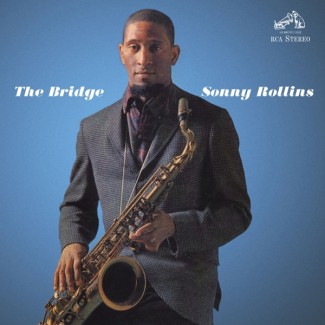
There is now a move afoot to have the Williamsburg Bridge renamed as the Sonny Rollins Williamsburg Bridge. There is a petition here. Please consider signing it. I have!
Here’s a little video about The Sonny Rollins Bridge project:
And if you’re on Twitter can follow their account here:
Follow @RollinsBridge
Jazz, Icarus and Henri Matisse
Posted in Art, Biographical with tags Henri Matisse, Icarus, Jazz, Royal Academy of Arts on September 8, 2017 by telescoperI forgot to mention that while I was in London last weekend I visited the exhibition Matisse in the Studio at the Royal Academy of Arts in Burlington House (Piccadilly). It’s an interesting show, covering not only on the art works by Henri Matisse but also various items he had collected and kept in his studio, some of which appear in his paintings in various forms. Anyway, do go to the exhibition if you can – it’s there until November 12th.
Anyway, all that reminded me of this famous image by Matisse, called Icarus, which seems to fit the theme of this blog. It appears in a small booklet called Jazz which consists of collages and other images as well as text written by the artist himself.

Stardust – Louis Armstrong
Posted in Jazz with tags Hoagy Carmichael, Jazz, Louis Armstrong, Stardust on August 22, 2017 by telescoperThis wonderful recording of Hoagy Carmichael’s great song Stardust was made in 1931 by Louis Armstrong with his big band. After the heights that Armstrong reached in the 1920s, starting with King Oliver and then with the Hot Fives and Hot Sevens, some jazz critics maintain that the 1930s were a comparative wilderness. Well, I think he sings and plays beautifully on this so if this is a wilderness just take me to it, and I’ll pitch my tent there anytime!
Follow @telescoperThe Versatile Four
Posted in History, Jazz with tags Down Home Rag, drums, Jazz, Ragtime, The Versatile Four, Wilbur C. Sweatman on July 14, 2017 by telescoperI’ve posted a few examples of Jazz drummers recently, so I thought you might be interested in this, a rare recording of performance from the (pre-Jazz) Ragtime era that provides a good example of where Jazz drumming came from. This track was recorded in London way back in 1916 and it’s remarkable for the clarity with which you can hear the drums, which in those days usually proved very difficult to capture. The tune, Down Home Rag (written by Wilbur C. Sweatman) was a big hit at the time and remains in the traditional jazz repertoire to this day. It’s played by The Versatile Four an almost legendary ragtime band that I know very little about other than the personnel: Tony Tuck (banjo; born 1879 Virginia); Charles W. Mills (piano; born 1883 Illinois); Gus Haston (banjo, vocals; born 1880 Missouri); and Charlie Johnson (drums; born 1885 Kentucky). I’m not sure who it is who blows the whistle, but it may well be the drummer.
Charlie Johnson’s playing of the drums may sound very old-fashioned and a bit staff to ears accustomed to the swinging style of the jazz era, and he no doubt used a very crude kit, but this recording shows what an absolutely superb musician he was. You can also clearly hear the influence of the sort of drum patterns used by military marching bands. As well being an interesting piece from the point of view of music history, the drummer suffuses this high-energy performance with a sense of knockabout fun that is guaranteed to bring a smile to even the most crabbed face!
Follow @telescoper
Take Five with Joe Morello
Posted in Jazz with tags Dave Brubeck, Jazz, Joe Morello, Paul Desmond, Take five on June 13, 2017 by telescoperNot long ago I posted a clip of a drum solo by the great Joe Morello which has proved to be extremely popular. Since a meeting I thought I had this afternoon has been cancelled I’ve decided to take five minutes out to post another terrific drum solo.
The tune Take Five, composed by alto saxophonist Paul Desmond and recorded by the Dave Brubeck Quartet in 1959, became a hit at the second attempt when it was re-released in 1961. It proved so popular that the band performed many versions of it live, manu of which can be found on youtube. This one is not unusual in that it is performed at a faster tempo than the version that was released as a single. I read an interesting blog post a while ago that explains how Joe Morello’s arrival almost broke up the Dave Brubeck Quartet, as Paul Desmond and he had clashing personalities. I think Part of that was Morello’s predilection for tempos that were a bit faster than Desmond was comfortable with; Paul Desmond had a beautiful tone, but in contrast to many of his Jazz contemporaries on the instrument, he was never a speed merchant on alto saxophone. He seems to be less fluent than usual on this track, at least at first, probably because of the speed.
Joe Morello’s drum solo, on the other hand, is characteristically wonderful. Just watch his superb left-hand technique, from a relatively gentle opening to when he turns down the strainer on the snare drum he starts to build up to a stunning climax in which his hands are far too fast for the camera. It’s a great solo, not only because of it’s technical brilliance but because it’s so beautifully constructed. All in 5/4 time too…
Follow @telescoperGene Krupa and Benny Goodman in Chicago
Posted in Jazz with tags Benny Goodman, Chicago, drums, Gene Krupa, Jazz, Teddy Wilson on May 10, 2017 by telescoperFollowing up the post I did last week about Joe Morello which proved very popular, here is another about a drummer whose name came up in the discussion following that item, Gene Krupa.
Gene Krupa didn’t exactly invent the image of the drummer as a madman who sat at the back of the band, but he certainly cultivated it. He may sometimes have lacked subtlety in his playing, but he always injected a huge amount of energy into a performance whether in a small group (as here) or behind a big band.
His extrovert personality proved an excellent complement to the rather introverted bandleader Benny Goodman which, together with his undoubted technical ability, led to them having a very long working relationship. That said, Gene Krupa did leave the Goodman Orchestra in 1938 reportedly because Benny Goodman didn’t his drummer’s tendency to hog the limelight, insisting on taking a drum solo in just about every number. They did continue to work together for many years afterwards, however, as this clip demonstrates.
Many people credit Gene Krupa for basically inventing the modern drum kit and was certainly one of the first drummers in Jazz to be well known as a soloist and, indeed, the first to become a nationwide celebrity. He also inspired subsequent generations of drummers: Keith Moon of The Who was an admirer of Gene Krupa and I was told some years ago that Krupa also provided the inspiration for `Animal’, the drummer in the Muppet Show band.
People don’t generally realize what a smash hit Benny Goodman’s band was in the pre-War years – their fame was exactly on the scale of the `Beatlemania’ of a few decades later.
My Dad taught himself to play the drums using a book called The Gene Krupa Drum Method. I found his (very old and battered) copy of it among his personal effects after he died almost a decade ago and gave it – along with his drums, sticks, brushes, etc – to a local school. One thing that came from learning from a book was that he learnt to read drum music very well, which helped him get jobs with various dance bands. Few Jazz drummers of his generation could read music.
This performance, dating from the 1960s, represents a kind of reunion the three members of Benny Goodman’s famous trio of the 1930s (Goodman, Krupa and Teddy Wilson), along with bassist George Duvivier. I never really understood how that original trio managed to get away without having a bass player, but it was hugely popular and made a number of terrific records.
There’s a (somewhat rambling) verbal introduction by Benny Goodman, so I’ll restrict myself to a couple of observations. One is that Gene Krupa (who is clearly enjoying himself in this clip – watch him at about 3:07!) shows off the `trad’ grip very effectively. The other is that if you look closely at Teddy Wilson’s right hand you can see that he doesn’t have the use of his index finger, which he was unable to unbend. I believe that came about as the aftermath of a stroke and it caused him a lot of problems in later life although he carried on playing well into the 1980s. Anyway, he still plays very nicely, as do they all. Enjoy!
Follow @telescoper

