Yesterday I noticed a now-typical outburst of British mean-spirited xenophobia in that people are cancelling their donations to the Royal National Lifeboat Institution on the grounds that it spends a massive 2% of its budget saving lives abroad rather than in the UK. Or at least claim to be cancelling donations. Judging by the kind of people commenting on Twitter I’d bet than none of them has ever donated anything to anyone in their entire crab-faced existence. The face of `Global Britain’ as represented by the Daily Mail gets more umpleasant by the day.
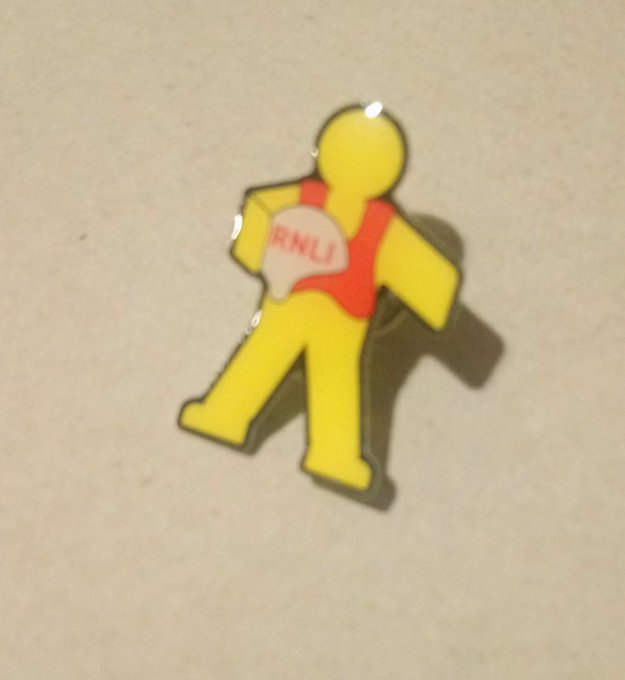
Anyway, as a regular donor to the RNLI I have this morning increased my contribution and will be wearing my RNLI pin badge in support of the brave men and women who regularly risk their lives to save those in distress at sea.
Incidentally, in case you were wondering, the RNLI also serves Ireland: there are 59 lifeboats based in 45 stations in the Republic as well as Northern Ireland.
Anyway, I don’t want to let all this get anyone down so I’m sharing this piece of music which sprang to mind. Lord Let Me In The Lifeboat was recorded in 1945 for the Blue Note label by a band led by Sidney Bechet and Bunk Johnson. The latter had just come out of retirement courtesy of Sidney Bechet’s brother Leonard, a dentist, who furnished trumpeter Johnson with a new set of false teeth to allow him to resume playing. Not a lot of people know that.
Understandably, Bunk Johnson’s chops were not in great shape on this session but Bechet’s certainly were! When I was a lad I used to spend a bit of time transcribing clarinet solos from old records, and I remember doing this one by Sidney Bechet. The notes in themselves are not hard to play, but few people could generate that heavy vibrato and rich tone!
UPDATE: Oh look! I found it. If you want to play along at home, here you are. It’s in B♭ Major, and comes with a best guess as to the chords:
I didn’t remember until late last night that yesterday was the 60th anniversary of the release, on 17th August 1959, of the classic jazz album Kind of Blue by a band led by trumpeter Miles Davis featuring John Coltrane (ts), Cannonball Adderley (as), Bill Evans (p, replaced by Wynton Kelly on one track), Paul Chambers (b) and Jimmy Cobb on drums. I bought the album on vinyl way back in the 1970s when I was still at school and have listened to it probably thousands of times since then. It still sounds fresh and exciting sixty years after its first release. But you don’t have to listen to me, you can listen to the whole album here:
When it first appeared, Kind of Blue seemed to represent all that Miles Davis stood for from a musical point of view, with its modal and scalar themes and such passages as the fourth section of Flamenco Sketches which hints at a Spanish influence. Whether the actual performances were typical of the way this band sounded live is less clear, but there’s no question that the album has worn so well as to be now universally regarded as a timeless masterpiece.
So why is it such an important album?
I can only speak for myself, of course, but I’d say a big part of this was that the music is on the cusp of the evolution of modern jazz. It’s music from a time of transition, pointing the way forward to exciting developments while also acknowledging past traditions. You only have to look at the various directions Miles Davis, John Coltrane and Bill Evans explored after this album to see what I mean.
A few words about each of the tracks:
The opening number So What? established the practice of constructing themes based on scales instead of chords. After an introduction that keeps you guessing for a while, it turns out to be a straightforward 32-bar melody with a simple modulation serving as the bridge. At a medium tempo, the pure-toned and rather spare solo by Miles Davis provides a delicious contracts with the flurry of notes produced by Coltrane, who also plays between the beats. It might be just my imagination but the rhythm section seems to tighten up behind him, only to relax again with Cannonball Adderley’s more laid-back, bluesy approach.
The next track is All Blues, which is in a gentle 6/8 time. I discovered by accident a while ago this composition found its way onto the GCSE Music syllabus. In fact there’s a recording of the track, produced and distributed as “set work” for that purpose:
As an aside, I should mention that I never took any qualifications in music at School – although I did get music lessons, I didn’t find them at all inspiring and it took me years to develop a taste for anything other than Jazz, which I knew about mainly from home, because my father was a (part-time) Jazz drummer. There wasn’t much mention of Jazz at School from teachers, and none of my friends were into it, so it became a very private passion, although I’m glad to say it never faded.
Anyway, what little I know about music I picked up by studying on my own, and trying to figure out what was going on by listening to records. All Blues is a really interesting composition to unpick in this way, as it tells you a lot about how Jazz was evolving in the late 1950s (it was released in 1959). Musicians like Miles Davis were experimenting with ways of breaking away from the standard approach to Jazz improvisation based on chord progressions, and one of the routes that developed was modal Jazz. All Blues is particularly interesting because it teeters on the edge between the old approach and the new; it’s clearly based on the traditional 12-bar blues progression but diverges from it in several respects.
A standard blues progression in G might go like this (although there are many variations):
|G|G|G|G|
|C|C|G|G|
|D|C|G|G|
It’s based on just three chords: the tonic (in this case G): the sub-dominant IV (C) and the dominant V (D); the V-IV-I progression in the last four bars is usually called the turnaround.
While the addition of a major 7th note to the basic triad G isn’t unusual, the two G minor 7th chords are more interesting, because they involve adding a blue note (a flattened third) to the basic chord . But it’s in the last four bars that the harmonies move dramatically away from the standard turnaround. Chromatic chords are included and the usual resolution back to G is subtly changed by the addition of a 6th note (E) to the basic G chord (GBD) at the end; that trick became a bit of a trademark for Jazz of this period.
However, it’s the two F chords that represent the strongest connection with modal harmony. The scale of G major involves F-sharp, so the F is a flattened note (a flattened VIIth). In fact, all the Fs in the piece are natural rather than sharp. For this reason you could argue that this is a piece not played in the key of G major but in the corresponding Mixolydian mode (the white notes on the piano from G to G).
So it’s a blues that’s not quite a blues, but is (appropriately enough) Kind of Blue. There’s so much going on harmonically that the fact that it’s played in 6/8 rhythm (rather than the more usual 4/4 for the Blues) seems almost irrelevant.
Those are just the bare bones, but the improvisations of Miles Davis, Bill Evans, Cannonball Adderley and John Coltrane et al breathe life into them and create a living Jazz masterpiece. Although it seems like a complicated tune, apparently what happened at the recording session was that Miles Davis talked the band through the piece, they played it once to get a feel for it, and then recorded the entire track that was released on the album in one go.
On Freddie Freeloader , Bill Evans was replaced with Wynton Kelly. I suppose that Miles Davis thought that Kelly would be more convincing on this relatively straight-ahead blues, and his crisp, direct opening solo suggests that Miles was probably right. Miles Davis’s solo that follows is superbly structured in terms of timing and dynamics. Coltrane plays more-or-less entirely in double-time and then Adderley enjoys himself hugely in a good-humoured final solo.
Blue in Green, which was mainly written by Bill Evans, is based on a ten-bar melody featuring an eloquent solo Miles on muted trumpet and some sensitive playing by Coltrane and Evans. The same mood prevails in the following track.
Flamenco Sketches involves a series of solos each improvised on a set of five scales; it’s the fourth section that hints at the Spanish influence alluded to in the title. The tempo is very slow, which contributes the air of solemnity as does the absolute perfection of the solos. In that respect it has clear parallels with some of Duke Ellington’s work. Miles Davis, who opens and closes the track on muted trumpet, and Bill Evans on piano are absolutely faultless but I particularly enjoy John Coltrane’s playing on tenor saxophone: his tone is as bleak and austere as an Arctic sunrise, and just as wonderful and he conjures up an absolutely beautiful improvised melody.
Kind of Blue isn’t merely an artistic highlight for Miles Davis, it’s an album that towers above its peers, a record generally considered as the definitive jazz album, a universally acknowledged standard of excellence. Why does Kind of Blue posses such a mystique? Perhaps because this music never flaunts its genius… It’s the pinnacle of modal jazz — tonality and solos build from the overall key, not chord changes, giving the music a subtly shifting quality… It may be a stretch to say that if you don’t like Kind of Blue, you don’t like jazz — but it’s hard to imagine it as anything other than a cornerstone of any jazz collection.
People sometimes ask me why I post about music on here. The answer has two parts and they’re both simple. One is that I enjoy writing about music because it gives me the opportunity to explore my own thoughts about why I like it so much. The other reason is to share something I love very much, in the hope that other people might find as much joy from the music I love. For example, if just one person listens to Kind of Blue for the first time as a result of reading this piece, then it will definitely be worth the 40 minutes it took me to write!
Well, I’ve been on duty all day so far at the Open Day I mentioned yesterday and am about to knock off and go home for a rest but first I thought I’d share this wonderful version of Cherokee, a tune that because of its complex chord changes is generally regarded as a test piece for jazz musicians. You’d never guess that from the ease that Clifford Brown shows as he tackles the 64-bar harmonic labyrinth at a breakneck tempo. If you want an example of jazz as a white knuckle ride, this is it!
Clifford Brown was a phenomenal virtuoso on the trumpet and it’s so sad that he died so young, at the age of 25, in a car accident. This performance was recorded in August 1953 and features an extended solo by Clifford Brown followed by a series of four-bar exchanges with the great drummer Art Blakey. Other principals are Percy Heath on bass and John Lewis on piano; Gigi Gryce (alto) and Charlie Rouse (tenor) also participate on the intro and outro. Enjoy!
Well, it’s Shrove Tuesday, Pancake Day, Mardi Gras and Fat Tuesday which gives me four excuses to post this lovely old record made by Humphey Lyttelton’s Paseo Jazz Band in the early Fifties. That’s the band that featured Humph’s regular crew alongside a number of London’s marvellous West Indian musicians of the time, hence the abundance of percussion and the resulting infectious calypso beat. Enjoy!
It’s been a very busy week so I’m about to go home and dive into a glass or two of wine, but before doing that I thought I’d leave a little something for the weekend.
Among the other things I have to do next week is make a short trip to Copenhagen to examine a PhD candidate. This track was recorded live at Copenhagen on September 8 1961 and it features Eric Dolphy (alto sax), Bent Axen (piano), Erik Moseholm (bass) and Jørn Elniff (drums). The tune The Way You Look Tonight is an old standard, written in 1936 by Dorothy Fields and Jerome Kern, but what a version this is! Dolphy tears through the changes on this performance, reinventing the piece in a way that turns what might be a routine tune into something absolutely new and refreshing. The combination of virtuosity and exuberance of the saxophone playing in this phenomenal performance is absolutely exhilarating. Enjoy!
I came across this on Youtube a while ago and I quite often play it when I’m at work if I’m in need of an aural pick-me-up when I’m flagging a bit. The tune All The Girls Go Crazy is one of many manifestations of a 16-bar blues theme that was fairly ubiquitous in New Orleans Jazz. The recording is by a band led Ken Colyer who I think is on cornet rather than trumpet on this track, but the Youtube poster gives no other information about the personnel or the date. I’m going to stick my neck out and say that the clarinettist sounds to me like Ian Wheeler and the drummer is without doubt Colin Bowden, one of the very best drummers in this style that the UK has ever produced. If I’m right then I think the date is somewhere around the mid-1950s, at the peak of the New Orleans revival in the UK. No doubt some other jazz fan out there will correct me if I’m wrong!
Ken Colyer (`the guvnor’) had very firm ideas about how New Orleans music should be performed, and you’ll notice that there’s much more ensemble work here than you find in the typical string-of-solos approach adopted by many `Trad’ bands of the period.
I’m going to look very silly if it’s not Colin Bowden on drums here, but for me he (or whoever else is the drummer) is the star of this performance, as it is he who is responsible for the steadily increasing sense of momentum, achieved without speeding up (which is the worst thing a rhythm section can do). Notice how he signals the end of each set of 8-bars with a little figure on the tom-toms and/or a cymbal crash, and it is by increasing the strength of these that he raises the excitement level. Notice also that he also has the last word with his cymbal, something jazz drummers are wont to do.
P.S. If you look here, you’ll see a certain Peter Coles playing alongside Ken Colyer in the 1970s. It’s not me, though. It’s my uncle Peter…
Mention the name Elkie Brooks to people of my generation or older and most will think of her popular hits from the late 1970s, especially Pearl’s A Singer which made the UK Top Ten in 1977. Elkie Brooks has however had a long and very distinguished career as a Jazz and Blues singer, including regular performances over the years with trumpeter Humphrey Lyttelton and his band. This particular track was recorded in 2002, when Humph was already in his eighties, but I think it’s a lovely performance so I thought I’d share it here.
Trouble in Mind is a very familiar tune that has been recorded countless times by jazz musicians. In fact an earlier manifestation of Humph’s Band made a very nice instrumental version way back in 1950 which I have on an old Parlophone 78. The tune is usually credited to Richard M. Jones, but it has its roots in much older spirituals and folk songs. There are a couple of things worth mentioning about it despite it being so well known.. Although Trouble in Mind is a blues, it is a slightly unusual one because it’s an eight-bar blues rather than the more usual twelve-bar variety. The other thing is that there’s something about this tune that suits a rhythm accompaniment in sixth notes, as exemplified by drummer Adrian Macintosh on this track when the vocal starts.
There’s also some fine trombone on this (by Pete Strange) and a nice bit of banter from Humph at the beginning. Enjoy!
One of the contributors to the `Out Thinkers’ event I went to a couple of weeks ago, Emer Maguire, talked about science and music. During the course of her presentation she mentioned one of the most common sets of chord changes in pop music, the I-V-vi-IV progression. In the key of C major, the chords of this progression would be C, G, Am and F. You will for example find this progression comes up often in the songs of Ed Sheeran (whoever that is).
These four chords include those based on the tonic (I), the dominant (V) and the sub-dominant (IV) – i.e. the three chords of the basic blues progression – as well as the relative minor (vi). The relative minor for a major key is a key with exactly the same notes (i.e. the same sharps and flats) in it, but with a different tonic. With these four chords (shuffled in various ways) you can reproduce the harmonies of a very large fraction of the modern pop repertoire. It’s a comfortable and pleasant harmonic progression, but to my ears it sounds a bit bland and uninteresting.
These thoughts came into my head the other night when I was listening to an album of music by Thelonious Monk. One of my `hobbies’ is to try to figure out what’s going on underneath the music that I listen to, especially jazz. I can’t really play the piano, but I have an electronic keyboard which I play around on while trying to figure out what chord progressions are being used. I usually make a lot of terrible mistakes fumbling around in this way, so my neighbours and I are grateful that I use headphones rather than playing out loud!
I haven’t done a detailed statistical study, but I would guess that the most common chord progression in jazz might well be ii-V-I, a sequence that resolves onto the tonic through a cadence of fifths. I think one of the things some people dislike about modern jazz is that many of the chord progressions eschew this resolution which can make the music rather unsettling or, to put it another way, interesting.
Here’s a great example of a Thelonious Monk composition that throws away the rule book and as a result creates a unique atmosphere; it’s called Off Minor and it’s one of my absolute favourite Monk tunes, recorded for Blue Note in 1947:
The composition follows the standard 32 bar format of AABA; the A section ends with a strange D sharp chord extended with a flattened 9th which clashes with a B in the piano melody. This ending is quite a shock given the more conventional changes that precede it.
But it’s the B section (the bridge) where it gets really fascinating. The first bar starts on D-flat, moves up to D, and then goes into a series of unresolved ii-V changes beginning in B-flat. That’s not particularly weird in itself, but these changes don’t take place in the conventional way (one each bar): the first does, but the second is over two bars; and the third over four bars. Moreover, after all these changes the bridge ends on an unresolved D chord. It’s the fact that each set of eight bars ends in mid-air that provides this piece with its compelling sense of forward motion.
There’s much more to it than just the chords, of course. There are Monk’s unique voicings and playful use of time as he states the melody, and then there’s his improvised solo, which I think is one of his very best, especially in the first chorus as he sets out like a brave explorer to chart a path through this curious harmonic landscape..
Well, it’s fine and sunny today and if the weather doesn’t put a spring in your step, hopefully this will. It’s a lovely old tune and something of a jazz standard called Melancholy, but this is very probably the least melancholy version of it you’ll ever hear. On top of that it’s quite an interesting piece of jazz history, as it features legendary clarinet player Johnny Dodds (who played in King Oliver’s Creole Jazz Band and later in the Hot Fives and Hot Sevens with Louis Armstrong in the 1920s) as did pianist Lil Hardin, but the rest of the band is from a younger generation, especially Charlie Shavers on trumpet and Teddy Bunn (a much underrated guitarist). The rhythm section has a define taste of the Swing Era rather than New Orleans, but the main thing about this is how well the different styles blend together. Enjoy!
The views presented here are personal and not necessarily those of my employer (or anyone else for that matter).
Feel free to comment on any of the posts on this blog but comments may be moderated; anonymous comments and any considered by me to be vexatious and/or abusive and/or defamatory will not be accepted. I do not necessarily endorse, support, sanction, encourage, verify or agree with the opinions or statements of any information or other content in the comments on this site and do not in any way guarantee their accuracy or reliability.