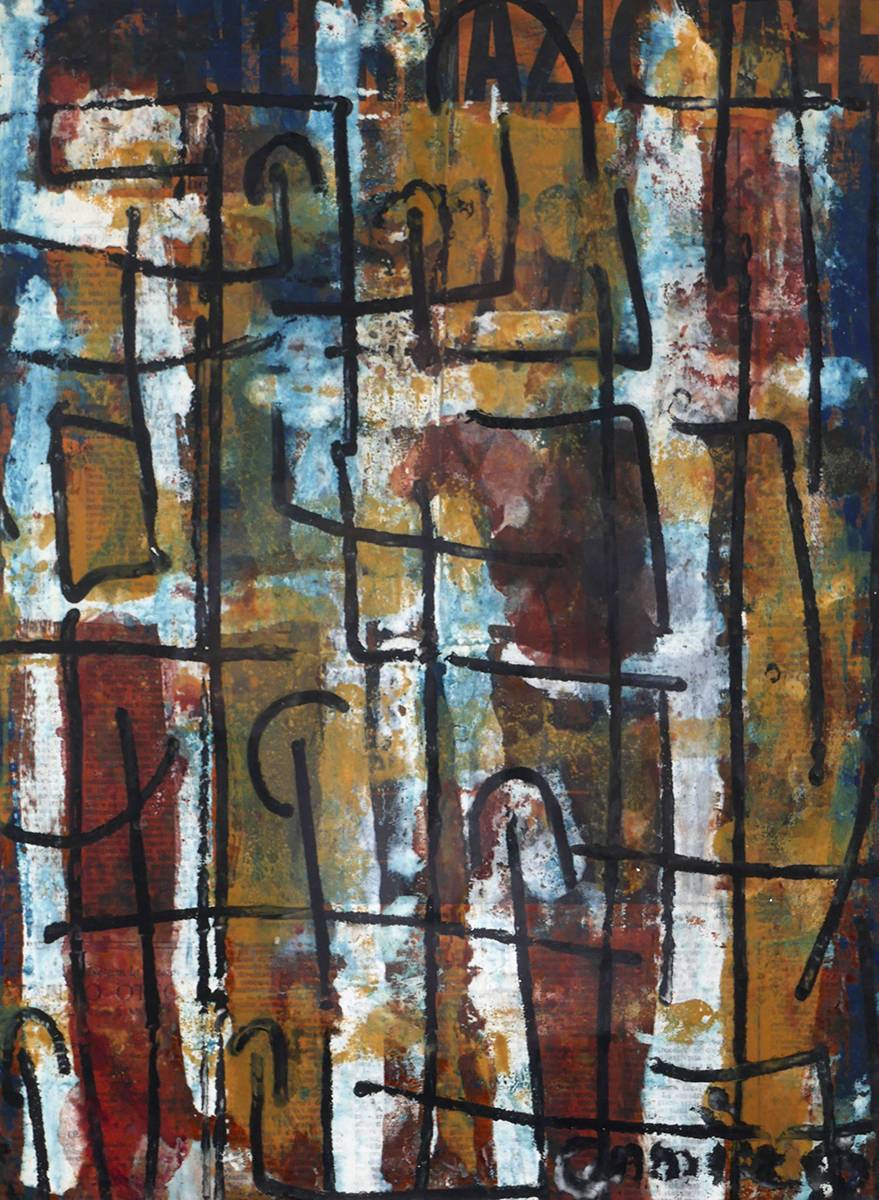
Internazionale by Camille Souter (1965, 76.2 x 63.5 cm, oil on newsprint, private collection).
Posted in tribute to the artist, who has passed away at the age of 93.
R.I.P. Camille Souter (1929-2023).
Internazionale by Camille Souter (1965, 76.2 x 63.5 cm, oil on newsprint, private collection).
Posted in tribute to the artist, who has passed away at the age of 93.
R.I.P. Camille Souter (1929-2023).
The 17th-century Flemish painter Anthony van Dyck (1599–1641) is famous not only as an artist but also for a particular style of facial hair, the goatee/moustache combo now known as a “Van Dyke”, as demonstrated by the man himself in this self-portrait:

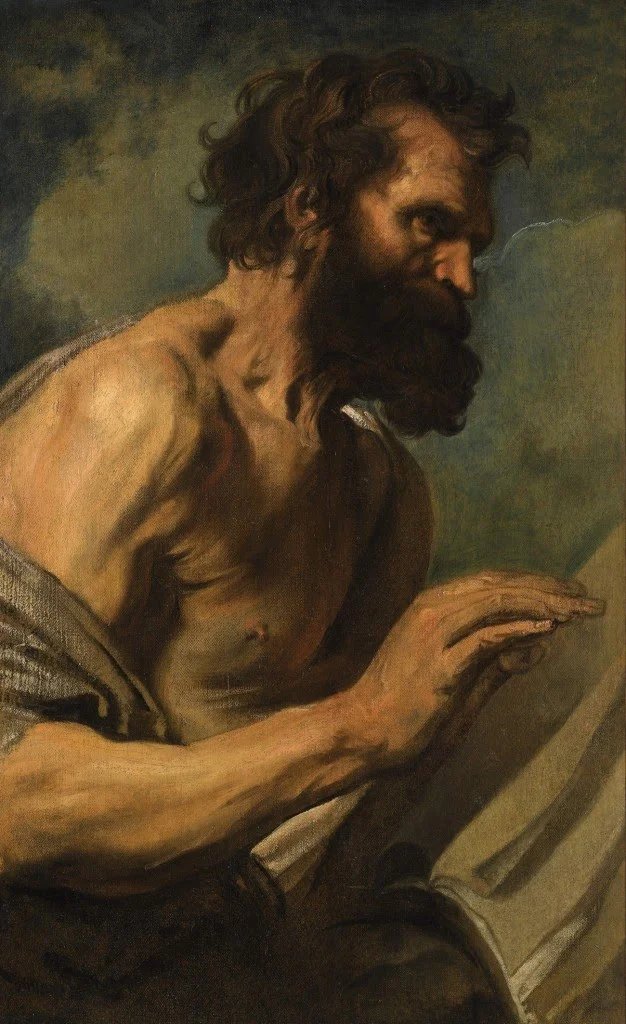
What I didn’t realise until recently however that van Dyck painted a very large number of studies of men with all kinds of beards. Here is a particularly fine example (Study of a Bearded Man with Hands Raised, 1616).

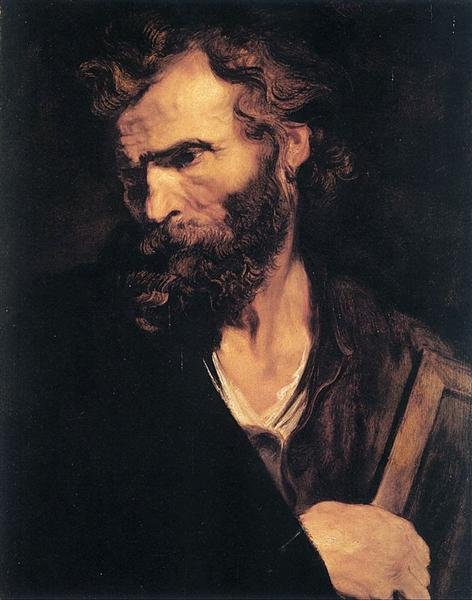
I’m not an expert but based on the poses I suspect these studies were done in preparation for paintings with biblical themes. Indeed the model looks rather similar to the figure in Jude The Apostle completed about three years later:

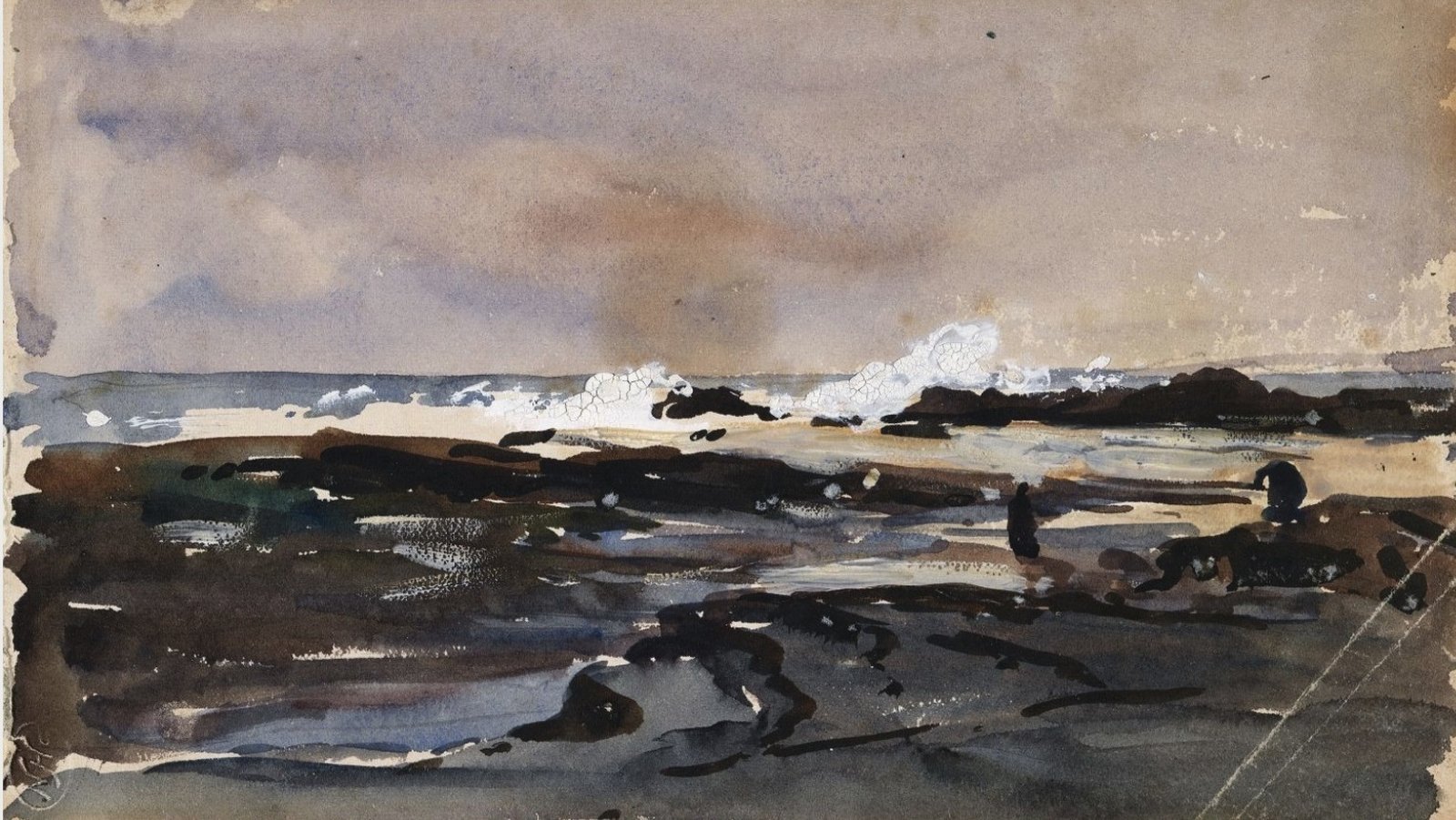
Back in Ireland on Thursday I was pottering about in my flat listening to the radio when I heard an interesting discussion about the work of art shown above, by Nathaniel Hone the Younger. It’s not a finished painting, but a small sketch made in watercolours, probably a study for a larger work. Hone made lots of these sketches over the years; this one was made in about 1890 at Kilkee and is in the National Gallery of Ireland. The dark palette and rough texture created by very thick application of the paint is unusual for a watercolour. No doubt all that is at least partly because of the windswept location in which the artist was working!
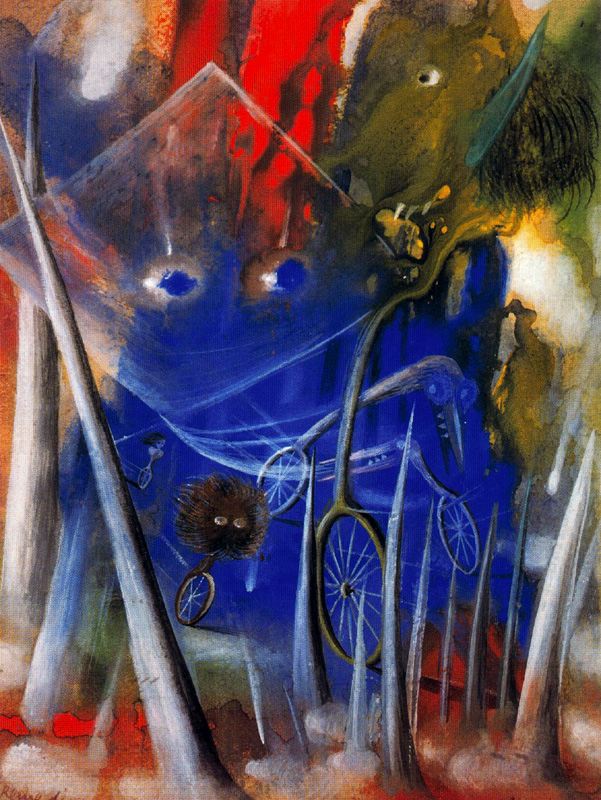
by Remedios Varo Uranga (1908-63), painted in 1945, 20 × 15.5cm, gouache on paper.
I came across this picture in this week’s Times Literary Supplement as part of an article describing an exhibition currently showing at the National Gallery in London. I thought I’d share it here because it’s such an extraordinarily powerful and mysterious image.
It was painted sometime around 1512-16 by Sebastiano del Piombo, a contemporary of Michelangelo.
The Pietà (an image of the distraught Virgin Mary lamenting the death of her son, usually cradling his lifeless body) is a familiar subject in religious art, but this particular version is strikingly different.
For one thing, the Virgin Mary is not holding, or even looking at, the body of Christ. She seems instead to be lost in prayer.
For another, the figure of Mary towers over the corpse at her feet. Is it just me, or does she look rather masculine too? Assuming this is deliberate, are we seeing her somehow growing in stature, perhaps becoming divine herself?
It’s as if we catch her in the moment in which she is undergoing some form of transformation. In any case she’s not simply overcome with grief as in many depictions of this scene. What she is experiencing remains an enigma. This is not unusual for Renaissance art: paintings in particular often seem to contain secret messages.
The body of her son – brown and apparently without wounds – looks grotesquely stiff, incapable of being embraced. The background is a bleak landscape of ruined buildings and stunted trees, feebly lit by the distant moon.
It’s a stark, comfortless description of the dead Christ, but Mary embodies a sense of determination and hope. Above all, though, it’s a very dramatic painting.