We live in a cyclic universe of a sort because every few years somebody tries to resurrect the idea that dark matter is somehow related to primordial black holes, i.e. black holes formed in the very early stages of the history of the Universe so that they have masses much smaller than black holes formed more recently by the collapse of stars or the merger of other black holes. If it forms very early the mass of a PBH could in principle be very small, much less than a star or a planet. The problem with very small black holes is that they evaporate very quickly via Hawking Radiation so would not survive the 14 billion years or so needed to still be in existence today and able to be dark matter.
An idea that was used in the past to circumvent this issue was that something might stop Hawking Radiation proceeding to reduce the mass of a PBH to zero, leaving a relic of finite mass usually taken to be the Planck mass. The suggestion has returned in different (but still speculative) guise recently, fueling a number of media articles of varying degrees of comprehensibility, e.g. here. The technical papers on which these articles are based can be found here and here.
Fortunately, there is now one of those excellent Cosmology Talks explaining the latest idea of how Hawking Radiation might break down and what the consequences are for Primordial Black Holes as a form of Dark Matter.
Today sees the launch of a new initiative between Galaxy Zoo (part of the Zooniverse conglomerate) and the Euclid Consortium which I am delighted to be able to promote on this blog. What follows the graphic is the text of the announcement which is being promoted across social media today. I’ll start with a little factoid which might surprise you: already in November 2023, before science operations even began, Euclid had sent back to Earth more data than the Hubble Space Telescope has done in in its entire lifetime.
Thanks to a new Galaxy Zoo project launched today, you can help identify the shapes of thousands of galaxies in images taken by ESA’s Euclid space telescope. These classifications will help scientists answer questions about how the shapes of galaxies have changed over time, and what caused these changes and why.
In its mission to map out the Universe, Euclid will image hundreds of thousands of distant galaxies. In November 2023 and May 2024, the world got its first glimpse at the quality of Euclid’s images, which included a variety of sources, from nearby nebulas to distant clusters of galaxies. In the background of each of these images are hundreds of thousands of distant galaxies.
This square astronomical image shows thousands of galaxies across the black expanse of space. The closest thousand or so galaxies belong to the Perseus Cluster.
For the next six years, the spacecraft is expected to send around 100 GB of data back to Earth every day. That’s a lot of data, and labelling that through human effort alone is incredibly difficult.
That’s why ESA and Euclid consortium scientists have partnered with Galaxy Zoo. This is a citizen science project on the Zooniverse platform, where members of the public can help classify the shapes of galaxies.
Euclid will release its first catalogues of data to the scientific community starting in 2025, but in the meantime any volunteer on the Galaxy Zoo project can have a glimpse at previously unseen images from the telescope.
You could be the first person to lay eyes on a galaxy
The first set of data, which contains tens of thousands of galaxies selected from more than 800 000 images, has been made available on the platform, and is waiting for you to help classify them.
If you partake in the project, you could be the first to lay eyes on Euclid’s latest images. Not only that, you could also be the first human ever to see the galaxy in the image.
The Galaxy Zoo project was first launched in 2007, and asked members of the public to help classify the shapes of a million galaxies from images taken by the Sloan Digital Sky Survey. In the past 17 years, Galaxy Zoo has remained operational, with more than 400 000 people classifying the shapes of galaxies from other projects and telescopes, including the the NASA/ESA Hubble Space Telescope and the NASA/ESA/CSA James Webb Space Telescope.
Humans and AI working together
These classifications are not only useful for their immediate scientific potential, but also as a training set for Artificial Intelligence (AI) algorithms. Without being taught what to look for by humans, AI algorithms struggle to classify galaxies. But together, humans and AI can accurately classify limitless numbers of galaxies.
At Zooniverse, the team has developed an AI algorithm called ZooBot, which will sift through the Euclid images first and label the ‘easier ones’ of which a lot of examples already exist in previous galaxy surveys. When ZooBot is not confident on the classification of a galaxy, perhaps due to complex or faint structures, it will show it to users on Galaxy Zoo to get their human classifications, which will then help ZooBot to learn more.
On the platform, volunteers will be presented with images of galaxies and will then be asked several questions, such as “Is the galaxy round?”, or “Are there signs of spiral arms?”.
After being trained on these human classifications, ZooBot will be integrated in the Euclid catalogues to provide detailed classifications for hundreds of millions of galaxies, making it the largest scientific catalogue to date, and enabling groundbreaking new science.
This project makes use of the ESA Datalabs digital platform to generate a large number of cutouts of galaxies imaged by Euclid.
Thanks to a new Galaxy Zoo project launched today, you can help identify the shapes of thousands of galaxies in images taken by ESA’s Euclid space telescope. These classifications will help scientists answer questions about how the shapes of galaxies have changed over time, and what caused these changes and why.
The first set of data, which contains tens of thousands of galaxies selected from more than 800 000 images, has been made available on the platform, and is waiting for you to help classify them.
Examples of Euclid galaxies to classify are shown in this image.
Euclid Galaxy Zoo galaxies to classify. Forty galaxies are shown against a black background. The galaxies are all different in shape, some look like spirals, some look barred, or smooth. Image credit: ESA/Euclid/Euclid Consortium/NASA, CC BY-SA 3.0 IGO or ESA Standard Licence
Euclid is a European mission, built and operated by ESA, with contributions from NASA. The Euclid Consortium – consisting of more than 2000 scientists from 300 institutes in 15 European countries, the USA, Canada and Japan – is responsible for providing the scientific instruments and scientific data analysis. ESA selected Thales Alenia Space as prime contractor for the construction of the satellite and its service module, with Airbus Defence and Space chosen to develop the payload module, including the telescope. NASA provided the detectors of the Near-Infrared Spectrometer and Photometer, NISP. Euclid is a medium-class mission in ESA’s Cosmic Vision Programme.
Looking at the title of this paper you might be tempted to dismiss it on the grounds that warp drives are the stuff of science fiction (which they are), but this paper is really a rigorous technical study of the dynamical evolution and stability of spacetimes that violate the null energy condition, inspired by the idea of a warp drive. As soon as I announced this paper on social media it started to get attention. That will probably increase because there is now a press release to accompany the paper. I’ve taken the liberty of reproducing the text of the press release here:
–o–
Imagine a spaceship driven not by engines, but by compressing the spacetime in front of it. That’s the realm of science fiction, right? Well, not entirely. Physicists have been exploring the theoretical possibility of “warp drives” for decades, and a new study published in the Open Journal of Astrophysics takes things a step further – simulating the gravitational waves such a drive might emit if it broke down.
Warp drives are staples of science fiction, and in principle could propel spaceships faster than the speed of light. Unfortunately, there are many problems with constructing them in practice, such as the requirement for an exotic type of matter with negative energy. Other issues with the warp drive metric include the potential to use it to create closed time-like curves that violate causality and, from a more practical perspective, the difficulties for those in the ship in actually controlling and deactivating the bubble.
This new research is the result of a collaboration between specialists in gravitational physics at Queen Mary University of London, the University of Potsdam, the Max Planck Institute (MPI) for Gravitational Physics in Potsdam and Cardiff University. Whilst it doesn’t claim to have cracked the warp drive code, it explores the theoretical consequences of a warp drive “containment failure” using numerical simulations.
Dr Katy Clough of Queen Mary University of London, the first author of the study explains: “Even though warp drives are purely theoretical, they have a well-defined description in Einstein’s theory of General Relativity, and so numerical simulations allow us to explore the impact they might have on spacetime in the form of gravitational waves.”
Co-author Dr Sebastian Khan, from Cardiff University’s School of Physics and Astronomy, adds: “Miguel Alcubierre created the first warp drive solution during his PhD at Cardiff University in 1994, and subsequently worked at the MPI in Potsdam. So it’s only natural that we carry on the tradition of warp drive research in the era of gravitational wave astronomy .”
The results are fascinating. The collapsing warp drive generates a distinct burst of gravitational waves, a ripple in spacetime that could be detectable by gravitational wave detectors that normally target black hole and neutron star mergers. Unlike the chirps from merging astrophysical objects, this signal would be a short, high-frequency burst, and so current detectors wouldn’t pick it up. However, future higher-frequency instruments might, and although no such instruments have yet been funded, the technology to build them exists. This raises the possibility of using these signals to search for evidence of warp drive technology, even if we can’t build it ourselves.
Dr Khan cautions “In our study, the initial shape of the spacetime is the warp bubble described by Alcubierre. While we were able to demonstrate that an observable signal could in principle be found by future detectors, given the speculative nature of the work this isn’t sufficient to drive instrument development.”
The study also delves into the energy dynamics of the collapsing warp drive. The process emits a wave of negative energy matter, followed by alternating positive and negative waves. This complex dance results in a net increase in the overall energy of the system, and in principle could provide another signature of the collapse if the outgoing waves interacted with normal matter.
This research pushes the boundaries of our understanding of exotic spacetimes and gravitational waves. Prof Dietrich comments: “For me, the most important aspect of the study is the novelty of accurately modelling the dynamics of negative energy spacetimes, and the possibility of extending the techniques to physical situations that can help us better understand the evolution and origin of our universe, or the avoidance of singularities at the centre of black holes.”
Dr Clough adds: “It’s a reminder that theoretical ideas can push us to explore the universe in new ways. Even though we are sceptical about the likelihood of seeing anything, I do think it is sufficiently interesting to be worth looking!”
The researchers plan to investigate how the signal changes with different warp drive models and explore the collapse of bubbles travelling at speeds exceeding the speed of light itself. Warp speed may be a long way off, but the quest to understand the universe’s secrets continues, one simulated crash at a time.
Here’s another video in the Cosmology Talks series curated by Shaun Hotchkiss. This one very timely after yesterday’s announcement. Here is the description on the YouTube page:
The Dark Energy Spectroscopic Instrument (DESI) has produced cosmological constraints! And it is living up to its name. Two researchers from DESI, Seshadri Nadathur and Andreu Font-Ribera, tell us about DESI’s measurements of the Baryon Acoustic Oscillations (BAO) released today. These results use one full year of DESI data and are the first cosmological constraints from the telescope that have been released. Mostly, it is what you might expect: tighter constraints. However, in the realm of the equation of state of dark energy, they find, even with BAO alone, that there is a hint of evidence for evolving dark energy. When they combine their data with CMB and Supernovae, who both also find small hints of evolving dark energy on their own, the evidence for dark energy not being a cosmological constant jumps as high as 3.9σ with one combination of the datasets. It seems there still is “concordance cosmology”, it’s just not ΛCDM for these datasets. The fact that all three probes are tentatively favouring this is intriguing, as it makes it unlikely to be due to systematic errors in one measurement pipeline.
My own take is that the results are very interesting but I think we need to know a lot more about possible systematics before jumping to conclusions about time-varying dark energy. Am I getting conservative in my old age? These results from DESI do of course further underline the motivation for Euclid (another Stage IV survey), which may have an even better capability to identify departures from the standard model.
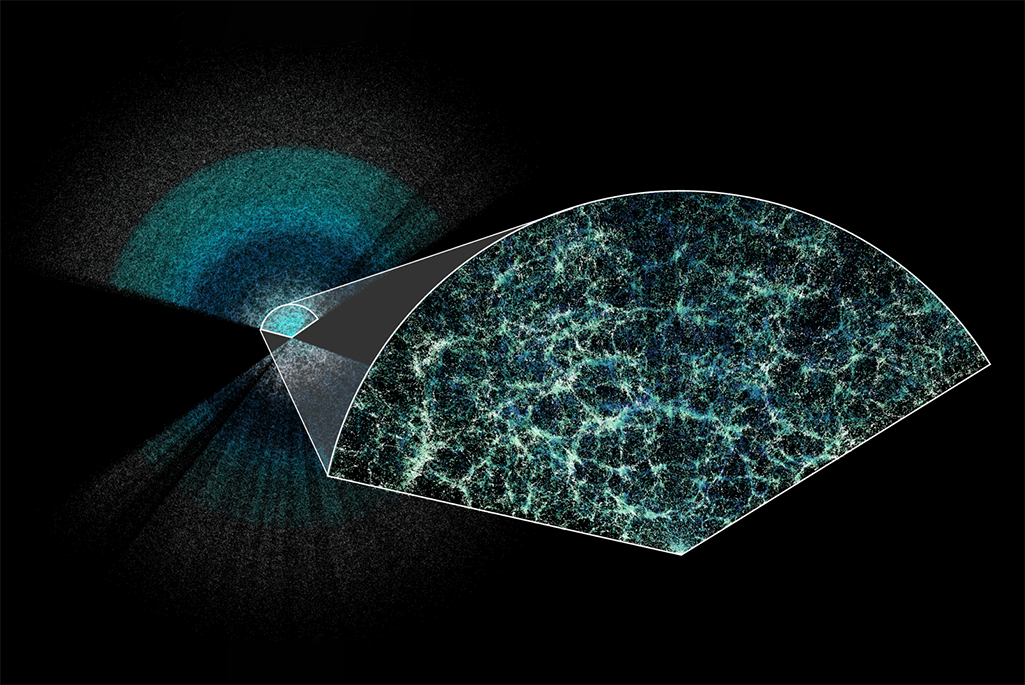
P.S. Here’s a nice graphic showing the cosmic web showing revealed by the DESI survey:
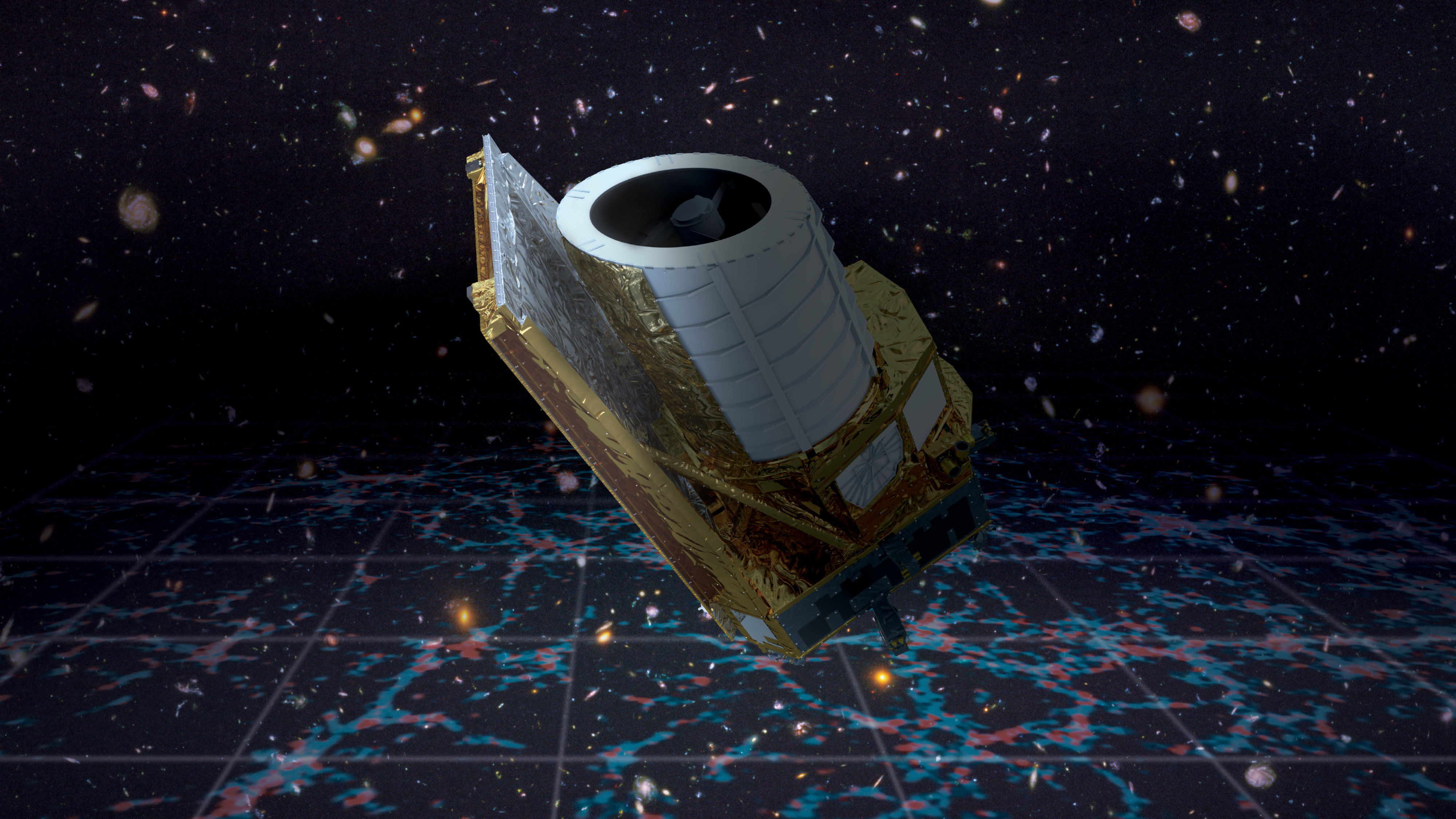
I thought it would be appropriate to add a little update about the European Space Agency’s Euclid mission. I’ll keep it brief here because you can read the full story on the official website here.
You may have seen in the news that the Euclid telescope has been having an issue with ice forming on surfaces in its optical systems, especially the VIS instrument. This is a common problem with telescopes in space, but the extent of it is not something that can be predicted very accurately in advance so a detailed strategy for dealing with it had to be developed on the go.
The layers of ice that form are very thin – just tens of nanometres thick – but that is enough to blur the images and also reduce the throughput of the instruments. Given that the objects we want Euclid to see are faint, and we need very sharp images then this is an issue that must be dealt with.
Soon after launch, the telescope was heated up for a while in order to evaporate as much ice as possible, but it was not known how quickly the ice would return and to what parts of the optical system. After months in the cold of space the instrument scientists now understand the behaviour of the pesky ice a lot better, and have devised a strategy for dealing with it.
The approach is fairly simple in principle: heat the affected instruments up every now and again, and then let them cool down again so they operate; repeat as necessary as ice forms again. This involves an interruption in observations, it is known to work pretty well, but exactly how frequently this de-icing cycle should be implemented and what parts of the optical system require this treatment are questions that need to be answered in practical experimentation. The hope is that after a number of operations of this kind, the amount of ice returning each time will gradually reduce. I am not an expert in these things but I gather from colleagues that the signs are encouraging.
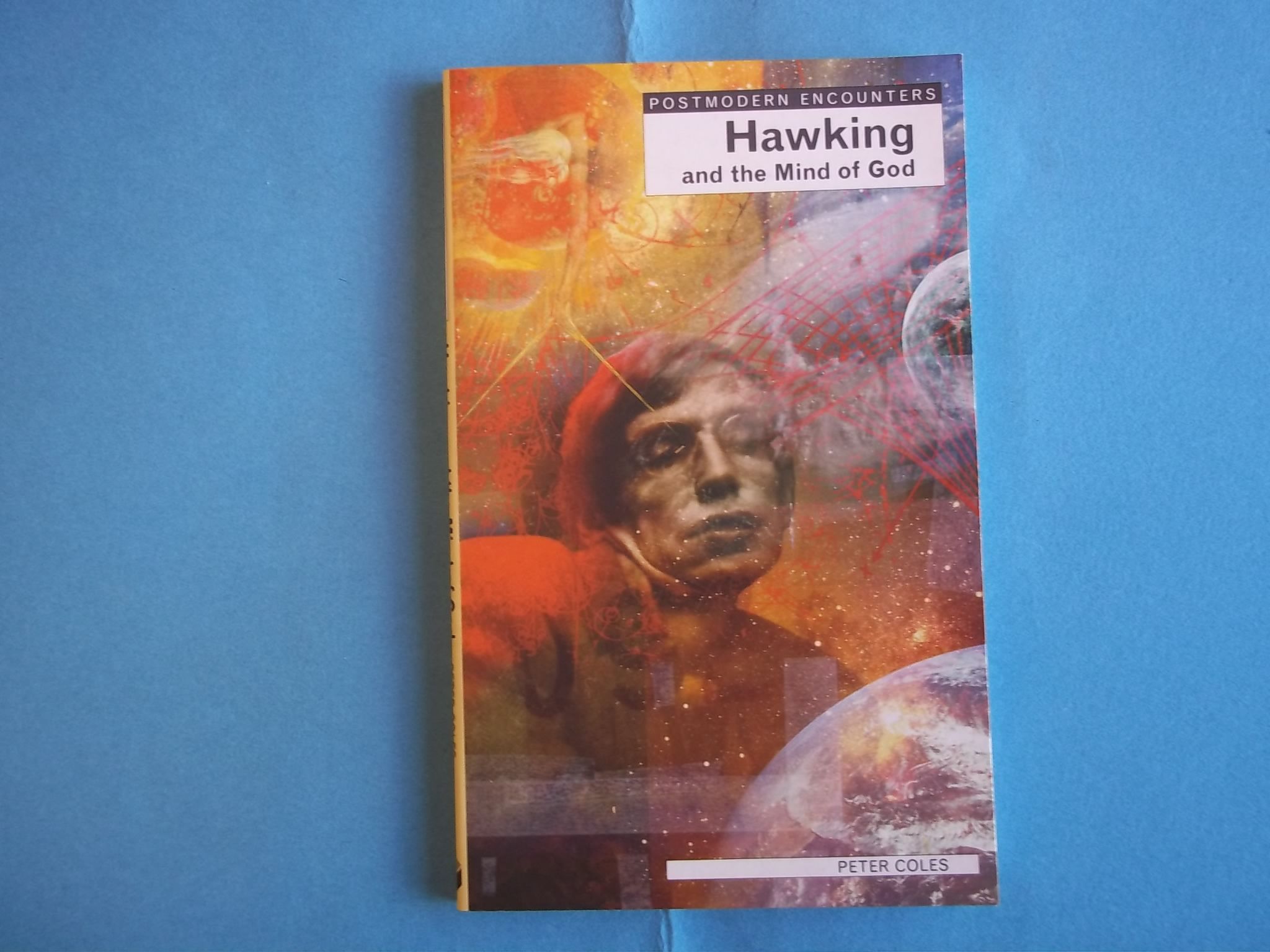
There’s a new book out about Stephen Hawking which has triggered a certain amount of reaction (see, e.g., here) so I thought I’d mention a book I wrote, largely in response to the pseudo-religious nature of some of Hawking’s later writings.
I have in the past gone on record, both on television and in print, as being not entirely positive about the “cult” that surrounds Stephen Hawking. I think a number of my colleagues have found some of my comments disrespectful and/or churlish. I do nevertheless stand by everything I’ve said. I have enormous respect for Hawking the physicist, as well as deep admiration for his tenacity and fortitude, and have never said otherwise. I don’t, however, agree that Hawking is in the same category of revolutionary thinkers as Newton or Einstein, which is how he is often portrayed.
The idea of a league table like this is of course a bit silly, but it does at least give some insight into the way physicists regard prominent figures in their subject. Hawking came way down the list, in fact, in 300th (equal) place. I don’t think it is disrespectful to Hawking to point this out. I’m not saying he isn’t a brilliant physicist. I’m just saying that there are a great many other brilliant physicists that no one outside physics has ever heard of.
It is interesting to speculate what would have happened if the list had been restricted to living physicists. I’d guess Hawking would be in the top ten, but I’m not at all sure where…
And before I get accused of jealousy about Stephen Hawking’s fame, let me make it absolutely clear that if Hawking was like a top Premiership footballer (which I think is an appropriate analogy), then I am definitely like someone kicking a ball around for a pub team on a Sunday morning (with a hangover). This gulf does not make me envious; it just makes me admire his ability all the more, just as trying to play football makes one realise exactly how good the top players really are.
I am not myself religious but I do think that there are many things that science does not – and probably will never – explain, such as why there is something rather than nothing. I also believe that science and religious belief are not in principle incompatible – although whether there is a conflict in practice does depend of course on the form of religious belief and how it is observed. God and physics are in my view pretty much orthogonal. To put it another way, if I were religious, there’s nothing in theoretical physics that would change make me want to change my mind. However, I’ll leave it to those many physicists who are learned in matters of theology to take up the (metaphorical) cudgels with Professor Hawking.
Stephen Hawking has achieved a unique position in contemporary culture, combining eminence in the rarefied world of theoretical physics with the popular fame usually reserved for film stars and rock musicians. Yet Hawking’s technical work is so challenging, both in its conceptual scope and in its mathematical detail, that proper understanding of its significance lies beyond the grasp of all but a few specialists. How, then, did Hawking-the-scientist become Hawking-the-icon? Hawking’s theories often take him into the intellectual territory that has traditionally been the province of religion rather than science. He acknowledges this explicitly in the closing sentence of his bestseller, A Brief History of Time , where he says that his ultimate aim is to know the Mind of God . Hawking and the Mind of God examines the pseudo-religious connotations of some of the key themes in Hawking’s work, and how these shed light not only on the Hawking cult itself, but also on the wider issue of how scientists represent themselves in the media.
I’m sure you’ll understand that there isn’t a hint of opportunism in the way I’m drawing this to your attention because my book is long out of print so you can’t buy it unless you get a copy second-hand…
My heart always sinks when the arXiv informs me that the abstract of a paper is `abridged’ so here’s the full version from the PDF you can download for yourself here. Please be aware, though, that it’s a lengthy paper running to over two hundred pages:
My own view on this topic is that it is indeed remarkable that the Universe is finely-tuned to exactly the extent required to allow authors to write such long papers about the fine-tuning of the Universe…
An interesting little paper by Duncan Forbes and Pavel Kroupa appeared today on the arXiv today. It asks what you would have thought was the rather basic question “What is a Galaxy?”. Like many basic questions, however, it turns out to be much more complicated than you imagined.
Ask most people what they think a galaxy is and they’ll think of something like Andromeda (or M31), shown on the left, with its lovely spiral arms. But galaxies exist in many different types, which have quite different morphologies, dynamical properties and stellar populations.
The paper by Forbes and Kroupa lists examples of definitions from technical articles and elsewhere. The Oxford English Dictionary, for instance, gives
Any of the numerous large groups of stars and other
matter that exist in space as independent systems.
I suppose that is OK, but isn’t very precise. How do you define “independent”, for example? Two galaxies orbiting in a binary system aren’t independent, but you would still want to count them as two galaxies rather than one. A group or cluster of galaxies is likewise not a single large galaxy, at least not by any useful definition. At the other extreme, what about a cluster of stars or even a binary star system? Why aren’t they regarded as gaaxies too? They are (or can be) gravitationally bound..
Clearly we have a particular size in mind, but even if we restrict ourselves to “galaxy-sized” objects we still have problems. Why is a globular cluster not a small galaxy while a dwarf galaxy is?
To be perfectly honest, I don’t really care very much about nomenclature. A rose by any other name would smell as sweet, and a galaxy by any other name would be just as luminous. What really counts are the physical properties of the various astronomical systems we find because these are what have to be explained by astrophysicists.
Perhaps it would be better to adopt Judge Potter Stewart‘s approach. Asked to rule on an obscenity case, he wrote that hard-core pornography was difficult to define, but ” I know it when I see it”….
As a cosmologist I tend to think that there’s only one system that really counts – the Universe, and galaxies are just bits of the Universe where stars seemed to have formed and organised themselves into interesting shapes. Galaxies may be photogenic, nice showy things for impressing people, but they aren’t really in themselves all that important in the cosmic scheme of things. They’re just the Big Bang’s bits of bling.
I’m not saying that galaxies aren’t extremely useful for telling us about the Universe; they clearly are. They shed light (literally) on a great many things that we wouldn’t otherwise have any clue about. Without them we couldn’t even have begun to do cosmology, and they still provide some of the most important evidence in the ongoing investigation of the the nature of the Universe. However, I think what goes on in between the shiny bits is actually much more interesting from the point of view of fundamental physics than the shiny things themselves.
Anyway, I’m rambling again and I can hear the observational astronomers swearing at me through their screens, so let me move on to the fun bit of the paper I was discussing, which is that the authors list a number of possible definitions of a galaxy and invite readers to vote.
For your information, the options (discussed in more detail in the paper) for the minimum criteria to define a galaxy are:
The relaxation time is greater than the age of the Universe
The half-light radius is greater than 10 parsecs
The presence of complex stellar systems
The presence of dark matter
Hosts a satellite stellar system
I won’t comment on the grammatical inconsistency of these statements. Or perhaps I just did. I’m not sure these would have been my choices either, but there you are. There’s an option to add your own criteria anyway.
UPDATE: In view of the reaction some of my comments have generated from galactic astronomers I’ve decided to add a poll of my own, so that readers of this blog can express their opinions in a completely fair and unbiased way:
I woke up this morning to the news that, according to Stephen Hawking, God did not create the Universe but it was instead an “inevitable consequence of the Law of Physics”. By sheer coincidence this daft pronouncement has come out at the same time as the publication of Professor Hawking’s new book, an extract of which appears in todays Times.
It’s interesting that such a fatuous statement managed to become a lead item on the radio news and a headline in all the national newspapers despite being so obviously devoid of any meaning whatsoever. How can the Universe be “a consequence” of the theories that we invented to describe it? To me that’s just like saying that the Lake District is a consequence of an Ordnance Survey map. And where did the Laws of Physics come from, if not from God?
Stephen Hawking is undoubtedly a very brilliant theoretical physicist. However, something I’ve noticed about theoretical physicists over the years is that if you get them talking on subjects outside physics they are generally likely to say things just as daft as some drunk bloke down the pub. I’m afraid this is a case in point.
Part of me just wants to laugh this story off, but another part is alarmed at what must appear to many to be an example of an arrogant scientist presuming to pass judgement on subjects that are really none of his business. When scientists complain about the lack of enthusiasm shown by sections of the public towards their subject, perhaps they should take seriously the alienating effect that such statements can have. This kind of thing isn’t what I’d call public engagement. Quite the opposite, in fact.
In case anyone is interested, I am not religious but I do think that there are many things that science does not – and probably will never – explain, such as why there is something rather than nothing. I also believe that science and religious belief are not in principle incompatible – although whether there is a conflict in practice does depend of course on the form of religious belief and how it is observed. God and physics are in my view pretty much orthogonal. To put it another way, if I were religious, there’s nothing in theoretical physics that would change make me want to change my mind. However, I’ll leave it to those many physicists who are learned in matters of theology to take up the (metaphorical) cudgels with Professor Hawking.
No doubt this bit of publicity will increase the sales of the new book, so I’ve decided to point out that I have written a book myself on precisely this question, which is available from all good airports bookshops. I’m sure you’ll understand that there isn’t a hint of opportunism in the way I’m drawing this to your attention. If you think this is a cynical attempt to cash in then all I can say is
BUY MY BOOK!
I also noticed that today’s Grauniad is offering a poll on the existence or non-existence of God. I noticed some time ago that there’s a poll facility on WordPress, so this gives me an excuse to try repeating it here. Anything dumb the Guardian can do, I can do dumber. However, owing to funding cuts I’ve decided to do a single poll encompassing several topical news stories at the same time.
The views presented here are personal and not necessarily those of my employer (or anyone else for that matter).
Feel free to comment on any of the posts on this blog but comments may be moderated; anonymous comments and any considered by me to be vexatious and/or abusive and/or defamatory will not be accepted. I do not necessarily endorse, support, sanction, encourage, verify or agree with the opinions or statements of any information or other content in the comments on this site and do not in any way guarantee their accuracy or reliability.



 Ask most people what they think a galaxy is and they’ll think of something like Andromeda (or M31), shown on the left, with its lovely spiral arms. But

 In the Dark