Archive for August, 2024

Leaving Certificate Results

Posted in Bad Statistics, Covid-19, Education, Maynooth with tags , , , , , , on August 23, 2024 by telescoper

Today’s the day that over 60,000 school students across Ireland are receiving their Leaving Certificate Results. As always there will be joy for some, and disappointment for others. The headline news relating to these results is that a majority (68%) of grades have been scaled up to that the distribution matches last year’s outcomes. This has meant an uplift of marks by about 7.5% on average, with the biggest changes happening at the lower levels of grade.

This artificial boost is a consequence of the generous adjustments made during the pandemic and apparent wish by the Education Minister, Norma Foley, to ensure that this year’s students are treated “fairly” compared to last year’s. Of course this argument could be made for continuing to inflate grades next year too, and the year after that. Perhaps the Minister’s plan seems to be to keep the grades high until after the next General Election, after which it will be someone else’s job to treat students “unfairly”. Anyway, you might say that marks have been scaled to maintain a Norma Distribution…

One can’t blame the students, of course, but one of the effects of this scaling is that students will be coming into third-level education with grades that imply a greater level of achievement than they actually have reached. This is a particular problem with a subject like physics where we really need students to be comfortable with certain aspects of mathematics before they start their course. It has been clear that even students with very good grades at Higher level have considerable gaps in their knowledge. This looks set to continue, and we will just have to deal with it. This issue was compounded for a while because Leaving Certificate grades were produced so late that first-year students had to start university a week late, giving less time for the remedial teaching that many of them needed. At least this year we won’t have that problem, so can plan some activities early on in the new Semester.

Anyway, out of interest – probably mine rather than yours – I delved into the statistics of Leaving Certificate results going back six years for Mathematics (at Higher A and Ordinary B) level, Physics and Applied Mathematics which I fished out of the general numbers given here.

Here are the results in a table, with the columns denoting the grade (1=high) and the numbers are percentages:

You can seen that the percentage of students getting H1 in Mathematics has increased a bit to 12.6% after falling considerably from 18.1% in 2022 to 11.2% last year (2023); note the huge increase in H1 from 2020 to 2021 (8.6% to 15.1%). Another thing worth noting is that both Physics and Applied Mathematics have declined significantly in popularity since 2019 from 7210.

Now that the results are out there will be a busy time until next Wednesday (28th) when the CAO first round offers go out. That is when those students wanting to go to university find out if they made the grades and university departments find out how many new students (if any) they will have to teach in September.

P.S. When I was a little kid we used to call a “Certificate” a “Stiff Ticket”. I just thought you would like to know that.

On a French Letter

Posted in Literature, Pedantry with tags , , on August 22, 2024 by telescoper

Although I studied French for five years at school I never learned the correct way to end an item of private correspondence in that language. It’s quite a subtle business in English whether to use “Yours Sincerely”, “Yours Faithfully”, or “Best Regards”, or some other alternative. Anyway, I stumbled across an old example of a French letter the other day which reveals what the French do write at the end …

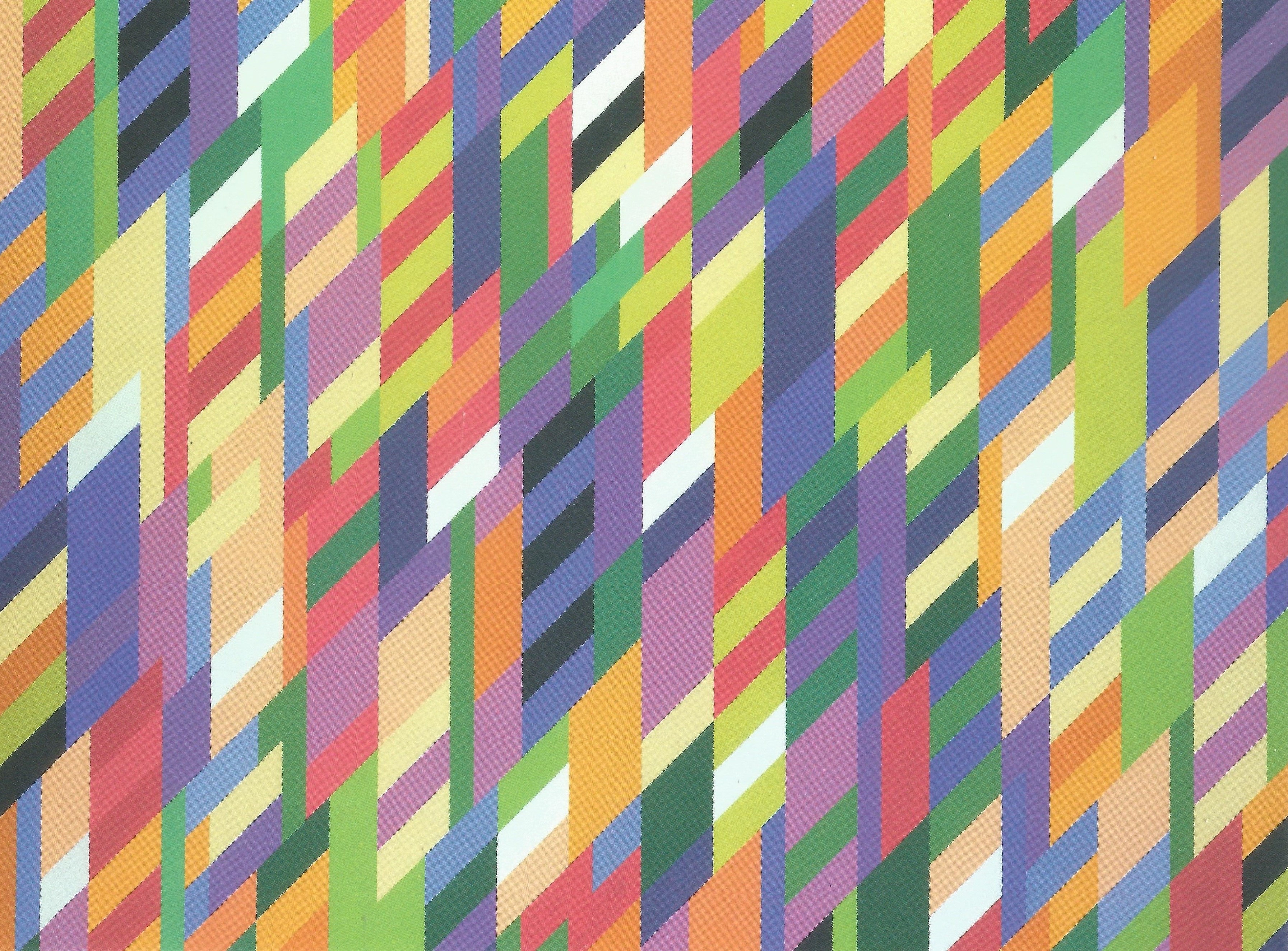
From Here – Bridget Riley

Posted in Art with tags , , , on August 21, 2024 by telescoper

by Bridget Riley (1994, 1576 × 2278 mm, Oil on Canvas, Private Collection)

An Exercise in Bayesian Probability

Posted in Bad Statistics with tags , on August 20, 2024 by telescoper

A businessman is on a luxury yacht, celebrating his recent acquittal in a high-profile fraud trial, when the yacht sinks in mysterious circumstances off the coast of Sicily. The businessman is one of six people on board who are missing, presumed dead. Just last week, the businessman’s co-defendant in the aforementioned fraud trial died in a mysterious road accident while out running in Cambridgeshire.

Using Bayesian methods, calculate the probability of these two events being a coincidence. Show your working. To the police.

Update: An investigation into possible manslaughter has been opened by the authorities in Italy.

Quasar – The Jimmy Giuffre 4

Posted in Jazz with tags , , , , on August 19, 2024 by telescoper

Jimmy Giuffre (1921-2008) was an immensely gifted saxophonist and clarinet player who was also an accomplished arranger and composer who worked for many big bands. His most famous piece as an arranger was Four Brothers which he wrote for Woody Herman’s fantastic saxophone section of Stan Getz, Zoot Sims, Serge Chaloff and Herb Steward. My first encounter with Giuffre as an instrumentalist was in the opening track of the 1958 film Jazz on a Summer’s Day playing a tune called  The Train and the River which has been a favourite of mine for many years. Back then he had a quite accessible style that blended jazz with folk elements, but he later developed a freer and more “modern” approach, including the use of electronic instruments and elements of jazz/rock fusion. I recently read a biographical article about him and – for obvious reasons – was intrigued that in 1985 he made an album called Quasar so I thought I’d share the title track here. Giuffre is on soprano sax on this one.

Newgrange and JWST

Posted in History, The Universe and Stuff with tags , , on August 18, 2024 by telescoper

Although I won’t myself be able to attend, I’m happy to be able to use the medium of this blog to advertise the above public event which is taking place in the first week of September on the back of a week-long conference to celebrate the career of Professor Tom Ray of the Dublin Institute for Advanced Studies. That in turn follows hard on the heels of the Irish National Astronomy Meeting (INAM) which takes place in Galway on 29th and 30th August.

Anyway, the public event on 3rd September is free to attend but you need to register here, where it is described thusly:

The Newgrange Passage Tomb, a prehistoric monument in County Meath, Ireland, is one of the most remarkable examples of Neolithic art and architecture, dating back to around 3200 BC. This ancient structure, with its intricate stone carvings and precise alignment with the winter solstice sunrise, reflects the sophisticated astronomical knowledge of its builders.

With starkly different technology, the James Webb Space Telescope (JWST), launched in 2021, represents the pinnacle of modern astronomical achievement. JWST is designed to peer into the farthest reaches of the universe, capturing images and data from the formation of the earliest galaxies to the atmospheres of planets outside of/beyond our solar system.

Despite being separated by millennia, both Newgrange and JWST underscore humanity’s enduring quest to understand our place in the cosmos through the study of the stars and the universe.

As part of the celebration of the career of Professor Tom Ray the Dublin Institute for Advanced Studies and the Institute of Physics are delighted to host a public event on Newgrange and JWST. This is in recognition of Tom’s long interest in archaeoastronomy and Newgrange in particular, and his involvement with the JWST through the Mid-Infrared instrument (MIRI).

The talk will be delivered by Dr. Frank Prendergast, archaeoastronomer and Emeritus Research Fellow at Technological University Dublin, and Professor Gillian Wright, European Principal Investigator of MIRI and Director of the UK Astronomy Technology Centre in Edinburgh.

Barabbas was a Publisher

Posted in Literature, Television with tags , , , on August 17, 2024 by telescoper

I couldn’t resist sharing the following, which I found here.

One day Lord Byron gave his publisher, John Murray, a handsomely bound Bible, its cover graced with a flattering inscription. Murray proudly displayed the book on a table where it would be seen by his many guests.

One day a visitor, admiring the book, noticed that at John 18:40, in the line ‘Now Barabbas was a robber,’ Byron had crossed out the word ‘robber’ and substituted… ‘publisher’.

You can probably figure out why I found it amusing!

The post from which I got the quote cites anecdotage.com as the source, but other websites dispute the attribution to Bryon. The Oxford Book of Essential Quotations, for example, gives:

Now Barabbas was a publisher.

also attributed, wrongly, to Byron

Thomas Campbell 1777–1844 Scottish poet: attributed, in Samuel Smiles A Publisher and his Friends: Memoir and Correspondence of the late John Murray (1891) vol. 1, ch. 14; see Bible

This goes to show two things: one is that not everything you find on the internet is true; the other is that very often the things that aren’t true really should be.

P.S. Fans of the classic TV series Tinker Tailor Soldier Spy will no doubt remember in Episode 1 that George Smiley uses the variation “Barabbas was a bookseller” when he is making a purchase in an antiquarian bookshop before he notices that he is being followed by Peter Guillam…

New Publication at the Open Journal of Astrophysics

Posted in OJAp Papers, Open Access, The Universe and Stuff with tags , , , , , on August 17, 2024 by telescoper

It’s Saturday morning and time for the usual weekly update of publications at the Open Journal of Astrophysics. This will be a short post because there is only one paper to report this week, being  the 68th paper in Volume 7 (2024)  and the 183rd  altogether. It was published on Thursday August 15th 2024.

The title of the latest paper is is “Spatial segregation of massive clusters in a simulation of colliding dwarf galaxies” and it  is in the folder marked Astrophysics of Galaxies. The authors are Bruce Elmegreen (IBM, NY, USA) and Natalia Lahen (MPA Garching, Germany);  the paper presents a numerical study of the properties and spatial distribution of star clusters resulting from a collision between dwarf galaxies.

Here is the overlay of the paper containing the abstract:


You can click on the image of the overlay to make it larger should you wish to do so. You can also find the officially accepted version of the paper on the arXiv here.

Back to A-level Again

Posted in Cardiff, Covid-19, Education with tags , , , on August 16, 2024 by telescoper

Yesterday was the day that students in United Kingdom received this year’s A-level results. It seems the number of students getting the highest grades went up in England but down in Wales and Northern Ireland. That difference could be because of the timing of the transition from Covid-19 adjustments, with marks in Wales and Northern Ireland only returning to pre-pandemic levels this year; this may disadvantage applicants to universities this year, of course.

Another thing worth mentioning is that the number of students taking Physics A-level has increased by 12% this year, reversing a recent downward trend. In Physics, 31.5 per cent of students achieved the top grades. This was an increase from last year when 30.8 per cent were awarded an A or A*. That probably means that most students who applied to do Physics at university will get a place in their first-choice institution.

As always my advice to students who got disappointing results is

There’s always the clearing system and there’s every chance you can find a place somewhere good. If you’re reading this blog you might be interested in Physics and/or Astronomy so I’ll just mention that both Cardiff and Sussex have places in clearing and both are excellent choices.

At least you’ve got your results; students here in Ireland will have to wait next Friday (23rd August) to get to get theirs – not in the form of GCE A-levels, of course, but the School Leaving Certificate. I have been away all year so don’t know how admissions have been going for Maynooth but the intention seems to be to increase student numbers in any way possible despite the already huge student-staff ratio (the highest in Ireland) and lack of student accommodation. Anyway, Covid-19 adjustments are still in place in Ireland so the artificial inflation of Leaving Certificate grades will continue. It seems the Government doesn’t know how to get out of the system it has locked itself into and is intent on leaving it for the next Government to sort out.

Evolving Dark Energy or Supernovae Systematics?

Posted in The Universe and Stuff with tags , , , , , , , on August 15, 2024 by telescoper

A few months ago I posted an item about the release new results from the Dark Energy Spectroscopic Instrument (DESI). That was then followed by a presentation explaining the details which you can find here to find out more about the techniques involved. At the time the new DESI results garnered a lot of media attention much of it about claims that the measurements provided evidence for “New Physics”, such as evolving dark energy. Note that the DESI results themselves did not imply this. Only when combined with supernova measurements did this suggestion arise.

Now there’s a new preprint out by George Efstathiou of Cambridge. The abstract is here:

Recent results from the Dark Energy Spectroscopic Instrument (DESI) collaboration have been interpreted as evidence for evolving dark energy. However, this interpretation is strongly dependent on which Type Ia supernova (SN) sample is combined with DESI measurements of baryon acoustic oscillations (BAO) and observations of the cosmic microwave background (CMB) radiation. The strength of the evidence for evolving dark energy ranges from ~3.9 sigma for the Dark Energy 5 year (DES5Y) SN sample to ~ 2.5 sigma for the Pantheon+ sample. Here I compare SN common to both the DES5Y and Pantheon+ compilations finding evidence for an offset of ~0.04 mag. between low and high redshifts. Correcting for this offset brings the DES5Y sample into very good agreement with the Planck LCDM cosmology. Given that most of the parameter range favoured by the uncorrected DES5Y sample is discrepant with many other cosmological datasets, I conclude that the evidence for evolving dark energy is most likely a result of systematics in the DES5Y sample.

Here are a couple of figures from the paper illustrating the difference in parameter constraints using the uncorrected (left) and corrected (right) Dark Energy (Survey) 5 year Supernova sample.

The y-axis shows a parameter wa, which is zero in the standard model with non-evolving dark energy; the non-zero value implied by the left hand panel using the uncorrected data.

Just as with the Hubble Tension I blogged about yesterday, the evidence for a fundamental revision of our standard model may be nothing of the sort but some kind of systematic error. I think we can expect a response from the Dark Energy Survey (DES) team. Grab your popcorn.