Well, just back from the Department Christmas dinner, I find myself filled with the festive spirit (or more, accurately, wine) so I thought I’d share a seasonal piece of music. As regular readers of this blog (both of them) will know, I listen to quite a lot of jazz. In the course of doing that it has often struck me that there can hardly be a tune that’s ever been written – however unpromising – that some jazz musician somewhere hasn’t taken a fancy to and done their own version. Louis Armstrong turned any amount of base metal into gold during his long career, but here’s a record I could scarcely imagine before hearing it. It’s Santa Claus is coming Town recorded in 1964 by the great Bill Evans on piano in a trio with Gary Peacock on bass and Paul Motian on drums. As far as I know this is the only Christmas tune that Bill Evans ever recorded, but I think it’s great. Enjoy!
Archive for December, 2024
Santa Claus is Coming to Town – Bill Evans
Posted in Jazz with tags Bill Evans, Gary Peacock, Paul Motian, Santa Claus is Coming to Town on December 13, 2024 by telescoperCosmology Talks: Recent DESI Power Spectrum Results
Posted in The Universe and Stuff with tags Cosmology, Cosmology Talks, Dark Energy, Dark Energy Spectroscopic Instrument, DESI, Physics on December 12, 2024 by telescoperSome weeks ago I posted an item about recent results that have emerged from the DESI (Dark Energy Spectroscopic Instrument) Collaboration. I have been a bit busy since then but I just saw that there is one of those Cosmology Talks about these results which I thought I would pass on. The contributors are Arnaud de Mattia, Hector Gil-Marín and Pauline Zarrouk and they are talking about the analsysis they have done using the “full shape” of the galaxy power spectrum. It’s quite a long video, but very illuminating.
Pride Soc
Posted in Biographical, LGBTQ+ on December 11, 2024 by telescoper(I’m not sure whether the above link will show properly, as I haven’t quite got the hang of this instant gramophone thing that young people use.)
It’s been a very busy day so I’ve just got time for a quick post to mention that this afternoon I gave a talk to Maynooth University’s Pride Society, which was a much less formal reprise of the talks I gave last month at Trinity College Dublin and at Oxford University in June. The talk was originally intended to mark LGBTQIA+ STEM Day on November 18th but it proved impossible to find a convenient time on that day or even near it. Anyway, it was nice talking to the students in this forum, and I would like to use the medium of this blog to say a bit “Thank You” for inviting me!
The Journal of Universal Rejection
Posted in Open Access on December 10, 2024 by telescoperAs (both) my regular readers know I have a strong interest in innovative publication methods, I thought I would share a very intriguing one I have just found out about:
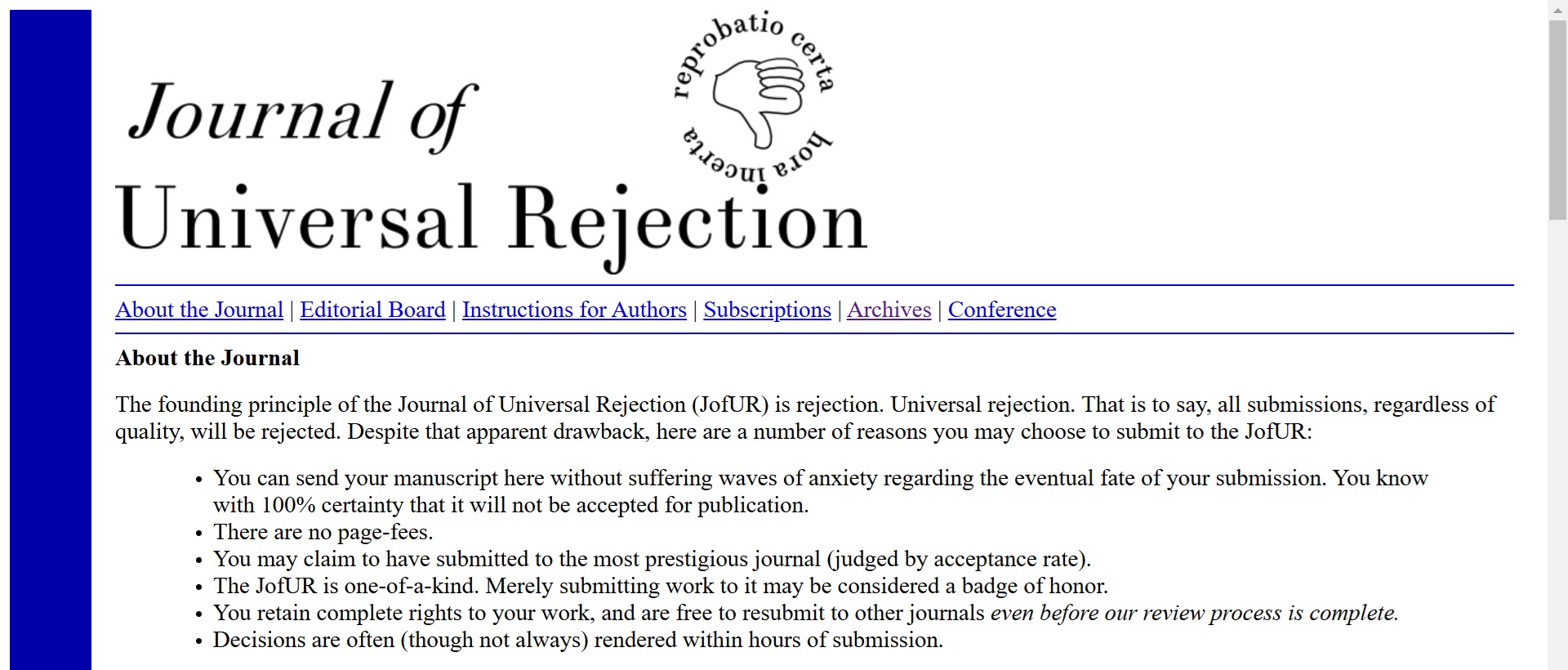
I think this approach might help us at the Open Journal of Astrophysics cut our running costs still further. Gold Open Access journals have an incentive to publish as many papers as possible to increase revenue from Article Processing Charges, whereas we Diamond journals have an incentive in the opposite direction. This journal would appear to take that to its logical conclusion.
I think I’ll apply to be on the Editorial Board. It must be a very prestigious to bea member of the Editorial Board of a journal with such a high rejection rate!
Sixty Years of A Love Supreme
Posted in Jazz with tags A Love Supreme, Acknowledgement, Elvin Jones, Jimmy Garrison, John Coltrane, McCoy Tyner, Psalm, Pursuance, Resolution, Rudy Van Gelder on December 9, 2024 by telescoperOn 9th December 1964 – exactly 60 years ago to the day – John Coltrane (ts), McCoy Tyner (p), Jimmy Garrison (b) and Elvin Jones (d) got together to record at Rudy Van Gelder’s Studio in New Jersey. In a single session they created what is probably Coltrane’s masterpiece, A Love Supreme, an album that proved immediately popular and influential when it was released in 1965.
A Love Supreme represents a sort of musical culmination of everything this quartet had achieved and it’s not surprising that they abruptly changed direction soon after making this record. They had said everything they could say in this format. Coltrane’s next great album, Meditations, recorded in 1965, features the same musicians (with the addition of Pharaoh Sanders on tenor sax and a second drummer, Rashied Ali), but it’s much freer in style.
A Love Supreme consists of four sections: Acknowledgement, Resolution, Pursuance and Psalm. As you might imagine from the titles, it’s a deeply spiritual piece. Acknowledgement is based on an 8-bar theme underpinned by a four-note phrase played on the bass that fits the phrase “a love supreme”. Coltrane impovises rather meditatively on this theme, then the group chants “a love supreme” in unison while Elvin Jones elaborates the rhythm in complex double-time. The second movement, Resolution, is based on a different 8-bar theme and Coltrane’s playing and interplay with Jones is much more agitated but it’s in Pursuance that he pulls out all the stops. Harmonically, Pursuance is a blues but it’s taken at a fast tempo and Coltrane plays with the harsh, strangulated tone he had developed by this time. After all this frantic activity he imbues the final section, Psalm, with a radiant solemnity, as he pours out an incredibly beautiful solo, with Elvin Jones providing a perfectly judged accompaniment, the rise and fall of his drum rolls showing wonderful control.
Anyway, these are just words. It’s much better just to listen to the music, as I have done twice already this evening. Enjoy!
Reaching Nelson
Posted in Cricket, History, OJAp Papers with tags 111, cricket, Lord Nelson, Nelson, Siege of Calvi, The Open Journal of Astrophysics on December 9, 2024 by telescoperThis morning I published another paper at the Open Journal of Astrophysics and in the process I noticed that took us to a total 111 articles this year. I got to thinking about the significance of that number in cricket, where it goes by the name of Nelson…
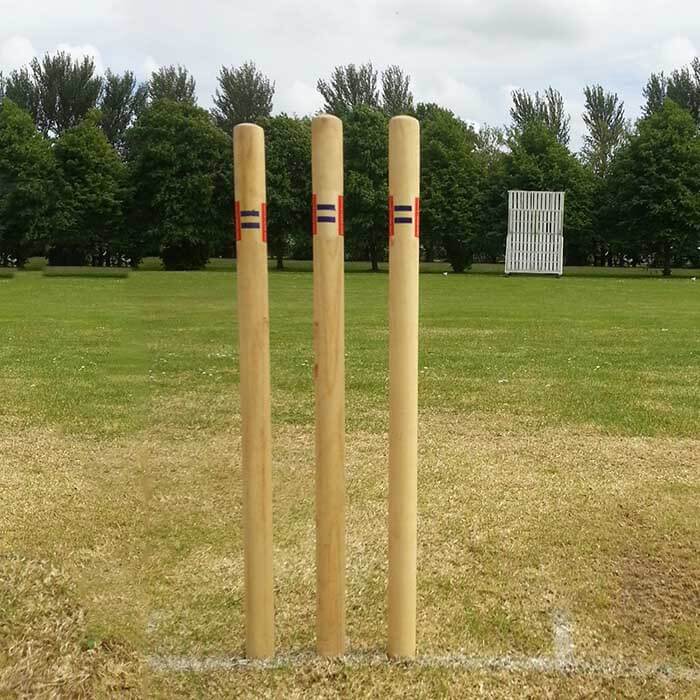
In cricket – at least in England – Nelson is supposed to be an unlucky number. The reason for this could well be that the number 111 looks like a set of stumps without the bails (see left). (For those of you not up with the lingo, the bails are two smaller bits of wood that sit on top of the stumps. ) The absence of the bails could mean that they have been dislodged, signifying that a batter is out. Also umpires remove the bails at close of play, so it could indicate that the match is over.
What’s less clear is the connection with Horatio, Lord Nelson (right). The version I was told at school was that Nelson had “one eye, one arm, and one Trafalgar”. Some also say “Destiny” instead of “Trafalgar”. Those are polite versions. Others say the third one refers to a part of the male anatomy. Bill Frindall used to say “one eye, one arm, and one et cetera“. Who knows which, if any, of these is right?

In any case this does give me the chance to point out that, contrary to popular myth, Nelson didn’t lose an eye anyway. In 1794, Nelson was in action at the Siege of Calvi during the Invasion of Corsica when a cannonball struck a nearby sandbag and sprayed him with sand and gravel. Nelson’s right eye was damaged by this, but he didn’t lose it although he had little effective vision through it thereafter.
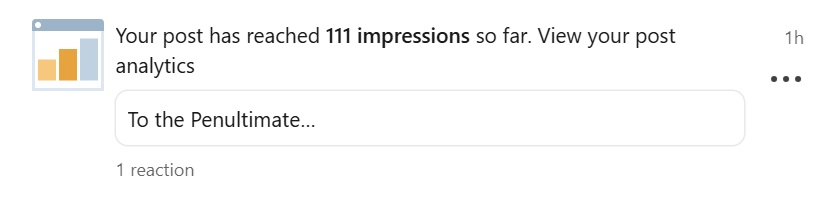
Meanwhile, I just saw this notification on LinkedIn about yesterday’s post:
To the Penultimate…
Posted in Education, LGBTQ+, Maynooth with tags Christmas, Maynooth University, teaching on December 8, 2024 by telescoperThe forthcoming week is the second-to-last week of teaching term at Maynooth and, as usual at this stage of the Semester, we’re getting busier and busier.
The examinations for January have been sent off for printing and are (presumably) ready to go, so that’s one item crossed off the to-do list. I’m still behind on the coursework grading for one of my two modules, but should be able to catch up in the next few days. Other than that, I am miraculously on schedule as far as teaching is concerned. I should finish covering the respective syllabuses by Friday 13th, which means the following week will be devoted to revision. I expect attendance on campus will be fairly sparse in the last week of term, especially later on. I’ll be there until the bitter end, however, as I have a lecture scheduled on Friday 20th and have to attend final-year student presentations that afternoon. After that I will probably collapse in a state of exhaustion into the welcoming arms of the Christmas break.
While the week ahead will be fairly normal from the point of view of teaching itself, there are quite a few extra things in my calendar, as people try to get various things done before the break. Extra items for next week including a meeting about a staff recruitment (of which, hopefully, more anon) and another about the possible reorganization of teaching in the light of the merger of the Departments of Theoretical and Experimental Physics. Rationalization of teaching could lead to an improvement in the courses offered and also, by removing duplication, reduce our very heavy teaching workloads. Whether it will actually be possible to achieve either or both of these aims remains to be seen. In any case I’m not sure if any significant changes to teaching will be implemented before I retire, but I’ll probably go along to the meeting anyway in case there’s anything I can contribute.
I’ve also agreed to give a talk on Wednesday to the student Pride Society which I am looking forward to, although such events invariably make me feel very old!
As it happens, Friday 13th December is the date for the first Christmas dinner of the newly formed Department of Physics; previously, the Departments of Theoretical Physics and Experimental Physics held separate celebrations. It will be a much bigger group this time and, it being on a Friday evening we’ll have the weekend to recover before the last week of term.
Anyway, although it’s a Sunday I’ll be working all afternoon as I have a task to finish that is due tomorrow so I had better sign off. When I was younger I used to look forward to Christmas as a time for feasts and parties and socialising. Now that I’m older I look forward to it more than anything as a time for the sense of relaxation that comes from the lack of deadlines.
Mozart & Bruckner at the National Concert Hall
Posted in Music with tags Bruckner Symphony No. 7, Hans Graf, Mozart Violin Concerto No. 5, National Concert Hall, National Symphony Orchestra, Stefan Jackiw, Wolfgang Amadeus Mozart on December 7, 2024 by telescoper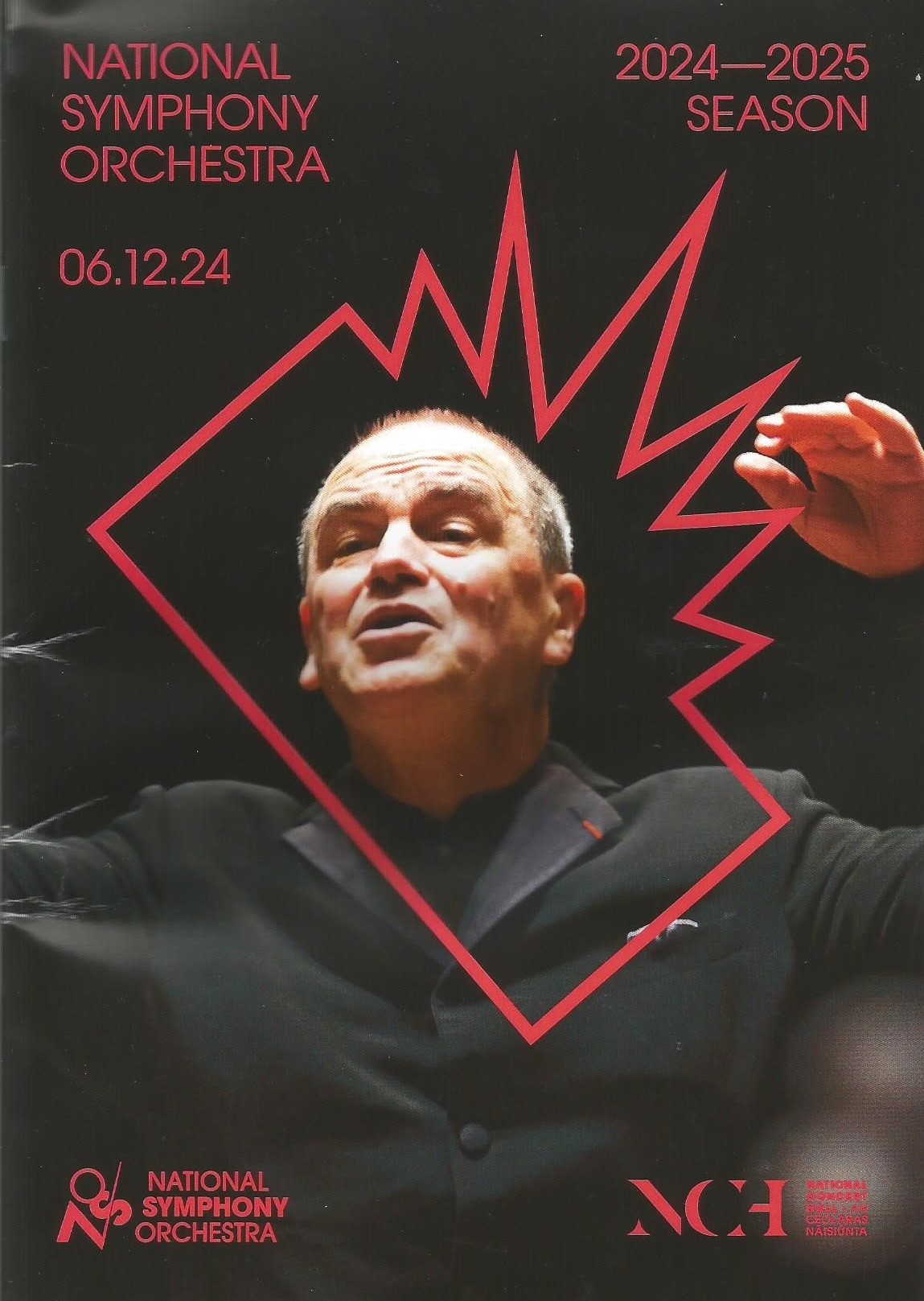

It was a dark and stormy night but I braved the inclement weather to travel to the National Concert Hall in Dublin for what will be my last concert of 2024. It look like being a nearly full house when I booked my ticket, but in the end there were quite a few empty seats perhaps because various groups decided not to make a journey owing to Storm Darragh. My own travels went without a hitch and in fact I even managed to walk from Connolly to the NCH before the performance and back to Pearse after it without getting rained on.
Anyway, there were two items on the menu: Violin Concerto No. 5 in A Major by Wolfgang Amadeus Mozart, with soloist Stefan Jackiw, and the Symphony No. 7 in E Major by Anton Bruckner. The National Symphony Orchestra was conducted by Hans Graf.
Mozart wrote at least five violin concertos, and he was at most 20 when he wrote the last of the five that are known. During last night’s performance I was thinking a lot about all I had failed to achieve by the age of twenty! Influenced by his father Leopold, the violin was Mozart’s first instrument, but he later moved on and preferred to play keyboard instruments. Perhaps he wanted to escape from his father’s domination, which might explain why he didn’t write any more pieces for solo violin in the rest of his (short) life.
The 5th Violin Concerto is sometimes called “The Turkish” though there isn’t much of a Turkish influence in the music. Whatever the name, it is a very enjoyable piece in three movements, played quite beautifully last night by Stefan Jackiw and by the pared-down NSO. The soloist got a very warm ovation and responded with a solo encore in the form of a largo movement from a Bach violin sonata.
After the wine break we returned to find the stage much fuller with a large brass section and extra strings added to the smaller forces required for the Mozart. Bruckner’s Seventh Symphony is a huge and varied work lasting over an hour in performance. The radiant first movement, with its noble melody soaring over shimmering violin tremolos is very reminiscent of Wagner, as is much of the rest of the Symphony (especially in terms of the orchestration). Bruckner famously idolized Wagner and this composition is at least partly a tribute to his musical hero. It is said that Bruckner had a premonition of Wagner’s death in 1883 and the cymbal crash during the second (slow) movement symbolizes the moment that he found out that his premonition had come true. That whole movement (marked Sehr feierlich und sehr langsam; very solemn and very slow) is very moving: sombre though not excessively mournful. The third movement Scherzo is marked Sehr Schnell (very fast) but I found the tempo last night vigorous, but not epecially fast. I was expecting something a bit wilder. The last movement actually sounded to me more like Mahler than Wagner, with a resounding climax.
The Seventh is probably Bruckner’s best known and most performed Symphony. It was certainly a big hit for him when it was first performed in 1884. The composer was born in 1824 and last nigtht’s concert was billed as Bruckner 200. I think the 7th was a good choice to mark the occasion and the performance, with superb playing by the brass section (including the Wagner tuben), and the orchestra very well marshalled by Hans Graf, was a fitting tribute.
My next trip to the NCH won’t be until January, but I’m already looking forward to the Leningrad Symphony after the Christmas break!
Four New Publications at the Open Journal of Astrophysics
Posted in OJAp Papers, Open Access, The Universe and Stuff with tags 3x2pt analysis, Angular Power Spectrum, arXiv:2407.11125v2, arXiv:2409.05815v3, arXiv:2410.03632v2, arXiv:2412.00599v1, Astrophysics of Galaxies, BLAST, Cosmology and NonGalactic Astrophysics, galaxy formation, Limber Approximation, star formation on December 7, 2024 by telescoperIt’s Satuday morning once again so here’s another quick update of activity at the Open Journal of Astrophysics. Since the last update a week ago we have published four papers, which takes the count in Volume 7 (2024) up to 110 and the total published altogether by OJAp up to 225.
In chronological order of publication, the four papers published this week, with their overlays, are as follows. You can click on the images of the overlays to make them larger should you wish to do so.
First one up is “The impact of feedback on the evolution of gas density profiles from galaxies to clusters: a universal fitting formula from the Simba suite of simulations” by Daniele Sorini & Sownak Bose (Durham University, UK), Romeel Davé (University of Edinburgh, UK), and Daniel Anglés-Alcázar (University of Connecticut, USA). The paper, which is in the folder marked Astrophysics of Galaxies, presents a study of the effects of stellar and/or AGN feedback on the shape and evolution of gas density profiles in galaxy haloes using the SIMBA simulations. It was published on Tuesday 3rd December 2024.
Here is a screen grab of the overlay, which includes the abstract:

You can find the officially accepted version of the paper on the arXiv here.
The second paper to announce, also published on 3rd December 2024, and is also the folder “Astrophysics of Galaxies, is “Self-regulated growth of galaxy sizes along the star-forming main sequence” by Shweta Jain (U. Kentucky, USA), Sandro Tacchella (U. Cambridge, UK) and Moein Mosleh (Shiraz University, Iran). This paper suggestes an identification of a possible self-regulating mechanism in galaxy size growth involving the interplay between feedback from star formation and newly accreted gas.
You can see the overlay here:

The accepted version of this paper can be found on the arXiv here.
The third paper, published on Thursday 6th December 2024 in the folder marked Cosmology and NonGalactic Astrophysics, is called “BLAST: Beyond Limber Angular power Spectra Toolkit. A fast and efficient algorithm for 3×2 pt analysis” by Sofia Chiarenza, Marco Bonici & Will Percival (Waterloo, Canada) and Martin White (Berkeley, USA). It presents BLAST, an efficient algorithm for calculating angular power spectra without employing the Limber approximation or assuming a scale-dependent growth rate, based on the use of Chebyshev polynomials. The code is written in Julia.
Here is the overlay

The final version accepted on arXiv is here.
Last in this batch, published on 6th December 2024, and in the folder Astrophysics of Galaxies, is “On the universality of star formation efficiency in galaxies” by Ava Polzin & Andrey V. Kravtsov (U. Chicago) and Vadim A. Semenov & Nickolay Y. Gnedin (CfA Harvard), all based in the USA. The paper presents an argument that the universality of observational estimates of star formation efficiency per free-fall time can be plausibly explained by the turbulence-driven and feedback-regulated properties of star-forming regions.

You can find the official accepted version on the arXiv here.
We seem to have recovered from a small Thanksgiving lull and, looking at the OJAp workflow, I think we’ll have a similar number of publications next week. I’ll do another update next weekend!
This Year’s Kisses
Posted in Jazz with tags Billie Holiday, Lester Young, This Year's Kisses on December 6, 2024 by telescoperI’ve been out all day on a secret mission so, in lieu of a proper post, I thought I’d share this classic record by Billie Holiday and Lester Young.

 In the Dark