Archive for June, 2025

Marking Over

Posted in Biographical, Education, Maynooth with tags , on June 9, 2025 by telescoper

Better is the end of a thing than the beginning thereof…

I’ve just graded the last of my assignments for this (academic year). I had a bigger class than usual for Computational Physics this time round, so it took much longer than usual to mark the project component. It always takes a while because I not only have to read and grade the reports, but also look at the code they submit and run it to check that it works. I uploaded the final grades to our system just now and although I finished later than planned I was relieved to see that I’m not the last lecturer to do so!

What happens next is that all the marks from all the modules will be collated and cross-checked. Then we will have a meeting of the Departmental Examination Board (on Thursday morning) to go through the results in the presence of our External Examiner. Since this is the end of the academic year, we will also look at the final grades of those students who are completing their studies this year in order to consider the classification of their degrees. There may also be some who are not qualified to graduate and may have to repeat failed examinations or other assessments. Another (pleasant) duty of our Examination Board on Thursday will be to award prizes for the best performance, not just for finalists but for students at every stage, including the first year.

I was teaching a module for the Department of Engineering last Semester so I should attend their final Examination Board too. Many of our students at Maynooth take joint degrees, in which case their final degree classification depends on grades from two Departments. For that reason, there is an overall Examination Board at which the marks are combined. Fortunately, only the Head of Department (who is not me) has to attend that one.

If all goes to plan, students will receive their final marks on Friday 27th June. It’s a lengthy process so as to allow plenty of opportunities to check and validate the different stages. After that, on Tuesday 1st July, we have a consultation day at which students can ask for advice about repeat examinations, etc, and after that we have to make sure repeat examinations are available. The repeat examination period is Wednesday 6th August to Tuesday 19th August.

Between the end of this week and the repeat exams, perhaps I’ll get a bit of time to do some research…

The Cosmic Poltergeist

Posted in Film, The Universe and Stuff with tags , , on June 8, 2025 by telescoper

Last night I stayed up long past my usual bedtime to watch the film Poltergeist. This film, about the haunting of a family house by malevolent spirits, was a huge hit when it came out in cinemas back 1982, and I was interested to see how well it has endured. I think it stans up pretty well actually. The special effects could be done better nowadays, but it is still credibly scary.

The idea of a poltergeist is not new, but the film cleverly combines the old legends with new technology, in the way that the first manifestation of an evil presence is through a TV set. It is the youngest child of the house in question, Carol Anne, who is able to detect the ghosts when all we can see on the screen is static. The implication is that the young are the most receptive to paranormal phenomena.

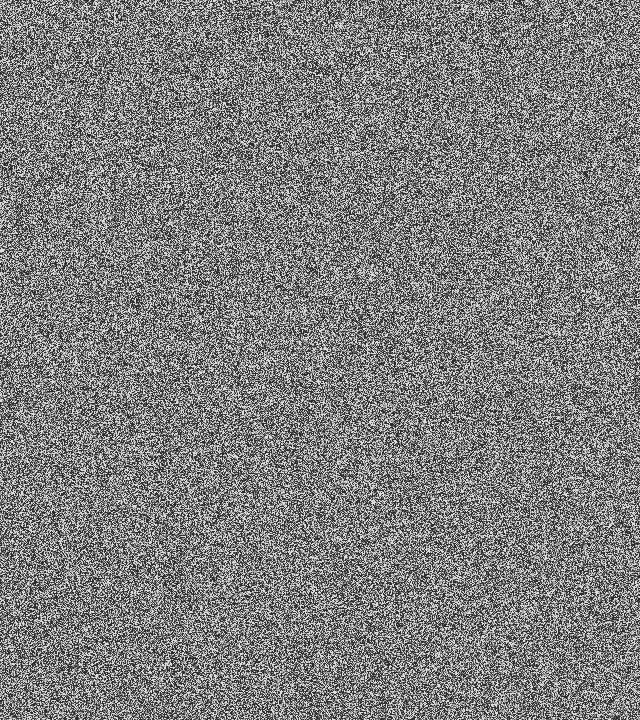
Most of the static produced in a TV set when it is not tuned to a broadcast frequency is produced by thermal noise in the receiver, but around 1% of it comes from the cosmic microwave background (CMB). I’ve used static on a TV screen as a gimmick in public lectures on several occasions, with the joke that it may only be 1% but the birth of the Universe is far more interesting than most things you can see on TV!

The CMB is a ghost of the Big Bang. Watching Poltergeist last night, it occurred to me that when cosmologists study this relic radiation, we are all a bit like Carol Anne, trying to make sense of an eery presence that is always with us, but is barely perceptible. Such studies involve extensive use of spectral analysis.

This line of thinking led me to my new theory of the Universe. Perhaps it was built on the remains of an earlier, deceased Universe which is now trying to make contact this one in order to wreak revenge for the violation of its grave…

The 2025 Leaving Certificate Mathematics Papers

Posted in Education, mathematics with tags , , on June 7, 2025 by telescoper

As I mentioned a few days ago, examinations for the 2025 school Leaving Certificate are under way. One of the interesting things about the Irish system is that the examination papers are put up online immediately after the examinations. Students took their first paper in Mathematics (either Ordinary or Higher level) on Friday (yesterday), and there has been some reaction.

Anyway, I thought I’d share the papers here so you can see what you think. Paper 2 is on Monday 9th June, so I’ll add those papers then.

They look reasonable to me. The thing that strikes me about them is that they are much more structured than the A-level mathematics examinations I took way back in 1981.

Comments are welcome through the box below.

Update: As promised here are the Papers 2:

Reaction to Paper 2 of Higher Mathematics is that it was more challenging than Paper 1.

Weekly Update from the Open Journal of Astrophysics – 07/06/2025

Posted in OJAp Papers, Open Access, The Universe and Stuff with tags , , , , , , , , , , , on June 7, 2025 by telescoper

It’s Saturday so once again it’s time for the weekly update of papers published at the Open Journal of Astrophysics. Since the last update we have published two new papers, which brings the number in Volume 8 (2025) up to 69 and the total so far published by OJAp  is now up to 304.

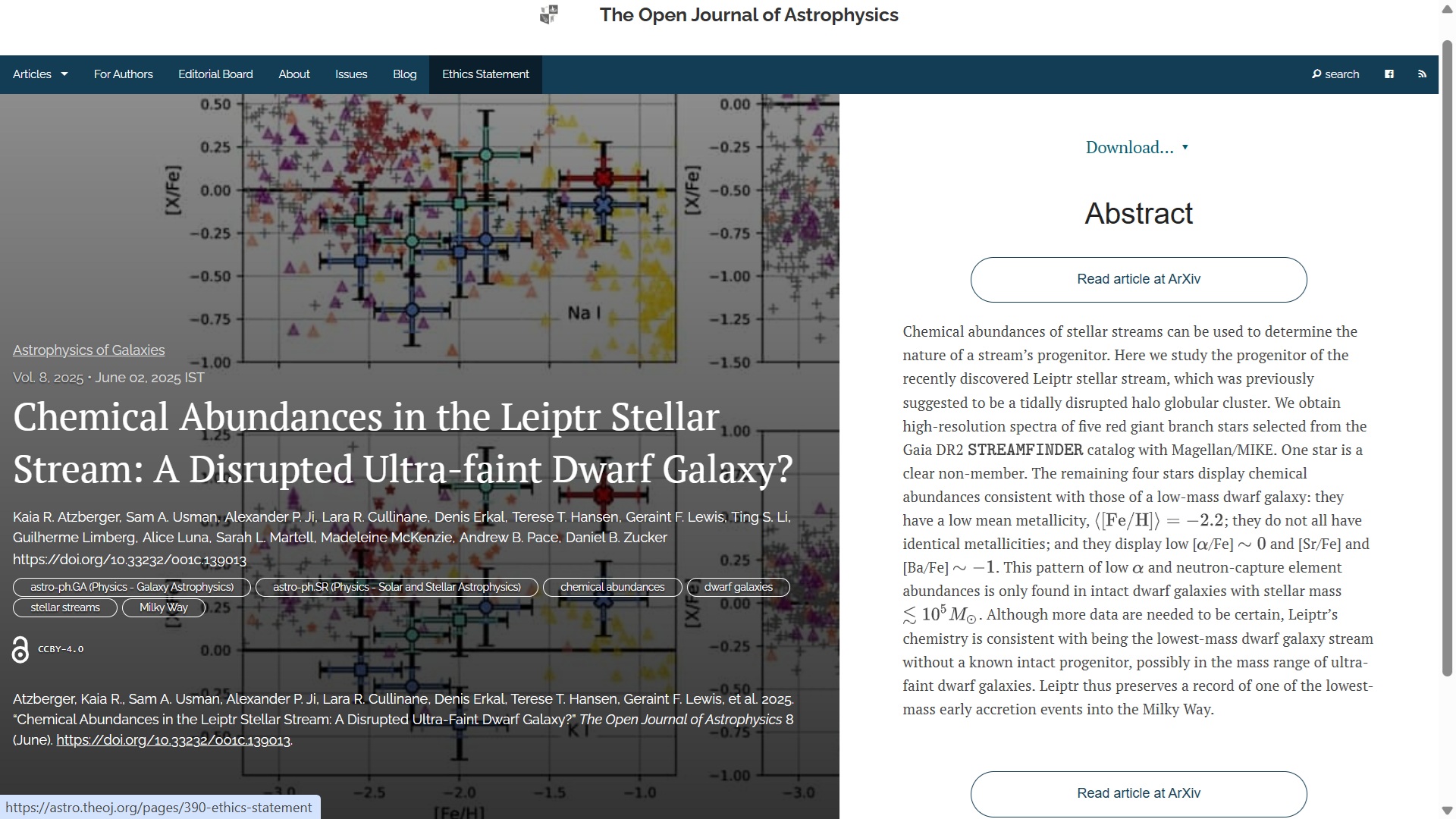
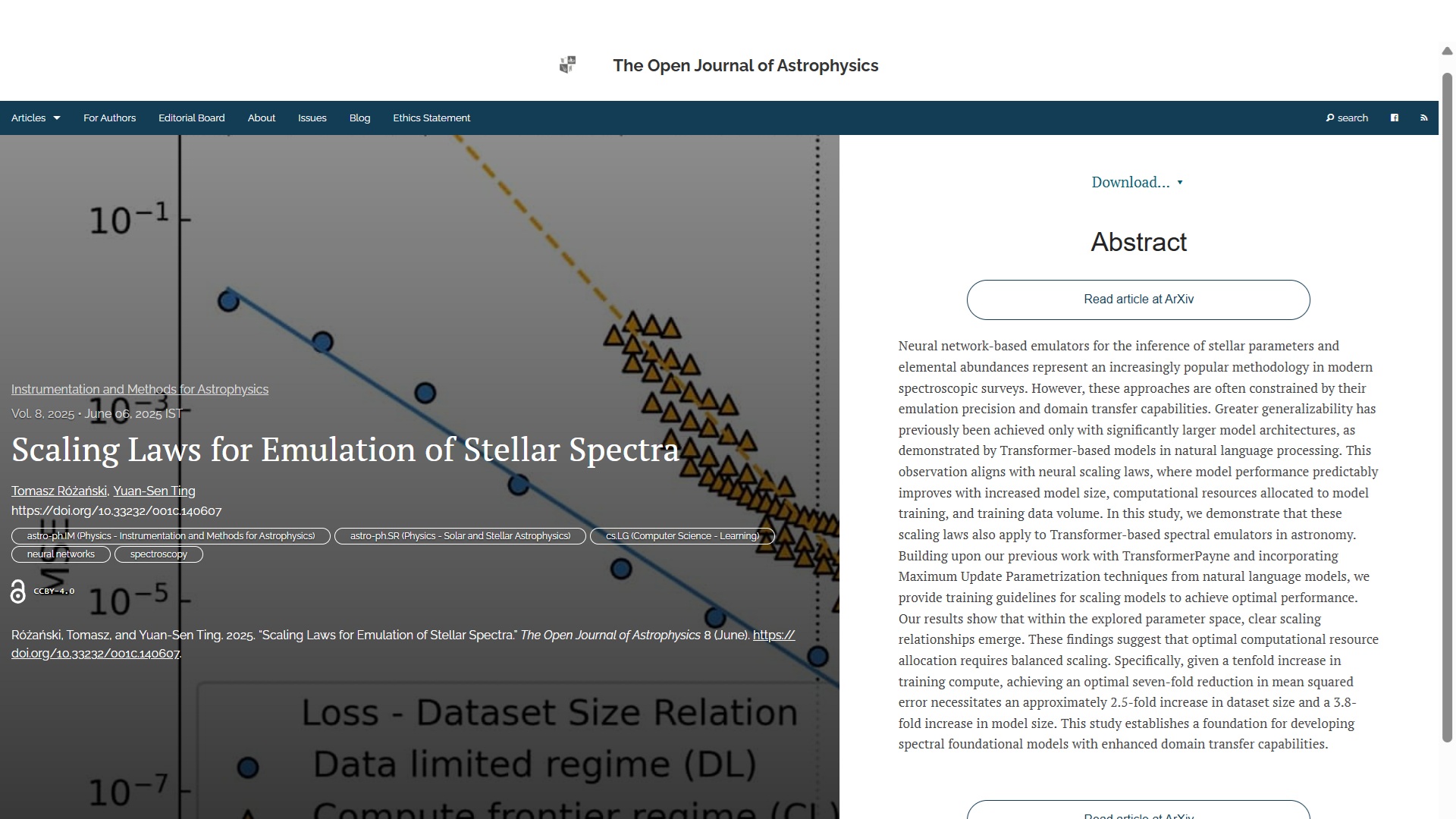
The two papers published this week, with their overlays, are as follows. You can click on the images of the overlays to make them larger should you wish to do so.

The first paper to report is “Chemical Abundances in the Leiptr Stellar Stream: A Disrupted Ultra-faint Dwarf Galaxy?” by Kaia R. Atzberger (Ohio State University) and 13 others based in the USA, Germany, the UK, Sweden, Australia, Canada and Brazil. This one was published on 2nd June 2025 and is in the folder marked Astrophysics of Galaxies. It presents a spectroscopic study of stars in a stellar stream suggesting that the stream originated by the accretion of a dwarf galaxy by the Milky Way.

The overlay is here:


You can read the final accepted version on arXiv here.

The second paper is “Scaling Laws for Emulation of Stellar Spectra” by Tomasz Różański (Australian Nastional University) and Yuan-Sen Ting (Ohio State University, USA). This was published yesterday, i.e. on 6th June 2025, and is in the folder Instrumentation and Methods for Astrophysics. The paper discusses certain scaling models and their use to achieve optimal performance for neural network emulators in the inference of stellar parameters and element abundances from spectroscopic data.

The overlay is here:

You can find the officially-accepted version of the paper on arXiv here.

That’s the papers for this week. I’ll post another update next weekend.

As a postscript I have a small announcement about our social media. Owing to the imminent demise of Astrodon, we have moved the Mastodon profile of the Open Journal of Astrophysics to a new instance, Fediscience. You can find us here. The old profile currently redirects to the new one, but you might want to update your links as the old server will eventually go offline.

R.I.P. Edmund White (1940-2025)

Posted in Biographical, LGBTQ+, Literature, R.I.P. with tags , on June 6, 2025 by telescoper

I was saddened to hear of the death on Tuesday at the age of 85 of novelist Edmund White. Like many gay men of my age I read his semi-autobiographical novel A Boy’s Own Story as a teenager, and it had a profound effect on me.

It’s the story of an adolescent boy coming to terms with his sexuality in the American mid-West during the 1950s. It is as frank about the description of gay sex as it is truthful about the confusion that goes with being a teenager. When I bought it I didn’t realize it was going to be so sexually explicit, as the whole subject of gay sex was very much taboo in those days. I didn’t think it was possible to write about such things in such a matter-of-fact way and at the same time so beautifully. The book is also unflinching in its description of the personality flaws of the central character.

The Irish Times has a collection of reflections by various writers on Edmund White that say far more, and far more eloquently, than I ever could. I’ll just say, as a (now) sixty-something gay man that Edmund White helped me on my journey to self-acceptance when I was a struggling teenager all those years ago, and for that I will always be profoundly grateful.

Rest in peace, Edmund White (1940-2025).

L’elisir d’amore at the National Opera House

Posted in Opera with tags , , , , , , , , on June 5, 2025 by telescoper

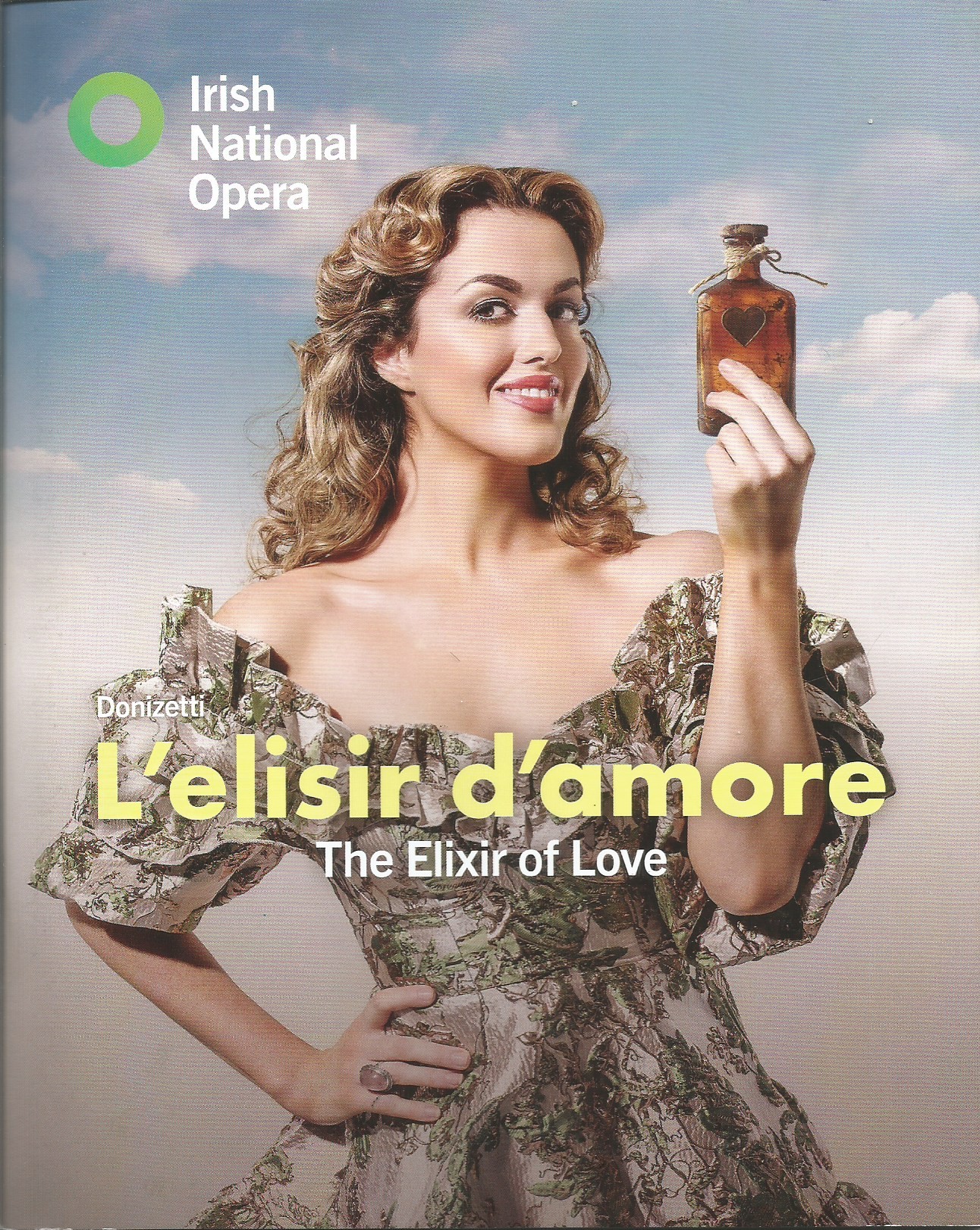
My trip to Wexford was to mark a special occasion by paying my first ever visit to the National Opera House to see a performance of Donizetti’s comic opera L’elisir d’amore by Irish National Opera. It was well worth the trip, as it was a wonderfully entertaining production with lovely singing and lots of laugh-out-loud moments. In short, it was a blast.

Billed as a melodramma giocoso, but more usually called an opera buffa, this was the first Donizetti opera to be performed in Ireland, in 1838; its world premiere was in 1832 in Milan and it has been in the operatic repertoire ever since. The show-stopping Una furtiva lagrima in Act II is one of the most recorded tenor arias, the first recording of which dates back to 1904 (by Enrico Caruso).

In case you’re not aware of the opera, it tells the story of a lowly peasant (Nemorino, tenor) who is in love with the wealthy Adina (soprano), who does not return his love – understandably not just because he’s poor but because he’s a bit of a drip. In despair Nemorino turns to the fake doctor Dulcamara (bass-baritone) “famous throughout the Universe and certain other places” who has arrived in town to peddle potions and quack remedies, no doubt made from snake oil. Nemorino asks him for a philtre that will make Adina fall for him. Dulcamara has sold all his potions, but fills an empty medicine bottle with wine and tells him it’s the love potion he needs. After drinking it, Nemorino feels more confident, but Adina still isn’t interested. Worse, Adina has agreed to marry to soldier Belcore. That’s Act I.

In Act II, desperate to stop the marriage, Nemorino wants to buy some more of the love potion but he has no money so he agrees to join the army for which he is entitled to a joining fee. He spends the money on more wine and gets completely wasted, so much so that he misses the news that a rich uncle has died and left him a large inheritance. When the women of the town find out that he is now rich, they all start showing an interest in Nemorino, which he assumes is because of the love-potion. At this point Adina decides she really does love Nemorino, buys out his contract with the army, and calls off the wedding with Belcore. The soldier shrugs off his loss. Dulcamara convinces himself that he really has magical powers…

Summarizing the plot doesn’t really do justice to the opera, however, as there are numerous musical interludes, with dancing, and slapstick comedy. Donizetti’s music is wonderful, and keeps the pace going. It’s basically a theatrical farce set to music, with the score keeping everything moving at the speed that is essential to make such a thing work. Erina Tashima conducted the Orchestra of Irish National Opera with great verve.

This production is set in a comical Wild West of America, with a relatively simple set but wonderful very witty costumes. Nemorino (Duke Kim) was dressed like Woody from Toy Story, for example. We also had appearances from Calamity Jane, Laurely & Hardy (who do their “Way Out West” dance), Abraham Lincoln and even the couple from Grant Wood’s painting American Gothic. Adina (Claudia Boyle) has no fewer than five costume changes, each one into a frock more glamorous than the previous. Dulcamara was the wonderful John Molloy and there is great comedy between him and his diminutive sidekick Truffaldino (a non-singing part played by Ian O’Reilly). Belcore’s troops are kitted out like the US Cavalry, and their dancing and messing about delivers laugh after laugh. There are also sundry “peasants”, i.e. cowboys and women of the town adding to the hilarity. I give 10/10 to the members of the chorus, their Director Richard McGrath and choreographer Paula O’Reilly.

All the principles were great too. Claudia Boyle sang beautifully, but also conveyed the comic aspects of her role. Duke Kim was perfectly cast as the boyish Nemorino; he has a light and agile tenor voice, which he used to bring the house down with the big number Una Furtiva Lagrima in Act II. Belcore was baritone Gianluca Margheri (whom I saw perform in Maynooth a couple of years ago). His physique matches the muscular quality of his voice, and he wasn’t shy in showing it off by taking off his shirt onstage! John Molloy’s singing was as impeccable as his comic timing in the role of Dulcamara. I think he got the most laughs, in a production that produced many.

This triumphant production plays L’elisir d’amore for laughs and wins by a knockout. Sadly there’s only one performance left in this run, in Cork on Saturday 7th June. Do go if you can!

To Wexford and Back

Posted in Biographical with tags , , , on June 5, 2025 by telescoper

I’m currently on the train travelling back from Wexford to Dublin. The WIFI is a bit flaky so I’ll post more about the reasons for this trip later on, when I get home.

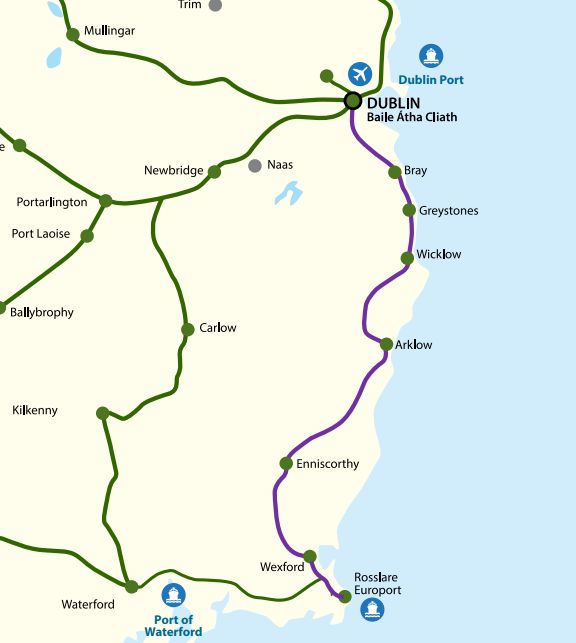
For the moment, I’ll just say that Wexford (Irish name: Loch Garman) is a picturesque historic town at the  mouth of the River Slaney, near the Southeastern corner of Ireland. I had a nice walk around this morning. It’s a pleasant place to stroll about; the streets still follow an obviously mediaeval layout, and parts of the old city wall are still standing.

The train journey from Dublin is very enjoyable, right along the coast for a while, then heading inland, then along the banks of the Slaney. The train isn’t very fast, but it is comfortable and costs less than €10 each way. There’s only a single line from Wicklow to Wexford, which severely limits the number of trains that can operate on the route. The same is true of the Maynooth-Sligo service, actually.

When I moved to Ireland (about 7 1/2 years ago), I planned to travel around and see some of the historic places. Workload issues and the pandemic put paid to that idea for a while, but I have a bit more time to travel now.

P.S. Curracloe Beach, a few miles North of Wexford, stood in for Omaha Beach for the film Saving Private Ryan. I didn’t have time to go there.

The Leaving

Posted in Biographical, Education, mathematics, Maynooth with tags , , , , , on June 4, 2025 by telescoper

Today is not only a significant date for me (in more ways than one), but it’s important for many young people in Ireland because the Junior Certificate and Leaving Certificate examinations both start today, so the first thing I need to do is wish everyone starting their examinations the very best of luck!

Among other things, the results of the leaving certificate examinations are important for September’s university admissions. This year the grade inflation that occurred during the pandemic years will be reduced, though it is not yet clear how. Whatever happens is likely to have a big impact on student recruitment to third-level institutions.

In the system operating in England and Wales the standard qualification for entry is the GCE A-level. Most students take A-levels in three subjects, which gives them a relatively narrow focus although the range of subjects to choose from is rather large. In Ireland the standard qualification is the Leaving Certificate, which comprises a minimum of six subjects, with many students taking more than this. This gives students a broader range of knowledge at the sacrifice (perhaps) of a certain amount of depth; it has been decreed for entry into this system that an Irish Leaving Certificate subject counts as about 2/3 of an A-level subject for admissions purposes, so Irish students do the equivalent of at least four A-levels, and many do more than this. It’s also worth noting that all students have to take Mathematics at Leaving Certificate level.

One can choose to do Leaving Certificate subjects at Ordinary or Higher level and there’s quite a big difference between the two, especially in Mathematics (of which more below).

Overall I prefer the Leaving Certificate over the UK system of A-levels, as the former gives the students a broader range of subjects than the latter (as does the International Baccalaureate). I would have liked to have been allowed to take at least one arts subject past O-level, for example.

For University admissions points are awarded for each paper according to the marks obtained and then aggregated into a total CAO points, CAO being the Central Applications Office, the equivalent of the UK’s UCAS. This means, for example, that our main Science pathway at Maynooth allows students to study Physics without having done it at Leaving Certificate level. This obviously means that the first year has to be taught at a fairly elementary level, but it has the enormous benefit of allowing us to recruit students whose schools do not offer Physics.

There is however a big problem with Mathematics. It was decided some years ago that students would get 25 extra CAO points if they got a mark of at least 40% in Higher Mathematics. This has led to more students taking the subject, which is good, but there are signs that this may have led to a decline in standards. If, for example, the marking is such that a fixed proportion of students get the top grade but more weaker students take the examination, that means that standards fall at the top end. For more discussion, see here.

Anyway, our Theoretical Physics & Mathematics course requires a good result in Higher Mathematics for entry. Will changes to the marking of Higher Mathematics this year make it harder for students to make the grade? We’ll just have to wait and see.

Moreover, since the pandemic struck, students have been able to choose to answer questions from a limited range of sections on the mathematics examination papers. That means that students can get very high grades despite knowing nothing about a big chunk of the syllabus. That matters most for subjects that require students to have certain skills and knowledge for entry into University, such as Physics. I taught part of our first year Mathematical Physics course in Maynooth for about 5 years. It was noticeable how the fraction that were comfortable with basic differentiation and integration was falling. Will this trend accelerate? Again, we’ll just have to wait and see…

Funding Diamond Open Access

Posted in Open Access with tags , , , , , on June 3, 2025 by telescoper

In case you weren’t aware, SciPost is a publishing infrastructure that provides Diamond Open Access to scientific papers. That means they are free to publish and free to read. They are funded by a consortium but are now struggling financially. They have recently circulated an open letter to the Community explaining their predicament and asking for help. I encourage you to read it and, if you can, to make a donation (or bully your institution to do so).

The open letter explains that SciPost is currently running at an average cost per paper of €500. That is much less than a typical APC for a mainstream journal but it is not a negligible cost. At the rate at which SciPost is publishing it amounts to about €1000 per day. SciPost currently attracts a significant level of sponsorship but it is not enough to support its current level of activity. Information on how to help SciPost can be found here. It is a worthy cause and deserves to be supported.

One area in which SciPost has not really taken of is Astronomy, where it has published very few papers. This may at be at least partly because of the Open Journal of Astrophysics (OJAp) which is also Diamond Open Access but runs in a very different and much cheaper way. A full breakdown of costs at OJAp is given here our annual running costs are about €5000 per year, which works out at less than €50 per paper (on average); that comprises a fixed component and a marginal cost of €10 per paper.

The main reasons for the large difference in running costs are: (i) SciPost maintains and runs its own platform; and (ii) it offers a copy-editing service. OJAp piggy-backs on arXiv (where most astrophysics research papers are found anyway) and expects authors to provide the final version of their own work. Neither organization pays referees or Editors. To enable it to run, SciPost employs about three staff full-time (2.9 FTE to be precise); OJAp has no employees and we keep our costs down by offering a ‘no-frills’ service. Instead of having a wide range of sponsors, we are entirely funded by Maynooth University. I am very grateful for that support, but we are run on a shoestring budget.

I have written before about what I think the future of Diamond Open Access could be like. I would like to see a range of Diamond Open Access journals offering a choice for authors and serving different sub-disciplines. Most universities nowadays have publishing operations so there could be network of federated journals, some based on arXiv and some based on other repositories and others with different models, such as SciPost. Perhaps institutions are worried about the expense but, as we have shown the actual cost, is far less than they are wasting on Article Processing Charges.

I don’t see other Diamond Open Access journals as competitors, but as allies with community-led ecosystem. I’d be more than happy to discuss how to start up such a journal on the OJAp model with anyone interested, and have already done so with some interested parties. As far as I’m concerned, the more the merrier! It is neither fair nor reasonable, however, that the expense of running a journal that serves the global astrophysics community should fall entirely on one small University in Ireland.

By all means support SciPost (and get your institutions to do likewise), but please also consider supporting OJAp. We are currently covering our costs but have no funds to make enhancements (such as a much-needed new LaTex template). If you can afford to make a donation to SciPost, then perhaps you can afford to make a donation to OJAp proportionate to our lower running costs? For example, if you give €10K to SciPost, could you give us €1K too? That amount would keep SciPost running for a day and OJAp for many months…

Firearms Units

Posted in The Universe and Stuff on June 2, 2025 by telescoper

Disturbed by the news of a shooting incident in Carlow yesterday that resulted a man’s death, I thought I’d check what the rules are for owning firearms in Ireland. I found a summary here. This is the introduction:

Spot the deliberate mistake!

I don’t possess an airgun, but I understand the pellets they fire range have a mass of at least 0.675 grammes. If, as seems likely, it is the kinetic energy of the pellet that is limited to 1 joule, then what is the maximum allowed muzzle velocity for an unlicensed airgun? Give your answer in metres per second.