Archive for Dublin

Passing the Ports

Posted in Biographical with tags , , , , , on July 15, 2026 by telescoper

I’ve been thinking for some time whether to renew my (expired) British passport, and finally decided to do so. No longer being resident in the UK I thought this would require a trip to the Embassy in Dublin, but that isn’t the case these days. One has to apply online, including supplying a digital photograph, send the old passport off by courier, then wait for the new one to arrive (by courier).

One problem with doing this is that the format of digital picture required for a British passport is not the same as for an Irish one, so most of the automatic machines (“Photo-Me”, etc) in Ireland are no use. I was able to take advantage of a recent trip to London, however, by using such a machine in Paddington station. I had plenty of time for that given the train delays. I got a few printed photos at the same time, in case I need them, but all you need for the passport is a photo code. The images are stored until used in the passport application.

And so it came to pass that today I completed the online application, paid the fees, and went to the local Post Office to send the old one to HM Passport Office. Now I have to wait and see how long it takes for my new passport to arrive. About a month, they say. We’ll see.
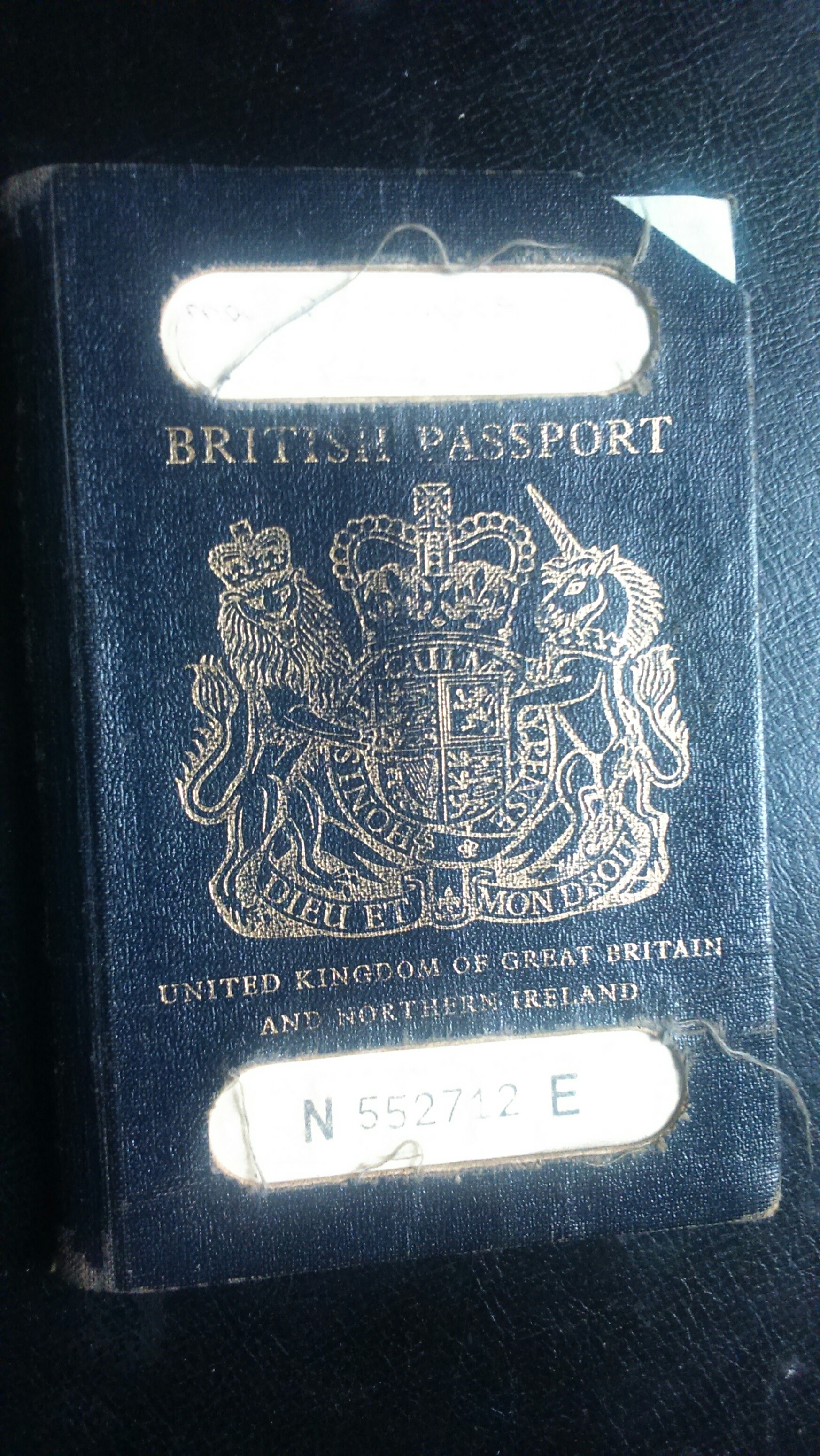
The new one will be dark-blue or black, like the very first one I ever had (left). That one was issued in 1986 and expired in 1996. I leave it as an exercise the reader to calculate how many I have had since then!

Whatever its design it will not allow me the right to live, work and retire freely within the European Union, so it will be of considerable less value than my Irish one.

I was for a time under the impression that having a British passport would make it easier should I ever want to enter the UK from somewhere other than Ireland, but I don’t think this is true. Unlike other EU citizens, according to the provisions of the Common Travel Area (CTA), Irish citizens do not require an ETA to enter the UK. They just need a valid Irish passport. Still, I think it will be useful to have a spare and I’m now used to having multiple identities!

I recently travelled to the UK and back by ferry. That journey being within the CTA a passport is not strictly required – other forms of photo-ID are acceptable – but I took mine anyway, as I don’t have a driver’s licence and we don’t have official government-issued ID cards in Ireland so I wasn’t sure whether they would accept any of the cards I have with my picture on it (e.g. my Maynooth staff card). As it happened the ID checks were very cursory. When I checked in at Dublin Ferry Port, the assitant there only wanted my ticket number and didn’t ask to see my ID at all. It was the same coming back from Holyhead. On arrival at Holyhead, there was a border post staffed by several officers, but they waved most passengers through (including me). On returning to Dublin the check was even more perfunctory: there was just one guy and he seemed more interested in welcoming everyone to Dublin than looking at any documents.

The CTA means that if you fly from Dublin to the UK you generally arrive at a place in the airport dedicated to such passengers. This is particularly convenient flying to Heathrow Terminal 2: on arrival you just walk through the Baggage Reclaim and out into the airport without passing any checks. You still need a passport, though, as airlines require this form of identification and it is scrutinized when you check in and when you board the plane. The only airport I know of that doesn’t have a simplified arrival system for CTA passengers is Dublin. They have no separate facilities, so you have to go through passport control with all the other passengers. That can be a bit inconvenient if lots of flights have arrived at the same time. I suppose the people who run Dublin Airport do not think it’s worth having a CTA arrivals facility.
Ferried Across

Posted in Biographical with tags , , , , , , , on July 11, 2026 by telescoper

I took another ferry back from Holyhead to Dublin last night. The outbound journey was via Irish Ferries but I returned on the Stena Line. I left Holyhead at 22.15 and arrived at the Ferry Terminal at Dublin Port at 1.45am. I was a bit unsure what it would be like on such a late-night trip but the trip was uneventful. I’d had a very tiring day getting to Holyhead so I toyed with the idea of sitting in the bar and having a few drinks, but I thought better of that. Instead I found a quiet corner in one of the lounges where there was a bench seat, and managed to stretch out enough to get about an hour’s sleep.

I think quite a few passengers had booked cabins for the crossing. I didn’t think it was worth doing that for less than four hours aboard, but I will consider that next time I take a late-night ferry. There’s not much to see out of the window in the dark!

The disadvantage of being a foot passenger on these ferries is that you have to wait until all the people with vehicles have disembarked before getting a bus back to the terminal building, which adds about 30 minutes to the time. Anticipating the probability that I would be knackered topo fed up to try getting home by public transport with all my luggage in the early hours of the morning, I had booked a taxi to meet me at 1.45, the scheduled arrival time, but I didn’t actually meet the driver until after 2am. Sitll, I got home to Maynooth quickly and was tucked up in bed by 3am. I had to open all the windows as the house was very stuffy, but other than that all was well.

While I was staying in London I took a few trips by train here and there, most of them very shambolic. All the direct trains from London Paddington to Oxford were cancelled, so passengers had to get on very overcrowded trains that went through Oxford to other destinations. To get back to London I used a train to Marylebone which I didn’t know existed. It was slow, but got me back.

With these problems in mind I took an earlier train from Euston to Holyhead than I originally intended. I’m glad I decided that because even the earlier train was delayed by > 45 minutes leaving Euston. Worse, some other trains goint to Manchester and beyond were cancelled so passengers were advised to get on the train I was on and change at Crewe or Chester. The seat reservations weren’t working so the result was a very sweaty overcrowded train with standing room only, at least until Chester where many people got off. The uncomfortable journey made me break a 195-day blogging streak as I just couldn’t be bothered even when I got a seat. Instead I just relaxed and looked out of the window as we travelled along the coast of North Waves.

My train from Holyhead to London was delayed by over an hour as was the train back yesterday. The upshot of all that is that I get a 100% refund of the fare for the entire journey so it was effectively free (if you don’t count the cost of the stress and discomfort).

Anyway, this trip was my first experience of ferry+train to the UK and back. My summary of the experience is “Ferry Good, Train Bad”.

The Bronze Shoes

Posted in Biographical, History, Maynooth with tags , , , , , , on September 8, 2025 by telescoper

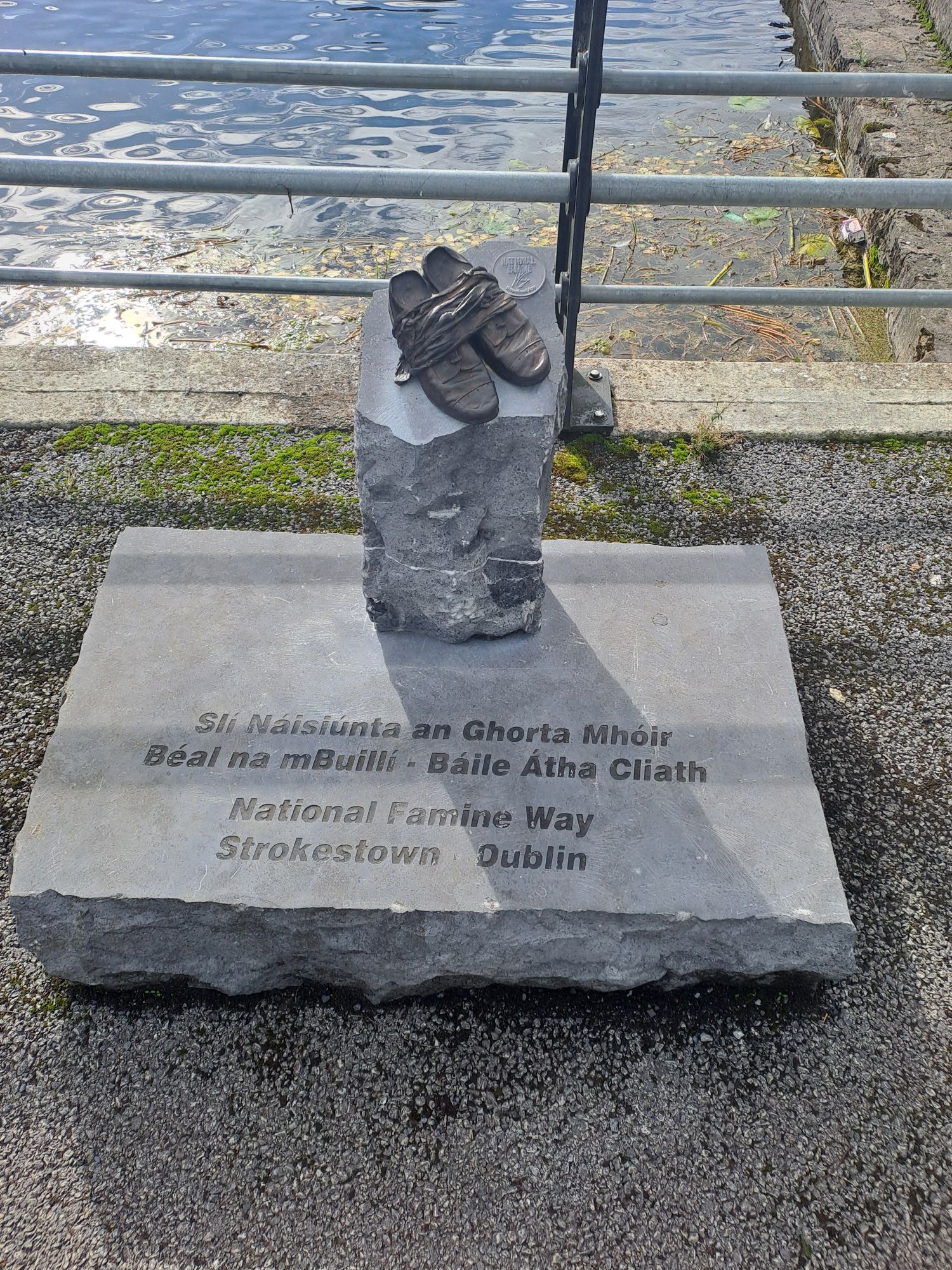
About a month ago I posted an item about the National Famine Way, at the end of which I signalled my future intention to walk the 165 km 6-day route from Strokestown to Dublin. I was subsequently contacted by a number of people warning me that I might not be up to it. They didn’t put me off, but I have come up with a plan. This week – on Wednesday in fact – I will have the injections I get every six months or so to control the arthritis in my knees. Thus fortified, I intend next week to do a trial run walk consisting of the last stage of the Famine Way, from Maynooth to Dublin, along the Royal Canal. That’s about 27km and will take most of a day. I’ll stop on the way for lunch and when I get to the end I can get the train back to Maynooth. And if I run walk into difficulties I can stop at one of the intermediate stations and return from there; the canal runs right alongside the railway line for most of the way. If all goes to plan I’ll take time off next year to do the whole trip from Strokestown.

Meanwhile here’s a picture of one the poignant bronze sculptures of children’s shoes placed along the way. This one is at Maynooth harbour; there are 8 others on the way to Dublin.

To learn more about these shoes, see here, and here’s a video telling the story

The Tower Records Experience

Posted in Biographical, Music with tags , , , , on August 16, 2025 by telescoper

I lived in London from late 1990 until the very end of 1998. One of my favourite places for shopping in those days was the excellent Tower Records. There were two stores then, but I only ever visited the one at Number 10 Piccadilly as it was very conveniently placed to skive off from meetings of the Royal Astronomical Society at Burlington House, which is just round the corner.

It wasn’t just the huge selection of records, tapes and CDs across all musical genres but also the extremely helpful and knowledgeable staff. I always found their advice very helpful and often left with many more things than I intended to buy when I went in.

Tower records was acquired by the Virgin Group in 2003 and the store in Piccadilly closed down completely in 2009. I haven’t been past the site recently, but I think it is vacant and awaiting redevelopment.

The reason for mentioning this is that Tower Records is alive and well and living in Dublin. There are two stores in the city but I’ve only ever been to the larger one in Dawson Street. It’s not as big as the one in Piccadilly, but it does have a very good selection of music (including a large section of classical music) and very friendly staff. It also has a wide range of hifi equipment, including turntables for those of us who have a vinyl collection. It also has an online service. The last thing I ordered from them was delivered to my house in Maynooth the next day at no charge.

It brought back a lot of memories when I first went inside as it has the same old yellow and red signage and very much the same vibe as the old London store; you can see some interior pictures here. Tower Records (Ireland) is highly recommended for those who are nostalgic for the old Tower Records (London) as well as those who just want to visit a proper, independent, music store. I hope it not only survives but prospers.

How to Hold your Hurley

Posted in Cricket, GAA, Maynooth with tags , , , , , on July 6, 2025 by telescoper

This is a big weekend for fans of hurling, as we have reached the semi-final stage of the All Ireland Senior Hurling Championship. Yesterday Cork trounced Dublin by 7-26 to 2-21. I’ve never seen such a high scoring game at the top level, nor a margin as large as 20 points (a goal is worth 3 points)! Though not expected by many to progress, Dublin had deservedly beaten Limerick in the quarter-finals but they were never in the game yesterday.

The other semi-final takes place this afternoon at 4pm, and is between Kilkenny and Tipperary. Which of these will meet Cork in the Final? We’ll soon find out!

Update: it was another high scoring match, finishing Kilkenny 0-30 to Tipperary’s 4-20, so Tipperary won by 2 points (with a goal in the last minute). The All Ireland Final will therefore be between Cork and Tipperary.

Both semi-finals are held at Croke Park, as is the final. Many supporters come through Maynooth on their way to these matches, as we’re on the train line that goes into Dublin Connolly via Drumcondra (the nearest station to Croke Park). There is an arrangement by which supporters can park their cars at the GAA ground in Maynooth and take the train, as there is no chance of parking near Croke Park.

Yesterday evening I needed to do a quick trip to the shops and ran into a crowd of returning Cork supporters who had just arrived by train. Most fans were in very good humour (unsurprisingly) but a few were very much the worse for drink: one young lad had passed out on the footpath and concerned pedestrians called an ambulance; over the road at the bus terminus Gardaí were dealing with a drunk and aggressive person; and in Supervalu a hopelessly inebriated bloke staggered into the off-licence part to get more booze but ended up falling over and dropping the cans he had picked up, with one bursting and making a mess all over the floor.

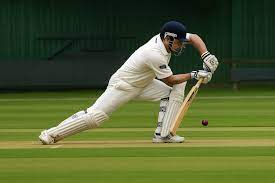
Anyway, none of this is to do with the intended subject of this post. Cork’s victory yesterday reminded me of a little bit of hurling information that I found interesting, concerning the way to hold the hurley. Having been brought up on a different bat-and-ball game (cricket), I was surprised to learn that in hurling you are supposed to hold the bat the wrong way round! What I mean by that is that in cricket the batter holds the bat with the dominant hand at the bottom of the handle near the blade and the other hand at the top. For illustration, here’s a forward defensive shot played by a right-hander:

You can see the left hand at the top of the handle and the right hand near the bottom. Shots like this are played predominantly with the bat moving in a vertical plane, propelled mainly by the left hand with the right hand guiding the direction. A hook or pull shot is played with the same grip but swinging the bat across the body from right to left with more bottom hand.

When I was at school I tried batting left-handed in the nets. It was quite interesting. I found I could play defensive shots equally well that way as with my usual right-handed stance, but I couldn’t play attacking shots very well at all.

It’s the same arrangement in baseball (or rounders, as we call it on this side of the Atlantic). The batter will hold the bat with their weaker hand nearer the end of the handle, i.e. towards the thin end.

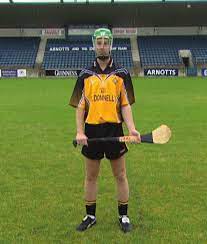
On the other hand (!), a hurler holds the hurley the other way round. On the right you can see a hurler at the ready position, with his right hand at the top of the handle and the left hand near the blade. When striking the sliotar (ball), the hands are moved closer together. Holding the end of the hurley in the dominant hand means that more strength can be applied when reaching away from the body with one hand, something that isn’t really done in cricket. The typical long-range strike of the sliotar is rather like a hook shot in cricket, except it’s played the opposite way across the body.

Here’s a video:

This seems very unnatural if you have been brought up to use the opposite basic grip, which explains why so many struggled even to hit the sliotar at the practice at the EAS Social Dinner in Cork a couple of weeks ago. In Ireland, however, kids learn to play hurling when they’re still in kindergarten so this is instilled at a very early age.

After the Lectures

Posted in Biographical, Education, Maynooth, Music with tags , , on May 9, 2025 by telescoper

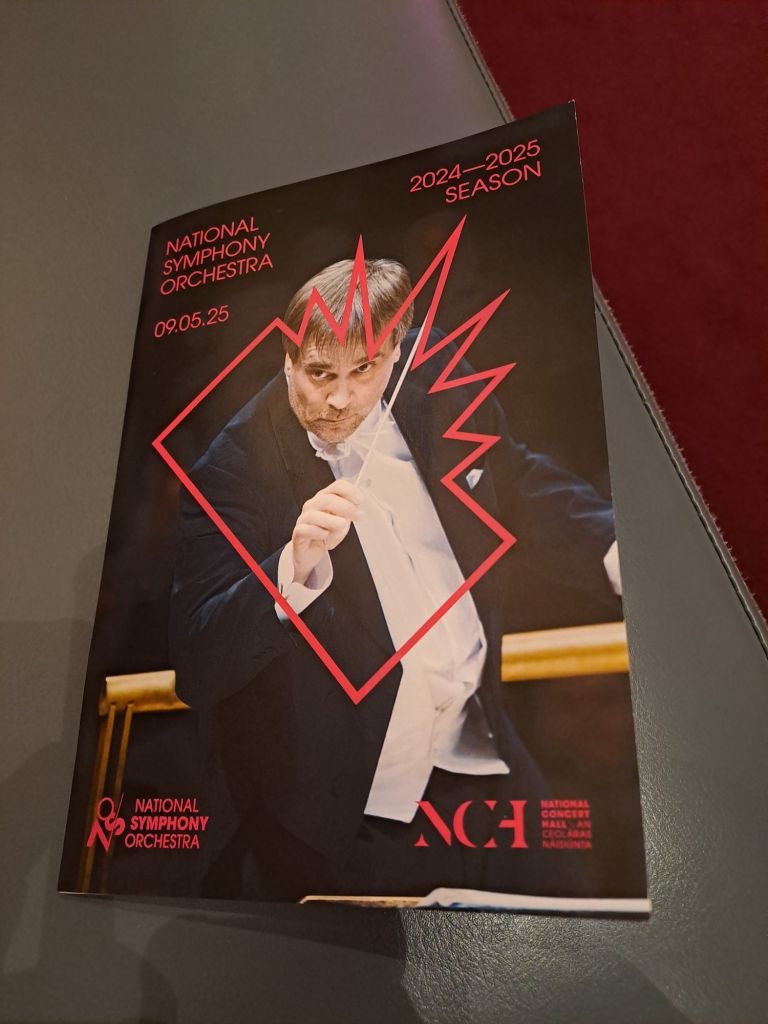
Today has been such a busy day that I’ve only got time for a quick post. This morning was spent preparing and delivering a revision lecture, and this afternoon preparing and delivering a Departmental Colloquium.  That done I headed straight for the railway station to get the train into Dublin and thence by foot to the National Concert Hall.

So here I am, sipping a glass of nicely chilled white wine as I wait for tonight’s performance. I’ll post a review tomorrow but, until then, Cheers!

Travel Travails

Posted in Barcelona, Biographical with tags , , , on March 13, 2024 by telescoper

I’m sitting in Heathrow Airport Terminal 2 waiting for a flight to Dublin to complete the return home from Phoenix. The transatlantic part of this journey went pretty well despite an unpromising start. The terminal at Phoenix was incredibly crowded, and the gate area far too small to accommodate the number of passengers on the flight. The Club World lounge was completely full and operating a wait list just to get in. I waited for 30 minutes to enter and then gave up without succeeding. Had I actually paid a business class fare I would have been very angry about that. The general overcrowding led to my flight taking off about 30 minutes late, but at least that didn’t get significantly worse and I got to Heathrow with plenty of time to make my connection.

I have to admit that the fatigue and disorientation resulting from the excessive travel I’ve been doing over the past few weeks is getting to me a bit. I don’t think I’m cut out for the jet set! It’s not quite over yet, either. After flying back to Dublin I will spend a few days in Maynooth to recover and celebrate the (predicted) success of a PhD student whose examination is tomorrow, then fly back to Barcelona. Fortunately that’s just a short-haul flight and then I’ll be able to settle there until at least July.

Update: I got back to a very rainy Maynooth safely and ahead of time: I managed to get a Hopper bus I should have missed, but which was 10 minutes late!

A Dublin Metro?

Posted in Biographical, Maynooth with tags , , on August 21, 2023 by telescoper

I have to do a bit of travelling in the second half of this week so I spent a bit of time today planning the trip, the easiest and quickest route seeming to be a bus from Maynooth to Heuston Station in Dublin and then a train from there. The only alternative, given that I don’t have a car, would have been a train to Connolly and a coach from Busáras, which would be cheaper but far slower.

Thinking about travelling it occurred to me that if I’d still been living in Cardiff I would have qualified for a free bus pass by now. I’ll have to wait until I’m 66 to get one here.

Coincidentally, when I got home I saw a news item that a team had been assembled to oversee the construction of the Dublin Metrolink. There’s nothing to get too excited about this news, as the project hasn’t yet got planning permission, and will take “6-8 years” to complete if and when it does. I’d be surprised if it’s done by 2035, actually. The question is whether it will really be a useful complement to the Irish Rail, DART, LUAS and bus services that exist already.

However, this is what it will look like:

As you can see, it’s basically North-South. The one obvious advantage is that it will at last provide a proper public transport link from the city to the airport, the lack of which is a national embarrassment.

Another thing of personal interest is the proposed new Glasnevin Station:

The Glasnevin MetroLink station is one of the most significant stations on the route. It is situated beside Cross Gunns Bridge and the Royal Canal, with a new Irish Rail station serving the Maynooth, Sligo and Kildare lines and BusConnects will also have stops close by.The complexity of the construction of this station is formidable as the aim will be to minimise the impact on Irish Rail services which is a vital part of the national rail network.

Oh dear. I sense years of rail replacement bus services and/or other disruptions if it goes ahead, and that there will be many planning objections before it even starts. If it does come to construction work, I suppose it will be easier for me to get the bus into Dublin while all that is going on. On the other hand, a link from the Maynooth line via MetroLink to St Stephen’s Green will be handy for concerts at the National Concert Hall. All of which assumes that I’m still around when this is finished, of course.

This reminds me of my trip to Copenhagen earlier this year, where I found their much more complex Metro system finished. I don’t remember how long I’ve been visiting that city and see extensive building work to do with the Metro, especially at Kongens Nytorv.

Tá mé sa bhaile – Biden’s Irish

Posted in Irish Language, Politics with tags , , , , , , on April 14, 2023 by telescoper

TRIGGER WARNING: CONTAINS PRONOUNS!

Yesterday, President of the United States of America, Joe Biden, addressed a joint sitting of the houses of Oireachtas in Dublin. Predictably he included an attempt at Irish in his speech to the obvious appreciation of those attending. I was a bit confused by the way what he said was reported in the Irish media, however, e.g.

My confusion was that I didn’t think he said tá mé seo abhaile as widely reported. For one thing, even I as a beginner could see that phrase means “I am this home”, which doesn’t make any sense (not to me, anyway). There are various possibilities for what Joe Biden did say. For what it’s worth I thought it was tá mé sa bhaile which, loosely, means “I am at home”. I note that the news media have generally changed their accounts (e.g. here) to reflect this, although other forms of words are possible. I’m not surprised that Biden struggled with the pronunciation – most of us beginners do, but I think the writers and editors of the newspapers above might at least have corrected his grammar.

The phrase illustrates a couple of interesting curiosities about the Irish language. Expressing the verb “to be” in Irish isn’t as straightforward as it is English. There are two grammatically distinct ways of doing this. The two Irish forms are , which is like the English verb “to be” and the so-called copula, is, which is sometimes called a defective verb. It’s admittedly a bit confusing that the copula looks like the third-person singular of the verb “to be” in English, but there you go.

Going back to, it is frequently referred to as tá (its present tense form as in the phrase above). It can be fully conjugated in all tenses and persons but it is highly irregular. Grammatically, is also just like any other verb, coming first in the sentence, followed by a subject (either a separate noun or pronoun or a suffix, depending on the tense and person, as shown in the conjugations), and then its predicate and any remaining adverbial information. Thus tá mé is “I am” with the pronoun . The accents (síneadh fada)  mean that this is pronounced taw-may.

The copula, however, is not fully conjugated for different subjects, which are always expressed by separate nouns or pronouns, and it only has two forms for different tenses: is can be used for present or future meaning, and ba (with lenition) is used for past or conditional meanings.

Among the specific situations in which the copular is must be used instead of but the main one is to be followed by a noun. You can’t say “I am a Professor” using – it has to be Is Ollamh – but to say “I am old” it is Tá mé sean.

One final remark. If you’re scared of pronouns please look away now. There are over 120 different pronouns in the Irish language. There’s a special version of the pronoun written mise which has two uses that I am aware of. One is when the copular is used for identification – so “I am Peter” is Is mise Peadar – and the other is for emphasis, when it is roughly equivalent to “myself” in English.

P.S. The Irish word for “pedantry” is pedantraí

Mahler, Weber, Schubert and Strauss at the NCH

Posted in Biographical, Music with tags , , , , , , , , , , , , on January 14, 2023 by telescoper

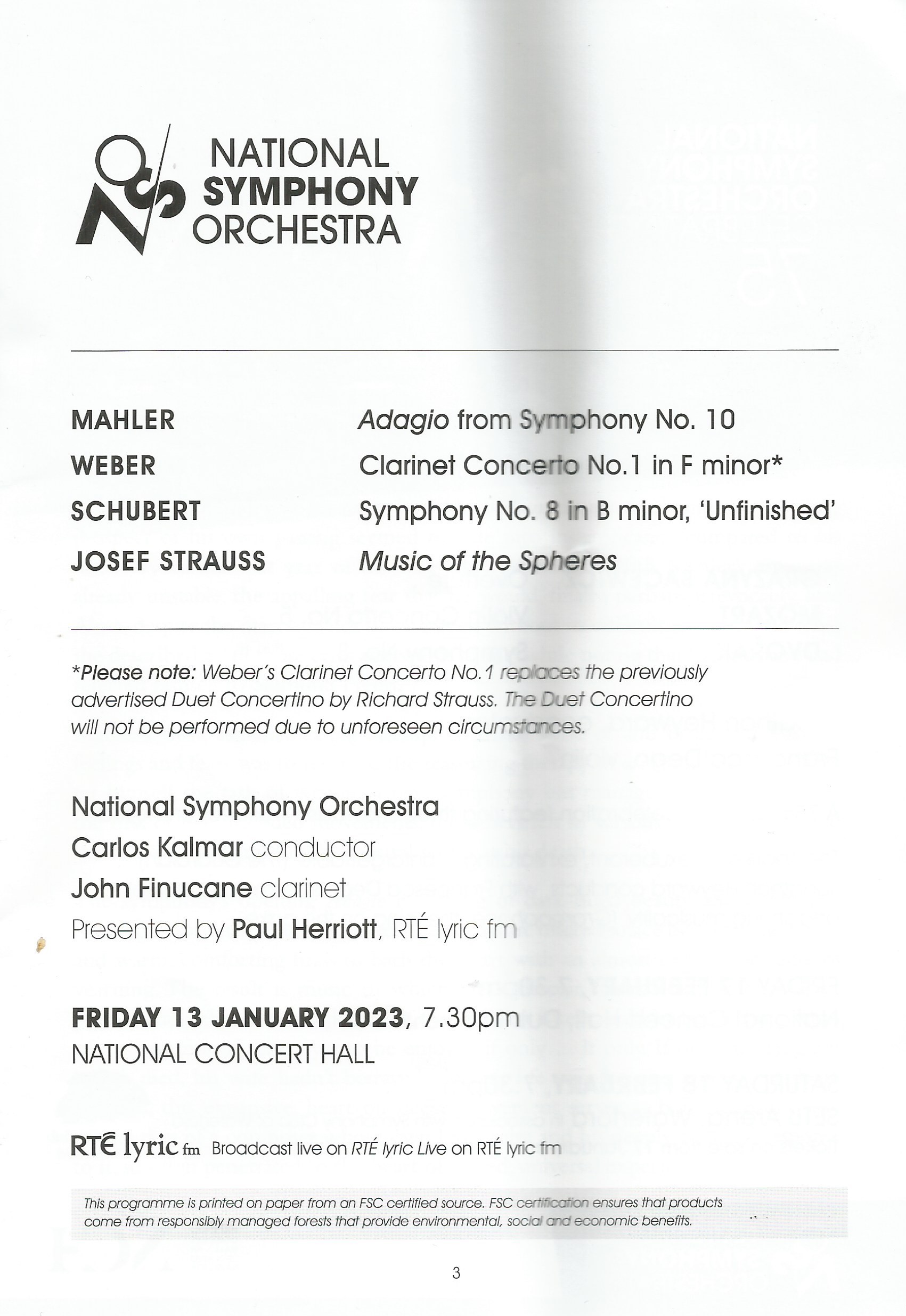
And so it came to pass that last night I took the train into Dublin for my first concert of the year 2023 at the National Concert Hall in Dublin which happened to be by the National Symphony Orchestra under the direction of guest conductor Carlos Kalmar.

It was an unusual programme in terms of its construction. Often the menu for such concerts begin with a short appetizer but this one started with the first movement of  Gustav Mahler‘s 10th Symphony. The composer died a hundred years ago in 1910 having not actually finished the rest of the symphony, but I gather that he left sufficiently detailed sketches and notes that complete versions have been constructed, but nevertheless the first movement is frequently performed on its own. It’s quintessentially Mahler in many ways, but it’s a strange opening for a symphony because it’s a very long Adagio movement (lasting about 30 minutes). It’s a complex and weighty movement for a full orchestra, rather cryptic in nature but overall with a rather dark tone, far from the usual lollipop to start a concert!

Originally this programme was supposed to feature the Duet Concertino by Richard Strauss but it was announced last week that this would be replaced by the Clarinet Concerto No. 1 in F Minor by Carl Maria von Weber with the NSO’s principal clarinettist John Finucane. Unusually for a concerto performance, John Finucane was reading a score, which perhaps suggests he stood in at short notice but in any case the performance was very fine. The third movement, a spirited Rondo kicked off by a very jaunty theme, is probably the most familiar piece, but I particularly enjoyed the interplay between clarinet and horns in the slow (2nd movement). John Finucane had brought his fan club with him, and the audience responded warmly.

After the wine break we had Symphony No. 8 in B Minor by Franz Schubert, the famous “Unfinished Symphony”. Somewhat surprisingly, I am pretty sure that I had never heard this piece performed live until this concert.

Schubert apparently wrote the first two wonderful movements of this piece in the space of only eight days in 1822 but then seems to have abandoned it. The composition wasn’t interrupted by his death – he didn’t pass away until 1828 – so it’s a mystery why he didn’t finish it. It wasn’t even discovered until the 1860s. Unlike Mahler 10, we don’t have any idea what the rest of this symphony would have been but the two existing movements are exceptional, not least for the stream of lovely melodies. This work clearly belongs to the same world as the Weber piece (which was composed in 1811) but having one after the other emphasizes the transition from Classical to Romantic, and having Mahler on the same programme contrasts early and late Romantic in a very illuminating way.

The last piece was Music of the Spheres, a waltz by Josef Strauss, the younger brother of the more famous Johan Strauss II. It’s a jolly enough but rather insubstantial piece that seemed rather incongruous to me in this programme, especially at the end as it is the sort of piece one could imagine as an appetizer. It seems to have been decided that something was needed in place of the missing movement(s) of the Schubert Symphony, so perhaps it was meant to play the role of a dessert?

In any case it was an upbeat way to end the concert which was very enjoyable. I then made my way out into the rain to get the train back to Maynooth. For a Friday night, Dublin was very quiet indeed, perhaps because of the inclement weather and/or the post-Christmas lull. The NCH wasn’t full but there was a decent attendance and the performance was warmly appreciated.

P.S. Note that the National Symphony Orchestra is no longer the RTÉ National Symphony Orchestra owing to some restructuring. Note also that it is planned to close down the NCH for at least two years for extensive refurbishment. I’m not sure what will happen to the NSO during this period.