With all the excitement of my first weekend in Sydney I completely forgot to post an update from the Open Journal of Astrophysics. In fact there is only one paper to report from last week, being the 12th paper in Volume 7 (2024) and the 127th altogether. This one was published on 9th February 2024 and is the first published from Down Under.
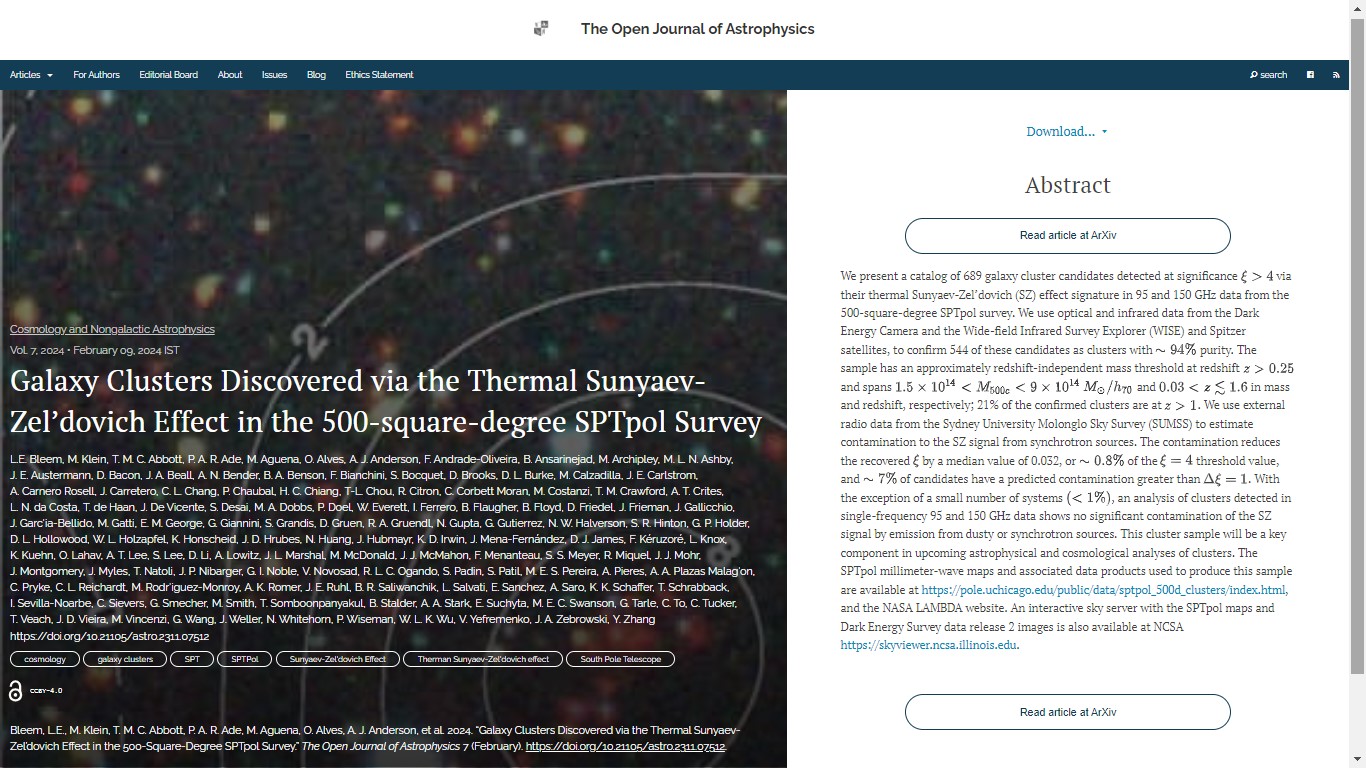
This paper has lead author Lindsey Bleem of the Argonne National Laboratory in the USA and has 127 other authors – too many to list individually here – but you can see them on the overlay below. I see quite a few names of people I know well!
Here is the overlay of the paper containing the abstract:
You can click on the image of the overlay to make it larger should you wish to do so. You can find the officially accepted version of the paper on the arXiv here.
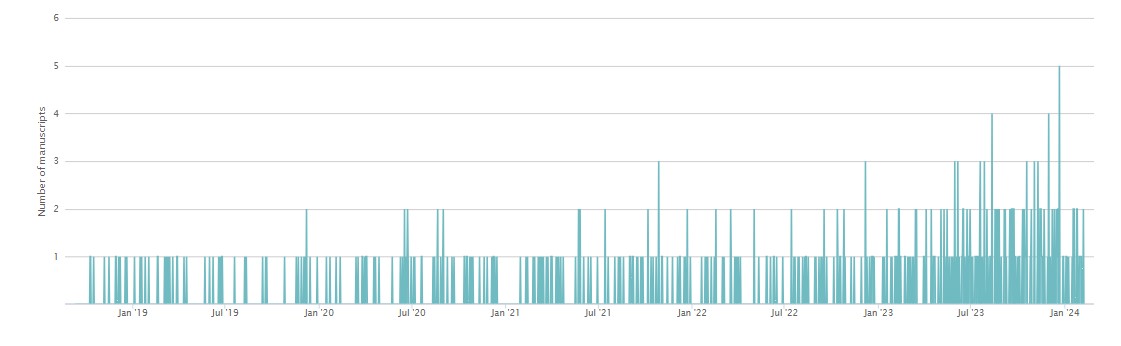
P.S. Incidentally, while I’m here I thought I’d share this little graphic I’ve generated (for other purposes) that shows how the rate of submissions to OJAp has increased over the last 5 years:
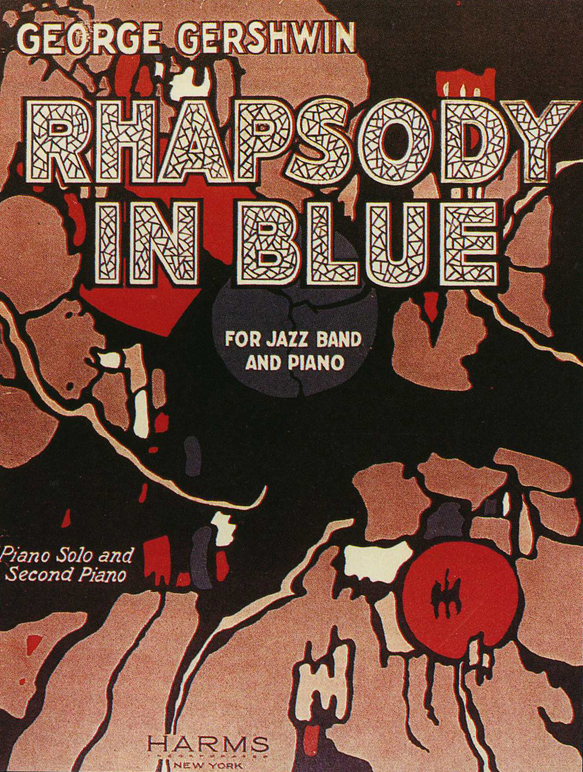
It is February 12th 2024, one hundred years to the day since the first performance of George Gershwin’s composition Rhapsody in Blue at the Aeolian Hall in New York by Paul Whiteman and his Palais Royal Orchestra with the composer himself on piano. This piece is has been a concert favourite for decades, but is usually heard in an arrangement for piano and full symphony orchestra which dates from 1942. The orchestration for that version was provided by Ferdi Grofe who had scored the original for Whiteman’s much smaller band back in 1924. Gershwin originally wrote the piece for two pianos, but didn’t know much about orchestration and had handed that task over to Grofe which the latter completed just a few days before the performance on February 12th 1924. It was not until the rehearsal with Whiteman’s band, however, that the famous opening took its now familiar shape.
The clarinet player with Paul Whiteman’s band in 1924 was a chap called Ross Gorman. It was his job to play the first few bars of Rhapsody in Blue, which had been scored for solo clarinet, consisting of a trill and then a long rising scale or arpeggio of more than two octaves. When they did the first play through Gorman didn’t play it as written but instead followed the trill with part of the scale followed by a long smeared glissando. Gorman often used smears to mimic laughing or sobbing noises, so this was a kind of trademark of his and came very naturally to him (though it is quite difficult to play a long glissando like this, especially slowly). There’s no question that it was “jazzed up” with humorous intent, but Grofe and Gershwin loved Gorman’s way of playing it, and that’s how it has been played ever since.
Rhapsody in Blue was a hit with the audience at its first performance, and has remained so with audiences around the world ever since. Sales of sheet music were good too! Critical reception was somewhat different, but those who disliked it were mostly judging it in comparison with classical music forms (e.g. a piano concerto) that it wasn’t attempting to be. I think it’s a piece to be enjoyed for its exuberance and atmosphere rather than thematic development or other more refined criteria.
There isn’t a recording of the original performance of 1924, but there is one of the same arrangement played by Paul Whiteman’s band in 1927 – complete with Ross Gorman on clarinet and George Gershwin again on piano. The difference is that it was played a bit faster for this recording than it was in concert so that it would fit on two sides of a 12″ record. Although I do think some modern performances of Rhapsody in Blue are too slow, this sounds to me rather rushed in places. The sound quality isn’t great either. Nevertheless, it’s an important piece of music history and it did sell over a million copies, so it would be remiss of me not to share it today!
Since I’m in a self-catering apartment here in Sydney, I’ve needed to scout out the local shops. It turns out the nearest supermarket to my residence is called Coles. When I was buying a few bits and bobs there I showed the name on my debit card to the person at the checkout, but they wouldn’t even give me a discount.
Coles is one of the two big supermarket chains in Australia, the other being Woolworths. I was a bit surprised by that as the UK Woolworths went down the tubes some time ago. I’ve tried both stores during my stay here and it pains me to say that I think Woolworths is the better of the two; it also has the highest market share. There’s also an Aldi near me.
One thing that surprised me about both Coles and Woolworths is that neither sells alcoholic beverages while Aldi does. It turns out that both have associated drinks businesses, Liquorland and BWS respectively, usually located right next to the supermarkets. For some reason it has been decided to keep them separate from the general stores. That might be because of licensing laws or because of purely commercial reasons. I’ve sampled a couple of wines while I’ve been here (one red and one white, both mid-price) and both were nice. Imported wines are available, but I’ll be sticking to local producers while I’m here. Of course the grape varieties are of European origin, but grown in Australia: the red I tried was a Montepulciano and the white a Riesling.
Other than that the main difference between supermarkets here and in Ireland (or the UK) is the much greater selection of Asian food and ingredients. Most groceries are of Australian origin, though, and even brands that are familiar back home (e.g. Heinz) are generally made here under licence. Anyway, I didn’t come all the way here to eat what I would eat at home, and it’s been fun sampling some of the local delicacies, such as Barramundi. I haven’t had kangaroo yet. I did try a Tim Tam but was unimpressed.
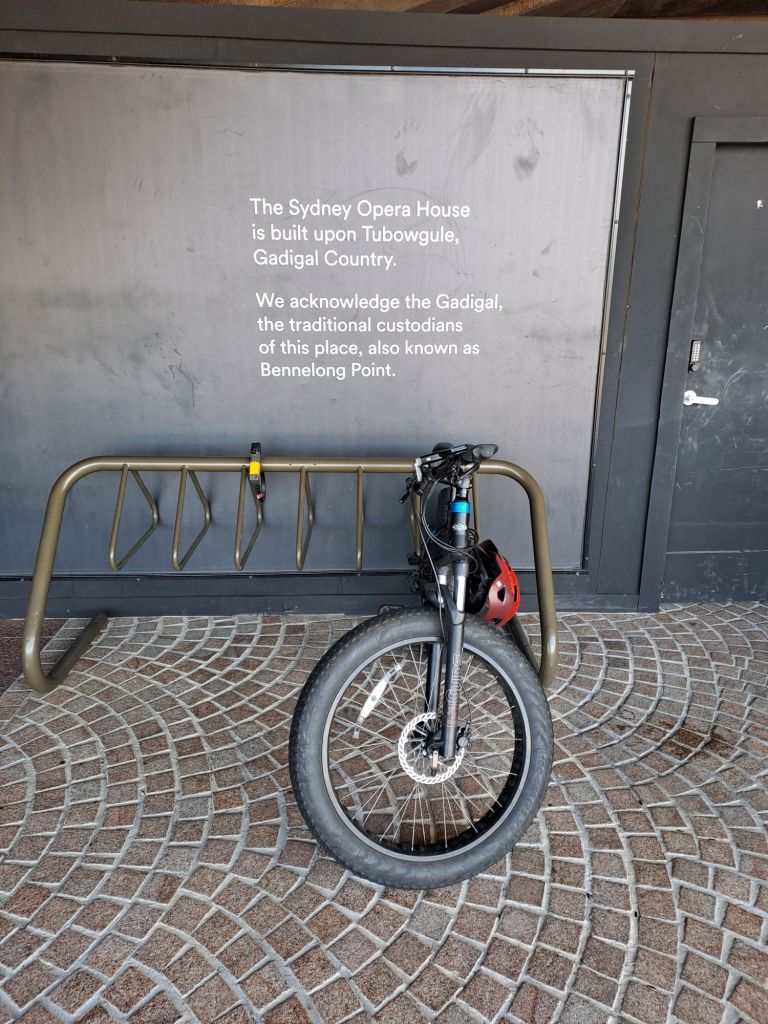
It was a bit rainy this morning so my planned Saturday walk around Sydney was a bit truncated. I made it to Sydney Harbour but didn’t go on a boat trip, which I’ll do later. I didn’t have time to visit the Botanical Gardens or the Art Gallery of New South Wales, which are nearby, but will do so later. I was planning to take more pictures with my little compact camera too, but when I took it out I realized its battery was virtually flat and I had to use my phone camera instead. The light here is very different from Ireland! Fortunately I’m here long enough that I’ll have other opportunities for exploration.
My residence in Sydney is the district called Ultimo, which is very central and close to the University of Sydney campus. There is excellent public transport from here to Circular Quay, close to both the Sydney Harbour Bridge and the Opera House, but I needed to stretch my legs so took a leisurely stroll of about an hour, my route taking me through Haymarket and Chinatown to Circular Quay. It being Chinese New Year, I took a detour to look at some of the preparations for two weeks of celebrations. I enjoyed the walk, which followed the tram line most of the way there, and it was getting rather warm in late afternoon so I returned by tram.
Anyway, after much fiddling about, I’ve managed to embed a video I put on Instagram. As you can hear, it was quite windy!
She sits in the park. Her clothes are out of date.
Two children whine and bicker, tug her skirt.
A third draws aimless patterns in the dirt
Someone she loved once passed by – too late
to feign indifference to that casual nod. “How nice” et cetera. “Time holds great surprises.” From his neat head unquestionably rises a small balloon…”but for the grace of God…”
They stand a while in flickering light, rehearsing the children’s names and birthdays. “It’s so sweet to hear their chatter, watch them grow and thrive, ” she says to his departing smile. Then, nursing the youngest child, sits staring at her feet. To the wind she says, “They have eaten me alive.”
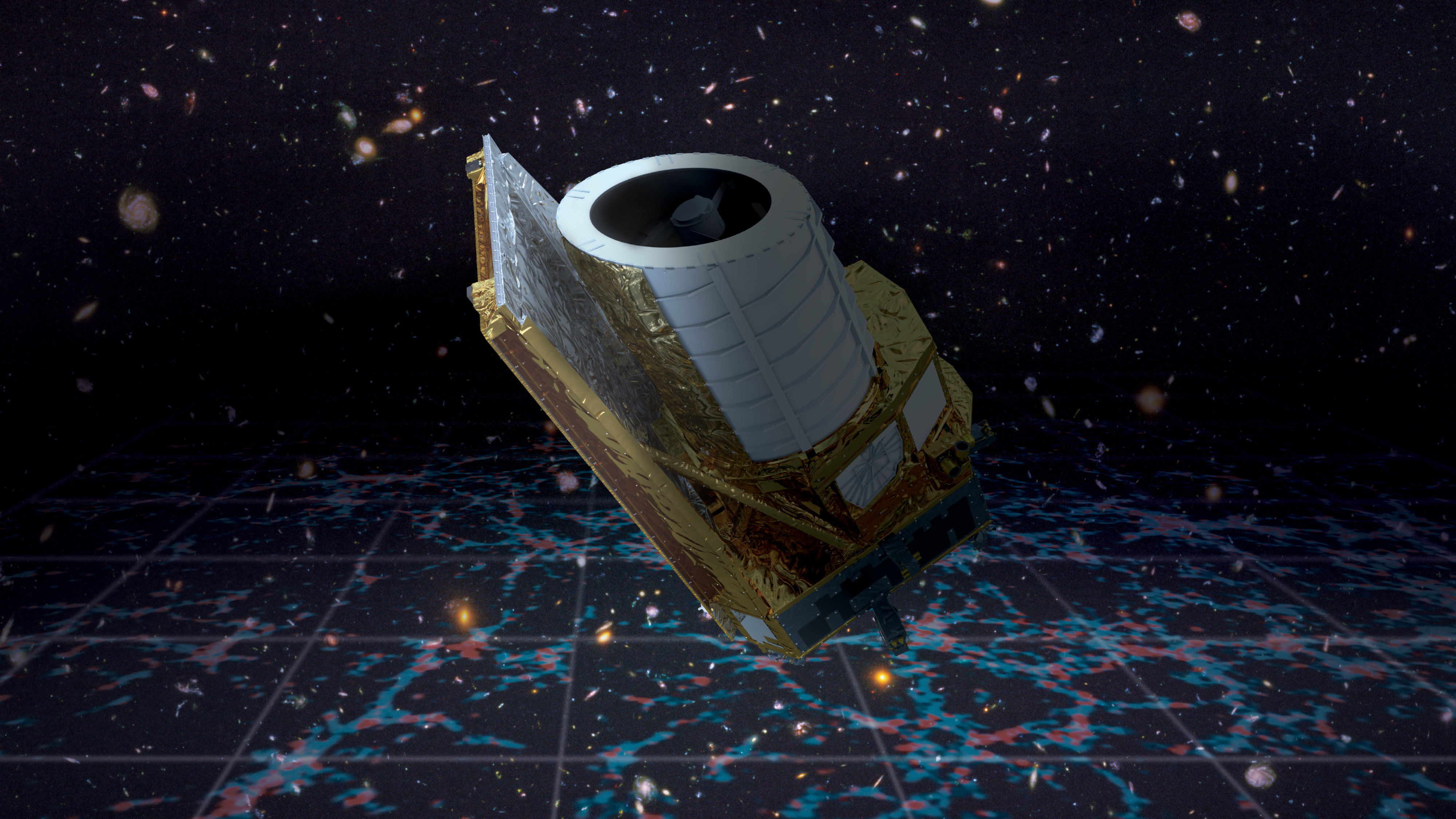
I just heard some excellent news about Euclid so thought I would post a quick update here. I won’t say much because there will no doubt be official communications from the European Space Agency and the Euclid Consortium. You can find a variety of Euclid-related posts on this blog here.
Over the past few months, there has been a huge amount of activity relating to commissioning the instruments, verifying their performance, and measuring parameters of the optical system that will be needed for analysis of the huge amount of data due to come from Euclid. All this effort fed into the Mission Commissioning Results Review (MCRR) which concluded yesterday that all was well.
This is an important milestone for Euclid because, in ESA parlance, it marks the change from a project to a mission. Until commissioning, there is a project manager who works with ESA and the industrial contractors to ensure everything functions properly; when nominal operations start the project team is disbanded and the mission team takes over; and so it came to pass that the Project Manager (Giuseppe Racca) handed over the reins to the Mission Manager (Pierre Ferruit).
That’s when the role of the Euclid Consortium increases substantially. In particular the Science Ground Segment (SGS), which includes the pipelines that will process the data, has been declared to be ready for business. You can read more about the SGS here but here’s a graphic that shows how data comes from the telescope, external telescopes, or simulations, then run through their respective pipelines for VIS, NISP, or external data, then are merged into a coherent format. Pipelines then extract scientific information and compute science data products for further analysis
Each element of this diagram is rather complex. Here, for example, is the organization of the Science Data Centre (SDC) component of the Science Ground Segment at the bottom of the above picture, consisting of computing centers responsible for implementing and running the data processing pipelines:
Anyway, the immediate upshot of all this is that full surveying activities of Euclid can now proceed. The Euclid mission will conduct primarily two different surveys: a “Wide Survey”, covering about 15,000 square degrees on the sky, and a “Deep Survey” of about 50 square degrees, where the instruments will observe three fields much longer than the rest of the sky to capture much fainter galaxies and hence look further out into space. I understand that the Wide Survey will commence in earnest on 14th February.The timescale from now is that the first full set of survey data (DR1) will be available internally to the Euclid Consortium in May or June 2025 and will be made public a year later (i.e. by June 2026).
That doesn’t mean that Euclid will be silent until 2026. In fact, the first batch of post-launch papers will come out very soon, in May 2024. This will include science papers resulting from the Early Release Observations – the data from these will also be made public at the same time – as well as an overview paper for the whole mission and papers describing the details of NISP and VIS instruments using measurements made during commissioning. There will also be a release in May 2025 of data from the Deep Survey patch of about 50 square degrees.
I know that’s an obvious joke, but I couldn’t resist.
The thing that’s really awkward about Zoom calls from Australia is when the other attendees are in Europe and North America. I had to chair a (Euclid-related) telecon in the early hours of yesterday morning, which wasn’t much fun, though I think it went OK and I did manage to get some sleep afterwards.
Other than that I’ve been remarkably free of jet lag. I had received dire warnings from other colleagues who have made the trip, but it doesn’t seem to have affected me badly at all. By now I’m used to what time it is, though I still have problems with what day it is. That’s because most of the emails I get are sent from Europe and these are generally sent yesterday (my time), i.e. from a place where my today is the sender’s tomorrow. If somebody says “let’s chat tomorrow” that confuses me!
Although I haven’t had much trouble with the time difference, the one thing that I have taken time to adjust to is eating habits. I got on the plane at Abu Dhabi at 10.25pm and once the plane had reached cruising altitude they served dinner (and, of course, wine). The trouble is that was around 7am Sydney time when I should have been having breakfast. I arrived in Sydney around 7pm Sydney time, when I should have had dinner, but all I had was a craving for breakfast (especially coffee). Obviously my stomach wasn’t yet tuned in. Anyway, just two (or is it three?) days later, I’m back to having breakfast at breakfast time and dinner at dinner time so all is well.
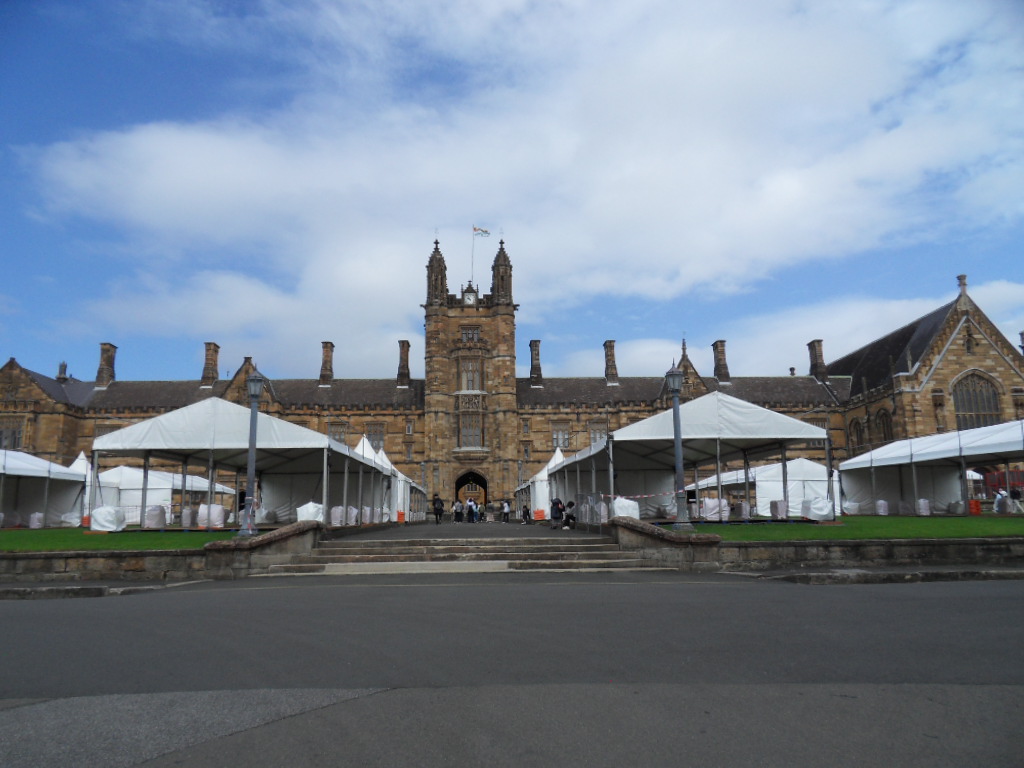
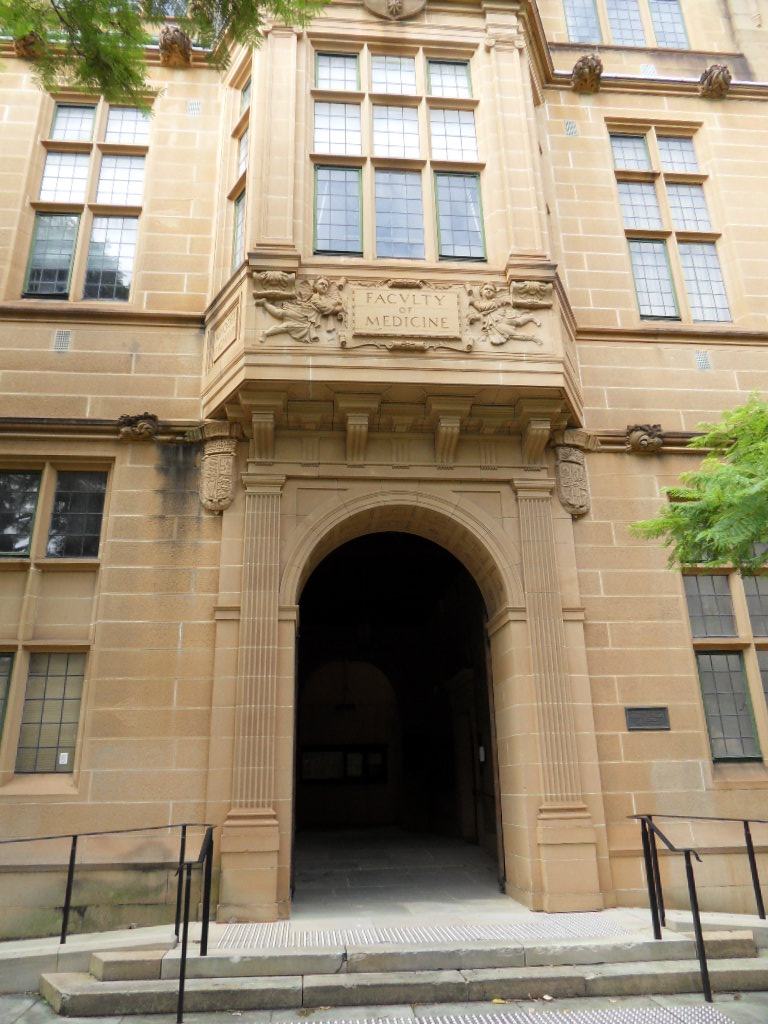
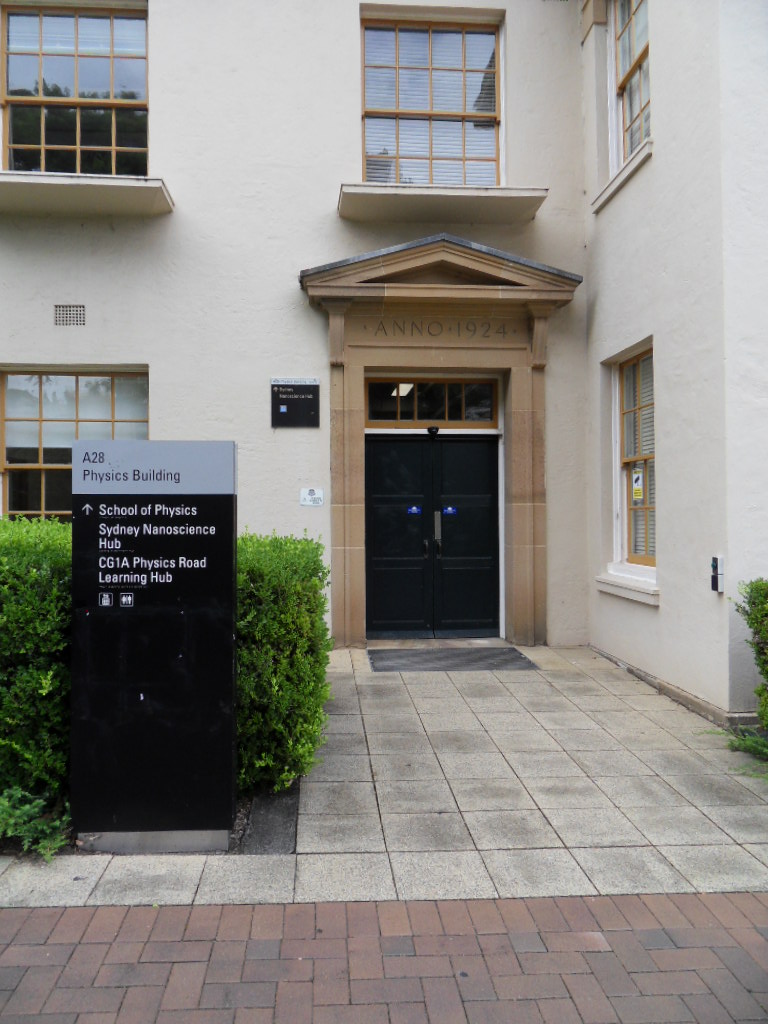
Here’s a gallery of random pictures I took on the way to the Physics Department at the University of Sydney this morning.
The academic year at the University of Sydney is about to start, with the new intake of students beginning to arrive next week and the first lectures taking place the week after that. The rows of tents are for the various student societies which will be hoping to recruit new members. The University was founded in 1850 and the architectural style of the older buildings on campus is what you might call Victorian Gothic Revival. There are also buildings dating from the 1920s, such as the Faculty of Medicine (1922) and the Physics Building (1924); the latter seems much bigger on the inside than the outside, and also has a new building next to it devoted to nanoscience.
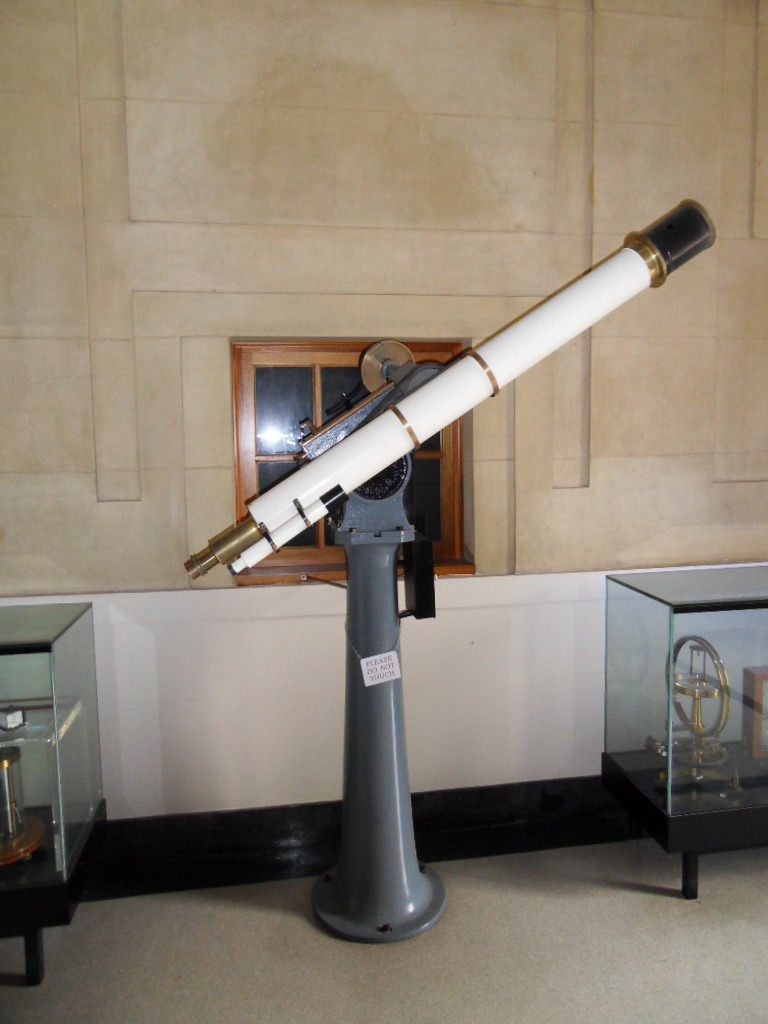
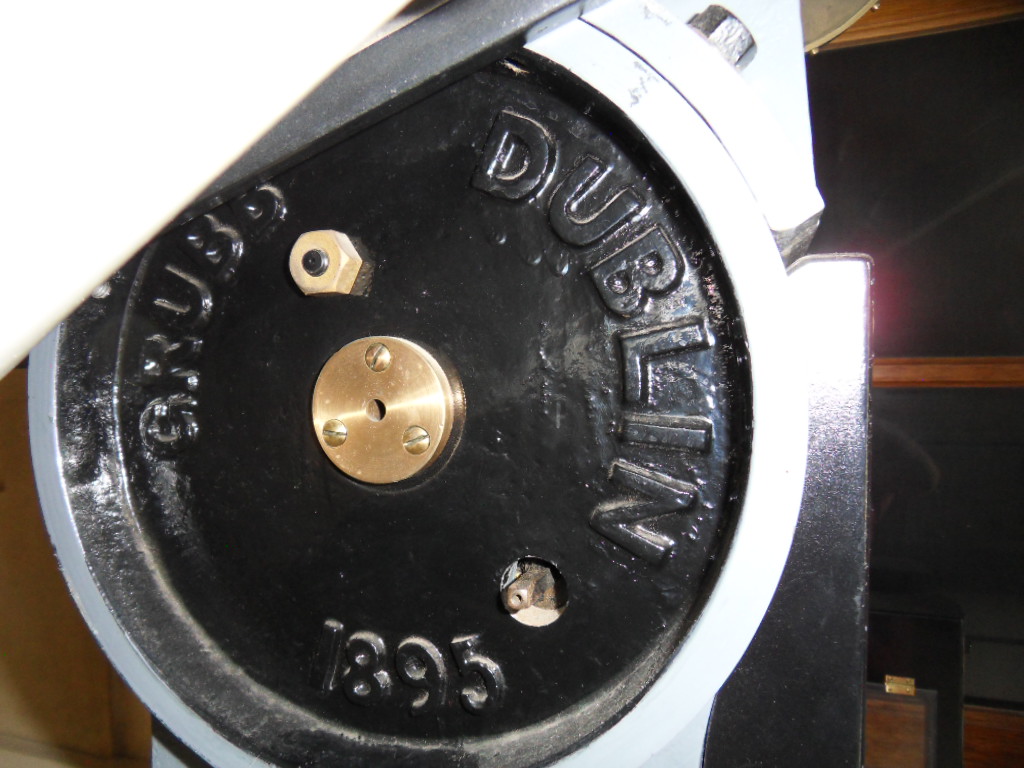
Entrance to CampusPreparing for Fresher’s FairGothic RevivalBuilt in 1922Way in to PhysicsLong CorridorA refracting telescopeGrubb Telescope Company 1893
I’ve posted before about the famous optical instrument manufacturer, the Grubb Telescope Company, founded in Dublin by Thomas Grubb and later renamed Grubb Parsons after its relocation to Newcastle upon Tyne. I’ve posted about other connections too, including the presence in the Physics Department in Barcelona of a refracting telescope made by Grubb. Imagine my surprise, then, when I saw yet another Grubb Telescope near the entrance to the Physics building of the University of Sydney, this one made in 1893. This is further evidence – as if it were needed – that, in its time, the Grubb Telescope Company really was the world leader in optical instrumentation.
P.S. The later manifestation of the Grubb Telescope Company – Grubb Parsons – also has Australian connections, including making the primary mirror for the Anglo-Australian Telescope (AAT) and building the UK Schmidt situated next to the AAT at Siding Spring Observatory (about 500 km from Sydney).
I just read the terrible news of the death at the age of 79 of yet another icon of Welsh Rugby Union, the legendary standoff Barry John.
Five years ago I posted an item about Barry John inspired by this clip
The opening part of this clip had caught my attention because it was filmed near the bus stop just outside The Halfway, a pub on Cathedral Road just a few yards from the house in Cardiff in which I lived for many years; in the background you can see Llandaff Fields.
I had often wondered what became of Barry John. He was 74 when I wrote about him and no longer the slim young prodigy who was undoubtedly the best rugby player I ever saw. Since he played in a great era for Welsh rugby that included Gareth Edwards, J.P.R. Williams, Gerald Davies et al, that really says something. As the Guardian obituary aptly puts it, he “played Rugby from another world”.
As a sort of rugby equivalent of George Best, Barry John was incredibly famous during his career. Budding rugby players – even those not born in Wales – all wanted to play like Barry John. But suddenly, at the age of just 27, after playing just 25 internationals, he turned his back on all the publicity and adulation and retired from rugby. He found the pressure of being such a star in the amateur era too difficult to cope with.
So was Barry John really that good? Absolutely yes, he was. Slight of build but with superb balance, he had an extraordinary, almost magical, ability to find his way through a crowd of potential tacklers as if they weren’t there at all. In the memorable words of that great commentator Bill McLaren “he flits like a little phantom”. But you don’t need to take my word for it. Just look at him – and some other giants of the time – in these highlights of the classic Scotland-Wales tie in the Five Nations of 1971. Watch about 30 seconds in, where he wrong-foots half the Scottish three-quarter line before ghosting through three more and releasing the ball to his forwards. Will there ever be another Barry John? I doubt it..
I’m sure there are many of us who remember the excitement of watching Barry John play and feel enriched by what he gave us.
Yesterday was a holiday in Ireland but now, with the January examinations over, it’s back to teaching. I am not in Maynooth to enjoy the fun but I can use the medium of this blog to advertise the fact that the MSc in Theoretical Physics & Mathematics is now open to applications for entry in September.
This postgraduate course is run jointly between the Departments of Theoretical Physics and Mathematics & Statistics, with each contributing about half the material. The duration is one calendar year (full-time) or two years (part-time) and consists of 90 credits in the European Credit Transfer System (ECTS). This is split into 60 credits of taught material (split roughly 50-50 between Theoretical Physics and Mathematics) and a research project of 30 credits, supervised by a member of staff in a relevant area from either Department.
This course is a kind of follow-up to the existing undergraduate BSc Theoretical Physics & Mathematics at Maynooth, also run jointly. We think the postgraduate course will appeal to many of the students on that programme who wish to continue their education to postgraduate level, though applications are very welcome from suitably qualified candidates who did their first degree elsewhere.
Postgraduate admissions in Ireland operate differently from the UK, in that there is a central system in Ireland (called PAC) that is similar to the undergraduate admissions system; in the UK PG courses are dealt with by individual institutions. You will need to apply online via PAC after the following the instructions here. The requisite PAC code for the full-time version of the course is MHQ56.
The closing date for applications is 30th June 2024.
The views presented here are personal and not necessarily those of my employer (or anyone else for that matter).
Feel free to comment on any of the posts on this blog but comments may be moderated; anonymous comments and any considered by me to be vexatious and/or abusive and/or defamatory will not be accepted. I do not necessarily endorse, support, sanction, encourage, verify or agree with the opinions or statements of any information or other content in the comments on this site and do not in any way guarantee their accuracy or reliability.











 In the Dark