The news of the death at the age of 100 of former US President Jimmy Carter reminded me of a day way back when I was still at school. It was Friday, May 6th, 1977 and I was at the Royal Grammar School, Newcastle upon Tyne. I remember that morning it was announced at Assembly that Carter would be visiting the city and giving a speech outside the Civic Centre, which was less than 10 minutes’ walk from the School. I think some senior boys were allowed to go an see him, but as a mere third-former I went to a class and the occasion largely passed me by.
One thing I do remember is a classmate after Assembly saying “Thank God he didn’t visit Sunderland instead…” – Carter visited Newcastle on his way to Washington (the ancestral home of George Washington), which is nearer to Sunderland than Newcastle. I suppose the reason was that Newcastle has an airport, whereas Sunderland hasn’t.
The other thing I remember was the TV coverage on Look North when I got home, which showed the start of President Carter’s speech with his famous “Howay the Lads!”
This morning I published another paper at the Open Journal of Astrophysics and in the process I noticed that took us to a total 111 articles this year. I got to thinking about the significance of that number in cricket, where it goes by the name of Nelson…
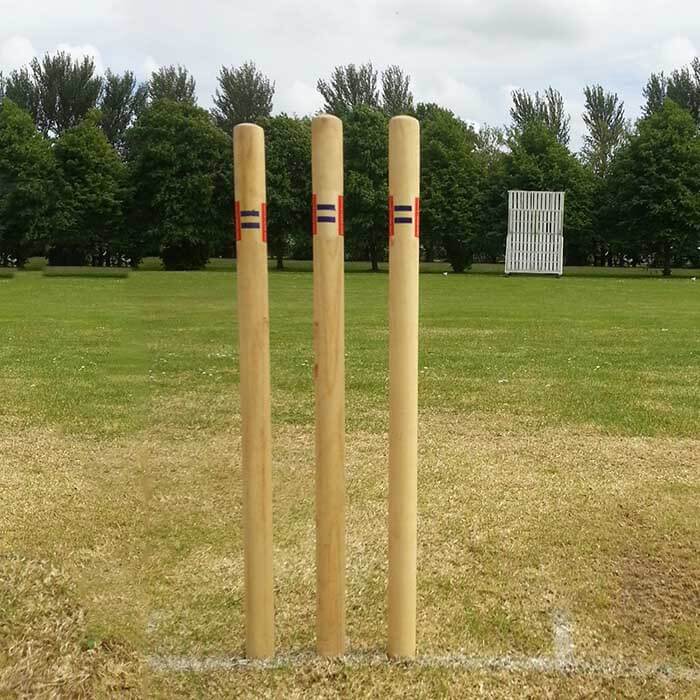
In cricket – at least in England – Nelson is supposed to be an unlucky number. The reason for this could well be that the number 111 looks like a set of stumps without the bails (see left). (For those of you not up with the lingo, the bails are two smaller bits of wood that sit on top of the stumps. ) The absence of the bails could mean that they have been dislodged, signifying that a batter is out. Also umpires remove the bails at close of play, so it could indicate that the match is over.
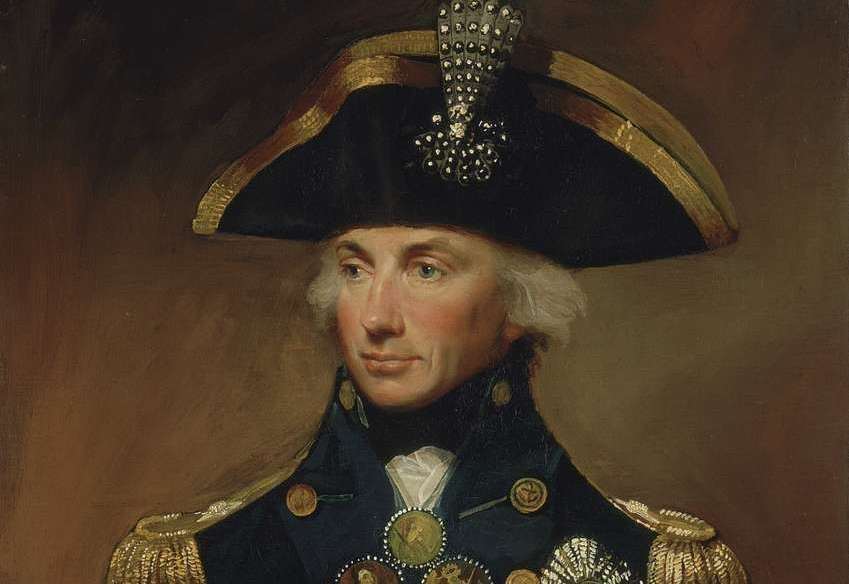
What’s less clear is the connection with Horatio, Lord Nelson (right). The version I was told at school was that Nelson had “one eye, one arm, and one Trafalgar”. Some also say “Destiny” instead of “Trafalgar”. Those are polite versions. Others say the third one refers to a part of the male anatomy. Bill Frindall used to say “one eye, one arm, and one et cetera“. Who knows which, if any, of these is right?
In any case this does give me the chance to point out that, contrary to popular myth, Nelson didn’t lose an eye anyway. In 1794, Nelson was in action at the Siege of Calvi during the Invasion of Corsica when a cannonball struck a nearby sandbag and sprayed him with sand and gravel. Nelson’s right eye was damaged by this, but he didn’t lose it although he had little effective vision through it thereafter.
Meanwhile, I just saw this notification on LinkedIn about yesterday’s post:
The story of the famous 1919 expeditions to measure the bending of light by the Sun as a test of general relativity has featured many times on this blog (e.g. here). I ahve also written elsewhere about it, e.g. here. One way this is often presented is whether the measurements preferred the “Einstein” prediction or one consistent with “Newton”, there being a famous factor of two between the two.
In fact the earliest published calculation of the deflection of light by the Sun was not by Isaac Newton but by Johann Georg von Soldner (Uber die Ablenkung eines Lichstrals von seiner geradlinigen Bewegung, durch die Attraktion eines Weltk¨orpers, and welchem er nahe vorbei geht. Berliner Astronomisches Jahrbuch, 1801: 161-172). This calculation does use Newtonian theory, but as far as I know there is no record tof any calculation of this sort by Newton himself.
There is, however, something very tantalizing in Newton’s 1704 book Opticks, published almost 20 years after his Principia outlined the laws of mechanics and of universal gravitation. Opticks which (unlike the Principia) was written in English, ends with a series of rhetorical questions called “Queries” which present speculative ideas about light and its interactions with matter. The first of these reads:
Query 1. Do not Bodies act upon Light at a distance, and by their action bend its Rays; and is not this action (caeteris paribus) strongest at the least distance?
This looks very much like a speculation about the bending of light by gravitation. But if that’s what it is, he could have done exactly what Soldner did about a century later. Why then did he never publish the result and why was it never found among his unpublished papers?
I’ve spoken to several people about this and there are three main ideas. One is that Newton actual did the Soldner calculation, and that the manuscript was accidentally destroyed in a fire caused by his dog, Diamond. The other is that he just never got round to it, which seems unlikely because it’s not a difficult calculation and Newton lived over 20 years after the publication of the Opticks. The third possibility is that Query 1 wasn’t about gravity at all. If it had been, wouldn’t he have used the word and wouldn’t he have mentioned the inverse-square law specifically? Perhaps what he had in mind was some kind of refraction. This interpretation is consistent with other Queries where he talks about the “aetherial Medium” through which he supposed light to propagate being distorted by the presence of massive bodies and thus causing refraction. For example, from Query 21,
Is not this Medium much rarer within the dense Bodies of the Sun, Stars, Planets and Comets, than in the empty celestial Spaces between them?
I suppose we’ll never know what Newton had in mind. I am split between the first and third explanations above.
It’s worth mentioning that some of the other Queries are very prescient. Take Query 5, for example:
Do not Bodies and Light act mutually upon one another; that is to say, Bodies upon Light in emitting, reflecting, refracting and inflecting it, and Light upon Bodies for heating them, and putting their parts into a vibrating motion wherein heat consists?
We’re about two-thirds of the way into the Autumn Semester here at Maynooth and, by a miracle, I’m just about on schedule with both the modules I’m teaching. It’s always difficult to work out how long things are going to need for explanation when you’re teaching them for the first time.
One of the modules I’m doing is Differential Equations and Transform Methods for Engineering Students. I’ve been on the bit following the “and” for a couple of weeks already. The first transform method covered was the Laplace transform, which I remember doing as a physics undergraduate but have used only rarely. Now I’m doing Fourier Series, as a prelude to Fourier transforms.
As I have observed periodically, the differential equations and transform methods are not at all disconnected, but are linked via the heat equation, the solution of which led Joseph Fourier to devise his series in Mémoire sur la propagation de la chaleur dans les corps solides (1807), a truly remarkable work for its time that inspired so many subsequent developments.
In the module I’m teaching, the applications are rather different from when I taught Fourier series to Physics students. Engineering students at Maynooth primarily study electronic engineering and robotics, so there’s a much greater emphasis on using integral transforms for signal processing. The mathematics is the same, of course, but some of the terminology is different from that used by physicists.
Anyway I was looking for nice demonstrations of Fourier series to help my class get to grips with them when I remembered this little video recommended to me some time ago by esteemed Professor George Ellis. It’s a nice illustration of the principles of Fourier series, by which any periodic function can be decomposed into a series of sine and cosine functions.
This reminds me of a point I’ve made a few times in popular talks about astronomy. It’s a common view that Kepler’s laws of planetary motion according to which which the planets move in elliptical motion around the Sun, is a completely different formulation from the previous Ptolemaic system which involved epicycles and deferents and which is generally held to have been much more complicated.
The video demonstrates however that epicycles and deferents can be viewed as the elements used in the construction of a Fourier series. Since elliptical orbits are periodic, it is perfectly valid to present them in the form of a Fourier series. Therefore, in a sense, there’s nothing so very wrong with epicycles. I admit, however, that a closed-form expression for such an orbit is considerably more compact and elegant than a Fourier representation, and also encapsulates a deeper level of physical understanding. What makes for a good physical theory is, in my view, largely a matter of economy: if two theories have equal predictive power, the one that takes less chalk to write it on a blackboard is the better one!
Anyway, soon I’ll be moving onto the complex Fourier series and thence to Fourier transforms which is familiar territory, but I have to end the module with the Z-transform, which I have never studied and never used. That should be fun!
Here are pictures of (left) house and (right) the observatory, neither of look in particularly good condition!
After independence, many of the large houses owned by the rich Anglo-Irish families who had run Ireland until then fell into disrepair or were destroyed.
Anyway, on top of the two-storey observatory building there used to be a dome that housed a 24″ Grubb reflecting telescope. Here’s an old picture showing what it looked like in better times, around 1900:
The dome is no longer there, and neither is the telescope. The latter was donated to the University of London in 1925 eventually housed in the Observatory at Mill Hill, now run by University College London. Here is an excerpt from the history of the University of London Observatory:
W.E. Wilson established an observatory at Daramona, Street, County Westmeath, in 1871 and equipped it with a 12-inch equatorial reflector by Grubb. Wilson (born in 1851, elected FRS in 1896, an original member of the BAA, awarded an honorary DSc by the University of Dublin in 1901, High Sheriff of Co. Westmeath in 1894), observed the transit of Venus in 1882 and solar eclipses at Oran in 1870 and Spain in 1900, published many papers in Proc. R. Soc, Proc. R. Dublin Soc., Proc. R. Irish Acad., etc., and died in 1908) enlarged his observatory in 1881 and installed a 24-inch reflector by Grubb on the mounting previously used for the 12-inch reflector. Ten years later a new mounting was constructed. It is this mounting which was moved to Mill Hill in 1928. Dr. Wilson used his telescope to make some of the best photographs of his time of star clusters and nebulae, and he worked extensively on problems of solar physics and the solar constant. The telescope may be used in Newtonian and Cassegrain forms; the focal length of the mirror is 10 feet and the equivalent focal length at the Cassegrain focus is approximately 42 feet. The telescope was moved in 1928 from Ireland to University College, where minor modifications were made to the focussing arrangements and plate-holder, and an electric motor was added to rewind the driving clock automatically.
The Wilson telescope was retired from active service in 1974 and moved to the World Museum in Liverpool where, as far as I know, it remains on display to this day.
This year I am supervising an undergraduate project student who is looking at approximations to probability distribution functions. This project was inspired by a nice paper on the arXiv by Elena Sellentin, Andrew Jaffe and Alan Heavens about the use of the Edgeworth series which I blogged about here.
It turns out that the student who picked this project hails from a place very close to Edgeworthstown in County Longford. I’ve been through there on the train going to and from Sligo, but I never thought much about the possible connection, assuming the name was a coincidence. When I met my project student yesterday for our weekly discussion, however, he told me he had looked into it and the results are very interesting.
The Edgeworth series was invented by Francis Ysidro Edgeworth (1845-1926) who was a political economist and philosopher was born in Edgeworthstown. He was the grandson of the Richard Lovell Edgeworth (1744-1817) who had no fewer than 22 children (including the novelist Maria Edgeworth) and was a founder member of the Royal Irish Academy. In a manner not untypical of the Anglo-Irish landed gentry, the Edgeworths renamed the local town from Meathas Troim (anglicized form Mostrim), c.f. Parsonstown.
There is a directly astronomical connection with the Edgeworth family too. Kenneth Edgeworth (1880-1972) was another member of the Edgeworth dynasty, `one of ‘the archetypal gentleman literary and scientific families’ who had sufficient private income to be able to pursue a diverse range of interests. Kenneth Edgeworth was an independent theoretical astronomer, best known for proposing the existence of a disc of bodies beyond the orbit of Neptune in the 1930s. Observations later confirmed the existence of this structure, often called the Kuiper belt or, especially in Irish circles, the Edgeworth-Kuiper belt.
Anyway, what’s the probability that a student would randomly pick a project involving a method invented a person born just a few miles away from his family home?
Here’s a fascinating video about a project looking into Ogham, an early-mediaeval way of writing that dates back to about the 4th Century AD.
As the video reflects, there’s some controversy about whether the ‘g’ is pronounced but most Irish people I know would say “Oham” rather than “Ogam”. Anyway, this video reports on a research collaboration between the University of Glasgow and Maynooth University that aims to harness Digital Technologies to Transform Understanding of Ogham Writing, from the 4th Century to the 21st.
The pockets of our greatcoats full of barley… No kitchens on the run, no striking camp… We moved quick and sudden in our own country. The priest lay behind ditches with the tramp. A people hardly marching… on the hike… We found new tactics happening each day: We’d cut through reins and rider with the pike And stampede cattle into infantry, Then retreat through hedges where cavalry must be thrown. Until… on Vinegar Hill… the final conclave. Terraced thousands died, shaking scythes at cannon. The hillside blushed, soaked in our broken wave. They buried us without shroud or coffin And in August… the barley grew up out of our grave.
This poem is about the Battle of Vinegar Hill which took place outside Enniscorthy in County Wexford on 21st June 1798. It was part of the Rebellion of the United Irishmen. The term “croppy” refers to the short cropped hair worn by the rebels, most of whom went into battle carrying only pikes against the artillery and muskets of the crown forces. The battle was a heavy defeat for the United Irishmen over a thousand of whom were killed in what Heaney calls the “final conclave” where the last hopes for the rebellion to succeed were finally crushed. The poem’s final line depicts the barley in the pockets of dead rebels growing through the soil used to bury them, suggesting that the dream of independence would live on.
Although I won’t myself be able to attend, I’m happy to be able to use the medium of this blog to advertise the above public event which is taking place in the first week of September on the back of a week-long conference to celebrate the career of Professor Tom Ray of the Dublin Institute for Advanced Studies. That in turn follows hard on the heels of the Irish National Astronomy Meeting (INAM) which takes place in Galway on 29th and 30th August.
Anyway, the public event on 3rd September is free to attend but you need to register here, where it is described thusly:
The Newgrange Passage Tomb, a prehistoric monument in County Meath, Ireland, is one of the most remarkable examples of Neolithic art and architecture, dating back to around 3200 BC. This ancient structure, with its intricate stone carvings and precise alignment with the winter solstice sunrise, reflects the sophisticated astronomical knowledge of its builders.
With starkly different technology, the James Webb Space Telescope (JWST), launched in 2021, represents the pinnacle of modern astronomical achievement. JWST is designed to peer into the farthest reaches of the universe, capturing images and data from the formation of the earliest galaxies to the atmospheres of planets outside of/beyond our solar system.
Despite being separated by millennia, both Newgrange and JWST underscore humanity’s enduring quest to understand our place in the cosmos through the study of the stars and the universe.
As part of the celebration of the career of Professor Tom Ray the Dublin Institute for Advanced Studies and the Institute of Physics are delighted to host a public event on Newgrange and JWST. This is in recognition of Tom’s long interest in archaeoastronomy and Newgrange in particular, and his involvement with the JWST through the Mid-Infrared instrument (MIRI).
The talk will be delivered by Dr. Frank Prendergast, archaeoastronomer and Emeritus Research Fellow at Technological University Dublin, and Professor Gillian Wright, European Principal Investigator of MIRI and Director of the UK Astronomy Technology Centre in Edinburgh.
As I’ve mentioned before on this blog, over the past year or so I’ve been trying to catch up on my reading. My stack of books I’ve bought but never read is now down to half-a-dozen or so.
With sabbatical drawing to a close, the next major life even appearing on the horizon is retirement. Since that will involve a considerable reduction in income, and consequently money to buy books, and my house already has quite a lot of books in it, I thought I’d join the local public library so that when I’ve cleared the backlog of bought books, I’ll read books from the library instead.
With that in mind, I just joined the public library on Main Street, Maynooth, which is only about 15 minutes’ walk from my house. It’s a small branch library but is part of a larger network across County Kildare, with an extensive online catalogue from which one can acquire books on request. All this is free of charge.
Once I got my card, I had a quick look around the Maynooth branch. It has a good collection of classic literature (including poetry) as well as Irish and world history, which will keep me occupied for quite a while. The normal loan period is 3 weeks, which provides an incentive to read the book reasonably quickly.
I borrowed books in large quantities from public libraries when I was a child. I’m actually looking forward to getting into the library habit again.
The views presented here are personal and not necessarily those of my employer (or anyone else for that matter).
Feel free to comment on any of the posts on this blog but comments may be moderated; anonymous comments and any considered by me to be vexatious and/or abusive and/or defamatory will not be accepted. I do not necessarily endorse, support, sanction, encourage, verify or agree with the opinions or statements of any information or other content in the comments on this site and do not in any way guarantee their accuracy or reliability.





 In the Dark