Archive for the History Category

The Meaning of Everything by Simon Winchester

Posted in Biographical, History, Literature with tags , , , , , , , , , , on May 12, 2024 by telescoper

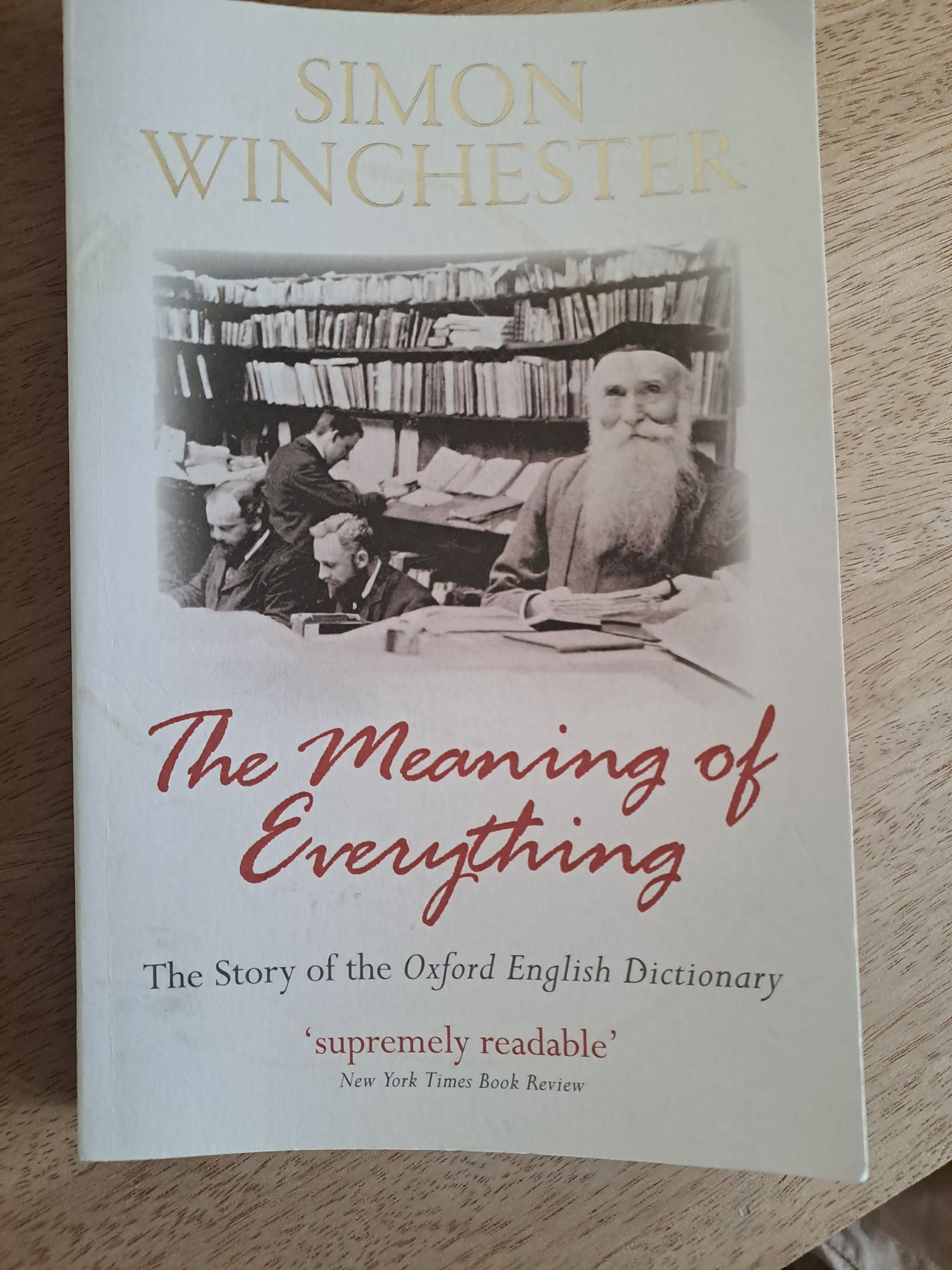
The most recent item on my (non-research-related) sabbatical reading list to be completed is The Meaning of Everything by Simon Winchester, subtitled “The Story of the Oxford English Dictionary”. I didn’t actually buy this book, but won it in a crossword competition back in February 2019. It didn’t arrive in Ireland until the end of May 2019, so it has taken me a bit less than 5 years to read it. I wish I’d read it earlier as it is fascinating and very well-written.

There’s quite a lot of information about the Oxford English Dictionary on the wikipedia page so I will keep it brief here. In short, the idea of a definitive dictionary of the English language emanated from the Philological Society and dates back to 1857, but real work didn’t start on it until a decade later. The whole project was many times on the brink of cancellation because the task of compiling the dictionary turned out to be much greater than was imagined at the outset. It was thought that the dictionary would be finished in a few years, but the First Edition was not completed until 1928. I think most people imagine that the OED has been around much longer than that!

Almost immediately work began on a supplement to include words that had entered usage during the decades needed to compile the original. A complete Second Edition was published in 1989.

The OED was actually first published in fascicles, softbound publications of about 300 pages that could be later sewn into a hard binding. These were quite expensive – 12/6 each. The first, A-Ant, was published in 1884. A complete list of these can be found here.

One might imagine that the laborious nature of the work involved in compiling a dictionary of this sort would make the story rather dull but it’s actually fascinating, both to see how the task was approached and to learn about some of the characters involved. As well as the Editors – who were paid a salary – the work relied heavily on hundreds of volunteer readers who would scour the literature looking for useful quotations that revealed the meaning of a word. By “the literature” I mean anything written – novels, non-fiction, newspapers, magazines, technical papers, anything. These volunteers would send in apposite quotations from which the compilers would construct definitions of the words. Some “headwords” have many meanings – set is an extreme example, with over 430 senses – and others – such as back – appear in a large number of compound words, all of which it had been decided needed to be illustrated with a quotation. The First Edition contained over 400,000 words and nearly two million quotations, all written and indexed laboriously by hand.

Among the volunteer readers were some extraordinary characters. One such was William Chester Minor, an American former surgeon who worked tirelessly for the Dictionary, sending his contributions in the post from an address in Crowthorne, Berkshire, which happened to be Broadmoor Psychiatric Hospital. The Chief Editor of the OED, James Murray, apparently assumed that W.C. Minor worked at Broadmoor but in fact he had been committed there in 1878 because, overcome by some form of psychosis, he had murdered a stranger and deemed insane. Minor carried on his work – using the prison guards as assistants – until he became seriously ill in 1902 after another psychotic episode during which he cut off his own penis.

The real star of the show however is English itself and this book offers some fascinating insights into the origin and evolution of the language. Almost nothing of the Celtic languages spoken throughout England before the Roman conquest survives into Old English (which used to be called Anglo-Saxon). This had a lexicon of around 50,000 words but only a few thousand of these survived in any form into Middle English and Modern English. Many common words in Old English were replaced and the language otherwise altered dramatically due to an influx of words, first from Scandinavia, via the Vikings, then from Norman French, and later on from diverse languages around the world. English has steadily absorbed and incorporated words from other languages for centuries, and is still doing so, though these words sometimes have a meaning in English that differs from their original.

In the light of this dramatic evolution in the language the Oxford English Dictionary was never intended to legislate on usage, but to register it; this is why its lexicographers relied so much on quotations in forming their definitions. This is also why the OED will never really be finished. The task of updating it nowadays is, on the one hand, made easier by the availability of computers and searchable databases but, on the other, made more difficult by the sheer amount of literature being produced.

I’ll send with one of the (apparently inadvertent) funny bits in the OED, from the second definition of the rarely used noun abbreviator:

An officer of the court of Rome, appointed… to draw up the Pope’s briefs…

I say it is inadvertent because the OED gives the earliest usage of the word briefs meaning underwear as 1930, after the publication of the First Edition (in which this appears).

A Table Alphabeticall

Posted in History, Literature with tags , , , on May 5, 2024 by telescoper

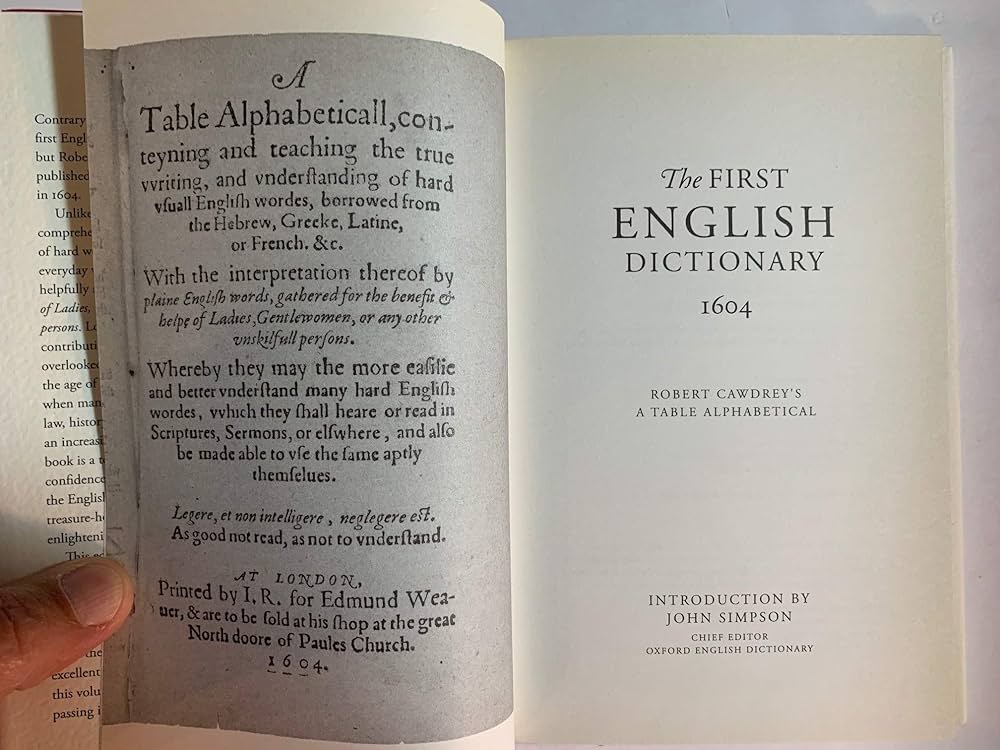
I’m having a lazy Sunday so instead of writing anything too demanding on here I thought I’d share something I stumbled across in a book I’ve been reading (and will probably review next week sometime). Not a lot of people know that the first true English dictionary was called A Table Alphabeticall which was created by Robert Cawdrey and first published in London in 1604, over 150 years before Samuel Johnson’s much more famous A Dictionary of the English Language.

This, on the left, is the frontispiece of the First Edition to A Table Alphabeticall:

Notice that it says it was compiled for the benefit and help of “Ladies, Gentlewomen, or any other unskilfull persons”. Ouch! By the Third Edition, published in 1613, this was amended to “all unskilfull persons”.

P.S. Notice the old-fashioned typesetting, especially the use of the “long s” which I have blogged about before.

Carrowmore, County Sligo

Posted in Architecture, History with tags , , , , , on May 1, 2024 by telescoper

Today is 1st May, so it’s the Labour Day Holiday in Barcelona. Colleagues in Ireland will have to wait until Monday 6th May for their equivalent holiday. The First of May, Beltane (Bealtaine in Irish), is a festival of pagan origin that roughly marks the mid-point between the Spring Equinox and the Summer Solstice. It’s one of the so-called Cross-Quarter Days that lie halfway between the equinoxes and solstices.

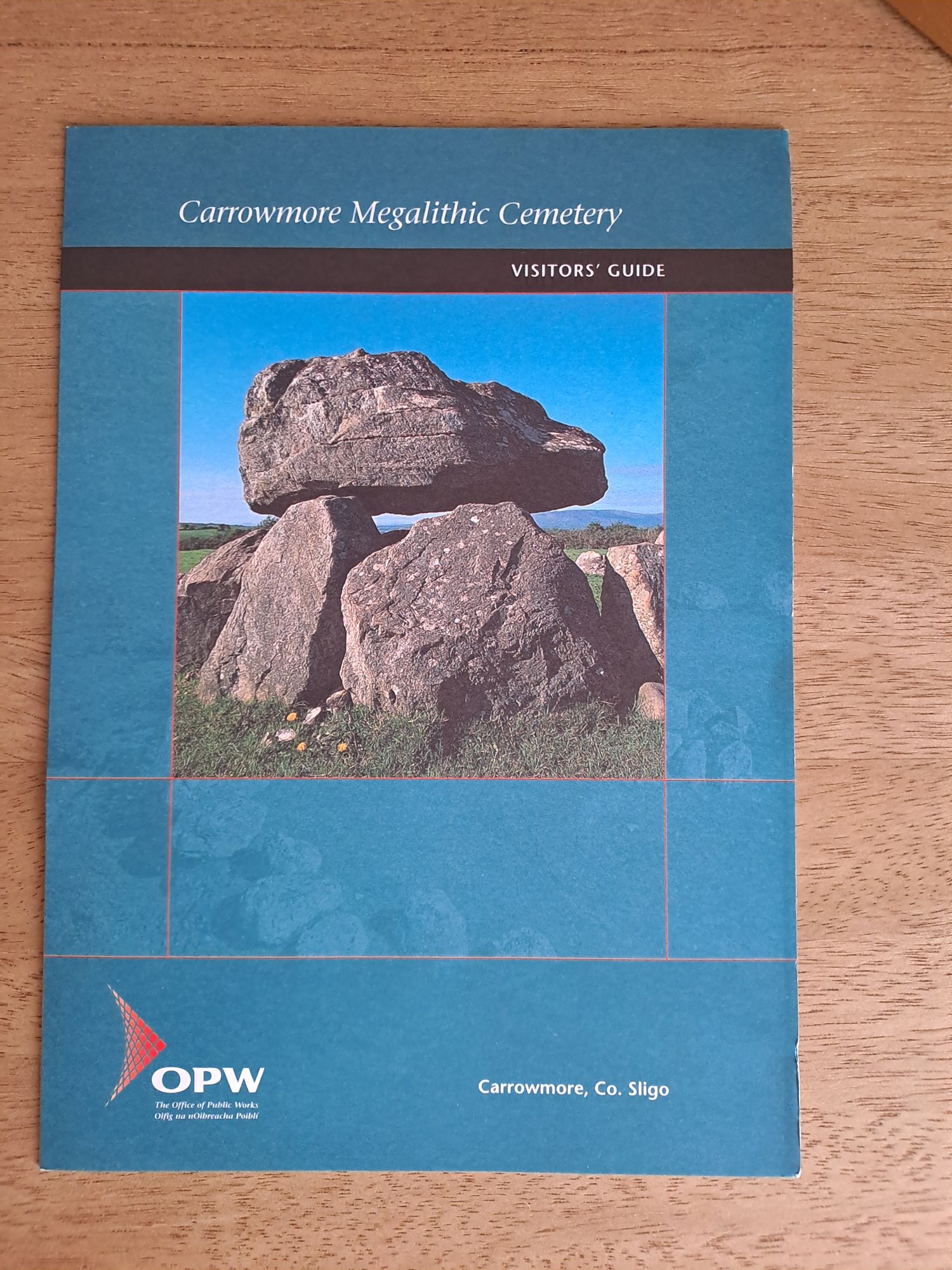
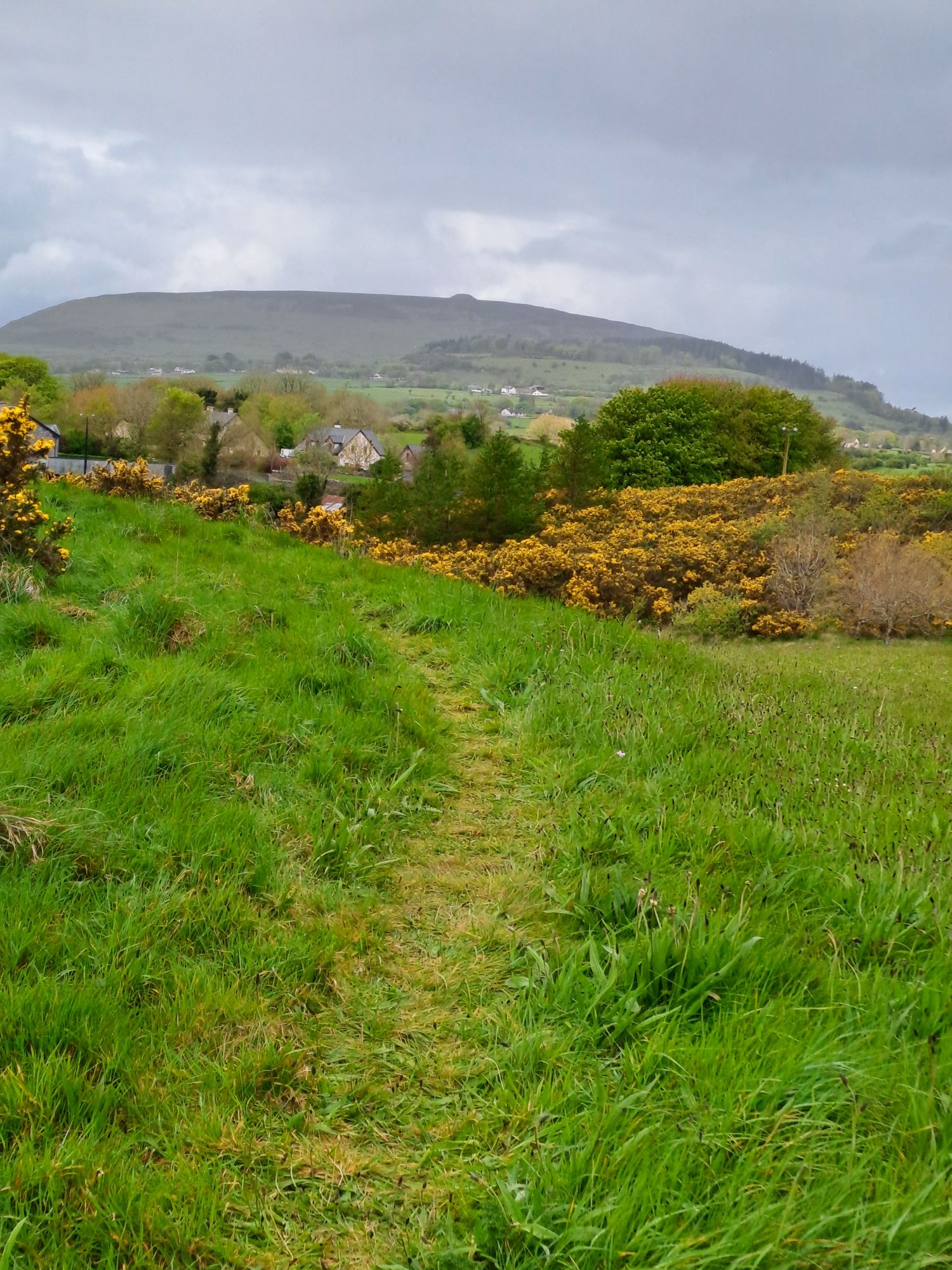
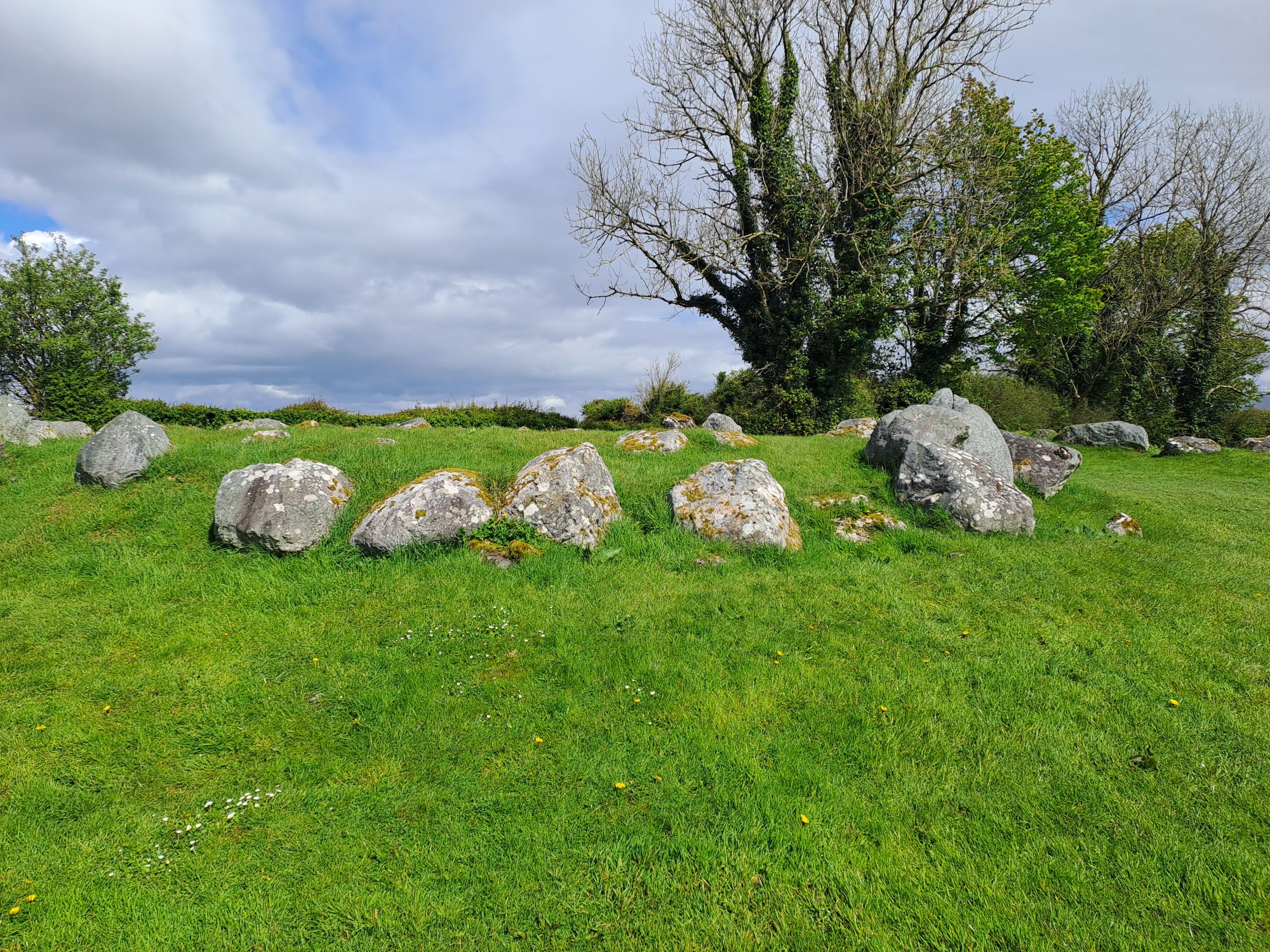
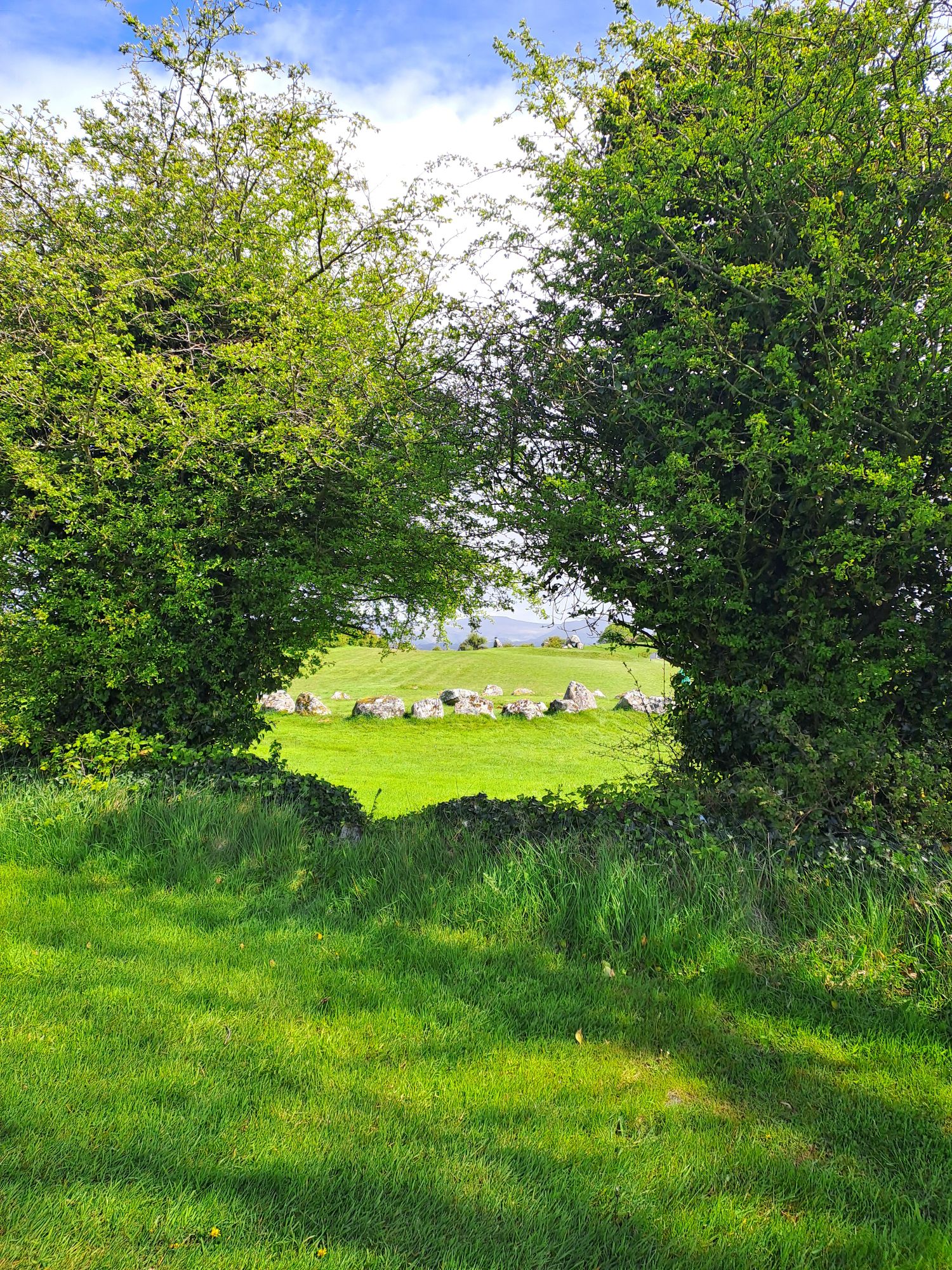
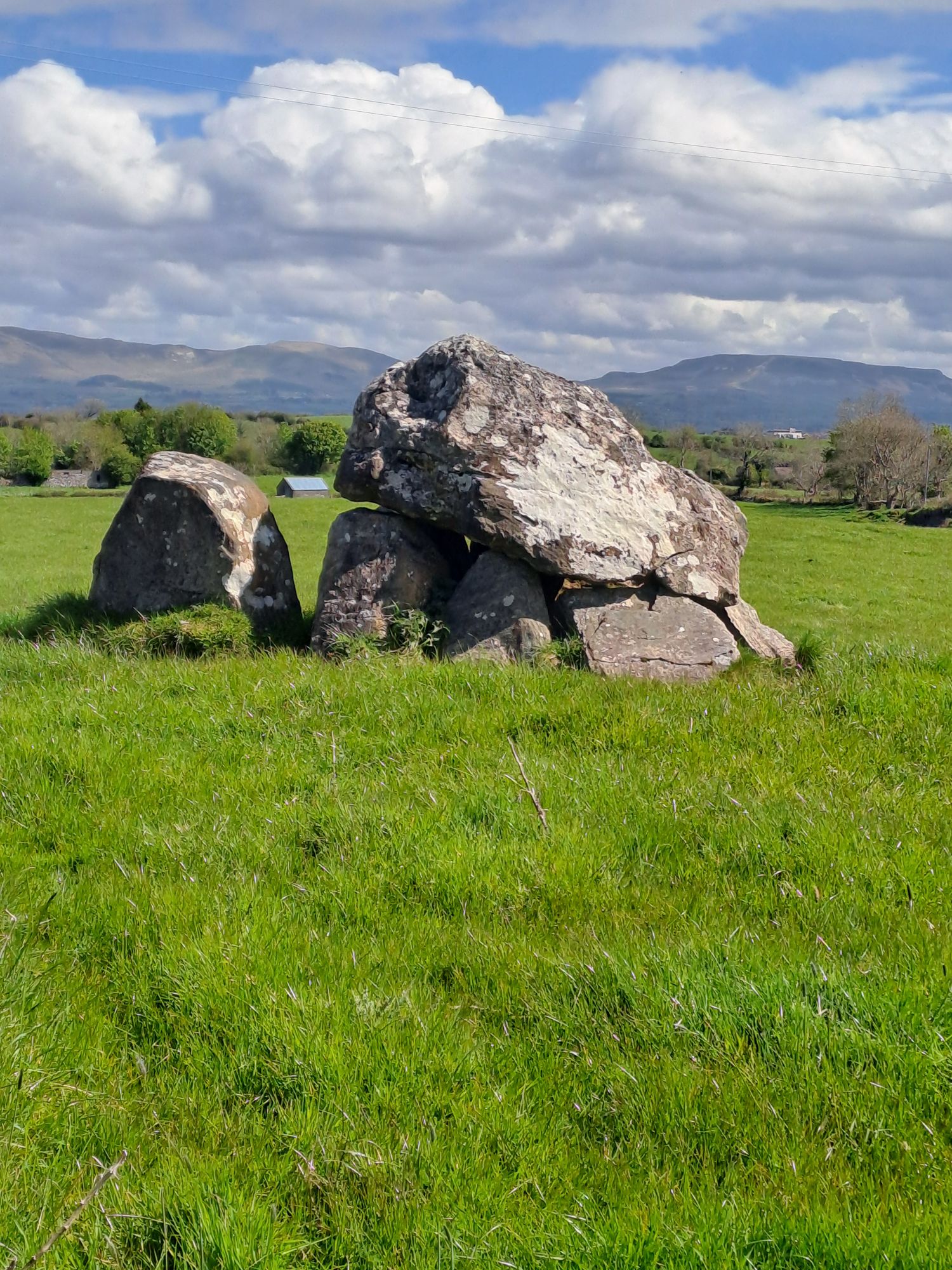
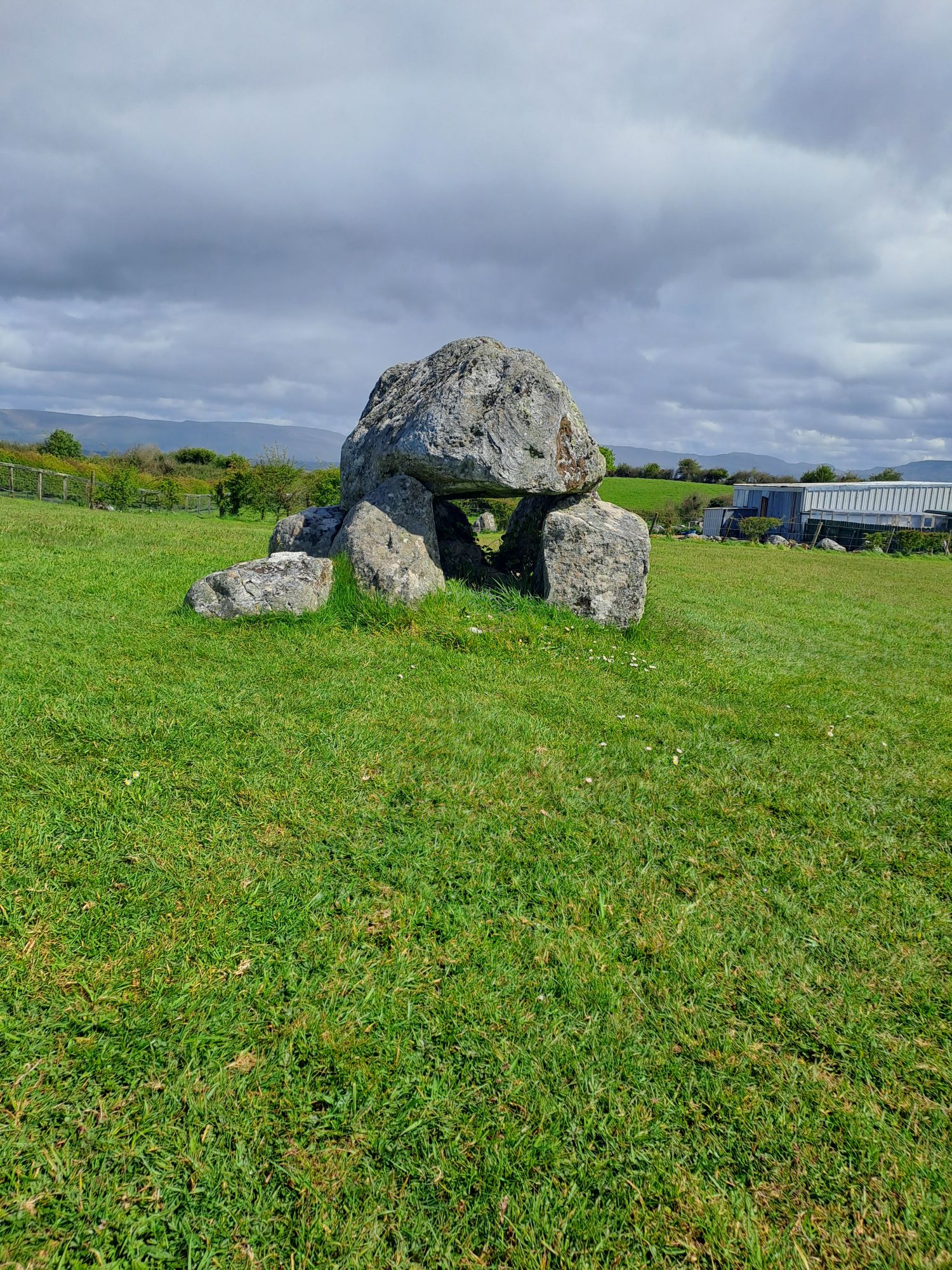
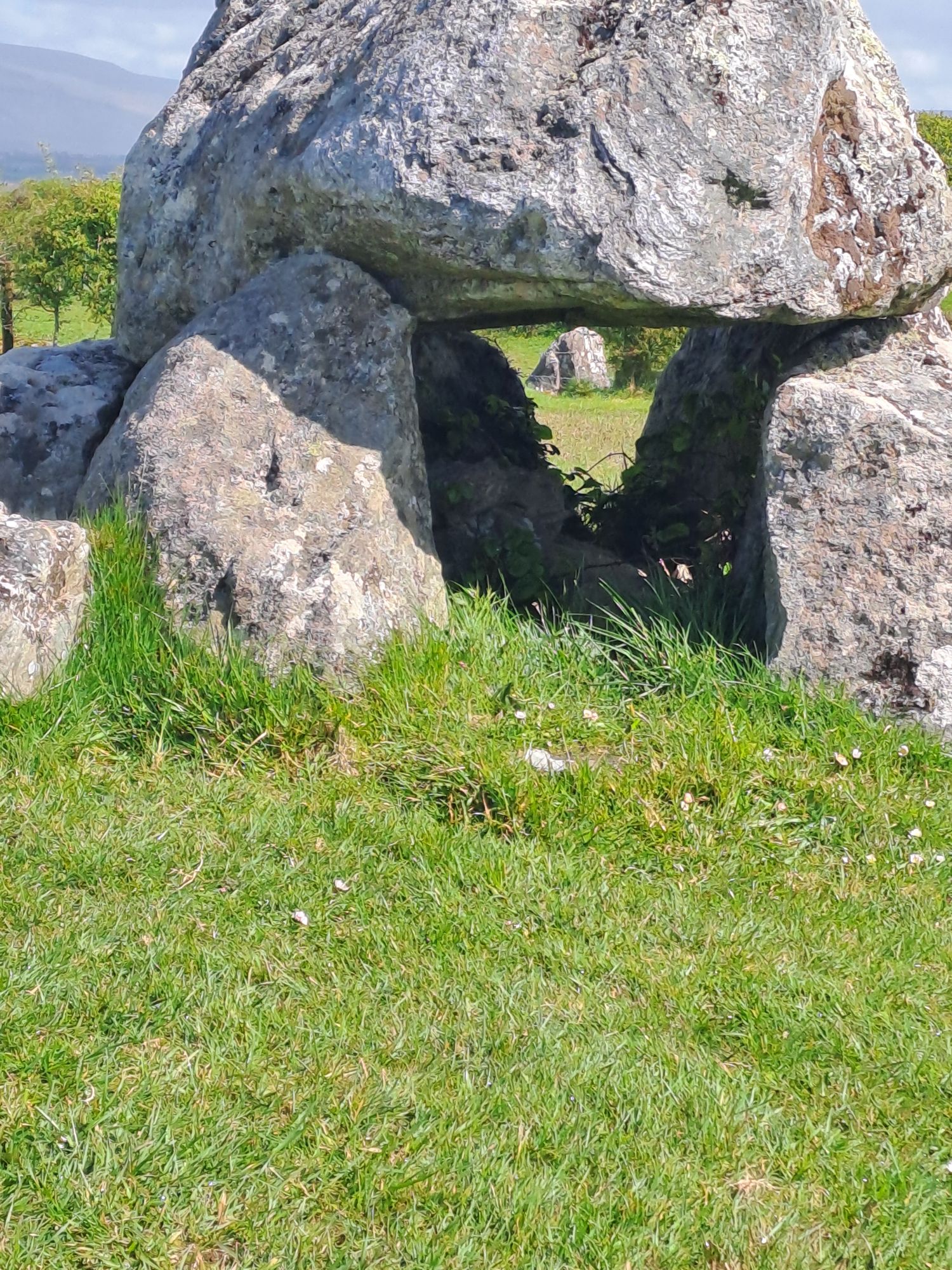
In view of the ancient origins of this holiday I thought I’d share some pictures of the amazing megalithic burial grounds at Carrowmore which is about 4km outside Sligo (where I have been on a secret mission). Carrowmore is the largest of the four megalithic cemeteries in Ireland in terms of the number of tombs, although the tombs are smaller in size and less complicated than the larger structures found at Brú na Bóinne. The structures at are also significantly older; there are signs of human habitation on the site going back at least 6000 years. The English name derives from the Irish An Cheathrú Mhór, which means ‘the great quarter’. Photographs don’t do justice to the extraordinary beauty of the landscape around the site but here is a panorama which gives some impression.

A visitor can easily understand why this was felt to be an appropriate last resting place for the Great and the Good. The surrounding topography is very interesting, as you can see from the first picture (of a model in the Visitor’s Centre); it’s on a peninsula between Sligo Harbour to the North and Ballysadare Bay to the South, and is surrounded on three sides by mountains. In particular, the site is overlooked from the west by Knocknarea, on top of which lies a large cairn, Miosgán Meadhbha, reputed to be the burial-place of the legendary Queen Maeve (Méabh in modern Irish). I was surprised to learn that this has never been excavated, so nobody really knows who or what is inside though it probably contains a passage tomb of similar form to those on the Carrowmore site. The cairn at the centre of Carrowmore, called Listoghil, the entrance to which you can see in one of the pictures, is a reconstruction.

Sadly, many other tombs were destroyed in the 19th Century, with stones being robbed to make walls when the land was enclosed, and large-scale quarrying for gravel in the area. Only some of the tombs are on publicly-owned land, but others are visible in nearby fields and indeed all around the area. There is even a stone circle in Sligo itself, on a housing estate called Abbeyquarter. Who knows what else is lurking under the unexcavated ground?

This forthcoming Bank Holiday weekend there is the Queen Maeve Festival in Sligo, but I will be in Barcelona.

Revolução dos Cravos

Posted in History, Music, Politics with tags , , , , , , on April 25, 2024 by telescoper

My office mate in Barcelona is Portuguese and he very proudly reminded me this morning that today, 25th April 2024, is the 50th anniversary of the Carnation Revolution that ultimately overthrew a fascist dictatorship and led Portugal towards becoming a progressive democracy. Just over a year later, General Franco died and Spain began its transition to democracy too. Both countries joined the European Community in 1986 and are now members of the European Union. It’s hard to believe, only 50 years on, that fascism is on the rise once more in Europe (and elsewhere). That makes it all the more important to remember the struggles of the not-so-distant past.

The signal for the Revolução dos Cravos in Portugal to begin was a song played on the radio. The result was remarkable. Although led by military officers dissatisfied with the ruling regime, it garnered a huge level of popular support and morphed into a coordinated campaign of mass civil resistance. When regime change was achieved, it was largely peaceful. The name “Carnation Revolution” refers to the flowers given to soldiers by people celebrating their liberation from authoritarianism.

Fascismo nunca mais! Vinte e cinco de abril sempre!

I couldn’t help sharing the song that triggered that huge historical moment. It is Grândola, Vila Morena by Zeca Afonso. Few people can lay claim to have written a song that brought down a dictatorship.

Diada de Sant Jordi

Posted in Barcelona, History with tags , , , , , , on April 23, 2024 by telescoper

Today, 23rd April, is Diada de Sant Jordi (Saint George’s Day) which, though not a public holiday, is a very special occasion in Barcelona. Saint George is of course familiar to me as the Patron Saint of England, and of quite a few other places, but wasn’t aware until a few weeks ago that he is also the Patron Saint of Catalonia.

Not much is known about Saint George, but it is believed that he was born in Cappadocia (modern-day Turkey, then part of the Roman Empire) to parents of Greek origin, and that he fought in the Roman army and died in 303 AD in Syria Palaestina (also part of the Roman Empire). There is no evidence that he ever visited England or Catalonia for that matter. It seems that he began to be venerated around about the time of the First Crusade, which happened over seven hundred years after his death.

Anyway, the Festa de Sant Jordi is celebrated in a very civilized and charming way in Barcelona. Traditionally the celebration involved giving gifts of flowers (especially roses) to women and gifts of books to men. That is obviously a bit sexist so nowadays you can give flowers and books to whomever you wish. In order to facilitate this, quite a large area of the Eixample district around my apartment is largely closed off to traffic today, refuse collections have been paused, and there are stalls selling books or flowers filling up the pavements. It was especially busy this morning on Passeig de Gràcia, where the combination of queues at the bookstalls and queues for the Casa Batlló generated a big crowd, but the atmosphere was very friendly and nice (apart from a few car drivers upset at the road closures).

Here are a couple of video clips which will hopefully give you an idea of what it was like:

And here are some random pics

I wish I could visit the celebrations again, but this afternoon I have to take the train to Madrid for a conference.

An Unmarked Anniversary

Posted in History with tags , , , on April 19, 2024 by telescoper

I didn’t have time to mention yesterday, 18th April 2024, that it was the 75th anniversary of the day that that the Republic of Ireland came into existence. The  Republic of Ireland Act, which provided the legal basis for the establishment of a new Republic, was passed in 1948 but only came into force on 18th April 1949. From that point the Republic no longer had the British monarch as Head of State and was no longer part of the Commonwealth.

That day was marked with parades and celebrations but “Republic Day” never became the public holiday that might have been expected given how many other countries mark such events in their history and indeed is hardly marked at all, not even on its 75th anniversary. I have quite a few Irish friends who were unaware of the significance of yesterday’s date.

The reason is probably explained by the statement made by Éamon De Valera when he declined an invitation extended to him by Taoiseach John A. Costello to attend the official ceremonies on 18th April 1949:

Celebrations such as those now proposed ought to be reserved until the national task which we have set ourselves is accomplished…We still believe that public demonstrations and rejoicings are out of place and are likely to be misunderstood so long as that task remains uncompleted and our country partitioned.

The Last Mughal by William Dalrymple

Posted in History, Literature with tags , , , , , , , on April 15, 2024 by telescoper

The latest item on my sabbatical reading list is The Last Mughal by William Dalrymple. This is about Bahadur Shah Zafur, the last King of the Mughal Dynasty that ruled Hindustan from its capital Delhi for 350 years, but it’s really about the last years of his life, focusing on the Indian Rebellion (Uprising) of 1857, when Mughal rule was already in a state of decline, to his death in exile in Rangoon five years afterwards. His narrative makes much use of the Mutiny Papers, an enormous collection of correspondence from the time of the rebellion collected in India’s National Archive, and there is extensive use of quoted material. There is also an extensive glossary and some excellent illustrations.

I remember learning about the “Indian Mutiny” (as it was called then) when I was doing my O-level History (in 1979) but that was more-or-less entirely from a British perspective. The immediate trigger for the rebellion of the sepoys in the British Army, we were told with some amusement by our teacher, was that a rumour had spread that the grease used to lubricate cartridges for the newly-issued Enfield rifles contained a mixture of beef fat and lard, offensive to both Hindus and Muslims. The implication was that this was a silly and trivial matter. There was, of course, a lot more to it than that…

Dalrymple explains how the British, Hindus and Muslims in Delhi co-existed reasonably peacefully until the middle of the 19th Century; there were many mixed marriages and it was by no means unknown for British representatives of the East India Company to wear Indian dress. This began to change with the arrival of a new British colonial class who disrespected any religion other than their own form of Christianity; the same attitudes were held by this class towards Irish Catholics. Resentment had been building up among both Hindus and Muslims, who felt their beliefs were under threat. The Enfield rifles were just the spark that lit the fire.

Let me quote from the book:

But while Zafar was certainly never cut out to be a heroic or revolutionary leader, he remains, like his ancestor the Emperor Akbar, an attractive symbol of Islamic civilisation at its most tolerant and pluralistic. he himself was a notable poet and calligrapher; his court contained some of the talented and artistic and literary figures in modern South Asian history; and the Delhi he presided over was undergoing one of its great periods of learning, communal amity and prosperity. He is certainly a strikingly liberal and sensitive figure when compared to the Victorian Evangelicals whose insensitivity, arrogance and blindness did so much to bring the Uprising of 1857 down upon their own heads, and those of the people and court of Delhi, engulfing all of northern India in a religious war of terrible violence

The Last Mughal, pp. 483-4

The Indian Rebellion (which took place between May and September 1857) was on a huge scale and involved terrible atrocities: women and children were not spared, many of the executed in sadistic fashion. The rebels (“mutineers” to the British) flocked to Delhi drawn to the idea that the Mughal King would lead them to victory. Unfortunately Zafar was already an old man of 82 and he was in no fit state, either mentally or physically, to be a military leader. By then he had very little power as King anyway; he certainly had only modest financial resources. He was really more of a mascot than anything else.

The lack of military leadership at Delhi was a serious problem for the rebels. In the British army a sepoy was unable to rise to a rank that involved commanding more than about 100 men. There was no-one at Delhi capable of organizing and coordinating the huge rebel army, with the result that they were unable to dislodge a much smaller British force that had assembled on a ridge outside the city. Eventually a much larger British column arrived and Delhi’s fate was sealed. Not without themselves suffering heavy casualties, the British eventually stormed the Kashmiri Gate, entered the city, looted what they could find and massacred the remnants of the rebel army in revenge for the atrocities committed by the sepoys. The famous Red Fort was largely destroyed. A plan to flatten Delhi completely was seriously considered, but eventually rejected. What remained however was a City of the Dead – that’s the title of Chapter 11.

Zafar was eventually captured but in contrast to most of the rest of his family and members of his court, was not summarily executed but exiled to Rangoon where he died in obscurity just five years later.

This book is vividly written with a extraordinary eye for detail as well as a sense of the grand sweep of the history. It must be difficult to combine the large and small scale like that. Although it’s well written it’s not always easy to read. The graphic descriptions of indiscriminate slaughter by both sides made me very uncomfortable, as did the obvious racism of many British officials and army officers revealed by the Mutiny Papers. But these are part of history, and we have to be made aware of them.

Zafar was of course Muslim, but a significant majority – almost two-thirds – of the sepoys who took part in the rebellion were Hindus. It’s interesting that both factions seem to have been content to rally around the Mughal banner. At his “trial” the British authorities in the form of prosecutor Major Harriott tried to argue that Zafar was the leader of a global Muslim conspiracy.

Here’s another quote:

The Uprising in fact showed every sign of being initiated by upper-caste Hindu sepoys reacting against specifically grievances perceived as a threat to their faith and dharma.; it then spread rapidly through the country, attracting a fractured and diffuse collection of other groups alienated by aggressively insensitive and brutal British policies. Among these were the Mughal court and the many Muslim individuals who made their way to Delhi and fought as civilian jihadis united against the kafir enemy. Yet Harriott’s bigoted and Islamophobic argument oversimplified this complex picture down to an easily comprehensible, if quite fictional, global Muslim conspiracy with an appealingly visible and captive hate figure at its centre, towards whom righteous vengeance could now be directed.

The Last Mughal, pp. 439-40

I won’t dwell on the obvious and important lesson about how bigotry and intolerance feed extremism, as the one lesson one can learn from studying history is that nobody ever learns the most obvious and important lesson.

Two Poems by Sir Thomas Wyatt

Posted in History, Poetry with tags , , , , , , , on April 3, 2024 by telescoper

Another character who appears in Hilary Mantel’s novel Wolf Hall is Sir Thomas Wyatt (1503-1542) who was a diplomat and member of the Court of Henry VIII, as well as being a fine poet. I thought I would post two of his famous poems.

The first is a sonnet, written some time in the 1530s, is ostensibly a (loose) translation of Petrarch’s Una Candida Cerva and thus one of the first examples of a Petrarchan Sonnet written in English. That makes it interesting in its own right, but many people think that it is actually about Anne Boleyn. The use of hunting as a metaphor for courtly love was widespread and, despite being married, Wyatt seems to have had his eye on Anne Boleyn. As far as is known, however, they didn’t have a sexual relationship. Wyatt wisely backed off when he realized he was competing with Henry VIII (thinly disguised as “Caesar”) in the penultimate line; Noli me tangere means “do not touch me” in Latin.

Whoso list to hunt, I know where is an hind,
But as for me, hélas, I may no more.
The vain travail hath wearied me so sore,
I am of them that farthest cometh behind.
Yet may I by no means my wearied mind
Draw from the deer, but as she fleeth afore
Fainting I follow. I leave off therefore,
Sithens in a net I seek to hold the wind.
Who list her hunt, I put him out of doubt,
As well as I may spend his time in vain.
And graven with diamonds in letters plain
There is written, her fair neck round about:
Noli me tangere, for Caesar’s I am,
And wild for to hold, though I seem tame.

Wyatt was in fact confined to the Tower of London in 1536 on suspicion of having committed adultery with Anne Boleyn; adultery with the King’s wife was considered treason, a capital offence. While in the Tower, where he witnessed executions, possibly including that of Anne Boleyn herself and others accused of treason with her, he wrote this other famous poem

Who list his wealth and ease retain,
Himself let him unknown contain.
Press not too fast in at that gate
Where the return stands by disdain,
For sure, circa Regna tonat.

The high mountains are blasted oft
When the low valley is mild and soft.
Fortune with Health stands at debate.
The fall is grievous from aloft.
And sure, circa Regna tonat.

These bloody days have broken my heart.
My lust, my youth did them depart,
And blind desire of estate.
Who hastes to climb seeks to revert.
Of truth, circa Regna tonat.

The bell tower showed me such sight
That in my head sticks day and night.
There did I learn out of a grate,
For all favour, glory, or might,
That yet circa Regna tonat.

By proof, I say, there did I learn:
Wit helpeth not defence too yerne,
Of innocency to plead or prate.
Bear low, therefore, give God the stern,
For sure, circa Regna tonat.

The repeated Latin phrase circa Regna tonat is usually translated “Thunder rolls around the Throne”, a reference to the dangerous temperament of the King.

Wyatt was not executed in 1536, but released after the intervention of none other than Thomas Cromwell. It seems he had a habit of sailing rather close to the wind, and was in and out of trouble with the King, being charged again with treason in 1541 and again released. He died, apparently of natural causes, in 1541, at the age of 39.

Thomas Cromwell and his Prayer-Book

Posted in Art, History with tags , , , , , , on April 1, 2024 by telescoper
(1532-1533, Oil on Panel, 78.1 cm × 64.1 cm) by Hans Holbein the Younger – The Frick Collection, Public Domain, https://commons.wikimedia.org/w/index.php?curid=207764

The famous portrait of Thomas Cromwell by Hans Holbein the Younger shown above is in fact a copy; the original is lost. There is another copy in the National Portrait Gallery in London, but it’s not as good. The original was painted around 1533, during the period covered by the novel Wolf Hall (which I reviewed yesterday) and is mentioned in the book. Holbein is known for having sometimes painted excessively flattering portraits – most notably of Anne of Cleves – but he doesn’t seem to have done that here. Cromwell is portrayed as dour, stern-faced and more than a little scary. He probably wanted people to fear him, so wouldn’t have minded this.

As well as the nature of the likeness, the composition is interesting. The subject seems to be squashed into the frame, and hemmed in by the table that juts out towards the viewer. He is also looking out towards the viewer’s left, though not simply staring into space; his eyes are definitely focussed on something. I’m not sure what all this is intended to convey, except that the table carries an ornate prayer-book (the Book of Hours) as if to say “look, here’s a symbol of how devout this man is”.

Interesting, just last year scholars published research that argues that the copy of the Hardouyn Hours which can be found in the Library at Trinity College, Cambridge, is precisely the book depicted on the table. If so, it’s a rare and perhaps unique example of an artefact seen in a Tudor painting that survives to this day.

Wolf Hall by Hilary Mantel

Posted in History, Literature, Uncategorized with tags , , , , , , , on March 31, 2024 by telescoper

Still trying to use the spare time during my sabbatical to catch up on long-neglected reading, this Easter weekend – helped by the rainy weather – I finished Wolf Hall by Hilary Mantel, the first of her novels that I’ve read. This “historical novel” won the Booker Prize in 2009 and I understand was made into a play and a TV series, neither of which I have seen.

The novel is set in Tudor England in the reign of Henry VIII and revolves around Thomas Cromwell, who rose from lowly beginnings in Putney to be one of the powerful men in the country. Cromwell gets a surprisingly sympathetic treatment, at odds with most of the historical record which treats him largely as a cruel and unscrupulous character, undoubtedly clever but given to threats and torture if appeals to reason failed. From a 21st century perspective, it’s hard to find redeeming features in Cromwell. Or anyone else in this story, to be honest.

The historical events of the period covered by the book are dominated by Henry’s attempts to have his marriage of 24 years to Catherine of Aragon annulled so he could marry Anne Boleyn, along the way having himself declared the Supreme Governor of the Church in England, causing a split with Rome. Henry does marry Anne, and she bears him a daughter, destined to become Elizabeth I, though her second pregnancy ends in a miscarriage. The book ends in 1535 just after the execution of Thomas More, beheaded for refusing to swear the Oath of Supremacy.

(More was portrayed sympathetically in the play and film A Man For All Seasons though he was much disposed to persecution of alleged heretics, many of whom he caused to be burned at the stake for such terrible crimes as distributing copies of the Bible printed in English. Significant chunks of the penultimate chapter are lifted from the script of A Man For All Seasons but given a very different spin.)

Henry VIII is also portrayed in a somewhat flattering light; Anne Boleyn rather less so. Mary Tudor, Henry’s eldest daughter by Catherine of Aragon, cuts an unsurprisingly forlorn and intransigent. There are also significant appearances from other figures familiar from schoolboy history: Hugh Latimer, Cardinal Wolsey, and Thomas Cranmer; as well as those whose story is not often told, such as Mary Boleyn (Anne’s older sister). I have a feeling that Hilary Mantel was being deliberately courting controversy with her heterodox approach to characterization. She probably succeeded, as many professional historians are on record as hating Wolf Hall as much of it is of questionable accuracy and some is outright fiction.

Incidentally, one of the most negative reactions to this book that I’ve seen is from Eamon Duffy who is on record as detesting the historical figure of Thomas Cromwell and was “mystified by his makeover in Hilary Mantel’s Wolf Hall from a thuggish ruthless commoner to a thoughtful sensitive figure”. I mention this particularly because Eamon Duffy, an ecclesiastical historian, was my tutor when I was an undergraduate at Magdalene College, Cambridge.

On the other hand, Wolf Hall not meant to be a work of scholarly history: it is a novel and I think you have to judge it by the standards of whether it succeeds as a work of fiction. I would say that it does. Although rather long-winded in places – it’s about 640 pages long – it is vividly written and does bring this period to life with colour and energy, and a great deal of humour, while not shying away from the brutality of the time; the execution scenes are unflinchingly gruesome. The book may not be accurate in terms of actual history, but it certainly creates a credible alternative vision of the time.

It’s interesting that the title of this book is Wolf Hall when that particular place – the seat of the Seymour family – hardly figures in the book. However, one character does make a few appearances, Jane Seymour, who just a year after the ending of this book would become the third wife of Henry VIII. It also happened that Thomas Cromwell’s son, Gregory, married Jane’s sister, Elizabeth. I suppose I will have to read the next book in the trilogy, Bring Up The Bodies, to hear Mantel’s version of those events…