Until I can get my laptop fixed and/or get a new one, my ability to write blog posts is a bit limited. At least there is a sizeable collection of things to share, including a steady supply of new videos from the Euclid Consortium like this one:
Until I can get my laptop fixed and/or get a new one, my ability to write blog posts is a bit limited. At least there is a sizeable collection of things to share, including a steady supply of new videos from the Euclid Consortium like this one:
Ongoing computer issues mean that this week’s update of activity at the Open Journal of Astrophysics will have to be briefer and with fewer graphics than usual, for which I apologize. During the last week we published four new papers, taking the total so far in 2024 to 51 – so we have already passed last year’s total of 50 – and the total altogether to 166.
The four papers concerned are the following:

(in the folder High-Energy Astrophysical Phenomena, by Noam Soker, of Technion, Haifa, Israel; published on June 20th, arXiv version here)
https://astro.theoj.org/article/120086-repeating-partial-disruptions-and-two-body-relaxation

(in the folder High-Energy Astrophysical Phenomena, by Luca Broggi of the University of Milan, Italy, and six others; published on 21st June, arXiv version here)

(in the folder Astrophysics of Galaxies, by Andrey Kravtsov and Sophia Winney, of the University of Chicago, USA; published on 21st June, arXiv version here)
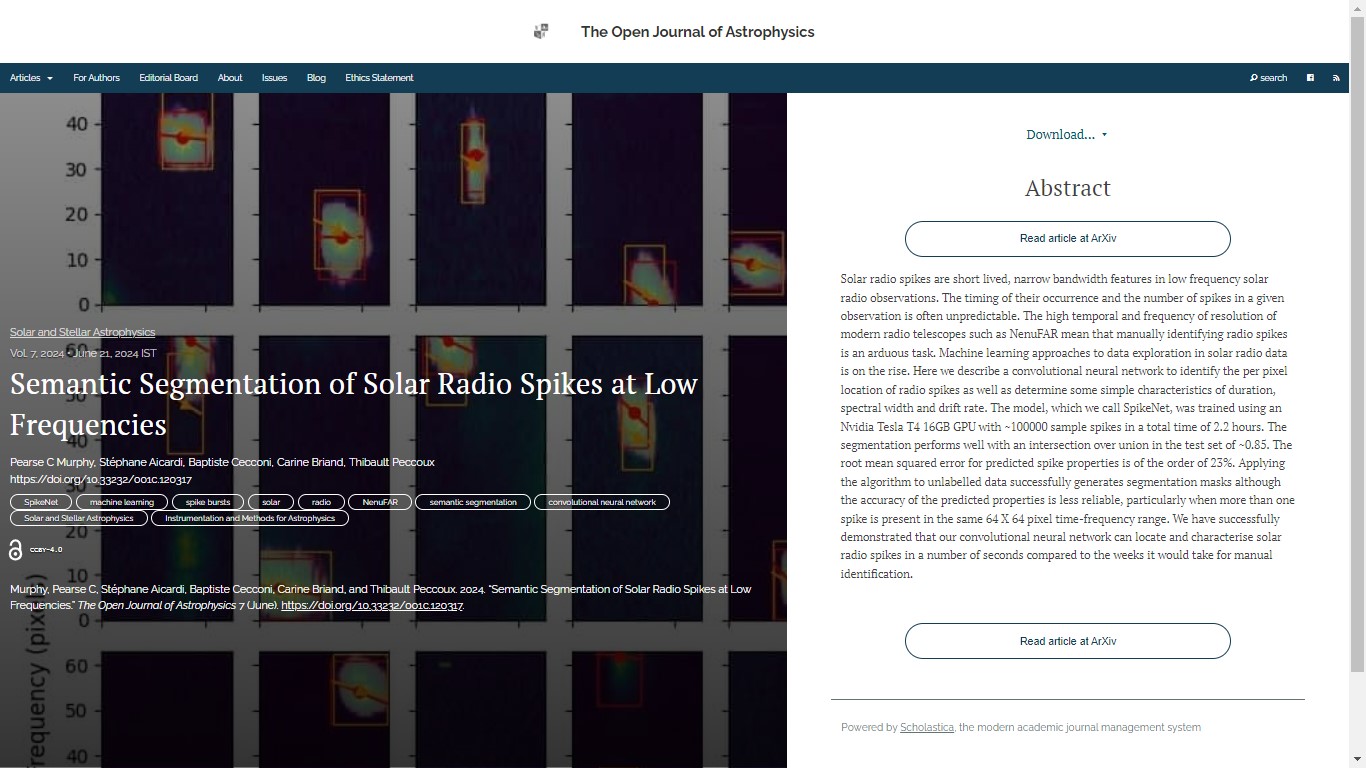
(in the folder Solar and Stellar Astrophysics, by Pearse C Murphy, and four others, based in Paris, France, arXiv version here)
It’s Saturday morning in Barcelona, and time to post another update relating to the Open Journal of Astrophysics. Since the last update we have published two more papers, taking the count in Volume 7 (2024) up to 47 and the total published by OJAp up to 162. We actually accepted four papers last week, but so far only two final versions have appeared on the arXiv.
The first paper of the most recent pair – published on Friday 14th June – is “Spectroscopic Confirmation of an Ultra-Massive Galaxy in a Protocluster at z ~ 4.9″ . The author list has a strong University of California flavour: Stephanie M. Urbano Stawinski (UC Irvine), M. C. Cooper (UC Irvine), Ben Forrest (UC Davis) , Adam Muzzin (York University, Canada), Danilo Marchesini (Tufts University), Gillian Wilson (UC Merced), Percy Gomez (Keck Observatories, USA), Ian McConachie (UC Riverside), Z. Cemile Marsan (York University, Canada), Marianna Annuziatella (Centro de Astrobiología CSIC-INTA, Spain) and Wenjun Chang (UC Riverside).
This paper presents an investigation of a cluster system involving a massive galaxy using Keck spectroscopy with determination of its redshift and star formation properties. The results pose a challenge for theorists. The paper is in the folder marked Astrophysics of Galaxies.
Here is a screen grab of the overlay which includes the abstract:

You can click on the image of the overlay to make it larger should you wish to do so. You can find the officially accepted version of the paper on the arXiv here.
The second paper, also published on Friday 14th June and has the title “Boil-off of red supergiants: mass loss and type II-P supernovae” by Jim Fuller (Caltech) and Daichi Tsuna (Caltech, USA and University of Tokyo, Japan). This one, which is in the folder marked Solar and Stellar Astrophysics, discusses A new model for stellar mass loss which predicts that low-mass red supergiants lose less mass than commonly assumed, while high-mass red supergiants lose more.
Here is a screen grab of the overlay which includes the abstract:

You can click on the image of the overlay to make it larger should you wish to do so. You can find the officially accepted version of the paper on the arXiv here.
That concludes this week’s update. Will we reach 50 for 20204 next week? Tune in next Saturday to find out!
I’m travelling back to Barcelona today, later than planned because I’ve had a heavy cold that I struggled to shake off and didn’t want to infect fellow passengers on the flight. While I’m in transit I thought I’d share some updates about the European Space Agency’s Euclid mission.
The first thing to share is a piece by Knud Jahnke with news about Euclid’s issue with ice in the optical system. The latest intervention has led to an improvement, but since it is a closed system ice will probably form again – though perhaps not in the same place – and further procedures will probably be necessary in future. In the meantime, though, the survey resumes.
Now for some short videos -three, to be precise – about the Early Release Observations mentioned here. I posted another one in this series here. I think the titles are self-explanatory:
And if that isn’t enough, for those of you who like simulations here is another video about the Euclid Flagship simulation described in this paper.
Time for another roundup of business at the Open Journal of Astrophysics. This time I have three papers to announce, which brings the total we have published so far this year (Vol. 7) to 45 and the total published by OJAp to 160. We’re still on track to publish around 100 papers this year or more, compared to last year’s 50.
First one up, published on 3rd June 2024, is “Log-Normal Waiting Time Widths Characterize Dynamics” by Jonathan Katz of Washington University (St Louis, Missouri, USA). This paper presents a discussion of the connection between waiting time distributions and dynamics for aperiodic astrophysical systems, with emphasis on log-normal distributions. This paper is in the folder marked High-Energy Astrophysical Phenomena.
Here is a screen grab of the overlay, which includes the abstract:

You can read the paper directly on arXiv here.
The second paper to present is “An Empirical Model For Intrinsic Alignments: Insights From Cosmological Simulations” by Nicholas Van Alfen (Northeastern University, Boston, USA), Duncan Campbell (Carnegie Mellon University, Pittsburgh, USA), Jonathan Blazek (Northeastern University), C. Danielle Leonard (Newcastle University, UK), Francois Lanusse (Université Paris-Saclay, France), Andrew Hearin (Argonne National Laboratory, USA), Rachel Mandelbaum (Carnegie Mellon University) and The LSST Dark Energy Science Collaboration. This paper presents an extension of the halo model (specifically the Halo Occupation Distribution, HOD) to include intrinsic alignment effects for the study of weak gravitational lensing. This paper is in the folder marked Cosmology and Nongalactic Astrophysics. It was published on Tuesday June 4th 2024.
The overlay looks like this:

You can read this paper directly on the arXiv here.
Last, but by no means least, comes “Towards Cosmography of the Local Universe” which proposes the multipoles of the distance-redshift relation as new cosmological observables that have a direct physical interpretation in terms of kinematical quantities of the underlying matter flow. This was also published on 4th June. The authors are Julian Adamek (IfA Zurich, Switzerland), Chris Clarkson (Queen Mary, London, UK), Ruth Durrer (Geneva, Switzerland), Asta Heinesen (U. Lyon, France & NBI Copenhagen, Denmark), Martin Kunz (Geneva), and Hayley J. Macpherson (Chicago, USA).
Here is a screengrab of the overlay:


With an hour or so to waste in Heathrow Airport I thought I’d just mention that yesterday I attended the 27th Hintze Lecture on the topic of Understanding supernova explosions with sophisticated computer simulations delivered by Prof. Adam Burrows (in the very same lecture theatre in which I gave my lecture the day before). I was also on the guest list for a subsequent dinner in Christ Church College, which was very nice. Thanks to Stephen Smartt for that!
Anyway, I’m now on my way to Dublin (and then Maynooth) so I can vote in tomorrow’s Local and European Parliament elections before returning to Barcelona early next week after a (hopefully) restful weekend…
So here I am, not in Barcelona. On Thursday night I flew to the fine city of Newcastle upon Tyne to act as external examiner for a PhD candidate. Since I knew I would be arriving quite late I stayed in a hotel near Newcastle Airport. It was just as well I did so because, it being Ryanair, I arrived even later than expected. On Friday morning I took the Metro from the Airport to Haymarket and spent the morning in the School of Mathematics, Statistics and Physics at Newcastle University ahead of the viva voce examination.
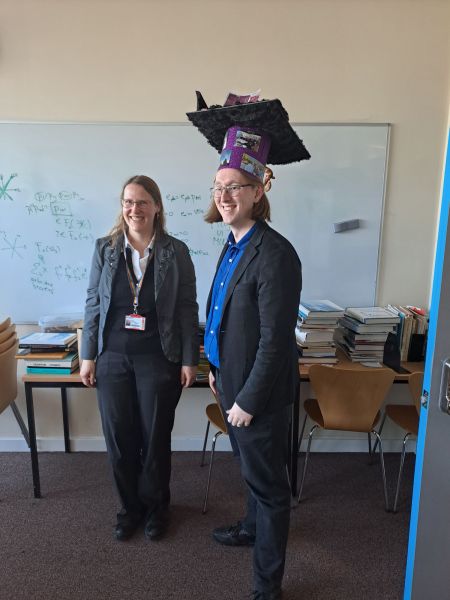
The PhD candidate was Alex Gough (pictured right, after the examination, with supervisor Cora Uhlemann). Cora being German we were treated to the tradition of successful PhD candidates having to wear a elaborate hat, after the examination (fortunately not during it). Some champagne was consumed, followed by dinner at a nice Indian restaurant on Clayton Street.
For those of you not familiar with how the PhD system works in the UK, it involves doing research into a particular topic and then writing up what you’ve done in a thesis. The thesis is a substantial piece of work, often in the region of 100,000 words (200 pages or so), which is then assessed by two examiners (one internal to the university at which the research was done, and one external). They read copies of the thesis and then the candidate has to defend it in an oral examination, which was what happened on Friday, after which they make a recommendation to the university about whether the degree should be awarded.
There aren’t many rules for how a viva voce examination should be conducted or how long it should last, but the can be as short as, say, 2 hours and can be as long as 5 hours or more. The examiners usually ask a mixture of questions, some about the details of the work presented and some about the general background. The unpredictable content of a viva voce examination makes it very difficult to prepare for, and it can be difficult and stressful for the candidate (as well as just tiring, as it can drag on for a long time). However, call me old-fashioned but I think if you’re going to get to call youself Doctor of Philosophy you should expect to have to work for it. Some might disagree.
Obviously I can’t give details of what went on in the examination except that it was quite long primarily because the thesis was very interesting and gave us lots to discuss. At the end internal examiner Danielle Leonard and I agreed to recommend the award of a PhD. In Newcastle as in other UK universities, the examiners simply make a recommendation to a higher authority (e.g. Board of Graduate Studies) to formally award the degree, but they almost always endorse the recommendation. I’ve never been sure exactly when a successful candidate is allowed to call themselves “Doctor”, actually, but congratulations to Dr Gough!
Anyway, the celebratory dinner ended just after Women’s International football match between England and France (which France won) had finished at St James’ Park and the Metro was consequently crammed full, but I got back to the hotel at a reasonable hour. Thank you to everyone in the group, especially Cora and Ian Moss, for being so friendly and making me feel so welcome during this brief visit.
Tomorrow I shall be heading to the part of not-Barcelona known as Oxford, where I believe there is a University of some sort, to give a lecture about which I’ll post more tomorrow.
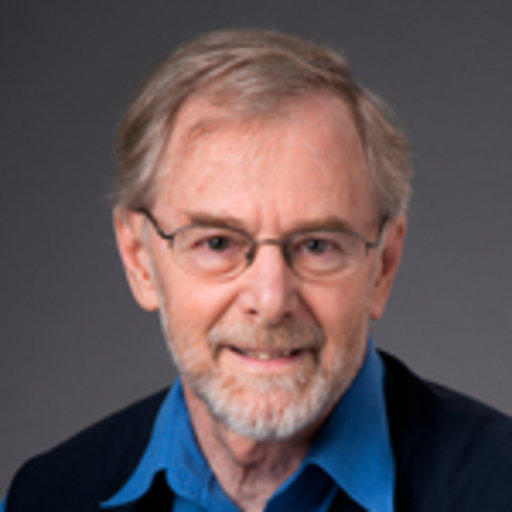
I have been asked to use the medium of this blog to pass on the sad news of the passing of Jasper Wall (left) who died on 28th March at White Rock, British Columbia, Canada.
Jasper Wall (who was Canadian by birth) began his career in Radio Astronomy in Toronto with Alan Yen. This included building a 320-MHz receiver, and carrying out absolute background measurements using a pyramidal horn. He subsequently chose Australia to continue his research, working on a receiver for Parkes Radio Telescope at CSIRO where he and John Bolton began a sky survey at hitherto unprecedented high frequency of 2.7 GHz. Wall’s survey discovered the extensive ‘flat-spectrum’ quasar population, the key to the relativistic beaming model of radio sources. His research at Parkes lasted over eight years and the statistical results of this work strongly favoured a “Big Bang” universe rather than the “Steady State” preferred by John Bolton, Fred Hoyle and Tommy Gold.
Wall was also part of the team which in 1969 brought the Apollo 11 moon landing via the Parkes Radio Telescope to an estimated 650 million TV viewers world wide. In 1974-1978 he was a member of Martin Ryle’s group at the MRAO Cambridge UK, continuing his research in active galaxy systems at both radio and optical wavelengths, plus submm and X-ray observations. He taught statistics to astronomy students at Cambridge, leading to his 2003 book with co-author Charles Jenkins, Practical Statistics for Astronomers.
Later on in his career, he became more involved in science administration. Joining the Royal Greenwich Observatory in 1979 as Head of Astrophysics and Astrometry Division, he continued research in optical and radio astronomy. In 1986 he became Director of the Isaac Newton Group of Telescopes on La Palma for four years, and then Director of the Royal Greenwich Observatory from 1995 until its closure in 1998. He was a Professor at Oxford University from 1998 to 2002, after which he retired, returned to Canada and took up an emeritus position at the University of British Columbia, where he continued to teach and supervise students.
I have a busy day in front of me here in Not-Barcelona so I thought I’d do a quick post sharing a video about the Euclid Early Release Observations (EROs) that came out last week. The press materials accompanying the release of the EROs and the science paper relating to this work, mention “freely floating planets”, but that doesn’t make sense in terms of the modern definition of a planet so here they are described as sub-stellar objects. The paper describing this work can be found on the arXiv here.
Before I head off on a trip to various parts of not-Barcelona, I thought I’d share a somewhat provocative paper by David Hogg and Soledad Villar. In my capacity as journal editor over the past few years I’ve noticed that there has been a phenomenal increase in astrophysics papers discussing applications of various forms of Machine Leaning (ML). This paper looks into issues around the use of ML not just in astrophysics but elsewhere in the natural sciences.
The abstract reads:
Machine learning (ML) methods are having a huge impact across all of the sciences. However, ML has a strong ontology – in which only the data exist – and a strong epistemology – in which a model is considered good if it performs well on held-out training data. These philosophies are in strong conflict with both standard practices and key philosophies in the natural sciences. Here, we identify some locations for ML in the natural sciences at which the ontology and epistemology are valuable. For example, when an expressive machine learning model is used in a causal inference to represent the effects of confounders, such as foregrounds, backgrounds, or instrument calibration parameters, the model capacity and loose philosophy of ML can make the results more trustworthy. We also show that there are contexts in which the introduction of ML introduces strong, unwanted statistical biases. For one, when ML models are used to emulate physical (or first-principles) simulations, they introduce strong confirmation biases. For another, when expressive regressions are used to label datasets, those labels cannot be used in downstream joint or ensemble analyses without taking on uncontrolled biases. The question in the title is being asked of all of the natural sciences; that is, we are calling on the scientific communities to take a step back and consider the role and value of ML in their fields; the (partial) answers we give here come from the particular perspective of physics
arXiv:2405.18095
P.S. The answer to the question posed in the title is probably “yes”.

 In the Dark