A month to go

Posted in Artificial Intelligence, Biographical, Education, mathematics, Maynooth with tags , , , , , on November 25, 2025 by telescoper

I’ve been a bit preoccupied these recent weeks so it was with a shock that I realised that we’re into Week 9, which means just four weeks (including this one) until the end of term and just a month before Christmas. Teaching finishes here in Maynooth on Friday 19th December, but I don’t have any lectures on Fridays so in my case it will finish the day before (with a tutorial). I don’t know how many students will be there, but the module concerned is my 4th year Mathematical Physics module and the students are very hard-working, so I think most will attend. After such a busy term I’m sure that they will need a break as much as I will.

I had to rejig the schedule for both modules I am teaching this semester to accommodate the introduction of in-class tests to replace take-home assignments (for reasons I outlined here). I’ve also been handing out voluntary exercises for practice, not counting towards the module mark but for formative reasons. Both modules are mathematical in nature, and I think the best way to learn mathematics is by doing it…

Despite the changes with respect to last year, I am still roughly on track. In my Engineering Mathematics module I’ve just finished Laplace transforms, and will start Fourier methods tomorrow. With the mathematical physicists, I am in the middle of complex analysis, having done complex differentiation and conformal mappings and starting complex integration next week.

I still have a couple more class tests to get through. On the positive side, the students are turning up for them and have expressed approval for the fact that they don’t have compulsory homework to do off-campus. This form of assessment is undoubtedly harder work for the students, it’s also better preparation for the examination that take-home assignments.

We’ve just received the draft examination timetable for January, and I’m pleased that both of the examinations for which I am responsible will take place quite early in the examination period (on 12th and 15th January, respectively) so I should be able to get them corrected in time to have a break for some research before teaching resumes at the start of February.

Money and Open Access

Posted in Open Access with tags , , , , , , , on November 24, 2025 by telescoper

I was thinking when I did Saturday’s update of the week’s new papers at the Open Journal of Astrophysics that I should convey some idea of the amount of money being saved by using Diamond Open Access.

So far this year we have published 181 articles in the Open Journal of Astrophysics. That’s a very small fraction – a few percent – of the output of the established journals in the area, Astrophysical Journal, Astronomy & Astrophysics and Monthly Notices of the Royal Astronomical Society, MNRAS.

I will take MNRAS as an example for comparison. Last time I looked, the Article Processing Charge (APC) (i.e. publication fee) for a paper submitted there is £2356. Our 181 papers published this year would have cost their authors £426,436 had they had to pay the MNRAS APC. Some – especially in the UK – do not pay directly, but have an equivalent amount taken from their institution(s) via Read-and-Publish agreements. The charge therefore does not come directly from the authors’ funds but from their institution, but that is just splitting hairs. The point about OJAp is that neither authors nor their institutions have to pay.

For comparison, a year’s stipend for a PhD student outside London at UKRI rates is £20,780. That means that the total amount saved by publishing in OJAp rather than MNRAS (£426,436) would be more than the cost of 20 PhD students. It might even be enough (just) to pay your Vice-Chancellor’s salary…

You might well think that is a trivial amount of money compared to the total circulating in science funding, but the real point is that it represents only a tiny fraction of the money being siphoned off from astrophysics research into other activities. Taking all the APCs paid (or page charges or other words that mean “publication fee”) to all the journals, the total figure is probably at least 50 times the £426,436 obtained above. That would be a figure in excess of £20 million. That is not a trivial amount of money. Even for a Vice-Chancellor.

Wouldn’t you and your institution rather keep your grant funds to spend on research than hand it over – directly or indirectly – to publishers? I know I would!

For the Birds

Posted in Biographical, Maynooth with tags , , , , , , , on November 23, 2025 by telescoper

The weather here in Maynooth was very mild until a couple of weeks ago and with the arrival of inclement conditions I started putting out the bird feeders in my garden. I can see the level of the seed from my kitchen window so know when they need filling up. I had one out for a couple of days before the arrival of Storm Claudia with associated torrential rain, but when it passed I was surprised to see the feeders were still half full so I left them.

Last weekend it started to become very cold so I was surprised there were no birds at the feeder. When I went out to look I realized that owing the heavy rainfall some water had got into the seed container, with the result that some of the seeds had started to germinate. This formed a tangled mass of shoots that blocked the gap through which seed is dispensed. The reason the feeders were not empty was not that the birds weren’t hungry, but that no seed was coming out.

I took the feeders inside and cleaned out all the matted seedlings. Then I took them back to the shed to fill up, at which point I knocked over the jar in which I stored the birdseed, scattering the supply all over the floor. There wasn’t much left anyway, but my clumsiness reduced the stock to zero so I was unable to feed the birds despite having functioning feeders.

Yesterday I finally had time to buy some more birdseed. I filled up the feeders as soon as I got home. It was quite interesting to watch the sequence of events. The first to arrive were sparrows who, being small and agile, were quite happy taking terms perching at the feeders. Not long after, however, starlings arrived, squabbling and squawking as they usually do. Starlings are much larger then sparrows and are extremely messy and noisy eaters, their attempts to perch at a feeder causing it to swing and scatter seed all over the ground.

(Incidentally, the term for a large group of starlings is a murmuration, a congregation, a cloud, or a constellation, but there are alternatives for a smaller group like the dozen or so that arrived in my garden. These include a clutter, a scourge, a vulgarity and, my favourite, a filth…)

Some starlings and sparrows started to feed on the ground, as did a very bonny collared dove, walking around calmly amid the flurry of other birds and paying them no attention at all .

At this point the feeder was almost empty.

The last cohort to arrive were the rooks and jackdaws. These are too big to even attempt to perch so their modus operandi is to crash into the feeders to try to break them or knock them down to the ground where they are easier to attack. They didn’t succeed, so they left.

Now the feeders are empty, the birds have gone, and all is quiet. I think I’ll put more food out tomorrow before I go to work. I imagine they’ll be empty by the time I get back home.

Weekly Update from the Open Journal of Astrophysics – 22/11/2025

Posted in OJAp Papers, Open Access, The Universe and Stuff with tags , , , , , , , , , , , , , , , , , , , , , on November 22, 2025 by telescoper

It’s Saturday again, so it’s time for the usual update of the week’s new papers at the Open Journal of Astrophysics. Since the last update we have published another five papers, which brings the number in Volume 8 (2025) up to 180, and the total so far published by OJAp up to 415.

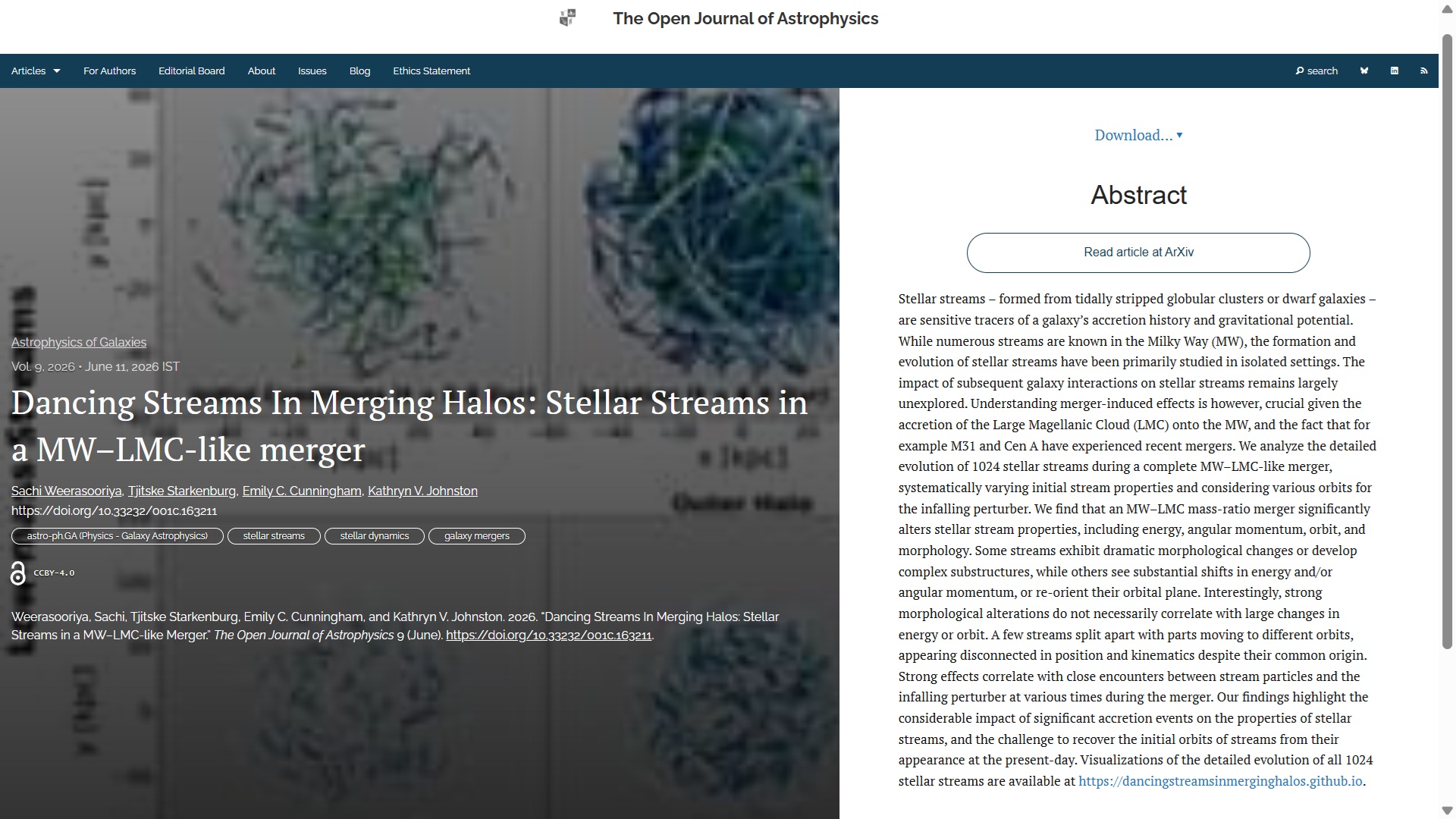
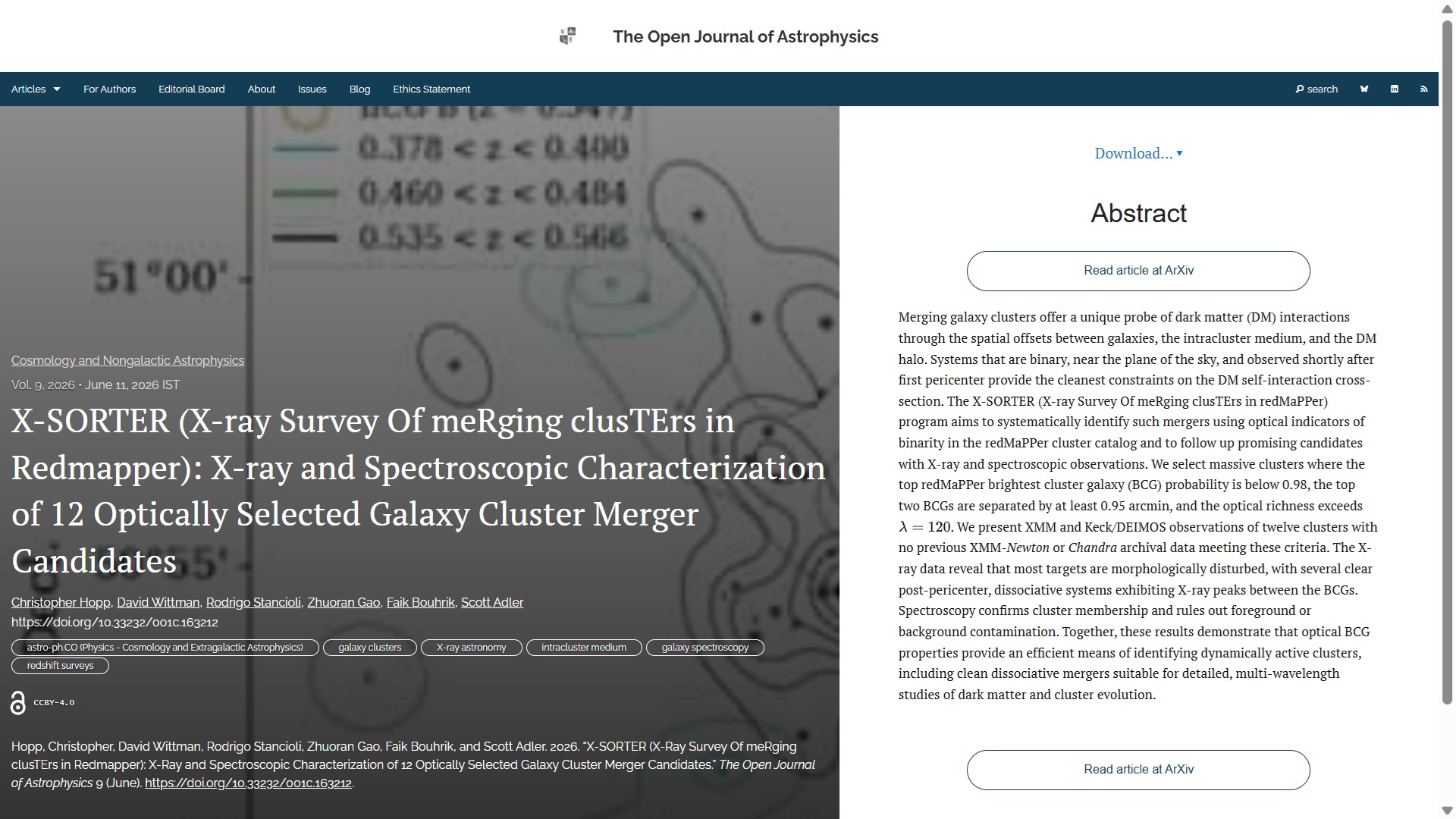
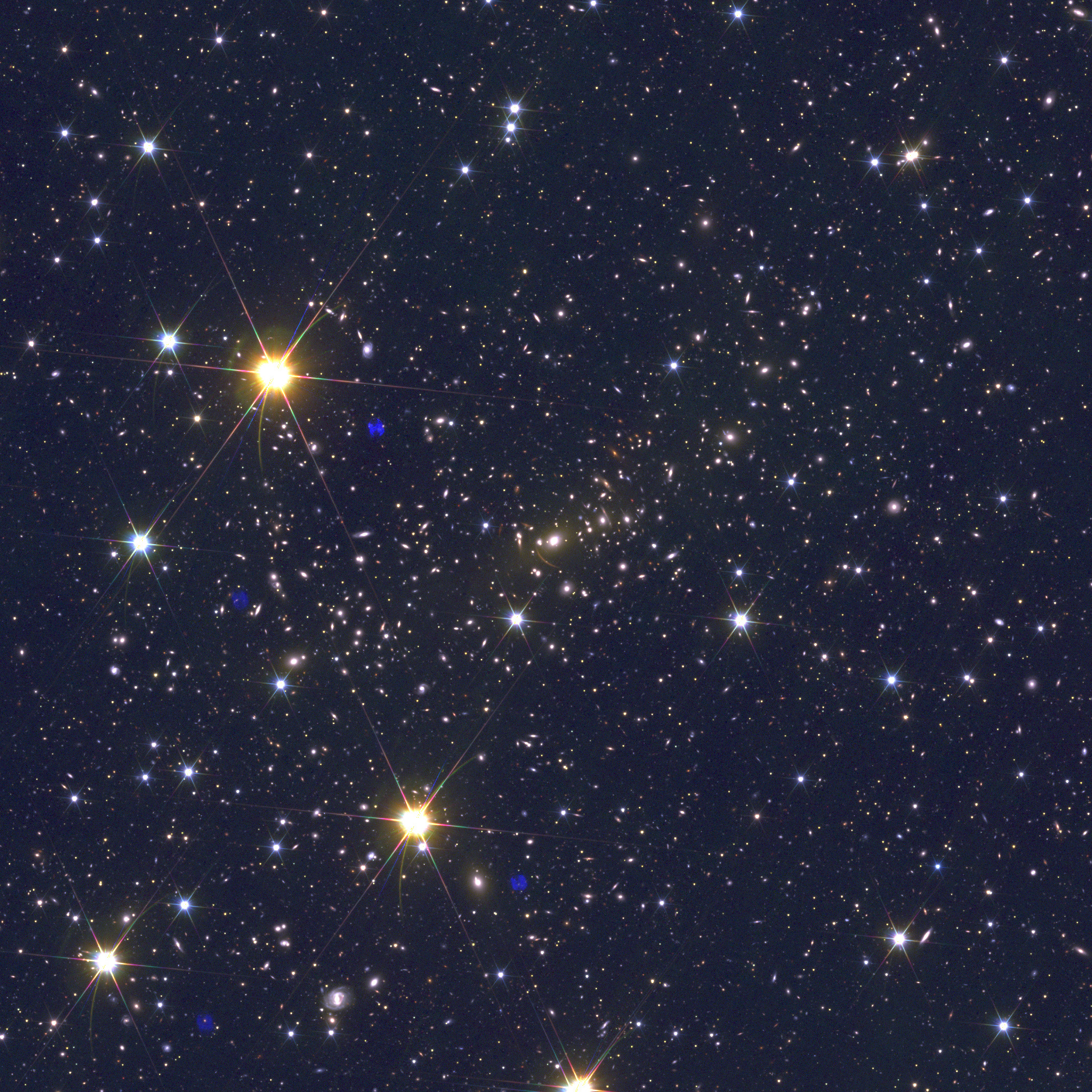
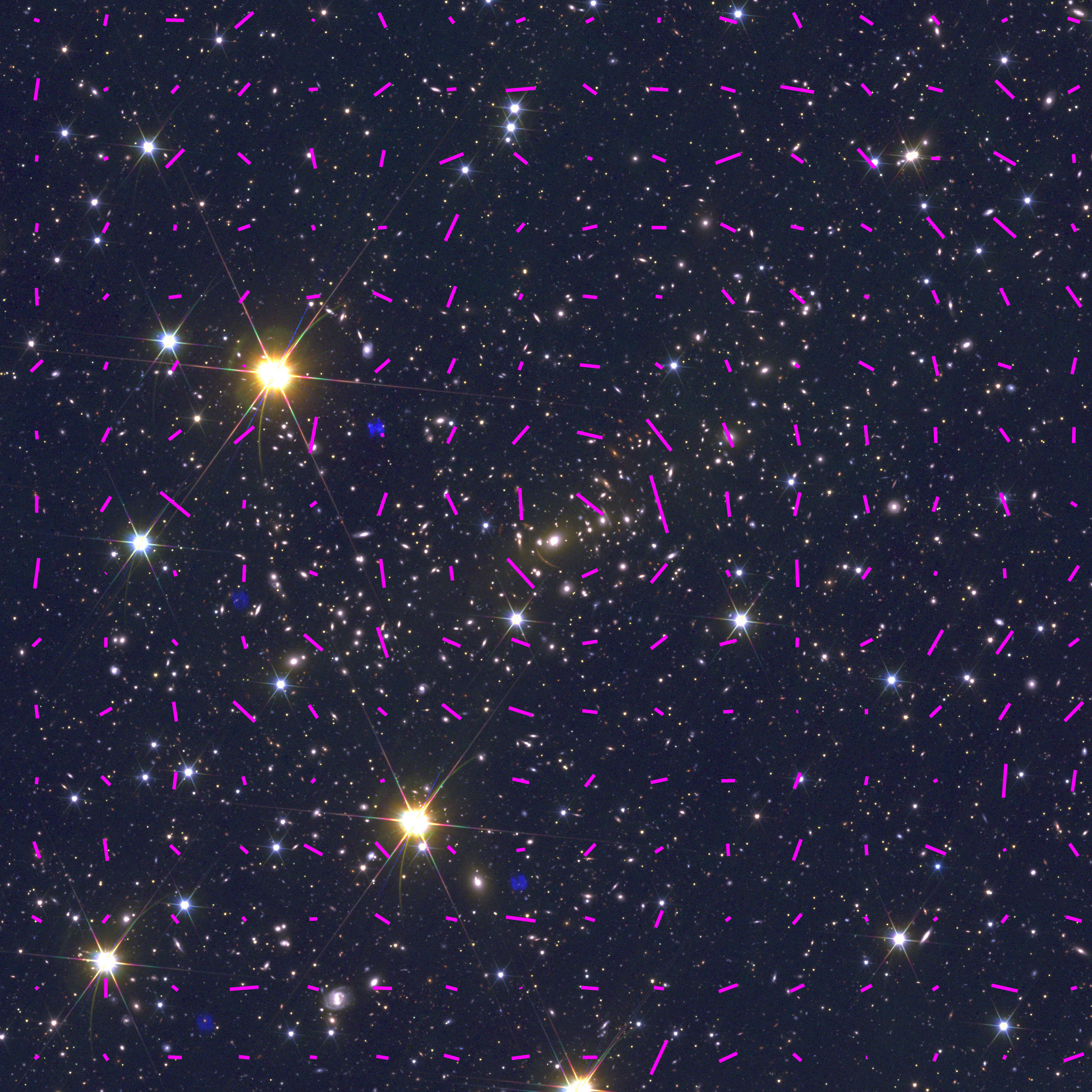
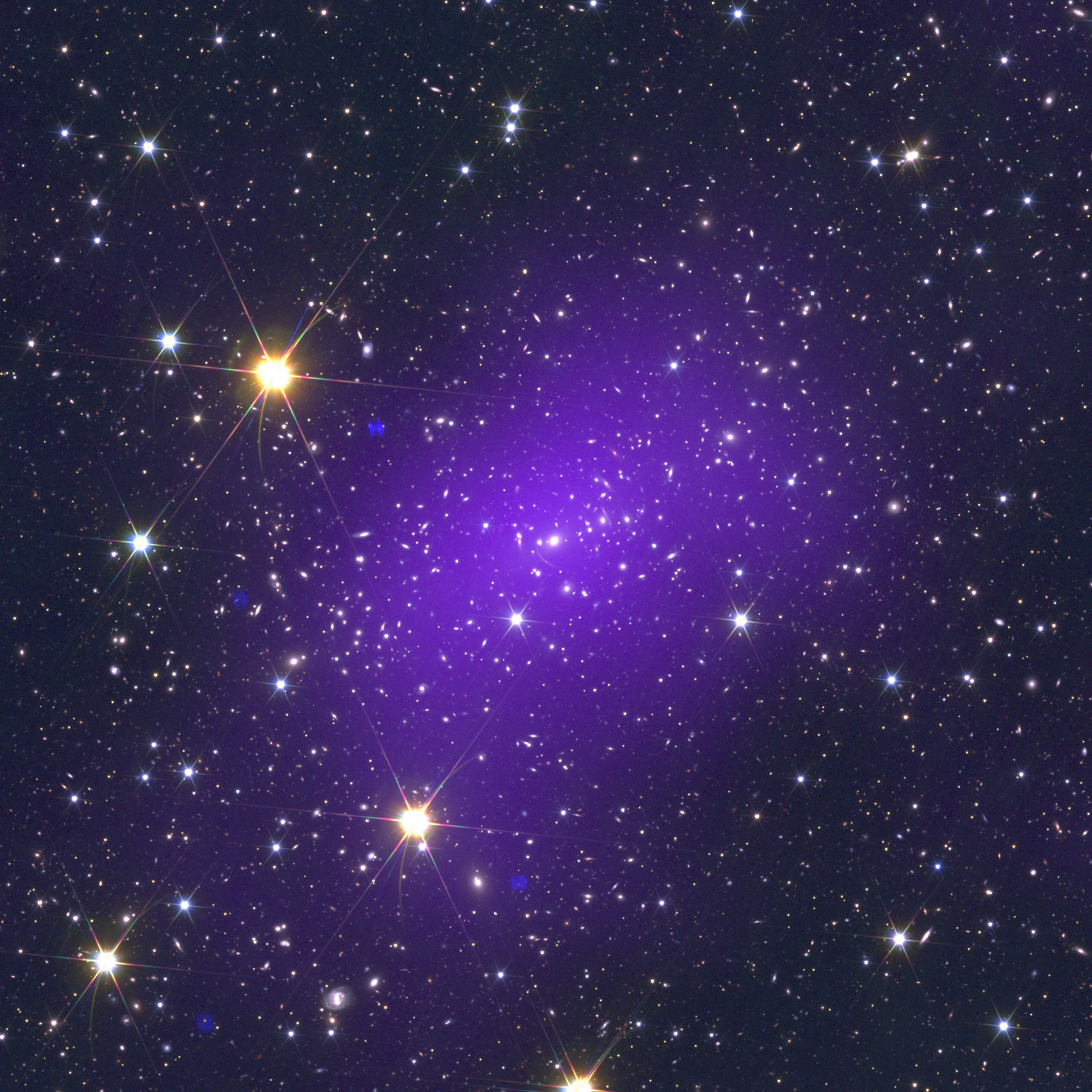
The first paper to report this week is “Probing Anisotropic Cosmic Birefringence with Foreground-Marginalised SPT B-mode Likelihoods” by Lennart Balkenhol (Sorbonne Université, France), A. Coerver (UC Berkeley, USA), C. L. Reichardt (U. Melbourne, Australia) and J. A. Zebrowski (U. Chicago, USA). This paper was published on Monday November 17th in the folder Cosmology and Nongalactic Astrophysics. It presents a way of using data from the Souh Pole Telescope (SPT) in the CMB-lite framework to constrain the level of cosmic birefringence.  The overlay is here:

You can find the officially accepted version on arXiv here and the The Fediverse announcement is here:

Open Journal of Astrophysics

New Publication at the Open Journal of Astrophysics: "Probing Anisotropic Cosmic Birefringence with Foreground-Marginalised SPT B-mode Likelihoods" by Lennart Balkenhol (Sorbonne Université, France), A. Coerver (UC Berkeley, USA), C. L. Reichardt (U. Melbourne, Australia) and J. A. Zebrowski (U. Chicago, USA)

doi.org/10.33232/001c.147459

November 17, 2025, 8:43 am 1 boosts 0 favorites

The second paper of the week is “Radio Observations of a Candidate Redback Millisecond Pulsar: 1FGL J0523.5-2529” by Owen. A. Johnson & E. F. Keane (Trinity College Dublin, Ireland), D. J. McKenna (ASTRON, NL), H. Qiu (SKAO, UK), S. J. Swihart (Insitute for Defense Analyses, USA), J. Strader (Michigan State U., USA) and M. McLaughlin (West Virginia U., USA). This one was published on Tuesday November 18th 2025 in the folder marked High-Energy Astrophysical Phenomena and it describes a search for radio emission from a candidate “redback pulsar” J0523.5-2529 resulting in upper limits but no detection.

The overlay is here:

You can find the official version of this one on arXiv here. The federated announcement on Mastodon is here:

Open Journal of Astrophysics

New Publication at the Open Journal of Astrophysics: "Radio Observations of a Candidate Redback Millisecond Pulsar: 1FGL J0523.5-2529" by Owen. A. Johnson & E. F. Keane (Trinity College Dublin, Ireland), D. J. McKenna (ASTRON, NL), H. Qiu (SKAO, UK), S. J. Swihart (Insitute for Defense Analyses, USA), J. Strader (Michigan State U., USA) and M. McLaughlin (West Virginia U., USA)

doi.org/10.33232/001c.147516

November 18, 2025, 8:42 am 1 boosts 0 favorites

Next one up is “The role of turbulence in setting the phase of the ISM and implications for the star formation rate” by Tine Colman (Université Paris-Saclay, France) and 13 others based in France, Germany, Italy and the UK. This was published in the folder Astrophysics of Galaxies on Tuesday November 18th. It descrtibes using a suite of stratified box simulations to explore the link between star formation, turbulence and the thermal state of the multi-phase interstellar medium (ISM).

The overlay is here:

You can find the official accepted version on arXiv here. The fediverse announcement is here:

Open Journal of Astrophysics

New Publication at the Open Journal of Astrophysics: "The role of turbulence in setting the phase of the ISM and implications for the star formation rate" by Tine Colman (Université Paris-Saclay, France) and 13 others based in France, Germany, Italy and the UK.

doi.org/10.33232/001c.147517

November 19, 2025, 8:19 am 0 boosts 0 favorites

The fourth paper of the week is “A Bimodal Metallicity Distribution Function in the Ultra-Faint Dwarf Galaxy Reticulum II” by Alice M. Luna (U. Chicago, USA) and 8 others based in the USA, Korea and Canada. This was published on Wednesday November 19th in the folder Astrophysics of Galaxies. It decribes low-resolution Magellan/IMACS spectroscopy of 167 stars in the ultra-faint galaxy Reticulum II, revealing a clearly bimodal distribution.

The overlay is here:

You can find the official published version on arXiv here. The Fediverse announcement follows:

Open Journal of Astrophysics

New Publication at the Open Journal of Astrophysics: "A Bimodal Metallicity Distribution Function in the Ultra-Faint Dwarf Galaxy Reticulum II" by Alice M. Luna (U. Chicago, USA) and 8 others based in the USA, Korea and Canada.

doi.org/10.33232/001c.147696

November 19, 2025, 8:37 am 0 boosts 0 favorites

The fifth and final paper for this week is “Cool Gas in the Circumgalactic Medium of Massive Post Starburst Galaxies” by Zoe Harvey, Sahyadri Krishna, Vivienne Wild & Rita Tojeiro (U. St Andrews, UK) and Paul Hewett (U. Cambridge, UK). This was published on Thursday November 20th in the folder Astrophysics of Galaxies.

The overlay is here:

The officially accepted version can be found on arXiv here. The Fediverse announcement is here:

Open Journal of Astrophysics

New Publication at the Open Journal of Astrophysics: "Cool Gas in the Circumgalactic Medium of Massive Post Starburst Galaxies" by Zoe Harvey, Sahyadri Krishna, Vivienne Wild & Rita Tojeiro (U. St Andrews, UK) and Paul Hewett (U. Cambridge, UK)

doi.org/10.33232/001c.147836

November 20, 2025, 9:02 am 1 boosts 0 favorites

And that concludes the update for this week. I will do another next Saturday.

Visiting Speaker

Posted in Maynooth, OJAp Papers, Open Access, The Universe and Stuff with tags , , on November 21, 2025 by telescoper

I’ve been playing host today to my former PhD student, now at the University of Vienna, Mateja Gosenca, who gave a talk on “Ultralight Dark Matter: Phenomenology and Observational Constraints”. Mateja did an MSc at the University of Sussex before doing a PhD under my supervision, so it is very nice to have her visit us in Maynooth.

It was only when I started to think about how to introduce her Colloquium that I remembered that Mateja was co-author of the very first paper published by the Open Journal of Astrophysics, way back in 2016. At that time we were running an experimental prototype site before switching to the Scholastica platform we now use, but it was still a landmark. We’ve now published 415 papers.

Update: Obligatory pub photograph

Stardust – Michael D. Higgins

Posted in Poetry with tags , , , , on November 20, 2025 by telescoper

by Michael D. Higgins (b. 1941), former President of the Republic of Ireland.

Here he is reading the poem from the President’s Office.

Queen’s University Belfast and Dundalk IT (not Maynooth?)

Posted in Education, Maynooth with tags , , , on November 19, 2025 by telescoper

A couple of years ago I posted an item about the news of a proposed merger of Maynooth University and Dundalk Institute of Technology. That piece began with the following:

Life is full of surprises, especially if you’re a member of academic staff at Maynooth University.

Today it was revealed that the institution that employs me is planning to merge with Dundalk Institute of Technology. It was revealed not in a direct message to staff, but through an article in the national media, in this case the Sunday Independent. The article there is paywalled but there is another piece here.

This is astonishing news, not least because of the way it has come out. Yet again, the only way that staff at Maynooth can find out what’s going on is through the newspapers. Senior Management don’t deign to inform us of anything…

Not surprisingly I hadn’t heard anything about how the proposed merger was progressing except for a couple of items in the national media. For example, in May this year, there was an announcement of the formation of a Regional Graduate Academy linking postgraduate education in Dundalk and Maynooth.

Today, however, I saw another news item announcing that Dundalk IT has now decided to become a College of Queen’s University Belfast. It explains:

The new partnership between Queens University Belfast and Dundalk Institute of Technology is not a “parent child relationship,” and represents the first “all-Ireland university”, the Minister for Further and Higher Education has said.

DkIT is set to become a University College following the agreement with QUB, which will see it change from an IT to a University College of Queen’s University Belfast.

What does this new new relationship between DkIT and QUB mean for the old new relationship between DkIT and Maynooth University? Have they called the Maynooth-Dundalk merger off? Or will the three institutions form a ménage à trois?

Don’t ask me. I only work here. Perhaps I’ll be able to find out by reading the newspapers.

P.S. Coincidentally, the next “President’s Update” for staff at Maynooth, scheduled for December, has been postponed until the New Year.

P.P.S. It is about 80km from Belfast to Dundalk and about 100km from Dundalk to Maynooth.

It’s LGBTQIA+ STEM Day!

Posted in LGBTQ+, Maynooth with tags , , , , on November 18, 2025 by telescoper

Just a quick post to point out that today is LGBTQIA+ STEM Day, which aims to celebrate  to celebrate the work of LGBTQIA+ people in science, technology, engineering, and mathematics (STEM), but also to highlight the barriers still facing us.

For more information see here.

This also provides an opportunity for me to send my best wishes to all LGBTQIA+ staff and students at Maynooth and around the world! As far as I know, my Employer is not marking this occasion. This surprises me as it is not unknown for them to engage in pinkwashing from time to time, whenever it suits them for some reason.

P.S. I’m reminded that it was 22 years ago today that Section 28 was finally repealed in England and Wales. With reactionary fforces around the world attacking our hard-won rights, it is important that we cling on to what we’ve got.

Principia for Sale

Posted in History, The Universe and Stuff with tags , , , on November 17, 2025 by telescoper

With Christmas approaching, you may be looking for gift ideas so I thought I would pass on this advertisement:

The book concerned is a First Edition of the Continental Issue of Isaac Newton’s Philosophiæ Naturalis Principia Mathematica, dated 1687.

For more details see here. The estimate is “only” €100,000, which seems to me a bit on the low side. A similar volume was listed by Christie’s in 2016 as $1,000,000 to $1,500,000 but in the end sold for $3.7 million. This one has had some repairs and is slightly browned with age, but has an interesting provenance. I’d be surprised if it didn’t fetch at least a million. We’ll find out in a week!

Concerning Muskopedia

Posted in Politics with tags , , , , on November 16, 2025 by telescoper

A colleague sent me this arXiv paper. The abstract reads:

Elon Musk released Grokipedia on 27 October 2025 to provide an alternative to Wikipedia, the crowdsourced online encyclopedia. In this paper, we provide the first comprehensive analysis of Grokipedia and compare it to a dump of Wikipedia, with a focus on article similarity and citation practices. Although Grokipedia articles are much longer than their corresponding English Wikipedia articles, we find that much of Grokipedia’s content (including both articles with and without Creative Commons licenses) is highly derivative of Wikipedia. Nevertheless, citation practices between the sites differ greatly, with Grokipedia citing many more sources deemed “generally unreliable” or “blacklisted” by the English Wikipedia community and low quality by external scholars, including dozens of citations to sites like Stormfront and Infowars. We then analyze article subsets: one about elected officials, one about controversial topics, and one random subset for which we derive article quality and topic. We find that the elected official and controversial article subsets showed less similarity between their Wikipedia version and Grokipedia version than other pages. The random subset illustrates that Grokipedia focused rewriting the highest quality articles on Wikipedia, with a bias towards biographies, politics, society, and history. Finally, we publicly release our nearly-full scrape of Grokipedia, as well as embeddings of the entire Grokipedia corpus.

It’s an interesting paper which shows that much of Muskopedia Grokipedia is just scraped from Wikipedia but some articles have been rewritten to reflect Elon Musk’s fascist attitudes.

Incidentally, the name is derived from Grok, an AI bot for spreading far-right propaganda on Twitter. “Grot” would have been a better name. I have no experience of Grok as I no longer use Twitter and have no intention of looking at Grokipedia either. I imagine it’s probably like Conservapedia, although considerably less (unintentionally) funny.

I remember that I should have posted a reaction to the spineless behaviour of the Royal Society, of which Mr Musk is a Fellow. At the “Unite the Kingdom” march organized by career criminal and racist thug Stephen Yaxley-Lennon (aka Tommy Robinson), Elon Musk made a (remote) contributuion that used violent rhetoric to promote narratives of division and polarisation. This is what his sort will always do. The Royal Society’s response was to issue a lame public statement but take no further action. Musk’s continued presence is a terrible stain on the reputation of the Royal Society.

In the interest of full disclosure I should mention that I do have a Wikipedia page. I’m told I don’t get a mention on Muskopedia. I am grateful for that. Anyway, this paper reminded me to make another donation to Wikipedia. I encourage you to do likewise.