All-Ireland Hurling Final Weekend

Posted in GAA with tags , , on July 18, 2025 by telescoper

Just a quick note, primarily for those of you not in Ireland, to point out that this weekend sees the All-Ireland Senior Hurling Championship Final at Croke Park. There’s always a fantastic atmosphere for this event and I’m looking forward to it enormously. It’s every bit as big as the FA Cup Final used to be when I was a kid.

This year’s final is between Cork and Tipperary and takes place on Sunday 20th July, with the throw-in at 3.30pm.

For those of you in the UK, there is live coverage on BBC2 from 3pm.

Global Talent Ireland

Posted in Maynooth, The Universe and Stuff with tags , , on July 18, 2025 by telescoper

The Government of Ireland has just announced details of a scheme called Global Talent Ireland. Full details of the scheme can be found here but, in a nutshell, the scheme aims to attract exceptional mid-career and established researchers from across the globe to Ireland. Researchers funded through this programme are required to transfer their research activities from their current location to any Eligible Research Body in Ireland. Given its commitment to equality, diversity and inclusion, Research Ireland welcomes applications from women and those from historically underserved communities.

The programme budget includes the resources to build a research team (e.g., staff, consumables and travel) to carry out high-impact, world-class research, and additional start-up costs to support the researcher’s move to Ireland. These positions are available for any area of research supported by Research Ireland.

The programme comprises two streams: Rising Stars and Research Leaders. High level details are outlined in the table below: 

The timescale for this is very short (as the window lies in the vacations for people likely to be recruited). In the case of Maynooth, which I assume is an Eligible Research Body, there is a first-stage internal process for Expressions of Interest to be completed by 29th July (i.e. less than two weeks away). There is then a selection for submissions to be forwarded to the Government by August 28th 2025.

As the timescale is so short I would ask anyone interested in taking up such a position in the Department of Physics at Maynooth University to contact me as soon as possible, as both the Head of Department and Dean of the Faculty of Science and Engineering are away at the moment. Ireland’s recent decision to join CERN as well as membership of the European Southern Observatory and the European Space Agency might be good strategic grounds for an application.

Those interested in other areas of research would be advised to contact the relevant Departments as soon as possible. The selection process is bound to be very competitive, but you can’t win the prize if you don’t buy a ticket!

A Reminder to Vote for Wyn Evans as Chancellor of Cambridge University

Posted in Education, Harassment Bullying etc with tags , , , on July 17, 2025 by telescoper

Here’s a message for Alumni of Cambridge University!

Tomorrow (18th July) is the last day registered electors can vote online for Prof. Wyn Evans as Chancellor of the University. If you’ve registered then please don’t forget to vote! You have until 5pm tomorrow.

Here’s a post outlining the reasons why you should vote for Wyn.

In-person voting in Cambridge has already closed.

The word on the street in Cambridge is that the election will be won by Lord Browne. The Masters of many of the richest Colleges (Trinity, St Johns) have come out in his favour despite his tarnished reputation. The likelihood that the post of Chancellor of the University of Cambridge will be filled by someone so eminently unsuitable has prompted an open letter by academics (any academic can sign, not just Cambridge).

Why anyone would think that Lord Browne is an appropriate choice is completely beyond me. The letter clearly identifies the main reason why he would be a terrible choice; he is one of the key individuals associated with ushering in the present funding regime, which has led to students graduating with huge debts and many UK universities currently facing financial ruin.

Update: Unfortunately, Wyn didn’t win. Lord Browne didn’t either. The new Chancellor of Cambridge University is Chris Smith (currently Master of Pembroke College, Cambridge). It seems the electorate went with the tradition of electing a political has-been.

Classical Fluid Analogies for Schrödinger-Newton Systems

Posted in The Universe and Stuff with tags , , , , on July 16, 2025 by telescoper
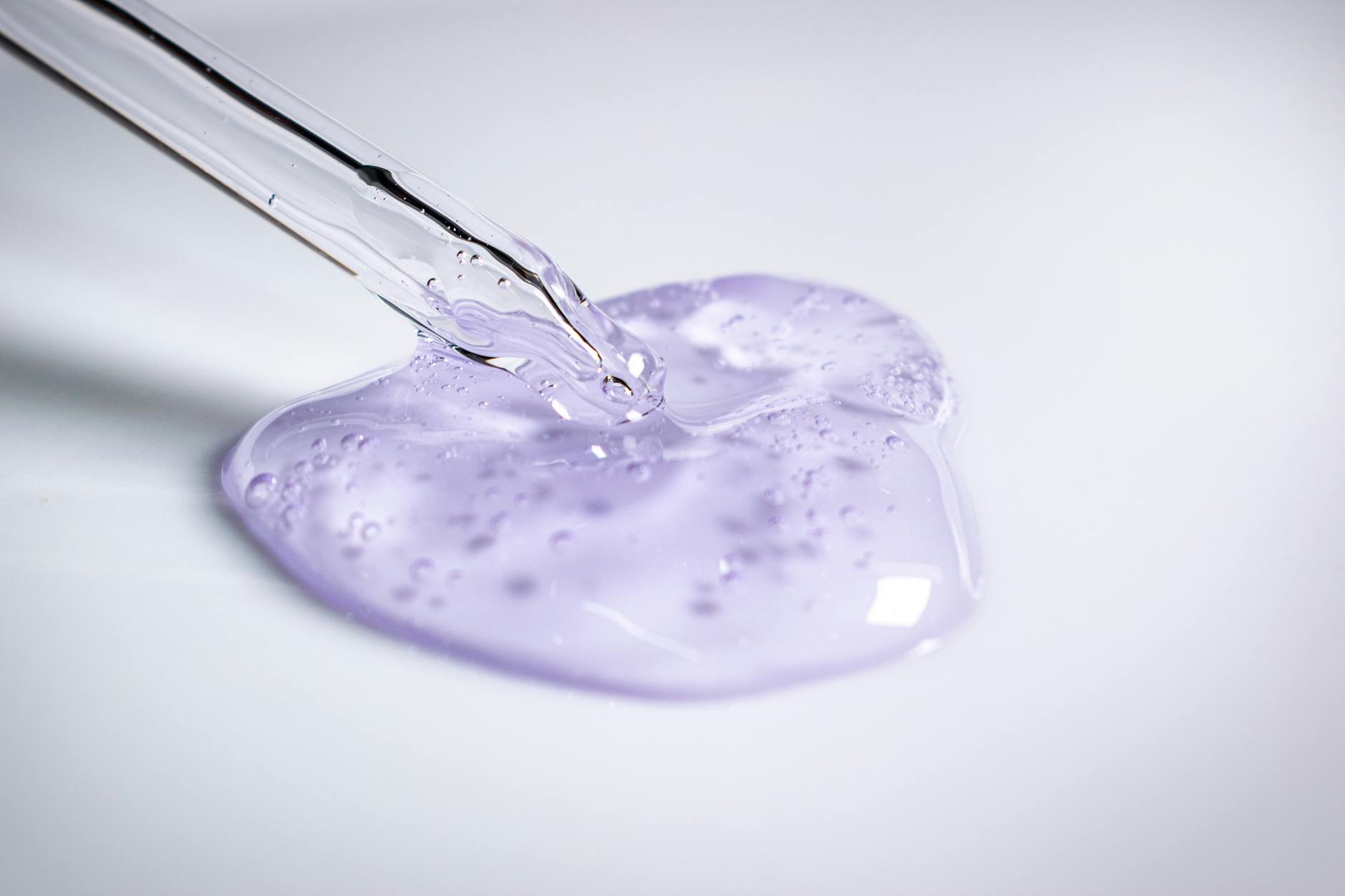
Stock viscosity image: Photo by Fernando Serrano on Pexels.com

I thought I’d mention here a paper now on arXiv that I co-wrote with my PhD student Aoibhinn Gallagher. Here is the abstract:

The Schrödinger-Poisson formalism has found a number of applications in cosmology, particularly in describing the growth by gravitational instability of large-scale structure in a universe dominated by ultra-light scalar particles. Here we investigate the extent to which the behaviour of this and the more general case of a Schrödinger-Newton system, can be described in terms of classical fluid concepts such as viscosity and pressure. We also explore whether such systems can be described by a pseudo-Reynolds number as for classical viscous fluids. The conclusion we reach is that this is indeed possible, but with important restrictions to ensure physical consistency.

arXiv:2507.08583

It is based on work that his in her now-completed PhD thesis, along with another paper mentioned here. I have been interested for many years in the Schrödinger-Newton system (or, more specifically, the Schrödinger-Poisson system in the case where self-gravitational forces are involved). In its simplest form this involves a wave-mechanical representation, in the form of an effective Schrödinger equation, of potential flow described classically by an Euler equation. More recently we got interested in the extent to which such an approach could be used to model viscous fluids represented by a Navier-Stokes equation rather than an Euler equation. That was largely because the effective Planck constant that arises in this representation has the same dimensions as kinematic viscosity (but there’s more to it than that).

In the paper we explored a limited aspect of this, by looking at situations where there is no vorticity (so still a potential flow) but there is viscosity. There aren’t many examples of fluid flow in which there is viscosity but no vorticity, and most of those that do exist are about one-dimensional flow along channels or pipes with boundary conditions that don’t really apply to astrophysics, but one example we did look at in detail was the dissipiation of longitudinal waves in such a fluid.

One upshot of this work is that one can indeed describe some aspects of quantum-mechnical fluids such as ultra-light scalar matter in terms of classical fluid properties, such as viscosity, but you have to be careful. For more information, read the paper!

No More CMB-S4…

Posted in The Universe and Stuff with tags , , , , , , on July 15, 2025 by telescoper

There was some sad news for cosmologists last week in that the Government of the United States of America – specifically the National Science Foundation (NSF) and the Department of Energy (DOE) – has cancelled the next generation of ground-based cosmic microwave background experiments, called CMB-S4. This would have been the fourth generation This would have consisted of several dedicated telescopes equipped with highly sensitive superconducting cameras.

The plan was that these telescopes would spend about seven years listening to the microwave sky at two locations already recognized for their suitability: the South Pole, which was to host several telescopes of varying sizes to observe across a wide range of microwave frequencies; and the Atacama Plateau in Chile, a high-desert site which would have hosted two large telescopes that can also observe several different frequencies. The South Pole telescopes were to conduct an ultra-deep survey of 3% of the sky, while the Atacama telescopes would conduct a complementary ultra-wide and deep survey of 70% of the sky. Together, the two sites promised to provide a dramatic leap forward in our understanding of the fundamental nature of space and time and the evolution of the Universe.

Longstanding readers of this blog will remember that in 2014 the BICEP2 experiment at the South Pole was claimed to have detected the B-mode polarization signal that would be a diagnostic of primordial gravitational waves generated during a burst of cosmic inflation. That result was later shown to be dominated by Galactic dust emission which could not be identified from its spectral properties, as BICEP2 operated at only one frequency. With an order of magnitude more detectors than previous ground-based CMB experiments, wider frequency coverage, and better control of systematic errors, CMB-S4 would have reduced the limits on earlier observations by a factor of five, enabling either the direct detection of primordial gravitational waves or ruling out large classes of inflationary models and dramatically impacting current thought on cosmic inflation.

For more technical information about CMB-S4 see the 2021 White Paper here.

Despite its very strong science case, and the fact that it was ranked as second-highest priority in the 2020 Decadal Survey, it seems that CMB-S4 is no more. Sad.

Maynooth University Library Cat Update

Posted in Maynooth with tags , , on July 14, 2025 by telescoper

Though not as warm as it has been over the last few days, today still found Maynooth University Library Cat in need of a siesta. There aren’t many students around these days so he’s not disturbed by so many people wanting to pet him, and was sound asleep in a shady spot when I passed by this afternoon.

Non-Disclosure Agreements in the UK

Posted in Harassment Bullying etc with tags , , , , , , , on July 13, 2025 by telescoper

About a year ago, I posted an item about a change to Employment Law in Ireland that effectively bans the use of Non-Disclosure Agreements (NDAs) in situations involving allegations of discrimination, victimisation, harassment and sexual harassment. When I posted this, the change had not come into force, but it has now. I think this is a very good move.

There aren’t many reasons to praise the current UK Government, but it seems they are proposing something similar, through an Amendment to the Employment Rights Bill, although the change has not yet come into effect and will not do so until the Bill becomes an Act.

The legislation will state that an employer shall not enter an NDA with an employee where the employee has made allegations of discrimination, harassment or sexual harassment. In my experience, NDAs are currently the default in such cases. I know of many examples in the UK where such legal instruments have been used to prevent victims of harassment from speaking publicly about their experiences, thus enabling harassers to move elsewhere without anyone knowing what they had done. This ploy is also seen by Management as a way of preventing reputational damage, although it does not seem to me to be a good way of doing that, as the truth has a way of coming out anyway and the effect of hiding the misconduct when it does causes more reputational damage than the harassment itself.

This reminds me of things I wrote a while ago in connection with a case at Leiden University where the Management decided not to name a professor involved in such a case (who was subsequently identified as Tim de Zeeuw). I thought this was a nonsense, for at least two reasons. The first is that I think people who have behaved in such a way should be named as a matter of principle, so that potential collaborators and future employers know what they have done. In previous posts on this topic I had defended confidentiality (e.g. hereduring an investigation, but I still think that once it has been decided that a disciplinary offences have been committed there should be full disclosure.

The second is that failing to identify the individual concerned led to a proliferation of rumours inside and outside Leiden (none of which I am prepared to repeat here). As a result, the finger of suspicion was pointed at the wrong people until the name of the abusive Professor was revealed. That made for a very difficult working environment for everyone concerned.

Of course the new law, when passed, will only apply to cases in the United Kingdom. In Astronomy, as in many other parts of academia, there is a great deal of international mobility. The new legislation would not prevent someone who has engaged in such misconduct in, for example, The Netherlands, applying for a job in the UK without this coming to light. One could hope that other countries follow suit, but the wheels of the legislature are not known to turn quickly in any country that I know of.

I can sense many Human Resources departments getting very nervous, as the proposed change will render a major component of their modus operandi unlawful. Who knows, it may even encourage them to start tackling the culture of harassment that they have so far been content to hide.

Finally, I think it’s an important question whether or not this legislation is retroactive. If it is, and past NDAs are declared null and void then it will blow open many cases. I can imagine rather a lot of institutions and individuals getting rather nervous at the prospect of their previously concealed misconduct coming out in the open.

P.S. In related news, online voting for the Chancellorship of Cambridge University opened last week. It’s a transferable vote system. I put my first choice for Wyn Evans.

Heatwave

Posted in Biographical, Education with tags , , , on July 12, 2025 by telescoper

So here I am, back from a sweltering London to an almost-as-sweltering Maynooth. It was 33 degrees where I was in London yesterday and 30 degrees here in Maynooth earlier today, though it is now cooling slightly. Such a temperature is very unusual for this part of the world.

I was visiting South Kensington Technical College Imperial College for the last couple of days, working there. The surrounding area is of course looked very posh and looked resplendent in the summer sun. The area around the Museums was very busy with tourists, but it was nice to see people out and about, enjoying themselves in the sunshine.

I had hoped to publish a few OJAp papers on Wednesday morning before leaving for the airport. Unfortunately, as explained here, Crossref was offline all day Wednesday so I couldn’t do that. I caught up on Thursday morning by getting up before 6am and publishing 4 papers before heading down for a very nice hotel breakfast at 7am.

The journey to London on Wednesday didn’t get off to a very good start. My Aer Lingus flight from Dublin was delayed for an hour waiting the arrival of the aircraft from, of all places, Barcelona. Worse was to follow. I had decided to take the tried-and-trusted route from Heathrow Terminal 2 to South Kensington via the Piccadilly line. All went well until we approached Acton Town when the driver explain that there was a signal failure ahead at Covent Garden which meant the line in front was congested. Thereafter we inched along waiting for a succession of red lights to clear. The Piccadilly line has rather old trains without air conditioning, so it was like sitting in a slowly-moving sauna. Then we reached Turnham Green (where the train was not supposed to stop), and the driver opened the doors to give us a bit of fresh air. I spotted a District Line train to Upminster on the other side of the platform. That line does not go through Covent Garden so I dashed across and took it for the rest of the journey. I got to my hotel about 90 minutes later than planned, but not late enough to miss the welcome dinner at Ognisko, a very nice Polish restaurant.

Fortunately the hotel the Imperial staff had booked for me was very nice, and had good airconditioning. The rest of my stay was very pleasant, if intense. I even got back to Dublin on schedule yesterday evening and had time to go to the shops to get something for dinner last night and breakfast this morning.

Now that I’m back I have a report to write, but that can wait until tomorrow. Today I have to attend to a thirsty garden.

Weekly Update from the Open Journal of Astrophysics – 12/07/2025

Posted in OJAp Papers, Open Access, The Universe and Stuff with tags , , , , , , , , , , , , , , , , , , , , , , , , , on July 12, 2025 by telescoper

It’s Saturday morning again, so it’s time again for an update of papers published at the Open Journal of Astrophysics. Since the last update we have published seven new papers, which brings the number in Volume 8 (2025) up to 92, and the total so far published by OJAp  up to 327.

This was a slightly strange week, starting with the fact that there were no new arXiv announcements on Monday 7th July because of the 4th July holiday in the USA on Friday so no papers were published that day. We were not able to publish any papers on Wednesday 9th July either because Crossref was offline for 24 hours that day while its data was migrated into the cloud. Our publishing process requires a live connection with Crossref to deposit metadata upon publication so we can’t publish while that service is down. Fortunately the update seems to have gone well and normal services resumed the following day. That partially accounts for the fact that four of this week’s papers were published on 10th July.

Anyway, The papers published this week, with their overlays, are as follows.  You can click on the images of the overlays to make them larger should you wish to do so.

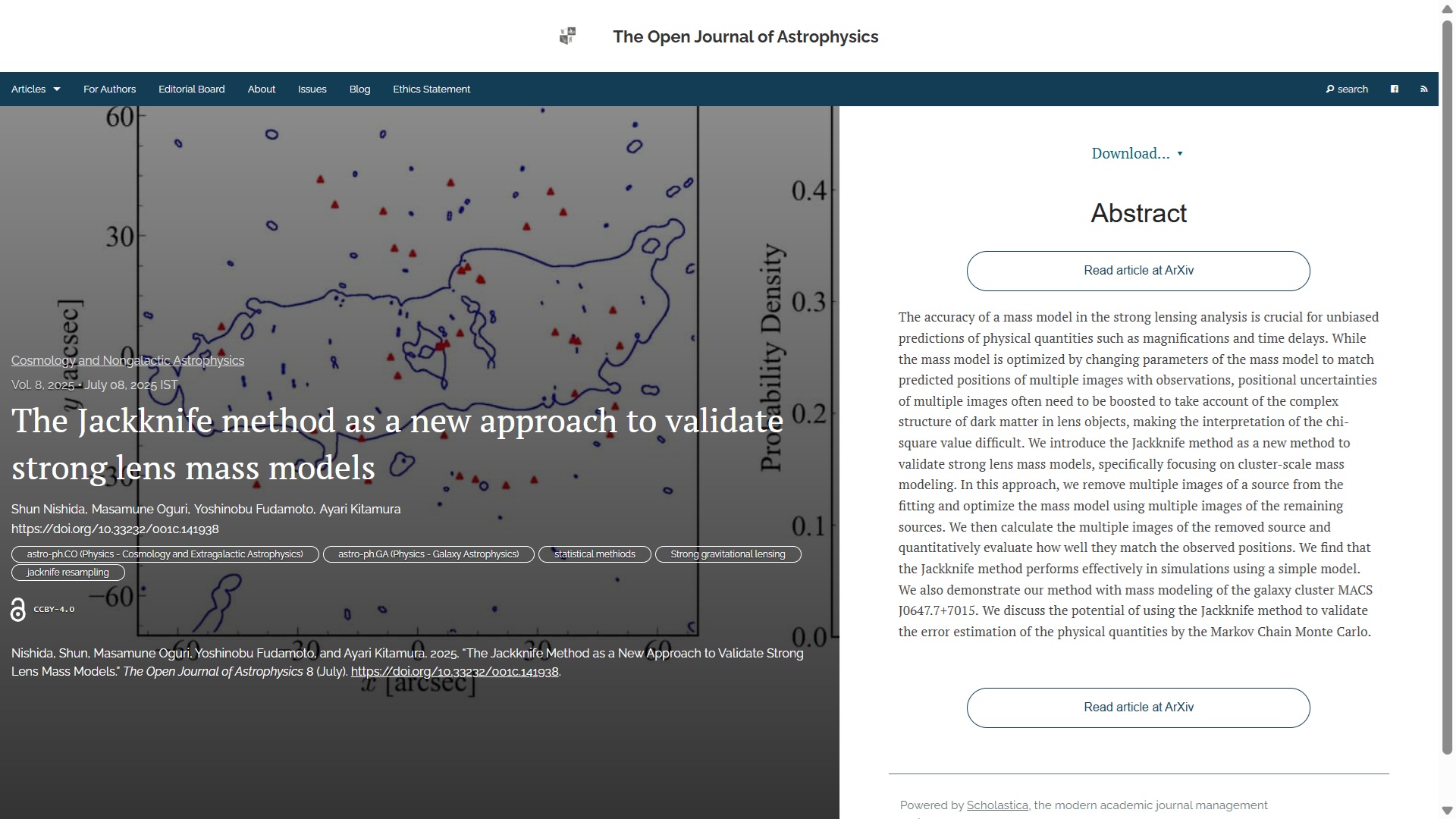
The first paper to report is “The Jackknife method as a new approach to validate strong lens mass models” by Shun Nishida & Masamune Oguri (Chiba University, Japan) , Yoshinobu Fudamoto (Steward Observatory, USA) and Ayari Kitamura (Tohoku University, Japan). This article, which is in the folder marked Cosmology and NonGalactic Astrophysics,  describes and application of the Jackknife statistical resampling techique to gravitational lensing by removing lensed images and recalcualting the mass modelIt was published on Tuesday 8th July 2025. The overlay is here:


The officially-accepted version can be found on arXiv here.

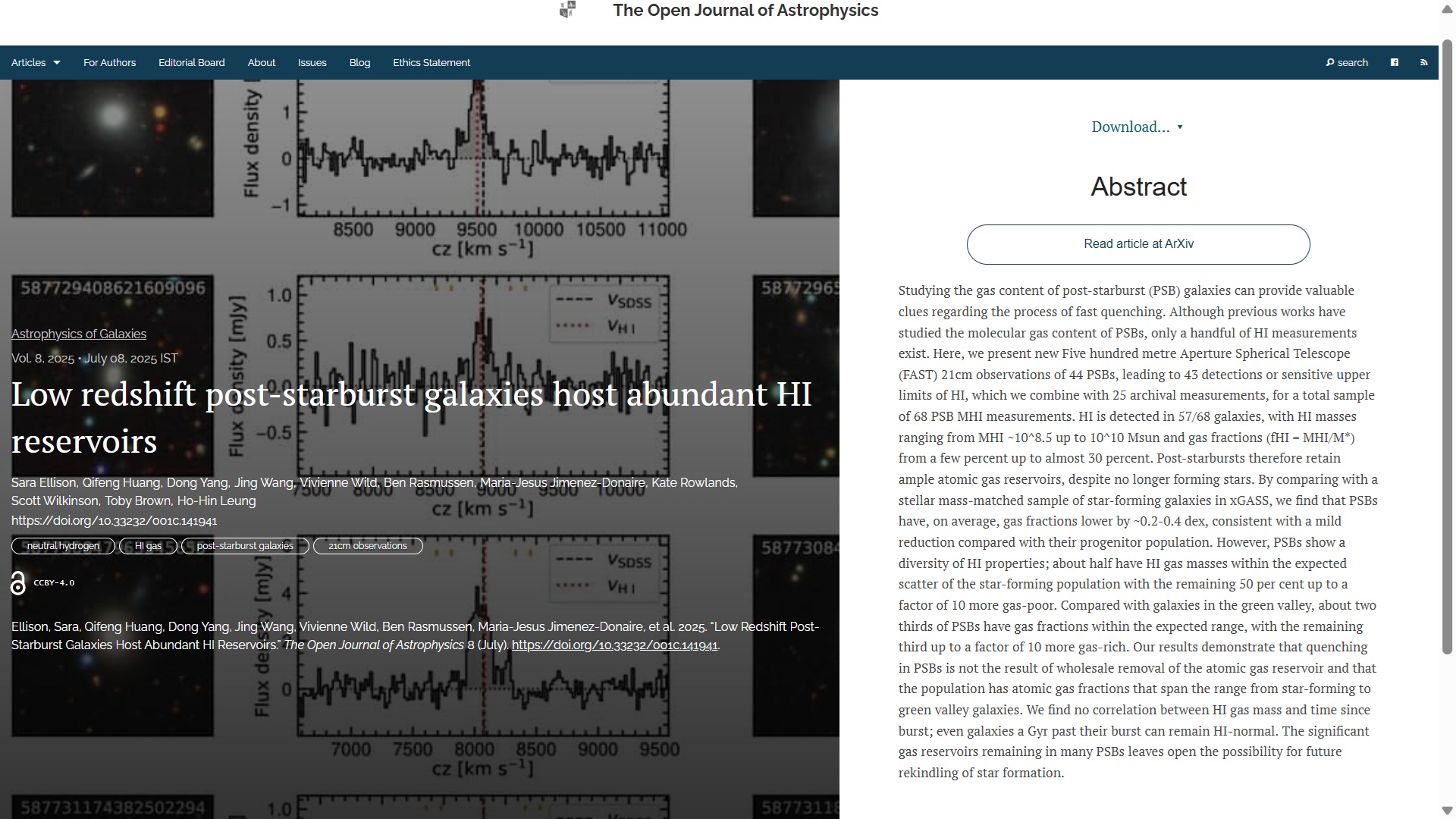
The second paper is “Low redshift post-starburst galaxies host abundant HI reservoirs” by Sara Ellison (U. Victoria, Canada) and 10 others based in China, UK, Spain, USA and Canada.  This one was also published oon Tuesday 8th July but in the folder Astrophysics of Galaxies. This paper uses 21cm observations of a sample of post-starburst galaxies, to show  that they contain large reservoirs of neutral hydrogen. Here is the overlay:

You can find the final version of the manuscript on arXiv here.

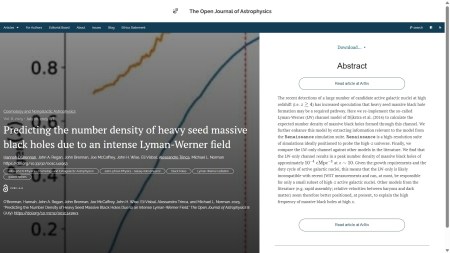
Next one up, one of four published on Thursday 10th July, is “Predicting the number density of heavy seed massive black holes due to an intense Lyman-Werner field” by Hannah O’Brennan (Maynooth University, Ireland) and 7 others based in Ireland, USA and Italy. This paper presents an exploration of the scenario for black hole formation driven by Lyman-Werner photons (i.e. ultraviolet radiation in the range 11.2 to 13.6 eV). It is in the folder marked Cosmology and NonGalactic Astrophysics, and the overlay is here:
 

You can read the final accepted version on arXiv here.

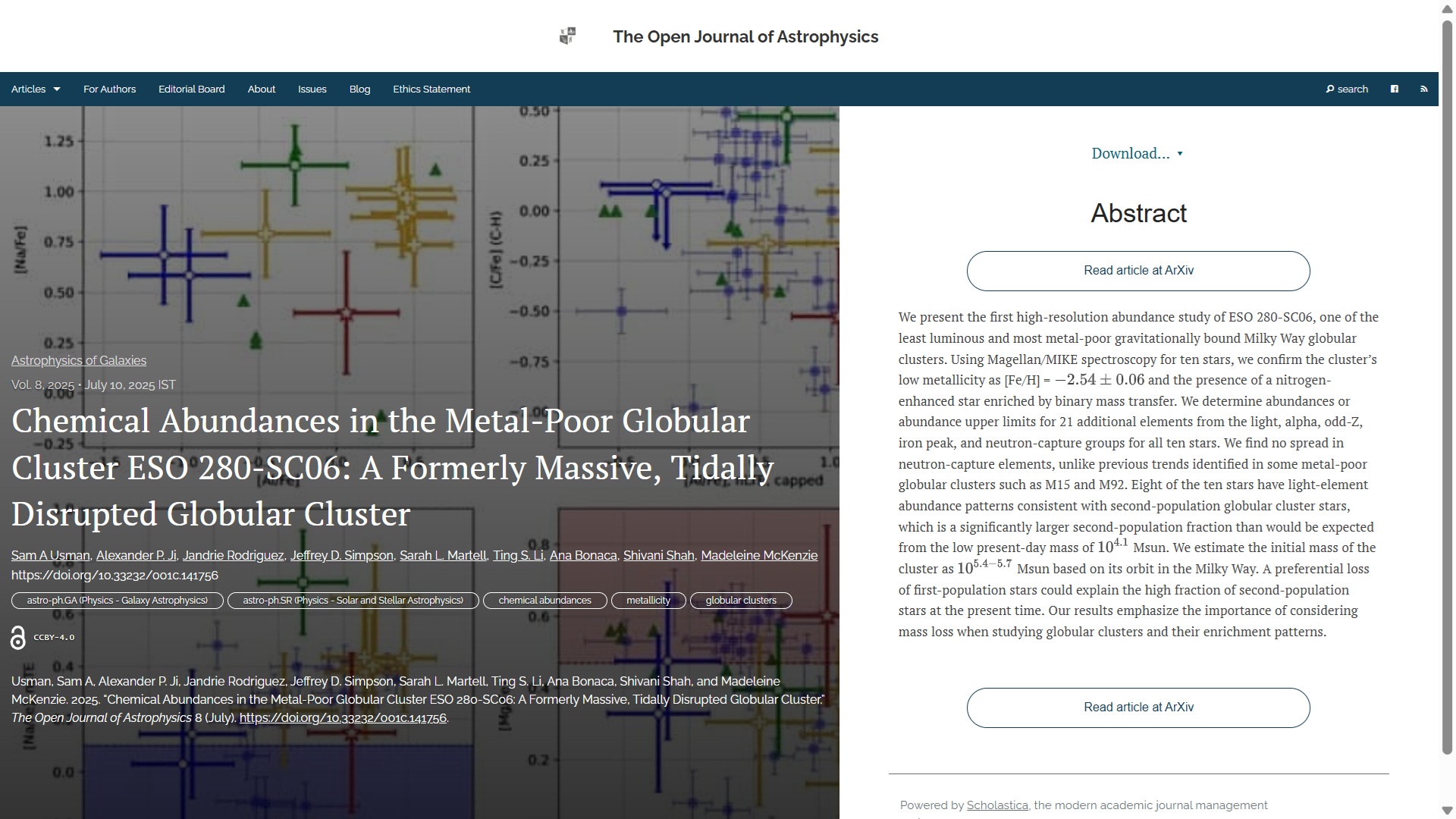
The fourth paper this week, and the second published on 10th July, is “Chemical Abundances in the Metal-Poor Globular Cluster ESO 280-SC06: A Formerly Massive, Tidally Disrupted Globular Cluster” by Sam A. Usman (U. Chicago, USA) and 8 others based in the USA, Canada and Australia. This paper, which is in the folder Astrophysics of Galaxies, presents a detailed spectroscopic study of the chemical abundances in a Milky Way globular cluster ESO 280-SC06. The overlay is here:

The officially accepted version of the paper can be read here.

Next one up, also published on 10th July and also in the folder marked Astrophysics of Galaxies is “Predictions for the Detectability of Milky Way Satellite Galaxies and Outer-Halo Star Clusters with the Vera C. Rubin Observatory” by Kabelo Tsiane (U. Michigan) and 9 others on behalf of the LSST Dark Energy Science Collaboration.

The overlay is here:


You can find the officially-accepted version of the paper on arXiv here.

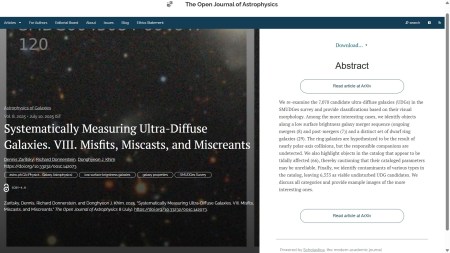
The penultimate paper for this week, and the last of the batch published on 10th July,  is “Systematically Measuring Ultra-Diffuse Galaxies. VIII. Misfits, Miscasts, and Miscreants” by Dennis Zaritsky, Richard Donnerstein, and Donghyeon J. Khim (Steward Observatory, U. Arizona, USA). This paper presents a morphological study of weird and wonderful galaxies as part of an effort to Systematically Measure Ultra-Diffuse Galaxies (the SMUDGes survey). It is in the folder marked Astrophysics of Galaxies. The overlay is here:
 

You can find the officially-accepted version of the paper on arXiv here.

The last article published this week is “Differential virial analysis: a new technique to determine the dynamical state of molecular clouds” by Mark R. Krumholz (ANU, Australia), Charles J. Lada (Harvard, USA) & Jan Forbrich (U. Herts, UK). This paper presents simple analytic models of supported and collapsing molecular clouds, tested using full 3D simulations and applied to observed clouds in Andromeda. It is in the folder marked Astrophysics of Galaxies and was published yesterday, i.e on Friday 11th July 2025. Here is the overlay


You can find the officially-accepted version on arXiv here.

And that’s all the papers for this week. I will, however, take this opportunity to mention that a while ago I was interviewed about the Open Journal of Astrophysics by Colin Stuart on behalf of the Foundational Questions Institute; the write-up of the interview can be found here.

Interlude

Posted in Uncategorized on July 9, 2025 by telescoper

I am going to be away until the weekend, and in any case I’ve been a bit overwhelmed with things over the last few days, so I’m going to take a short break from blogging. I’ll (probably) start again on Saturday. Normal service will be resumed as soon as possible.