A jazz version of an old song from an album called A Charlie Brown Christmas may not seem a very promising concept but I like it, so there. The original lyrics of O Tannenbaum don’t refer to Christmas at all, incidentally, but it has become a Christmas standard. This version is by the Vince Guaraldi Trio and it was recorded 60 years ago in 1965. Vince Guaraldi was a fine jazz pianist who had an interesting solo career as well as playing with bands led by Woody Herman and Carl Tjader, among others. He is best remembered, however, for composing the music that went with TV adaptations of the Peanuts cartoons written and illustrated by Charles M. Schulz of which this is a nice example.
O Tannenbaum – Vince Guaraldi Trio
Posted in Jazz, Television with tags A Charlie Brown Christmas, Charles M. Schulz, O Tannenbaum, peanuts on December 22, 2025 by telescoperThe Winter Solstice 2025
Posted in Maynooth, The Universe and Stuff with tags December Solstice, Earliest Sunset, Latest Sunrise, Solar noon, Winter Solstice on December 21, 2025 by telescoperJust a quick note to point out that the Winter Solstice in the Northern hemisphere happens today, Sunday 21st December 2025, at 15.03 UT (GMT).
In Dublin, sunrise yesterday (20th December) was at 8.37 am and sunset at 4.07 pm, while today the sunrise was at 8.38 am and sunset at 4.08 pm. Both sunrise and sunset happen later tomorrow than today, so the Solstice marks neither the latest sunrise nor the earliest sunset. We have to wait until January for the latest sunrise (8.40am) and the earliest sunset (4.06pm) actually happened over a week ago. The interval between the two events will, however, be about 2 seconds longer tomorrow than today; and yesterday the gap was about 4 seconds longer than today. Taking a day to be the interval between sunrise and sunset, today is the shortest.
For a full explanation of this, see this older Winter Solstice post.
P.S. In the Southern Hemisphere this is of course the summer solstice. In Australia it was marked by the ritual of a victory in the Ashes against England.
R.I.P. Yannick Mellier (1958-2025)
Posted in Euclid, R.I.P., The Universe and Stuff with tags Cosmology, Euclid, Euclid Consortium, Gravitational Lensing, Yannick Mellier on December 21, 2025 by telescoper
Last night I received a message via the Euclid Consortium conveying the very sad news of the death, at the age of 67, of the French astrophysicist and cosmologist Yannick Mellier (pictured left). Among many other things, Yannick was the Euclid Consortium Lead in which role he took on enormous responsibility for getting the project started and, with his team, keeping everything running. His loss is incalculable.
Yannick’s research work focussed on cosmology and the search for dark matter using gravitational lensing. Back in 1987 he was part of the observational team that discovered the first giant arc produced by strong gravitational lensing. He also did pioneering work in the field of weaking gravitational lensing with the Canada-France Hawaii Telescope in that regard starting back in 2000.
For well over a decade now Yannick had been involved with the European Space Agency’s Euclid mission. He was a major force right from the beginning, making the proposal, and after it was accepted leading the Consortium assembled to bring the project into being, preparing for launch, and dealing with the first data. The Euclid Consortium is a huge collaboration and it is impossible to overestimate the scale of the task facing the Lead. The first full data release (DR1) from Euclid will take place towards the end of next year (2026). It is sad beyong words that he did not live to see this.
During the period when I was Chair of the Euclid Consortium Diversity Committee I had a number of interactions with Yannick, sometimes dealing with difficult and confidential matters. I found him to be a man of great wisdom and sensitivity. Despite having many other things to deal with, including a long-term illness, he was unfailingly supportive and his advice was always sound.
The following is an excerpt from the message sent out yesterday:
Yannick’s death leaves a huge void within the consortium and our community. Those of us who have been here the longest know how hard he worked to make the Euclid project a success. He became its embodiment, working tirelessly to ensure its success; we owe him an immense debt of gratitude, and we will surely have the opportunity to reflect in detail on all that we owe him.
Indeed. I hope the Euclid Consortium – and the international cosmological community generally – will, at some stage, organize an appropriate tribute to Yannick.
Rest in Peace, Yannick Mellier (1958-2025)
Ar dheis Dé go raibh a anam
Weekly Update from the Open Journal of Astrophysics – 20/12/2025
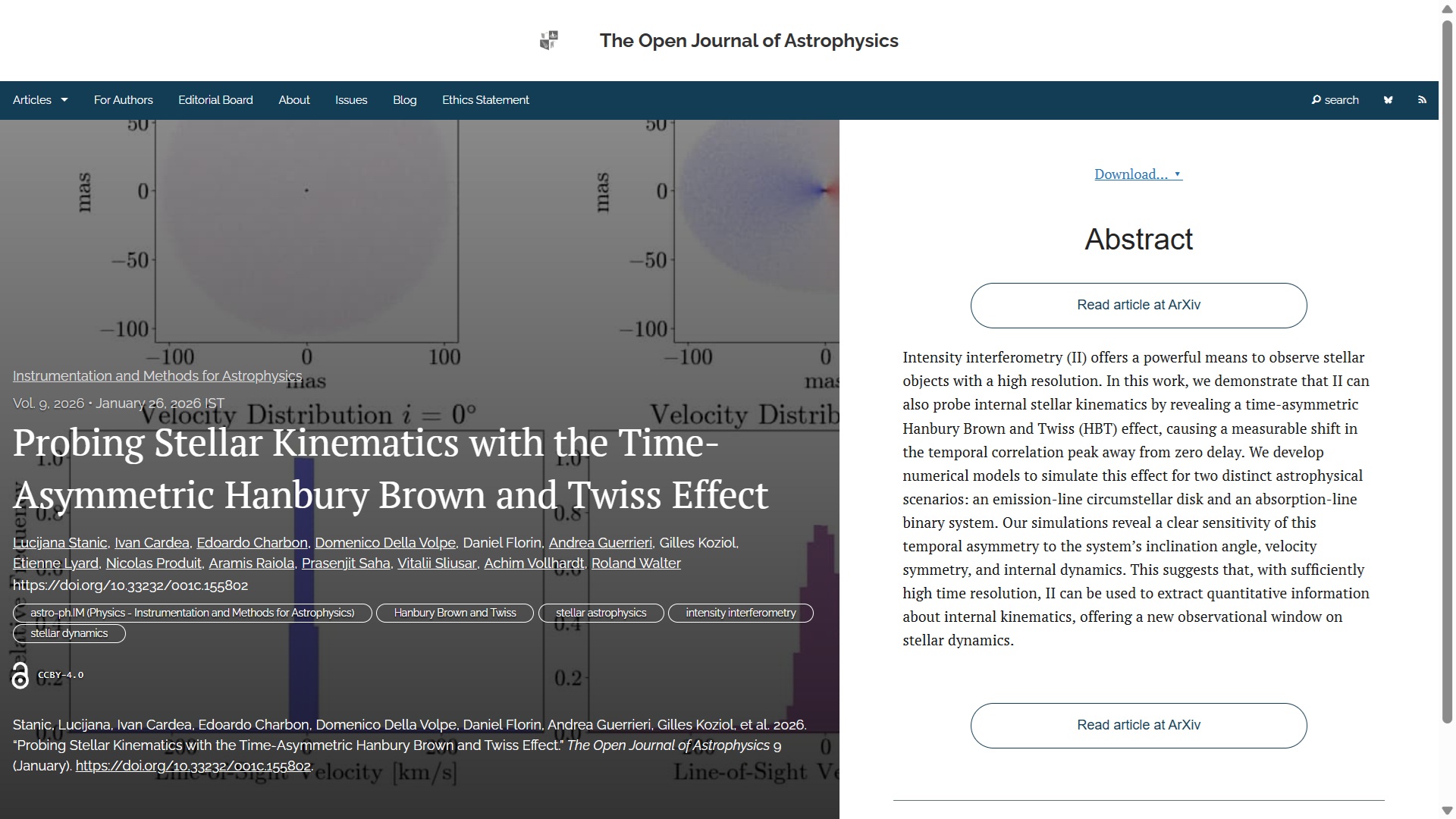
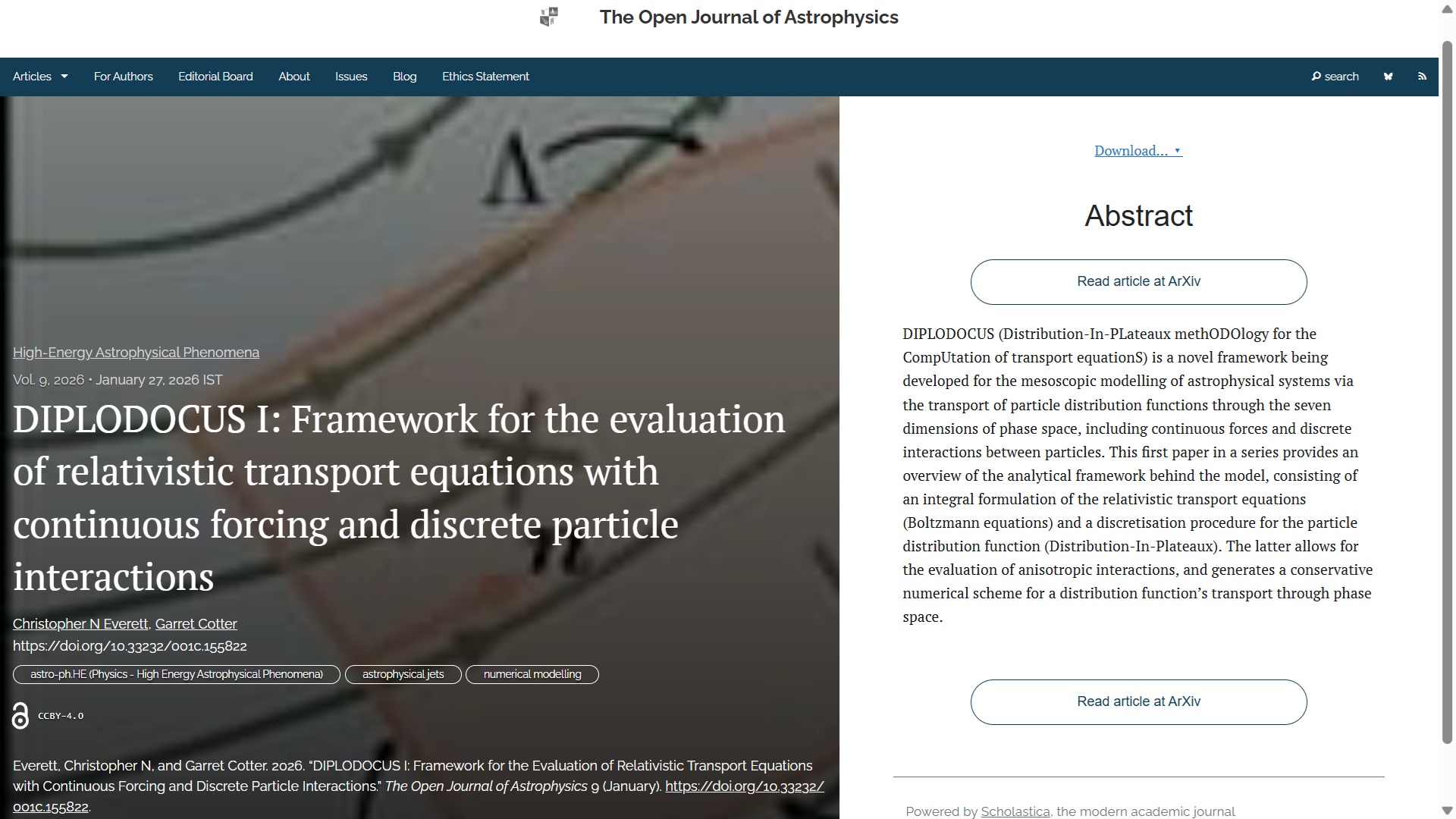
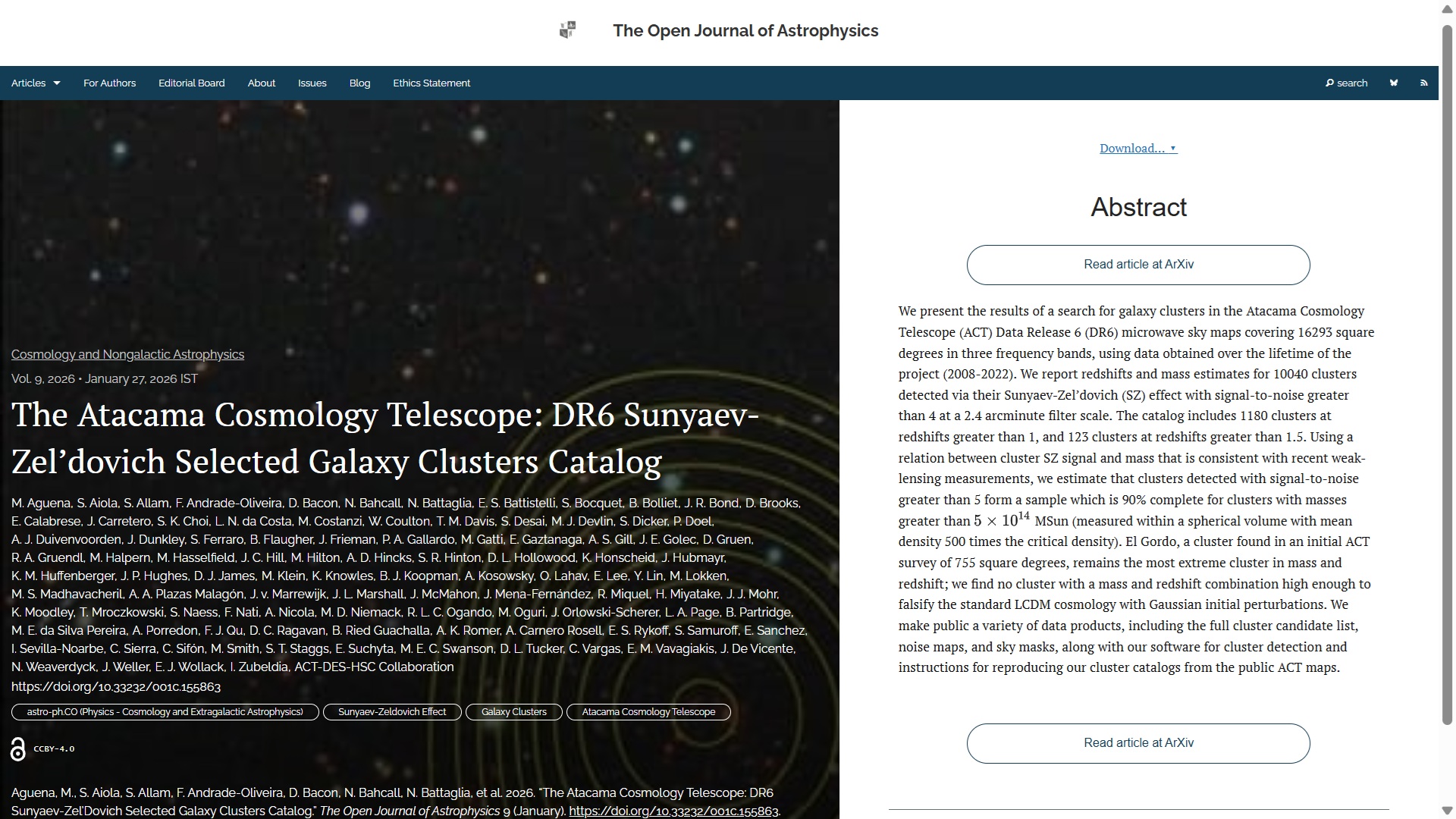
Posted in OJAp Papers, Open Access, The Universe and Stuff with tags arXiv:2504.16076v3, arXiv:2510.09480v2, Astrophysics of Galaxies, Cosmology and NonGalactic Astrophysics, Diamond Open Access, Diamond Open Access Publishing, gravitational infall, Interstellar Medium, intrinsic alignments, Open Access, Open Journal of Astrophysics, Redshift-Space Distortions, star formation, star-forming clouds, The Open Journal of Astrophysics, weak gravitational lensing on December 20, 2025 by telescoperChristmas is coming, but it’s still time for the usual update of the week’s new papers at the Open Journal of Astrophysics. Since the last update we have published two more regular papers, described below, which brings the number in Volume 8 (2025) up to 197, as well as the 12 papers in yesterday’s Supplement, and the total published for the year up to 209, and the total so far published by OJAp up to 444.
Please note that we will be pausing publishing activity from 24th December 2025 until Monday 5th January 2026. Submissions will remain open, but no more papers will be published in Volume 8 (2025) after Christmas Eve. We will resume in the New Year with Volume 9.
Now for this week’s update. Since I blogged about the contents of the Supplement yesterday I won’t repeat them here and will instead just include the two regular papers.
The first regular paper this week is “Optimal intrinsic alignment estimators in the presence of redshift-space distortions” by Claire Lamman (Harvard-Smithsonian CfA, USA), Jonathan Blazek (Ohio State U., USA) and Daniel J. Eisenstein (Northeastern U., USA). This was published on Monday December 15th 2025 in the folder Cosmology and Nongalactic Astrophysics. The authors present estimators for quantifying intrinsic alignments in large spectroscopic surveys intended to inprove the constraints they provide for weak gravitational lensing and other cosmological applications.
The overlay is here:
You can find the officially accepted version on arXiv here and this is the announcement on Mastodon (Fediscience):
The second regular paper of the week is “What is the contribution of gravitational infall on the mass assembly of star-forming clouds? A case study in a numerical simulation of the interstellar medium” by Noé Brucy (Universite Claude Bernard Lyon 1, France), Enrique Vázquez-Semadeni (Universidad Nacional Autónoma de México, Mexico), Tine Colman (Universite Claude Bernard Lyon 1, France), Jérémy Fensch (Universite Claude Bernard Lyon 1, France) and Ralf S. Klessen (Universität Heidelberg, Germany). This was published in the folder Astrophysics of Galaxies on Friday 19th December 2025. This paper describes research using numerical simulations to quantify how much of the mass inflow into a star-forming cloud is driven by the self-gravity of the gas and the gravity from the stellar disk.
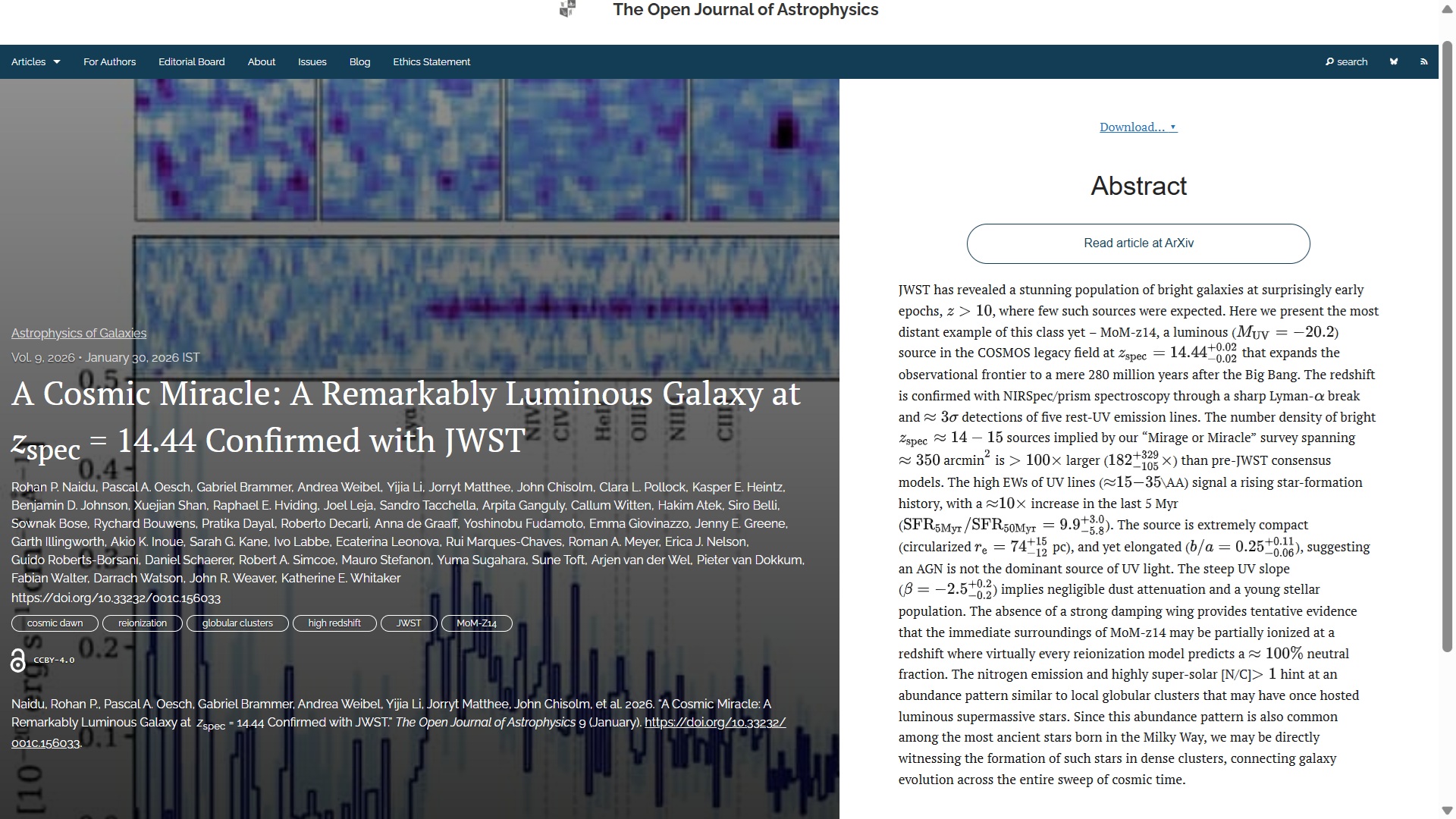
The overlay is here:
You can find the official version of this one on arXiv here. The federated announcement on Mastodon is here:
And that concludes the update for this week, which will be the last Saturday update for 2025.
Art in Bruges
Posted in Art, Film with tags Art, Brendan Gleason, Colin Farrell, Hieronymous Bosch, In Bruges, The Last Judgment on December 19, 2025 by telescoperFor various reasons I find myself thinking about this little clip from the 2016 film In Bruges, starring Brendan Gleason and Colin Farrell. It’s set in the Groeningemuseum in the city of Bruges.
You can read an interesting post about the art in the film here.
You will see that the only painting that Ray (Colin Farrell) likes is a triptych called The Last Judgment, a version of which coincidentally featured in my post on Monday. The one I posted was by Hieronymous Bosch and is in Vienna; the one in Bruges is of doubtful attribution. It may be by Bosch, but experts think it is more likely to be by members of his workshop.
P.S. If you like black comedies then In Bruges is definitely for you! I wouldn’t say it was really a Christmas movie though…
Supplement to the Open Journal of Astrophysics – “Pulsar Science with the SKAO”
Posted in OJAp Papers, Open Access, The Universe and Stuff with tags Diamond Open Access Publishing, Open Access Publishing, Open Journal of Astrophysics, Pulsar Science, pulsars, SKAO, Square Kilometre Array, Square Kilometre Array Observatory, The Open Journal of Astrophysics on December 19, 2025 by telescoperIt’s been a busy day at the Open Journal of Astrophysics as we’ve published 12 related papers in the form of our first ever Supplement; officially it is Vol. 8 Supplement Issue 1. The idea of a Supplement is to publish a set of related papers together. I imagine it might be of interest for publishing conference proceedings, etc.
The topic of this Supplement is Pulsar Science with the Square Kilometre Array Observatory and it includes updates to the Science Case for the SKAO, the previous version of which is 10 years old. All the papers are indendependently peer-reviewed, which took some organizing and a lot of time because many potential referees are themselves members of the SKA Pulsar Science Working Group! Anyway, the final versions of all the papers hit the arXiv this morning so I published them all today.
Rather than include all 12 papers in tomorrow’s Saturday update I decided just to show the overlay for the overview of the special issue, which is here:

The following paragraph describes the content of the supplement and includes links to the other 11 papers in the issue.
The large instantaneous sensitivity, a wide frequency coverage and flexible observation modes with large number of beams in the sky are the main features of the upcoming SKA observatory’s two telescopes, the SKA-Low and the SKA-Mid, which are located on two different continents. Owing to these capabilities, the SKAO telescopes are going to be a game-changer for radio astronomy in general and pulsar astronomy in particular. The eleven articles in this special issue on pulsar science with the SKA Observatory describe its impact on different areas of pulsar science. Phase 1 of the rollout of the SKAO telescope is likely to double the known pulsar population in new surveys described in the first three papers (Keane et al. 2025; Abbate et al. 2025; Bagchi et al. 2025). These new discoveries will improve our understanding of the dynamics, evolution and gas content of globular clusters and the black hole at the centre of the Milky Way galaxy apart from increasing the samples for each of different kinds of radio emitting neutron stars (Levin et al. 2025). The larger population sample will enhance our understanding of the magneto-ionic interstellar medium (Tiburzi et al. 2025; Xu et al. 2025), the pulsar magnetosphere (Oswald et al. 2025) and pulsar wind nebulae (Gelfand et al. 2025). Moreover, the discovery of exotic neutron star systems will test gravity theory ever more stringently (Krishnan et al. 2025) and will probe fundamental physics at sub-atomic level (Basu et al. 2025). Finally, this enhanced sample is likely to make the sky portrait sharper in nano-Hertz gravitational waves impacting on our understanding of the Universe in a fundamental way (Shannon et al. 2025). In summary, the papers in this special issue describe the way the upcoming SKA Observatory’s telescopes address fundamental physics through the study of pulsars and gravitational waves.
The Last of Teaching
Posted in Biographical, Maynooth on December 18, 2025 by telescoperI’ve just returned to the office after delivering my last teaching session of 2025 (a tutorial on Differential Equations and Complex Analysis). I’m up to date with all my grading too, so I’m done with teaching for 2025.
Yesterday we had our Physics Department Christmas Celebration, which was very enjoyable. We went to a restaurant in Maynooth (The Avenue) and afterwards to a local pub (Brady’s). I didn’t stay out too late, though, because I had teaching today and I’m too old for that sort of thing. I got up quite early this morning, actually, although I have to admit it took even longer than usual for effective brain functioning to commence…
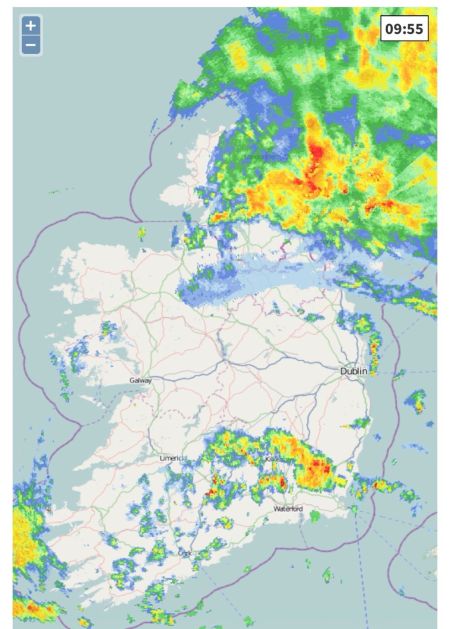
I was planning to go home directly after my tutorial and finish a few small jobs in my study, but I don’t particularly want to get drenched so I think I’ll finish them here on campus and hope that the current deluge passes soon…
Schumann: Arabeske in C major (Op. 18) – Boris Giltburg
Posted in Music with tags Arabesque in C Major, Boris Giltburg, Robert Schumann on December 17, 2025 by telescoperA couple of weeks ago I blogged about a concert at the National Concert Hall that included a performance of a Mozart Piano Concerto by Boris Giltburg. The pianist did an encore piece – the Arabeske in C major by Robert Schumann – which I’ve been meaning to post because it was very nice. I managed to find this recording performed by Boris Giltburg himself, not at the NCH but in Georgia:
How magnetism might make galaxies…
Posted in Biographical, The Universe and Stuff with tags Cosmology, galaxy formation, primordial magnetic fields on December 16, 2025 by telescoperI saw mention of paper recently published in Nature Astronomy by Karsten Jedamzik, Levon Pogosian and Tom Abel with the title Hints of primordial magnetic fields at recombination and implications for the Hubble tension. It’s behind a paywall but there is a version available on the arXiv here. The abstract of the Nature Astronomy version looks like this:

This paper reminded me of a paper I wrote a long time ago (in 1991, when I was at Queen Mary) about primordial magnetic fields and galaxy formation. It had its origins in a lunchtime talk I gave which was based on an old paper from the 1970s by Ira Wasserman. All I did was go through the paper and add a few small comments to update it, including some more recent observational constraints and mentions of dark non-baryonic matter; the Wasserman paper was framed in a model in which all the matter in the Universe was baryonic.
Anyway, the talk went down quite well and I was encouraged to write it up. I did so, and submitted it to a journal (MNRAS). Not unreasonably, it was rejected on the grounds that it didn’t have sufficient original content. I therefore expanded the discussion and submitted it as a review article to Comments on Astrophysics. That journal is now defunct, but the paper can be found on NASA/ADS here. It’s even got some citations!
Here’s the title and abstract:

You can find the whole paper here:
You will see I was advocating a larger magnetic field than in the recent one, with a view to affecting galaxy formation directly rather than larger scale features of the Universe. An important point is that primordial magnetic fields can have a large effect soon after recombination, so they might play a role in the formation of galaxies at high redshift which we are struggling to explain. At least – unlike some of the more exotic explanations that have been proposed – we know that magnetic fields actually exist…
The Last Judgment
Posted in Art, Maynooth with tags Das letzte Gericht, Hieronymous Bosch, Maynooth, Maynooth University, The Last Judgment on December 15, 2025 by telescoperWalking home through Maynooth this evening, the streets filled with partying students, I was reminded of this:
It’s the central part of the triptych Das letzte Gericht (The Last Judgment) by Hieronymus Bosch. The medium is oil on oak panel and it measures 164 x 127 cm. The original work is in the Academy of Fine Arts in Vienna.
The figures at the top, looking down on the chaos, are clearly identifiable as members of academic staff, while those below are students. I’m sure that if Christmas jumpers had been invented in 1486, when the work is thought to have been completed, Bosch would have painted a few in…