Toccata & Fugue in D Minor BWV 565

Posted in Music with tags , , , on January 3, 2025 by telescoper

Although the Toccata and Fugue in D Minor, thought* to be by Johann Sebastian Bach, is such a famous work that few people out there will not have heard it, I couldn’t resist sharing this great version which a friend send me recently. It was played by Hungardian-born organist Xaver Varnus in 2013 in the beautiful but cavernous Berliner Dom. It’s particular noticeable how Varnus adjusts his performance to account for the reverberation time. Playing too quickly when there is a long echo can lead to confusion but in this case the playing is crisp enough to hear the piece unfolding while slow enough to let the acoustic add a special ingredient of its own. This performance lasts a good couple of minutes longer than any other version I have on CD. One of the YouTube commenters on this video puts it very well indeed: “It’s nice to see an organist who understands they are not only playing the organ, but the entire building. His timing as the sound decays across the auditorium is impeccable.” Indeed. A mere recording can’t capture the sensation of hearing the music through the soles of your feet as well through your ears, but it’s very enjoyable nonetheless. It’s also good to see the organist close up so you can see how demanding it is to play a work like this.

*the attribution to Johan Sebastian Bach has been questioned. There is no surviving manuscript in Bach’s hand and the evidence that it was actually written by him is circumstantial.

Timescape versus Dark Energy?

Posted in Astrohype, Open Access, The Universe and Stuff with tags , , , , , , , on January 2, 2025 by telescoper

Just before the Christmas break I noticed a considerable amount of press coverage claiming that Dark Energy doesn’t exist. Much of the media discussion is closely based on a press release produced by the Royal Astronomical Society. Despite the excessive hype, and consequent initial scepticism, I think the paper has some merit and raises some interesting issues.

The main focus of the discussion is a paper (available on arXiv here) by Seifert et al. with the title Supernovae evidence for foundational change to cosmological models. This paper is accompanied by a longer article called Cosmological foundations revisited with Pantheon+ (also available on arXiv) by a permutation of the same authors, which goes into more detail about the analysis of supernova observations. If you want some background, the “standard” Pantheon+ supernova analysis is described in this paper. The reanalysis presented in the recent papers is motivated an idea called the Timescape model, which is not new. It was discussed by David Wiltshire (one of the authors of the recent papers) in 2007 here and in a number of subsequent papers; there’s also a long review article by Wiltshire here (dated 2013).

So what’s all the fuss about?

Simulation of the Cosmic Web

In the standard cosmological model we assume that, when sufficiently coarse-grained, the Universe obeys the Cosmological Principle, i.e. that it is homogeneous and isotropic. This implies that the space-time is described by a Friedmann–Lemaître–Robertson–Walker metric (FLRW) metric. Of course we know that the Universe is not exactly smooth. There is a complex cosmic web of galaxies, filaments, clusters, and giant voids which comprise the large-scale structure of the Universe. In the standard cosmological model these fluctuations are treated as small perturbations on a smooth background which evolve linearly on large scales and don’t have a significant effect on the global evolution of the Universe.

This standard model is very successful in accounting for many things but only at the expense of introducing dark energy whose origin is uncertain but which accounts for about 70% of the energy density of the Universe. Among other things, this accounts for the apparent acceleration of the Universe inferred from supernovae measurements.

The standard cosmology’s energy budget

The approach taken in the Timescape model is to dispense with the FLRW metric, and the idea of separating the global evolution from the inhomogeneities. The idea instead is that the cosmic structure is essentially non-linear so there is no “background metric”. In this model, cosmological observations can not be analysed within the standard framework which relies on the FLRW assumption. Hence the need to reanalyse the supernova data. The name Timescape refers to the presence of significant gravitational time-dilation effects in this model as distinct from the standard model.

I wrote before in the context of a different paper:

….the supernovae measurements do not directly measure cosmic acceleration. If one tries to account for them with a model based on Einstein’s general relativity and the assumption that the Universe is on large-scales is homogeneous and isotropic and with certain kinds of matter and energy then the observations do imply a universe that accelerates. Any or all of those assumptions may be violated (though some possibilities are quite heavily constrained). In short we could, at least in principle, simply be interpreting these measurements within the wrong framework…

So what to make of the latest papers? I have to admit that I didn’t follow all the steps of the supernova reanalysis. I hope an expert can comment on this! I will therefore restrict myself to some general comments.

  • My attitude to the standard cosmological model is that it is simply a working hypothesis and we should not elevate it to a status any higher than that. It is based not only on the Cosmological Principle (which could be false), but on the universal applicability of general relativity (which might not be true), and on a number of other assumptions that might not be true either.
  • It is important to recognize that one of the reasons that the standard cosmology is the front-runner is that it provides a framework that enables relatively straightforward prediction and interpretation of cosmological measurements. That goes not only for supernova measurements but also for the cosmic microwave background, galaxy clustering, gravitational lensing, and so on. This is much harder to do accurately in the Timescape model simply because the equations involved are much more complex; there are few exact solutions of Einstein’s equations that can help. It is important that people work on alternatives such as this.
  • Second, the idea that inhomogeneities might be much more important than assumed in the standard model has been discussed extensively in the literature over the last twenty years or so under the heading “backreaction”. My interpretation of the current state of play is that there are many unresolved questions, largely because of technical difficulties. See, for example, work by Thomas Buchert (here and, with many other collaborators here) and papers by Green & Wald (here and here). Nick Kasiser also wrote about it here.
  • The new papers under discussion focus entirely on supernovae measurements. It must be recognized that these provide just one of the pillars supporting the standard cosmology. Over the years, many alternative models have been suggested that claim to “fix” some alleged problem with cosmology only to find that it makes other issues worse. That’s not a reason to ignore departures from the standard framework, but it is an indication that we have a huge amount of data and we’re not allowed to cherry-pick what we want. We have to fit it all. The strongest evidence in favour of the FLRW framework actually comes from the cosmic microwave background (CMB) with the supernovae provide corroboration. I would need to see a detailed prediction of the anisotropy of the CMB before being convinced.
  • The Timescape model is largely based on the non-linear expansion of cosmic voids. These are undoubtedly important, and there has been considerable observational and theoretical activity in understanding them and their evolution in the standard model. It is not at all obvious to me that the voids invoked to explain the apparent acceleration of the Universe are consistent with what we actually see in our surveys. That is something else to test.
  • Finally, the standard cosmology includes a prescription for the initial conditions from which the present inhomogeneities grew. Where does the cosmic web come from in the Timescape model?

Anyway, I’m sure there’ll be a lot of discussion of this in the next few weeks as cosmologists return to the Universe from their Christmas holidays!

Comments are welcome through the box below, especially from people who have managed to understand the cos.

2025: The Year Ahead

Posted in Biographical, Euclid, Maynooth with tags , , , , on January 1, 2025 by telescoper
For last year’s words belong to last year’s language
And next year’s words await another voice.
And to make an end is to make a beginning.

From Four Quartets, ‘Little Gidding’ by T. S. Eliot.

January is named after the Roman deity Janus, who according to Wikipedia, is the god of beginnings, gates, transitions, time, duality, doorways, passages, frames, and endings. Since I did a retrospective post yesterday about 2024 in retrospect, I thought I’d do a quick one today (1st January 2025) to mention a few things looking forward.

January will, as usual, be dominated by examinations, and especially the marking thereof. The first examination for which I am responsible is on January 13th.

February sees the start of a new semester. I’ll be teaching Particle Physics for the first time at Maynooth. I taught this subject for many years at Nottingham and Cardiff (the latter combined with Nuclear Physics), so it should be OK. My other module is Computational Physics which I have taught at Maynooth every year since 2018, apart from 2024 when I was on sabbatical.

The big event in March will be the release of “Q1” data from Euclid. This is only a very small part of the full survey, but is an important milestone and will no doubt attract a lot of press coverage. There’s a blog post by Knud Jahnke here. No doubt I’ll do a few blog posts too. The first full data release DR1 will take place in 2026. The Q1 release is timed to coincide with the annual Euclid Consortium Meeting, which this year takes place in Leiden. I won’t be able to attend in person, as it happens during teaching term, but may be able to follow some of the sessions remotely.

In April we will have a very special visitor to Maynooth to deliver the Dean’s Lecture (of which more anon). Much less significantly, I’ll be giving a Colloquium in the Department of Physics.

May will largely be taken up with second semester exams and assessments – there will be a lot of computational physics projects to correct as well as the usual examinations.

The annual meeting of the European Astronomical Society takes place in Cork in June. I’ve been to Cork before, but am looking forward to going again.

And then it will be summer. I did a lot of travelling during my sabbatical so I am not planning to travel much in 2025, though I may try to visit some more places in Ireland. Hopefully I’ll be able to get on with some research too. This year I am supervising my first MSc project at Maynooth, so that will be an interesting new experience.

And then we’re more-or-less into the next academic year 25/26. That’s beyond my planning horizon. I don’t know what I’ll be teaching, but it may be the same as 2024 (at least for Semester 1). I wonder if I’ll get to teach any astrophysics or cosmology here before I retire? It doesn’t look likely…

2024 in Retrospect

Posted in Barcelona, Biographical, Cardiff, Maynooth with tags , , , , , on December 31, 2024 by telescoper
What we call the beginning is often the end
And to make an end is to make a beginning.
The end is where we start from.

T. S. Eliot, from Little Gidding, the last of the Four Quartets.

I wasn’t really planning on posting a retrospective of the year 2024, but the rain is pouring down outside so I’ve decided to use up a bit of time before going out in the hope that the rain stops.

The past year has been very busy with significant life events. One particular highlight has to be a wonderful once-in-a-lifetime trip to Sydney in February. I don’t know if I’ll ever get the chance to visit Australia again, but if I do I’ll take it! Shortly after returning from that trip I went back to Barcelona until the summer, leaving briefly for visits to Rome (Euclid Consortium Meeting), Valencia (Department Colloquium), Newcastle (to do a PhD examination) and Oxford (to give the inaugural Pride talk at the Department of Physics).

Unfortunately, at that point my laptop gave up the ghost so I had to come back to Maynooth a little earlier than planned to salvage what was on it and get a new one. And so ended my sabbatical. I’d like to take the opportunity again to thank everyone at the Universities of Barcelona and Sydney for making me feel so welcome and, of course, to Maynooth for granting me a full-year sabbatical in the first place.

As well as giving me some time for my own research, the year saw significant progress with the Open Journal of Astrophysics, both in terms of numbers of papers published (120 in 2024) but also some much-needed work on automation and an increase in the size of the Editorial Board. It’s hard to predict what will happen in 2025, but I’m glad that a significant number of members of the astrophysics community seem to be regarding OJAp as a viable avenue for communicating their results.

I will also mention – for those that care – that the Open Journal of Astrophysics is now listed in Scopus, but all the numbers they have published about the journal are inaccurate. I have spent months trying to get them to correct the figures but, although they have admitted errors, they have failed to do so. My next step will be to take legal action against Scopus (which is based in The Netherlands) under the Dutch Civil Code.

The big event workwise at Maynooth was the merger of the Departments of Theoretical Physics and Experimental Physics into a single Department of Physics. So far this has been largely paper exercise. What will result from it in the long term remains to be seen. I was given two new modules to teach last Semester and have another new one next Semester (as well as one I’ve done before). Although this made for a heavy workload, it wasn’t as bad as what happened after the only other sabbatical I’ve had in my career. I got a one Semester sabbatical when I was at Nottingham, but the Department simply moved my first-semester teaching to the second semester in addition to what had already been allocated for the second, so I had a double teaching load when I got back!

There has been a significant change in my personal circumstances too. During 2024 I finally completed the sale of my former home in Pontcanna, Cardiff. I had intended to do this years ago, but the pandemic and subsequent workload issues made it difficult to travel and sort this matter out. In the meantime bought my house in Maynooth with a mortage so I owned two properties, one of which was empty for much of the time. After much stopping and starting, and being badly let down by more than one prospective buyer, the Cardiff house is now sold. I now feel much less delocalised. I also felt very rich when the proceeds hit my bank account, but only briefly. I used a big chunk to pay off my mortgage and put the rest into fixed-term investments for retirement.

Anyway, writing about Sydney reminded me that there are parts of the world in which it is 2025 already, so let me end with a “Happy New Year” and a few interesting numerological facts about the number 2025:

P.S. It’s still raining.

P.P.S. Athbhliain faoi shéan agus faoi mhaise daoibh! 

Jimmy Carter in Newcastle (1977)

Posted in Biographical, History, R.I.P., Television with tags , , , on December 30, 2024 by telescoper

The news of the death at the age of 100 of former US President Jimmy Carter reminded me of a day way back when I was still at school. It was Friday, May 6th, 1977 and I was at the Royal Grammar School, Newcastle upon Tyne. I remember that morning it was announced at Assembly that Carter would be visiting the city and giving a speech outside the Civic Centre, which was less than 10 minutes’ walk from the School. I think some senior boys were allowed to go an see him, but as a mere third-former I went to a class and the occasion largely passed me by.

One thing I do remember is a classmate after Assembly saying “Thank God he didn’t visit Sunderland instead…” – Carter visited Newcastle on his way to Washington (the ancestral home of George Washington), which is nearer to Sunderland than Newcastle. I suppose the reason was that Newcastle has an airport, whereas Sunderland hasn’t.

The other thing I remember was the TV coverage on Look North when I got home, which showed the start of President Carter’s speech with his famous “Howay the Lads!”

R.I.P. Jimmy Carter (1924-2024)

Taking a stand against Musk (or not)

Posted in Maynooth, Politics with tags , , , , , , on December 29, 2024 by telescoper

This morning I saw an announcement (dated 19th December 2024) that the Université Paris-Saclay has, to its credit, ceased its activity on the social media platform formerly known as Twitter and now known as Elon Musk’s personal mouthpiece. I have written about why individuals and institutions should leave Twitter several times before, e.g. here.

According to the Saclay announcement:

It comes following changes to the platform’s content policy, which is no longer in compliance with the European Union’s Code of Practice on Disinformation, making the platform incompatible with the universal values that the university and its community share.

Bravo!

But why are so many other universities still supporting Twitter/X? I suppose it may be because many of them have specifically employed staff to broadcast news about themselves on this platform and without it they’d have nothing to do. That’s not a very good argument, in my opinion. I’m sure other bullshit jobs can be found. Another possibility, of course, is that they just don’t care. Given the prevalence of toxic management in higher education these days, this may well be the real reason. Whatever the motivation I find it deeply shaming to be working for an institution that is still happy to tout for trade in a neo-Nazi chatroom.

I very much doubt my own institution’s management will take the correct ethical course. The Maynooth University leadership doesn’t even follow the institution’s own Statutes, so I doubt that a mere EU Code of Conduct will have any influence on them. I do hope, however, the decision by the mega-University Saclay – one of the world’s top research institutions may influence others to do the right thing. As well all known, University “leadership” these days largely involves copying what others do.

It’s not only universities, and not only via Xitter, that institutions are being degraded by their association with Elon Musk. The venerable Royal Society still counts him as a Fellow, despite his overtly antiscientific dissemination of false information and his support for far-right extremism. I don’t know how Musk was elected an FRS in 2018, perhaps before the worst of his character became widely known, but the fact that he remains a Fellow tarnishes the reputation of that organization.

P.S. I had the opportunity to visit Saclay about 13 months ago.

New Publication at the Open Journal of Astrophysics

Posted in OJAp Papers, Open Access, The Universe and Stuff with tags , , , , , on December 28, 2024 by telescoper

I wasn’t planning to do the usual weekly update of activity at the Open Journal of Astrophysics this morning as I thought we wouldn’t publish any more papers between last week’s update and the Christmas break. However, one final version did hit the arXiv on Christmas Eve so I decided to publish it straight away. This brings the total for Volume 7 (2024) to 120 – a neat average of ten a month – and the overall total to 235.

Here’s a table showing the sequence of papers published over the last six years and the series formed from the aforementioned sequence:

Year201920202021202220232024
Papers1215171750120
Total16314865115235

Anyway, the new paper is “Galaxy evolution in the post-merger regime. II – Post-merger quenching peaks within 500 Myr of coalescence” by Sara Ellison (U. Victoria, Canada), Leonardo Ferreira (U. Victoria), Vivienne Wild, (St Andrews, UK), Scott Wilkinson (U. Victoria), Kate Rowlands, (STScI, USA) & David R. Patton (Trent U., Canada). It was published on 24th December 2024 in the folder marked Astrophysics of Galaxies. It comprises an investigation of the possibility that quenching of star formation is a consequence of galaxy-galaxy interactions and mergers. The overlay is here:

You can find the officially accepted version on arXiv here.

Well, that definitely concludes the updates for 2024. I’ll be back on January 4th with the first update of 2025.

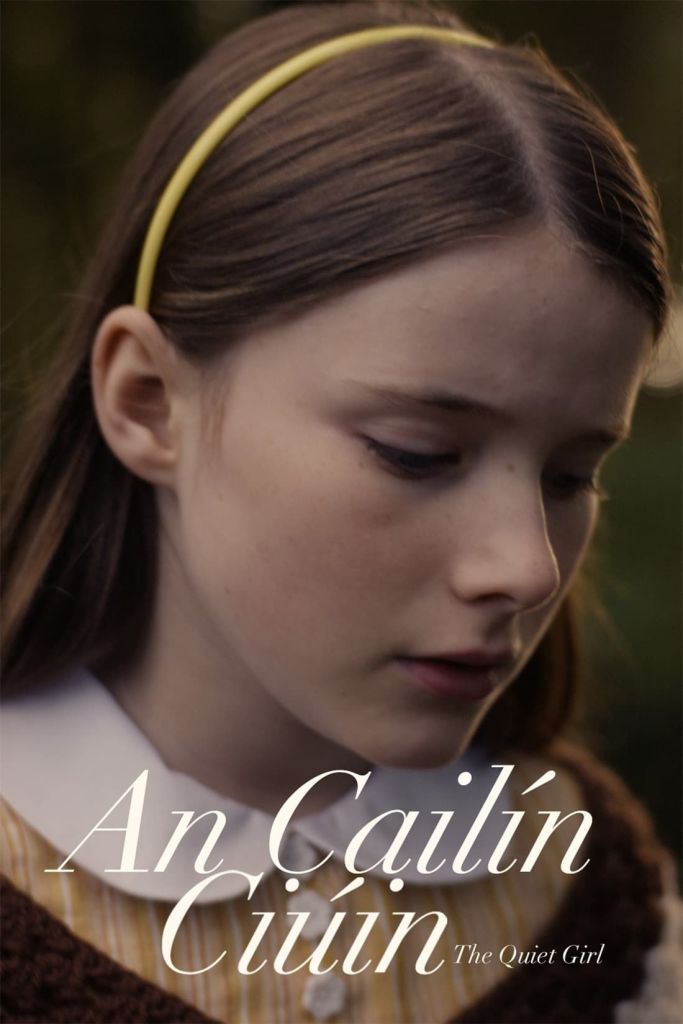
An Cailín Ciúin 

Posted in Film, Irish Language, Television with tags , on December 27, 2024 by telescoper

Now that the Christmas dinner and follow-up leftovers are done, I thought I’d just mention a very beautiful film I watched on the TV late on Christmas Day – An Cailín Ciúin (in English: The Quiet Girl). I was quite surprised to see it scheduled then, but TG4 is known for bold and imaginative programming.

It’s (mostly) in the Irish language, but don’t let that put you off; there are subtitles. It’s gentle, poignant and wonderfully observed. A little gem, in fact. I’d encourage you to see it if you can. It’s a fine film all round, but I can’t resist pointing out Catherine Clinch in the central role of Cáit, the quiet girl herself. She had never acted in front of a camera before this film, which makes her subtly expressiven performance all the more remarkable.

Donate to Wikipedia!

Posted in Biographical with tags , on December 26, 2024 by telescoper

It seems that Donald Trump’s owner, Elon Musk, does not approve of Wikipedia. Apparently he particularly dislikes the fact that the organizers are dedicated to Diversity, Equity and Inclusion whereas white supremacists like Musk prefer prefer Monotony, Unfairness and Exclusion of everyone who is not like them. I would imagine if he were in charge it would turn into another Conservapedia. Anything that Musk hates has to be worth supporting so today I made a donation to Wikipedia, which is a non-profit organization.

I don’t remember the launch of Wikipedia in January 2001, but I do recall when students started using Wikipedia links in project reports and the like. Unfortunately, at the beginning, many of the articles on scientific topics were very poor – often laughably so – and I discouraged students from using them. Now, over twenty years and the efforts of many volunteer editors later, they are generally very good. I now encourage students to use Wikipedia as a resource, but I still discourage them from including references to it in formal reports. The best way to use it is to get an overview but then dig down into the references which most articles lists.

I find Wikipedia an excellent resource for things outside science of course, especially music, and link to articles there very often from this blog.

Somewhere along the line somebody even set up a Wikipedia page about me. It began as “just a stub” but has been updated from time to time. I don’t know who set it up or who has updated it. I just looked and it still says I am Fellow of the Institute of Physics and the Royal Astronomical Society, when I resigned from both organizations earlier this year. I’ve edited a few articles there myself, actually, mostly on cosmology but also on jazz. Some of my blog posts are linked from there too but it would seem inappropriate for me to edit my own Wikipedia page.

Anyway, if you’re a fan of Wikipedia and/or despise Elon Musk then please consider making a donation.

Nollaig shona daoibh go léir!

Posted in Uncategorized on December 25, 2024 by telescoper

Here we are then, Christmas Day. I thought I’d do a quick yule blog in between finishing a rather late breakfast and starting the preparations for dinner*.

Let me just wish you all a Merry Christmas, Nollaig Shona, Nadolig Llawen, Fröhliche Weihnachten, Joyeux Noël, Buon Natale, Feliz Navidad, Feliç Nadal, Glædelig Jul, etc…

And in the words of a traditional Irish toast:

Go mbeirimid beo ar an am seo arís!

(“May we live to see this time next year”)

*Roast duck, with a port and redcurrant sauce, braised red cabbage, honey-roast carrots and parsnips, and roast potatoes.