Mozart & Bruckner at the National Concert Hall

Posted in Music with tags , , , , , , on December 7, 2024 by telescoper

It was a dark and stormy night but I braved the inclement weather to travel to the National Concert Hall in Dublin for what will be my last concert of 2024. It look like being a nearly full house when I booked my ticket, but in the end there were quite a few empty seats perhaps because various groups decided not to make a journey owing to Storm Darragh. My own travels went without a hitch and in fact I even managed to walk from Connolly to the NCH before the performance and back to Pearse after it without getting rained on.

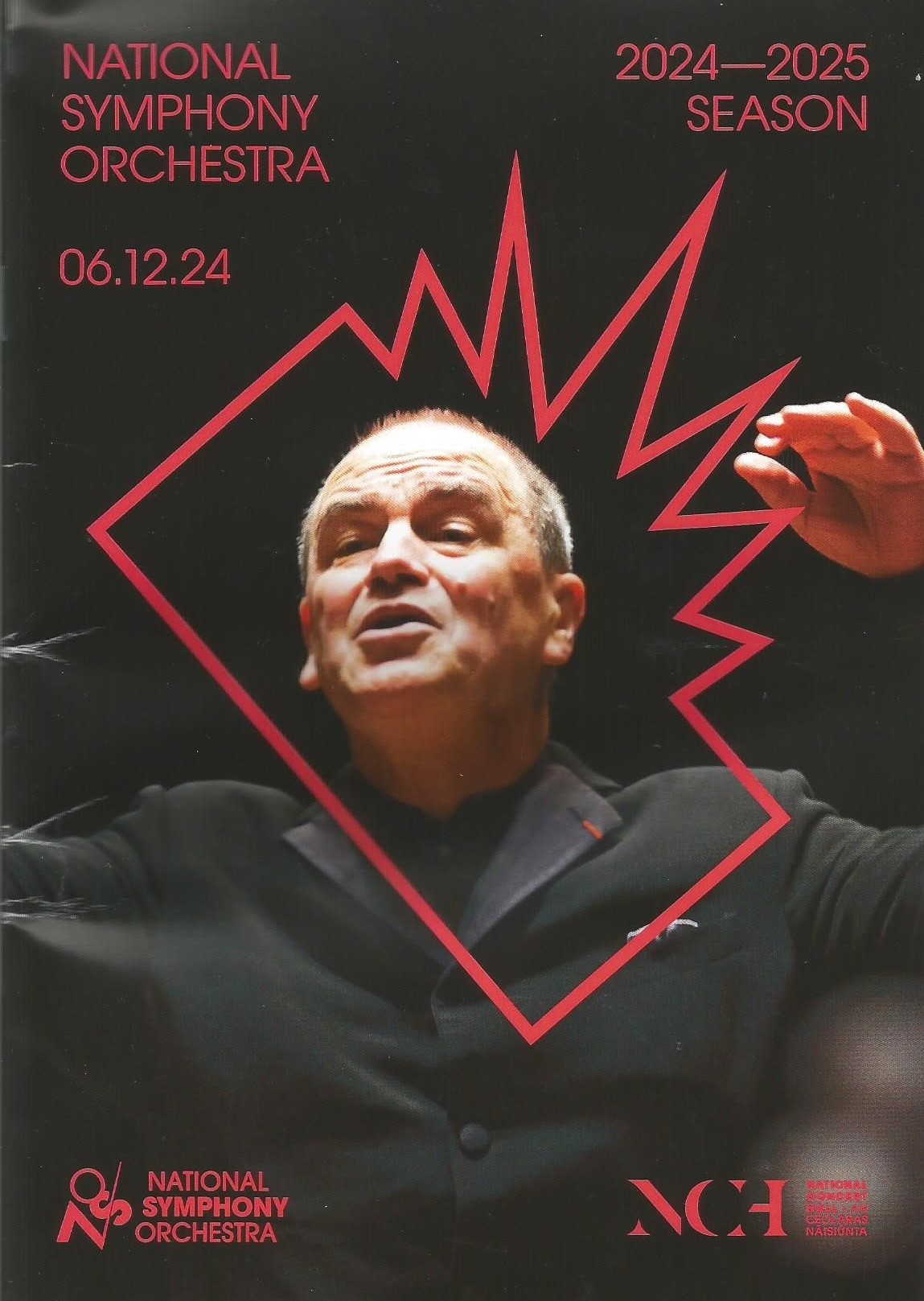
Anyway, there were two items on the menu: Violin Concerto No. 5 in A Major by Wolfgang Amadeus Mozart, with soloist Stefan Jackiw, and the Symphony No. 7 in E Major by Anton Bruckner. The National Symphony Orchestra was conducted by Hans Graf.

Mozart wrote at least five violin concertos, and he was at most 20 when he wrote the last of the five that are known. During last night’s performance I was thinking a lot about all I had failed to achieve by the age of twenty! Influenced by his father Leopold, the violin was Mozart’s first instrument, but he later moved on and preferred to play keyboard instruments. Perhaps he wanted to escape from his father’s domination, which might explain why he didn’t write any more pieces for solo violin in the rest of his (short) life.

The 5th Violin Concerto is sometimes called “The Turkish” though there isn’t much of a Turkish influence in the music. Whatever the name, it is a very enjoyable piece in three movements, played quite beautifully last night by Stefan Jackiw and by the pared-down NSO. The soloist got a very warm ovation and responded with a solo encore in the form of a largo movement from a Bach violin sonata.

After the wine break we returned to find the stage much fuller with a large brass section and extra strings added to the smaller forces required for the Mozart. Bruckner’s Seventh Symphony is a huge and varied work lasting over an hour in performance. The radiant first movement, with its noble melody soaring over shimmering violin tremolos is very reminiscent of Wagner, as is much of the rest of the Symphony (especially in terms of the orchestration). Bruckner famously idolized Wagner and this composition is at least partly a tribute to his musical hero. It is said that Bruckner had a premonition of Wagner’s death in 1883 and the cymbal crash during the second (slow) movement symbolizes the moment that he found out that his premonition had come true. That whole movement (marked Sehr feierlich und sehr langsam; very solemn and very slow) is very moving: sombre though not excessively mournful. The third movement Scherzo is marked Sehr Schnell (very fast) but I found the tempo last night vigorous, but not epecially fast. I was expecting something a bit wilder. The last movement actually sounded to me more like Mahler than Wagner, with a resounding climax.

The Seventh is probably Bruckner’s best known and most performed Symphony. It was certainly a big hit for him when it was first performed in 1884. The composer was born in 1824 and last nigtht’s concert was billed as Bruckner 200. I think the 7th was a good choice to mark the occasion and the performance, with superb playing by the brass section (including the Wagner tuben), and the orchestra very well marshalled by Hans Graf, was a fitting tribute.

My next trip to the NCH won’t be until January, but I’m already looking forward to the Leningrad Symphony after the Christmas break!

Four New Publications at the Open Journal of Astrophysics

Posted in OJAp Papers, Open Access, The Universe and Stuff with tags , , , , , , , , , , , on December 7, 2024 by telescoper

It’s Satuday morning once again so here’s another quick update of activity at the Open Journal of Astrophysics. Since the last update a week ago we have published  four papers, which takes the count in Volume 7 (2024) up to 110 and the total published altogether by OJAp up to 225.

In chronological order of publication, the four papers published this week, with their overlays, are as follows. You can click on the images of the overlays to make them larger should you wish to do so.

First one up is “The impact of feedback on the evolution of gas density profiles from galaxies to clusters: a universal fitting formula from the Simba suite of simulations” by Daniele Sorini & Sownak Bose (Durham University, UK), Romeel Davé (University of Edinburgh, UK), and Daniel Anglés-Alcázar (University of Connecticut, USA). The paper, which is in the folder marked Astrophysics of Galaxies, presents a study of the effects of stellar and/or AGN feedback on the shape and evolution of gas density profiles in galaxy haloes using the SIMBA simulations. It was published on Tuesday 3rd December 2024.

Here is a screen grab of the overlay, which includes the abstract:


You can find the officially accepted version of the paper on the arXiv here.

The second paper to announce, also published on 3rd December 2024, and is also the folder “Astrophysics of Galaxies, is “Self-regulated growth of galaxy sizes along the star-forming main sequence” by Shweta Jain (U. Kentucky, USA), Sandro Tacchella (U. Cambridge, UK) and Moein Mosleh (Shiraz University, Iran).  This paper suggestes an identification of a possible self-regulating mechanism in galaxy size growth involving the interplay between feedback from star formation and newly accreted gas.

You can see the overlay here:


The accepted version of this paper can be found on the arXiv here.

The third paper, published on Thursday 6th December 2024 in the folder marked Cosmology and NonGalactic Astrophysics, is called  “BLAST: Beyond Limber Angular power Spectra Toolkit. A fast and efficient algorithm for 3×2 pt analysis” by Sofia Chiarenza, Marco Bonici & Will Percival (Waterloo, Canada) and Martin White (Berkeley, USA). It presents BLAST, an efficient algorithm for calculating angular power spectra without employing the Limber approximation or assuming a scale-dependent growth rate, based on the use of Chebyshev polynomials. The code is written in Julia.

Here is the overlay


The final version accepted on arXiv is here.

Last in this batch, published on 6th December 2024, and in the folder Astrophysics of Galaxies, is “On the universality of star formation efficiency in galaxies” by Ava Polzin & Andrey V. Kravtsov (U. Chicago) and Vadim A. Semenov & Nickolay Y. Gnedin (CfA Harvard), all based in the USA. The paper presents an argument that the universality of observational estimates of star formation efficiency per free-fall time can be plausibly explained by the turbulence-driven and feedback-regulated properties of star-forming regions.

You can find the official accepted version on the arXiv here.

We seem to have recovered from a small Thanksgiving lull and, looking at the OJAp workflow, I think we’ll have a similar number of publications next week. I’ll do another update next weekend!

This Year’s Kisses

Posted in Jazz with tags , , on December 6, 2024 by telescoper

I’ve been out all day on a secret mission so, in lieu of a proper post, I thought I’d share this classic record by Billie Holiday and Lester Young.

Newton’s Opticks and a Query about the Bending of Light

Posted in History, The Universe and Stuff with tags , , , , on December 5, 2024 by telescoper

The story of the famous 1919 expeditions to measure the bending of light by the Sun as a test of general relativity has featured many times on this blog (e.g. here). I ahve also written elsewhere about it, e.g. here. One way this is often presented is whether the measurements preferred the “Einstein” prediction or one consistent with “Newton”, there being a famous factor of two between the two.

In fact the earliest published calculation of the deflection of light by the Sun was not by Isaac Newton but by Johann Georg von Soldner (Uber die Ablenkung eines Lichstrals von seiner geradlinigen Bewegung, durch die Attraktion eines Weltk¨orpers, and welchem er nahe vorbei geht. Berliner Astronomisches Jahrbuch, 1801: 161-172). This calculation does use Newtonian theory, but as far as I know there is no record tof any calculation of this sort by Newton himself.

There is, however, something very tantalizing in Newton’s 1704 book Opticks, published almost 20 years after his Principia outlined the laws of mechanics and of universal gravitation. Opticks which (unlike the Principia) was written in English, ends with a series of rhetorical questions called “Queries” which present speculative ideas about light and its interactions with matter. The first of these reads:

Query 1. Do not Bodies act upon Light at a distance, and by their action bend its Rays; and is not this action (caeteris paribus) strongest at the least distance?

This looks very much like a speculation about the bending of light by gravitation. But if that’s what it is, he could have done exactly what Soldner did about a century later. Why then did he never publish the result and why was it never found among his unpublished papers?

I’ve spoken to several people about this and there are three main ideas. One is that Newton actual did the Soldner calculation, and that the manuscript was accidentally destroyed in a fire caused by his dog, Diamond. The other is that he just never got round to it, which seems unlikely because it’s not a difficult calculation and Newton lived over 20 years after the publication of the Opticks. The third possibility is that Query 1 wasn’t about gravity at all. If it had been, wouldn’t he have used the word and wouldn’t he have mentioned the inverse-square law specifically? Perhaps what he had in mind was some kind of refraction. This interpretation is consistent with other Queries where he talks about the “aetherial Medium” through which he supposed light to propagate being distorted by the presence of massive bodies and thus causing refraction. For example, from Query 21,

Is not this Medium much rarer within the dense Bodies of the Sun, Stars, Planets and Comets, than in the empty celestial Spaces between them?

I suppose we’ll never know what Newton had in mind. I am split between the first and third explanations above.

It’s worth mentioning that some of the other Queries are very prescient. Take Query 5, for example:

Do not Bodies and Light act mutually upon one another; that is to say, Bodies upon Light in emitting, reflecting, refracting and inflecting it, and Light upon Bodies for heating them, and putting their parts into a vibrating motion wherein heat consists?

Clever chap, Newton!

That TV Sexual Misconduct Scandal…

Posted in Television with tags , , on December 4, 2024 by telescoper
He’s a bit “handsy”…

I don’t watch TV that much, but I have heard about the shocking allegations of inappropriate sexual behaviour by Bunsen Honeydew, Z-list celebrity and presenter of Muppet Master Chef. Now that his career is rightfully over, he’ll no doubt end up like similarly disgraced muppets – as a presenter on GB News.

Gregg Wallace is 60.

Fourth Covid Booster

Posted in Biographical, Covid-19 with tags , , on December 3, 2024 by telescoper

Just for the record, today I had my 4th Covid-19 vaccination booster. As an Old, I get prompted by the HSE to get free Covid-19 boosters and winter ‘flu jabs so I booked an appointment at a local pharmacist, which is how they are done these days, which is much better than traipsing to City West or Punchestown. In fact I went into work this morning, and walked to the pharmacy and back. I didn’t have to wait long and the vaccination itself only took a matter of minutes.

The vaccination record is not as fancy as the one I got last year for my third booster last year, but it will have to do as a souvenir:

That makes six Covid-19 jabs altogether for me: the initial vaccination was in two stages, and I have since had four boosters. All but one of these have been Pfizer; the other was Moderna.

On previous occasions of this type I’ve always managed to arrange an afternoon free afterwards in case of any adverse reactions. Today, however, I went straight from the pharmacist to get a quick lunch and then had a two-hour lecture with the Engineers, which I survived. Once again, there are no serious ill-effects, apart from a slight discomfort at the injection site and a general feeling of tiredness. I think I’ll sleep well tonight!

P.S. Last night, as I usually do, I checked my calendar before I went to bed to make sure I was ready for all the items on the following day’s agenda, including the Covid-19 jab. When I slept, for some reason I had a funny dream that I had invented a new form of vaccine that could be administered via a cigarette!

Introduction to Entropy: The Way of the World

Posted in The Universe and Stuff with tags , , , , on December 2, 2024 by telescoper

The publishers sent me a copy of this book Introduction to Entropy – The Way of the World by Jonathan Allday and Simon Hands. Here are some thoughts on it.

The conventional way of teaching physics at an introductory level is to develop the subject in thematic strands – classical mechanics, electromagnetism, quantum mechanics and so on – and reinforce the resulting structure with a cross-weave of methods – experimental, mathematical or computational – to show how the discipline as a whole is bound together by the interplay between these two. Some approaches emphasize the themes, others the methods but generally the layout is a criss-cross pattern of this sort, embedded within which are various concepts which we encounter on the way.

This book by schoolteacher Jonathan Allday and particle physicist Simon Hands is provides a valuable alternative approach in that it focusses on neither themes nor methods but on a particular concept, that of entropy. This is an interesting idea because it allows the reader to follow a direction more-or-less orthogonal to the conventional approaches. It is especially interesting to deal with entropy in this way because it is a concept that is familiar on one level – even Homer Simpson knows what about the Second Law of Thermodynamics! –  but very unfamiliar when it comes to its detailed application, for example in quantum mechanics.

Guided by the concept of entropy, the authors take us on a journey through physics that has three main stages. The first is fairly mainstream in undergraduate courses, from classical thermodynamics to statistical mechanics, with applications and basic ideas of probability and statistics introduced along the way. The second, more technical, leg takes us through the idea of entropy in quantum mechanics and quantum information theory. The final part of the excursion is much freer ramble through more speculative terrain, including the role of entropy in biology, cosmology and black holes. This final section on life, the universe, and (almost) everything, addresses a number of open research questions. The authors stop to point out common errors and misconceptions at various points too.

This is an interesting and engaging book to anyone with an undergraduate education in physics, or above, who wants to understand the concept of entropy in all its manifestations in modern physics. It covers a great deal of territory but the narrative is coherent and well thought-out, and the material is very well organized and presented.

Irish Election Update

Posted in Politics with tags , , , , , on December 2, 2024 by telescoper

The dust is now settling on the 2024 General Election which took place on Friday. Counting didn’t start anywhere until the following morning, so in the absence of any actual results the Saturday newspapers were full of articles by Phil Space, most of them based on an exit poll that turned out not to be very accurate. It soon become clear what was going to happen. The Single Transferable Vote system does mean that counting takes a while – one constituency (Cavan-Monaghan) is yet to declare as I write this – but it is much fairer than the system used in the UK and the process is fascinating to follow. Since moving to Ireland 7 years ago, I think my two favourite spectator sports are hurling and election counts, though the former happens at a considerably faster pace than the latter!

I’ll begin with my own constituency, Kildare North, which returned 5 TDs. The chosen five are James Lawless (FF), Réada Cronin (SF), Aidan Farrelly (SD), Naoise Ó Cearúil (FF) and Joe Neville (FG). The big surprise was that Fine Gael grandee Bernard Durkan lost his seat to a younger colleague, the strategy of fielding three candidates backfired on him. At one stage it even looked like all three might be eliminated, which would have been very amusing, but it was not to be.

A surprise at least to me, though a lesser one than the defeat of Bernard Durkan, is that Aidan Farrelly won for the Social Democrats. Catherine Murphy (SD) was top of the poll last time but has now retired. There was no guarantee that Aidan Farrrelly would hold onto Catherine Murphy’s personal following, especially since a former Social Democrat turned Independent stood against him. In the end, however, Farrelly was elected quite comfortably, although with a smaller share of the vote than Catherine Murphy had achieved.

Of the two FF candidates elected, James Lawless and Naoise Ó Cearúil, the fomer is more familiar; the latter was elected to the County Council this summer and will be a new arrival in the Dáil. The Kildare North constituency has one extra TD this time because of population growth, and it went to FF who ended up with the most TDs nationally.

The successful Sinn Féin candidate was the incumbent Réada Cronin.

The wooden spoon for Kildare North went to Sean Gill of the Centre Party of Ireland, an ironic name for what is far-right splinter group of FG previously known as Renua. He received a majestic 67 votes and was eliminated on the first round. In fact, far-right candidates did very poorly not only in Kildare North but nationally. That’s a relief.

One of the fascinating things about the coverage of the election has been to see how people use their preferences. Voting is a much more nuanced thing here that it has ever been allowed to be in the UK by the electoral system there. Some of the transfers are very hard to fathom. I noticed in Kildare North, for example, that some voters put the left-wing People Before Profit first then Fine Gael second, skipping over the whole spectrum in between. I don’t understand that choice, but then I don’t have to. Folk are perfectly entitled to use their vote whichever way they wish. That’s how it works. It’s called democracy.

The big three parties look set to finish on FF 48, SF 39 and FG 38. This means that FG+FF add up to 86, which is two short of a majority. The overall outcome of the election will therefore be the Same Old Same Old government, a coalition of the two right wings of the Property Party, possibly with a smaller party to make up the numbers and to be contemptuously discarded at the next election. That fate befell the Green Party, part of the outgoing coalition, which lost 11 of its 12 TDs this time round. Labour and the Social Democrats are both on 11 TDs. Will one of them walk into the trap, or will some Independents be enough?

Incidentally, the only prediction I made in my earlier post about this election, turned out to be incorrect. I was confident that there would be more Independent TDs than last time. In fact there are fewer (16 versus 20). Though the predominantly rural, right-wing Independent Ireland won 4 seats, it is a party so its TDs are not Independent, if you see what I mean.

The State of Irish Politics (detail from Impossible Stairs by M.C. Escher)

Sinn Féin once again failed to break the deadlock of FFG government. They have done reasonably well in terms of seats, but their share of the vote fell by about 5% since the 2020 Election but in between then and now had risen to over 30%. only to fall back recently. I suspect the party leaders will be privately relieved at where they ended up, given that a few weeks ago things looked likely to be much worse for them.

Whatever the complexion of the final coalition, it seems clear to me that we’re in for five more years of housing crisis, crumbling infrastructure, under-investment in education and public services. I don’t know what it will take for a change of government to take place. Perhaps the next (inevitable) financial crash? Or perhaps not even that. Ireland is very set in its ways, politically speaking.

It has been remarked that this election has bucked two global trends. One is the rise of the far-right, whose failure is something I am very happy about. The other is anti-incumbent feeling. I’m much more ambivalent about that because in my opinion change is long overdue. Apparently the electorate were unconvinced that change of government would really make things better here.

P.S. The turnout – just under 60% – was the lowest it has been in a General Election in Ireland since 1923. I find it saddening that 40% of those eligible did not even bother to vote.

Seven Years in Maynooth!

Posted in Biographical, Education, Maynooth with tags , on December 1, 2024 by telescoper
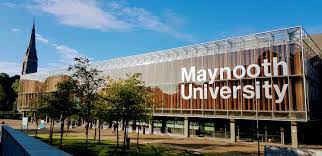
Maynooth University Library, home of the famous cat

As the count continues in the General Election in Ireland, the result of which seems likely to be the same old government, I am reminded that today is 1st December 2024, which means that it’s seven years to the day since I started work at Maynooth University. Despite the frustrations I’m still happy I made the move all that time ago.

One big change that has happened over the last year is that the Department of Theoretical Physics that I joined in 2017 no longer exists. It has now been subsumed into a new Department of Physics alongside the old Department of Experimental Physics. This is something that should have happened years ago, and should also have been handled in a better way. As it is, The Merger really just involved merging the two budgets with little thought given to how the new Department would function. As a result it still operates largely as two separate sub-Departments. Any benefits of the reorganization have therefore yet to accrue. The good side of this is that Senior Management seems to have lost interest in pushing us around, and it’s now up to the new Department to self-organize. I suppose in due course there will be changes, but in due course I will have retired.

When I wrote last year on the occasion of the sixth year of my appointment at Maynooth, I complained that the University had still not fulfilled the terms of my employment contract. With The Merger, members of the former Department of Theoretical Physics now have access to the technical support previously enjoyed by the Department of Experimental Physics so I suppose that particular ticket is closed. This blatant disregard for written contractual terms demonstrates, however, why I have so little trust in the University management. In that vein, it still concerns me that my contract says that I am employed by the Department of Theoretical Physics. Legally, does it matter that I am employed to work in an entity that doesn’t exist?

The thing I’m probably most proud of over the past seven years is, with the huge help of staff at Maynooth University Library, getting the Open Journal of Astrophysics off the ground and attracting some excellent papers. This year has seen yet more significant growth, with submissions and publications more than doubling this year, after an increase of a factor of three the year before. We’re still smaller than many of the mainstream astrophysics journals, but we’re still growing.

Anyway, I continue to enjoy the teaching, though doing two new modules in a term, plus an undergraduate project, plus supervising three PhD students, is quite a lot of work for an old man. That reminds me I have some correcting to do…

Ring, Dvořák and Tchaikovsky at the National Concert Hall

Posted in Music with tags , , , , , , on November 30, 2024 by telescoper

After a gap of a few weeks due to other commitments, last night I went to the National Concert Hall in Dublin to see and hear another programme of music performed by the National Symphony Orchestra. Unusually for these Friday evening concerts by the NSO, it wasn’t broadcast live or even, judging by the absence of microphones on and over the stage, recorded. I suppose that might have been for some contractual reason.

Tyhe conductor for this performance was Patrik Rinborg, from Sweden. The first thing that struck me about him was that he is very tall – his was a towering presence on the podium. Looking through my back catalogue I find I attended a performance of the Dvořák Requiem conducted by him back in January 2020, not long before the pandemic struck.

The first piece, Everything was asleep as if the universe was a vast mistake by Judith Ring, received its performance in January 2023. The title is from a translation of a quite by Fernando Pessoa. I found this piece quite interesting, especially the changes of colour and energy, but spoilt a little for me by the repeated short sliding phrases coming from the trombones, which I thought sounded rather lavatorial and therefore jarring in the context of the work. Anyway, Judith Ring was in the audience last night and came up on stage at the end of the performance to great applause.

The second work was a perennial favouite in the concert hall, the Cello Concerto in B minor by Antonín Dvořák. I think most people, if asked to name half-a-dozen great works for cello and orchestra would put this one on their list. Last night’s soloist was Camille Thomas, resplendent in a glamorous purple frock, who played beautifully. Her body language was interesting even when she wasn’t playing, sometimes leaning back with her arms by her sides as if transported by the music, and sometimes turning around to look at the orchestra to encourage them. She got a well-deserved ovation at the end, and did a solo encore in the form of a piece called Song of the Birds by Pablo Casals.

After the wine break we returned for Symphony No. 5 in E minorOp. 64 by Pyotr Ilyich Tchaikovsky. In advance of the concert I had this muddled up with the Manfred Symphony, which I have heard live before. That was indeed the fifth symphony that Tchaikoksky composed, but is not counted among the numbered symphonies. I hadn’t previously heard a full performance of the Symphony No. 5 we heard last night, so I came to it relatively fresh. Things to note about it are distinct shifts in tonality through the four movements, and a single motif repeated throughout in different forms. It did make me think of the Symphony No. 7 “Leningrad” by Shostakovich who seems to have borrowed the idea for the “invasion” theme of the first movement.

I enjoyed the performance a lot – it was played with much vigour and nuance by the NSO – but at a first hearing I’m not a huge fan of the piece. It’s a bit less than 50 minutes long and by the end I was very bored with the motif. I wasn’t as uplifted by the final movement, where it reaches resolution in E Major, as I think I was supposed to feel as I thought it very brash and unsubtle.

Anyway the audience responded with generous applause at the end of this concert, which was quite a long one (partly because of the encore). For one thing that meant I had much less time to wait for my train back to Maynooth than usual.