Nobody’s fault but mine

Posted in Jazz, Uncategorized with tags on May 2, 2010 by telescoper

It being a rainy bank holiday weekend, I’ve been working, although I didn’t start until I’d done the Sunday crosswords and watched the football on the telly. Now it’s too late to post anything substantial, so I’ll resort to something from my back catalogue of bookmarked masterpieces from Youtube. This is a wonderful bluesy gospelly piece by the late great Nina Simone, a rare example in my opinion of a cover version being better than the original (in this case by Blind Willie Johnson).

Incidentally, I wonder if either of my regular readers can think of cover versions better than the original? Jeff Buckley’s intensely moving  version of Leonard Cohen’s great song Hallelujah springs to mind, but I’d be interested to hear other suggestions…

Skepsis

Posted in Politics, The Universe and Stuff with tags , , , , , , on May 1, 2010 by telescoper

This past week was the final week of proper teaching at Cardiff University, so I’ve done my last full lectures, tutorials and exercise classes of the academic year. Yesterday I assessed a bunch of 3rd-year project talks, and soon those students will be handing in their written reports for marking.  Next week will be a revision week, shortly after that the examinations begin. And so the cycle of academic life continues, in a curious parallel to the  football league season – the other routine that provides me with important markers for the passage of the year.

Anyway, this week I gave the last lecture to my first-year class on Astrophysical Concepts. This is a beginning-level course that tries to introduce some of the theory behind astronomy, focussing on the role of gravity. I cover orbits in newtonian gravity, gravity and hydrostatic equilibrium in extended bodies, a bit about stellar structure, gravitational collapse, and so on. In the last part I do a bit of cosmology. I decided to end this time with a lecture about dark energy as, according to the standard model, this accounts for about 75% of the energy budget of the Universe. It’s also something we don’t understand very well at all.

To make a point, I usually show the following picture (credit to the High-z supernova search team).

 What is plotted is the redshift of each supernova (along the x-axis), which relates to the factor by which the universe has expanded since light set out from it. A redshift of 0.5 means the universe was compressed by a factor 1.5 in all dimensions at the time when that particular supernova went bang. The y-axis shows the really hard bit to get right. It’s the estimated distance (in terms of distance modulus) of the supernovae. In effect, this is a measure of how faint the sources are. The theoretical curves show the faintness expected of a standard source observed at a given redshift in various cosmological models. The bottom panel shows these plotted with a reference curve taken out so the trend is easier to see.

The argument from this data is that the high redshift supernovae are fainter than one would expect in models without dark energy (represented by the \Omega_{\Lambda}  in the diagram. If this is true then it means the luminosity distance of these sources is greater than it would be in a decelerating universe. They can be accounted for, however, if the universe’s expansion rate has been accelerating since light set out from the supernovae. In the bog standard cosmological models we all like to work with, acceleration requires that \rho + 3p/c^2 be negative. The “vacuum” equation of state p=-\rho c^2 provides a simple way of achieving this but there are many other forms of energy that could do it also, and we don’t know which one is present or why…

This plot contains the principal evidence that has led to most cosmologists accepting that the Universe is accelerating.  However, when I show it to first-year undergraduates (or even to members of the public at popular talks), they tend to stare in disbelief. The errors are huge, they say, and there are so  few data points. It just doesn’t look all that convincing. Moreover, there are other possible explanations. Maybe supernovae were different beasties back when the universe was young. Maybe something has absorbed their light making them look fainter rather than being further away. Maybe we’ve got the cosmological models wrong.

The reason I show this diagram is precisely because it isn’t superficially convincing. When they see it, students probably form the opinion that all cosmologists are gullible idiots. I’m actually pleased by that.  In fact, it’s the responsibility of scientists to be skeptical about new discoveries. However, it’s not good enough just to say “it’s not convincing so I think it’s rubbish”. What you have to do is test it, combine it with other evidence, seek alternative explanations and test those. In short you subject it to rigorous scrutiny and debate. It’s called the scientific method.

Some of my colleagues express doubts about me talking about dark energy in first-year lectures when the students haven’t learned general relativity. But I stick to my guns. Too many people think science has to be taught as great stacks of received wisdom, of theories that are unquestionably “right”. Frontier sciences such as cosmology give us the chance to demonstrate the process by which we find out about the answers to big questions, not by believing everything we’re told but by questioning it.

My attitude to dark energy is that, given our limited understanding of the constituents of the universe and the laws of matter, it’s the best explanation we have of what’s going on. There is corroborating evidence of missing energy, from the cosmic microwave background and measurements of galaxy clustering, so it does have explanatory power. I’d say it was quite reasonable to believe in dark energy on the basis of what we know (or think we know) about the Universe.  In other words, as a good Bayesian, I’d say it was the most probable explanation. However, just because it’s the best explanation we have now doesn’t mean it’s a fact. It’s a credible hypothesis that deserves further work, but I wouldn’t bet much against it turning out to be wrong when we learn more.

I have to say that too many cosmologists seem to accept the reality of dark energy  with the unquestioning fervour of a religious zealot.  Influential gurus have turned the dark energy business into an industrial-sized bandwagon that sometimes makes it difficult, especially for younger scientists, to develop independent theories. On the other hand, it is clearly a question of fundamental importance to physics, so I’m not arguing that such projects should be axed. I just wish the culture of skepticism ran a little deeper.

Another context in which the word “skeptic” crops up frequently nowadays is  in connection with climate change although it has come to mean “denier” rather than “doubter”. I’m not an expert on climate change, so I’m not going to pretend that I understand all the details. However, there is an interesting point to be made in comparing climate change with cosmology. To make the point, here’s another figure.

There’s obviously a lot of noise and it’s only the relatively few points at the far right that show a clear increase (just as in the first Figure, in fact). However, looking at the graph I’d say that, assuming the historical data points are accurate,  it looks very convincing that the global mean temperature is rising with alarming rapidity. Modelling the Earth’s climate is very difficult and we have to leave it to the experts to assess the effects of human activity on this curve. There is a strong consensus from scientific experts, as monitored by the Intergovernmental Panel on Climate Change, that it is “very likely” that the increasing temperatures are due to increased atmospheric concentrations of greenhouse gas emissions.

There is, of course, a bandwagon effect going on in the field of climatology, just as there is in cosmology. This tends to stifle debate, make things difficult for dissenting views to be heard and evaluated rationally,  and generally hinders the proper progress of science. It also leads to accusations of – and no doubt temptations leading to – fiddling of the data to fit the prevailing paradigm. In both fields, though, the general consensus has been established by an honest and rational evaluation of data and theory.

I would say that any scientist worthy of the name should be skeptical about the human-based interpretation of these data and that, as in cosmology (or any scientific discipline), alternative theories should be developed and additional measurements made. However, this situation in climatology is very different to cosmology in one important respect. The Universe will still be here in 100 years time. We might not.

The big issue relating to climate change is not just whether we understand what’s going on in the Earth’s atmosphere, it’s the risk to our civilisation of not doing anything about it. This is a great example where the probability of being right isn’t the sole factor in making a decision. Sure, there’s a chance that humans aren’t responsible for global warming. But if we carry on as we are for decades until we prove conclusively that we are, then it will be too late. The penalty for being wrong will be unbearable. On the other hand, if we tackle climate change by adopting greener technologies, burning less fossil fuels, wasting less energy and so on, these changes may cost us a bit of money in the short term but  frankly we’ll be better off anyway whether we did it for the right reasons or not. Of course those whose personal livelihoods depend on the status quo are the ones who challenge the scientific consensus most vociferously. They would, wouldn’t they? Moreover, as Andy Lawrence pointed out on his blog recently, the oil is going to run out soon anyway…

This is a good example of a decision that can be made on the basis of a  judgement of the probability of being right. In that respect , the issue of how likely it is that the scientists are correct on this one is almost irrelevant. Even if you’re a complete disbeliever in science you should know  how to respond to this issue, following the logic of Blaise Pascal. He argued that there’s no rational argument for the existence or non-existence of God but that the consequences of not believing if God does exist (eternal damnation) were much worse than those of behaving as if you believe in God when he doesn’t. For “God” read “climate change” and let Pascal’s wager be your guide….
Honour the Fate you are

Posted in Poetry with tags , , on April 30, 2010 by telescoper

Poetry again, Auden this time. I’ve always loved this, one of his “quest” poems, although I’m not sure the last verse really works.

ATLANTIS

Being set on the idea
Of getting to Atlantis
You have discovered of course
Only the Ship of Fools
Is making the voyage this year,
As gales of abnormal force
Are predicted, and that you
Must therefore be ready to
Behave absurdly enough
To pass for one of The Boys,
At least appearing to love
Hard liquor, horseplay and noise.

Should storms, as may well happen,
Drive you to anchor a week
In some old harbour-city
Of Ionia, then speak
With her witty scholars, men
Who have proved there cannot be
Such a place as Atlantis:
Learn their logic, but notice how its subtlety betrays
Their enormous simple grief;
Thus they shall teach you the ways
To doubt that you may believe.

If later, you run aground
Among the headlands of Thrace,
Where with torches all night long
A naked barbaric race
Leaps frenziedly to the sound
Of conch and dissonant gong;
On that stony savage shore
Strip off your clothes and dance, for
Unless you are capable
Of forgetting completely
About Atlantis, you will
Never finish your journey.

Again, should you come to gay
Carthage or Corinth, take part
In their endless gaiety;
And if in some bar a tart,
As she strokes your hair, should say
‘This is Atlantis, dearie,’
Listen with attentiveness
To her life-story: unless
You become acquainted now
With each refuge that tries to
Counterfeit Atlantis, how
Will you recognise the true?

Assuming you beach at last
Near Atlantis, and begin
That terrible trek inland
Through squalid woods and frozen
Tundras where all are soon lost;
If, forsaken then, you stand,
Dismissal everywhere,
Stone and snow, silence and air,
O remember the great dead
And honour the fate you are,
Travelling and tormented,
Dialectic and bizarre.

Stagger onwards rejoicing;
And even then if, perhaps
Having actually got
To the last col, you collapse
With all Atlantis shining
Below you yet you cannot
Descend, you should still be proud
Just to peep at Atlantis,
In a poetic vision:
Give thanks and lie down in peace,
Having seen your salvation.

All the little household gods
Have started crying, but say
Goodbye now, and put out to sea.
Farewell, my dear, farewell: may
Hermes, master of the roads
And the four dwarf Kabiri,
Protect and serve you always;
And may the Ancient of Days
Provide for all you must do
His invisible guidance,
Lifting up, dear, upon you
The light of His countenance.

House of Cards

Posted in Finance, Politics with tags , , , on April 29, 2010 by telescoper

There’s now only a week left until polling day in the General Election, and I’ve managed to avoid blogging about it as much as possible. The main reason for this is that I feel almost entirely disconnected from the whole thing, as if it’s all a bit unreal. One of the things in the news this week sparked a memory of something I wrote a few weeks ago which, in turn, made me realise why I find it difficult to take this election seriously.

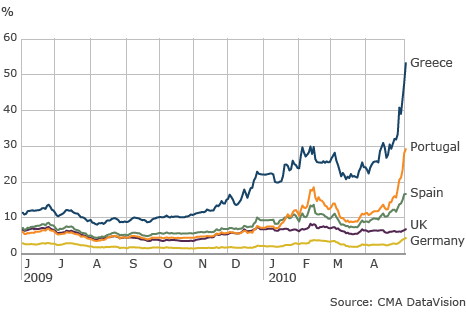
It emerged on Tuesday that the international money markets had downgraded Greece’s credit rating to “junk” status. Portugal and, more recently, Spain have since been downgraded too, but not as far as Greece. Yet. The reason for this downgrading is that analysts doubt whether these countries will be able to control their public spending sufficiently in order for them to honour huge levels of sovereign debt. The probability that Greece in particular will default in a big way has been growing steadily, according to the calculations of financial experts, and has now reached the level at which traders are adopting strategies that essentially involve betting on this actually happening.

The consequence of all this turmoil is that Greece would have to borrow money at huge levels of interest – over 15% – in order to carry on. The eurozone countries – particularly Germany – are trying to put together a package that that can be paid back at less ruinous rates, but while they continue to debate the details the panic continues.

The knock-on effect of a Greek default would be to remove money from the balance sheets of banks and financial institutions around the world. If a  bank has holdings of Greek debt, and the Greeks default, then the bonds become worthless and billions of pounds disappear off its balance sheet. Some British banks are exposed in this way, but nowhere near as much as France, Germany and Switzerland.

The baleout of Greece may work, but if it doesn’t it looks likely that Greece will be ejected from the euro and will have to take drastic measures to set its house in order. Fine, you might say. They’ve been living beyond their means for too long. That’s true. But so has Spain, which suffered even more than the UK from a housing bubble that went pop and is left with a huge budget deficit.  Spain is too large an economy to be rescued, even by Germany.  A default there, and there’s a real possibility of a chain reaction that will probably mean  curtains for the euro and possibly a real meltdown of the global financial system.  I’m just surprised that it has taken since 2007 for phase 2 of the global financial crisis to start. I think the contagion is still spreading.

 By some measures, our economy is in even worse shape than Spain’s.  However, the reason the markets haven’t downgraded us yet is that we’ve been given a stay of execution by the imminent general election. I’m sure analysts will be looking for very prompt and effective action to tackle our budget deficit if they are not going to put us through the wringer like they did with Greece. Greece, Portugal and Spain are all relatively recent democracies and it’s not obvious their governments can deliver huge public spending cuts and survive the resulting social unrest intact. They certainly haven’t managed to convince the markets they can anyway.

 What’s clear from the UK general election campaign is that none of the main political parties is willing to go public about the scale of the challenge facing whoever takes office after the election. The recent budget did a bit of trim around the edges here and there, and the party manifestos talk about the odd billion here and there in savings, but these are dwarfed by the real scale of our deficit. It seems the politicians have agreed to keep quiet about this to avoid frightening the electorate. When the votes are counted we’re going to get a rude awakening. The general election campaign is just a bizarre masquerade that’s too ridiculous to get involved in.

The scale of what could happen here is indicated by what’s happening in Ireland. Politicians here are talking about a public sector pay freeze. Ireland is actually cutting salaries in the public sector by up to 20%. I think the next UK government is going to have to do something similar or we’ll suffer the same fate as Greece. These next three years are going to be very grim for those of us working in the public sector, or at least for those who decide to stay in the UK.

We generally like to think we’re a mature democracy that’s a bit more sensible that all those mediterranean hotheads and that we’ll be able to grin and bear it for the sake of the economy. However, I’m old enough to remind the Winter of Discontent and it’s by no means obvious to me that cuts on the necessary scale will go through without sustained opposition. If – as seems likely – we end up with a coalition government with a fragile majority, this sort of thing could easily bring it down. If the markets see political instability in the UK they will certainly start downgrading our credit rating too. Public borrowing will  become more expensive, deeper spending cuts will be needed, and Britain be well and truly scuppered.

Science Fiction

Posted in Poetry on April 28, 2010 by telescoper

I haven’t posted any poems for a while so I thought I’d put one up this morning.  However, just to make things a bit different I thought I’d make this one into a little quiz. This is called Science Fiction and it’s from a second-hand paperback book of poems I bought ages ago and I wonder if any of you know who wrote it?  Of course it’s quite easy to stick the words in google and find out that way, but see if you can figure it out without doing that.

Or maybe you know anyway…

Science Fiction

What makes us rove that starlit corridor
May be the impulse to meet and face
Our vice and folly shaped into a thing,
And so at last ourselves; what lures us there
Is simpler versions of disaster:
A web that shuffles time and space,
A sentence to perpetual journeying,
A wotrld of ocean without shore,
And simplest, flapping down the poisoned air,
A ten-clawed monster.

In him, perhaps, we see the general ogre
Who rode our ancestors to nightmare,
And in his habitat their maps of hell.
But climates and geographies soon change,
Spawning mutations none can quell
With silver sword or thaumaturge’s ring
Worse than their sides, of wider range,
And much more durable.

Black Hole Hunter

Posted in The Universe and Stuff with tags , , , on April 27, 2010 by telescoper

A discussion yesterday with one of my colleagues in the gravitational physics group here in Cardiff gave me the idea of including a little advert here for a fun website called Black Hole Hunter.

The site was developed as a part of the Royal Society Summer Exhibition 2008, Can you hear black holes collide? presented by Cardiff University, and the Universities of Birmingham, Glasgow and Southampton in the UK in collaboration with the Albert Einstein Institute and Milde Marketing in Germany.

The idea is to use your skill, judgement and lugholes to detect the gravitational wave signal from the merger of two black holes in the noisy output of a gravitational wave detector. The image on the left shows the pattern of gravitational radiation as calculated numerically using Einstein’s general theory of relativity. Why not give it a try and see how you get on?
You can play here.

Astronomy Look-alikes, No. 22

Posted in Astronomy Lookalikes with tags , on April 26, 2010 by telescoper

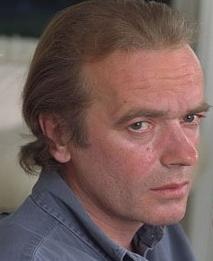
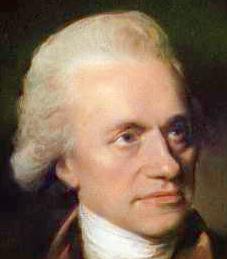
I’m indebted to Matt Griffin for drawing my attention to the remarkable likeness between Martin Amis, novelist son of a novelist father, and William Herschel, astronomer father of an astronomer son. I wonder if by any chance they might be related?

Martin Amis

William Herschel

Lecture Notes

Posted in Education with tags , , , on April 25, 2010 by telescoper

One week to go before the end of teaching term, and it’s time for the dreaded questionnaires to be handed out for the purpose of gauging student feedback on our teaching. The responses from the students go off somewhere to be counted and I’ll get a summary back in due course and learn what the students made of the  series of chaotic and rambling performances I strung together to masquerade as lecture courses. At the end of the year we usually get to see a league table of who’s popular and who isn’t, but the scores aren’t very useful beyond that. More important than the tick boxes are the comments that students write about what’s good and what isn’t. I read through all those and they’re often very helpful in suggesting things to be done differently in subsequent years.

Lecturing has changed an enormous amount since I was at university almost thirty years ago. In those days we got very little in the way of printed notes and we were expected to write everything down in classes that were primarily delivered in the chalk-and-talk style, although some lecturers used overhead projectors. The disadvantage of the latter over the former was a tendency to go too quickly through the material.

As a student I just accepted this was the way things were and developed my own note-taking strategy. I trained myself to be able to write things down about as fast as the lecturer could speak. I did this by cutting out the biggest hindrance to taking notes quickly, which is the business of  making your eyes go backwards and forwards between the blackboard (or projection screen) and paper in front of you. I just wrote everything I could on the paper without looking at it. Although my handwriting was scrappy when I did this, I could keep track of just about everything that was said as well as what was written by the lecturer. Later on, I’d turn these notes into a neat copy and in the process of doing that I tried to iron out any bugs in the original notes as well as figure out things I couldn’t make sense of.

When I started lecturing I primarily used blackboards and chalk. I was teaching quite mathematical things and found this the best way to do it. For one thing the physical effort of writing made me go through the material at a reasonable pace. The other advantage is that I think mathematical proofs and derivations should not just be presented, but should happen as a process for the students to see. I always felt that a lecture would be more interesting if it appeared to be spontaneous rather than delivered from a pre-prepared script. Even if the students disagreed, I certainly enjoyed lecturing much more if there was an element of improvisation in the performance.

However, I soon noticed that many students didn’t really know how to take notes even at the modest speed I was going. They would generally only write down what I wrote on the board, not the little verbal explanations and embellishments I put in. My response to this observation was to make sure I wrote down more and consequently went through the material even more slowly. When I got to sit in as a peer reviewer of other staff lecturers, I looked at what the students around me were doing and realised that the vast majority simply didn’t know how to take notes efficiently or accurately. For many the act of writing things down took so much effort that they weren’t listening to the lecturer. I guess this stems from the changing style of teaching in schools, but even if that is true it is something that university teachers need to come to terms with.

Incidentally, I have from time to time given final-year undergraduate lectures at Italian universities (in English). When I used the same style there as at home – writing full notes on the board rather than just the equations – the students asked me why I was doing it. They all expected to have to write down what I was saying. If they could manage to do that with lectures in their second language, I don’t really see why our students can’t do it in their mother tongue!

Gradually the ubiquitous powerpoint has largely the old-fashioned style of lecturing to the extent that many lecture theatres don’t even have a blackboard. We’re generally expected to hand out complete sets of printed notes, with the result that the students don’t have to take notes of their own but also turning a lecture into an entirely passive experience.

I resisted the move to powerpoint for undergraduate lecturing for many years, but gave up and went with the flow when I moved to Cardiff.  However, what I do is a bit different from the others who teach this way. I generally use slides which have only a few bits of text, key equations and figures on them. I hand out copies of these slides at the start of each lecture and then go through them during the class, and also make the powerpoint files available on the web. This gives them all the important things, but I tell the students I expect students to annotate the handouts and make their own set of notes based on the skeleton I’ve handed out. However, it is clear that many students don’t write anything down at all during the lecture. We’ll see from the forthcoming exams how much they have actually learned.

Newer educational technology should enable us to improve the standards of teaching in universities, but I think there’s still a long way to go before we work out how to use it effectively.  In particular I think we need to question whether lectures in the old-fashioned sense should continue to provide the primary mode of teaching. My personal opinion is that we should be moving to more independent, problem-based, learning and much less of the passive spoon-feeding.  I think we should be aiming to cut the number of lectures we give by about 50% across the school and use the time and effort saved in more creative and effective ways.

We’re in the middle of a review of our course structure in the School of Physics & Astronomy at Cardiff University and I hope we take the opportunity to make radical changes not just to the curriculum but also to the way we present it. Not everyone in the School is keen on really radical changes. I think I understand why. I actually enjoy lecturing. I always have. It’s fun and it’s also a lot easier to give a lecture than to prepare large numbers of problems and write pages and pages of printed notes. Looking back at my time as a student, though, I am bound to admit that I learnt next to nothing from lectures. This was partly because many of the lecturers I had were poorly delivered but also partly because I’m not sure lectures are the best way to teach physics. We carry on doing it this way just because it’s what we’re used to.

Perhaps the biggest problem with the way we teach physics these days is that it encourages students to think of each module as a bite-sized piece that can be retained until the examinations, regurgitated, and then forgotten.  I’ve no doubt that memorizing notes  is how many students pass the examinations we set.  Little genuine understanding or problem-solving ability is needed. We promote physics as a subject that nurtures these skills, but I don’t think many physics graduates – even those with good degrees – actually possess them at the end. We should be making much more of an effort in teaching students how to use their brains in other ways than as memory devices.

Nuit St George

Posted in Biographical with tags , on April 24, 2010 by telescoper

Still feeling a bit fragile after the Chaos Ball last night, which by itself probably indicates that it was good fun. We started out at Peter Hargrave’s penthouse flat, which is in the same block I lived in for a while before I managed to buy my house in Cardiff. My flat was much smaller and on the first floor, but Pete’s is high enough to command a majestic view of the hills to the north, and in yesterday’s lovely late evening sunshine we could even see as far as Newport, to the east, although seeing Newport wasn’t something I was particularly yearning to do.

A cocktail or two later and we were on our way to the venue just down the road at the Mercure Holland House Hotel. We got there too late for the bubbly that had been laid on to welcome the guests, as it  had all been guzzled by the students in next to no time. Still, there was plenty of wine at the tables, so there wasn’t a problem. It wasn’t Nuits St Georges, incidentally, which is a fine wine-growing region of Burgundy. I picked the title because the ball  was on St George’s Night…

The food turned out to well-presented and very tasty too.  During the meal we had musical accompaniment from a saxophone quartet and afterwards a DJ plied us with music of a more contemporary nature. It was a bit too contemporary for my tastes, in fact, and I didn’t find much I wanted to dance to. A bit of Abba would have suited me better, but then it was all aimed at the students rather than the few old fogeys on the staff who came along. Not being inspired by the  terpsichorean muse I spent the rest of the evening chatting and drinking in the bar, as well as getting in the way of various peoples’ photographs.

My famous white dinner jacket attracted some comments but fortunately didn’t attract any of the tomato soup I had for a starter. I must say everyone looked  glamorous in their posh frocks and I think people were generally having a good time and were enjoying the chance to dress up.

Most of the younger crowd headed off to a club in town to carry on the evening, and I was toying with the idea of going along but it was getting close to midnight and I was in danger of turning into a pumpkin so I climbed into a comfortable taxi and went home to crash out. I’m far too old for all that sort of carrying on.

After debauched evenings like this I usually wake up the following morning to a vague recollection that I did or said something embarrassing, which usually turns out to have been the case. This morning I just had a headache. That doesn’t mean I didn’t disgrace myself again, but if I did I don’t remember how. Senility has its advantages.

On behalf of everyone who was there and had a good time I’d like to thank Harriet and Alice for doing such a grand job organizing it!

P.S. You can find another account of the night’s proceedings on Ed’s blog.

How to Vote: A Helpful Flowchart

Posted in Politics with tags on April 23, 2010 by telescoper