

I’m no longer in the part of not-Barcelona known as Sligo (which is Sligeach in Irish) but here are some random pictures and a random video clip I took while I was there.
About Sligo
Posted in Biographical with tags Benbulbin, ireland, Sligeach, Sligo, W.B. Yeats, William Butler Yeats on May 2, 2024 by telescoperMaynooth University Library Cat Update
Posted in Maynooth with tags Maynooth University, Maynooth University Library Caat on May 2, 2024 by telescoperQuite a few people have asked for an update about Maynooth University Library Cat. I’m not actually in Maynooth right now so can’t pass on first-hand knowledge, but I am informed that said feline is doing fine and yesterday a colleague sent me this picture.
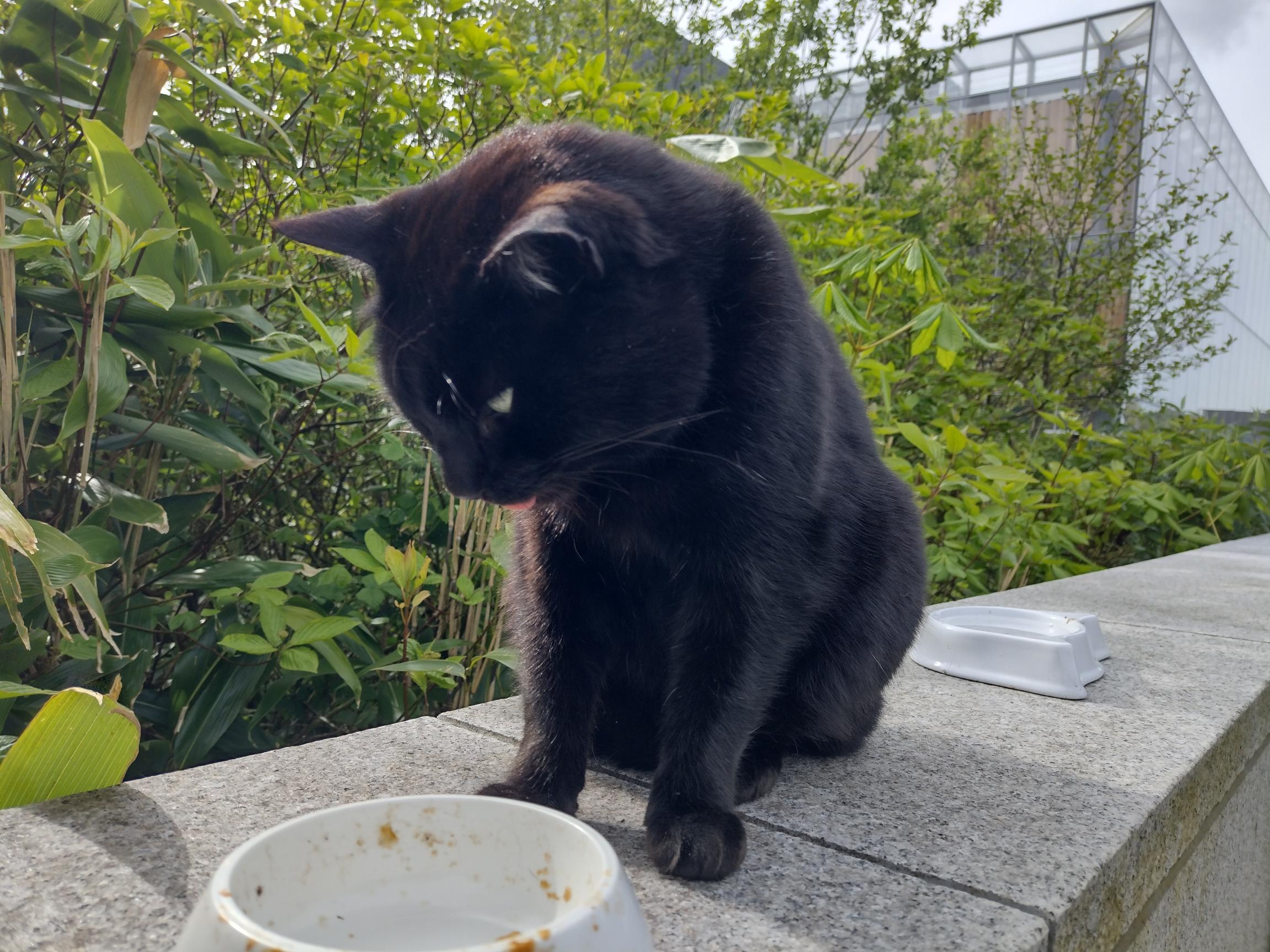
To be honest he looks a bit peeved* that his dish is empty. It is entirely possible, however, that he had been fed several times already before that picture was taken…
*In Irish, the word “peeve” is pronounced “piamh”
Carrowmore, County Sligo
Posted in Architecture, History with tags Bealtaine, Carrowmore, County Sligo, ireland, Knocknarea, Sligo on May 1, 2024 by telescoperToday is 1st May, so it’s the Labour Day Holiday in Barcelona. Colleagues in Ireland will have to wait until Monday 6th May for their equivalent holiday. The First of May, Beltane (Bealtaine in Irish), is a festival of pagan origin that roughly marks the mid-point between the Spring Equinox and the Summer Solstice. It’s one of the so-called Cross-Quarter Days that lie halfway between the equinoxes and solstices.
In view of the ancient origins of this holiday I thought I’d share some pictures of the amazing megalithic burial grounds at Carrowmore which is about 4km outside Sligo (where I have been on a secret mission). Carrowmore is the largest of the four megalithic cemeteries in Ireland in terms of the number of tombs, although the tombs are smaller in size and less complicated than the larger structures found at Brú na Bóinne. The structures at are also significantly older; there are signs of human habitation on the site going back at least 6000 years. The English name derives from the Irish An Cheathrú Mhór, which means ‘the great quarter’. Photographs don’t do justice to the extraordinary beauty of the landscape around the site but here is a panorama which gives some impression.
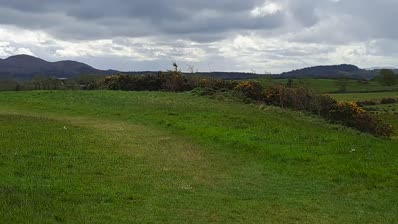
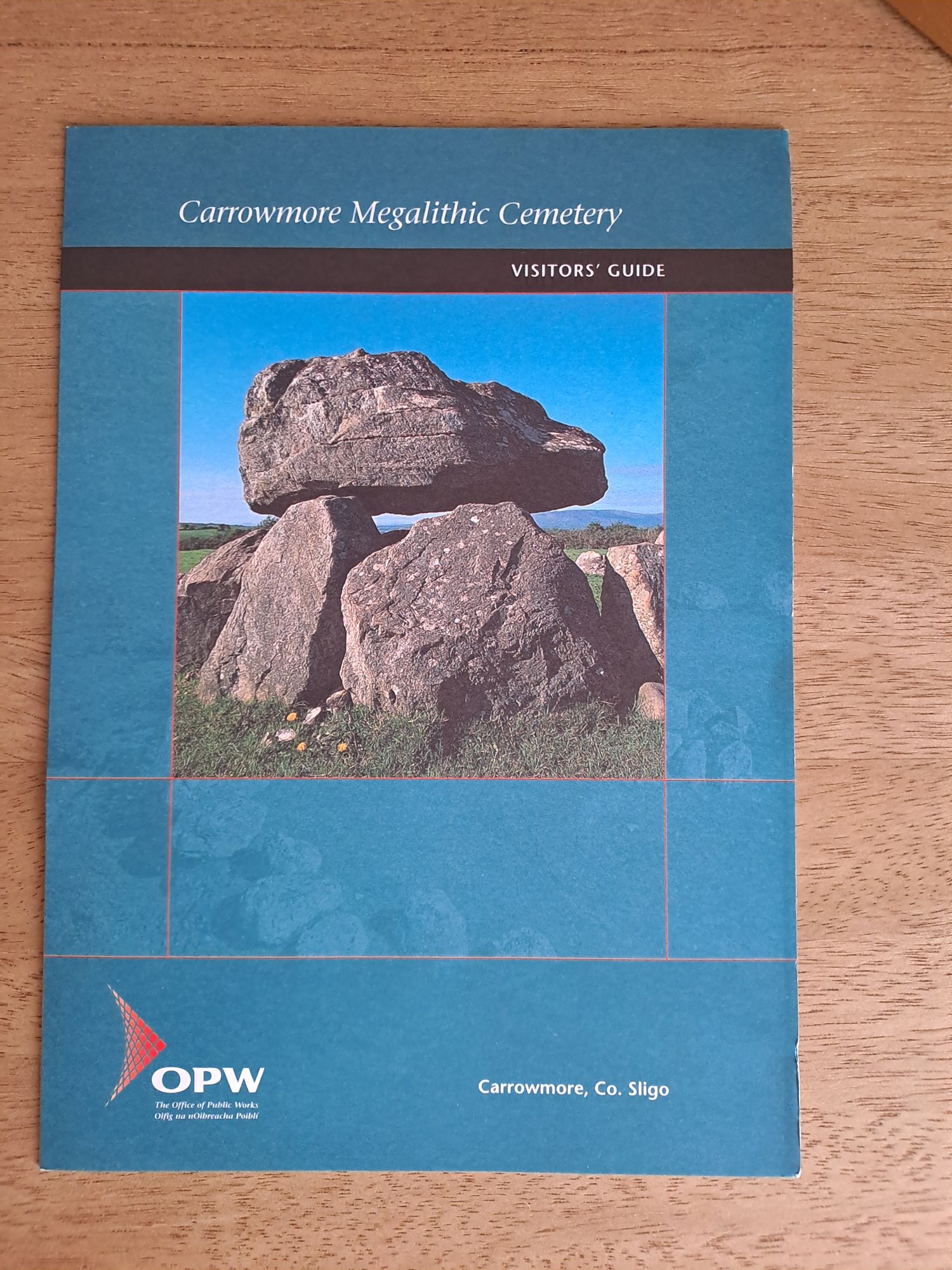

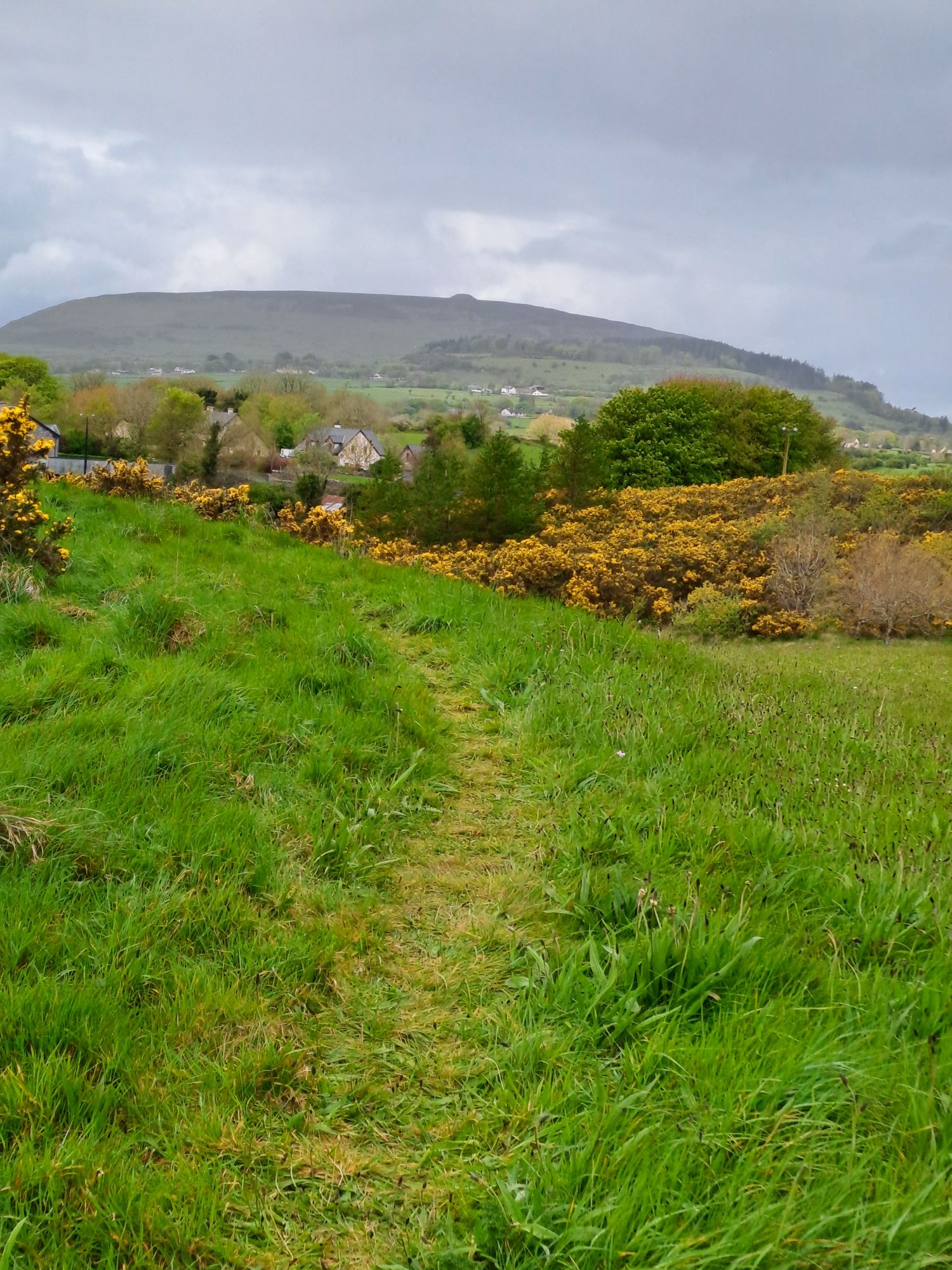


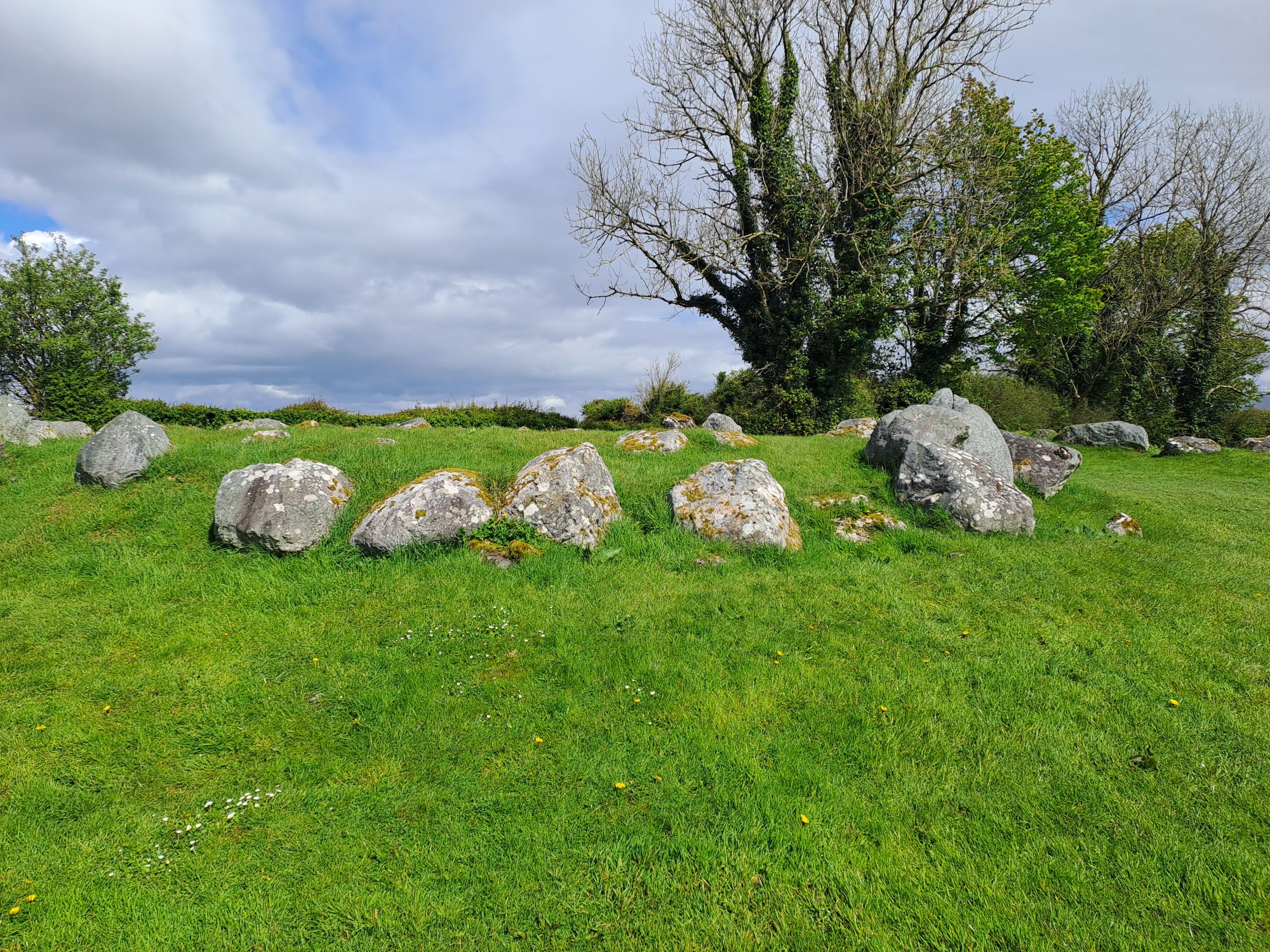
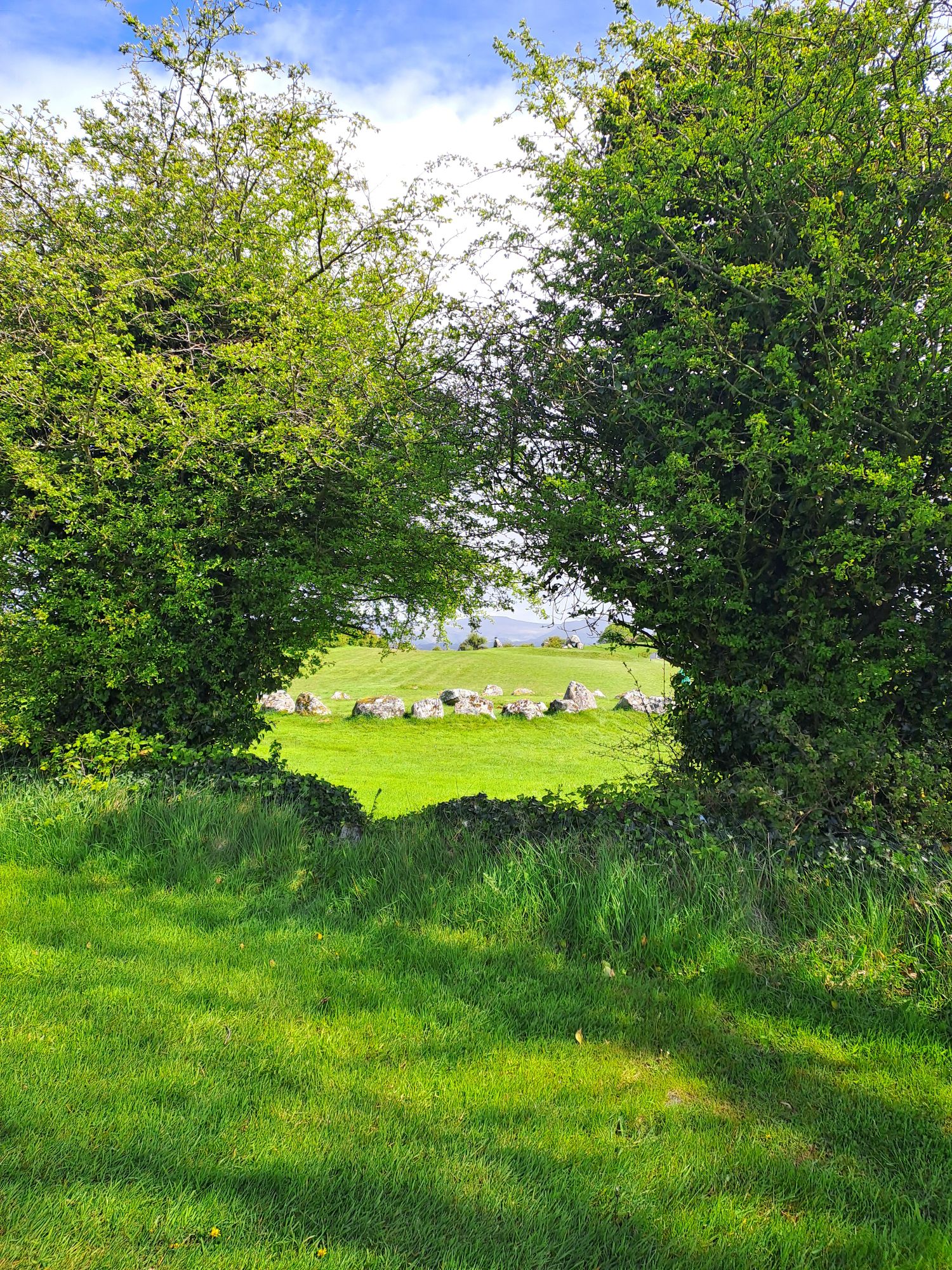
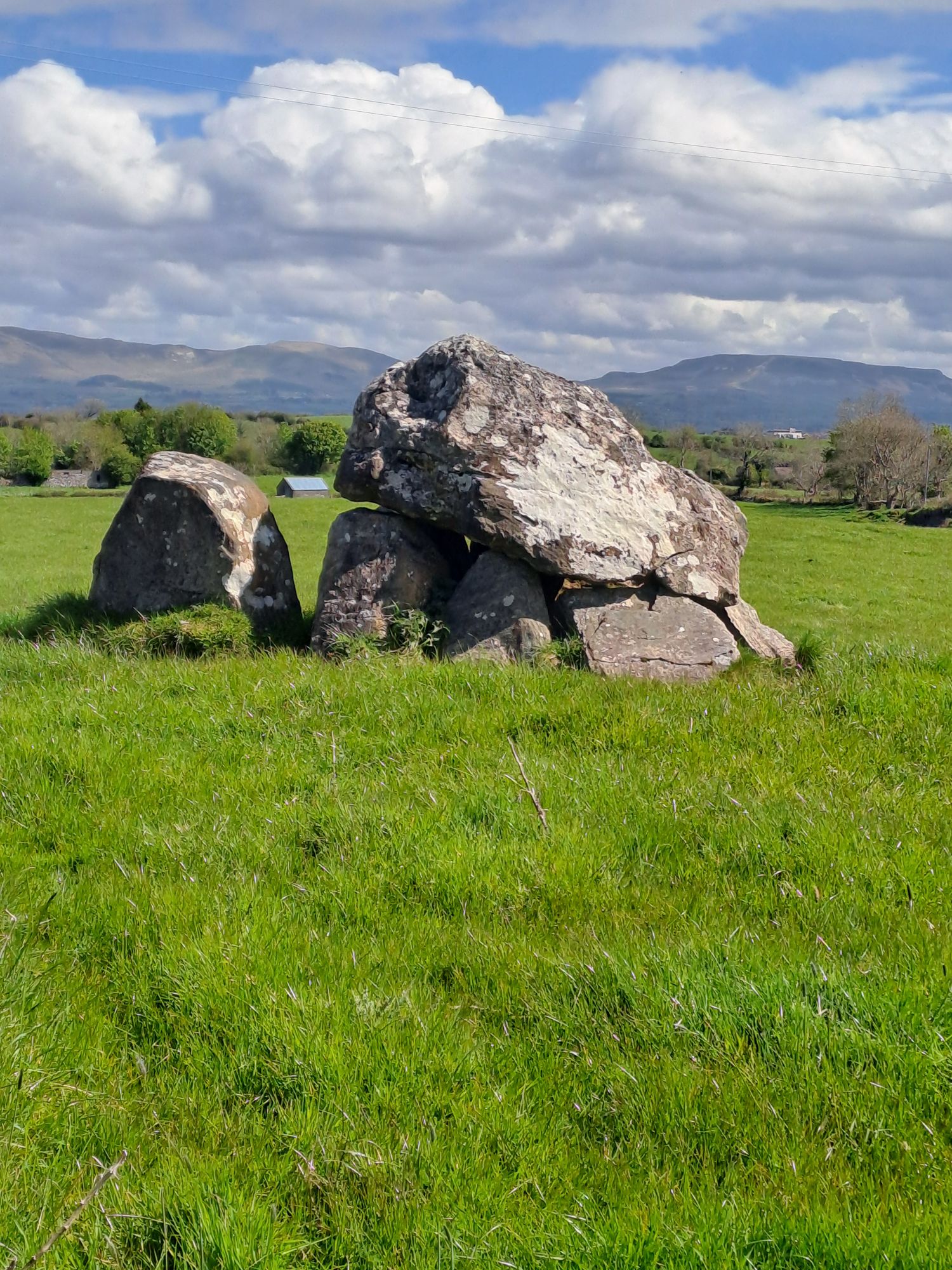
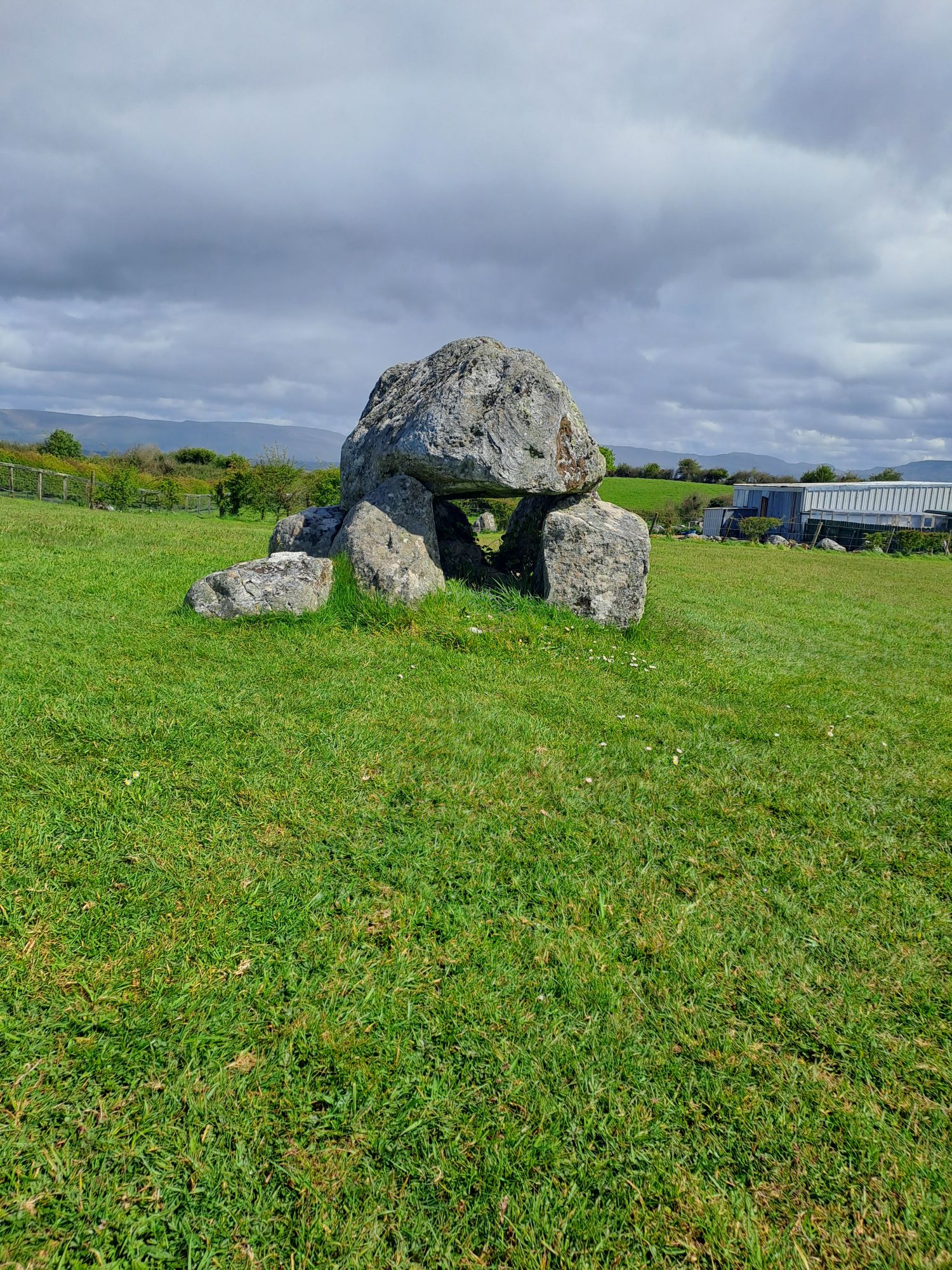
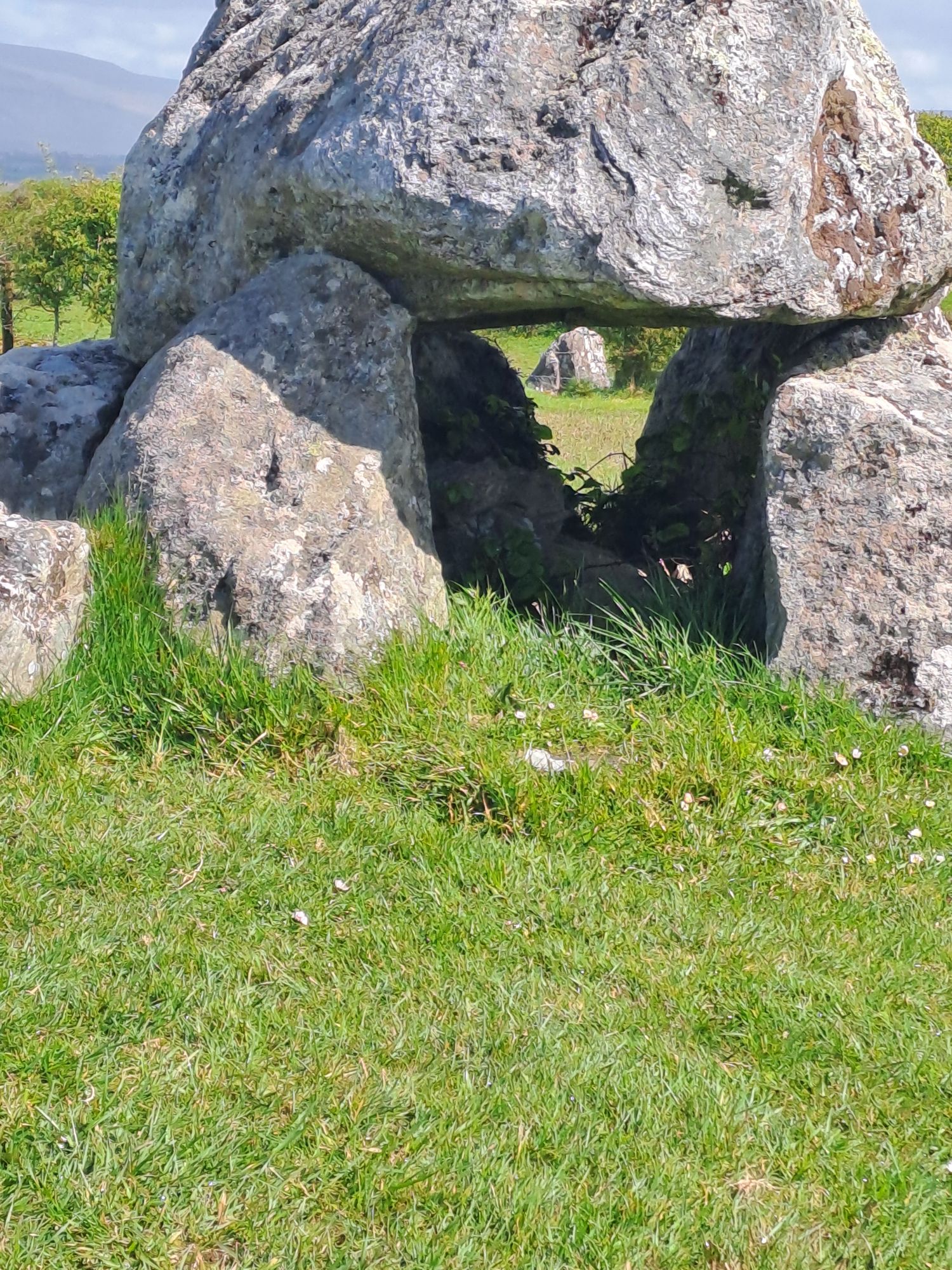
A visitor can easily understand why this was felt to be an appropriate last resting place for the Great and the Good. The surrounding topography is very interesting, as you can see from the first picture (of a model in the Visitor’s Centre); it’s on a peninsula between Sligo Harbour to the North and Ballysadare Bay to the South, and is surrounded on three sides by mountains. In particular, the site is overlooked from the west by Knocknarea, on top of which lies a large cairn, Miosgán Meadhbha, reputed to be the burial-place of the legendary Queen Maeve (Méabh in modern Irish). I was surprised to learn that this has never been excavated, so nobody really knows who or what is inside though it probably contains a passage tomb of similar form to those on the Carrowmore site. The cairn at the centre of Carrowmore, called Listoghil, the entrance to which you can see in one of the pictures, is a reconstruction.
Sadly, many other tombs were destroyed in the 19th Century, with stones being robbed to make walls when the land was enclosed, and large-scale quarrying for gravel in the area. Only some of the tombs are on publicly-owned land, but others are visible in nearby fields and indeed all around the area. There is even a stone circle in Sligo itself, on a housing estate called Abbeyquarter. Who knows what else is lurking under the unexcavated ground?
This forthcoming Bank Holiday weekend there is the Queen Maeve Festival in Sligo, but I will be in Barcelona.
Masters in Theoretical Physics & Mathematics at Maynooth
Posted in Education, Maynooth, The Universe and Stuff with tags Maynooth University, Theoretical Physics & Mathematics, Theoretical Physics and Mathematics on April 30, 2024 by telescoperI may not be in Maynooth this academic year but that doesn’t stop me using the medium of this blog to advertise the fact that the MSc in Theoretical Physics & Mathematics is open to applications for entry in September.

This postgraduate course is run jointly between the Departments of Theoretical Physics and Mathematics & Statistics, with each contributing about half the material. The duration is one calendar year (full-time) or two years (part-time) and consists of 90 credits in the European Credit Transfer System (ECTS). This is split into 60 credits of taught material (split roughly 50-50 between Theoretical Physics and Mathematics) and a research project of 30 credits, supervised by a member of staff in a relevant area from either Department.
Here is an instagram post advertising the course:
This course is a kind of follow-up to the existing undergraduate BSc Theoretical Physics & Mathematics at Maynooth, also run jointly. We think the postgraduate course will appeal to many of the students on that programme who wish to continue their education to postgraduate level, though applications are very welcome from suitably qualified candidates who did their first degree elsewhere.
There is a central system for postgraduate applications in Ireland (called PAC) that is similar to the undergraduate admissions system. You will need to apply online via PAC after the following the instructions here. The requisite PAC code for the full-time version of the course is MHQ56.
The closing date for applications is 30th June 2024.
All The Things You Might Be
Posted in Jazz with tags All the things you are, chords, Jazz, Jerome Kern on April 29, 2024 by telescoperApparently the great American songwriter Jerome Kern didn’t like Jazz at all. It’s ironic therefore that his tune All The Things You Are is such a favourite among Jazz musicians, sometimes played as it is and sometimes forming the underlying chord progression for some other tune. Here it is, sung by the sublime Ella Fitzgerald:
The first things you learn if you try to teach yourself something about how jazz works is that there are two basic forms: the Twelve-bar Blues and the Thirty-two-bar form built from an A section and a B section (the bridge) arranged AABA. It’s true that this gets you quite a long way but it doesn’t take you long to realize that many famous Blues are not based on 8 or 16 -bar cycle and many of those that are 12-bar blues don’t have the standard progression. Then you find out that some of the most well-known Jazz standards aren’t AABA either.
All The Things You Are is an example. The chorus of this tune actually consists of 36 bars in a A1A2BA3 form with two twists on the usual 32-bar AABA song-form: A2 transposes the initial A section down a fourth, while the final A3 section adds an extra four bars. The result is much easier to lose your way when you try to improvise but, on the other hand, provides a very rich framework within which to experiment. That’s obviously why Jazz musicians like it so much.
Here is a backing track for this tune that shows you the chords without the melody. Although I’m a fairly incompetent musician I love trying to play along to this sort of thing, playing the melody for one chorus to find your feet and then just letting the chords suggest possibilities. It’s tremendous fun and very rewarding if you do manage to play something original, even if it makes Jerome Kern turn in his grave.
The Children of Men by P.D. James
Posted in Biographical, Literature with tags Book, book-review, Books, Dystopia, fiction, Novel, P.D. James, The Children of Men on April 28, 2024 by telescoper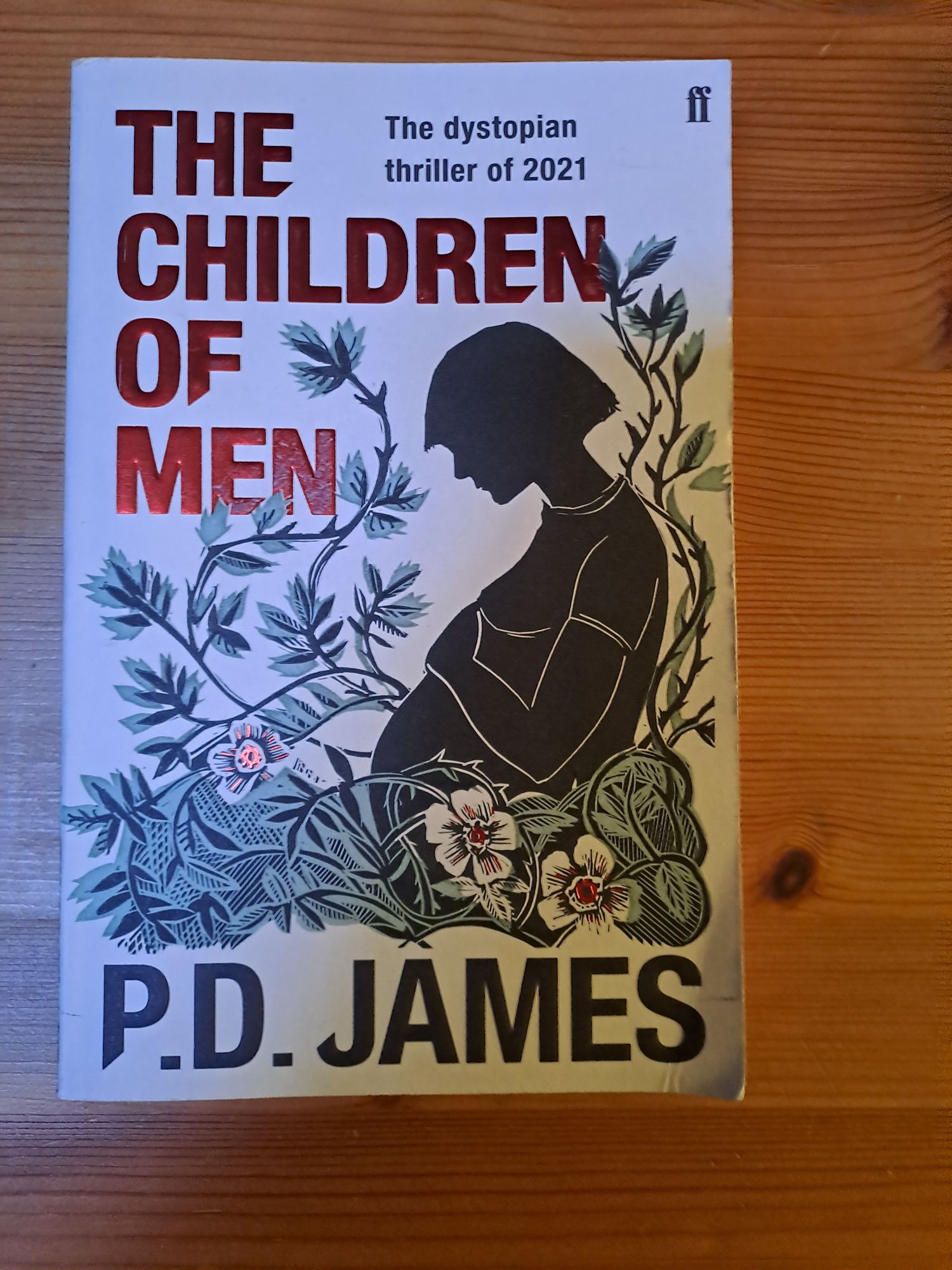
When I finished reading Death Comes to Pemberley by P.D. James I realized that there was one other book by the same author that I had never read, the dystopian thriller The Children of Men. I bought the above edition about five years ago, but the novel was first published in 1992.
The premise of this story, set in the (then future) 2021 is that, in 1995, for reasons unknown, the entire human race suddenly lost the ability to reproduce. The book makes no attempt to explain the origins of this mass infertility, and it is a conceit that I found very implausible, but I did manage to suspend my disbelief enough to engage with the author’s ideas about what a society without children might be like. That is basically what the first half of the book tries to do. It’s an interesting idea and what develops is not the kind of post-apocalyptic scenario that has been written about many times before.
In 2021 England is ruled by a dictator, called the Warden, by the name of Xan. He happens to be the cousin of the principal protagonist, Theo. The Powers That Be introduce the concept of a Quietus, at which elderly people are forced to commit mass suicide. A penal colony is set up on the Isle of Man where prisoners are dumped and left to fend for themselves. As the population ages, schools and colleges close, buildings are left to decay, and as numbers decrease people are forced to move to larger towns, the only places where services and utilities can be maintained.
One thing that struck me reading this in 2024 is that the author did not foresee any of the technological advances that were to occur between 1995 and 201. The existence of the internet or even mobile phones would have had significant implications for the plot.
The novel is split into two parts, Book 1 (Omega) and Book 2 (Alpha), and the first part is largely devoted to describing the decay and hopelessness of a society without children. I found it rather heavy-handed, with too much sermonizing. While Book 1 verges on a sort of allegory, no doubt inspired by the author’s own Christian faith, n Book 2 the story becomes a well-plotted thriller. After witnessing the horror of a Quietus, Theo joins a small group of dissidents based in Oxford who carry out a campaign to disrupt such events and think that Theo’s relationship to the Warden might be useful in effecting change at the top. As well as being Xan’s cousin, Theo used to work for Government as an adviser to the Warden.
The group is, however, rumbled and its members have to flee into the countryside. Along the way we find that one of their number, a woman by the name of Julian, is pregnant. Fortunately another member of the group, Miriam, is a midwife (although she obviously hasn’t practiced for 25 years). We learn the identify of the father of Julian’s child but not the reason why she has conceived when apparently nobody else on the planet can. Obviously the Alpha in the title of the second book refers to this child. I won’t say how it all finishes, except that the ending is ambiguous.
The fugitives-on-the-run part of the story in Book 2 is very well crafted and genuinely exciting, but the pregnancy adds yet another level of implausibility to a plot that seemed to me already very contrived. Although it is a page-turner I found it ultimately unsatisfying.
P.S. I understand there is a film based on the book, but I haven’t seen it.
Three New Publications at the Open Journal of Astrophysics
Posted in OJAp Papers, Open Access, The Universe and Stuff with tags 2312.09183v3, arXiv:2311.03491v2, Astrophysics of Galaxies, black holes, Brown Dwarf, dark matter, Dark Matter Haloes, galaxy formation, mass loss, Merging black holes, Open Access Publishing, Solar and Stellar Astrophysics, stellar mass loss, The Open Journal of Astrophysics on April 27, 2024 by telescoperIt’s time for the usual Saturday roundup of business at the Open Journal of Astrophysics. The latest batch of publications consists of three papers, taking the count in Volume 7 (2024) up to 30 and the total published by OJAp up to 145.
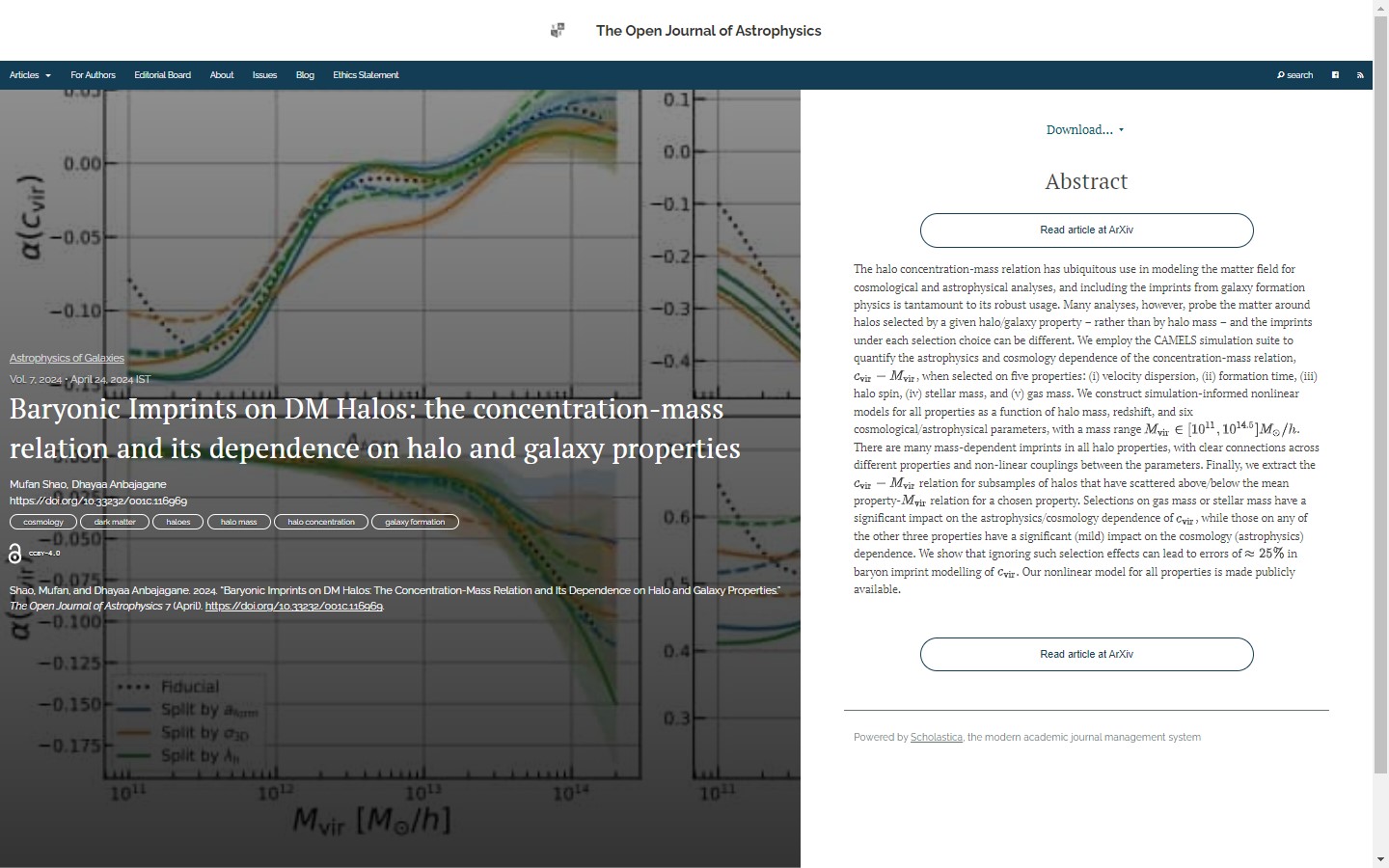
First one up is “Baryonic Imprints on DM Halos: the concentration-mass relation and its dependence on halo and galaxy properties” . The authors, Mufan Shao and Dhayaa Anbajagane of the University of Chicago, USA, use a non-linear model informed by simulations to study the imprint of galaxy formation physics on the concentration-mass relationship using various different choices of halo selection criteria. This one is in the folder marked Astrophysics of Galaxies and was published on 24th April 2024.
Here is a screen grab of the overlay, which includes the abstract:
You can read the paper directly on arXiv here.
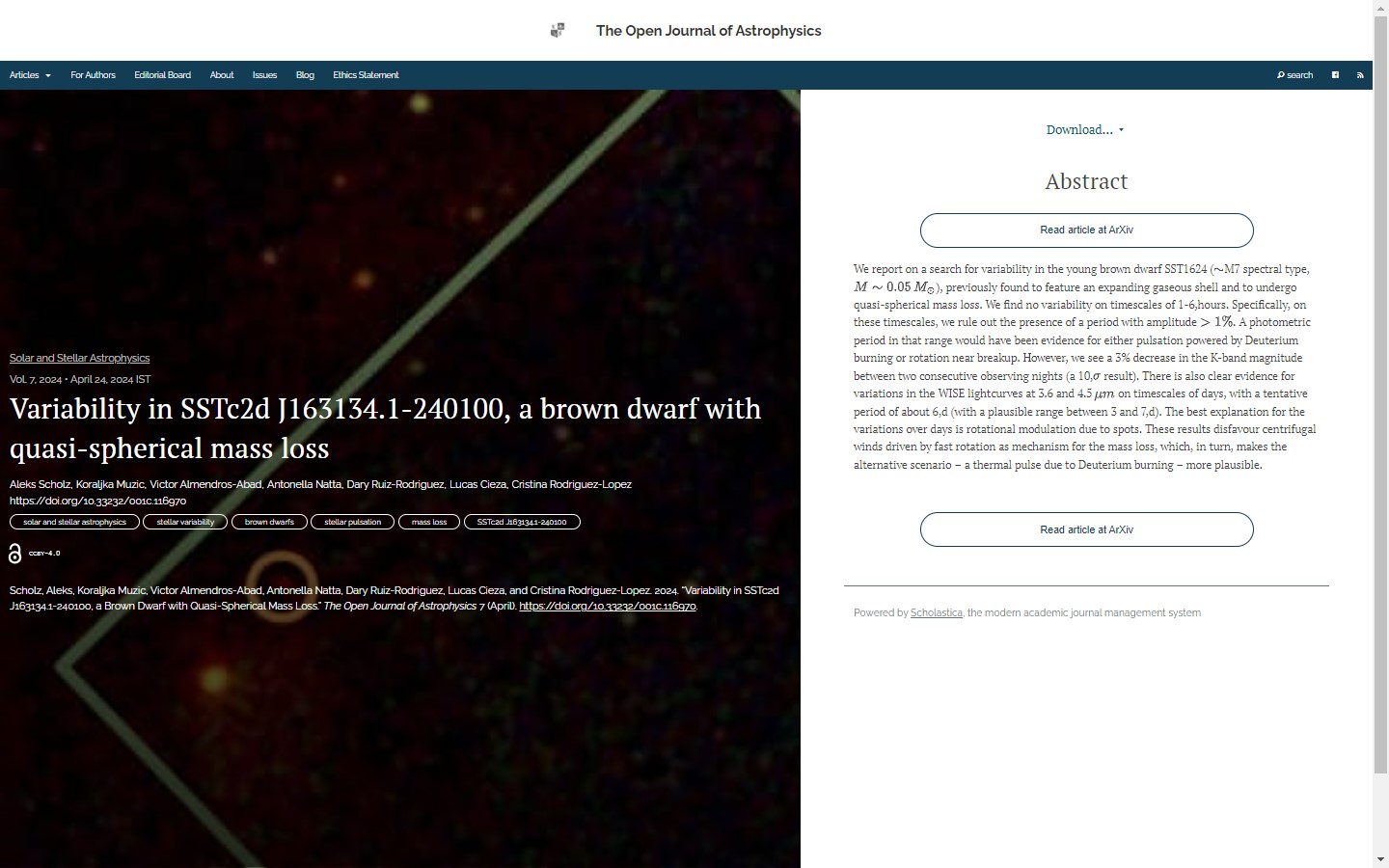
The second paper to announce is “Variability in SSTc2d J163134.1-240100, a brown dwarf with quasi-spherical mass loss” which describes a search for variability in a brown dwarf star known to be losing mass and the implications of the lack thereof for the reason for the outflow therefrom. The authors are Aleks Scholz (St Andrews, UK), Koraljka Muzic (Lisbon, Portugal), Victor Almendros-Abad (Palermo, Italy), Antonella Natta (DIAS, Ireland), Dary Ruiz-Rodriguez (NRAO, USA), Lucas Cieza (Uni. Diego Portales, Chile), Cristina Rodriguez-Lopez (IAA-CSIC, Granada, Spain)
This one is in the folder Solar and Stellar Astrophysics and was also published on 24th April 2024. The overlay looks like this:
You can read this paper directly on the arXiv here.
The last paper of this batch, also in the folder marked Astrophysics of Galaxies, is entitled “MAGICS I. The First Few Orbits Encode the Fate of Seed Massive Black Hole Pairs” and is a computational study of the process by which massive black holes are formed by merging smaller seed black holes. It was published on April 26th 2024 (i.e. yesterday). The authors are: Nianyi Chen, Diptajyoti Mukherjee and Tiziana Di Matteo (all Carnegie Mellon University); Yueying Ni (Harvard); Simeon Bird (University of California, Riverside); and Rupert Croft (Carnegie Mellon University). All authors are based in the USA.
Here is a screengrab of the overlay:
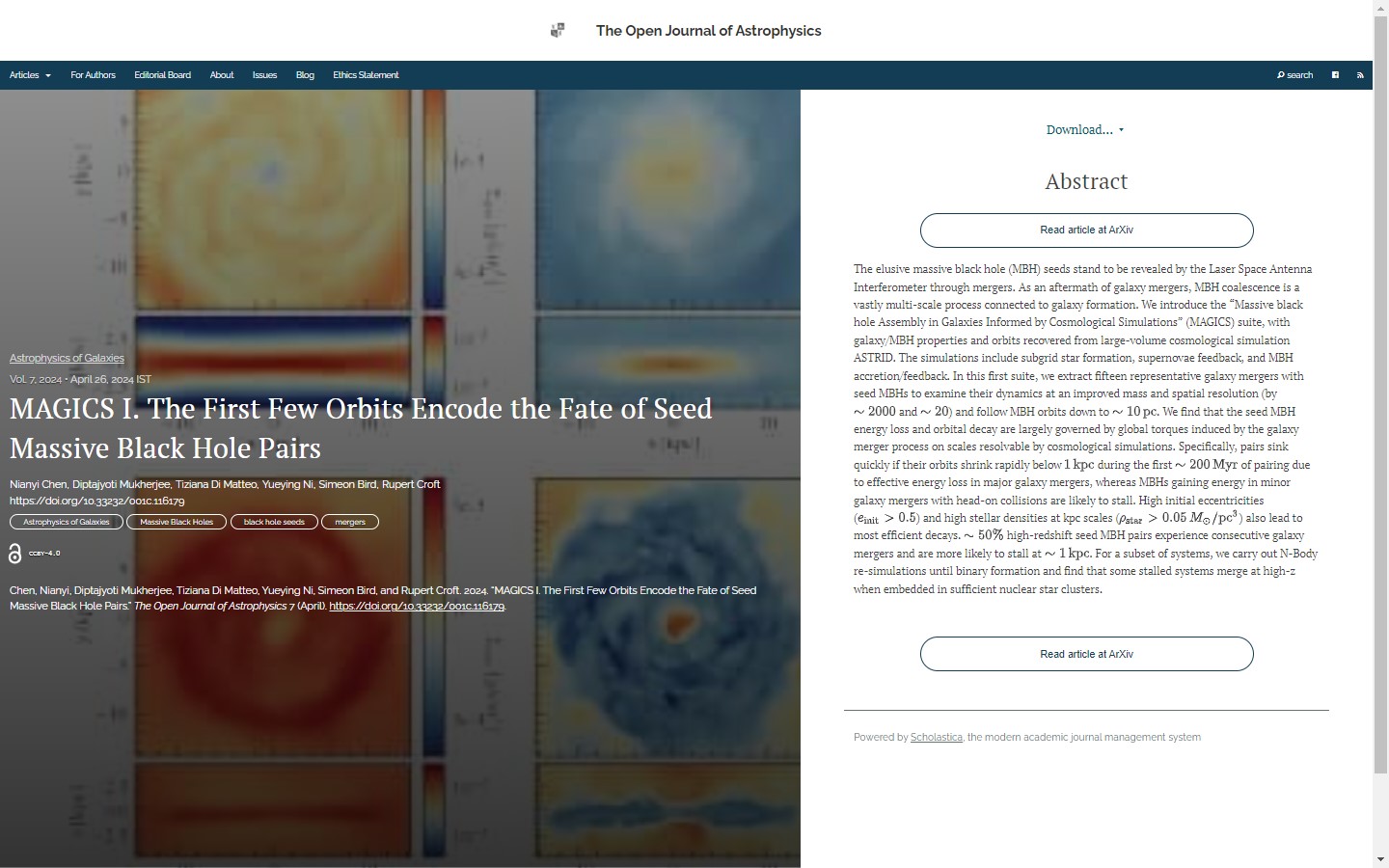
To read the accepted version of this on the arXiv please go here.
That’s all for now. More news in a week or so!
Black Rook in Rainy Weather – Sylvia Plath
Posted in Poetry with tags Black Rook in Rainy Weather, Poems, Poetry, Sylvia Plath on April 26, 2024 by telescoperOn the stiff twig up there
Hunches a wet black rook
Arranging and rearranging its feathers in the rain-
I do not expect a miracle
Or an accident
To set the sight on fire
In my eye, nor seek
Any more in the desultory weather some design,
But let spotted leaves fall as they fall
Without ceremony, or portent.
Although, I admit, I desire,
Occasionally, some backtalk
From the mute sky, I can’t honestly complain:
A certain minor light may still
Lean incandescent
Out of kitchen table or chair
As if a celestial burning took
Possession of the most obtuse objects now and then —
Thus hallowing an interval
Otherwise inconsequent
By bestowing largesse, honor
One might say love. At any rate, I now walk
Wary (for it could happen
Even in this dull, ruinous landscape); sceptical
Yet politic, ignorant
Of whatever angel any choose to flare
Suddenly at my elbow. I only know that a rook
Ordering its black feathers can so shine
As to seize my senses, haul
My eyelids up, and grant
A brief respite from fear
Of total neutrality. With luck,
Trekking stubborn through this season
Of fatigue, I shall
Patch together a content
Of sorts. Miracles occur.
If you care to call those spasmodic
Tricks of radiance
Miracles. The wait’s begun again,
The long wait for the angel,
For that rare, random descent.
by Silvia Plath (1932-63)
Revolução dos Cravos
Posted in History, Music, Politics with tags Carnation Revolution, Fascism, History, Portugal, portuguese, Revolução dos Cravos, Zeca Afonso on April 25, 2024 by telescoperMy office mate in Barcelona is Portuguese and he very proudly reminded me this morning that today, 25th April 2024, is the 50th anniversary of the Carnation Revolution that ultimately overthrew a fascist dictatorship and led Portugal towards becoming a progressive democracy. Just over a year later, General Franco died and Spain began its transition to democracy too. Both countries joined the European Community in 1986 and are now members of the European Union. It’s hard to believe, only 50 years on, that fascism is on the rise once more in Europe (and elsewhere). That makes it all the more important to remember the struggles of the not-so-distant past.
The signal for the Revolução dos Cravos in Portugal to begin was a song played on the radio. The result was remarkable. Although led by military officers dissatisfied with the ruling regime, it garnered a huge level of popular support and morphed into a coordinated campaign of mass civil resistance. When regime change was achieved, it was largely peaceful. The name “Carnation Revolution” refers to the flowers given to soldiers by people celebrating their liberation from authoritarianism.
Fascismo nunca mais! Vinte e cinco de abril sempre!
I couldn’t help sharing the song that triggered that huge historical moment. It is Grândola, Vila Morena by Zeca Afonso. Few people can lay claim to have written a song that brought down a dictatorship.
.Astronomy
Posted in Barcelona, Euclid, The Universe and Stuff with tags astronomy, dotastronomy, ESAC, ESOC, Euclid, European Space Agency, European Space Astronomy Centre, European Space Operations Centre, Madrid on April 24, 2024 by telescoper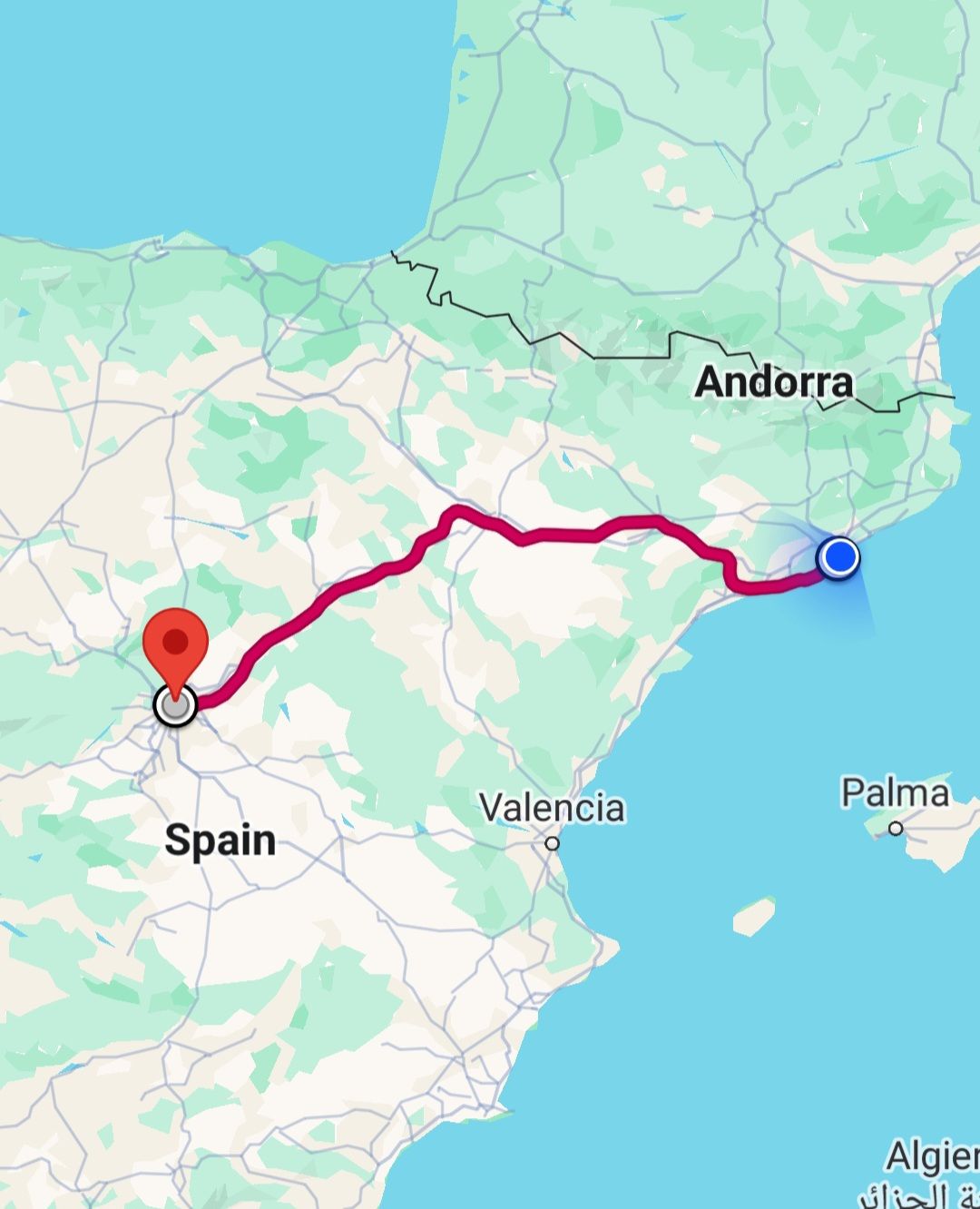
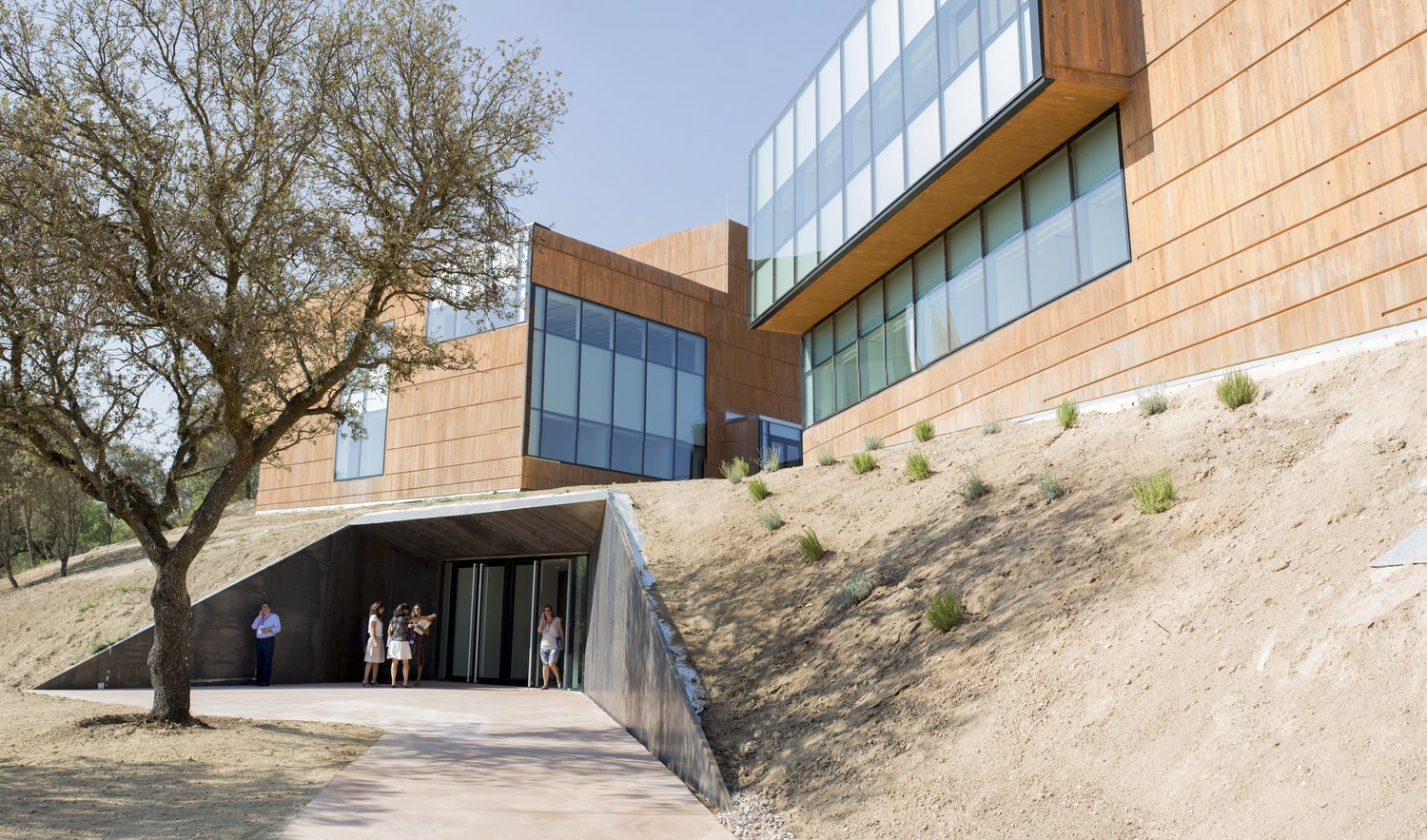
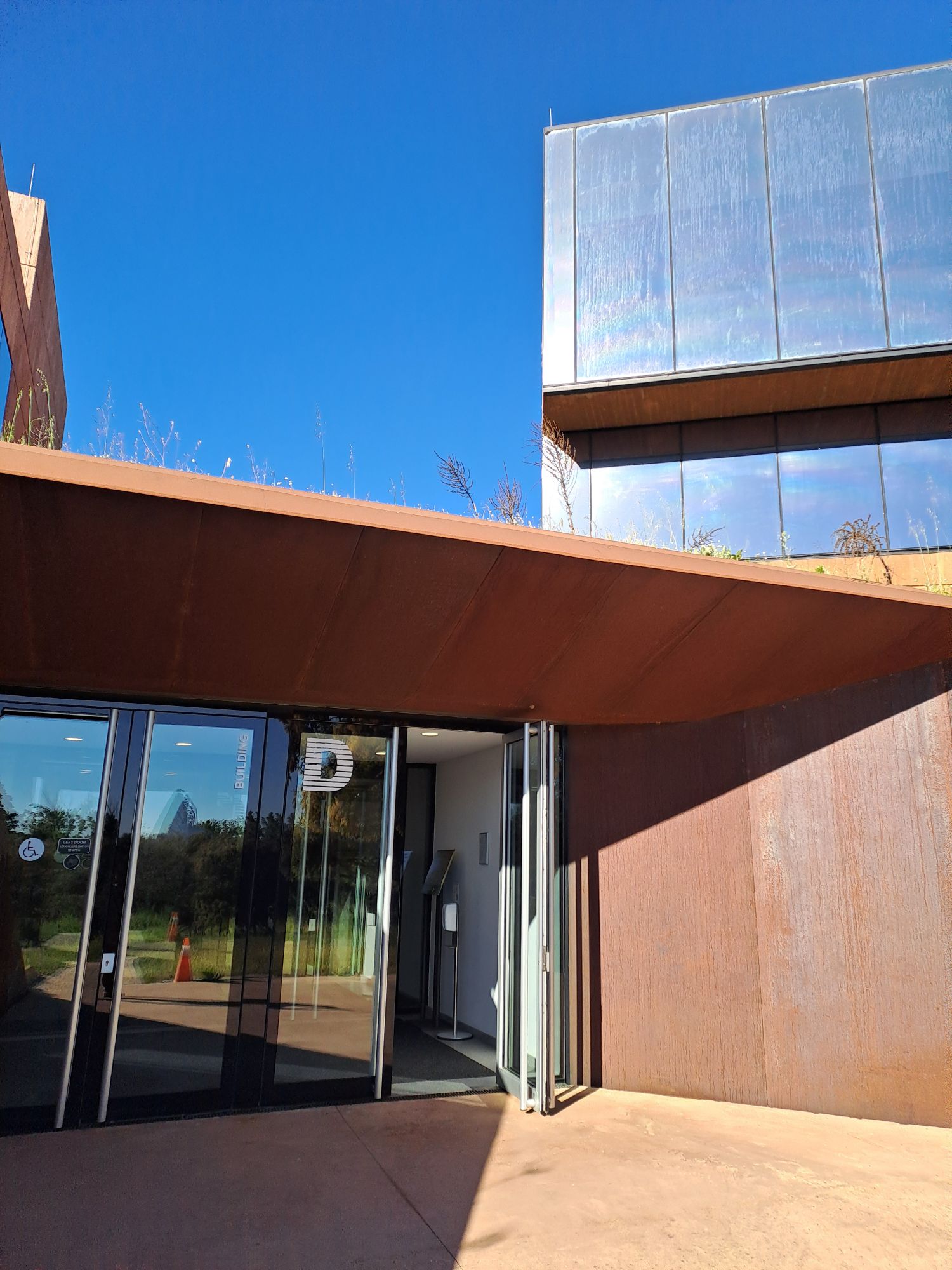

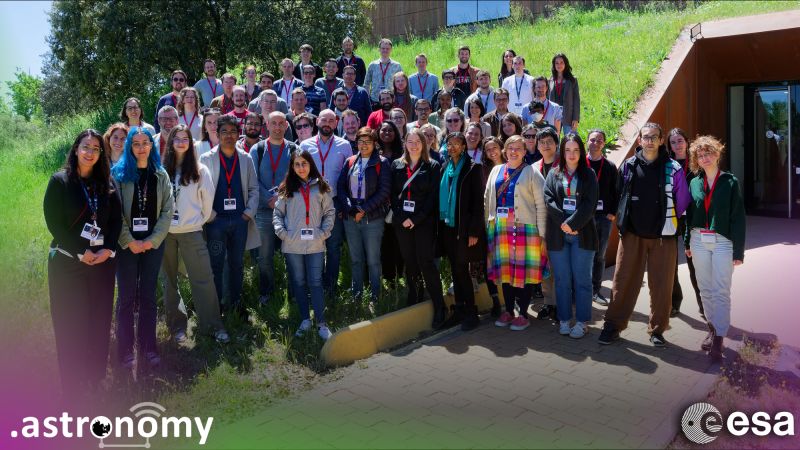
So here I am at the European Space Astronomy Centre (ESAC) just outside Madrid for a conference called .Astronomy 13. It is (obviously) the thirteenth such conference but the first that I have attended. I’m giving a plenary talk in half-an-hour or so. I travelled from Barcelona by train yesterday evening, which was a comfortable and uneventful trip, the (approximately) 504 km from Barcelona to Madrid Atocha station taking about 2 hours and 30 minutes that cost about 30 euros. I stayed overnight in Madrid and took a shuttle bus from to ESAC. The only glitch in my travels so far was that I got on the Metro Line 6 (the equivalent of the Circle Line), but chose the wrong platform and went the long way round. I still got there in time to get the shuttle.
Incidentally, ESAC hosts the Euclid Science Operations Centre (SOC) which plays a central role in the processing of data from Euclid and is also responsible for the development and operations of the Euclid Archive from which data will be distributed to the global astronomical community.
UPDATE: Back in Barcelona. The return by train was just as smooth an uneventful as the outbound journey, and in fact arrived back about five minutes ahead of schedule. Thanks to the organizers for inviting me – I’m sorry I couldn’t stay for longer as I like the idea of the .Astronomy meetings. Perhaps we should have one in Ireland sometime?

 In the Dark