Archive for Cosmology

A Primordial Black Hole?

Posted in The Universe and Stuff with tags , , , , , on September 3, 2025 by telescoper

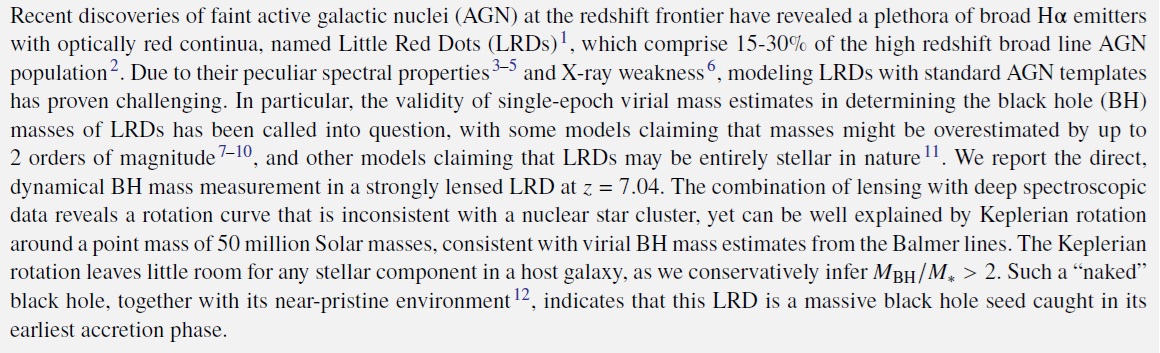
There’s a recent paper on arXiv with the title A direct black hole mass measurement in a Little Red Dot at the Epoch of Reionizationon by Juodžbalis et al. that is causing a lot of interest. The paper is here and the abstract is:

There is a discussion of this in the Grauniad here and in several other places on the interwebs. It comes hard on the heels of the theoretical paper announced here.

I only saw this paper yesterday and, now that I’ve read it, it isn’t really all that clear to me what this object is. No doubt there’ll be considerable follow-up. One possibility – and it is just a possibility – is that we are seeing evidence of a primordial black hole, called a PBH for short. These are black holes formed by direct collapse in the early Universe rather than by merging of stellar black holes. Note the use of the word “naked” is rather misleading. It does not mean a naked singularity, in the sense of a singularity without an event horizon around it. In this case it just means that it appears not to be surrounded by accreting material or even a host galaxy.

A PBH of mass M would form at a particular cosmic time t if a region of radiius ~ct (the cosmological horizon scale) collapses into a black hole. Obviously this would require a large fluctuation in density on that scale but if a PBH does form then its mass will be roughly the mass contained within the horizon, i.e. M ~ ρ(t) (ct)3 (ignoring dimensionless factors). The sort of mass required (~106 M) corresponds to a time when the Universe was radiation-dominated and before matter and radiation decoupled. What would be inside such a black hole is therefore predominantly trapped radiation, which is Quite Interesting, but as far as the outside universe is considered it’s just a massive black hole.

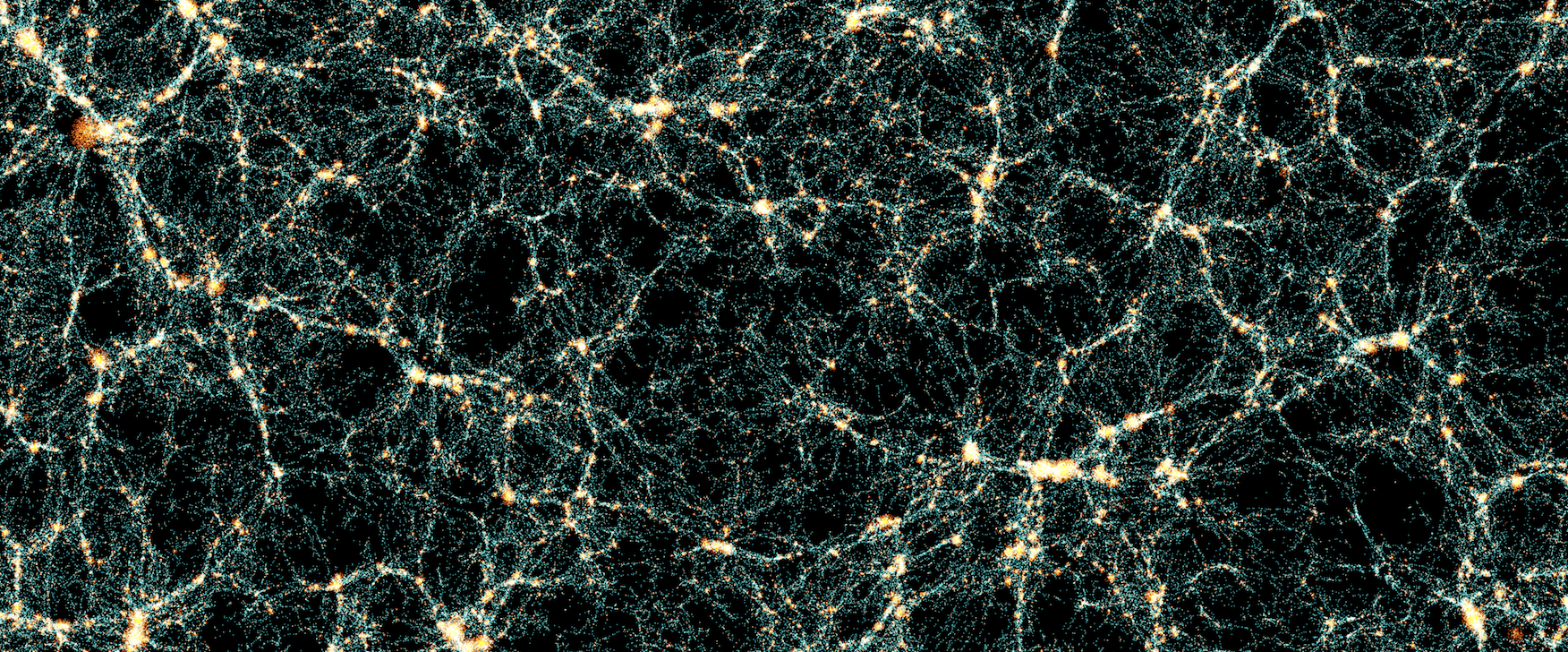
Graphic by European Space Agency showing how structure formation might be affected by PBH formation

Anyway, during radiation domination, the mass-energy density of the Universe ρ(t) ∝ t-2, so the horizon mass increases linearly with t. According to the standard cosmology, the epoch of radiation domination lasts for approximately 50,000 years after the Big Bang, i.e. of order 1012 seconds, and at the end of it the horizon mass is of order 1014 M. Assuming that the universe is completely radiation-dominated before that the time at which a PBH of mass 106 M would form is about 104 seconds, i.e. getting on for 3 hours after the Big Bang. This is after the end of cosmological nucleosynthesis, but not by much. Primordial black holes of lower mass than this would form earlier, with a stellar mass PBH having to collapse around the time of the quark-hadron transition. Lighter PBHs would form even earlier.

The numbers I’ve quoted are very approximate, back-of-the-envelope, ballpark guesstimates. For one thing not all of the horizon mass will end up in a PBH: energy may well be released during the collapse. Moreover, some PBHs on one scale will subsequently be subsumed within objects of larger mass. Also I’ve ignored quite a lot of numerical factors. All this will have to be worked out properly, but there are potential constraints on any physical processes that might give rise to PBHs on the relevant scale if they involve a release of significant amount of energy as there may not be time for this excess to be thermalized by scattering or they may intefere with the element abundances predicted by nucleosynthesis.

That is all assuming it is a primordial black hole in the first place…

Galaxies and Black Holes in the First Billion Years

Posted in Biographical, The Universe and Stuff with tags , , , , , on September 1, 2025 by telescoper

Trying to catch up on recent developments in galaxy formation? I can heartily recommend an excellent review article on the subject by Richard Ellis which you can find on the arXiv here. The abstract reads:

 I present written notes from three lectures given at the 54th Saas-Fee Advanced Course of the Swiss Society of Astrophysics and Astronomy in January 2025 entitled “Galaxies and Black Holes in the First Billion Years as seen by the JWST”. I focused my lectures on progress in studies of cosmic reionisation, the properties of galaxies in the reionisation era, topics related to the redshift frontier and the search for Population III stars. The lectures were given to graduate students in astrophysics and cover both pedagogical material as well as observational results from the first two and half years of JWST science operations. The pace of discovery with JWST is, of course, rapid and so my lectures discuss long-term goals, analysis methods and their assumptions and limitations in the hope that the underlying material will retain value in the near future. In this written version, the visual material is that presented at Saas-Fee in January 2025 but I have provided updates on progress from the literature up to August 2025. The material is aimed at early career researchers and should not be considered as a scholarly review of the entire JWST literature on high redshift galaxies.

It’s quite a long article (65 pages) but nicely written and well worth reading, as it is full of information about recent advances as well as historical insights. Talking of which, there’s a picture on page 41 taken at a meeting in Durham in 1988 called The Epoch of Galaxy Formation that I attended while I was still a graduate student:

Richard Ellis himself is in the front row, left of centre with light-coloured trousers, checked shirt and hands in pockets. I’m in the picture too, but I’ll leave it up to you to find me!

A poll was held among the delegates at that meeting about various questions to do with galaxy formation. The majority opinions revealed by these votes nearly all turned out to be utterly wrong! That’s progress, I guess…

Weekly Update from the Open Journal of Astrophysics – 23/08/2025

Posted in OJAp Papers, Open Access, The Universe and Stuff with tags , , , , , , , , , , , , , , , , , , , , , , , , , on August 23, 2025 by telescoper

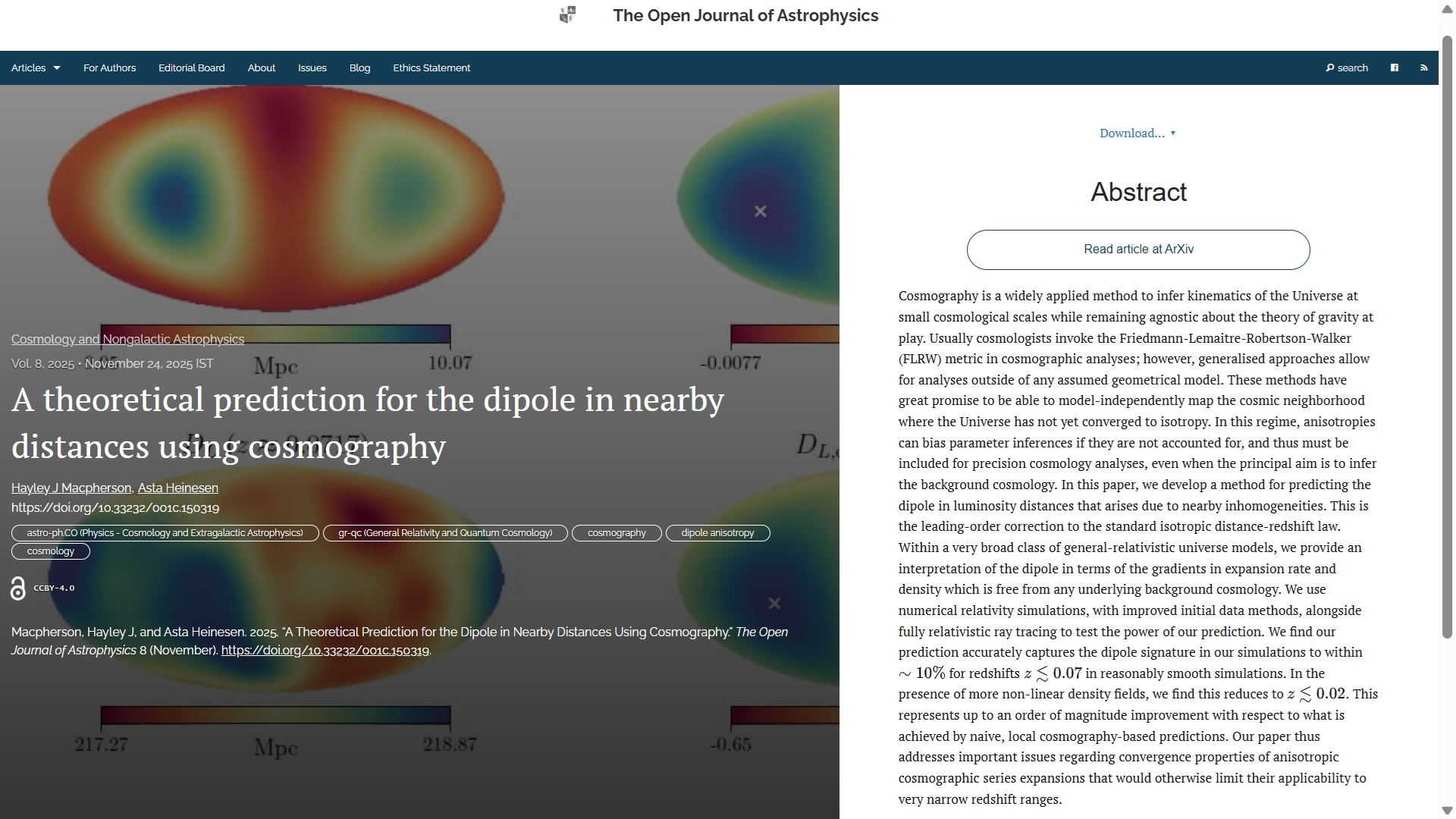
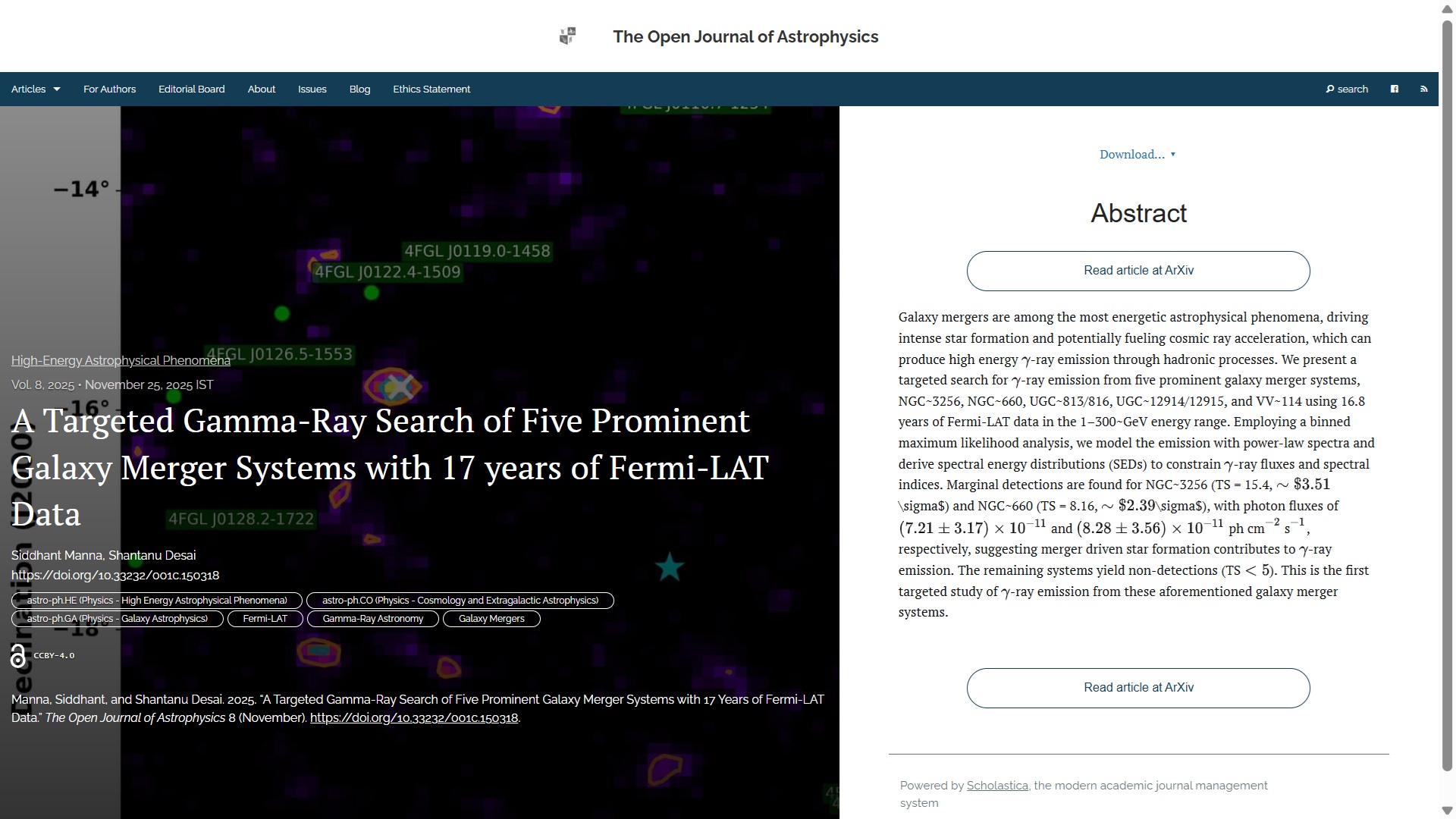
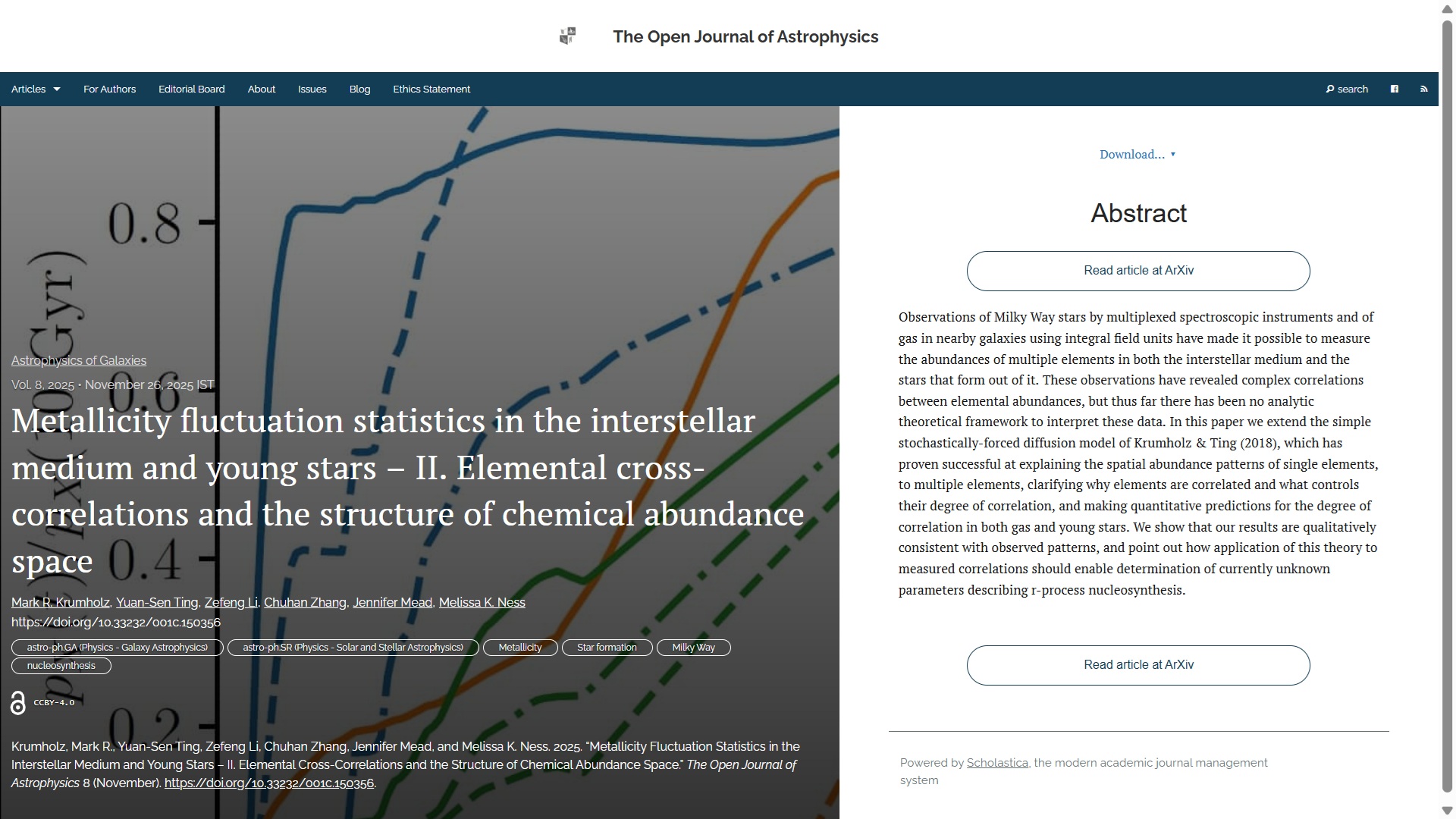
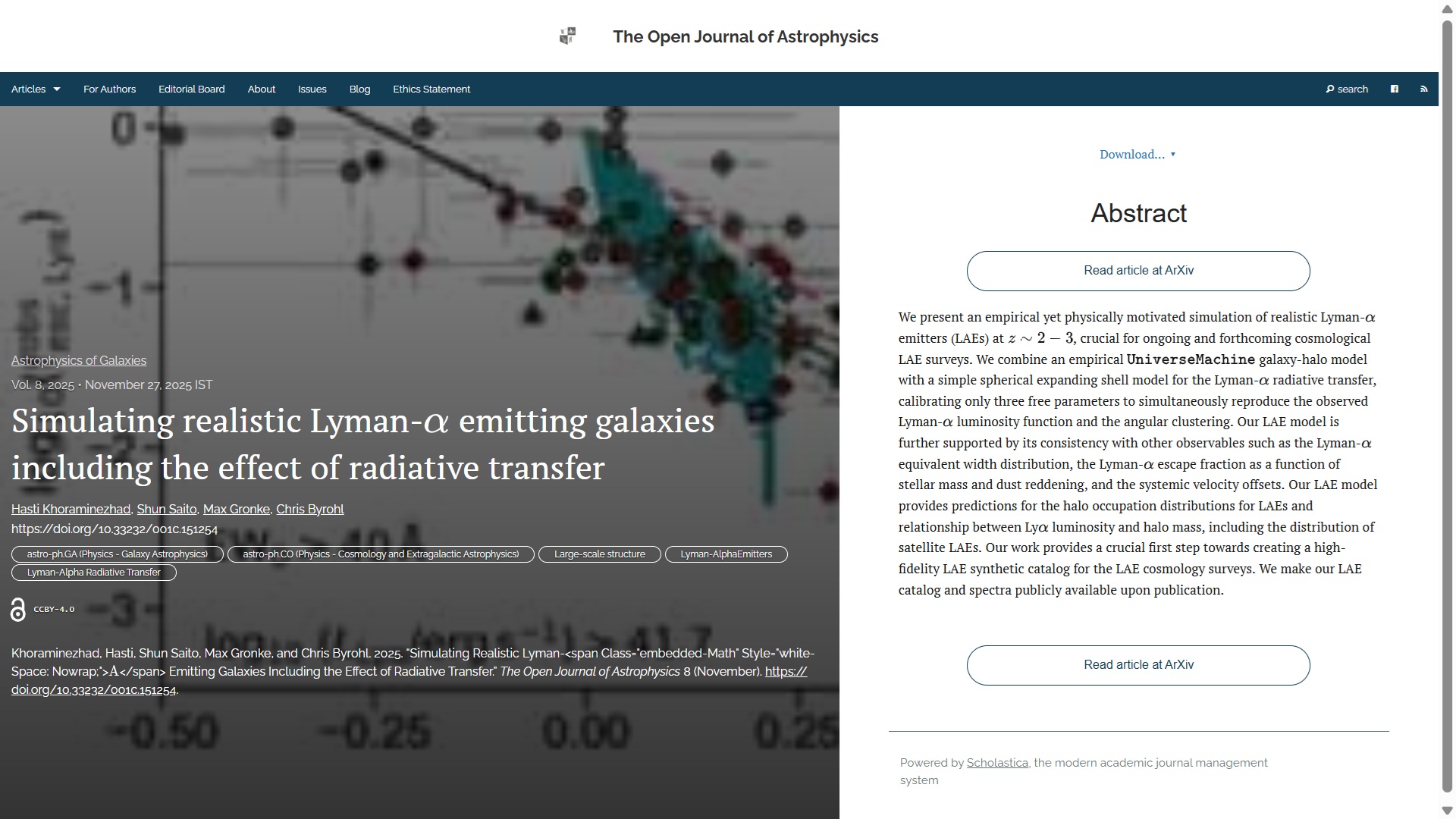
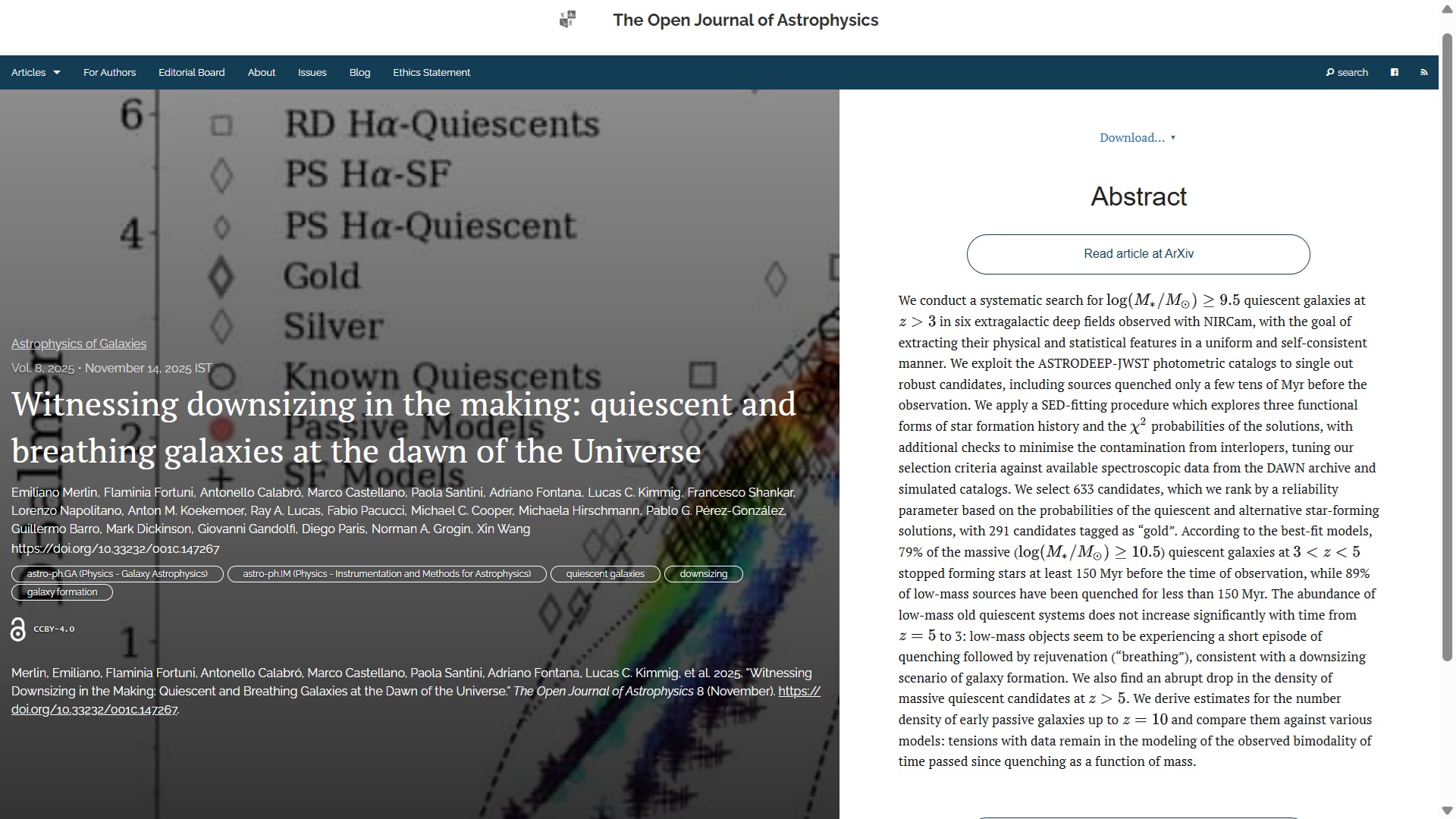
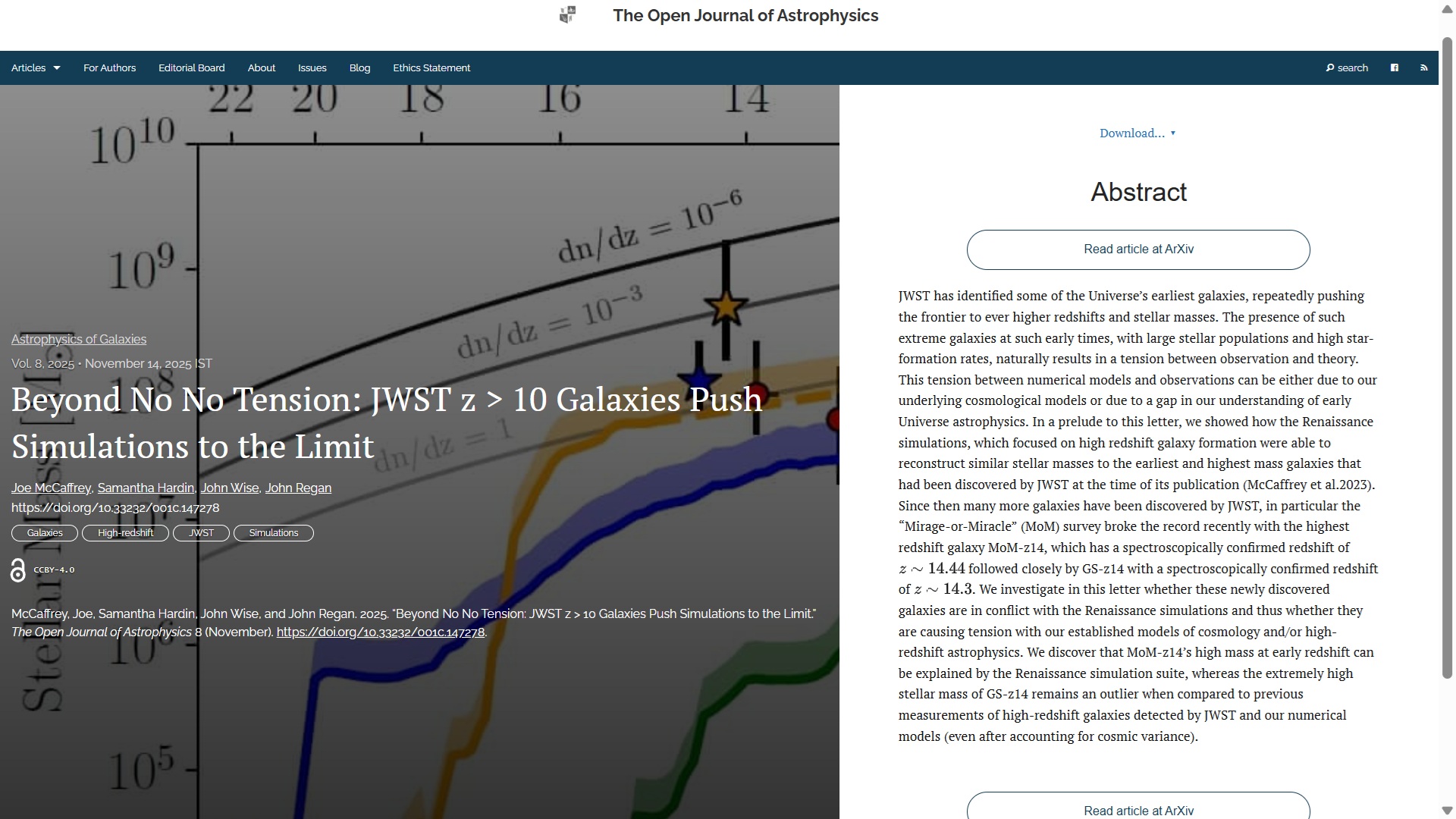
So it’s Saturday again, so it’s time for the usual update of papers published at the Open Journal of Astrophysics which I do every Saturday. Since the last update we have published six new papers, which brings the number in Volume 8 (2025) up to 122, and the total so far published by OJAp up to 357. As I mentioned here we have overtaken the total of 120 published in Volume 7 (2024) and are on track for in excess of 180 publications in 2025.

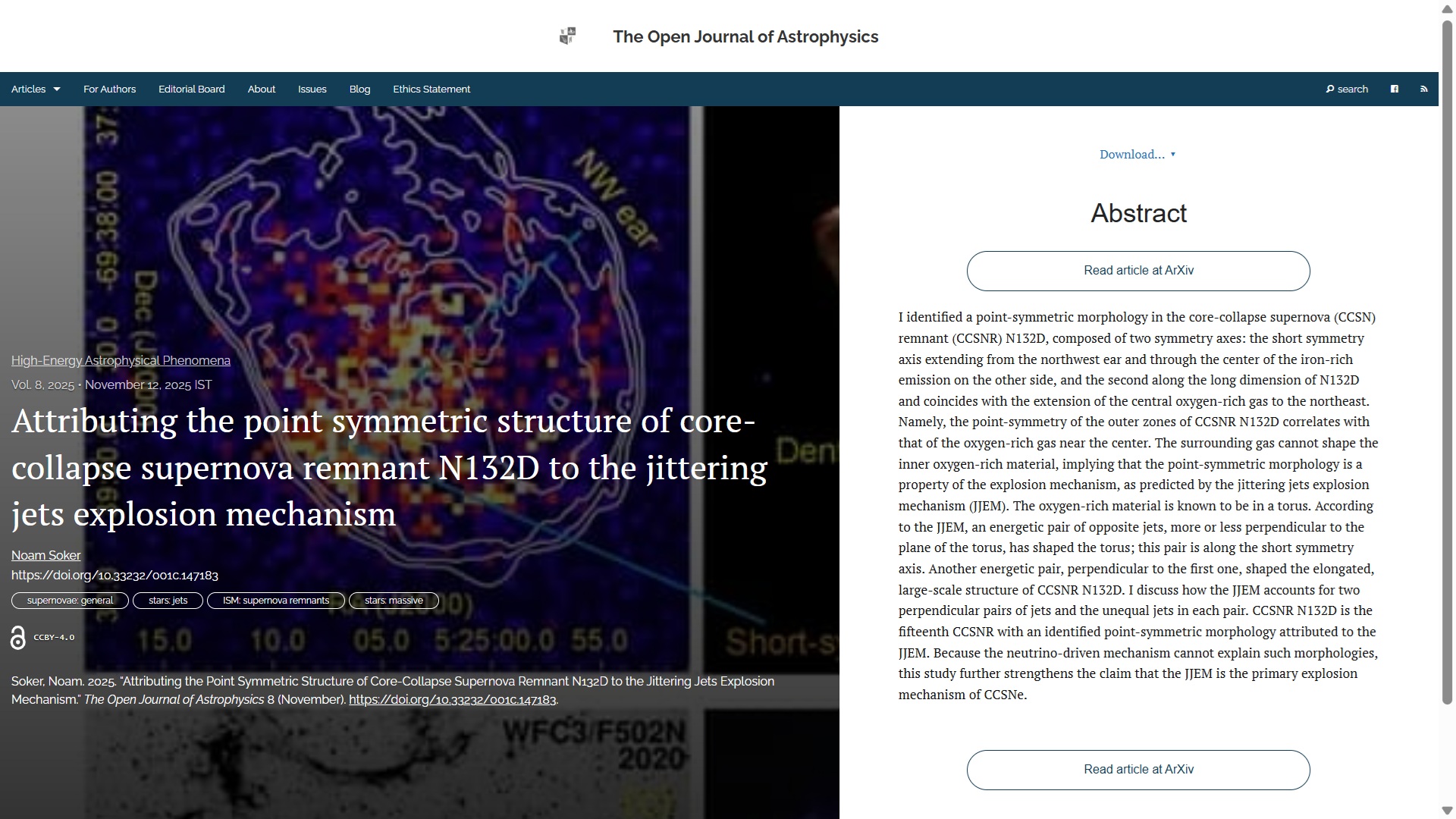
The first paper to report this week is “Mass-feeding of jet-launching white dwarfs in grazing and common envelope evolution” by Noam Soker (Technion, Haifa, Israel). This was published on Tuesday 19th August in the folder Solar and Stellar Astrophysics. It proposes a theoretical suggestion about the production of jets in common-envelope evolution with massive stars.

The overlay is here:

You can make this larger by clicking on it, as you can with all the overlays below. The officially accepted version of this paper can be found on the arXiv here.

The second paper this week, published on Wednesday 20th August in the folder Earth and Planetary Astrophysics, is “Transition metal abundance as a key parameter for the search of Life in the Universe” by Giovanni Covone and Donato Giovannelli (University of Naples, Italy). This paper presents an argument that the availability of transition elements is an essential feature of habitability, and should be considered as such in selecting exoplanetary targets in the search for life.

The overlay is here:

You can find the officially accepted version of the paper on arXiv here.

The third paper this week, also published on 20th August 2025 in the folder Earth and Planetary Astrophysics, is “Discrete element simulations of self-gravitating rubble pile collisions: the effects of non-uniform particle size and rotation” by Job Guidos, Lucas Kolanz and Davide Lazzati (Oregon State University, USA).  This presents a new computer code for simulating the growth of granular masses through collisions of smaller particles and discusses results generated by it.

The overlay for this one is here:

You can find the officially accepted version on arXiv here.

The next paper, the fourth this week, is “Seeing the Outer Edge of the Infant Type Ia Supernova 2024epr in the Optical and Near Infrared” by W.B. Hoogendam (University of Hawaii, USA) and 32 others – too numerous to list by name – based in various institutes in the USA, Australia, UK, Denmark, Taiwan and China. This paper was also published on Wednesday 20th August 2025, but in the folder High-Energy Astrophysical Phenomena.  The article reports on the results of optical-to-near-infrared photometry and spectroscopy of the Type Ia supernova (SN Ia) 2024epr and a discusses how these challenge models for this sort of supernova.

The overlay is here:

You can find the officially accepted version on arXiv here.

The fifth paper this week is “Computing Nonlinear Power Spectra Across Dynamical Dark Energy Model Space with Neural ODEs” by Peter L. Taylor of Ohio State University (USA).  This one shows how to compute the evolution of cosmological power spectra into the non-linear regime via neural differential equations. It was published on Friday 22nd August 2025 in the folder Cosmology and NonGalactic Astrophysics. The overlay is here:

You can find the officially accepted version on arXiv here.

And finally for this week we have “Symbiotic star candidates in Gaia Data Release 3” by Samantha E. Ball & Benjamin C Bromley (University of Utah, USA) and Scott J. Kenyon (Smithsonian Observatory, USA). This paper was published on Friday 22nd August in the folder Solar and Stellar Astrophysics. It describes a new search for symbiotic star candidates in Gaia Data Release 3 (GDR3), based on astrometric, photometric, and spectroscopic information. The overlay is here:

You can find the officially accepted version of this one on arXiv here.

And that’s all the papers for this week. I suppose there will come a time when we publish a paper on every day of the week and each week’s summary will contain a paper in each of the astro-ph categories on arXiv, but we haven’t done that yet. This week we published on every day but Monday 18th August, and have papers in four of the six categories.

Weekly Update from the Open Journal of Astrophysics – 02/08/2025

Posted in OJAp Papers, Open Access, The Universe and Stuff with tags , , , , , , , , , , , , , , , , , , , , , , , , , , , , on August 2, 2025 by telescoper

It’s Saturday morning again, and it’s the start of a new month, so it’s time for an update of papers published at the Open Journal of Astrophysics. Since the last update we have published five new papers, which brings the number in Volume 8 (2025) up to 110, and the total so far published by OJAp up to 345. I expect we’ll the total number we published last year (120) sometime this month. I predict that by the end of this year we will have published around 180 papers in Volume 8 and around 400 altogether.

The papers published this week, with their overlays, are as follows. You can click on the images of the overlays to make them larger should you wish to do so.

The first paper to report is “The matter with(in) CPL” by Leonardo Giani (U. Queensland, Australia), Rodrigo Von Marttens (Universidade Federal da Bahia, Brazil) and Oliver Fabio Piattella (Universita degli Studi dell’Insubria, Italy). This was published on Monday 29th July 2025 in the folder Cosmology and Nongalactic Astrophysics. This article presents a new parameterization of the standard model and its implications for the interpretation of cosmological observations.

The overlay is here:


The officially-accepted version can be found on arXiv here.

The second paper of the week, published on Tuesday 30th July in the folder Instrumentation and Methods for Astrophysics, is “An automated method for finding the most distant quasars” by Lena Lenz, Daniel Mortlock, Boris Leistedt & Rhys Barnett (Imperial College London, UK) and Paul C. Hewett (U. Cambridge, UK)”.  This paper presents an automated, reproduceable and objective high-redshift quasar selection pipeline, tested on simulations and real data from the Sloan Digital Sky Survey (SDSS) and UKIRT Infrared Deep Sky Survey (UKIDSS). The overlay is here:


You can find the officially accepted version of the paper on arXiv here.

The third paper of the week is “Early Post Asymptotic Giant Branch Instability: Does it Affect White Dwarf Hydrogen Envelope Mass?” by James MacDonald (University of Delaware, USA). This one was published on Friday 1st Auguest (i.e. yesterday) in the folder Solar and Stellar Astrophysics. It is an investigation into whether Early Post AGB Instability (EPAGBI) can affect determinations of the total abundance of hydrogen in white dwarf stars.

The overlay is here:

The final version is on arXiv here.


The fourth paper of the week, also published on Friday 1st August, is “Light Echoes of Time-resolved Flares and Application to Kepler Data” by Austin King and Benjamin C. Bromley (University of Utah, USA).  This describes a new model for circumstellar disks that incorporates echoes produced by extended, time-resolved flares. It is published in the folder Solar and Stellar Astrophysics. Here is the overlay:

You can find the officially-accepted version on arXiv here.


The fifth and final article published this week, also published on Friday 1st August,  is “Wide Binaries from Gaia DR3 : testing GR vs MOND with realistic triple modelling” by Charalambos Pittordis, Will Sutherland and Paul Shepherd (Queen Mary, University of London, UK). This presents a test for modified gravity from a sample of wide-binary stars from Gaia DR3, finding that (unmodified) Newtonian gravity provides a better fit to the data. It is in the folder Astrophysics of Galaxies.

The overlay is here:


You can find the officially-accepted version on arXiv here.

And that’s all the papers for this week. I’ll do another update next Saturday.

Weekly Update from the Open Journal of Astrophysics – 26/07/2025

Posted in OJAp Papers, Open Access, The Universe and Stuff with tags , , , , , , , , , , , , , , , , , , , , , on July 26, 2025 by telescoper

It’s Saturday morning again, so it’s time again for an update of papers published at the Open Journal of Astrophysics. Since the last update we have published seven new papers, which brings the number in Volume 8 (2025) up to 105, and the total so far published by OJAp up to 340. I expect we’ll pass the century for this year sometime next week. I had expected a bit of a slowdown in July, but that doesn’t seem to have happened. Anyway, with the century for the year having been achieved, the next target is 120 (the total number we published last year). At the current rate I expect us to reach that sometime in August.

The papers published this week, with their overlays, are as follows. You can click on the images of the overlays to make them larger should you wish to do so.

The first paper to report is “Non-equilibrium ionization in the multiphase circumgalactic medium – impact on quasar absorption-line analyses” by Suyash Kumar and Hsiao-Wen Chen (University of Chicago, USA). This was published on Tuesday 22nd July 2025 in the folder Astrophysics of Galaxies. It discusses time-dependent photoionization (TDP) models that self-consistently solve for the ionization state of rapidly cooling gas irradiated by the extragalactic ultraviolet background (UVB) and the application thereof to observed systems.

The overlay is here:

The officially-accepted version can be found on arXiv here.

The second paper of the week, also published on Tuesday 22nd July but in the folder Cosmology and Nongalactic Astrophysics, is “Do We Know How to Model Reionization?” by Nick Gnedin (University of Chicago, USA). This paper discusses the similarities and differences between the radiation fields produced by different numerical simulations of cosmic reionization. The overlay is here:

You can find the officially accepted version of the paper on arXiv here.

The third paper of the week is “The effects of projection on measuring the splashback feature” by Xiaoqing Sun (MIT), Stephanie O’Neil (U. Penn.), Xuejian Shen (MIT) and Mark Vogelsberger (MIT), all based in the USA. This paper describes an investigation whether projection effects could lead to any systematic bias in determining the position of the boundary between infalling and accreting matter around haloes. It was published on Wednesday 23rd July in the folder Astrophysics of Galaxies. The overlay is here:

The officially-accepted version can be found on arXiv here.

The fourth paper of the week, also published on Wednesday 22nd July in the folder Astrophysics of Galaxies, is “Host galaxy identification of LOFAR sources in the Euclid Deep Field North” by Laura Bisigello, Marika Giulietti, Isabella Prandoni, Marco Bondi, & Matteo Bonato (INAF, Bologna, Italy), Manuela Magliocchetti (INAF-IAPS Roma, Italy), Huub Rottgering (Leiden Observatory, Netherlands), Leah, K. Morabito (Durham University, UK) and Glenn, J. White (Open Universirty, UK). This presents a catalogue of optical and near-infrared counterparts to radio sources detected in the Euclid Deep Field North using observations from the LOw-Frequency ARray (LOFAR). The overlay is here:

The final, accepted version of the paper is on arXiv here.

Fifth one up is “Constraining the dispersion measure redshift relation with simulation-based inference” by Koustav Konar (Ruhr University Bochum), Robert Reischke (Universität Bonn), Steffen Hagstotz (Ludwig-Maximilians Universität München), Andrina Nicola (Bonn) and Hendrik Hildebrandt (Bochum); all authors based in Germany. This was published on Thursday 24th July in the folder Cosmology and NonGalactic Astrophysics. It discusses using simulations to develop the use of Dispersion Measures of Fast Radio Bursts as cosmological probes. The overlay is here:

You can find the officially accepted version on arXiv here.

The penultimate (sixth) article published this week is “Generating Dark Matter Subhalo Populations Using Normalizing Flows” by Jack Lonergan (University of Southern California), Andrew Benson (Carnegie Observatories) and Daniel Gilman (University of Chicago), all based in the USA. This paper describes a generative AI approach to subhalo populations, trained using the semi-analytical model Galacticus. This paper was published yesterday (i.e. on Friday 25th July) in the folder Astrophysics of Galaxies.

You can find the final version on arXiv here.

The last article published this week is “21 Balmer Jump Street: The Nebular Continuum at High Redshift and Implications for the Bright Galaxy Problem, UV Continuum Slopes, and Early Stellar Populations” by Harley Katz of the University of Chicago, and 13 others based in the USA, UK, Germany, Denmark and Austria. This discusses the implications of extreme nebular emission for the spectroscopic properties of galaxies, especially at high redshift. It was published on Friday 25th July in the folder Astrophysics of Galaxies.

The overlay is here:

You can find the officially-accepted version on arXiv here.

And that’s all the papers for this week. I’ll do another update next Saturday, when we’ll be into August.

No More CMB-S4…

Posted in The Universe and Stuff with tags , , , , , , on July 15, 2025 by telescoper

There was some sad news for cosmologists last week in that the Government of the United States of America – specifically the National Science Foundation (NSF) and the Department of Energy (DOE) – has cancelled the next generation of ground-based cosmic microwave background experiments, called CMB-S4. This would have been the fourth generation This would have consisted of several dedicated telescopes equipped with highly sensitive superconducting cameras.

The plan was that these telescopes would spend about seven years listening to the microwave sky at two locations already recognized for their suitability: the South Pole, which was to host several telescopes of varying sizes to observe across a wide range of microwave frequencies; and the Atacama Plateau in Chile, a high-desert site which would have hosted two large telescopes that can also observe several different frequencies. The South Pole telescopes were to conduct an ultra-deep survey of 3% of the sky, while the Atacama telescopes would conduct a complementary ultra-wide and deep survey of 70% of the sky. Together, the two sites promised to provide a dramatic leap forward in our understanding of the fundamental nature of space and time and the evolution of the Universe.

Longstanding readers of this blog will remember that in 2014 the BICEP2 experiment at the South Pole was claimed to have detected the B-mode polarization signal that would be a diagnostic of primordial gravitational waves generated during a burst of cosmic inflation. That result was later shown to be dominated by Galactic dust emission which could not be identified from its spectral properties, as BICEP2 operated at only one frequency. With an order of magnitude more detectors than previous ground-based CMB experiments, wider frequency coverage, and better control of systematic errors, CMB-S4 would have reduced the limits on earlier observations by a factor of five, enabling either the direct detection of primordial gravitational waves or ruling out large classes of inflationary models and dramatically impacting current thought on cosmic inflation.

For more technical information about CMB-S4 see the 2021 White Paper here.

Despite its very strong science case, and the fact that it was ranked as second-highest priority in the 2020 Decadal Survey, it seems that CMB-S4 is no more. Sad.

Vera C. Rubin Observatory “First Look” Images

Posted in The Universe and Stuff with tags , , , on June 23, 2025 by telescoper

Just a quick note to say that the “first look” images from the Vera C. Rubin Observatory will be revealed at 11am (Eastern Daylight Time; 4pm local Irish Time). This is the live stream:

I understand there will be a watch party at the EAS meeting in Cork, but I will be on the train so I’ll miss it.

A few images have been released already as a sneak preview. Here is one, to whet your appetitite:

This image shows a small section of NSF-DOE Vera C. Rubin Observatory’s total view of the Virgo cluster.
Image by NSF-DOE Vera C. Rubin Observatory

Weekly Update from the Open Journal of Astrophysics – 20/06/2025

Posted in OJAp Papers, Open Access, The Universe and Stuff with tags , , , , , , , , , , , , , , , on June 20, 2025 by telescoper

Yesterday (Thursday 19th June 2025) was a national holiday in the USA, which means that no new papers were announced on arXiv today (Friday 20th June). I have therefore decided to bring forwarded the usual weekly update of papers published at the Open Journal of Astrophysics by a day. Since the last update we have published three new papers, which brings the number in Volume 8 (2025) up to 74, and the total so far published by OJAp  is now up to 309.

The three papers published this week, with their overlays, are as follows. All three were published on Tuesday, June 17th 2025. You can click on the images of the overlays to make them larger should you wish to do so.

The first paper to report is “Illuminating the Physics of Dark Energy with the Discovery Simulations” by Gillian D. Beltz-Mohrmann (Argonne National Laboratory, USA) and 12 others based in the USA and Spain. This describes new high-resolution cosmological simulations providing a testbed for alternative cosmological probes that may offer additional constraining power beyond Baryon Accoustic Oscillations. It is filed in the folder marked Cosmology and NonGalactic Astrophysics.

The overlay is here:

You can read the final accepted version on arXiv here.

The second paper is in the folder marked Astrophysics of Galaxies. It is “LIGHTS. The extended point spread functions of the LIGHTS survey at the LBT” by Nafise Sedighi (Instituto de Astrofísica de Canarias, Spain) and 15 others based in Spain, USA, Iran, Italy and the UK. It describes the procedure used to construct the extended Point Spread Functions (PSFs) of the LIGHTS survey in images taken with the Large Binocular Cameras (LBCs) of the Large Binocular Telescope (LBT).

The overlay is here:


You can find the officially-accepted version of the paper on arXiv here.

Finally this week we have “Fast radio bursts as a probe of gravity on cosmological scales” by Dennis Neumann (Leiden University, Netherlands), Robert Reischke (Universität Bonn, Germany), Steffen Hagstotz (Ludwig-Maximilians Universität München, Germany) and Hendrik Hildebrandt (Ruhr University Bochum, Germany). This is about using dispersion measures derived from Fast Radio Bursts (FRBs) in combination with cosmic shear to investigate modified gravity theories, specifically Horndeski gravity. It is in the folder marked Cosmology and NonGalactic Astrophysics.

The overlay is here:

You can find the officially-accepted version on arXiv here.

That’s all the papers for this week. I’ll revert to the usual schedule for updates next week, and post the next one on Saturday 28th June.


Ologies and Nouns of Agency

Posted in Pedantry with tags , , , , , , , on June 11, 2025 by telescoper

The other day I was wondering, for no particular reason, why it is that a person who does astrology is called an astrologer, whereas a person (such as myself) who specializes in cosmology is a cosmologist.

Before proceeding to bore you further I will point out: (i) that words such as astrologer or cosmologist are examples of “noun of agency” or “agentive nouns” as they denote the agent or doer of an action; and (ii) that the suffix “-ology” signifies the study of a particular subject of thing. The word “ology” itself has come to mean “a branch of study” (at least informally).

Most ologies have an agentive noun that ends in “ologist”. As well as cosmologist, we have biologist, geologist, anthropologist, sociologist, and so on. There’s even “apologist” although I don’t think “apology” is an ology in the usual sense. Astrology is an ology, but we don’t usually talk about astrologists. In fact I rarely talk about astrologers either, but that’s not the point.

Looking in various dictionaries, however, I do see that the “-ologer” ending is given for some of the ologies listed above, including “geologer” but in all cases that I’ve found these are marked as archaic. Perhaps “astrologer” has lingered because astrology is a subject that likes to present itself as having ancient credentials.

There is another exception to the “ology-ologist” rule. At least in English English, a person who studies theology is not a theologist, nor even a theologer, but a theologian. I don’t know how that came about. There are quite a few people who can’t resist mixing religion with science when they talk about the field of cosmology, so perhaps cosmologian might be an appropriate term for them?

The Cosmic Poltergeist

Posted in Film, The Universe and Stuff with tags , , on June 8, 2025 by telescoper

Last night I stayed up long past my usual bedtime to watch the film Poltergeist. This film, about the haunting of a family house by malevolent spirits, was a huge hit when it came out in cinemas back 1982, and I was interested to see how well it has endured. I think it stans up pretty well actually. The special effects could be done better nowadays, but it is still credibly scary.

The idea of a poltergeist is not new, but the film cleverly combines the old legends with new technology, in the way that the first manifestation of an evil presence is through a TV set. It is the youngest child of the house in question, Carol Anne, who is able to detect the ghosts when all we can see on the screen is static. The implication is that the young are the most receptive to paranormal phenomena.

Most of the static produced in a TV set when it is not tuned to a broadcast frequency is produced by thermal noise in the receiver, but around 1% of it comes from the cosmic microwave background (CMB). I’ve used static on a TV screen as a gimmick in public lectures on several occasions, with the joke that it may only be 1% but the birth of the Universe is far more interesting than most things you can see on TV!

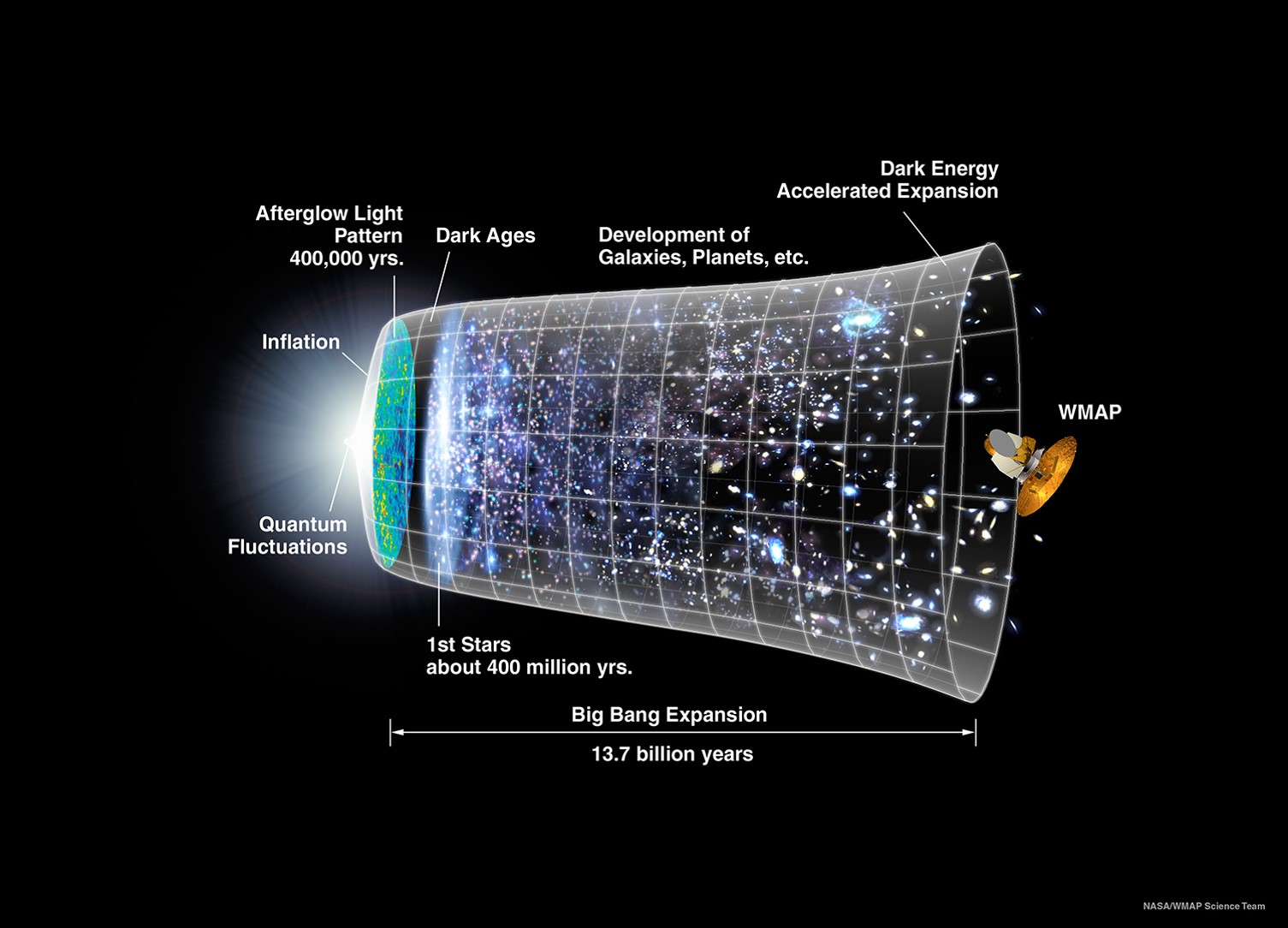
The CMB is a ghost of the Big Bang. Watching Poltergeist last night, it occurred to me that when cosmologists study this relic radiation, we are all a bit like Carol Anne, trying to make sense of an eery presence that is always with us, but is barely perceptible. Such studies involve extensive use of spectral analysis.

This line of thinking led me to my new theory of the Universe. Perhaps it was built on the remains of an earlier, deceased Universe which is now trying to make contact this one in order to wreak revenge for the violation of its grave…