Archive for fast radio bursts

Weekly Update from the Open Journal of Astrophysics – 06/09/2025

Posted in OJAp Papers, Open Access, The Universe and Stuff with tags , , , , , , , , , , , on September 6, 2025 by telescoper

It’s Saturday again, so it’s time for a summary of the week’s new papers at the Open Journal of Astrophysics. Since the last update we have published two new papers, which brings the number in Volume 8 (2025) up to 127, and the total so far published by OJAp up to 362. It’s been another relatively slow week, not least because of the Labor (sic) Day holiday in the USA on Monday which, among other things, meant there was no arXiv update on Tuesday.

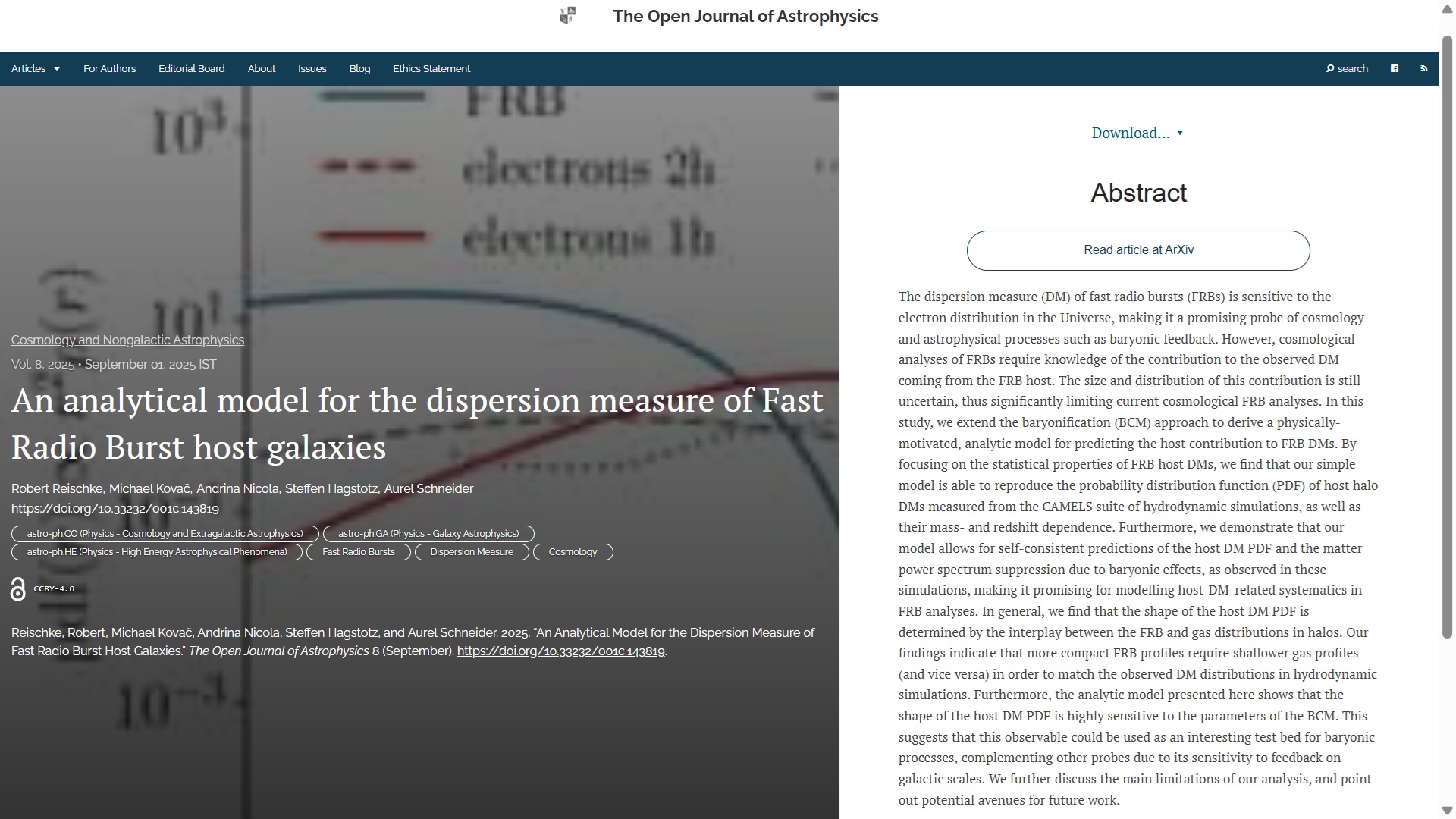
Anyway, the first paper to report this week is “An analytical model for the dispersion measure of Fast Radio Burst host galaxies” by Robert Reischke, Michael Kovač & Andrina Nicola (U. Bonn, Germany), Steffen Hagstotz (Ludwig-Maximilians Universität München) and Aurel Schneider (U. Zurich, Switzlerland). This is a theoretical study of the dispersion measures (DMs) intrinsic to host galaxies of Fast Radio Burst (FRB) sources to enable separation of that from the line-of-sight DM. This one was published on Monday 1st September 2025 in the folder Cosmology and NonGalactic Astrophysics.

The overlay is here:


You can make this larger by clicking on it.  The officially accepted version of this paper can be found on the arXiv here.

The second paper this week, published on Wednesday 3rd Sepember in the folder Solar and Stellar Astrophysics, is “Complex spectral variability and hints of a luminous companion in the Be star + black hole binary candidate ALS 8814” by Kareem El-Badry (Caltech, USA), Matthias Fabry (Villanova U., USA), Hugues Sana (KU Leuven, Belgium), Tomer Shenar (Tel Aviv U., Israel) and Rhys Seeburger (MPA Heidelberg, Germany).

The overlay for this one is here:


You can find the officially accepted version on arXiv here.

And that’s all the papers for this week. It’s still a bit slow as we emerge from the summer vacations, we have a lot of papers in the pipeline that I expect to emerge pretty soon.

Weekly Update from the Open Journal of Astrophysics – 26/07/2025

Posted in OJAp Papers, Open Access, The Universe and Stuff with tags , , , , , , , , , , , , , , , , , , , , , on July 26, 2025 by telescoper

It’s Saturday morning again, so it’s time again for an update of papers published at the Open Journal of Astrophysics. Since the last update we have published seven new papers, which brings the number in Volume 8 (2025) up to 105, and the total so far published by OJAp up to 340. I expect we’ll pass the century for this year sometime next week. I had expected a bit of a slowdown in July, but that doesn’t seem to have happened. Anyway, with the century for the year having been achieved, the next target is 120 (the total number we published last year). At the current rate I expect us to reach that sometime in August.

The papers published this week, with their overlays, are as follows. You can click on the images of the overlays to make them larger should you wish to do so.

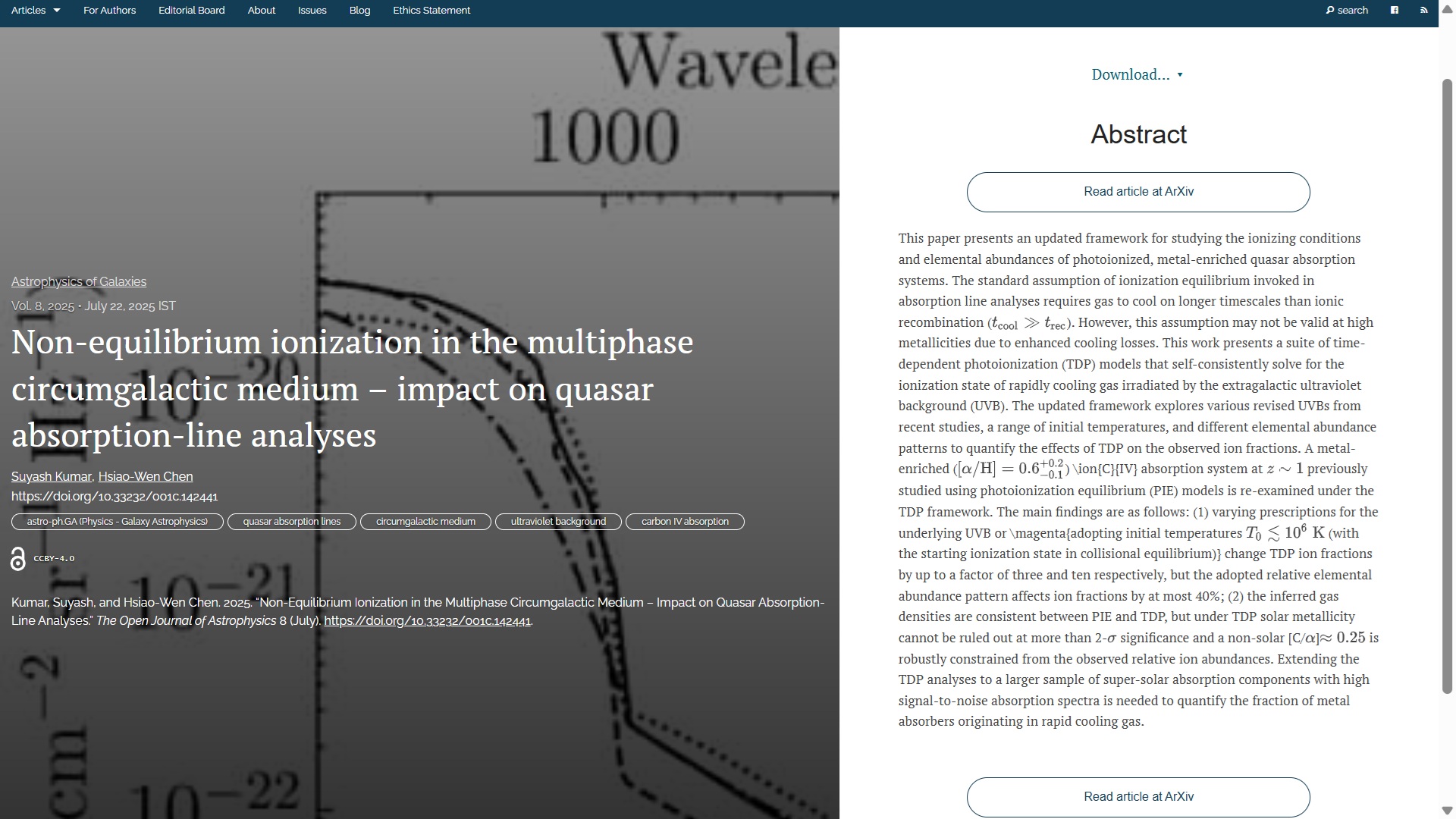
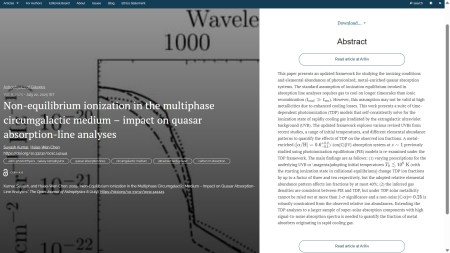
The first paper to report is “Non-equilibrium ionization in the multiphase circumgalactic medium – impact on quasar absorption-line analyses” by Suyash Kumar and Hsiao-Wen Chen (University of Chicago, USA). This was published on Tuesday 22nd July 2025 in the folder Astrophysics of Galaxies. It discusses time-dependent photoionization (TDP) models that self-consistently solve for the ionization state of rapidly cooling gas irradiated by the extragalactic ultraviolet background (UVB) and the application thereof to observed systems.

The overlay is here:
The officially-accepted version can be found on arXiv here.

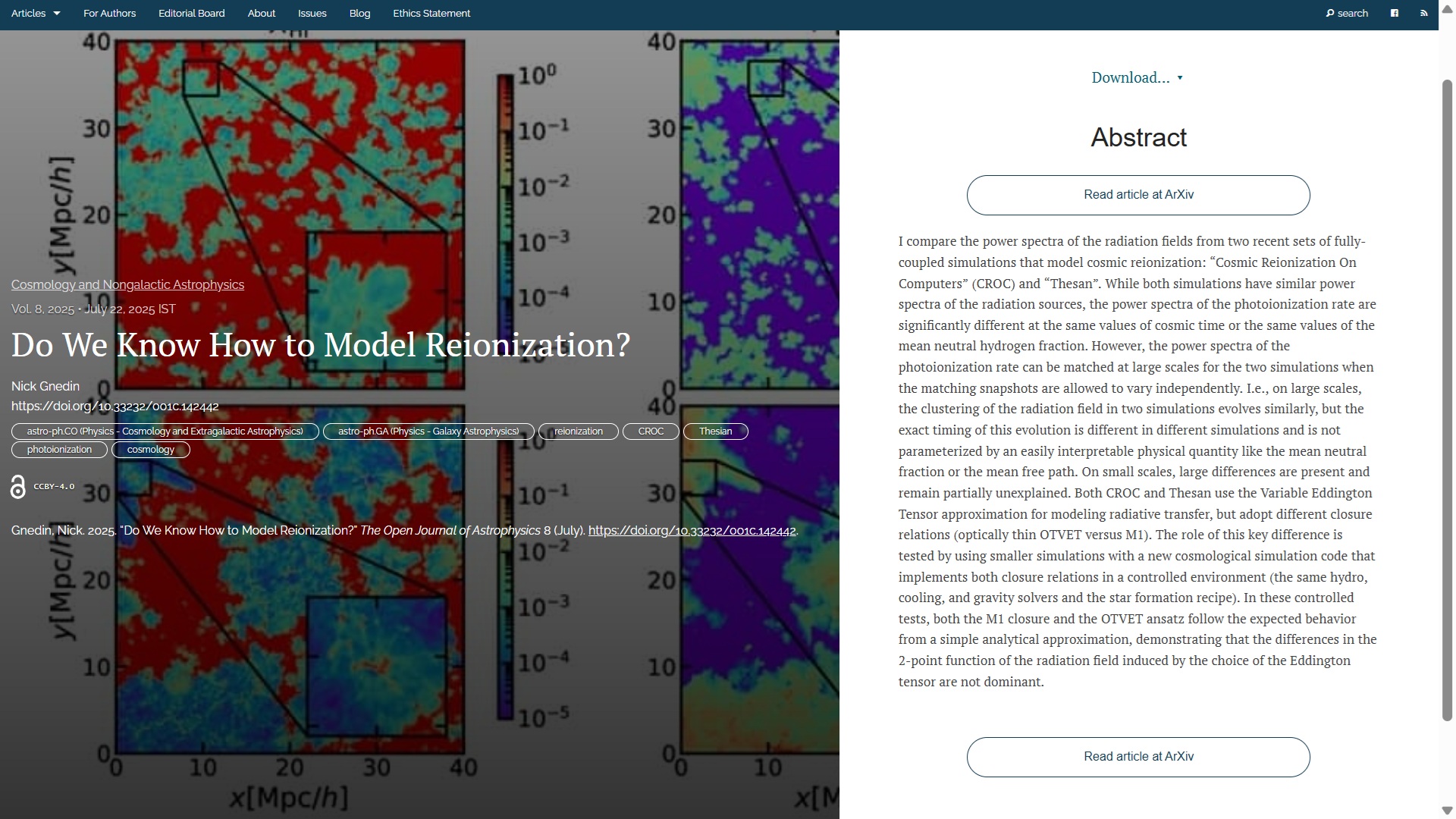
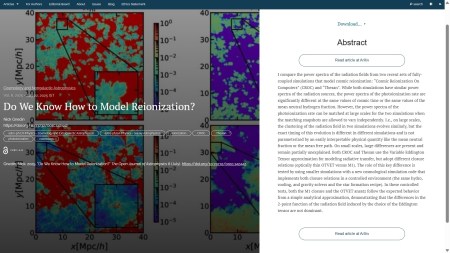
The second paper of the week, also published on Tuesday 22nd July but in the folder Cosmology and Nongalactic Astrophysics, is “Do We Know How to Model Reionization?” by Nick Gnedin (University of Chicago, USA). This paper discusses the similarities and differences between the radiation fields produced by different numerical simulations of cosmic reionization. The overlay is here:
You can find the officially accepted version of the paper on arXiv here.

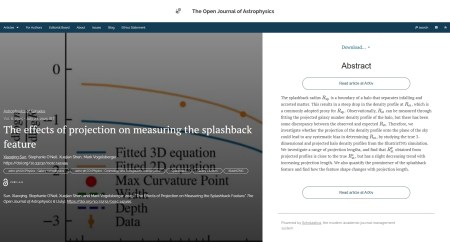
The third paper of the week is “The effects of projection on measuring the splashback feature” by Xiaoqing Sun (MIT), Stephanie O’Neil (U. Penn.), Xuejian Shen (MIT) and Mark Vogelsberger (MIT), all based in the USA. This paper describes an investigation whether projection effects could lead to any systematic bias in determining the position of the boundary between infalling and accreting matter around haloes. It was published on Wednesday 23rd July in the folder Astrophysics of Galaxies. The overlay is here:
The officially-accepted version can be found on arXiv here.

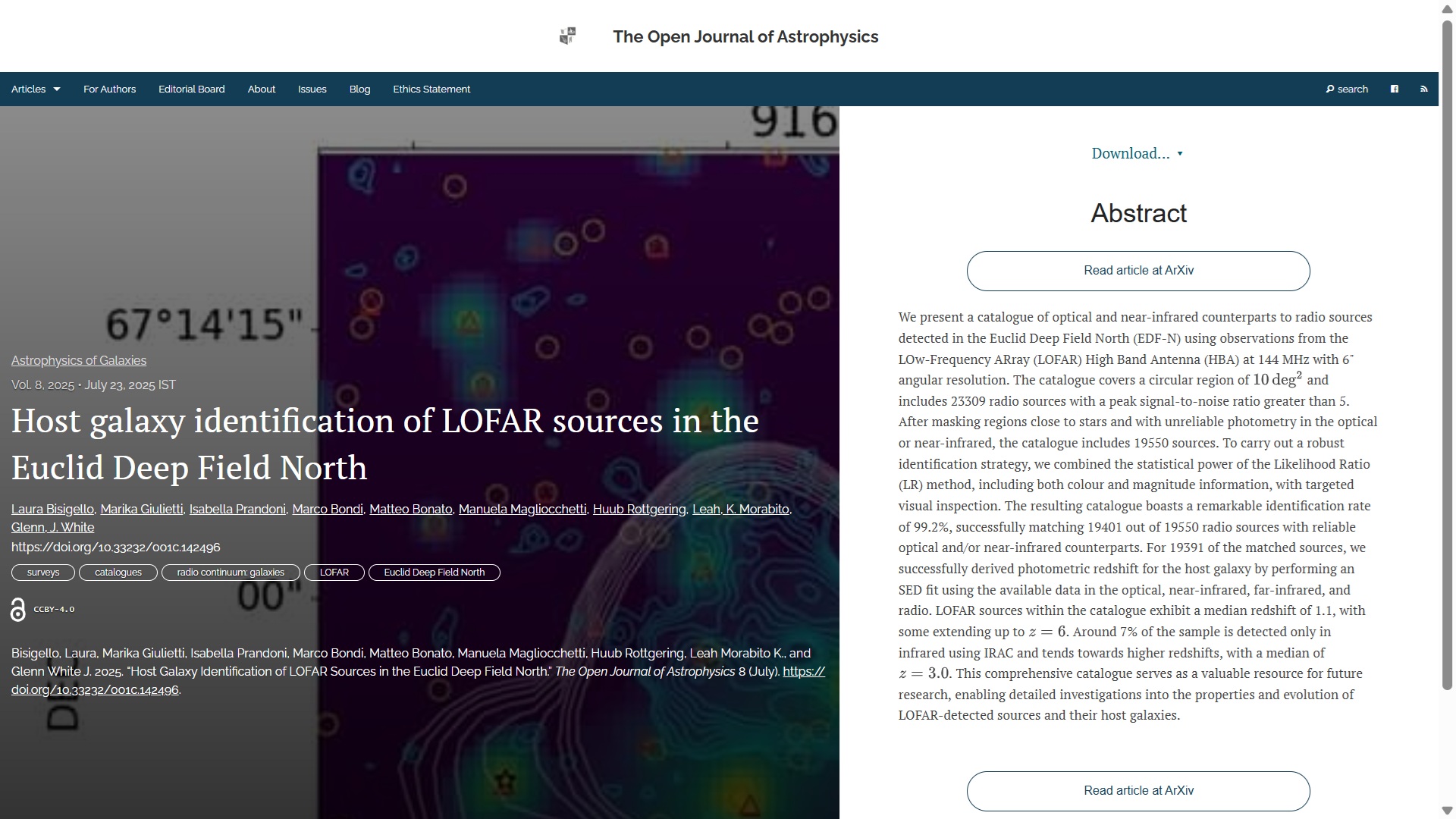
The fourth paper of the week, also published on Wednesday 22nd July in the folder Astrophysics of Galaxies, is “Host galaxy identification of LOFAR sources in the Euclid Deep Field North” by Laura Bisigello, Marika Giulietti, Isabella Prandoni, Marco Bondi, & Matteo Bonato (INAF, Bologna, Italy), Manuela Magliocchetti (INAF-IAPS Roma, Italy), Huub Rottgering (Leiden Observatory, Netherlands), Leah, K. Morabito (Durham University, UK) and Glenn, J. White (Open Universirty, UK). This presents a catalogue of optical and near-infrared counterparts to radio sources detected in the Euclid Deep Field North using observations from the LOw-Frequency ARray (LOFAR). The overlay is here:
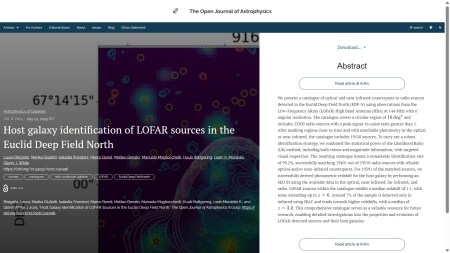
The final, accepted version of the paper is on arXiv here.

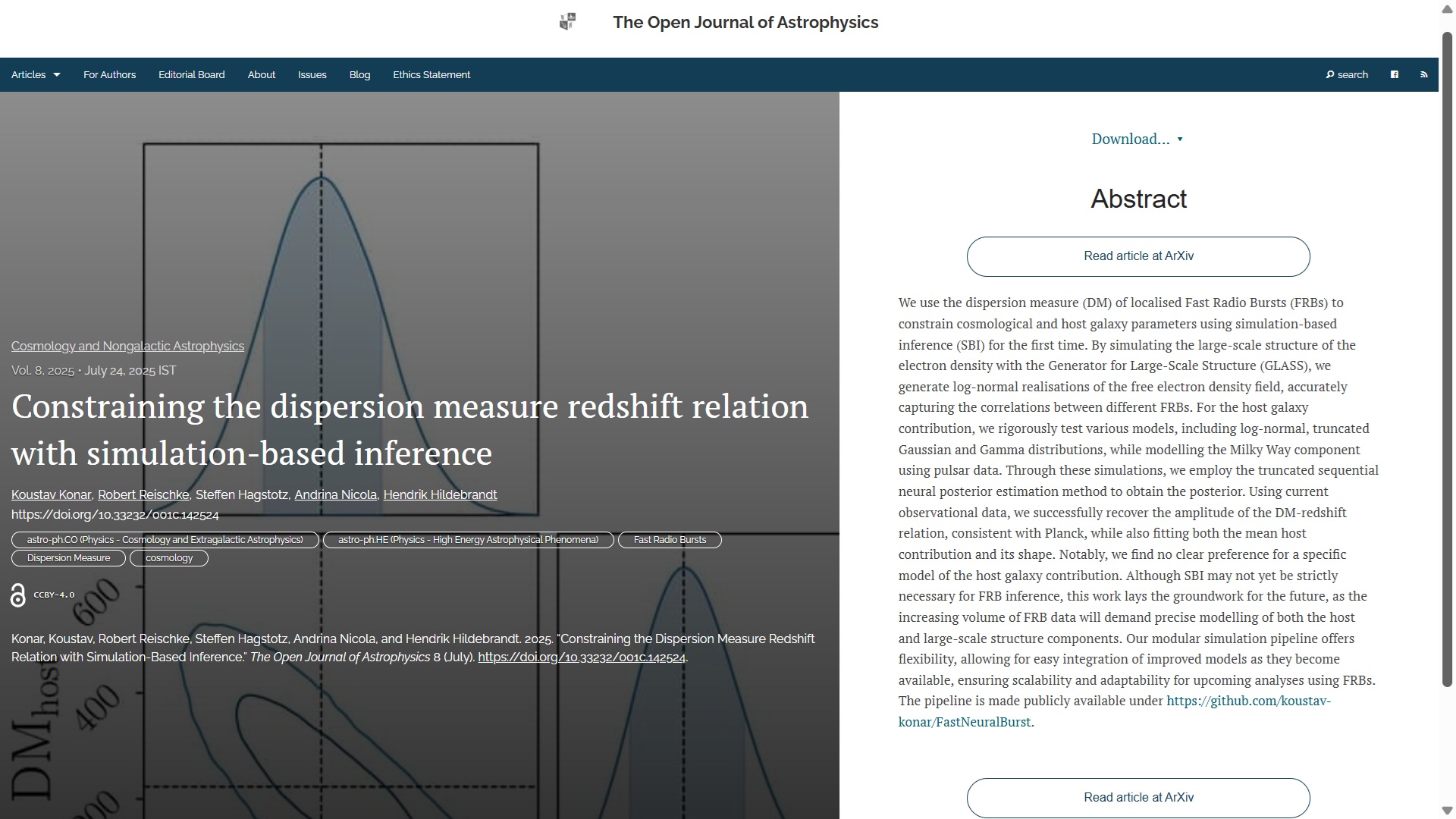
Fifth one up is “Constraining the dispersion measure redshift relation with simulation-based inference” by Koustav Konar (Ruhr University Bochum), Robert Reischke (Universität Bonn), Steffen Hagstotz (Ludwig-Maximilians Universität München), Andrina Nicola (Bonn) and Hendrik Hildebrandt (Bochum); all authors based in Germany. This was published on Thursday 24th July in the folder Cosmology and NonGalactic Astrophysics. It discusses using simulations to develop the use of Dispersion Measures of Fast Radio Bursts as cosmological probes. The overlay is here:

You can find the officially accepted version on arXiv here.

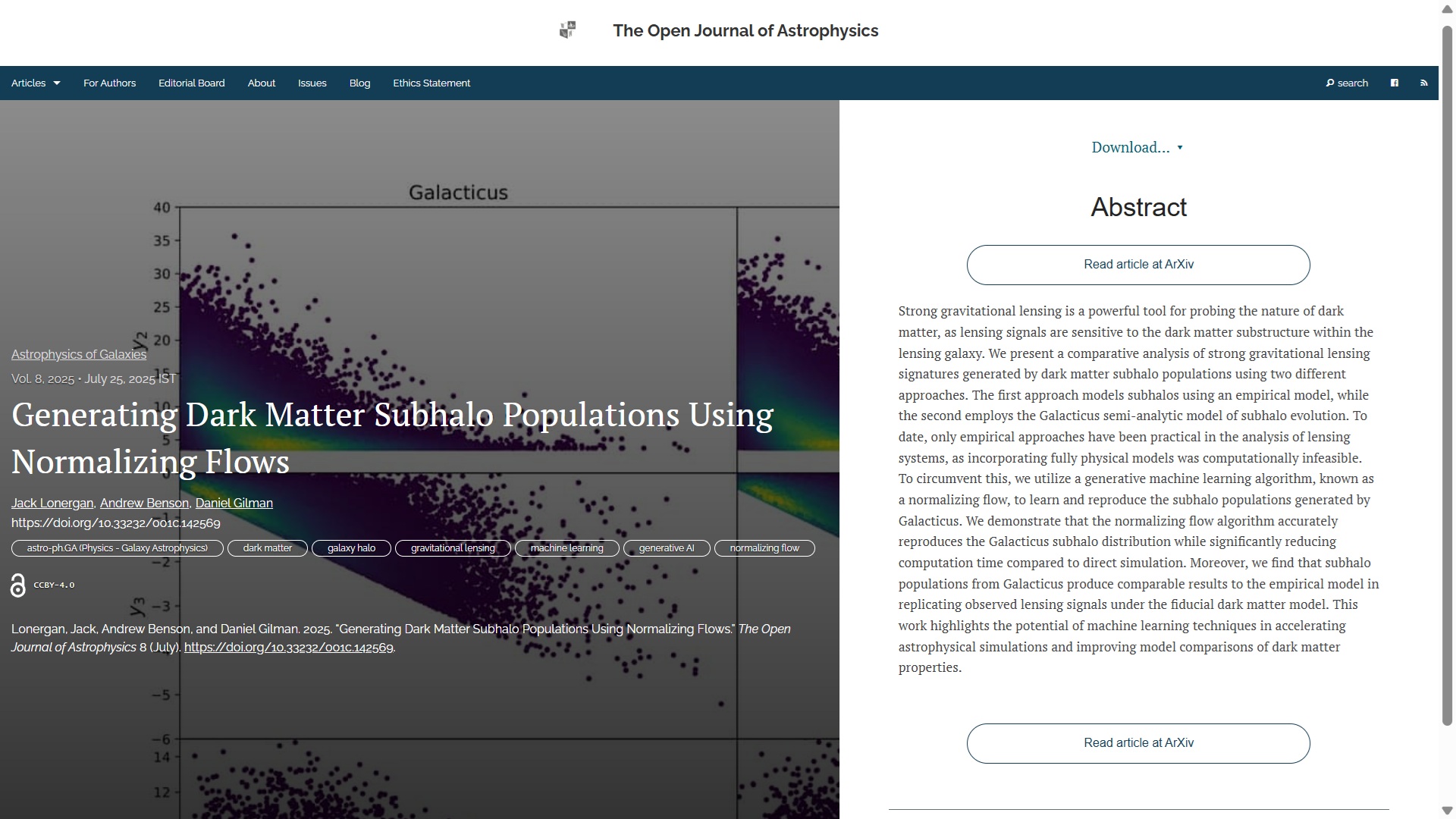
The penultimate (sixth) article published this week is “Generating Dark Matter Subhalo Populations Using Normalizing Flows” by Jack Lonergan (University of Southern California), Andrew Benson (Carnegie Observatories) and Daniel Gilman (University of Chicago), all based in the USA. This paper describes a generative AI approach to subhalo populations, trained using the semi-analytical model Galacticus. This paper was published yesterday (i.e. on Friday 25th July) in the folder Astrophysics of Galaxies.
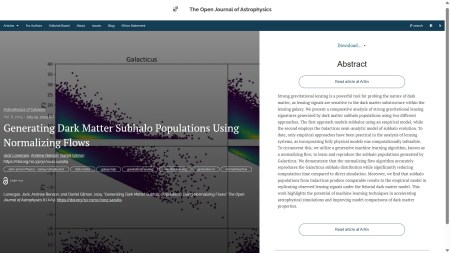
You can find the final version on arXiv here.

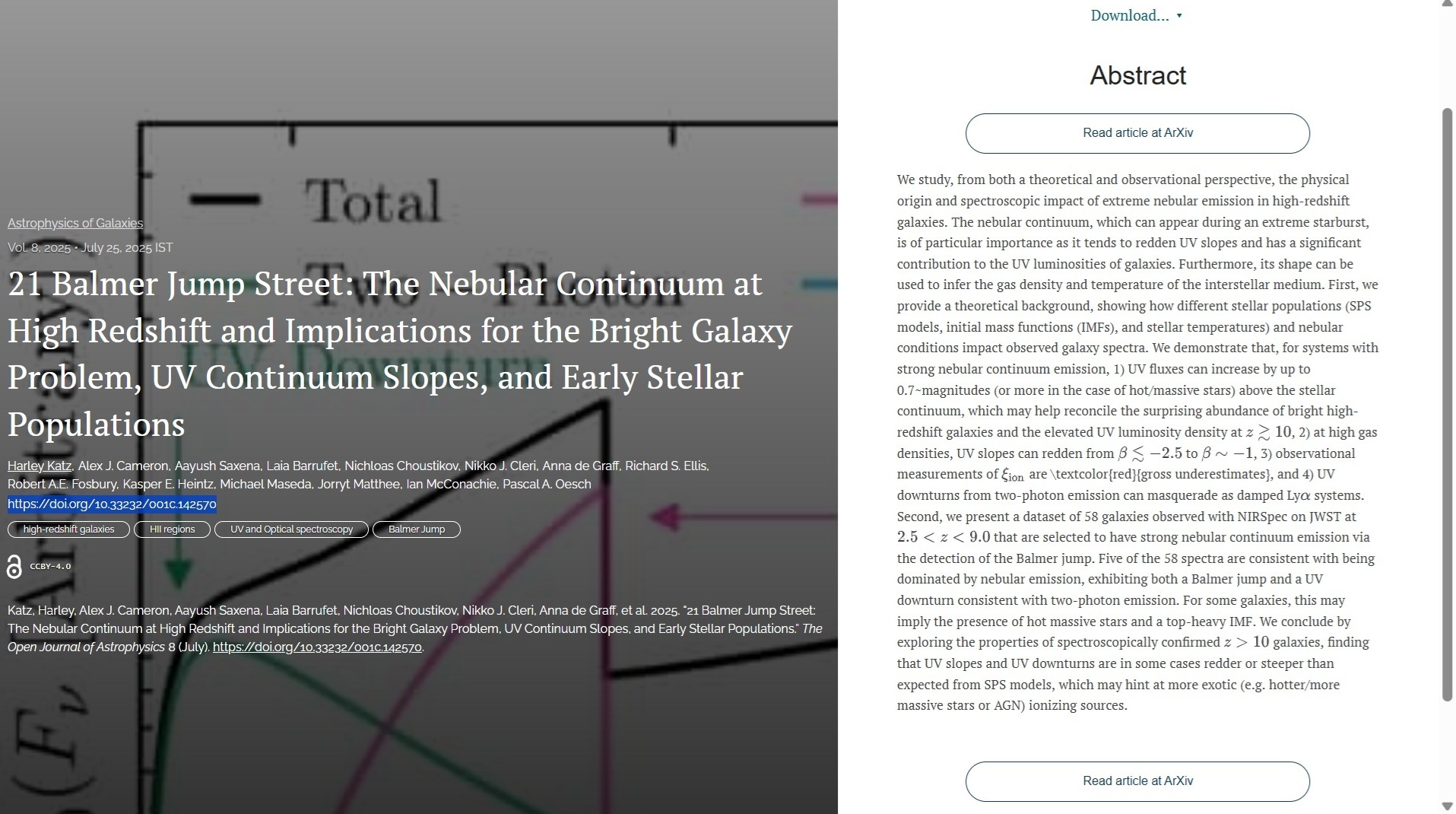
The last article published this week is “21 Balmer Jump Street: The Nebular Continuum at High Redshift and Implications for the Bright Galaxy Problem, UV Continuum Slopes, and Early Stellar Populations” by Harley Katz of the University of Chicago, and 13 others based in the USA, UK, Germany, Denmark and Austria. This discusses the implications of extreme nebular emission for the spectroscopic properties of galaxies, especially at high redshift. It was published on Friday 25th July in the folder Astrophysics of Galaxies.

The overlay is here:
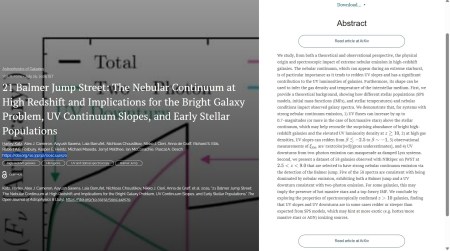
You can find the officially-accepted version on arXiv here.

And that’s all the papers for this week. I’ll do another update next Saturday, when we’ll be into August.
Weekly Update from the Open Journal of Astrophysics – 20/06/2025

Posted in OJAp Papers, Open Access, The Universe and Stuff with tags , , , , , , , , , , , , , , , on June 20, 2025 by telescoper

Yesterday (Thursday 19th June 2025) was a national holiday in the USA, which means that no new papers were announced on arXiv today (Friday 20th June). I have therefore decided to bring forwarded the usual weekly update of papers published at the Open Journal of Astrophysics by a day. Since the last update we have published three new papers, which brings the number in Volume 8 (2025) up to 74, and the total so far published by OJAp  is now up to 309.

The three papers published this week, with their overlays, are as follows. All three were published on Tuesday, June 17th 2025. You can click on the images of the overlays to make them larger should you wish to do so.

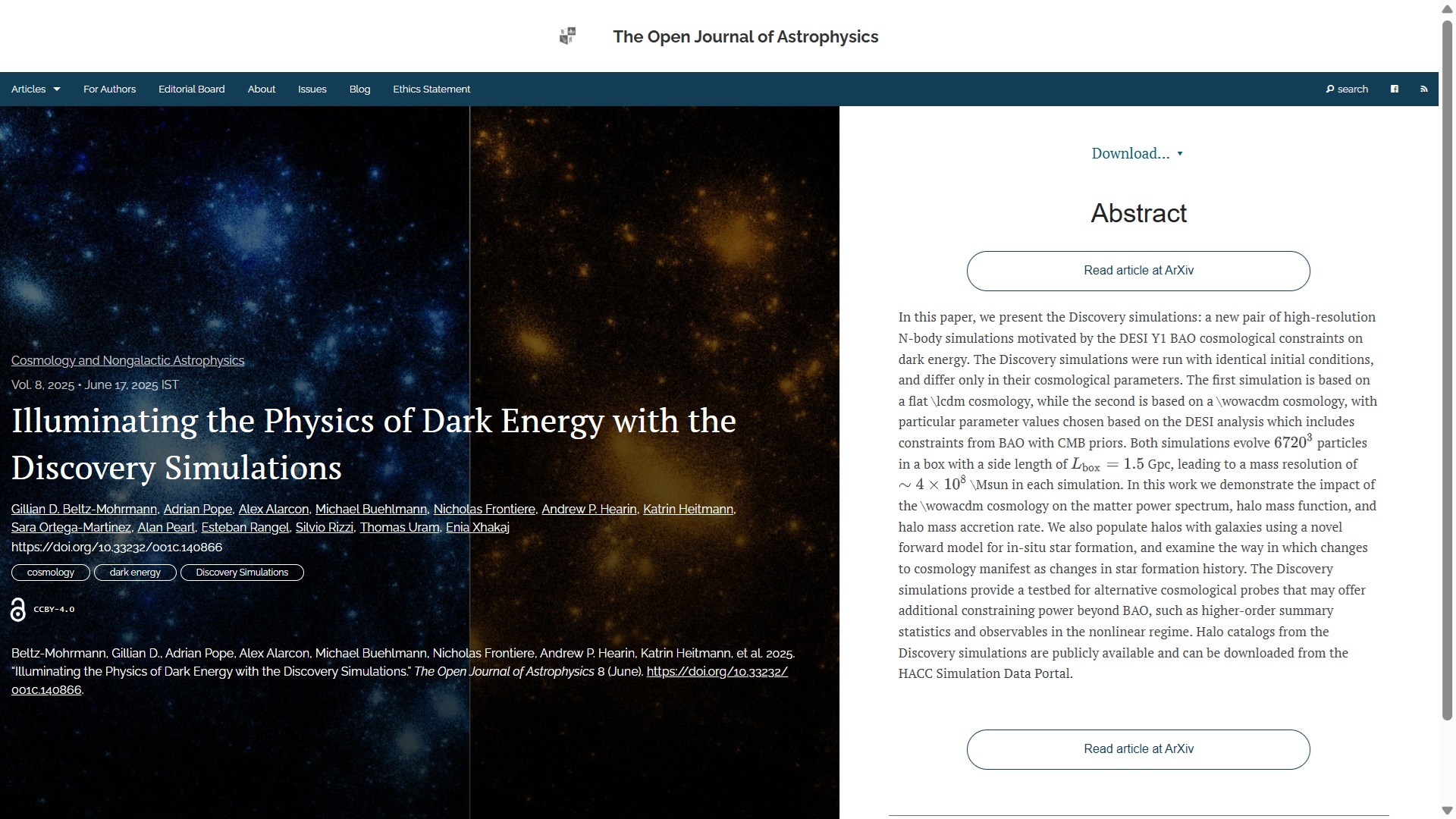
The first paper to report is “Illuminating the Physics of Dark Energy with the Discovery Simulations” by Gillian D. Beltz-Mohrmann (Argonne National Laboratory, USA) and 12 others based in the USA and Spain. This describes new high-resolution cosmological simulations providing a testbed for alternative cosmological probes that may offer additional constraining power beyond Baryon Accoustic Oscillations. It is filed in the folder marked Cosmology and NonGalactic Astrophysics.

The overlay is here:

You can read the final accepted version on arXiv here.

The second paper is in the folder marked Astrophysics of Galaxies. It is “LIGHTS. The extended point spread functions of the LIGHTS survey at the LBT” by Nafise Sedighi (Instituto de Astrofísica de Canarias, Spain) and 15 others based in Spain, USA, Iran, Italy and the UK. It describes the procedure used to construct the extended Point Spread Functions (PSFs) of the LIGHTS survey in images taken with the Large Binocular Cameras (LBCs) of the Large Binocular Telescope (LBT).

The overlay is here:


You can find the officially-accepted version of the paper on arXiv here.

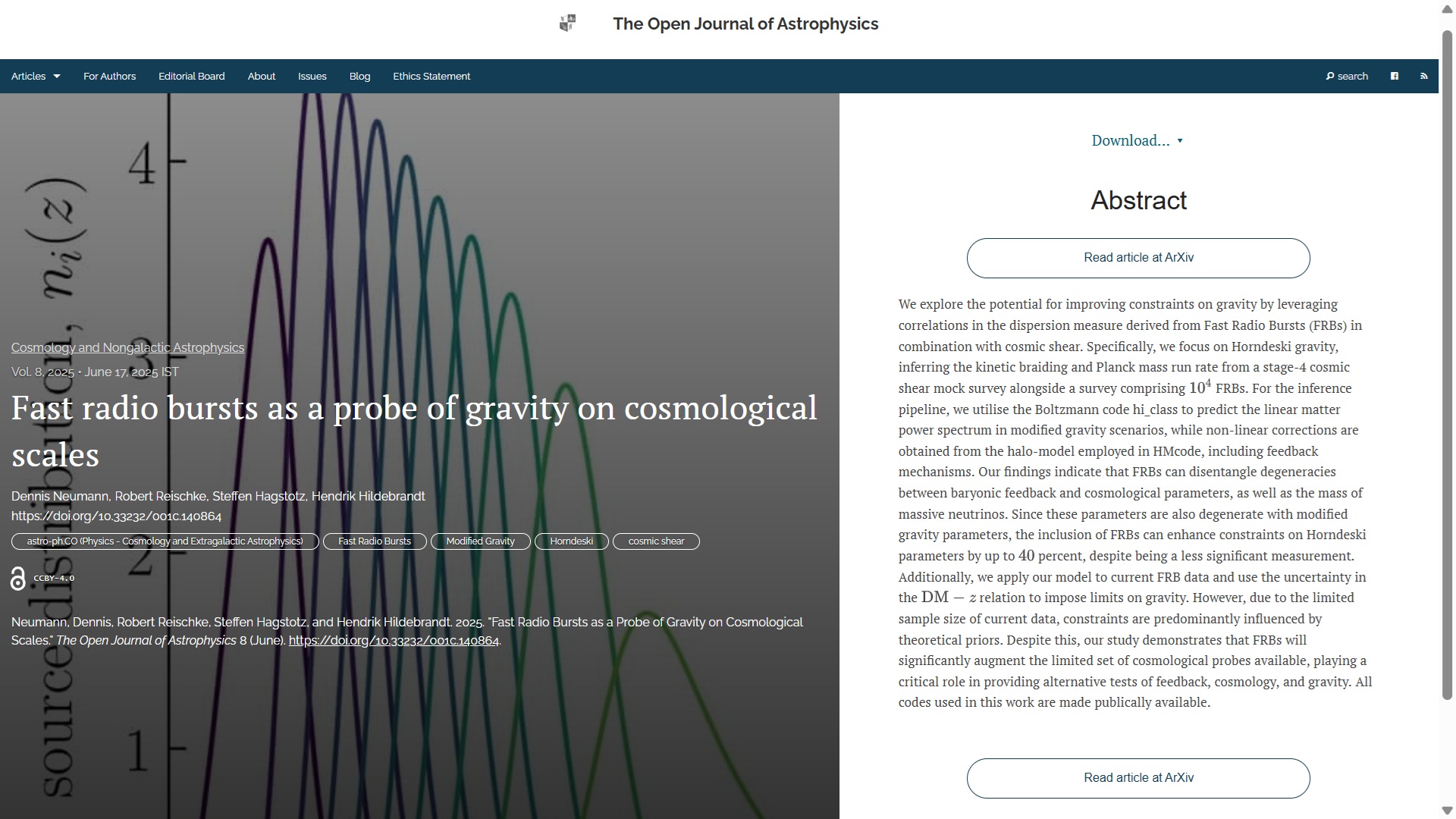
Finally this week we have “Fast radio bursts as a probe of gravity on cosmological scales” by Dennis Neumann (Leiden University, Netherlands), Robert Reischke (Universität Bonn, Germany), Steffen Hagstotz (Ludwig-Maximilians Universität München, Germany) and Hendrik Hildebrandt (Ruhr University Bochum, Germany). This is about using dispersion measures derived from Fast Radio Bursts (FRBs) in combination with cosmic shear to investigate modified gravity theories, specifically Horndeski gravity. It is in the folder marked Cosmology and NonGalactic Astrophysics.

The overlay is here:

You can find the officially-accepted version on arXiv here.

That’s all the papers for this week. I’ll revert to the usual schedule for updates next week, and post the next one on Saturday 28th June.


Four New Publications at the Open Journal of Astrophysics

Posted in OJAp Papers, Open Access, The Universe and Stuff with tags , , , , , , , , , , , , , , , , , , , on September 14, 2024 by telescoper

Once again, it’s time for a quick update of activity at the Open Journal of Astrophysics. This week we have published another batch of four papers which takes the count in Volume 7 (2024) up to 77 and the total published altogether by OJAp up to 192. Things are picking up again after the summer lull, and we’re moving towards a double century. If we keep up a steady average of four per week we’ll be at 200 per year.

In chronological order, the four papers published this week, with their overlays, are as follows. You can click on the images of the overlays to make them larger should you wish to do so.

First one up is “Quasi-two-dimensionality of three-dimensional, magnetically dominated, decaying turbulence” by Shreya Dwivedi, Chandranathan Anandavijayan, and Pallavi Bhat of TIFR, Bangalore, India. The paper presents an analysis of numerical simulations of MHD turbulence using Minkowski Functionals, with implications for local anisotropies revealed therein. It was published on 9th September 2024 and is in the folder marked High-Energy Astrophysical Phenomena.

Here is a screen grab of the overlay, which includes the abstract:


You can find the officially accepted version of the paper on the arXiv here.

The second paper to announce, also published on 9th September 2024, is “mochi_class: Modelling Optimisation to Compute Horndeski In class” by  Matteo Cataneo (Universität Bonn, Germany) and Emilio Bellini (SISSA, Trieste, Italy). This article presents a cosmological Einstein-Boltzmann solver adapted to work with Horndeski gravity, together with validation tests. It is in the folder Cosmology and NonGalactic Astrophysics.

You can see the overlay here:


The accepted version of this paper can be found on the arXiv here.

The third paper, published on 11th September 2024 in the folder marked High-Energy Astrophysical Phenomena, is by Jonathan Katz of Washington University, St Louis, USA. The title is “The Sources of Fast Radio Bursts” and it presents a discussion of the possible physical origin of Fast Radio Bursts, arguing that they fall into two distinct groups.


The final version accepted on arXiv is here.

Last in this batch, but by no means least, is “RMS asymmetry: a robust metric of galaxy shapes in images with varied depth and resolution” by Elizaveta Sazonova (U. Waterloo, Canada) with 15 other authors spread around the world (in Canada, USA, Australia, Italy, Chile, UK, Poland, Mexico, Germany, and Spain). This paper presents a method of quantifying distortion of galaxy images connected with mergers or other instabilities. It is in the folder marked Astrophysics of Galaxies and was published on September 12th 2024 with this overlay:


You can find the official accepted version on the arXiv here.

That’s all for now. I will post another update in a week.

New Publication at the Open Journal of Astrophysics

Posted in OJAp Papers, Open Access, The Universe and Stuff with tags , , , on February 14, 2023 by telescoper

It’s time to announce another new paper at the Open Journal of Astrophysics. This was published yesterday (13th February 2023). The rate of submissions has increased greatly in recent weeks, so  I am thinking seriously about switching to a weekly round-up on here instead of individual posts, but for the meantime I’ll carry on.

The latest paper is the 7th paper in Volume 6 (2023) as well as the 72nd  in all. This one is another one for the folder marked Instrumentation and Methods for Astrophysics. The title is “FRBSTATS: A web-based platform for visualization of fast radio burst properties”. This paper describes a software platform which can be accessed directly here. If you want to read more about Fast Radio Bursts, you can look here.

The authors of the paper are Apostolos Spanakis-Misirlis, who gives his affiliations as the University of Piraeus and University of Crete (Greece), and Cameron Van Eck of ANU in Canberra, Australia

Here is a screen grab of the overlay which includes the  abstract:


You can click on the image of the overlay to make it larger should you wish to do so. You can find the officially accepted version of the paper on the arXiv here.

Finding the Lost Baryons

Posted in Astrohype, The Universe and Stuff with tags , , , , , on June 3, 2020 by telescoper

Taking a break from examination marking I thought I’d post a comment on a recent paper in Nature which you can find on the arXiv here; see also a report here.

The paper, entitled A census of baryons in the Universe from localized fast radio bursts, is an important one which does seem to resolve a longstanding question often called the missing baryon problem. In a nutshell, the problem is that the density of baryons suggested by cosmological considerations – specifically the element abundances produced by Big Bang nucleosynthesis and the cosmic microwave background (CMB) – was, until recently, rather higher than that which has been observed by astrophysical measurements; by `baryonic material’ I mean basically protons and neutrons (whether or not they are in atomic nuclei).

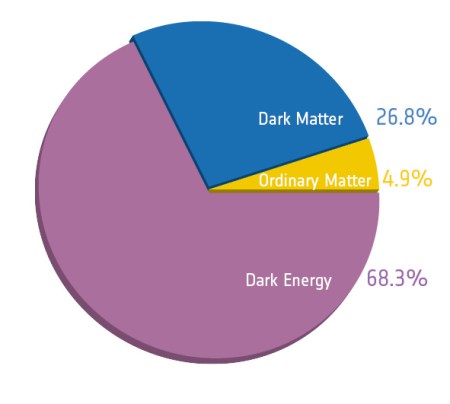
In the framework of the standard cosmological model, The density of baryonic matter (denoted `Ordinary Matter’ in the following figure) contributes only around 5% of the overall mass-energy budget of the Universe:

The first thing to stress is that this paper says nothing about the `Dark Matter’ which, according to the standard model, makes up about 27% of the pie and which cannot be in the form of baryons if the CMB and nucleosynthesis measurements are correct. If it were baryonic it would participate in nuclear reactions and mess up the light element abundances and also interact with photons in such a way as to change the fluctuation spectrum of the cosmic microwave background. Having said that, `dark’ is better adjective to use for hidden baryons than it is for non-baryonic matter, as baryons can absorb light. Non-baryonic matter isn’t really dark, it’s transparent because it doesn’t interact at all with electromagnetic radiation. We are however in the dark about it.

Note that the total density of dark + ordinary matter is about 32%, just what George Ellis and I concluded way back in 1994.

We can be much more certain about baryons actually existing than we can about dark matter because. For one thing, we are made of them. It has, however, been known for ages that the total density of directly visible baryons (ie those associated with stars and galaxies) is much lower than this figure, leading to the conclusion that some of the baryons predicted by cosmologists must be in some invisible form(s). Some, for example, is found by X-ray emissions in dense galaxy clusters, but this component is still inadequate to account for all the missing matter.

It has been suspected for some time that the hidden baryons probably inhabit a diffuse Warm-Hot Component of the Intergalactic Medium which, according to simulations of structure formation, traces its own form of the cosmic web we see in the distribution of galaxies:

The diffuse state and inhomogeneous nature of this intergalactic medium makes it difficult to detect, as explained in the abstract of the paper, but adding a relatively new technique involving fast radio bursts to probe the distribution of matter along the line of sight to the observer, it seems that it has now brought out into the open:

Now the inventory of observed baryons matches the 5% figure we cosmologists always knew it would be, and all is well with the world!

P. S. I was informed on Twitter after posting this that there was a paper on this topic in Nature a couple of years ago the last sentence of the abstract of which reads:

We conclude that the missing baryons have been found.