Archive for Gravitational Lensing

New Publication at the Open Journal of Astrophysics

Posted in OJAp Papers, The Universe and Stuff with tags , , , , , on December 31, 2023 by telescoper

It’s New Year’s Eve and I just remembered that there was a paper at the Open Journal of Astrophysics site that we published before Christmas but that I haven’t yet announced on here, so for the sake of completeness here it is. It takes us to 50 papers published in 2023.

The paper in question is the 50th and final paper  in Volume 6 (2023)  and it’s the 115th altogether. This one was actually published on Friday 22nd December 2023 but owing to the vacations we had to wait a bit to get the metadata registered.

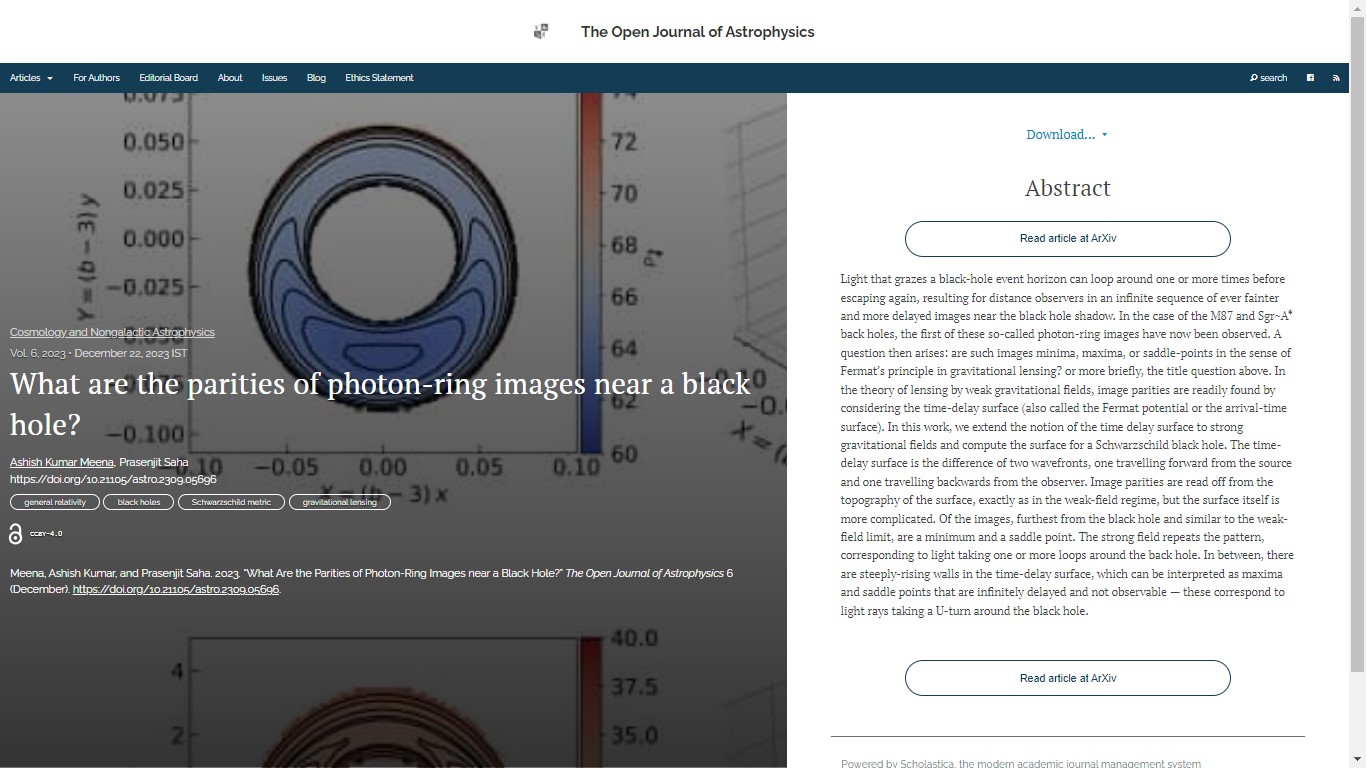
The title of this one is “What are the parities of photon-ring images near a black hole?” and is a discussion of the Fermat potential (also known as the arrival-time surface) in the context of gravitational lensing by strong gravitational fields and the implication for image parities thereby produced. This one is actually listed in General Relativity and Quantum Cosmology (gr-qc, on arXiv) but is cross-listed as Cosmology and Non-galactic Astrophysics so is eligible for publication here in the appropriate folder.

The authors are Ashish Kumar Meena (Ben Gurion University of the Negev, Israel) and Prasenjit Saha (University of Zurich, Switzerland).

Here is the overlay of the paper containing the abstract:


You can click on the image of the overlay to make it larger should you wish to do so. You can find the officially accepted version of the paper on the arXiv here.

And that concludes Volume 6 of the Open Journal of Astrophysics. Roll on Volume 7.


Four New Publications at the Open Journal of Astrophysics

Posted in OJAp Papers, Open Access, The Universe and Stuff with tags , , , , , , , , , , , , , , , , on July 29, 2023 by telescoper

The rate of publication at the Open Journal of Astrophysics has now reached the point at which I think I’ll have to limit myself to weekly updates here rather than announcing every paper as it appears. We still announce individual papers on social media of course, meaning Mastodon, Facebook and the platform formerly known as Twitter…

This week we have published four papers which I now present to you here. These four take the count in Volume 6 (2023) up to 31 and the total published by OJAp up to 96. I speculated earlier this year that we might reach 100 before the end of 2023, now it looks certain we will reach the century mark as early as August! It is gratifying to see the range of papers published increasing, with all four of these in different categories.

In chronological order, the four papers published this week, with their overlays, are as follows. You can click on the images of the overlays to make them larger should you wish to do so.

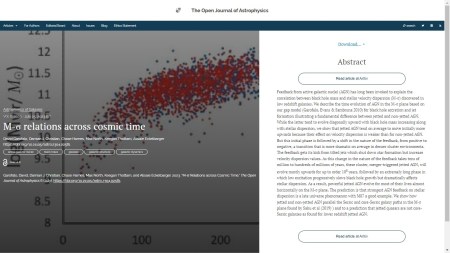
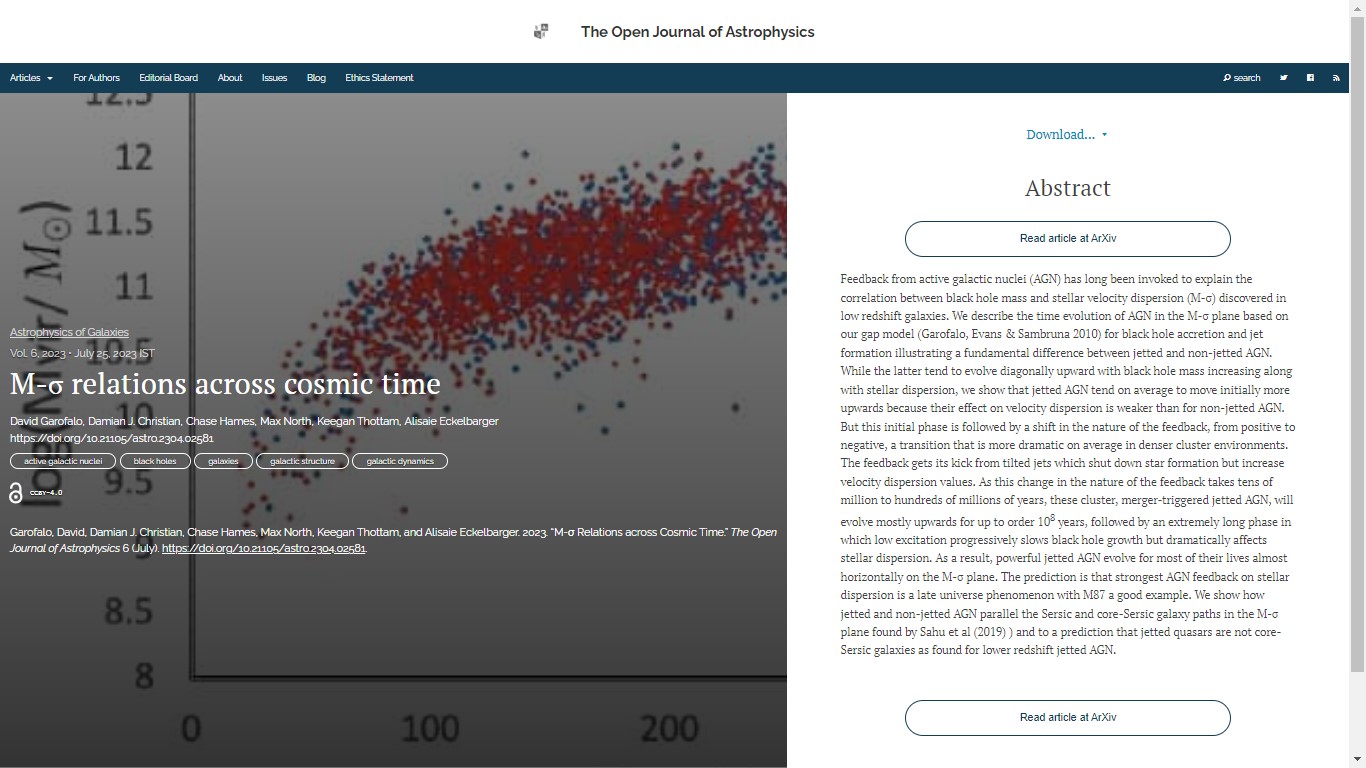
First one up is “M-σ relations across cosmic time” by David Garofalo (1), Damian J. Christian (2), Chase Hames (1), Max North (3), Keegan Thottam (1) & Alisaie Eckelbarger (1). The author affiliations are: (1) Department of Physics, Kennesaw State University, USA; (2) Department of Physics and Astronomy, California State University, Northridge, USA; (3) Department of Information Systems, Kennesaw State University, USA. This is a discussion of the relationship between black hole mass and stellar velocity dispersion discovered in low redshift galaxies and its evolution with cosmic time. The paper was published on 25th July, is in the folder marked Astrophysics of Galaxies and can be found here.

Here is a screen grab of the overlay, which includes the abstract:
You can find the officially accepted version of the paper on the arXiv here.

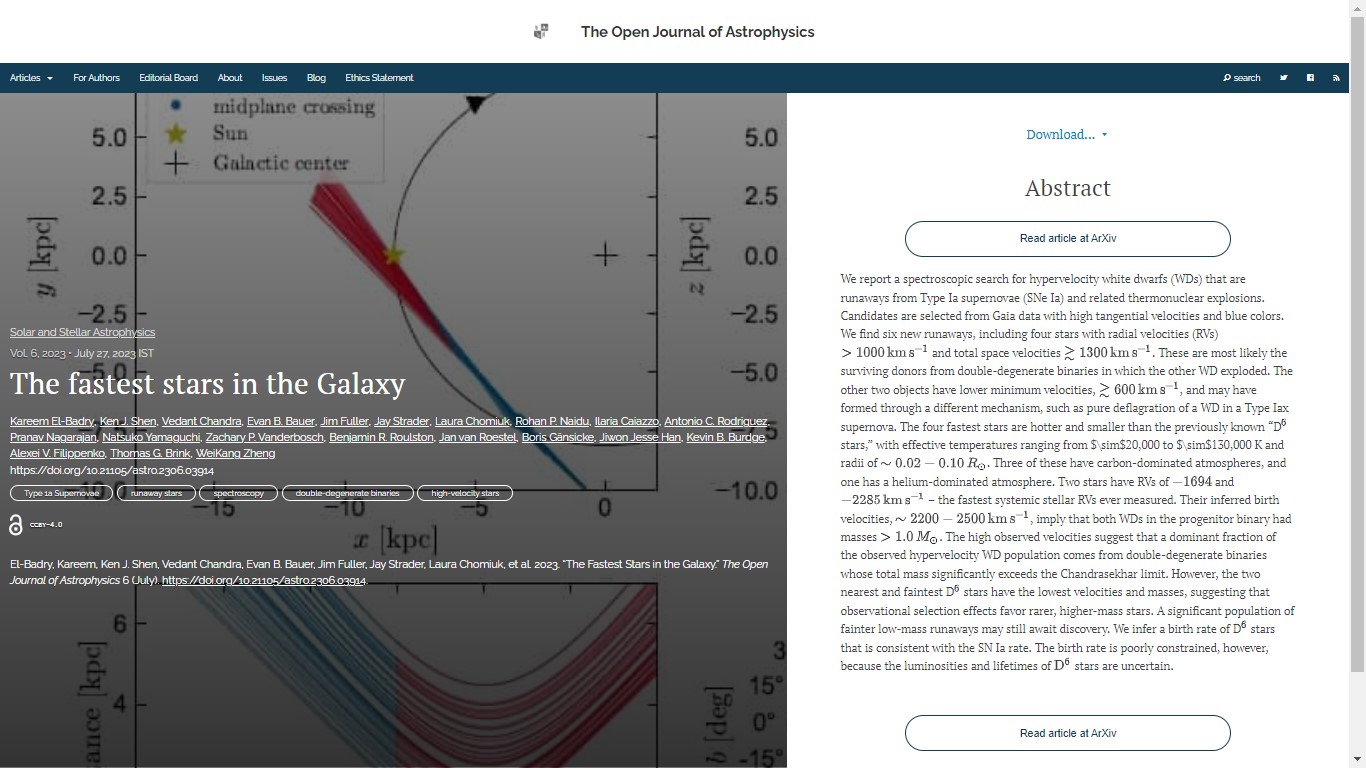
The second paper to announce is “The fastest stars in the Galaxy” by Kareem El-Badry et al. (21 authors. This one is the fourth item in the folder marked Solar and Stellar Astrophysics and it reports the spectroscopic discovery of 6 new “runaway” stars, probably the surviving members of binary star systems in which one star exploded in a Type 1a supernova. The paper was published on 27th July 2023 and you can see the overlay here:

The accepted version of this paper can be found on the arXiv here.

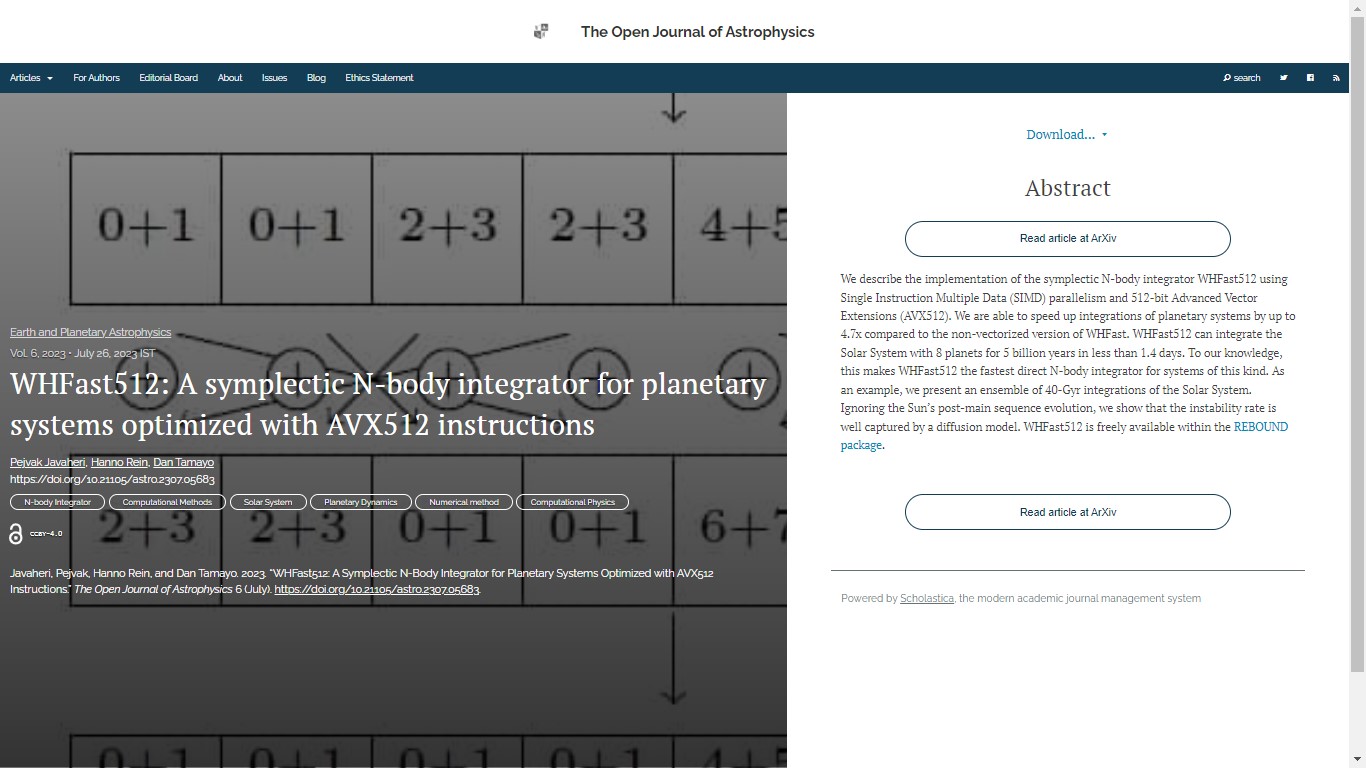
The next paper is in the Earth and Planetary Astrophysics folder. It is in fact only the second paper we have published in that area. It is entitled “WHFast512: A symplectic N-body integrator for planetary systems optimized with AVX512 instructions” by Pejvak Javaheri & Hanno Rein (University of Toronto, Canada) and Daniel Tamayo (Harvey Mudd College, USA). This paper presents a fast direct N-body integrator for gravitational systems, and demonstrates it using a 40 Gyr integration of the Solar System.

Here is the overlay:


You can find the full text for this one on the arXiv here.

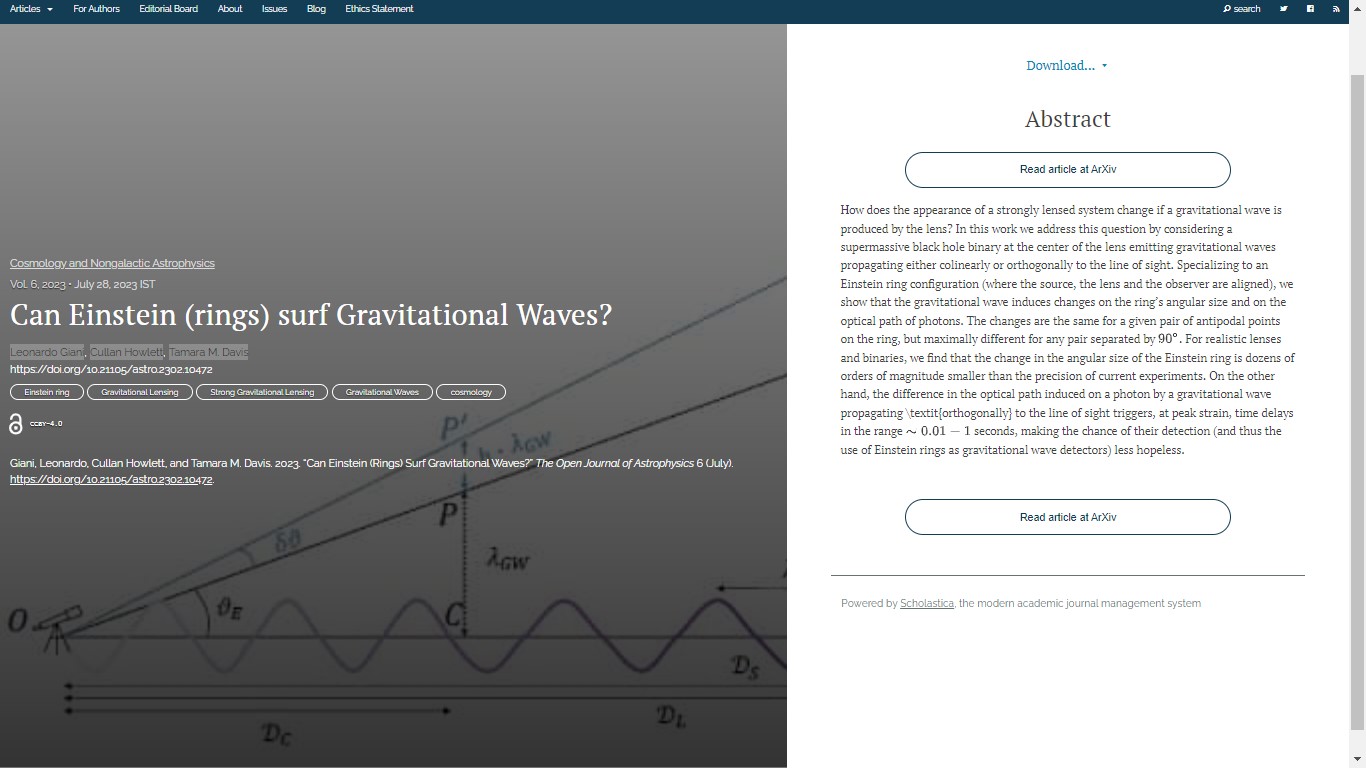
Last but by no means least, published yesterday (29th July), we have a paper that asks the question “Can Einstein (rings) surf Gravitational Waves?” by Leonardo Giani, Cullan Howlett and Tamara M. Davis of the University of Queensland, Australia. The primary classification for this one is Cosmology and Nongalactic Astrophysics and it discusses the possible effect(s) of gravitational waves on gravitational lensing observations.
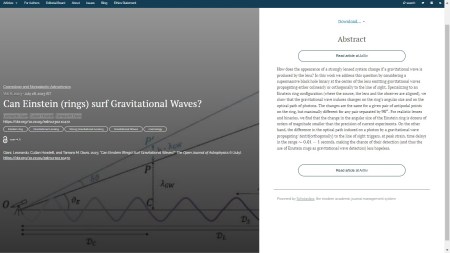
 

You can click on the image of the overlay to make it larger should you wish to do so. You can find the officially accepted version of the paper on the arXiv here.
Refsdal’s Ghost

Posted in The Universe and Stuff with tags , , , on May 13, 2023 by telescoper

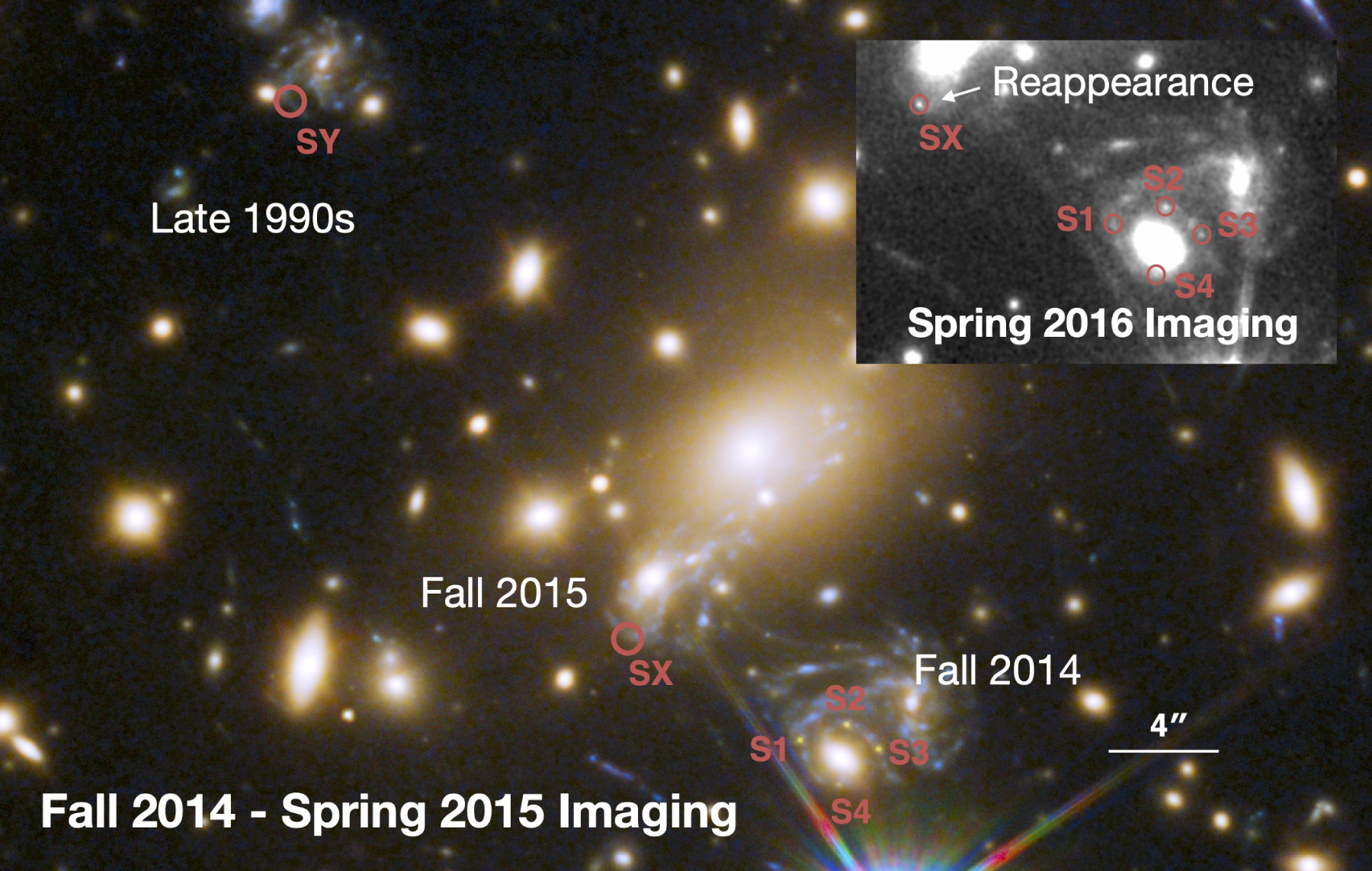
I haven’t had time to write much about astrophysics and cosmology recently, so this morning I back a few days through the arXiv – where every research paper worth reading in these fields can be found – and found a fascinating paper by Kelly et al. about the gravitational lensing of a supernova known as SN Refsdal after the pioneer of gravitational lensing, Sfur Refsdal. When first observed in 2014 this supernova was observed as four images produced by the gravitational lensing of light from the supernova through a massive cluster of galaxies, a phenomenon known as an Einstein Cross.

Lens modellers quickly got to work on this system and concluded that two further images should exist. Given the difference in light travel times for lensed paths and the relatively short lifetime of a supernova, neither would occur at the same time as the four original ones. One image would have been observed at some point in the 1990s, had anyone been looking, but that wasn’t the case. However, another was predicted to occur in 2015 and that was observed. I call it Refsdal’s Ghost because of the French word revenant, which means a ghost but also someone who returns after a long absence. Anyway, the revenant is marked SX in the image below (obtained from here). The unobserved image is SY and the four originals S1-S4.

Multiple images of a point source a in a system such as this, with measured time delays, provide theorists with a great deal of information they can use to model the distribution of mass inside the cluster, including its physical size. That in turn allows one to measure its distance. With a measurement of redshift, this allows one to determine the Hubble Constant.

That’s the background. Now here’s the abstract of the paper by Kelly et al.:

The gravitationally lensed Supernova Refsdal appeared in multiple images, produced through gravitational lensing by a massive foreground galaxy cluster. After the supernova appeared in 2014, lens models of the galaxy cluster predicted an additional image of the supernova would appear in 2015, which was subsequently observed. We use the time delays between the images to perform a blinded measurement of the expansion rate of the Universe, quantified by the Hubble constant (H0). Using eight cluster lens models, we infer H0 = 64.8 +4.4-4.3 km / s / Mpc, where Mpc is the megaparsec. Using the two models most consistent with the observations, we find H0 = 66.6 +4.1-3.3 km / s / Mpc. The observations are best reproduced by models that assign dark-matter halos to individual galaxies and the overall cluster.

Anyone who has been following developments in cosmology knows that there is currently some “tension” over different measurements of the Hubble constant, as illustrated in this figure (which is slightly dated but which makes the point):

There is some uncertainty of course, but it is interesting that the Kelly et al. measurement aligns with most of what are called the “early” measurements in this plot. As I have mentioned before, though, there is another common factor in the “early” measurements, which is that they are based on geometrical distances obtained from angular distances whereas most of the others are based on luminosity. If the Hubble tension were to resolve into a differences between these two types of measure then it would be of fundamental importance to cosmology. At present, however, there is nowhere near enough evidence to be sure one way or the other.

New Publication at the Open Journal of Astrophysics

Posted in OJAp Papers, The Universe and Stuff with tags , , , , , , , on April 25, 2023 by telescoper

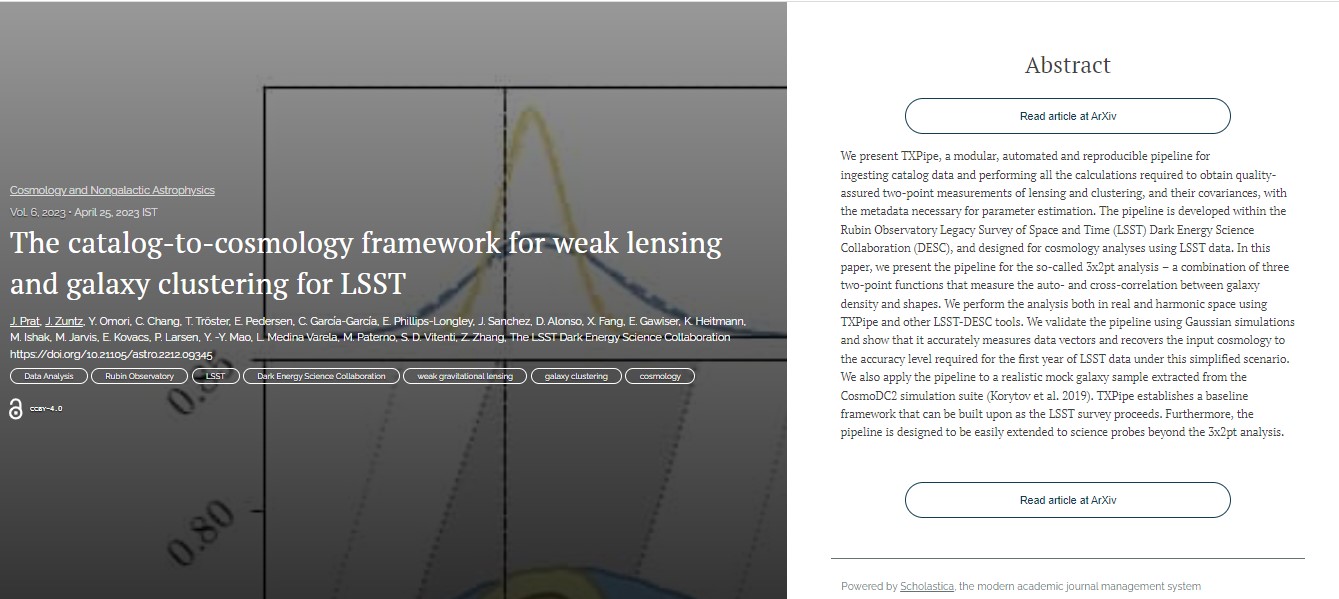
It’s time once more to announce a new paper at the Open Journal of Astrophysics. The latest paper is the 13th paper so far in Volume 6 (2023) and the 78th in all. This one is another for the folder marked Cosmology and NonGalactic Astrophysics and its title is “The catalog-to-cosmology framework for weak lensing and galaxy clustering for LSST”.

The lead author is Judit Prat of the University of Chicago (Illinois, USA) and there are 21 co-authors from elsewhere in the USA and in the UK. The paper is written on behalf of the LSST Dark Energy Science Collaboration (LSST DESC), which is the international science collaboration that will make high accuracy measurements of fundamental cosmological parameters using data from the Rubin Observatory Legacy Survey of Space and Time (LSST). The OJAp has published a number of papers involving LSST DESC, and I’m very happy that such an important consortium has chosen to publish with us.

Here is a screen grab of the overlay which includes the  abstract:

You can click on the image of the overlay to make it larger should you wish to do so. You can find the officially accepted version of the paper on the arXiv here.
New Publication at the Open Journal of Astrophysics

Posted in OJAp Papers, Open Access, The Universe and Stuff with tags , , , , , , , , , on August 24, 2022 by telescoper

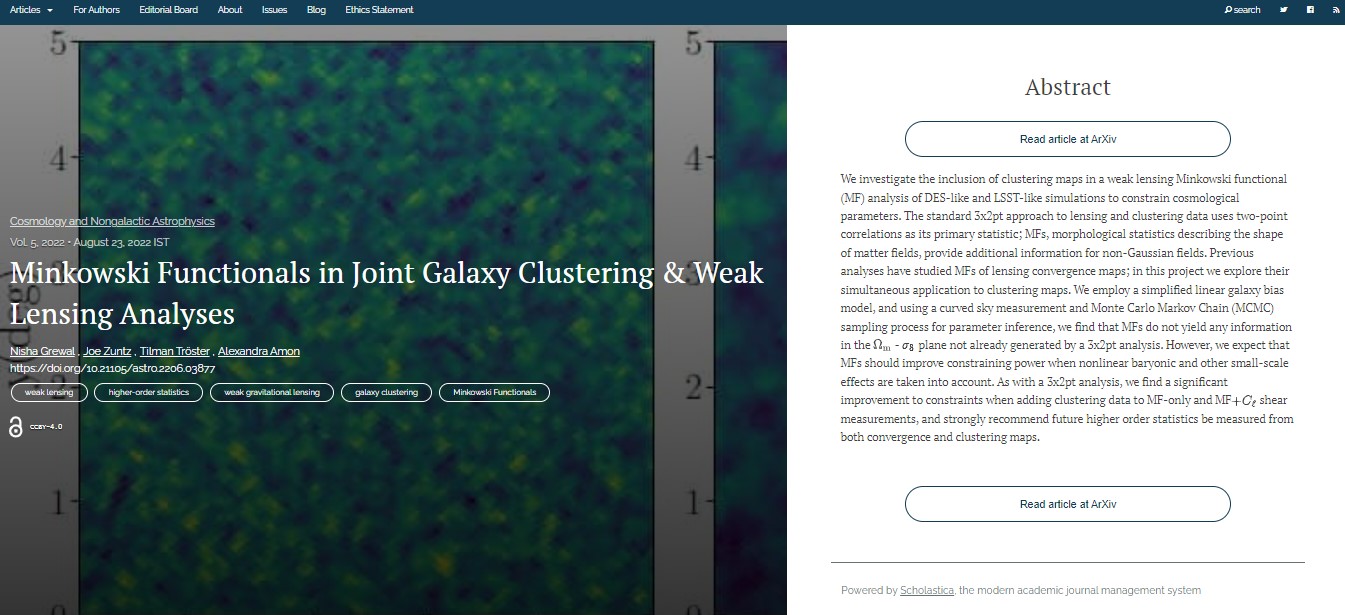
It’s time once again for me to announce another new paper at the Open Journal of Astrophysics. The new paper, published yesterday, is the 12th paper in Volume 5 (2022) and the 60th in all. The latest publication is entitled “Minkowski Functionals in Joint Galaxy Clustering & Weak Lensing Analyses” and the authors are Nisha Grewal, Joe Zuntz and Tilman Tröster of the Institute for Astronomy in Edinburgh and Alexandra Amon of the Institute of Astronomy in Cambridge. The paper is in the folder marked Cosmology and Non-Galactic Astrophysics.

Incidentally, Dr Alexandra Amon is the winner of this year’s Caroline Herschel Lectureship in Astronomy, so congratulations to her for that too!

The new paper is about the application of topological characteristics known as Minkowski Functionals to cosmological data. This approach has been used in the past to study the pattern cosmic microwave background temperature fluctuations; see e.g. here for one of my forays into this way back in 2008. Now there are more high-quality datasets besides the CMB so there are more opportunities to use this elegant approach. Perhaps I should do a blog post about Minkowski Functionals? Somewhat to my surprise I can’t find anything on that topic in my back catalogue here In The Dark

Anyway, here is a screen grab of the overlay which includes the  abstract:


You can click on the image to make it larger should you wish to do so. You can find the accepted version of the paper on the arXiv here.
The First Deep Field from JWST

Posted in Astronomy Lookalikes, The Universe and Stuff with tags , , , , , on July 12, 2022 by telescoper

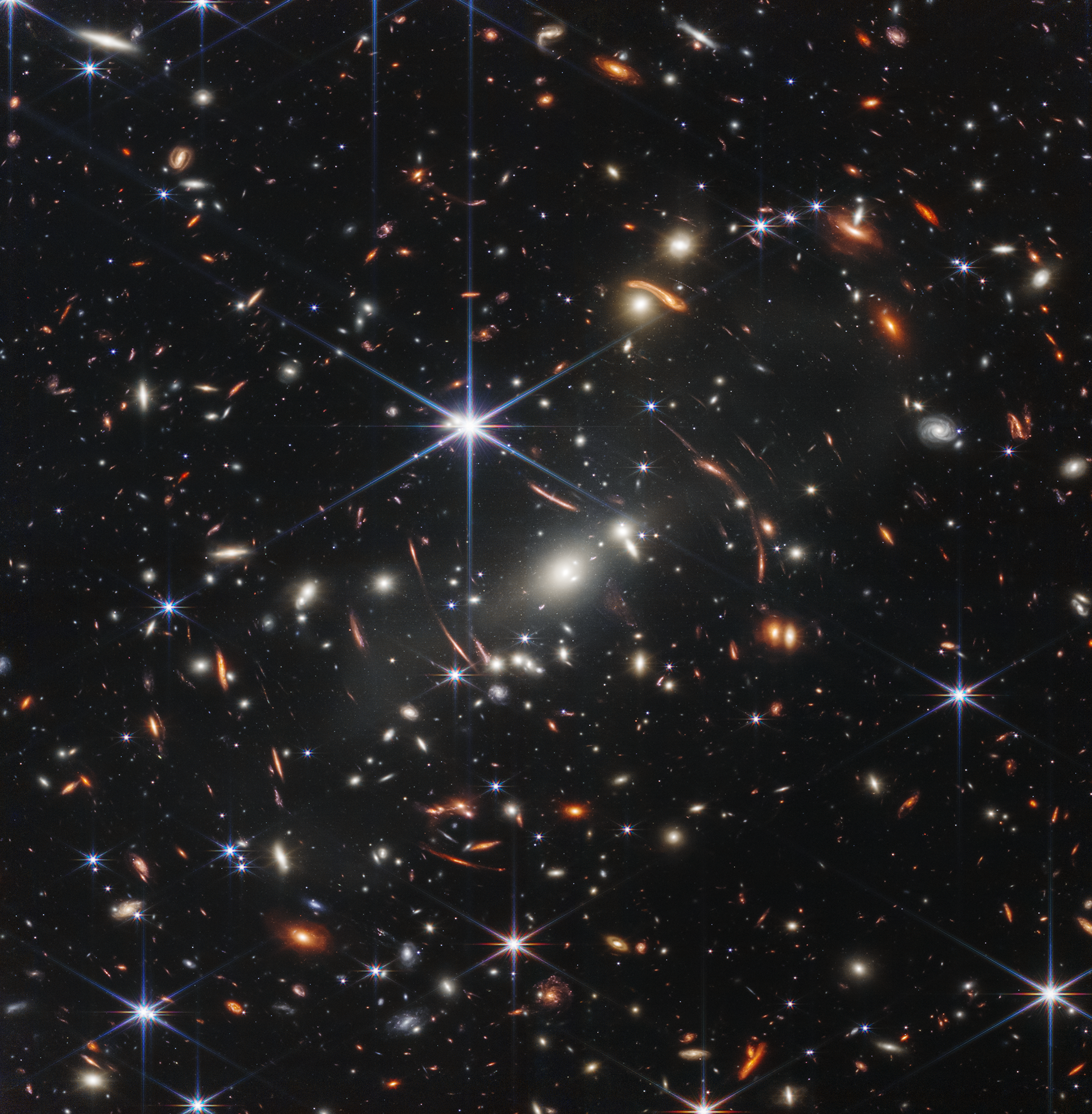
I have to say that I didn’t stay up to watch the live stream of last night’s preview of this afternoon’s release of the first images from the James Webb Space Telescope. It started very late and I got sick of listening to the dreary music on the feed so went to bed. Nevertheless here is the first picture:

Credits: NASA, ESA, CSA, and STScI

This is a deep field image taken using JWST’s NIRCAM (Near-Infrared Camera). Note that the artifacts you see around some objects are diffraction spikes which occur around bright sources; their six-fold symmetry reflects the hexagonal structure built into the JWST’s mirror assembly. Sources sufficiently bright and compact enough to cause these spikes in deep field images are foreground stars: the extended, fainter objects are all much more distant galaxies.

The description from the NASA page is:

NASA’s James Webb Space Telescope has produced the deepest and sharpest infrared image of the distant universe to date. Known as Webb’s First Deep Field, this image of galaxy cluster SMACS 0723 is overflowing with detail.

Thousands of galaxies – including the faintest objects ever observed in the infrared – have appeared in Webb’s view for the first time. This slice of the vast universe is approximately the size of a grain of sand held at arm’s length by someone on the ground.

This deep field, taken by Webb’s Near-Infrared Camera (NIRCam), is a composite made from images at different wavelengths, totaling 12.5 hours – achieving depths at infrared wavelengths beyond the Hubble Space Telescope’s deepest fields, which took weeks. 

The image shows the galaxy cluster SMACS 0723 as it appeared 4.6 billion years ago. The combined mass of this galaxy cluster acts as a gravitational lens, magnifying much more distant galaxies behind it. Webb’s NIRCam has brought those distant galaxies into sharp focus – they have tiny, faint structures that have never been seen before, including star clusters and diffuse features. Researchers will soon begin to learn more about the galaxies’ masses, ages, histories, and compositions, as Webb seeks the earliest galaxies in the universe

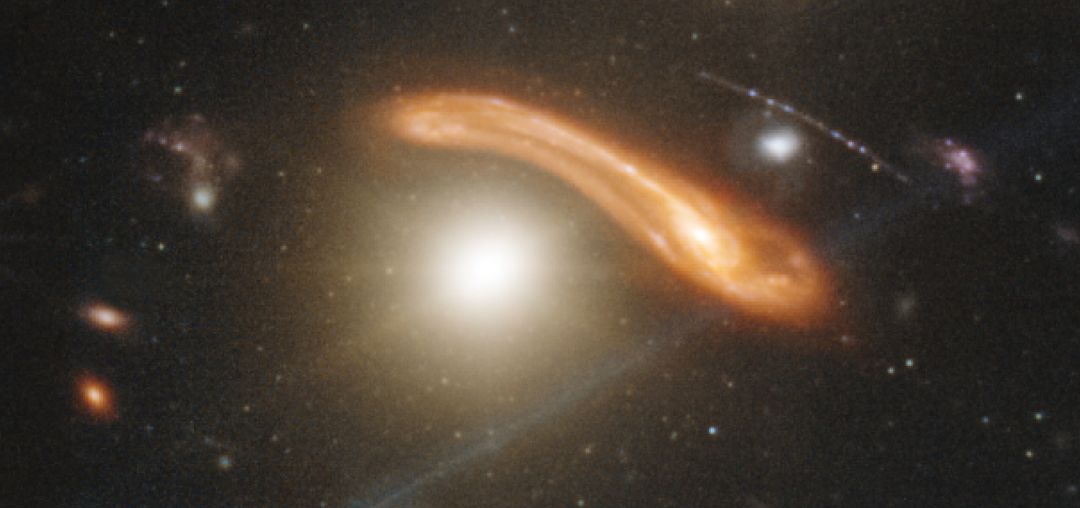
Here is a close-up of one of the distorted galaxy images and othe features produced by gravitational lensing:

We’re having a special viewing in Maynooth this afternoon of the press conference which will unveil more new images from JWST – nice telescope, shame about the name. I may add comments on here if anything particularly exciting turns up. You can watch it here:

Let’s hope this one starts on time!

New Publication at the Open Journal of Astrophysics

Posted in OJAp Papers, Open Access, The Universe and Stuff with tags , , , , , , on September 30, 2021 by telescoper

Time to announce another publication in the Open Journal of Astrophysics. This one is the twelfth paper in Volume 4 (2021) and the 43rd in all.

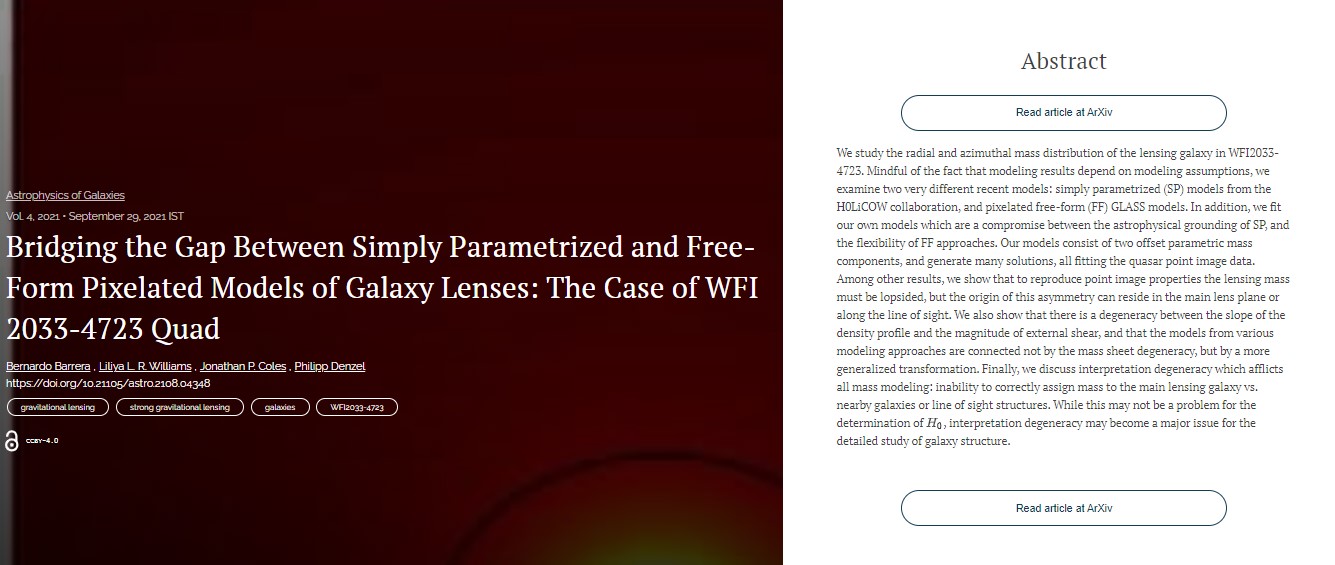
The latest publication is entitled  Bridging the Gap Between Simply Parametrized and Free-Form Pixelated Models of Galaxy Lenses: The Case of WFI 2033-4723 Quad and is in the folder marked Astrophysics of Galaxies. The authors are Bernardo Barrera (Tecnológico de Monterrey, Mexico), Liliya Williams (University of Minnesota, USA), Jonathan P. Coles* (Technical University of Munich, Germany) and Philipp Denzel (University of Zurich, Switzerland).

*No relation.

Here is a screen grab of the overlay which includes the abstract:

You can click on the image to make it larger should you wish to do so. You can find the arXiv version of the paper here.

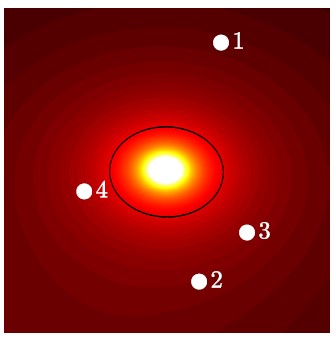
The teaser image doesn’t show up very well on the overlay so here it is in all its glory:

New KiDS on the Blog!

Posted in The Universe and Stuff with tags , , , , , , , , , , on August 5, 2020 by telescoper

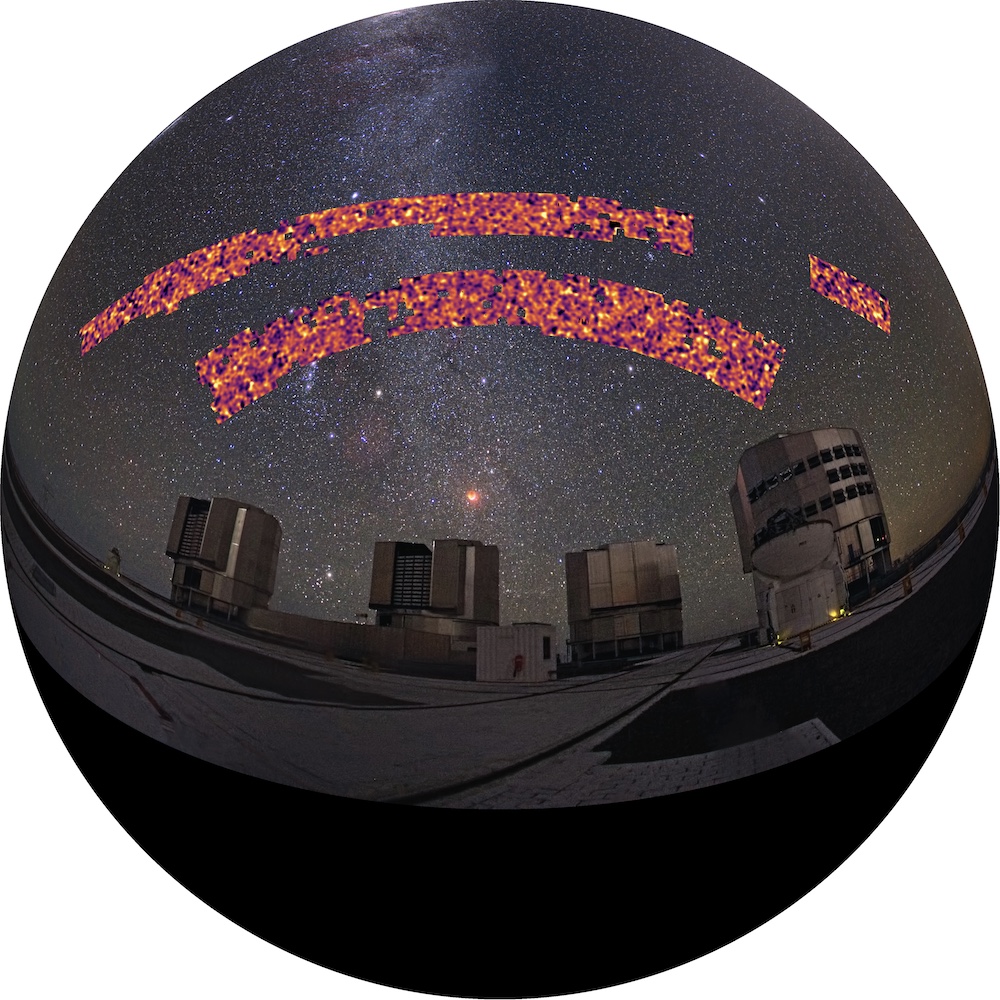
The above image is from the Kilo Degree Survey, performed using the OmegaCAM instrument on the European Southern Observatory’s VST Survey Telescope at Cerro Paranal in Northern Chile. I got it by googling `Pictures of KiDS’, which was probably unwise.

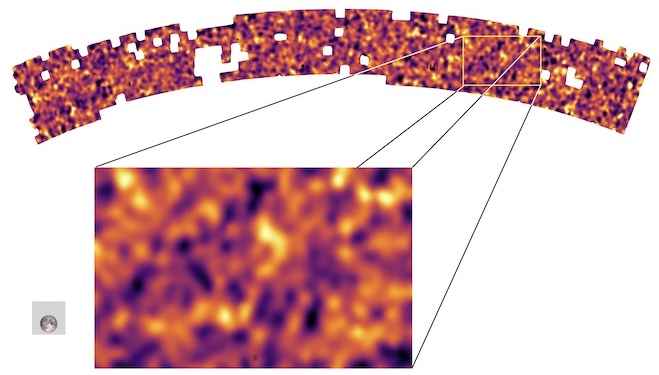
Here’s another picture, of part of the survey region.

A few people have asked me why I didn’t post about the new results from KiDs which came out last week. The answer is simply that I’ve been a bit busy, but here we go now with a post on the blog about the new KiDs papers. These appear as a bunch of five on the arXiv:

KiDS-1000 Methodology: Modelling and inference for joint weak gravitational lensing and spectroscopic galaxy clustering analysis

KiDS-1000 catalogue: weak gravitational lensing shear measurements

KiDS-1000 catalogue: Redshift distributions and their calibration

KiDS-1000 Cosmology: Cosmic shear constraints and comparison between two point statistics

KiDS-1000 Cosmology: Multi-probe weak gravitational lensing and spectroscopic galaxy clustering constraints

The result that stands out from the latest release is the suggestion that the Universe is about 8% less clumpy than the standard cosmological model suggests. The level of clumpiness is quantified by the parameter S8 which, according to Planck, has a value 0.832 ± 0.013 whereas KiDS gives 0.776 (+0.020/-0.014), a discrepancy of about 3σ. It’s not only the Hubble constant that is causing a bit of tension in cosmological circles!


New Publication at the Open Journal of Astrophysics!

Posted in OJAp Papers, Open Access, The Universe and Stuff with tags , , , , , , on June 25, 2020 by telescoper

Proving further the point that the The Open Journal of Astrophysics is definitely fully open we have published yet another paper. This one was actually published yesterday, which means that we had two in two days..

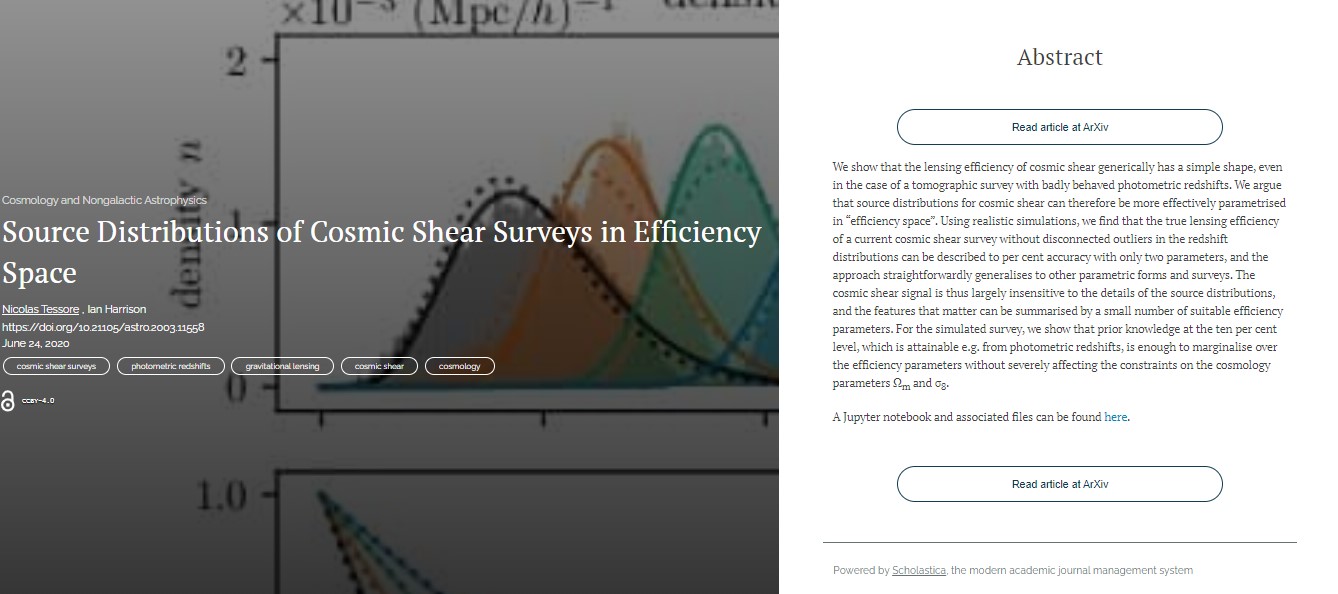
This one is in the Cosmology and Nongalactic Astrophysics section and is entitled Source Distributions of Cosmic Shear Surveys in Efficiency Space. The authors are Nicolas Tessore and Ian Harrison, both from the University of Manchester. The paper is concerned with the extraction of cosmological information from cosmic shear surveys.

Here is a screen grab of the overlay:

You can find the arXiv version of the paper here.

Cosmology Talks: Omar Darwish on Lensing Maps

Posted in The Universe and Stuff with tags , , , , , on April 17, 2020 by telescoper

If you are missing your regular seminar experience because of the Coronavirus lockdown, Shaun Hotchkiss has set up a YouTube channel just for you!

The channel features technical talks rather than popular expositions so it won’t be everyone’s cup of tea but for those seriously interested in cosmology at a research level they should prove interesting.

Here’s another example from that series in which Omar Darwish talks about CMB Lensing Maps and specifically about an extremely impressive example thereof which he made using data from the Atacama Cosmology Telescope.