I woke this morning to the sad news that the great tenor saxophonist Sonny Rollins passed away yesterday at the age of 95. He was one of the most influential and creative musicians of his time and there are many justifiably glowing obituaries of him. I can’t add much that hasn’t already been said by them, other than say that I consider myself deeply privileged to have been able see and hear Sonny Rollins play live, not once but twice, during the 1980s. The first was in the relatively intimate surroundings of Ronnie Scott’s club in London and the second in the Royal Festival Hall. On both occasions he was fantastic. Sonny Rollins was one of those musicians who made me think when I watched him that if you took the instrument out of his mouth it would somehow carry on playing on its own. At Ronnie Scott’s club he opened one set by starting to play in the band room, walking out through the audience onto the stage still playing and then about an hour later walked off back the way he came, still playing. The tune was Thelonious Monk’s 52nd Street Theme. He ended his set at the Festival Hall with an unstoppable version of Don’t Stop The Carnival that had everyone leaping about in the aisles. There was so much music in him it just had to come out. Was he playing the music or was it playing him?
Sonny Rollins began playing professionally when he was a teenager in the late 1940s but came to the attention of the jazz world in earnest when he teamed up with Miles Davis for a 1954 recording session that led to a record called Miles Davis with Sonny Rollins. (Coincidentally, today would have been Miles Davis’s 100th birthday). That record, originally issued on a 10″ LP, showcased Rollins’s big muscular sound on tenor sax, but also consisted of four tracks, three of which were compositions by Sonny Rollins, including a now-standard Oleo. That record was really Sonny’s breakthrough and he went on to record dozens of superb albums both as leader: A Night at the Village Vanguard, Saxophone Colossus, Newk’s Time, and Way Out West, to name just four. He also made many records as a side man, including the must-have album, Brilliant Corners with Thelonious Monk.
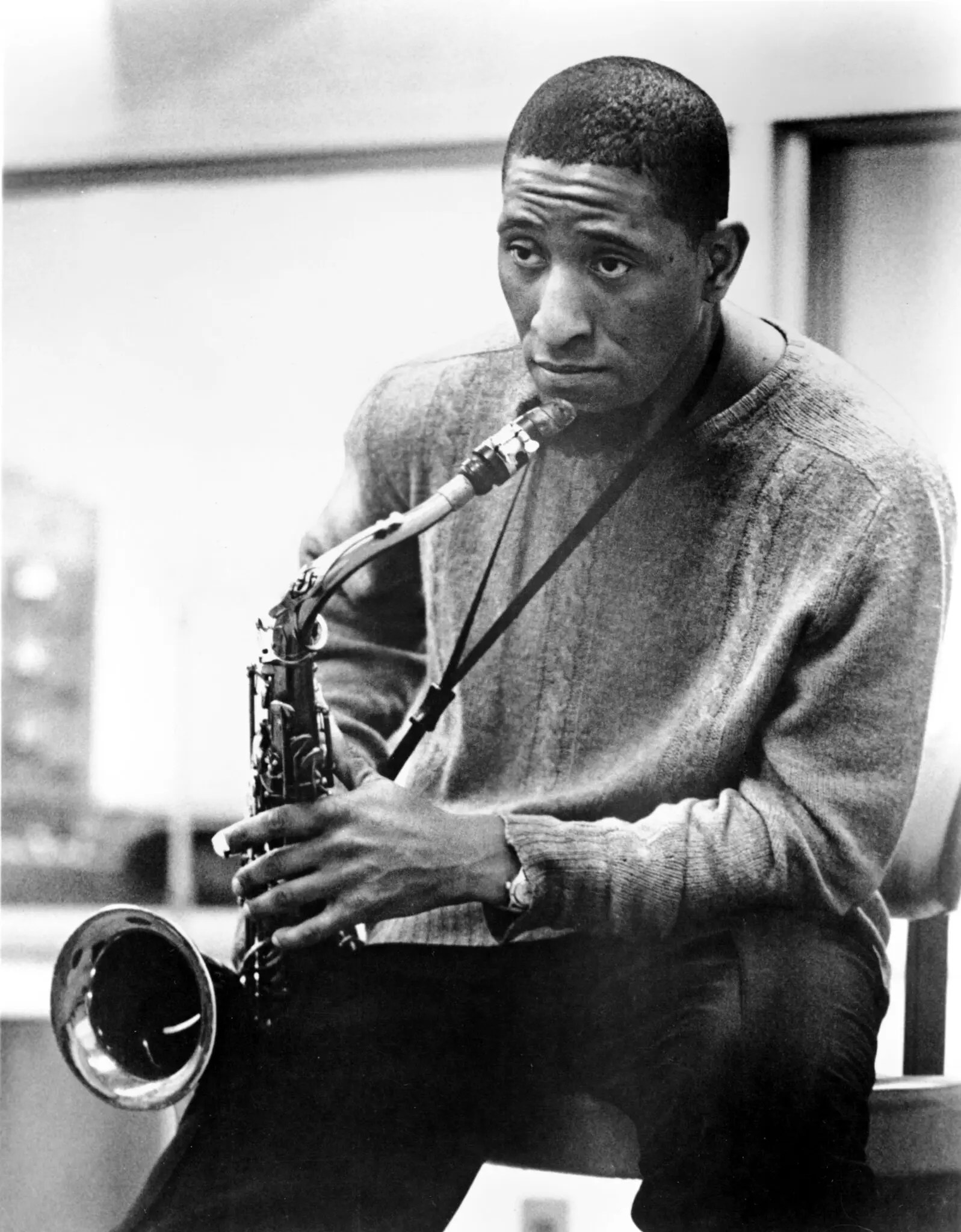
Having established himself as a major artist, Rollins suddenly took a three-year break from playing between 1959 to 1961 to develop his technique. Lacking space to practice in his apartment, he did so every day on the Williamsburg Bridge. When he returned to a recording studio in early 1962, the result was another classic album, The Bridge.
(Left: Sonny Rollins c. 1960)
Having established himself as a major artist, Rollins suddenly took a three-year break from playing between 1959 to 1961 to develop his technique. Lacking space to practice in his apartment, he did so every day on the Williamsburg Bridge. When he returned to a recording studio in early 1962, the result was another classic album, The Bridge.
In all he made over 60 albums, of which I have about a dozen. I’ll be listening to them a lot over the next few days and may post a few further items about them in due course.One thing I always liked about Sonny Rollins was his tendency to take a shine to very unexpected tunes and turn them into something magical. Off the top of my head I can think of The Surrey with the Fringe on Top, How are Things in Glocca Morra? and I’m an Old Cowhand.
It’s impossible to pick a single track than can do justice to Sonny Rollins so I’m just going to include a couple here. The first is the very first track I ever heard by him, on a Blue Note sampler album. It’s a Miles Davis tune called Tune Up and it’s from the 1957 Blue Note album Newk’s Time with Wynton Kelly (piano), Doug Watkins (bass), and Philly Joe Jones (drums). Perhaps listening to the energy and invention of his playing, delivered with that characteristically leathery tone then you’ will understand why I fell instantly in love with his music and wanted to hear more.
The second is one of my favourite records of all time. It’s called Hold’ Em Joe and it was recorded in 1965 with Ray Bryant (piano), Walter Booker (bass) and the fabulous Mickey Roker on drums:
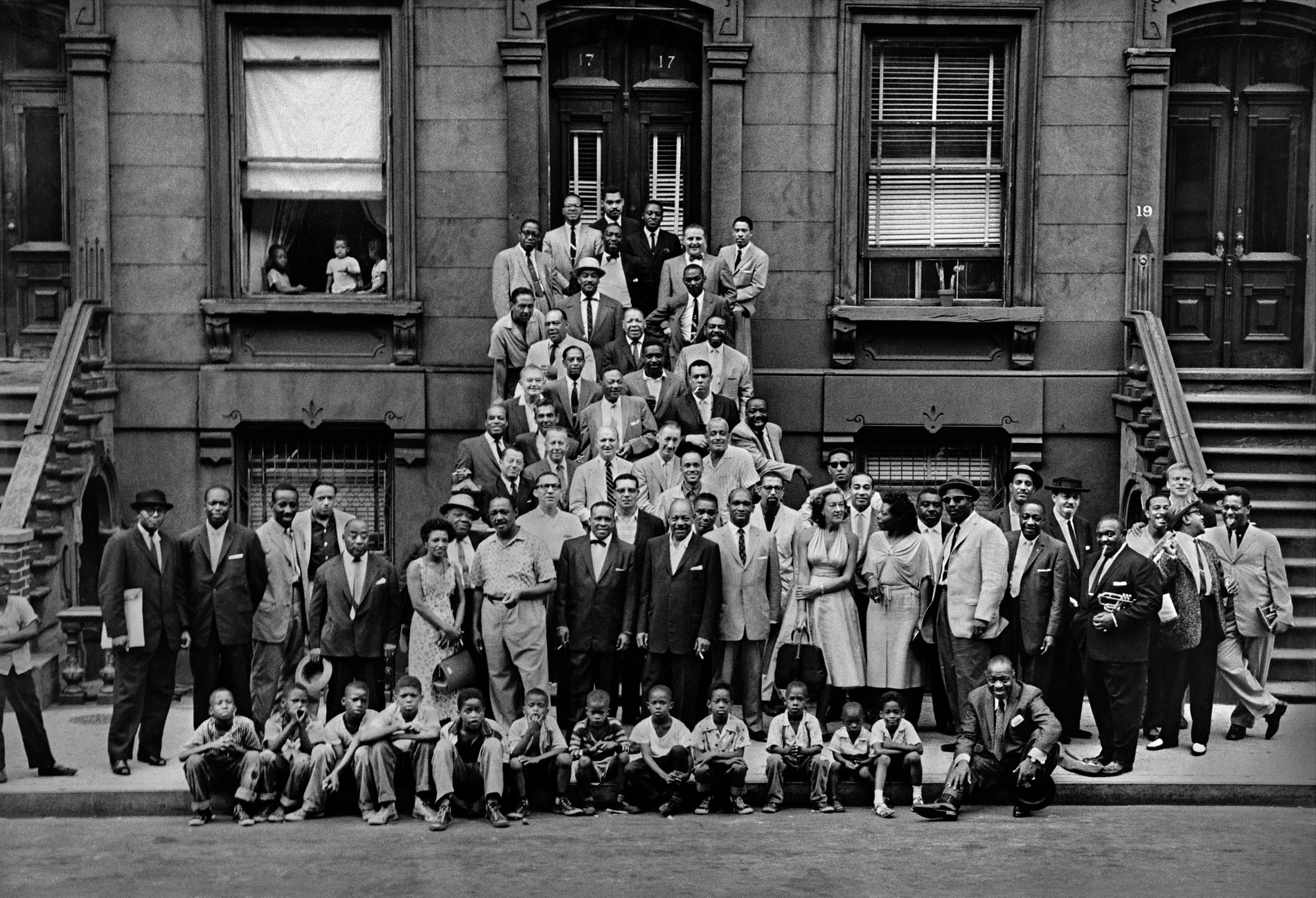
As a sad footnote on this sad occasion, the passing of Sonny Rollins means that not one of the great musicians in this famous photograph A Great Day in Harlem, taken on August 12th 1958, is still with us:
Rest in Peace Sonny Rollins (1930-1954), Saxophone Colossus indeed.


