by Wassily Kandinsky (1940; oil and enamel on canvas. 96.8 x 146 cm Guggenheim, New York)
Archive for December, 2025
Around the Circle – Wassily Kandinsky
Posted in Art with tags Around the Circle, Art, Wassily Kandinsky on December 10, 2025 by telescoperStorm Bram Approaches…
Posted in Biographical, Maynooth with tags Maynooth University, Storm Bram, Weather on December 9, 2025 by telescoperThe weather is rather strange today, as a result of Storm Bram which is approaching from the South. The storm is bringing warm air with it, so the temperature is around 15°C which is very mild for December. The prevailing winds are usually westerly or south-westerly.

Heavy rain fell overnight, especially in the South. It’s clearer now and the winds are starting to pick up. Although Maynooth is relatively sheltered we’re still expecting gusts up to 100 km/h. As a precaution, the large tent which is usually situated outside the John Hume building has been dismantled to stop it blowing away.
Campus remains open and lectures are going ahead as normal.
At least mine are…
UPDATE: 4.25pm. I spoke to soon. I have a teaching session between 2pm and 4pm on Tuesdays; I usually take a break halfway through, as I did this afternoon. Chatting with some students in the interval we noted the wind was picking up and discussed the possibility of a power cut. We obviously tempted fate, as no sooner had we resumed for the second half when all the power went off. It came on intermittently a few times, but at 3.30pm I called off the lecture. It was too dark to see the blackboard and no other AV equipment was working. When I got back to the Physics Department, where the power was also off, as it appeared to be for the whole campus, a colleague who lives nearby told me that our area of Maynooth still had power. So I headed home, via Dunnes (which has a generator) to buy a few things. As I walked through Maynooth some lights were on, some were off. The worst affected area seemed to be to the north-west and around campus. Anyway, I’m home safely and can continue working here as long as the power stays on.
P.S. The storm is named after Bram Stoker, author of Dracula, who was born in Dublin.
Nine Teaching Days to Christmas
Posted in Biographical, mathematics, Maynooth, Television with tags Biographical, Fast Show, Jesse, Maynooth on December 8, 2025 by telescoperThis week is the penultimate week of teaching term at Maynooth and, as usual at this stage of the Semester, we’re getting busier and busier. The examinations for January have been sent off for printing and are (presumably) ready to go, and I’m up to date with all my coursework gradin so I am, miraculously, on schedule as far as teaching is concerned. I should finish covering the respective syllabuses by Tuesday 16th, with the remaining teaching sessions devoted to revision. I don’t have any lectures on Fridays this term, so my teaching ends, a day before the end of term, on Thursday 18th December. To celebrate the end of term I’ll be presenting the students in the last session of my Engineering Mathematics module the gift of a final Class Test. I’m not sure when I’ll get to correct it. Oh, and our Department Christmas Dinner is on Wednesday 17th.
I’ll soon have to decide when to pause the publication of new papers at the Open Journal of Astrophysics and prepared for next year’s Volume 9. A certain person is insisting that I take a complete break for at least a week, so I think we’ll probably stop on Christmas Eve and begin again in the New Year.
In the meantime, term goes on. I have three lectures to get ready for tomorrow. Incidentally, my mid-Semester feedback suggested that I start each lecture with an introduction to say what I’m going to be covering. Here are some examples of what I’ve been doing in response:


Black Holes, Hawking Radiation (and AI…)
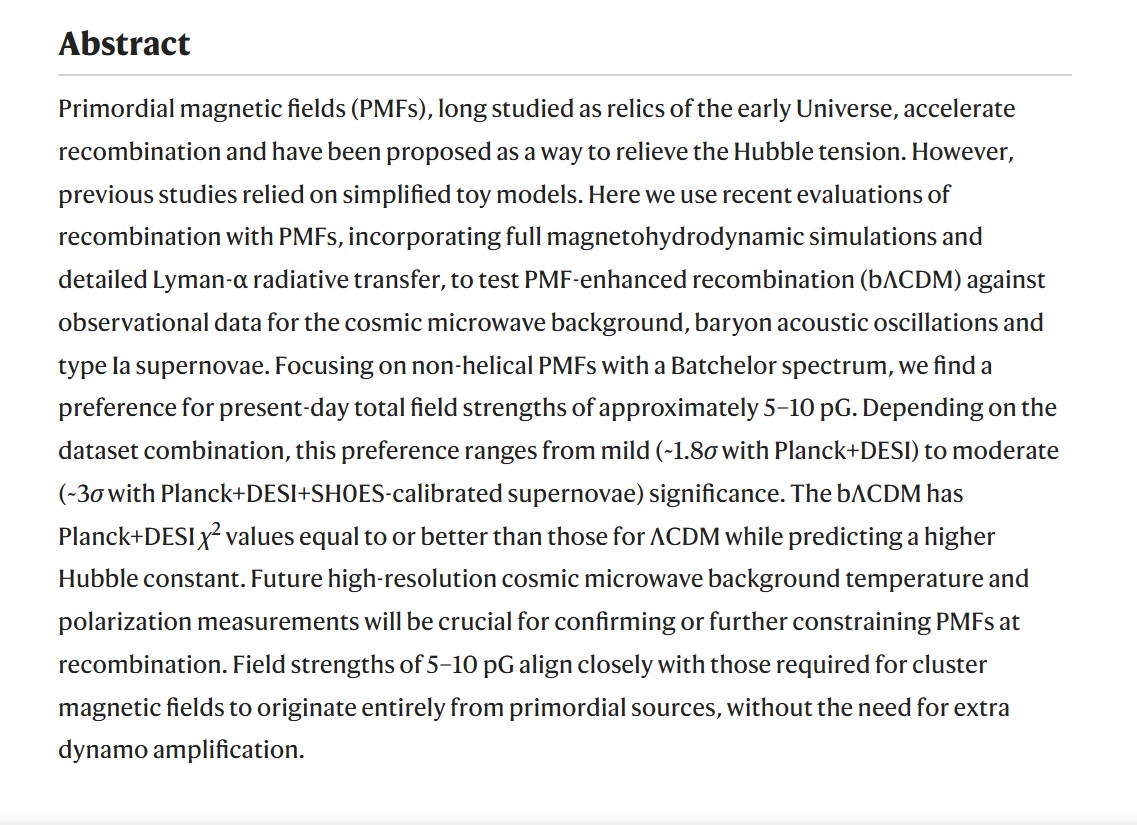
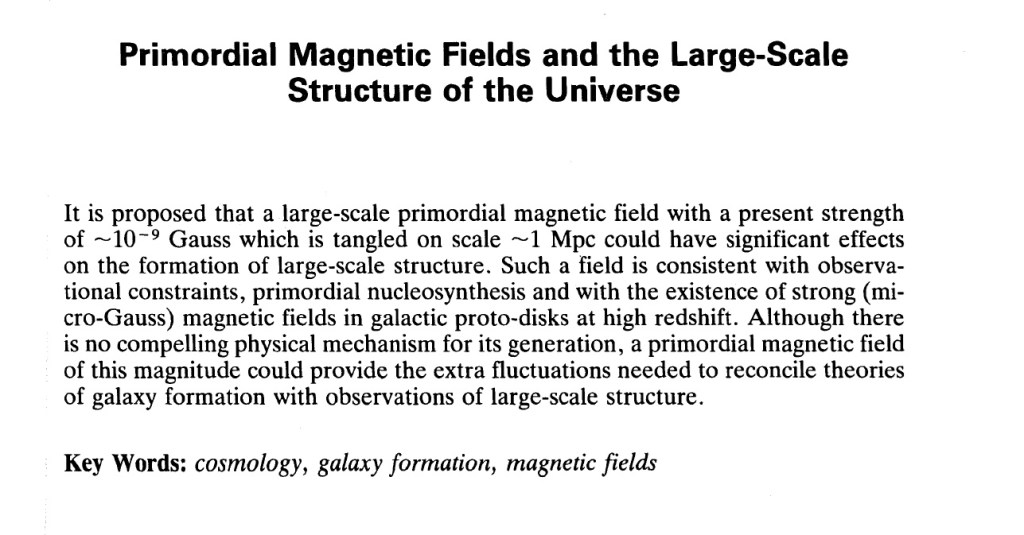
Posted in Artificial Intelligence, The Universe and Stuff with tags black holes, GenAI, Google, Hawking Radiation, Hawking Temperature, supermassive black holes on December 7, 2025 by telescoperIt seems to be a common misapprehension that the energy released by the supermassive black holes in, for example, active galactic nuclei is in the form of Hawking radiation. It isn’t. Hawking radiation is only significant for black holes of very low mass. The radiation produced around supermassive black holes is due to the extremely high density and temperate of matter falling into the black hole through an accretion disk not due to the evaporation of the black hole itself. Hawking radiation has never been experimentally detected.
Hawking showed that the a black hole will produce black-body radiation with a temperature, the Hawking Temperature, given by TH in a beautiful formula below that brings together constants relating to gravity, statistical mechanics, quantum theory and relativity:

You can see that the Hawking Temperature is inversely proportional to the mass of the black hole M so is largest for very small black holes. In fact for a black hole with mass of order that of the Moon, the Hawking Temperature is just 3 Kelvin. Since the Universe is bathed in cosmic radiation with this temperature, such a black hole would not evaporate at all because it would absorb as much radiation as it emits by the Hawking mechanism as would any black hole of mass greater than this. The Hawking temperature for a supermassive black hole is many orders of magnitude lower than this, so Hawking radiation is completely irrelevant.
Notice that if a black hole does start to evaporate then its mass begins to decrease. Its Hawking temperature therefore increases so its mass decreases even more quickly. In the end the mass gets so low and the temperature so high that the black hole effectively explodes. Nobody really knows how to describe the final stage as it relies on physics we don’t understand.
Anyway, this all reminds that years ago I set an examination question that involved applying the Hawking formula above to calculate the lifetime of a black hole of mass M. It’s not too hard to show that it scales as M-3. Another part of the question asked: what is the mass of a black hole whose Hawking Temperature is room temperature (say 300 K), what would be the Schwarzschild radius of such a black hole, and what would be its lifetime?
I’ll leave it to my readers to plug the numbers into the Hawking formula above to derive the mass, etc. Please submit your answers through the comments box below. The first correct entry does not win a prize, not even a joke Peace Prize.
For a laugh I asked Google for the answer. Here is the AI summary:
Bonus marks for pointing out everything that’s wrong in this summary.
Mozart and Bruckner at the National Concert Hall
Posted in Biographical, Music, Uncategorized with tags Anja Bihlmaier, Anton Bruckner, Boris Giltberg, Bruckner Symphony No. 9, Mozart Piano Concerto No. 15, National Concert Hall, National Symphony Orchestra Ireland, Wolfgang Amadeus Mozart on December 6, 2025 by telescoper

I was worried I might have to miss last night’s concert by National Symphony Orchestra Ireland conducted by Anja Bihlmaier at the National Concert Hall. I bought the ticket some weeks ago and was looking forward to it, but I had been a bit unwell earlier in the week and didn’t want to go only to cough all the way through, possibly infecting others on the way. By Friday afternoon, however, I felt a lot better and took the decision to go for it. I’m very glad I did because I enjoyed the music enormously and didn’t cough or sneeze once!
There were only two items on the menu, another pairing of Mozart and Bruckner.
In the first half we heard the Piano Concerto No. 15 by Wolfgang Amadeus Mozart played by Boris Giltberg. This piece was written in 1784 when the composer had reached the ripe old age of 28. It’s an enjoyable and entertaining piece, not perhaps as profound as some of the later piano concertos (Mozart wrote 27 altogether), but well worth listening to. It’s also regarded as one of the most difficult to play, though Boris Giltberg made it look easy enough and was clearly enjoying himself while he played it as I’m sure did the composer when he performed it for the first time in Vienna. The three movements follow a standard fast-slow-fast pattern; the last being a sprightly Rondo, part of which features in the soundtrack of an episode of Inspector Morse: Who Killed Harry Field?
After generous applause, Giltberg returned to the stage to play a very solo encore piece. I didn’t recognize it, but someone I know who was there told me it was by Robert Schumann but didn’t know the name. When I got home I spent a good half-hour going through recordings until I finally identified it as the Arabeske in C Major. Anyway, it was a very nice way to send us into the wine break.
After the interval we had Anton Bruckner‘s monumental Symphony No. 9, which was unfinished at Bruckner’s death in 1896. Insufficient material was recovered after the composer’s death to enable a reconstruction of the missing 4th movement, so this work is generally performed in its incomplete state with only three movements. Even so, it’s an immense work in both length and ambition, lasting over an hour in performance and calling for a large orchestra.
The majestic first movement (marked Feierlich, Misterioso; solemn & mysterious) with its soaring themes and thunderous climaxes always puts me in mind of a mountaineering expedition, with wonderful vistas to experience but with danger lurking at every step. At times it’s rapturously beautiful, at times terrifying. It’s not actually about mountaineering, of course – Bruckner meant this symphony to be an expression of his religious faith, which, in the latter years of his life must have been pretty shaky if the music is anything to go by.
The second movement (Scherzo) is all juddering rhythms, jagged themes and harsh dissonances reminiscent (to me) of Shostakovich. It alternates between menacing, playful and cryptic; the frenzied animation of central Trio section is especially disconcerting.
The last movement (Adagio) begins restlessly, with an unaccompanied violin theme and then becomes more obviously religious in character in various passages of hymn-like quality, still punctuated by stark crescendi. In this movement Bruckner doffs his cap in the direction of Richard Wagner, especially when the four Wagner tubas appear, and the movement reaches yet another climax with the brass bellowing out the initial violin theme. This dies away and the movement comes to an unresolved, poignant conclusion. With a long pause in silence as if to say “that’s all he wrote”, the concert came to an end.
Although I’ve loved this work for many years I’ve only ever heard it once before in concert. The live performance definitely adds other dimensions you will miss on a recording and I enjoyed it enormously. For one thing you can see how hard the musicians – especially the cellos and basses – have to work. The sight of a large symphony orchestra working together to produce amazing sounds is quite something.
The National Symphony Orchestra Ireland may not be the Berlin Philharmonic but I was generally very impressed, there was split note in the brass section near the end, but this was a minor blemish. The performance was very warmly received by the audience. The NCH wasn’t full, but it was quite a good attendance.
That’s not quite the end of my concert-going for 2025. I’m off to Messiah next week. Well, you have to, don’t you? It’s Christmas..
Weekly Update from the Open Journal of Astrophysics – 06/12/2025
Posted in OJAp Papers, Open Access, The Universe and Stuff with tags arXiv:2410.02850v2, arXiv:2504.05235v4, arXiv:2506.14736v2, arXiv:2506.19919v2, arXiv:2509.03593v3, arXiv:2509.22878v2, Astrophysics of Galaxies, AT2020adpi, Bayesian Methods, Cosmology and NonGalactic Astrophysics, Diamond Open Access Publishing, Fermi Paradox, GPUs, High-Energy Astrophysical Phenomena, Instrumentation and Methods for Astrophysics, intrinsic alignments, Lyman-alpha, Machine Learning, Nuclear Transient, Open Access Publishing, Open Journal of Astrophysics, photoionization, SETI, star formation, Stellar Populations, Suplhur, The Open Journal of Astrophysics, THESAN simulations on December 6, 2025 by telescoperOnce again it’s time for the usual Saturday morning update of the week’s new papers at the Open Journal of Astrophysics. Since the last update we have published a further six papers, which brings the number in Volume 8 (2025) up to 190, and the total so far published by OJAp up to 425. I blogged about the significance of the latter figure here.
The first paper this week is “The galaxy-IGM connection in THESAN: observability and information content of the galaxy-Lyman-alpha cross-correlation at z>6” by Enrico Garaldi (U. Tokyo, Japan), Verena Bellscheidt (Tech. U. Munich, Germany), Aaron Smith (U. Texas Austin, USA) and Rahul Kannan (York U. Canada). This paper was published on Monday 1st December 2025 in the folder Cosmology and Nongalactic Astrophysics. It describes an investigation of the impact of observational limitations on the ability to retrieve the intrinsic galaxy-Lyman-alpha cross correlation from line-of-sight observations.
The overlay is here:
You can find the officially accepted version on arXiv here and the Fediverse announcement is here:
The second paper of the week is “A Less Terrifying Universe? Mundanity as an Explanation for the Fermi Paradox” by Robin H.D. Corbet (U. Maryland, USA). This paper was published on 1st December 2025 in the folder Instrumentation and Methods for Astrophysics. It presents a discussion of possible explanations for the lack of s evidence for the presence of technology-using extraterrestrial civilizations in the Galaxy (usually called the Fermi paradox). The overlay is here:
You can find the official version of this one on arXiv here. The federated announcement on Mastodon is here:
Next one up is “Sulphur abundances in star-forming regions from optical emission lines: A new approach based on photoionization models consistent with the direct method” by Enrique Pérez-Montero, Borja Pérez-Díaz, & José M. Vílchez ( (Instituto de Astrofísica de Andalucía, Spain), Igor A. Zinchenko (LMU, Germany), Asier Castrillo, Marta Gavilán, Sandra Zamora & Ángeles I. Díaz (Universidad Autonoma de Madrid, Spain). This was published on 1st December 2025 in the folder Astrophysics of Galaxies. This study uses the emission lines produced in the optical part of the spectrum and with photoionization models to derive sulphur chemical abundances in the gas-phase of star-forming galaxies.
The overlay is here:
You can find the official accepted version on arXiv here. The fediverse announcement is here:
The fourth article of the week is “Bayesian Posteriors with Stellar Population Synthesis on GPUs” by Georgios Zacharegkas & Andrew Hearin (Argonne National Laboratory, USA) and Andrew Benson (Carnegie Observatories, USA). This is an exploration of a range of computational techniques aimed at accelerating Stellar Population Synthesis predictions of galaxy photometry using the JAX library to target GPUs (Graphics Processing Units, in case you didn’t know). This paper was published on Tuesday December 2nd 2025 in the folder Astrophysics of Galaxies.
The overlay is here:
You can find the official published version on arXiv here. The Fediverse announcement follows:
Next one up is “IAEmu: Learning Galaxy Intrinsic Alignment Correlations” by Sneh Pandya Yuanyuan Yang, Nicholas Van Alfen, Jonathan Blazek and Robin Walters (Northeastern University, Boston, USA). This presents a neural-network-based emulator that predicts the galaxy position-position, position-orientation, and orientation-orientation, correlation functions and their uncertainties using mock catalogs based on the halo occupation distribution (HOD) framework. It was published on December 2nd 2025 in the folder Cosmology and Nongalactic Astrophysics. The overlay is here:
The official accepted version can be found on arXiv here. The Mastodon announcement is here:
The last paper for this weel is “Unraveling the Nature of the Nuclear Transient AT2020adpi” by Paarmita Pandey (Ohio State University, USA) and a team of 15 others based in the USA, UK and Australia. This was published on Thursday December 4th 2025 in the folder High-Energy Astrophysical Phenomena. It is an investigation into a particular transient event AT2020adpi and a discussion of whether it is an extreme example of AGN variability or a Tidal Disruption Event (TDE). The overlay is here:
You can find the officially-accepted version on arXiv here, and the Mastodon announcement is here:
And that concludes the update for this week. I will do another next Saturday.
Viva Chair
Posted in Biographical, Maynooth with tags Mathematics and Statistics, Maynooth, PhD, PhD Viva, viva voce examination on December 5, 2025 by telescoperYesterday afternoon I acted as Chair of the viva voce examination for a PhD degree in the Department of Mathematics & Statistics at Maynooth University. I have done this once before at Maynooth, in the Department of Biology, but had to look back through my archive of blog posts to find out when that was: it was in June 2023.
For those of you not familiar with how this works, a PhD involves doing research into a particular topic and then writing up what you’ve done in a thesis. The thesis is a substantial piece of work, often in the region of 100,000 words (200 pages or so), which is then assessed by two examiners (one internal to the university at which the research was done, and one external). They read copies of the thesis and write preliminary reports on it. Then the candidate has to defend it in an oral examination, which was what happened yesterday, after which they make a recommendation to the university about whether the degree should be awarded.
There aren’t many rules for how a viva voce examination should be conducted or how long it should last, but the can be as short as, say, 90 minutes and can be as long as 5 hours or more. The examiners usually ask a mixture of questions, some about the details of the work presented and some about the general background. Sometimes, especially in Mathematics, the candidate might be asked to use the chalkboard to explain something, as was the case yesterday.
The unpredictable content of a viva voce examination makes it very difficult to prepare for, and it can be difficult and stressful for the candidate (as well as just tiring, as it can drag on for a long time). However, call me old-fashioned but I think if you’re going to get to call youself Doctor of Philosophy you should expect to have to work for it.
I found it interesting when I first arrived here that viva voce examinations at Maynooth follow a similar practice to those at my previous institution, Cardiff University my previous institution, in that each viva has a Chair as well as the usual internal and external examiners. The Chair is really only present to ensure fair play, that proper procedure is followed, and that all the paperwork is done in timely fashion. The Chair is rarely (if ever) called upon to intervene in the viva itself, though I have on some previous occasions done so, mainly to ask if the candidate and/or examiners would like to take a comfort break. Other than that it’s just a matter of sitting quietly and getting on with something else while the viva proceeds.
I have done quite a lot of examinations as internal or external examiner over the years and most institutions don’t have a Chair – only the two examiners and the candidate are present. Cardiff University is an exception: I chaired a quite a few vivas when I was there. The difference there was that the Chair was from the same School (Physics & Astronomy) as the candidate, whereas in Maynooth the Chair must be from a different Department (which is why I was asked to Chair examinations in Biology and, more recently, Mathematics).
I think having an independent Chair is a good idea, but I do understand that it involves finding a person willing to do it which, it seems, sometimes slows down the organization of a viva, as the process does not start until a Chair is appointed.
Anyway, in this case it all went well. The candidate passed, the forms were filled in and sent to the relevant people. Now there are just minor corrections to be done, everything approved at the relevant Faculty meeting, and then the PhD degree can be conferred.
Like a Million Pounds…
Posted in Biographical, Open Access with tags APC, Article Processing Charge, Diamond Open Access, MNRAS, Monthly Notices of the Royal Astronomical Society, Open Access, Open Journal of Astrophysics, The Open Journal of Astrophysics on December 4, 2025 by telescoperI’ve come down with some sort of lurgy and had to cancel a tutorial that was due to take place today, which I am sorry about. I did, however, manage to rise from my sick bed earlier this morning to publish a paper at the Open Journal of Astrophysics. When I checked the publishing dashboard I saw that this one is paper No. 425. This is a significant figure if you reckon by the cost of an Article Processing Charge (APC) at Monthly Notices of the Royal Astronomical Society. The current APC is £2356 per paper. If you multiply this by 425 the result is just over a million pounds (£1,001,300 to be exact). The Open Journal of Astrophysics, being a Diamond Open Access journal, is totally free for authors.
I mentioned a couple of weeks ago, that this is a small fraction of the money being wasted by the astronomical community worldwide on publication charges but if even a small operation like ours can save a million pounds, just think of what could happen if we all published this way! For one thing, there would certainly be more money available for actual research. That doesn’t only go for astronomy, of course: almost every scientific discipline is being ripped off by publishers who have hijacked the Open Access movement to generate income from APCs.
I’ll repeat the quotation I posted yesterday about a scandal relating to corporate publishing giant Elsevier
The scandal exposes the windfall profits of scientific publishers, who in recent years have amassed billions of dollars in earnings from public funds earmarked for science.
It’s a shocking idea, I know, but what if we spent public funds on what they are supposed to be spent on rather than handing millions to greedy publishers?
Yet Another Elsevier Scandal
Posted in Open Access with tags SCOPUS, Elsevier, Open Access Publishing, Journal of the Total Environment on December 3, 2025 by telescoperI wish to draw your attention to an article in the Spanish newspaper El Pais. I encourage you to read the full article, which in English here, and the headline is this:

The article is about a very dodgy journal called Science of the Total Environment published by Elsevier. As far as I can tell, despite the scandal, this journal is still listed in Scopus which is meant to mean that it is a quality journal. One shouldn’t be surprised however, because Scopus is itself owned by Elsevier. Why anyone would trust Scopus for anything is completely beyond me.
As well as the huge revenues and profit margins revealed in the article, it also mentions that Erik Engstrom, CEO of RELX (the multinational that owns Elsevier), earned more than €15 million ($17.4 million) in 2024 between his salary and other compensation. Nice work if you can get it…
Here’s a quote:
The scandal exposes the windfall profits of scientific publishers, who in recent years have amassed billions of dollars in earnings from public funds earmarked for science.
Quite so. I’ve been saying as much for years, in fact, and it is the major reason for setting up the Open Journal of Astrophysics. In my opinion, however, the scandalous behaviour of publishers is only half the problem: equally to blame are the institutions that go along with it.
MAUVE Image Simulation
Posted in The Universe and Stuff with tags astronomy, ChorizoGate, MAUVE, Salami on December 2, 2025 by telescoperSince the successful launch of the MAUVE satellite on Friday, the telescope has been undergoing verification and calibration. Meanwhile, I’ve been hard at work using my advanced image processing skills to simulate what images of astronomical objects seen in other wavebands might look like using MAUVE.
Here’s an example.
The original picture below is a famous image that needs no introduction. Simply move the slider to the left to reveal the MAUVE version…


P.S. Apologies that the software does not quite scale the images correctly.