Flaming June by Frederic Leighton (1895, Oil on Canvas, 120 ×120cm, Museo de Arte de Ponce, Puerto Rico)
Since this June has seen a heatwave across Europe and even here in Ireland, I was reminded of the expression “Flaming June” which I thought until relatively recently was some sort of folk expression or quotation from a poem, but it is instead the title of this Pre-Raphaelite painting by Frederic Leighton of a lady wearing what looks like a dress made out of old curtains. Apparently the oleander branch seen in the upper right symbolizes the fragile link between sleep and death. It looks to me like she must be attending a seminar. You can read more about this painting here.
As well as a hugely popular artist in his lifetime (though his reputation has not endured), Leighton holds the record for the shortest ever peerage: he was made Baron Leighton just the day before he died. The title he had been given was to be hereditary but as he had no offspring the title became extinct at his death.
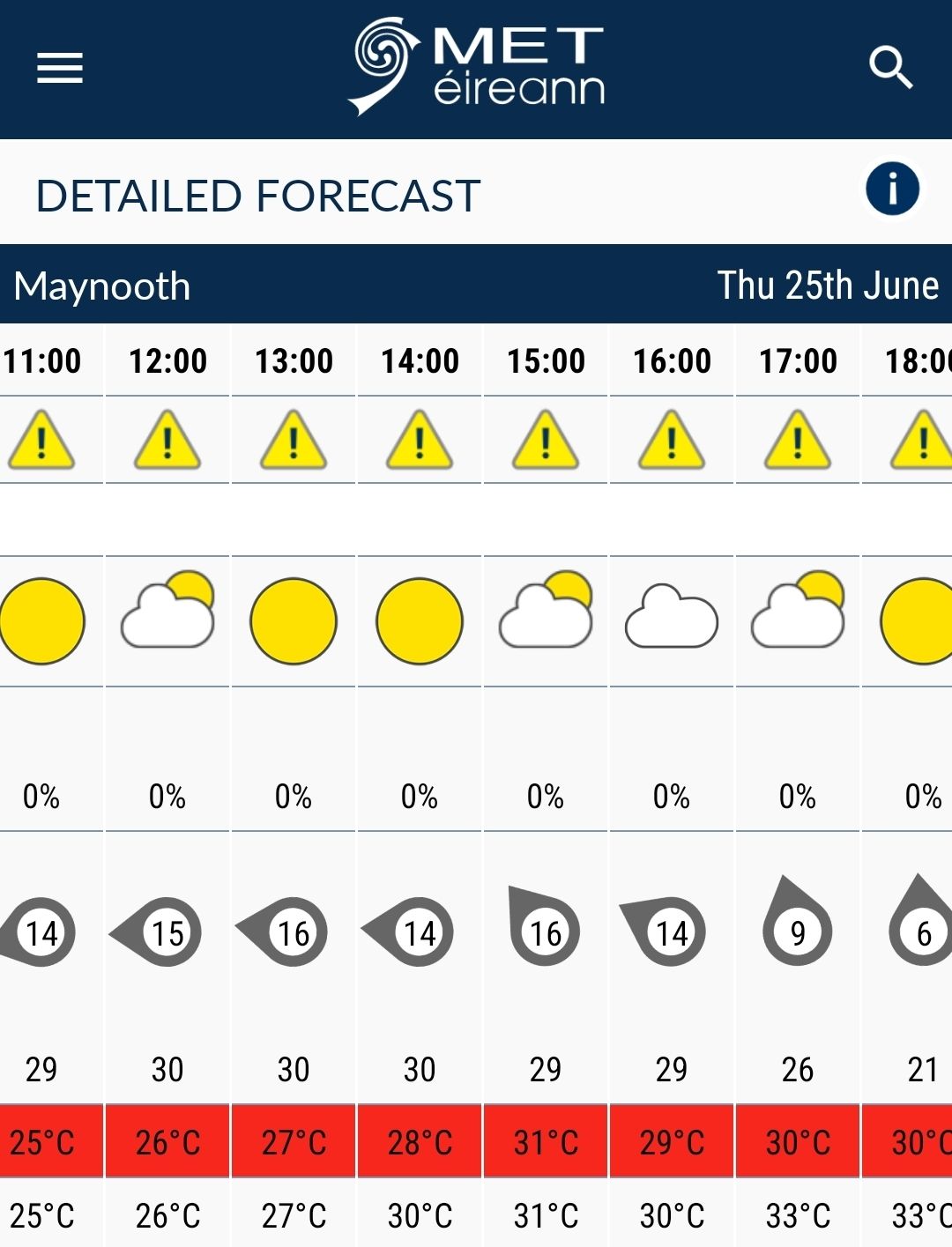
So the heatwave continues. The forecast for Maynooth today has temperatures exceeding 30°C, and higher in the South.
This kind of heat is very unusual for Ireland; the highest temperature ever recorded on the island is 33.3°C, in Kilkenny, way back in 1887. That record may well be broken today…
Actually the temperature readings in 1887 were given to the nearest degree Fahrenheit; the reading on 26th June 1887 was 92°F, which means somewhere between 91.5°F and 92.5°F (which is 33.1–33.6°C), so the central value of 33.3°C is not unreasonable, though the number could have been as low as 33.1°C or as high as 33.6°C. For a discussion see here.
It’s worth also repeating the fact I mentioned a few days ago on the Solstice, that this evening we will have the latest sunset of 2026, at 9:59:38 pm.
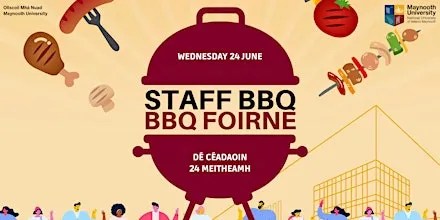
Yesterday afternoon we had a Staff Barbecue, which was held in nice – but not quite so hot – weather. It was very well attended and a pleasant occasion all round with plentiful burgers, hotdogs and booze. I must say it was very generous of the President to pay for all that out of her own pocket. (Is This Right? Ed.)
The Summer Solstice in the Northern hemisphere takes took place this morning, Sunday21st June 2026, at 9.24am local Irish Time (08.24 UTC). Among other things, this means that tomorrow is the longest day of the year around these parts. According to this website, the interval between sunrise and sunset in Dublin today will be 17 hours 4 minutes and 52 seconds. which is 2 seconds longer than yesterday, while tomorrow will be two whole seconds shorter.
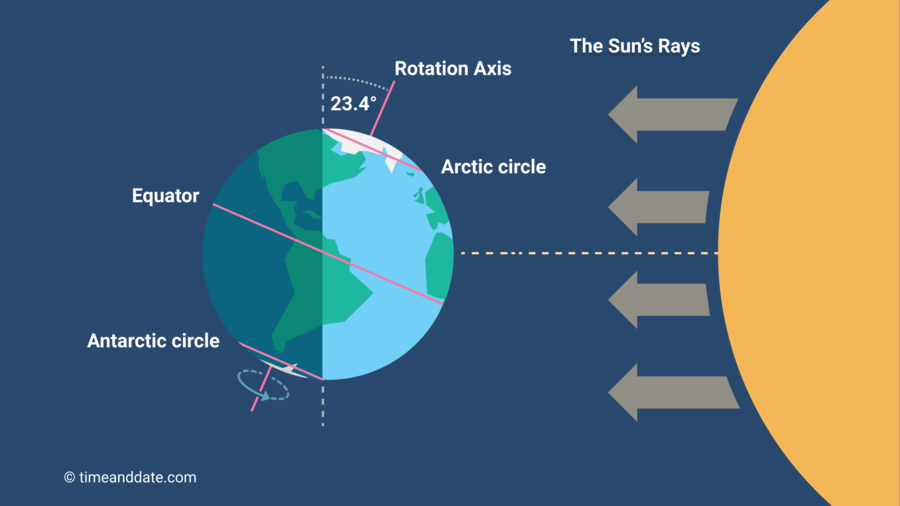
The Earth orbits the Sun once a year in a nearly circular orbit. The Earth’s axis of rotation (the straight line through the center of the Earth between the north and south poles) is not perpendicular to the plane of the Earth’s orbit. The Earth’s axis is tilted by about 23.4° from the the direction perpendiular to the orbital plane:
The orientation of the Earth’s axis in space remains nearly constant even as the Earth revolves around the Sun. It always points in the general direction of the star Polaris. The result is that when the Earth is on one side of its orbit, the South Pole is tilted toward the Sun (by as much as 23.4°) and the Southern Hemisphere experiences summer. Six months later, when the Earth is on the opposite side of its orbit, the North pole is tilted toward the Sun (by as much as 23.4°) and the Northern Hemisphere experiences summer.
On the Summer Solstice, Earth’s maximum axial tilt toward the Sun is 23.4°. Likewise, the Sun’s declination from the celestial equator is 23.4°. In areas outside the tropics, the Sun reaches its highest elevation angle at solar noon on the summer solstice. At the North Pole the Sun doesn’t set at all on the Summer Solstice.
So in a sense it’s all downhill from today until the Winter Solstice in December, but the nights won’t start drawing in just yet. Days will indeed get shorter from tomorrow, although this does not mean that sunset will happen earlier tomorrow than it does today. In fact it is a little later; the latest sunset will be on 25th June. Nor does it mean that today sees the earliest sunrise. Sunrise this morning was a little later than yesterday; the earliest sunrise was actually on 17th June.
This arises because there is a difference between mean solar time (measured by clocks) and apparent solar time (defined by the position of the Sun in the sky), so that a solar day does not always last exactly 24 hours. A description of apparent and mean time was given by Nevil Maskelyne in the Nautical Almanac for 1767:
Apparent Time is that deduced immediately from the Sun, whether from the Observation of his passing the Meridian, or from his observed Rising or Setting. This Time is different from that shewn by Clocks and Watches well regulated at Land, which is called equated or mean Time.
The discrepancy between mean time and apparent time arises because of the Earth’s axial tilt and the fact that it travels around the Sun in an elliptical orbit in which its orbital speed varies with time of year (being faster at perihelion than at aphelion).
You can read a piece about the cultural importance of the solstice over the years here.
I just watched a nice documentary programme on the Irish language channel TG4 in the series Scéalta Grá na h’Éireann (Ireland’s Greatest Loves). This one was about Lady Eleanor Charlotte Butler and the Honourable Sarah Ponsonby, often called The Ladies of Llangollen. The programme is available on the TG4 Player, actually, and it is possible I think to watch the whole thing anywhere in the world for free here. There’s also a little trailer on Youtube:
There’s an entire wikipedia page devoted to the Ladies of Llangollen, so there’s no need to reproduce it all here. However, for the sake of you who haven’t heard of them, they were. They were of Anglo-Irish extraction, both born in Ireland, and had been brought up just a few miles away from each other. They met in 1768 and immediately hit it off. They ran off together to avoid being forced into unwanted marriages, and moved to Wales in order to set up home at Plas Newydd, near Llangollen in Denbighshire, in 1780.
They lived together for the best part of 50 years in Plas Newydd, in relative seclusion, devoting their time to private studies of literature and languages and improving their estate, comprehensively redesigning the house in a Gothic style, and adding a superb garden. They did not actively socialise and town-dwellers of Llangollen seem to have regarded them as eccentrics, simply referring to them as “The Ladies”.
Gradually, their life attracted the interest of the outside world. Their house became a haven for all manner of visitors, mostly writers such as Wordsworth, Robert Southey, Shelley, Byron and Scott, but also the military leader Duke of Wellington and industrialist Josiah Wedgwood; aristocratic novelist Caroline Lamb, who was born a Ponsonby, came to visit too. Even travellers from continental Europe had heard of the couple and came to visit them, for instance Prince Hermann von Pückler-Muskau, the German nobleman and landscape designer who wrote admiringly about them.
The story of the “romantic friendship” between these two ladies is both charming and moving, but it’s also fascinating to learn how their lifestyle was accepted and even celebrated by wider society. One might have thought their relationship would have been regarded as scandalous by their contemporaries, rather than being widely admired as it turned out to be. One is tempted to assume that their “marriage” had a sexual dimension, which it may well have done, but it could have been a platonic, yet still romantic, friendship. As far as I’m concerned, that doesn’t really matter; what I find inspiring about them is that they dared to be different.
Anyway, here is the beautiful sonnet that William Wordsworth wrote after meeting the Ladies of Llangollen in 1824, although I believe the Ladies took exception to the description of their magnificent house as a “low-roofed cot”!
 A stream, to mingle with your favourite Dee,
 Along the vale of meditation flows;
 So styled by those fierce Britons, pleased to see
 In Nature's face the expression of repose;
 Or haply there some pious hermit chose
 To live and die, the peace of heaven his aim;
 To whom the wild sequestered region owes
 At this late day, its sanctifying name.
 Glyn Cafaillgaroch, in the Cambrian tongue,
 In ours, the Vale of Friendship, let 'this' spot
 Be named; where, faithful to a low-roofed Cot,
 On Deva's banks, ye have abode so long;
 Sisters in love, a love allowed to climb,
 Even on this earth, above the reach of Time!
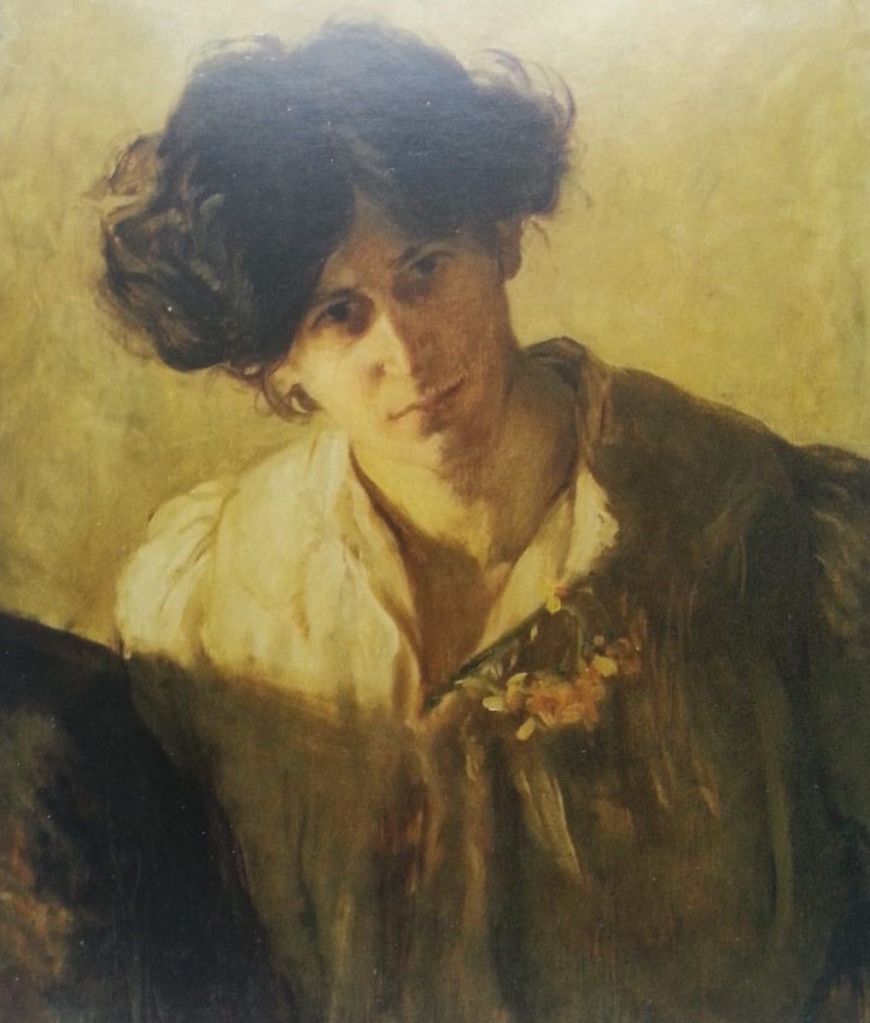
Following yesterday’s post about the 1926 Irish Census I fell down a metaphorical rabbit hole following a request from a former colleague (who happens to be Jewish) to help find a relative of his who lived in Dublin at the time of the census. I found the person, which was nice, but was then sent this article about an unrelated lady called Estella Solomons who was on the rebel side in the Easter Rising and helped the cause by hiding weapons in her garden. It turns out that there was a significant Jewish presence in Dublin back then. In the North Side, around Portobello, there was an area dubbed ‘Little Jerusalem’.
Estella Solomons was born in 1882 and died in 1968 at the age of 86. She was 34 at the time of the Easter Rising and would have been 44 at the time of the 1926 census. I did find her in the online census but her age is recorded as 40. She married the poet Seumas O’Sullivan in 1926 but she is listed as “single” on the census form, so presumably they married later in the year.
There are two other women at her 1926 address, both servants, so she was obviously quite well off, but no sign of her husband.
More surprisingly Estella’s sex is given in the 1926 census as Male. She is in the 1911 census too, but recorded there as Female. I did consider the possibility that she might have been living as a man, but that does not fit with other details of her life. I think it is just a mistake. Such records are not entirely free from errors.
I think this an example of the sort of confusion historians have to contend with when looking at historical documents!
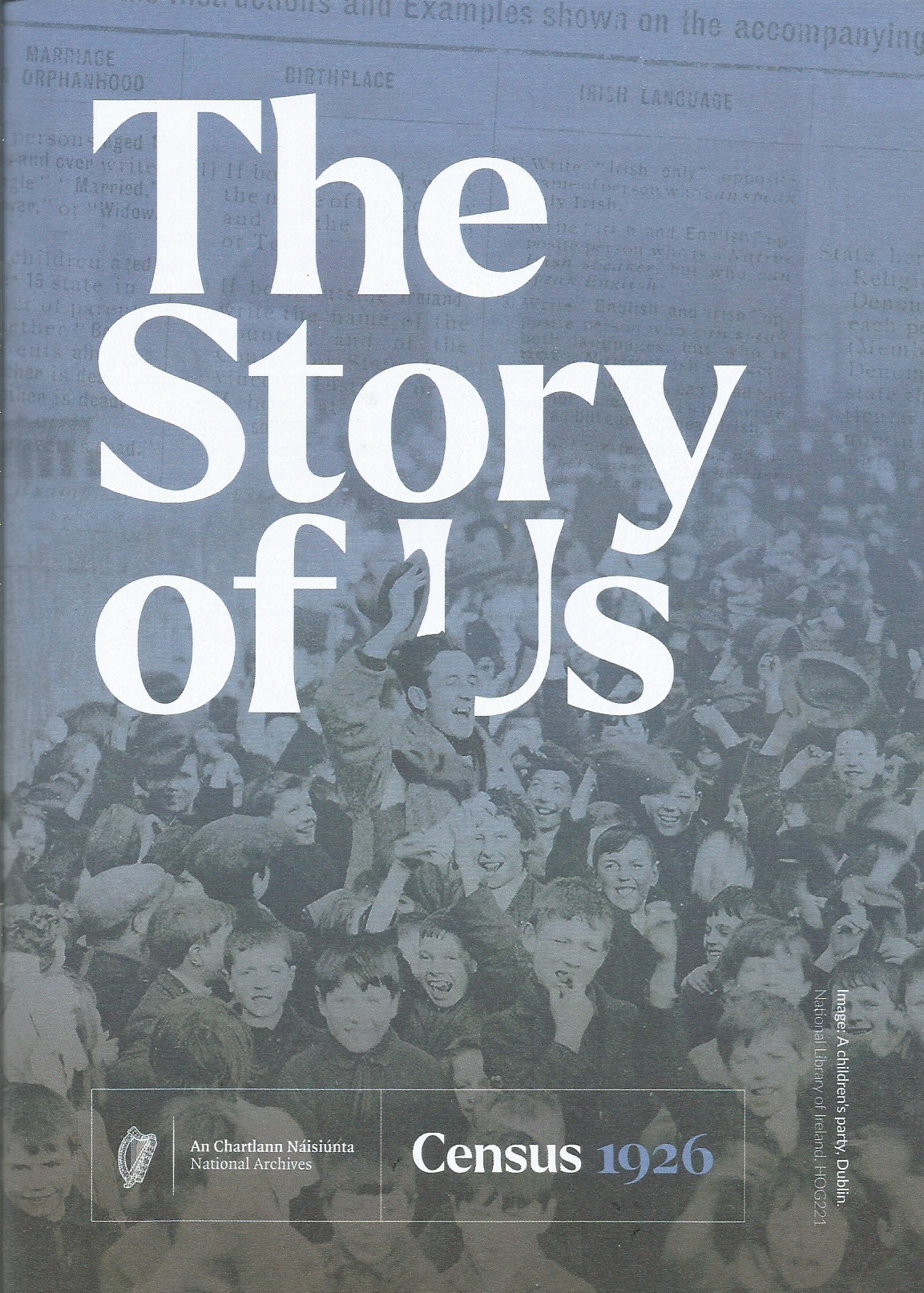
An interesting little booklet arrived in the post yesterday. It gives an overview of the 1926 census, which has just been made available online. This was the first census to be taken after the end of the War of Independence , the Irish Civil War, and the creation of the Irish Free State.
The census was taken on April 18th 1926 (i.e. 100 years ago yesterday) and the total population recorded was just 2,971, 992, a drop of 168,000 compared to the 1911 census (for the same 26 counties; this being after partition, the six counties of Northern Ireland are not included). The current population of the Republic is around 5.3 million.
This is indeed a full release of the census: not only names and numbers but also complete digital scans of all the returns can be downloaded. It’s fascinating to see the actually hand-written forms.
Out of curiosity I searched for the surname “Coles” in the 1926 census using the online platform and found only 25 entries, most of them in Wexford but also a small cluster in County Cork (in Cobh, actually). I know that “Coles” is not a common name in Ireland – it’s associated with England and Wales – but I hadn’t expected so few. There are a couple of entries in Dublin: one refers to a 32-year old woman called “Alfa Coles”. The latter record is completed in Irish – most of the others are in English. It seems people had much nicer handwriting in those days!
Some years ago I found that there is a Coles Coat of Arms and subsequently found that in Burkes General Armory (which details all the Coats of Arms registered in the UK and Ireland) the first entry under the surname Coles is indeed in Ireland, where it was confirmed in 1647. That date is during the Irish Confederate Wars, a couple of years before Oliver Cromwell arrived in Ireland with his army. One might surmise that this particular branch of the Coles lineage was somehow caught up in these hostilities, probably on the English side.
Anyway, as well as being a goldmine for historians, those of you out there with Irish lineage will no doubt find it interesting to search the 1926 census to find the records pertaining to your ancestors.
The next census of Ireland takes place on 9th May 2027.
P.S. If you do search the archive and find a record in Irish please remember that in Irish “man” is fear and “woman” is “bean” so “F” actually means “male” in Irish and “B” stands for “female” (unlike “M” and “F” in the English version).
I’ve been greatly enjoying the boxed set of six seasons of Peaky Blinders that I received as a gift recently. I may do a sort of review when I get to the end, but until then I thought I’d throw in a few tangential things. This post is an example. Here’s another one. This clip is from Episode 2 of Series 1, when the Shelby family are celebrating the reopening of the Garrison pub after it was destroyed by a firebomb earlier on. Listen to the background music at the start.
The music being played is Livery Stable Blues by the Original Dixieland Jazz Band, a record I blogged about here. Released in 1917, it is no exaggeration to say that this was the first every commercial jazz record; I blogged about the 100th anniversary of its release.
The band was originally called the “Original Dixieland Jass Band“. A few months later they changed the “Jass” to “Jazz” – it is claimed because people kept defacing their posters by removing the letter “J” – and the new name stuck. The Original Dixieland Jazz Band is usually referred by Jazz buffs as the ODJB.
Led by cornettist Nick LaRocca and clarinettist Larry Shields, the ODJB was a group of white musicians from in and around New Orleans who had picked up their musical ideas from listening to musicians there, including playing for the pioneering mixed-race band led by Papa Laine, before moving to Chicago which is where they were spotted by representatives of the Victor label. Although the sound quality isn’t great, it gives a good insight to what ealy jazz drummers were like – thumping bass and tom-toms but little use of the cymbals – and shows Larry Shields was a dab hand at glissandi…
Series 1 of Peaky Blinders is set in 1919 (mainly in Birmingham but also with scenes in London). Not a lot of people know that the ODJB actually visited England in 1919. They performed in review at the Hammersmith Palais and then did a command performance in front of King George V, who (apparently) particularly enjoyed their version of Tiger Rag. There is no evidence that they visited Birmingham, but we get a glimpse before the above clip of a band decked out to look like them, playing live in the Garrison pub. I very much enjoy little details like that!
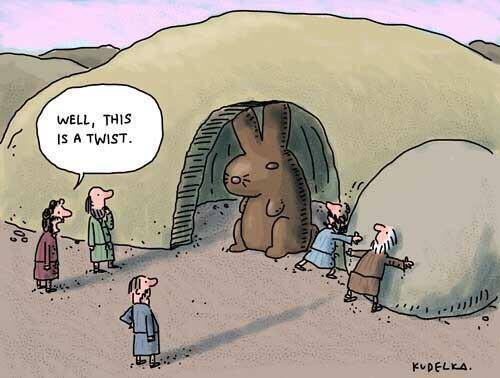
Today is Easter Sunday and it says something about my poor grasp of the Irish language that it was only today that I learnt that the word for “Easter” in modern Irish is Cáisc. When following the definite article (as in the title of this blog), this becomes Cháisc. You can also find the possessive form Cásca, e.g. Easter Sunday is Domhnach Cásca.
Although it’s not immediately obvious, the word Cáiscis related linguistically to the Latin “Pascha” and Hebrew “Pesach,” and to the word for Easter in many other European languages Pâques, Pascua, etc.), including the Welsh Pasg (the form Y Pasg with the definite article appears in the title of this post) as well as to the English adjective “paschal”.
I haven’t succeeded in becoming at all fluent in Irish, but I have learnt that isn’t very much like Welsh. Although Irish and Welsh are both Celtic languages they are from two distinct groups: the Goidelic group that comprises Irish, Manx and Scottish Gaelic; and the Brythonic group that comprises Welsh, Cornish and Breton. These are sometimes referred to as q-Celtic and p-Celtic, respectively, although not everyone agrees that is a useful categorization. Nevertheless it has stuck and does help with some aspects. The C at the start of Cáisc is a manifestation of the roots of modern Irish in a q-Celtic, as opposed to p-Celtic, language. Hence the difference between it and the Welsh Pasg. Irish, as a q-Celtic language, will generally tend to have a k/c/q sound at the start of words that start with a p-sound in Welsh (or others derived from Latin); the “q” is, of course, historic, since very few modern Irish words begin with “q”. Another example is the word for the number “four”: in Irish it is ceathair; in Welsh it is pedwar…
Incidentally, Scottish Gaelic is not the language spoken by the Celtic people who lived in Scotland at the time of the Romans, the Picts, which is lost. Scottish Gaelic is actually descended from Middle Irish. Also incidentally, Breton was taken to Brittany by a mass migration of people from South-West Britain fleeing the Anglo-Saxons which peaked somewhere around 500 AD. I guess that was the first Brexodus.
Although I speak neither with any proficiency, Welsh and Irish don’t sound at all similar to me. This is not surprising. It is thought that the Brythonic languages evolved from a language brought to Britain by people from somewhere in Gaul (probably Northern France), whereas the people whose language led to the Goidelic tongues were probably from somewhere in the Iberia (modern-day Spain or Portugal). The modern versions of Irish and Welsh do contain words borrowed from Latin, French and English so there are similarities there, but the original Celtic languages were very different.
As an Astronomist I am often asked “How do they calculate the date of Easter?”, so here goes.
The simple answer is that Easter Sunday is on the first Sunday after the first full Moon on or after the Vernal equinox. The Vernal Equinox took place this year on March 20th and the first full moon after that was on April 2nd.
I say “simple” answer above because it isn’t quite how the date of Easter is reckoned for purposes of the liturgical calendar.
For a start, the ecclesiastical calculation of the date for Easter – the computus – assumes that the Vernal Equinox is always on March 21st, while in reality these days it is more frequently 20th March, like this year.
On top of that there’s the issue of what reference time and date to use. The equinox is a precisely timed astronomical event but it occurs at different times and possibly on different days in different time zones. Likewise the full Moon. In the ecclesiastical calculation the “full moon” does not currently correspond directly to any astronomical event, but is instead the 14th day of a lunar month, as determined from tables (see below). It may differ from the date of the actual full moon by up to two days.
There have been years (1974, for example) where the official date of Easter does not coincide with the date determined by the simple rule given above. The actual rule is a complicated business involving Golden Numbers and Metonic cycles and whatnot.
Here is an excerpt from the Book of Common Prayer that shows Anglicans how to determine the date of Easter for any year up to 2199:
The calculations are based on the approximately 19-year metonic cycle, which is why the above table will not work indefinitely
For this year we find that (2026+1=2027) ÷19=106 with a remainder of 13 (106 × 19 being 2014). The Golden Number for this year is therefore 13, or XIII in the Table. This gives the date of the Paschal Full Moon, which occured this year on 2nd April, which is indeed the day in the centre column next to XIII in the left-hand column in the table. The Sunday Letter is determined by the remainder of (2026+506+6)÷7, which is 4, so this year’s Sunday Letter is D. The date of Easter Sunday is given by the entry in the centre column next to the first occurrence of D in the right-hand column after the Golden Number XIII appears in the left-hand column, i.e. April 5th. I hope this clarifies the situation.
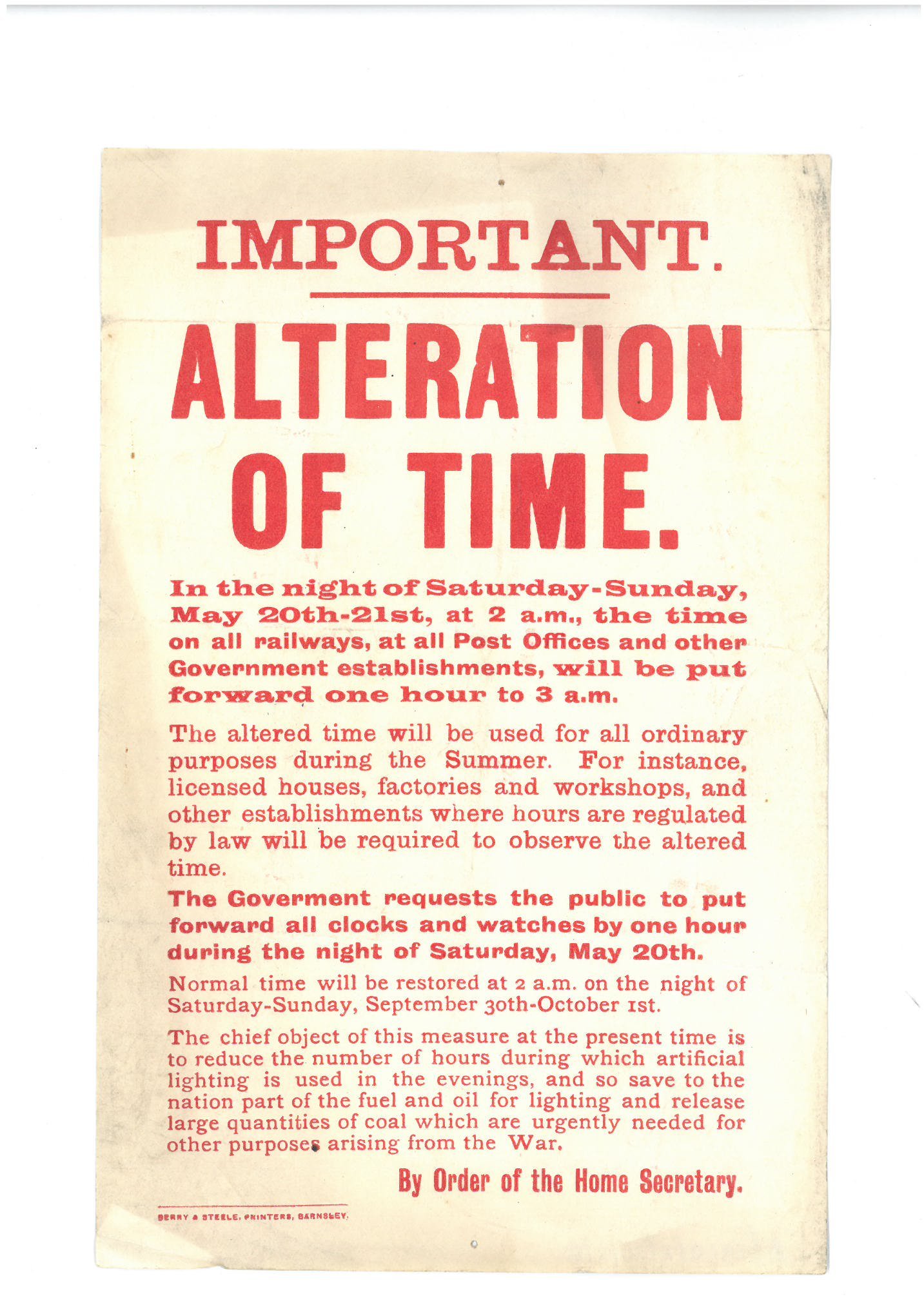
Last night the clocks went forward an hour so we are now on Irish Summer Time (GMT+1, the same as BST). Among other things, this means that for the next seven months or so the clock on my oven will actually be set correctly…
One of the more sensible decisions made by the European Parliament some years ago was to approve a directive that will abolish `Daylight Saving Time’. I’ve long felt that the annual ritual of putting the clocks forward in the Spring and back again in the Autumn was a waste of time effort, so I’ll be glad when this silly practice is terminated. It would be better in my view to stick with a single Mean Time throughout the year. This was supposed to happen in 2021 but was delayed by the pandemic and still hasn’t happened.
The marvellous poster above is from 1916, when British Summer Time was introduced, though it ran for only about 4 months (May to September), rather than the seven we have now (March to October).
You might be surprised to learn that the practice of changing clocks backwards and forwards is only about a hundred years old. in the United Kingdom. To be honest I’m also surprised that the practice persists to this day, as I can’t see any real advantage in it. Any institution or organization that really wants to change its working hours in summer can easily do so, but the world of work is far more flexible nowadays than it was a hundred years ago and I think few would feel the need.
Anyway, while I am on about Mean Time, here is a another poster from 1916.
Until October 1916, clocks in Ireland were set to Dublin Mean Time, as defined at Dunsink Observatory, rather than Mean Time as defined at Greenwich. The adoption of GMT in Ireland was driven largely by the fact that the British authorities found that the time difference between Dublin and London had confused telegraphic communications during the Easter Rising earlier in 1916. Its imposition was therefore, at least in part, intended to bring Ireland under closer control of Britain. Needless to say, this did not go down well with Irish nationalists.
Ireland had not moved to Summer Time with Britain in May 1916 and was still on Dublin Mean Time, which was 25 minutes 21 seconds behind GMT, so the change to GMT was introduced at the same time as BST ended in the UK, hence the alteration by one hour minus 25 minutes 21 seconds, i.e. 34 minutes and 39 seconds as in the poster.
The views presented here are personal and not necessarily those of my employer (or anyone else for that matter).
Feel free to comment on any of the posts on this blog but comments may be moderated; anonymous comments and any considered by me to be vexatious and/or abusive and/or defamatory will not be accepted. I do not necessarily endorse, support, sanction, encourage, verify or agree with the opinions or statements of any information or other content in the comments on this site and do not in any way guarantee their accuracy or reliability.




 In the Dark