No time for a proper post today, but I do have a gap in between meetings to share this wonderful picture of a little lad absorbed by the action at Croke Park during last weekend’s All-Ireland Hurling Semi-Final between Kilkenny and Clare (won by Kilkenny by 1-25 to 1-22, after a strong fightback by Clare). It’s a superb composition, with the little boy seemingly on his own but united with the others by their joint fascination with the game.
The All-Ireland Final (between Limerick and Kilkenny) is on Sunday 23rd July at 3.30pm. Whoever the kid is he might well be there; you can tell from the yellow and black stripes of his replica kit that he’s a Kilkenny supporter…
Thinking about Stevie Smith after yesterday’s post I thought I’d post something by her. She liked to put funny little sketches or doodles with some of her more whimsical poems, some of which are very short like this one, which brought a smile to my face so I thought I’d share it.
I’ve mentioned on here before that I had an English teacher at school who used to set interesting creative writing challenges, in which we would be given two apparently disconnected topics and asked to write something that connected them together. The inspiration was ‘Only Connect’, the epigraph of E.M. Forster’s novel Howard’s End. Since I’ve spent all afternoon in an Exam Board meeting I thought I’d do a little bit of connecting now.
Les sanglots longs
Des violons
De l’automne
Blessent mon coeur
D’une langueur
Monotone.
Tout suffocant Et blême, quand Sonne l’heure, Je me souviens Des jours anciens Et je pleure;
Et je m’en vais Au vent mauvais Qui m’emporte Deçà, delà, Pareil à la Feuille morte.
I posted the above poem by Paul Verlaine for two reasons. One is that lines from the poem were broadcast on the eve of the Normandy Landings. The landings themselves began in the morning of June 6th 1944 and the excerpt – the last three lines of the first verse – formed a coded message broadcast to the French resistance by Radio Londres, 5th June 1944 at 23.15 GMT, informing them that the Allied invasion of France was imminent and that sabotage operations should commence.
The other reason is that that it was just two weeks ago that I attended a concert featuring settings by Benjamin Britten of prose poems taken from Les Illuminations by Arthur Rimbaud. I didn’t know until that Verlaine and Rimbaud were lovers and that they lived for some time together in London. Their relationship was on the tempestuous side – at one point Verlaine fired a gun at Rimbaud, wounding him in the hand. Here’s a detail from a painting showing the two of them (Verlaine on the left, Rimbaud on the right).
It was said of Rimbaud that, as well as writing remarkable poetry, he was cute-looking, had a very dirty sense of humour, drank a bit too much, and liked lots and lots of rough sex. I think I would have liked him (although perhaps not enough to risk being shot by his jealous older boyfriend).
Anyway, this provides me with an excuse not only to commemorate D-Day but also Pride Month!
I just heard today – via the latest Private Eye – of the passing of Wally Fawkes on 1st March at the age of 98. His name won’t be familiar to many of the readers of this blog, but it is a name that I grew up with in a jazz-loving family. Wally Fawkes played clarinet with Humphrey Lyttelton’s band in its heyday in the late 40s and early 50s and was the last surviving member of that group. That band may have had a rhythm section that always sounded like its members were wearing diving boots, but the front line of Humphrey Lyttelton (trumpet), Wally Fawkes (clarinet) and Keith Christie (trombone) was truly outstanding.
Wally Fawkes wasn’t just a musician, though. He was also the acclaimed cartoonist known by the pseudonym Trog, and contributed a variety of cartoons to a variety of magazines and newspapers, including the long-running comic strip Flook. He was also an occasional contributor to Private Eye. He had to give up drawing in 2005 because of failing eyesight, after 62 years in the business.
I’ve already drawn attention to Wally Fawke’s excellence as a clarinet soloist with the Lyttelton band on The Onions at the famous 1954 Festival Hall Concert so it seems apt to pay tribute to his skills as both a cartoonist and a musician by returning to that concert for him playing his own composition Trog’s Blues. Wally Fawkes was a huge admirer of Sidney Bechet, and this tune clearly pays homage to Bechet’s monumental Blue Horizon (which I think is the finest instrumental blues ever recorded) but while Bechet’s blues performances were hewn from granite, Wally’s were wrought from finest porcelain.
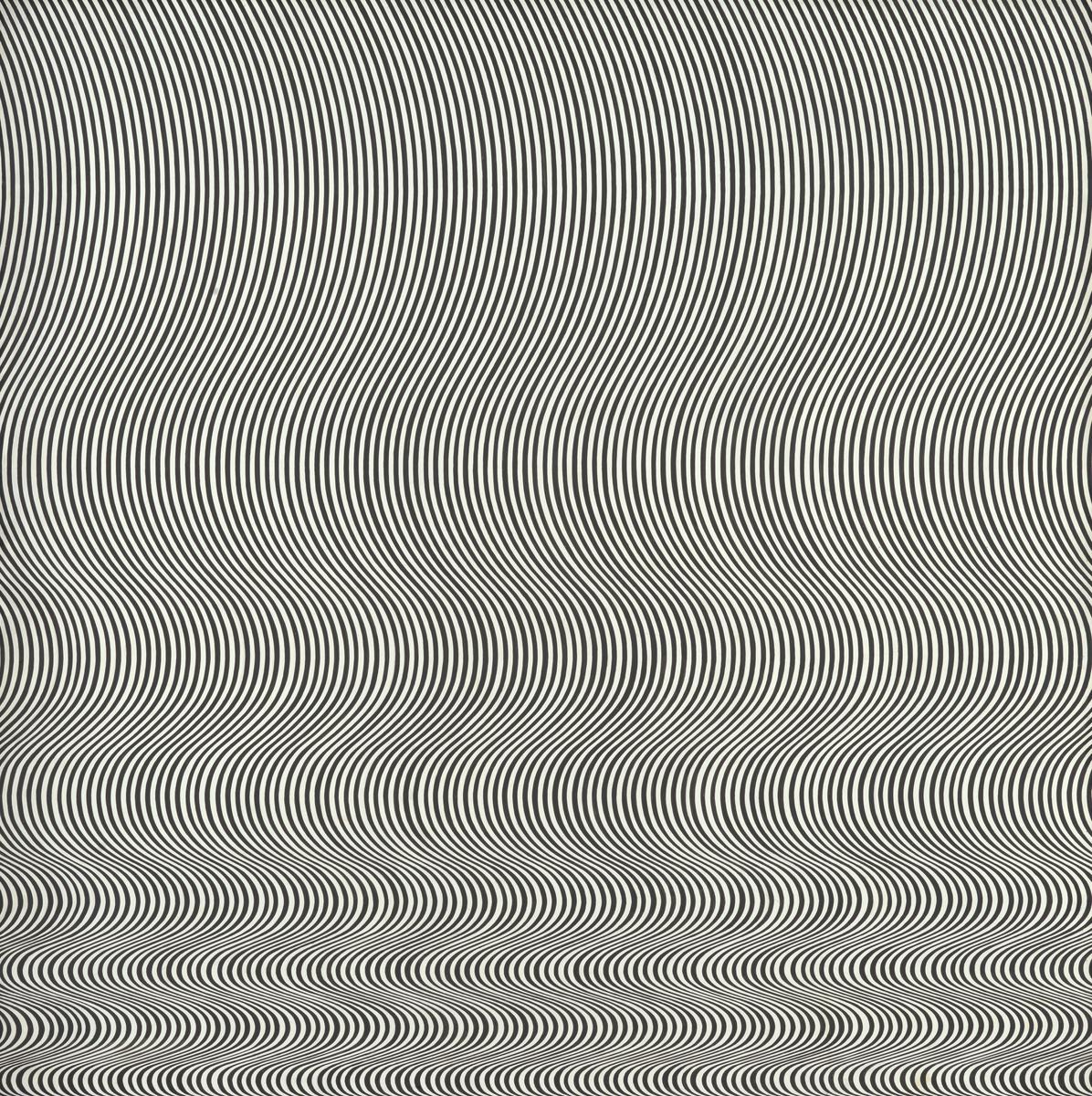
It’s not an illusion that I didn’t post yesterday. I have been very busy this week and didn’t have time to put anything on the blog. To get things going again, here is an intriguing optical illusion I saw on Twitter.
The point is that the cubes are not moving at all:
DIRAC is a high-performance computing facility designed to serve the research community supported in the UK by the Science and Technology Facilities Council (STFC). Recently DIRAC ran a competition to select the best images produced using results obtained by this facility, and I was honoured to be asked to be one of the judges. Entries were divided into two Themes: Theme 1 (Particle and Nuclear Physics) and Theme 2 (Astronomy, Cosmology and Solar & Planetary Science) and scores were allocated by the judges based on visual impact and scientific interest. There were 41 entries altogether, all of a very high standard.
So, without further ado, I shall now show you the winning entries!
The winning image in Theme 1 was submitted by Ed Bennett and Biagio Lucini of Swansea University and called Let it (Wilson) flow. The description supplied by the creators reads:
A space-time slice of the topological charge density distribution of a 128 times 643 lattice field configuration (with periodic boundaries) from an ensemble of the SU(2) gauge theory with two flavours of Dirac fermion in the adjoint representation (also known as Minimal Walking Technicolor). Moving along the time direction from left to right, successive time-slices are also iterated using the gradient flow of the Wilson action, which removes the ultraviolet noise that would otherwise prevent computation of the configuration’s topological charge. This noise is clearly visible on the left, with the actual instantons (orange) and anti-instantons (blue) becoming visible at longer flow times to the right.
Here is the winning image for Theme 1:
Theme 1 winner: Let it (Wilson) flow by Ed Bennett and Biagio Lucini.
The winning entry of Theme 2 is entitled Immediate origin of the Moon as a post-impact satellite and was submitted by Jacob Kegerreis of Durham University who supplied the following description:
The Moon is thought to have formed following a giant impact, but the details are still hotly debated. New high-resolution simulations, like the one shown here, reveal that a Moon-like satellite can be immediately placed into a wide orbit around the Earth, in contrast with the traditional idea of later accretion from a debris disk. This opens up new possibilities for the Moon’s initial orbit and interior, which could help to solve mysteries like its tilted orbit, thin crust, and Earth-like isotopes. The 3D smoothed particle hydrodynamics (SPH) simulations were run using the SWIFT code on the DiRAC COSMA8 system with over 100 times higher resolution than the current standard. The SPH data from this mid-impact snapshot are rendered using Houdini and Redshift, with the colour, opacity, and emission controlled by the particle material, density, and internal energy.
Here is the winning image of Theme 2:
Theme 2 Winner: Immediate origin of the Moon as a post-impact satellite by Jacob Kegerreis
Congratulations to the winners!
It was a lot of fun being one of the judges for this competition and I learnt a lot about the science from the clever way in which many of the entries displayed their results. The field was very strong, and many more images were worthy of recognition, but we were only allowed to pick one winner from each Theme. I am however given to understand that it is planned to include the best of the rest alongside the winners in a 2023 calendar which will be distributed to the DIRAC user community.
The views presented here are personal and not necessarily those of my employer (or anyone else for that matter).
Feel free to comment on any of the posts on this blog but comments may be moderated; anonymous comments and any considered by me to be vexatious and/or abusive and/or defamatory will not be accepted. I do not necessarily endorse, support, sanction, encourage, verify or agree with the opinions or statements of any information or other content in the comments on this site and do not in any way guarantee their accuracy or reliability.