Wales Coastal Path

Posted in Uncategorized with tags , on May 5, 2012 by telescoper

And now for something completely different.

I just found out this morning that this weekend sees the official opening of the Wales Coastal Path. This means that it’s now possible – if you have the time, the energy and sensible shoes – to walk the entire length of the Welsh coast. There’s a nice article here that picks out five particularly interesting stretches. One,  around the Llyn Peninsula, is of particular interest to me because it includes this picture of ancient church of Saint Hywyn, which is  almost on the beach in Aberdaron. The great Welsh poet R.S. Thomas was vicar here for a number of years.

Anyway, here’s a promotional video about the Wales Coastal Path, which gives an idea of some of the stunning views at various points around this beautiful country.

Milky Way Satellites and Dark Matter

Posted in Astrohype, Bad Statistics, The Universe and Stuff with tags , , , , on May 4, 2012 by telescoper

I found a strange paper on the ArXiv last week, and was interested to see that it had been deemed to merit a press release from the Royal Astronomical Society that had been picked up by various sites across the interwebs.

The paper, to appear in due course in Monthly Notices of the Royal Astronomical Society, describes a study of the positions and velocities of small satellite galaxies and other object around the Milky Way, which suggest the existence of a flattened structure orientated at right angles to the Galactic plane. They call this the “Vast Polar Structure”. There’s even a nifty video showing this arrangement:

They argue that this is is evidence that these structures have a tidal origin, having been thrown out   in the collision between two smaller galaxies during the formation of the Milky Way. One would naively expect a much more isotropic distribution of material around our Galaxy if matter had fallen into it in the relatively quiescent way envisaged by more standard theoretical models.

Definitely Quite Interesting.

However, I was rather taken aback by this quotation by one of the authors, Pavel Kroupa, which ends the press release.

Our model appears to rule out the presence of dark matter in the universe, threatening a central pillar of current cosmological theory. We see this as the beginning of a paradigm shift, one that will ultimately lead us to a new understanding of the universe we inhabit.

Hang on a minute!

One would infer from this rather bold statement that the paper concerned contained a systematic comparison between the observations – allowing for selection effects, such as incomplete sky coverage – and detailed theoretical calculations of what is predicted in the standard theory of galaxy formation involving dark matter.

But it doesn’t.

What it does contain is a simple statistical calculation of the probability that the observed distribution of satellite galaxies would have arisen in an exactly isotropic distribution function, which they conclude to be around 0.2 per cent.

However, we already know that galaxies like the Milky Way are not exactly isotropic, so this isn’t really a test of the dark matter hypothesis. It’s a test of an idealised unrealistic model. And even if it were a more general test of the dark matter hypothesis, the probability of this hypothesis being correct is not what has been calculated. The probability of a model given the data is not the same as the probability of the data given the model. To get that you need Bayes’ theorem.

What needs to be done is to calculate the degree of anisotropy expected in the dark matter theory and in the tidal theory and then do a proper (i.e. Bayesian) comparison with the observations to see which model gives the better account of the data. This is not any easy thing to do because it necessitates doing detailed dynamical calculations at very high resolution of what galaxy like the Milky Way should look like according to both theories.

Until that’s done, these observations by no means “rule out” the dark matter theory.

The Tallis Scholars

Posted in Music with tags , , , , , on May 4, 2012 by telescoper

I’ve always wanted to be at a live performance of the legendary 40 part motet  Spem in Alium by Thomas Tallis, not only  because it’s a gorgeous piece of music but also because I’ve always wondered what the conductor is supposed to do with his hands when there are so many independent parts. It’s such a complicated and demanding work, however, that opportunities to hear it live are rather limited. Last night’s concert at St David’s Hall by the Tallis Scholars (supplemented by a local choir; the Tallis Scholars number only ten singers) actually involved two performances of Tallis’ most famous work, first at the beginning and then again right at the end.

If you’ve never heard Spem in Alium before, then you really should make the effort. It’s an extraordinary piece of music in many different ways. Most writers focus on its complexity, but that shouldn’t make you think Tallis was just showing off when he wrote it, or distract you from the fact that it’s so very beautiful to listen to. The forty parts  involved are divided into eight choirs, each of five voices. The piece starts with one voice from the first choir, and slowly evolves to incorporate all forty voices, waving each individual vocal line into a gorgeous musical tapestry. At times all the voices seem to be acting independently within the overall harmonic framework, at others the choirs act as the basic unit; there’s a wonderful passage, for example, when choirs throw phrases backwards and forwards between them. There are also moments when all the evolving parts come back into phase so that all voices sing the same words at the same time. The effect of this is indescribable; it sent cold shivers down my spine.

There is so much going on in this piece that it’s difficult to understand how Tallis managed to stop the different parts interfering destructively with each other, but Spem in Alium  never dissolves into a shapeless melisma. As the piece unfolds, the various patterns that appear and disappear are always held in sharp focus. It’s a masterpiece, and although the large space of St David’s Hall probably isn’t ideal for performing a work like this, my long wait to hear a live performance of this masterpiece was well worth it.

The concert wasn’t just about Spem in Alium.  The Tallis Scholars performed a number of other works on their own, including pieces by Tallis’ old mate William Byrd and part of one of my other favourite Tallis works, The Lamentations of Jeremiah. The programme called for various combinations of the singers drawn from the ten in the basic line-up, producing a wide range of texture and colour.

It was all extremely enjoyable, but my lasting memory will be the piece that started and ended the show. There’s so much to discover listening to Spem in Alium that the second performance of it that ended the concert made me want to hear a third straight away.

PS. One of the other pieces performed during the concert was Tallis’ Miserere, which aptly described Cardiff City’s performance at home to West Ham in their play-off semi-final which was being played at the same time as the concert!

It’s JUICE!

Posted in Science Politics, The Universe and Stuff with tags , , on May 3, 2012 by telescoper

Not unexpectedly, the European Space Agency announced yesterday that it’s next large mission will be the Jupiter Icy Moon Explorer (aka JUICE). There’s a piece in Physics World about the selection – and rejection of the other two contenders, NGO and ATHENA. Andy Lawrence has commented already on his own blog and is also quoted extensively in the Physics World article.

A lot of allegations are flying around about how the selection process was conducted, specifically relating to conflicts of interest. I don’t know any details, so I won’t comment on whether this is justified outrage or simply sour grapes.

Anyway, for what it’s worth, I think I agree with what Andy Lawrence says in the Physics World story in that the final decision was pretty inevitable after NASA’s decisions in the areas of gravitational waves and X-ray astronomy pulled the rug out from under the other contenders. I’ll also add that, although it’s far from my own specialism, I think JUICE looks like a very exciting mission. I wish it every success.

It just remains to be seen how long the recriminations will rumble on.

Those earthly godfathers of Heaven’s lights

Posted in Literature, Poetry, The Universe and Stuff with tags , , on May 2, 2012 by telescoper

What was it that Ernest Rutherford said about science and stamp-collecting? It seems Shakespeare had much the same idea!

Study is like the heaven’s glorious sun,
That will not be deep-search’d with saucy looks;
Small have continual plodders ever won,
Save base authority from others’ books.
These earthly godfathers of heaven’s lights
That give a name to every fixed star,
Have no more profit of their shining nights
Than those that walk and wot not what they are.

from Love’s Labour’s Lost (Act I, Scene I) by William Shakespeare.

P.S. “wot” in the last line is an archaic form of  the verb “wit”, meaning “to know”; cf “I wot not what I ought to have braught” from A Midsummer Night’s Dream.

Astronomy Look-alikes, No. 75

Posted in Astronomy Lookalikes with tags , , on May 1, 2012 by telescoper

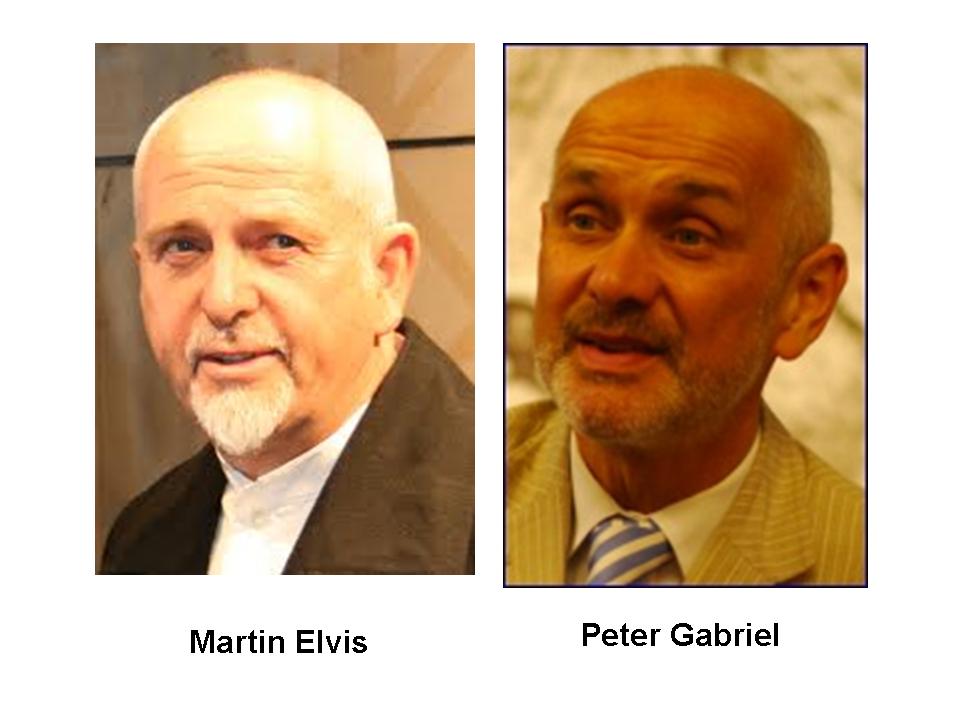
It has been brought to my attention that I haven’t done any of these for a while so I’ll attempt to re-start my series of Astronomy Look-alikes by pointing out that X-ray astronomer Martin Elvis bears a not inconsiderable likeness to former lead vocal artist of the popular beat combo Genesis, Peter Gabriel. I wonder if, by any chance, they might be related?

May Day

Posted in Poetry with tags , , on May 1, 2012 by telescoper

A delicate fabric of bird song
Floats in the air,
The smell of wet wild earth
Is everywhere.

Oh I must pass nothing by
Without loving it much,
The raindrop try with my lips,
The grass with my touch;

For how can I be sure
I shall see again
The world on the first of May
Shining after the rain?

by Sara Teasdale (1884-1933)

Godzilla versus the Olympics

Posted in Uncategorized with tags , on April 30, 2012 by telescoper

Breaking News. Alarming footage just released by MI5 reveals the true nature of the threat to the forthcoming 2012 Olympic games and explains why it is necessary to station missile batteries in London’s East End.

A New Baryon on the Block

Posted in The Universe and Stuff with tags , , , , , on April 29, 2012 by telescoper

I just chanced upon the news that a new particle has been discovered at the Large Hadron Collider. This is probably old hat for people who work at CERN, but for those of us following along in their wake it definitely belongs to the category of things marked Quite Interesting.

The new particle is a baryon, which means that it consists of three quarks. These quarks are held together by the colour force (which I refuse to spell the American way); baryonic states exist by virtue of the colours of constituent quarks being a red-green-blue mixture that is colourless.

Quarks are fermions with spin 1/2. The new particle has spin 3/2 which contrasts with the most familiar baryons, the proton and the neutron, which also consist of three quarks but which have spin 1/2. The difference can be understood from basic quantum mechanics: spins have to be added like vectors, so the three individual quark spins can be added to produce total spin 3/2 or 1/2.

The most familiar spin 3/2 baryons are made from the lightest quarks (the up, down and strange) as shown in the diagram below:

The top row contains no strange quarks, only up and down. In fact the Δ0 and Δ+ contain exactly the same quark compositions as the proton and the neutron (udd and uud respectively), but differ in spin. The next row down contains one strange quark (e.g. uds) , the one below two (e.g uss), and the particle at the bottom is a very famous one called the Ω– which is entirely strange (sss). For reasons I’ve never really understood, a strange quark carries a strangeness quantum number S=-1 (why not +1?) and the electrical charge is labelled by q in the diagram.

There are six quark flavours altogether so one can construct further baryonic states by substituting various combinations of heavier quarks (c,b and t) in the basic configurations shown above. There are also excited states with greater orbital energy; all the particles shown above have quarks in the lowest state of orbital angular momentum (L=O). There is then a potential plethora of baryonic particles,  but because all are unstable you need higher and higher energies to bring them into existence. Bring on the LHC.

The new particle is called the Ξb*, and it consists of a combination of up, strange and bottom quarks that required collision energies of 7 TeV to make it. The nomenclature reflects the fact that this chap looks a bit like the particles in the third row of the figure, but with one strange quark replaced by a much more massive bottom quark; this one has zero electrical charge because the charges on the u, s and b are +2/3, -1/3 and -1/3 respectively.

Anyway, here’s the graph that represents the detection of the new baryon on the block:

Only 21 events, mind you, but still pretty convincing. For technical details, see the arXiv preprint here.

Whether you really think of this as a new particle depends on how fundamental you think a particle should be. All six quark species have been experimentally detected and in a sense those are the real particles. Things like the Ξb* are merely combinations of these states. You probably wouldn’t say that an excited state of the hydrogen atom (say with the electron in the 2s energy level) is actually a different particle from the ground state so why do different permutations of the same quarks warrant distinct names?

The answer to this I guess is the fact that the mass of an excited hydrogen atom differs from the ground state by only a tiny amount; electronic energy levels correspond to electron-volt scales compared to the 1000 MeV or so that is the rest-mass energy of the nucleus. It’s all very different when you’re talking about energy levels of quarks in baryonic particles. In such situations the binding energies of the quarks are comparable to, or even larger than, their rest masses because the colour force is very strong and the quarks are whirling around inside baryons  with correspondingly enormous energies. When two creatures have enormously different masses, it’s difficult to force yourself to think of them as different manifestations of the same beast!

Anyway, the naming of this particle isn’t really the important thing. A rose by any other name would smell as sweet. What matters is that existence of this new quark state provides another example of a test of our understanding of quark-quark interactions based on the theory of quantum chromodynamics. You might say that it passed with flying colours…

Here’s That Rainy Day ..

Posted in Jazz with tags , , on April 28, 2012 by telescoper

If yesterday’s post made you wonder how difficult it is to turn a piece of sheet music into sound using a piano keyboard, then perhaps today’s will make you wonder how a pianist like Bill Evans managed to create music as beautiful as this without any score at all! This is Here’s that Rainy Day from the 1968 album Bill Evans Alone. Miles Davis said of Bill Evans “He plays the piano the way it should be played”. I, for one, won’t argue with that.