Archive for Astronomy & Astrophysics

Euclid on Sky

Posted in Euclid, The Universe and Stuff with tags , , , on May 2, 2025 by telescoper

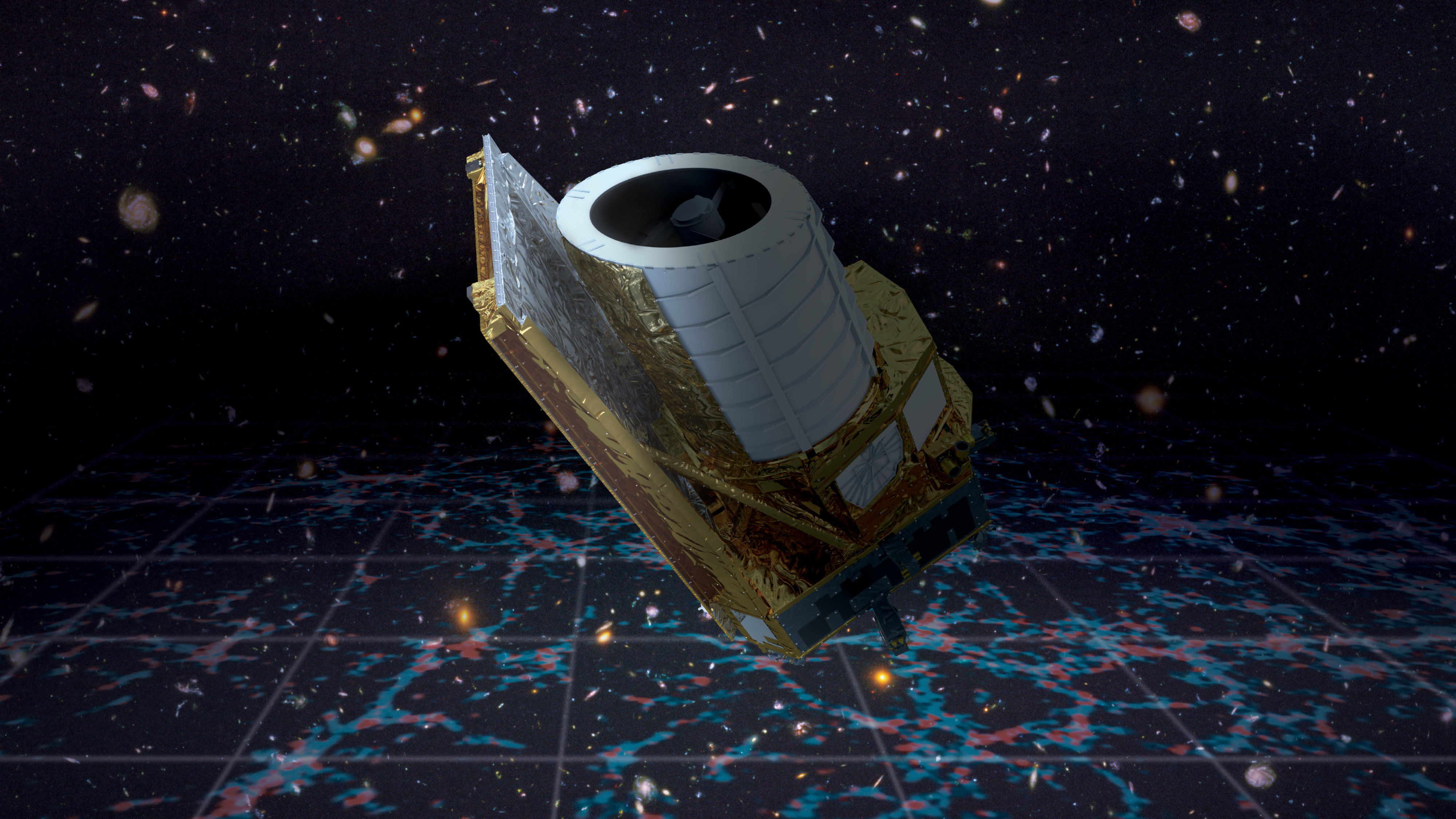
I haven’t posted much recently about the European Space Agency’s Euclid Mission but I’ve got an excuse to remedy that today as I’ve just seen that the Special Issue of Astronomy & Astrophysics called Euclid on Sky has at last been published (with a date of 30th April 2025). This contains the main mission and instrument overview papers as well as scientific papers relating to the Early Release Observations. All the individual papers have been on arXiv for some time already.

You can access the Special Issue here.

The main mission overview paper has 1139 authors (including yours truly); that’s definitely the longest author list I’ve ever been on! The arXiv version has been available for almost a year and has already got 254 citations. Here is the abstract:

The current standard model of cosmology successfully describes a variety of measurements, but the nature of its main ingredients, dark matter and dark energy, remains unknown. Euclid is a medium-class mission in the Cosmic Vision 2015-2025 programme of the European Space Agency (ESA) that will provide high-resolution optical imaging, as well as near-infrared imaging and spectroscopy, over about 14,000 deg^2 of extragalactic sky. In addition to accurate weak lensing and clustering measurements that probe structure formation over half of the age of the Universe, its primary probes for cosmology, these exquisite data will enable a wide range of science. This paper provides a high-level overview of the mission, summarising the survey characteristics, the various data-processing steps, and data products. We also highlight the main science objectives and expected performance.

Here’s Figure 1.

Page Charges at A&A

Posted in Euclid, Open Access with tags , , , , , on January 20, 2025 by telescoper

The journal Astronomy & Astrophysics (A&A for short) announced last week that it was increasing page charges on longer papers. The table of new charges to be implemented is here:

A&A is published on behalf of the European Southern Observatory by EDP Sciences (Édition Diffusion Presse Sciences) which began life as a joint venture of four French learned societies in science, mathematics, and medicine. The company was acquired in 2019 by  China Science Publishing & Media (which has headquarters in Beijing). Judging by its social media activity, EDP Sciences sees A&A as a flagship journal; for a list of other journals it runs see here. I gave some background on A&A here.

A&A publishes papers through a curious hybrid model called “S2O” (Subscribe to Open; not to be confused with “420”). This is not fully Open Access because it requires libraries to pay a subscription to access the journal. For this reason it is not compatible with some institutional open access policies. Unlike some journals, however, A&A does allow authors to place their papers on arXiv without restriction, so they can be read there for free. Previously A&A required authors (or their institutes) to pay “Page Charges” – essentially an Article Processing Charge (APC) – if they were not from a “member country”; this policy was introduced in 2020. Authors from a member country will now have to pay APCs to publish (if their paper exceeds the page limit) but their institutional libraries still have to pay a subscription if they are to access the paper. In other words, A&A is double-dipping.

According to A&A,

… the average length of papers has also been increasing. Too often, papers are longer than necessary, leading to increased workload for authors, referees, and editors, and hindering the reader’s ability to efficiently grasp their content. As well as needing logistical consideration, the challenges related to the journal’s growth have financial implications that must be addressed to ensure long-term sustainability.

I agree that many papers are far too long. As a journal Editor myself I know that it is much harder to find people willing to review very long papers, a fact that some authors seem reluctant to recognize. On the other hand I very much doubt that any of the funds generated by page charges will be given to the refeees who do the most important – indeed I would argue the only important – work of a journal.

If the desired effect is to reduce the number of long papers this policy may work, though I suspect authors who are incurably prolix will respond by splitting their work into several shorter papers to avoid the page charges and thereby generating even more work for the journal. I suspect however that the desired effect is really to increase revenue; so often in the context of academic publishing “sustainability” really means “profitability”. I would also bet that these charges will increase further in future.

The changing charges at A&A have widespread implications, including for the Euclid Consortium, most of whose scientific papers are published there. I’m sure the Euclid Consortium Editorial Board will discuss this development. I’m not a member of the ECEB so it would be inappropriate to comment further on publication policy so I’ll leave the discussion to them. I would say, however, that the publication process at A&A is rather slow. The main post-launch Euclid Overview paper by Mellier et al., for example, was accepted for publication in August 2024 but has still not appeared. It is, however, available on arXiv, which is all that really matters. That paper, incidentally, is over 90 pages long. According to the table above that would cost about €12,000 in page charges. It was submitted in May 2024 and accepted quite quickly but is planned to appear in a special issue Euclid on Sky the publication of which is being delayed by other papers still going through the editorial process.

(Incidentally, Mellier et al. has already acquired 157 citations despite not yet being officially published, which illustrates how little difference “official” publication is actually worth.)

Predicting the Future of Publishing from the Past

Posted in Open Access, The Universe and Stuff with tags , , , , on October 11, 2024 by telescoper

I was intrigued by an editorial piece from 20 years ago that was sent to me by Prof. Peter Schneider (who, among many other things, is Chair of the Euclid Consortium Editorial Board) who happens to be one of the authors. The article gives an interesting insight into the processes involved in being an Editor for the journal Astronomy and Astrophysics (A&A) at the time, and is worth reading all the way through, but I was particularly struck by Section 6.2, which makes some predictions about the future.

Here’s an excerpt:

We can even go a step further and ask the provocative question of whether we will need a peer-reviewed journal like A&A in the future. After all, in some communities, astro-ph has taken over the role of communicating new results. Is astro-ph not sufficient? A few aspects of a potentially very long answer to that question are as follows: many authors submit their manuscript to astro-ph, but only after it has been peer-reviewed, which shows that most researchers consider the peer-reviewing essential. People’s achievements are often judged by their refereed papers. Certainly at present, peer-reviewing is seen as a kind of quality stamp on manuscripts, and we are here to witness that papers are improved in the course of the refereeing process.


But what if astro-ph is supplemented by a refereeing process, essentially in the same way as the major journals do today, so that a manuscript gets a “green tick-mark” after successfully passing the reviewing stage and being “frozen”, i.e., cannot be replaced with an updated version anymore. We suspect that this is possible, although it would require a fairly large board of Editors to cope with the numbers of submissions to astro-ph, accompanied by costs that would have to be covered by someone. If this system were to replace the current journals, then one would end up with a single electronic-only astronomy journal and preprint service system. What if a paper is not passing through the refereeing stage? At present, a paper rejected by one journal can still be submitted to a second one, thus getting another chance to be published. We consider this second-chance opportunity a necessary feature for a fair peer-reviewed information flow. Hence, we would need more than one “astro-ph”-like system with different boards of editors, and this brings us back closely to a system of several electronic-only journals.

This is basically the idea behind the Open Journal of Astrophysics, which I didn’t really start thinking about until about 2010. In fact, when we were talking about setting up OJAp – about a decade after this paper was written – we did discuss the possibility of just having a “green tick-mark” on the arXiv entry. We rejected this idea in favour of the overlay concept primarily because of security concerns about who writes the tick mark into the arXiv field. I do agree with the point about having multiple platforms for such publications, however, and I have frequently argued that there should be alternatives to OJAp.

Here is another extract, from the very end of the paper:

We have taken here the role of devil’s advocate to demonstrate that issues in going electronic-only are far from being as simple and clear-cut as some open-access gurus would like us to believe. Obviously, electronic publishing is a timely and controversial issue that we will continue to consider in the coming years. The future of publication will be decided less by Boards of Directors and Editors, or by publishers, than by the community at large. With the availability of electronic-only journals, authors make their own decision on where to submit a manuscript. At present, this vote is clearly in favor of traditional journals, but as that may change we will remain open and ready to adapt.

I would hesitate to call myself a “guru” but I do think that the issues are clearer now than perhaps they were in 2004. Twenty years on, the balance is still in favour of traditional journals at least in terms of numbers of papers being published. Judging by the activity at OJAp, it may be that things may be changing…

Euclid Paper Day!

Posted in Barcelona, Euclid, Maynooth, The Universe and Stuff with tags , , , , , , , , on May 24, 2024 by telescoper

This morning’s arXiv update brought the expected deluge of preprints from Euclid. You can find details of all fifteen of the new articles here. Ten of them relate to the Early Release Observations of which five were announced yesterday and five last November. These are essentially byproducts of the testing and calibration phase of the Euclid mission rather than the main cosmological survey. ESA is making a series of short videos about these results which I will share on here from time to time.

Of more direct relevance to cosmologists such as myself are the following five reference papers:

The overview paper, led by Yannick Mellier (Euclid Consortium Lead), giving a general description of the mission capabilities and science goals, will be the main reference paper and just about every active member of the Euclid Consortium is on the author list (including myself). That’s over a thousand people, not quite at the level of the Large Hadron Collider but getting there. I do think we need to find a better way of giving credit to work in large collaborations than through authorship, but until someone comes up with a workable scheme, and people responsible for hiring researchers adopt it, we’re stuck with what we’ve got. At least I can say that I’ve read that paper (which is 94 pages long, including the author list)

Papers II-IV are technical articles relating to Euclid’s instruments and their calibration, which will also be important references for the survey part of the Euclid mission. Paper V is about the Flagship simulations and the mock catalogues produced therefrom; I discussed these a while ago here. It is led by Francisco Castander of Institut de Ciencies de l’Espai, who organized the meeting I attended recently here in Barcelona.

These papers now now be peer-reviewed and, assuming they are accepted, published in a special issue of Astronomy & Astrophysics (A&A).

Publishing Stats for Astrophysics Journals

Posted in Open Access, The Universe and Stuff with tags , , , , , on May 6, 2024 by telescoper

Somebody asked me about this recently so this afternoon while I was paying rapt attention to a Zoom call I was attending I did some quick sums and produced the table below. The request that was made was to give details of total numbers of papers published in the big astronomy and astrophysics journals last year. This is easy relatively easy to do using the excellent NASA/ADS search tool.

Name of JournalNumber of PapersNumber of CitationsAverage citations per paper
MNRAS413125,5406.18
A&A235415,9016.75
ApJ285915,7715.52
ApJL72610,22814.09
ApJS3382,6117.72
OJAp503717.42
Citations to papers published in 2023 (Data from NASA/ADS)

In case you weren’t aware of the standard abbreviations, MNRAS is Monthly Notices of the Royal Astronomical Society and A&A is Astronomy and Astrophysics; ApJ is the Astrophysical Journal, ApJL is the Astrophysical Journal Letters and ApJS is the Astrophysical Journal Supplement Series. The Open Journal of Astrophysics is OJAp.

Anyway, you can see that the big journals published many more papers last year than OJAp but in terms of citations per paper OJAp is doing well. We have a lot of ground to make up if we’re going to be a significant player in the game in terms of sheer quantity of publications, but since we don’t make a profit from APCs we have no reason to lower standards to achieve that.

If you’re interested, the average citations per paper so far this year (i.e. as of 6th May 2024) are: MNRAS (1.84); A&A (1.66); ApJ (2.29); ApJL (2.05), ApJS (2.09) and OJAp (2.90).

Page Charges and Monthly Notices

Posted in Open Access, The Universe and Stuff with tags , , , , on January 31, 2023 by telescoper

Some time ago (in 2020) I reported here that the publishers of Monthly Notices of the Royal Astronomical Society (known as MNRAS for short) had decided to abandon the print edition and only have online articles. This is not surprising as demand for hard copies was falling drastically.

At the time I heard from a reliable source that MNRAS was also planning to introduce page charges – fees paid by authors to publish papers in the journal – and posted a comment to that effect here. This comment led to wild accusations of “serious academic misconduct” by me from a certain individual who shall remain nameless.

Well, the “rumour” I reported in 2020 is now confirmed to be the truth (as I knew it was). At a recent meeting of the national societies affiliated to the European Astronomical Society, Royal Astronomical Society President Mike Edmunds confirmed that, in the near future, all authors publishing in Monthly Notices of the Royal Astronomical Society will have to pay page charges. The timescale is “within a few years”.

This is part of a move to making all articles Open Access, largely forced by Plan S through which funding agencies require research outputs to be made freely available upon publication. Page charges are Article Processing Charges by another name.

Other notable journals, such as the Astrophysical Journal (ApJ) and Astronomy & Astrophysics (A&A), have levied page charges for as long as I can remember, though in the latter case it is complicated because there is a waiver for researchers in “member” countries. ApJ and other journals also have a waiver scheme for those who cannot afford to pay. For those who have to pay, the fee is usually about $100 per page. For a long time MNRAS was the exception and indeed the only feasible choice for people who don’t have access to funding to cover page charges, including many in the developing world. More recently, however, MNRAS introduced a charge for longer papers: £50 per page over 20 pages, so a paper of 21 pages costs £50 and one of 30 pages costs £500, etc. This will now be extended to all papers. I don’t have a figure for what MNRAS will charge in future or what waivers will be offered, but it seems likely to be similar to existing journals.

The introduction of page charges is an attempt to maintain the profitability of MNRAS after the loss of income from subscriptions, as readers will no longer be required to pay to read papers. It is therefore a transfer of cost from reader to author. I chose the ‘profitability’ because the prime purpose of MNRAS is no longer the dissemination of scientific results but the generation of income to fund other activities of the Royal Astronomical Society. Despite the move to the much cheaper digital-only publishing mode, the annual cost of an institutional subscription to this journal is currently over $10,000. Most of that is goes as profit to Oxford University Press (the actual publisher) and to the Royal Astronomical Society. Page charges are nothing to do with the actual cost of publication, but are intended to protect the publisher’s profit margins.

Much of what the RAS does with the revenue generated by journals is laudable, of course, but I don’t think it is fair to fleece researchers in order to fund its activities. I think authors can see this, and the attempt to transfer costs onto researchers will backfire. In particular, it’s a move that plays into the hands of The Open Journal of Astrophysics, which publishes papers (online only) in all the areas of Astrophysics covered by MNRAS, and more, but is entirely free both for authors and readers. If you don’t want to pay page charges, or make your library pay a subscription, then you could give it a try.

For myself, I abandoned the traditional journal system many years ago, as it is so clearly a racket.

The question for the Royal Astronomical Society, and other learned societies that fund their activities in a similar way, is whether they can find a sustainable funding model that takes proper account of the digital publishing revolution. If their revenue from publishing does fall, can they replace it? And, if not, in what form can they survive?
Page Charges at A&A…

Posted in Open Access, The Universe and Stuff with tags , , , , on May 27, 2020 by telescoper


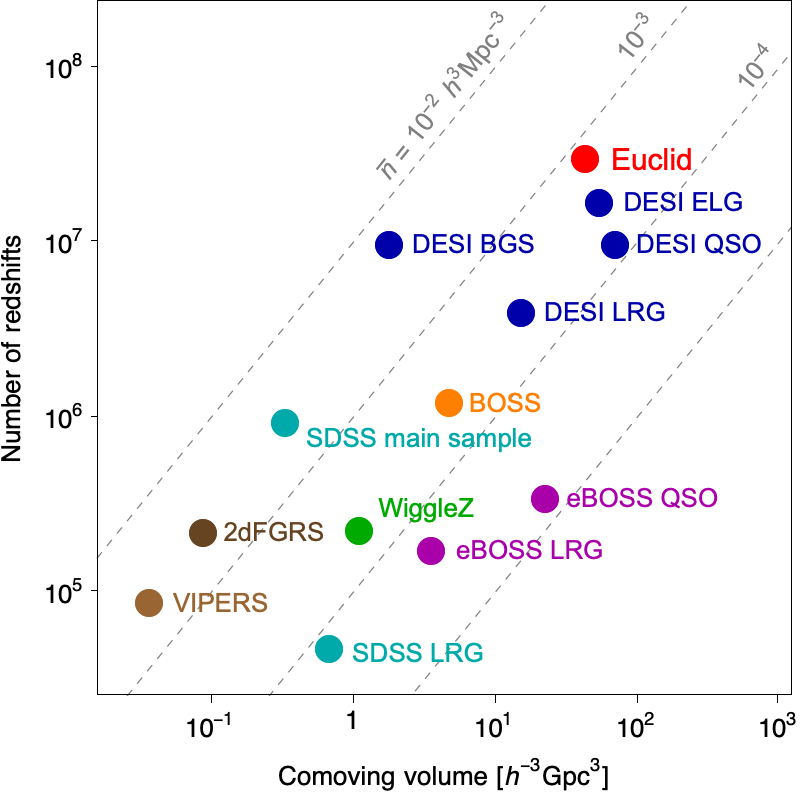
It was recently drawn to my attention that UK-based astronomers and astrophysicists now have to pay a charge of €100 per page (!) to publish in the journal Astronomy & Astrophysics (usually known as A&A for short). See their page charges information for details.

Contrary to popular belief, A&A only waives page charges for authors from countries who are sponsors of A&A, not all countries who are members of the European Southern Observatory (ESO) project. Although the United Kingdom is a member of ESO, it is not and never has been a sponsor of A&A: see the list of sponsoring countries and their representatives here .

Until recently, however, UK authors did have their page charges waived on what seems to have been an ex gratia basis. For some reason, that exception has now apparently been removed.

UPDATE 1: It should have occurred to me that that this also applies to authors from Ireland.

UPDATE 2: Apparently the liability for page charges is determined by the nationality of the first author. I had previously thought that if any of the authors belonged to a sponsoring country then charges would be waived.

Meanwhile, the Open Journal of Astrophysics publishes entirely for free and we are committed to continuing that way. You know what to do.

Planck Publications

Posted in Science Politics, The Universe and Stuff with tags , , , , on December 2, 2011 by telescoper

I just noticed that a Special Issue of Astronomy and Astrophysics which contains the early science papers from Planck has now finally appeared, swelling a considerable number of personal bibliographies just in time for the next round of grant and/or job applications!

The thing is, though, that these papers were all placed on the arXiv in January 2011, so it has taken almost 11 months for them to get officially published. Such a delay seems ridiculous to me in this digital age.  I wonder why it took A&A  so long to publish these papers? Were they all held up by refereeing delays? Are the final published versions significantly different from the arXiv version? I’ve only looked at a few, and can’t see any major changes.

Or maybe this is all normal for A&A?

If you know, please tell…

Of course the main science results from Planck won’t be out until 2013. I wonder how long they’ll take to referee?