Archive for the The Universe and Stuff Category

Vera C. Rubin Observatory “First Look” Images

Posted in The Universe and Stuff with tags , , , on June 23, 2025 by telescoper

Just a quick note to say that the “first look” images from the Vera C. Rubin Observatory will be revealed at 11am (Eastern Daylight Time; 4pm local Irish Time). This is the live stream:

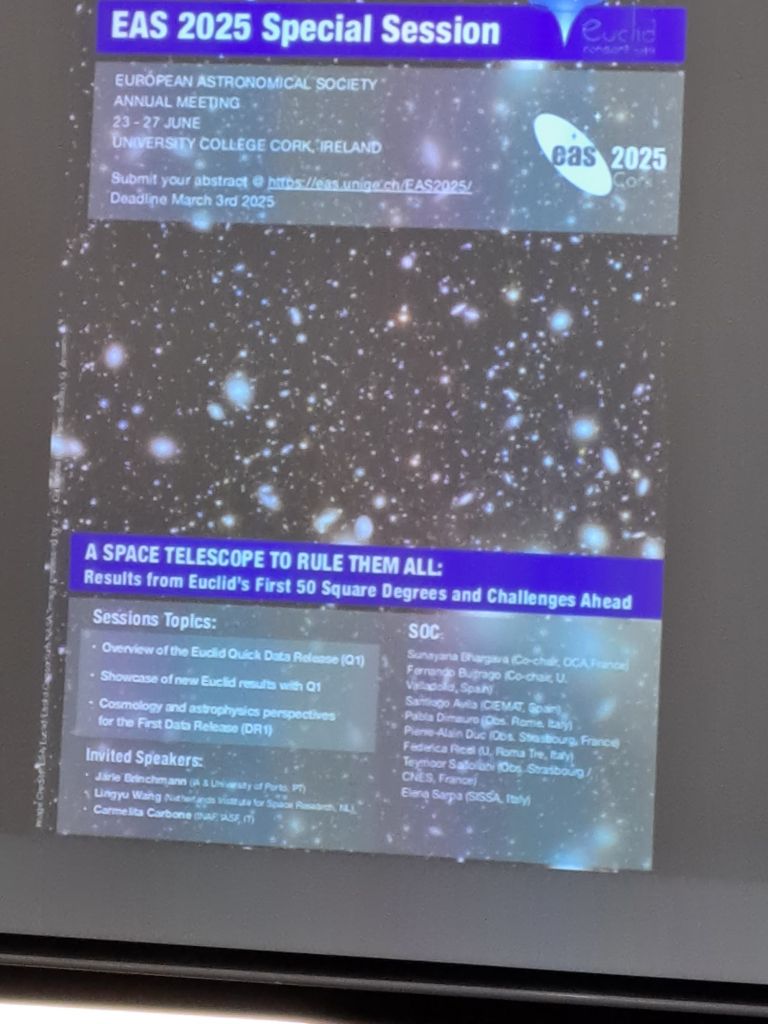
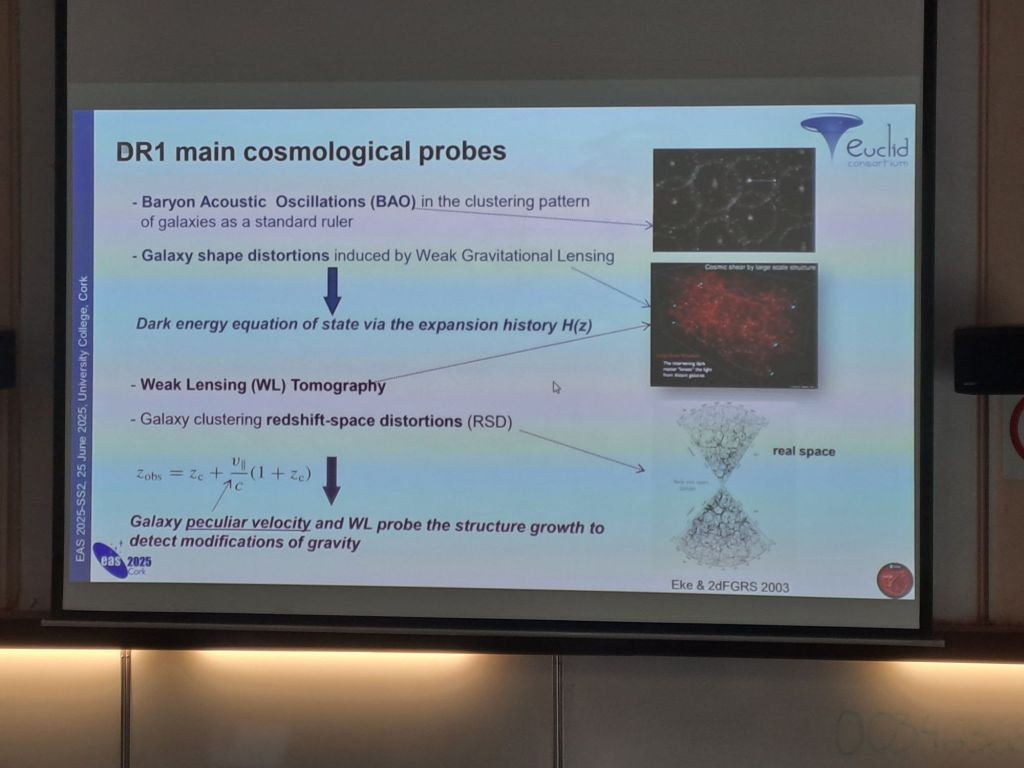
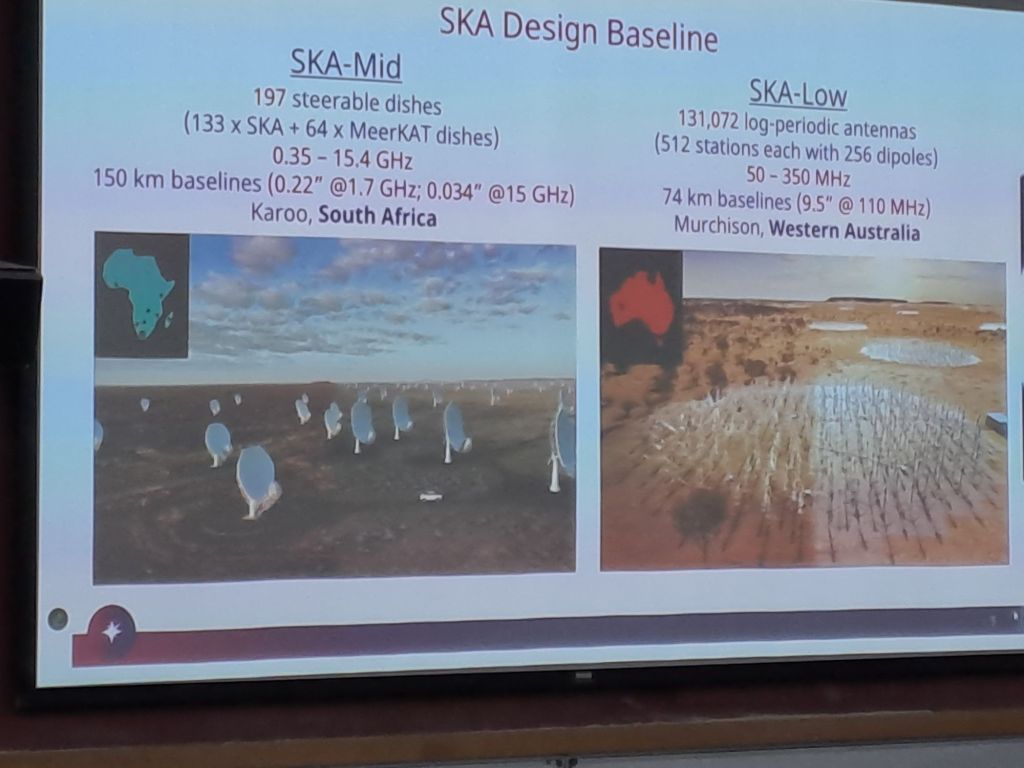
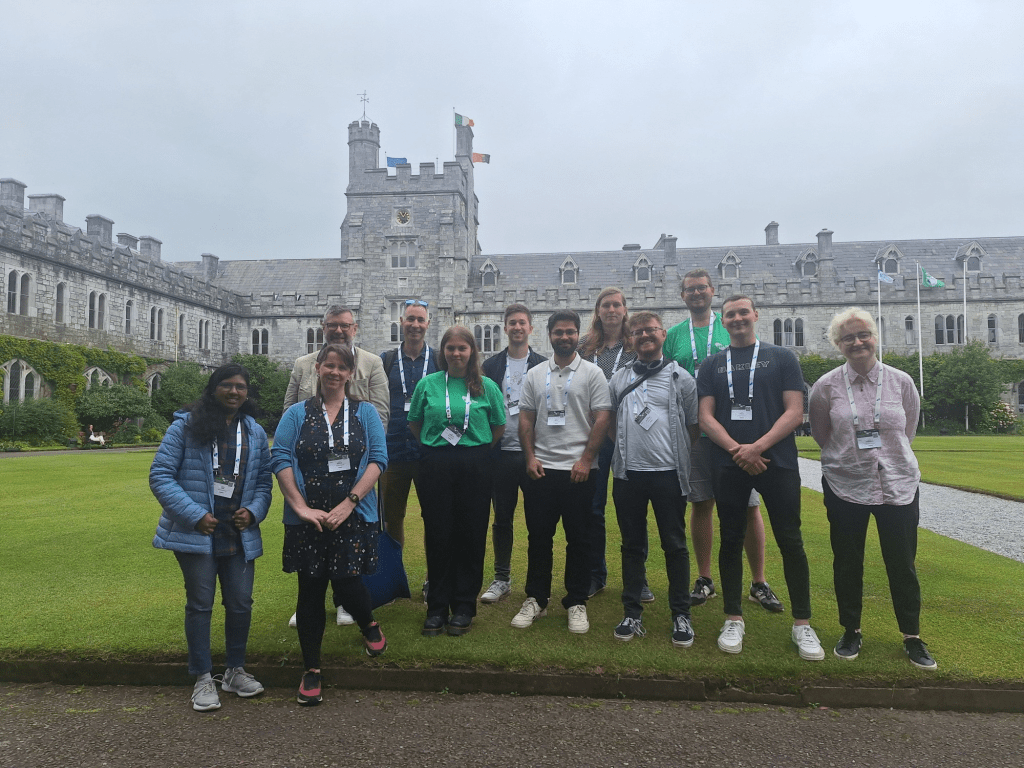
I understand there will be a watch party at the EAS meeting in Cork, but I will be on the train so I’ll miss it.

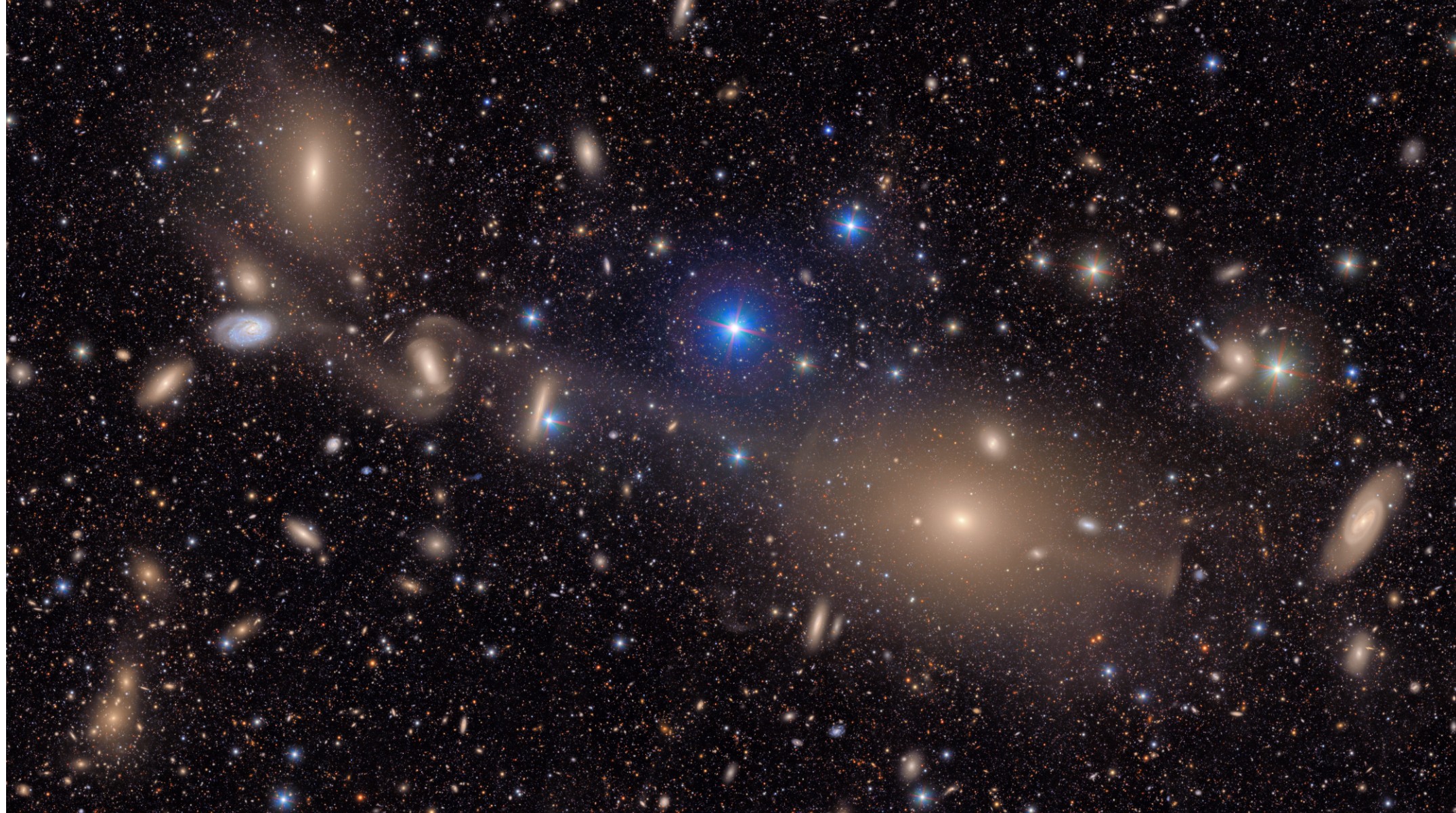
A few images have been released already as a sneak preview. Here is one, to whet your appetitite:

This image shows a small section of NSF-DOE Vera C. Rubin Observatory’s total view of the Virgo cluster.
Image by NSF-DOE Vera C. Rubin Observatory

Summer Solstice 2025

Posted in Irish Language, The Universe and Stuff with tags , , , , on June 21, 2025 by telescoper

In case you weren’t aware, the Summer Solstice in the Northern hemisphere took place this morning Saturday June 21, 2025 at 02:42 UTC (03:42am local Irish Time). Among other things, this means that today is the longest day of the year (as defined by the interval between sunrise and sunset).

According to this website, the interval between sunrise and sunset in Dublin today will be 17 hours and 12 seconds. which is a whole second longer than yesterday (!) and six seconds longer than tomorrow.

In the Northern hemisphere, days will get shorter from the Summer Solstice until the Winter Solstice in December.

The nights are drawing in. Although sunset does carry on getting a bit later for a few days, the days definitely start getting shorter from now on. I explained this in earlier posts here.

Incidentally, the word for “solstice” in the Irish language is grianstad which translates literally as “sun-stop”. The Summer Solstice is Grianstad an tSamhraidh“. The nominative singular word for “Summer”, a masculine noun in Irish, is Samhradh, but in the construction used here, “of summer”, it is in the genitive case so becomes Samhraidh. Moreover, when a masculine noun beginning with s- in the singular genitive is preceded by the definite article an) it experiences an initial mutation in the form of a t-prothesis; hence (an tSamraidh is “of the Summer”.

The Winter Solstice is Grianstad an Gheimhridh. The word for winter is Geimhreadh, which is masculine, and has a genitive form Geimhridh. In this case, however, because it doesn’t begin with “S” there is no t-prothesis but instead a lenition (séimhiú) that softens the initial “G” indicated by the “h”. Hence Grianstad an Gheimhridh, “Sun-stop of the Winter”.

I hope this clarifies the situation.

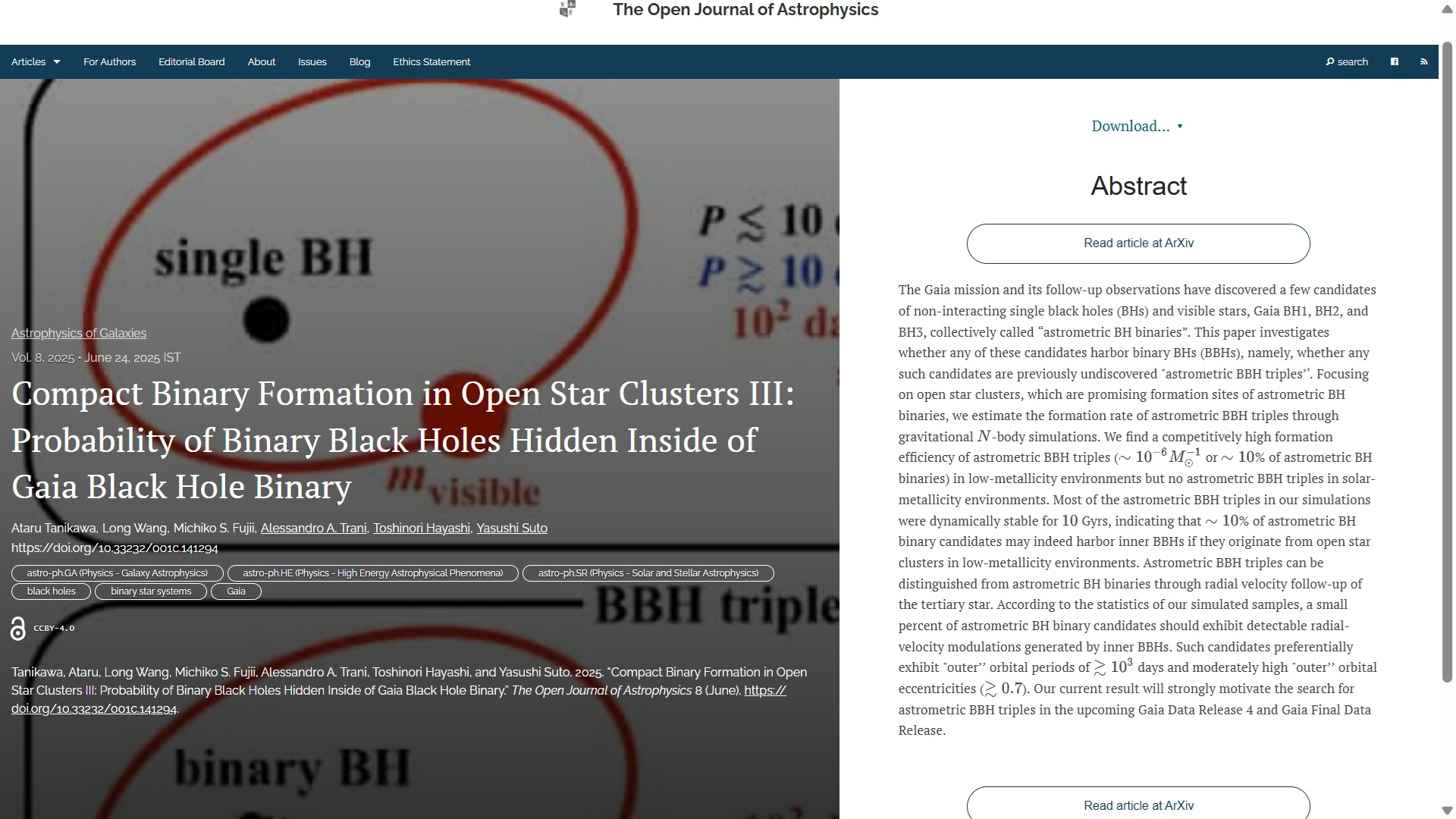
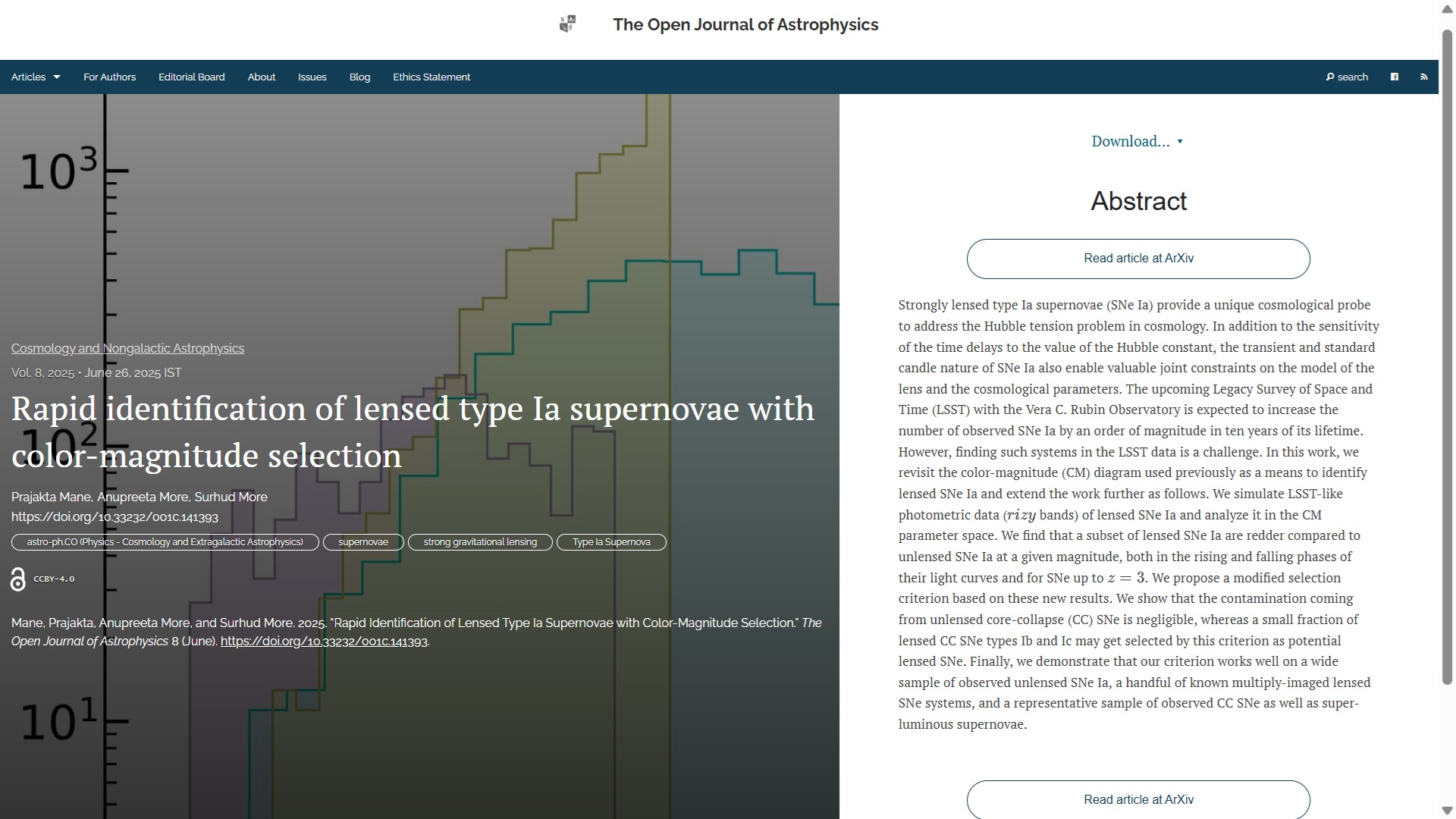
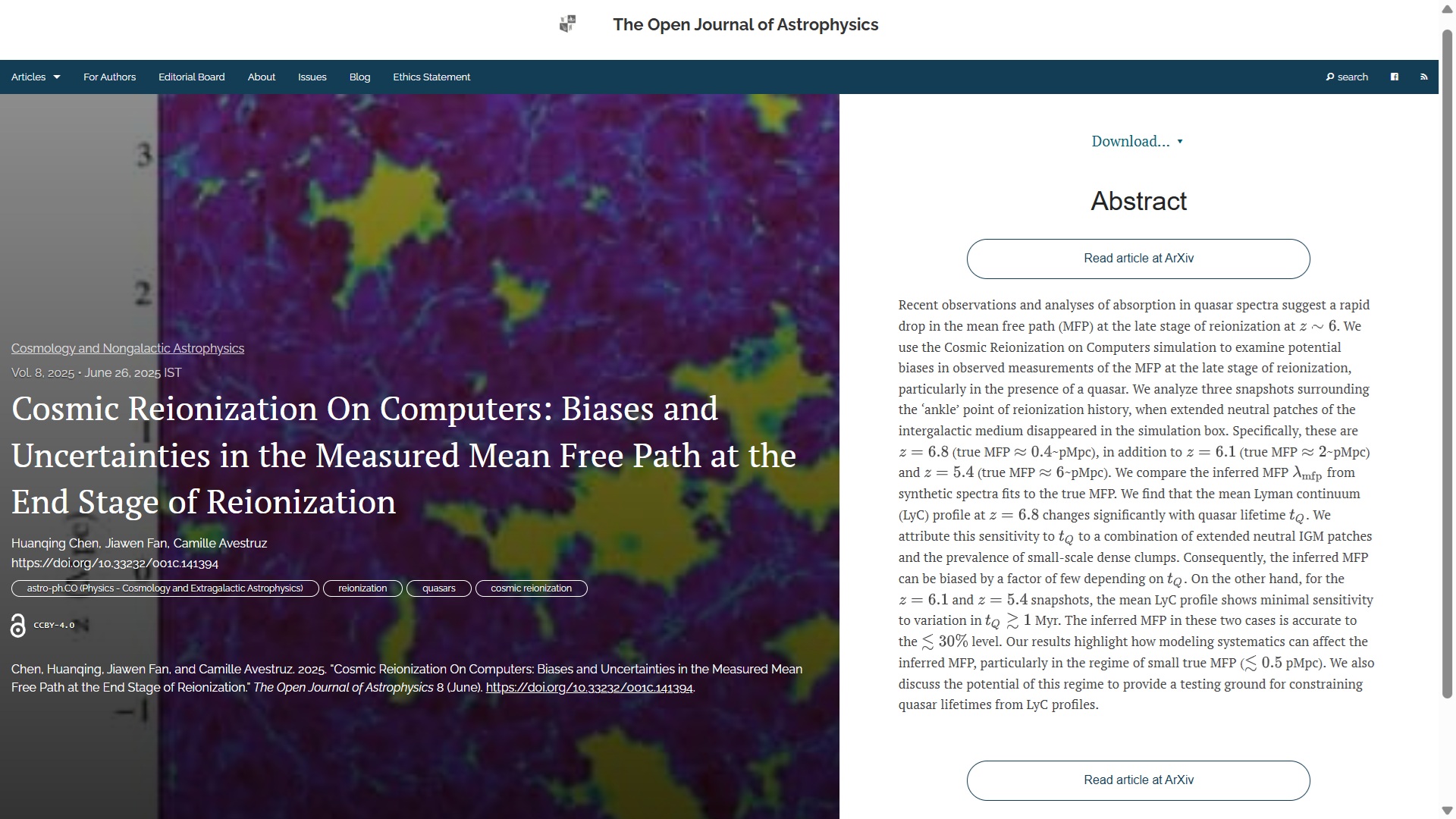
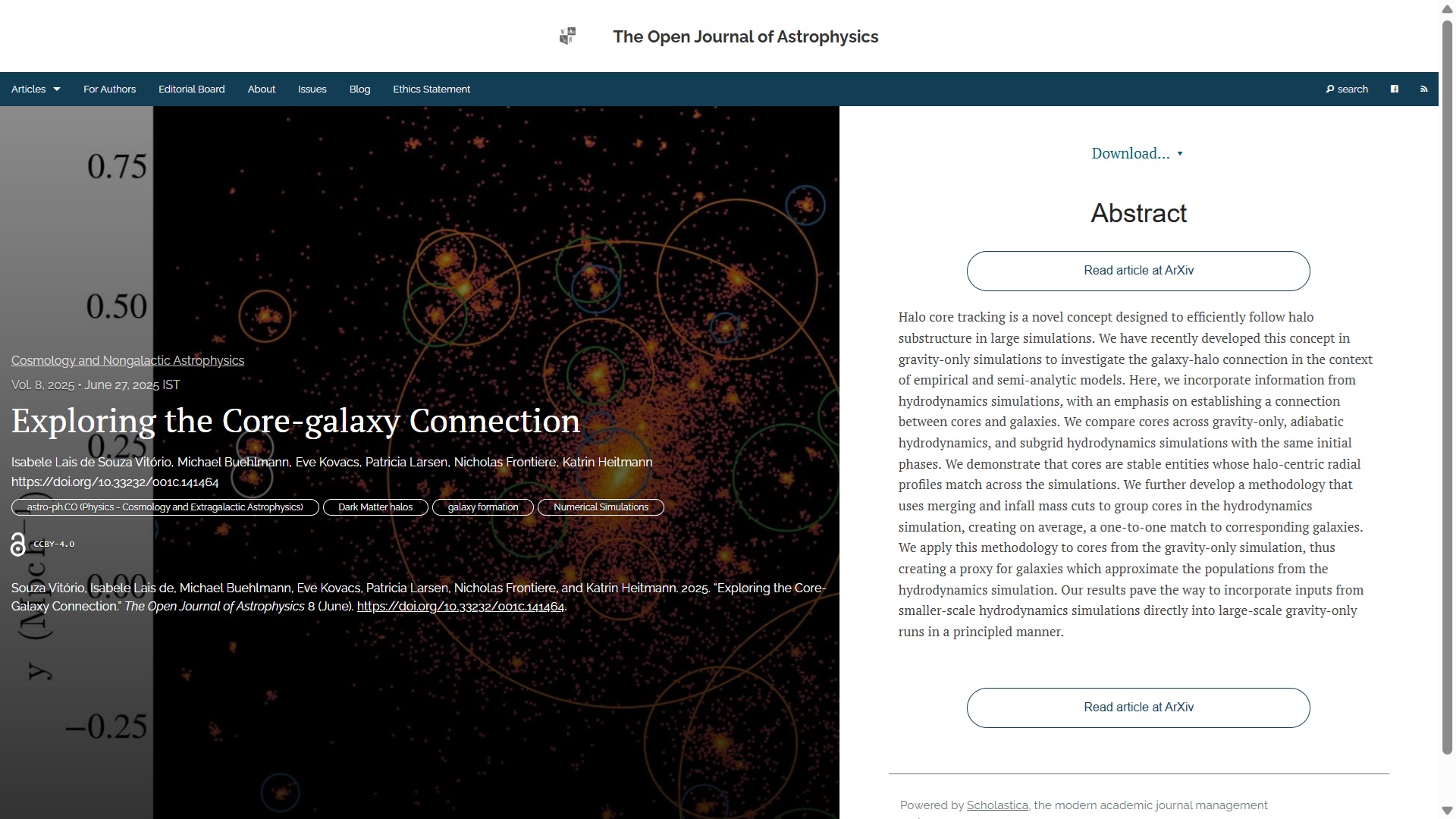
Weekly Update from the Open Journal of Astrophysics – 20/06/2025

Posted in OJAp Papers, Open Access, The Universe and Stuff with tags , , , , , , , , , , , , , , , on June 20, 2025 by telescoper

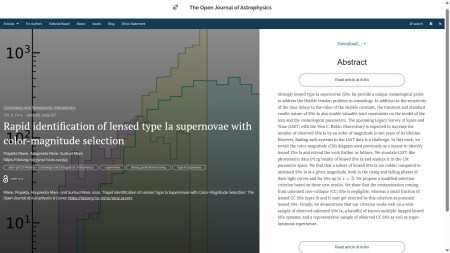
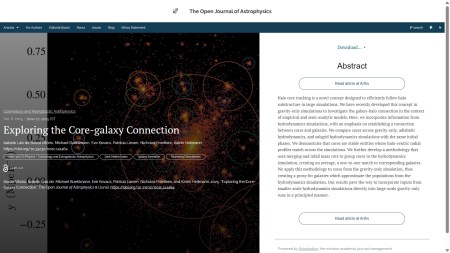
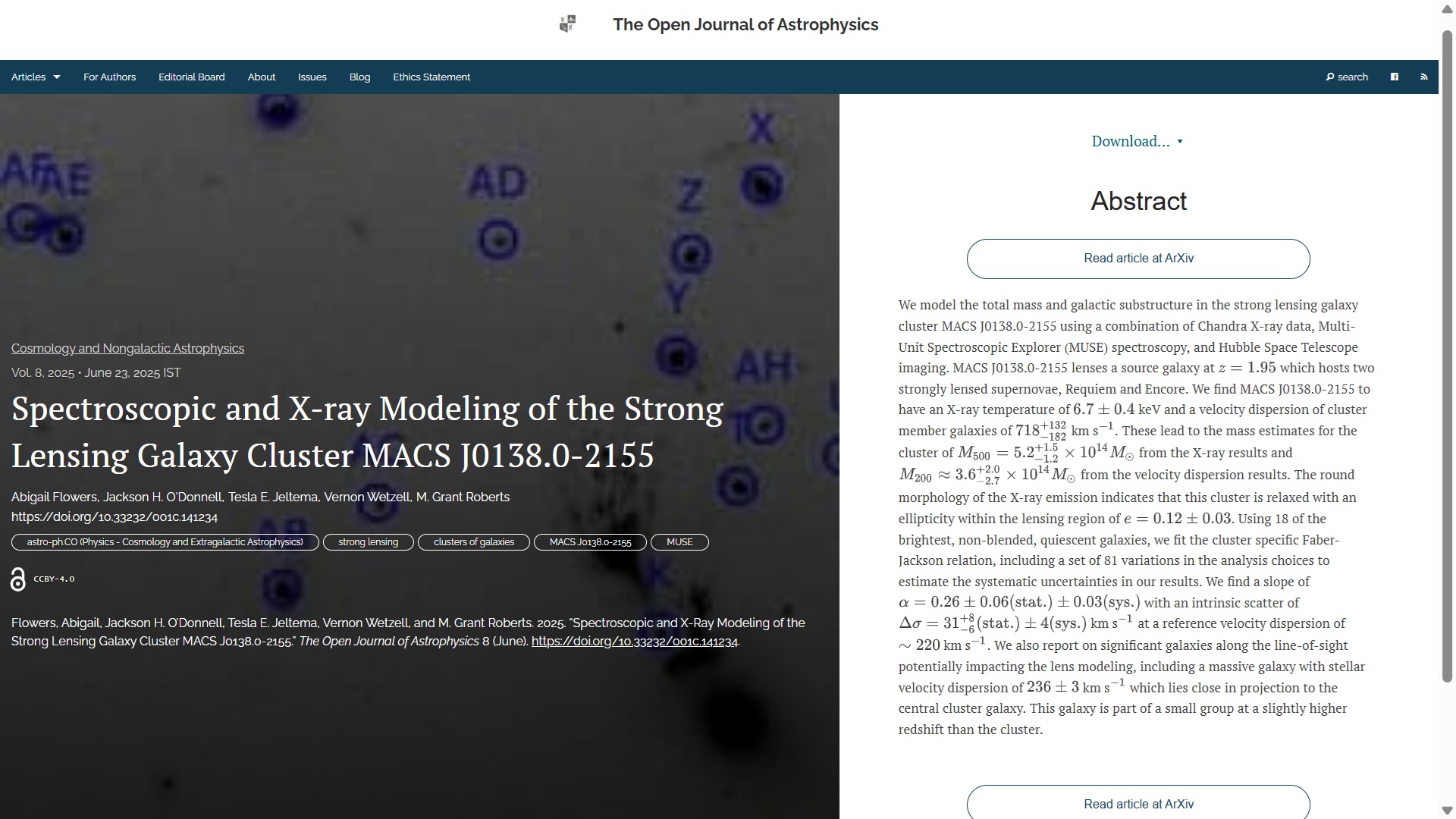
Yesterday (Thursday 19th June 2025) was a national holiday in the USA, which means that no new papers were announced on arXiv today (Friday 20th June). I have therefore decided to bring forwarded the usual weekly update of papers published at the Open Journal of Astrophysics by a day. Since the last update we have published three new papers, which brings the number in Volume 8 (2025) up to 74, and the total so far published by OJAp  is now up to 309.

The three papers published this week, with their overlays, are as follows. All three were published on Tuesday, June 17th 2025. You can click on the images of the overlays to make them larger should you wish to do so.

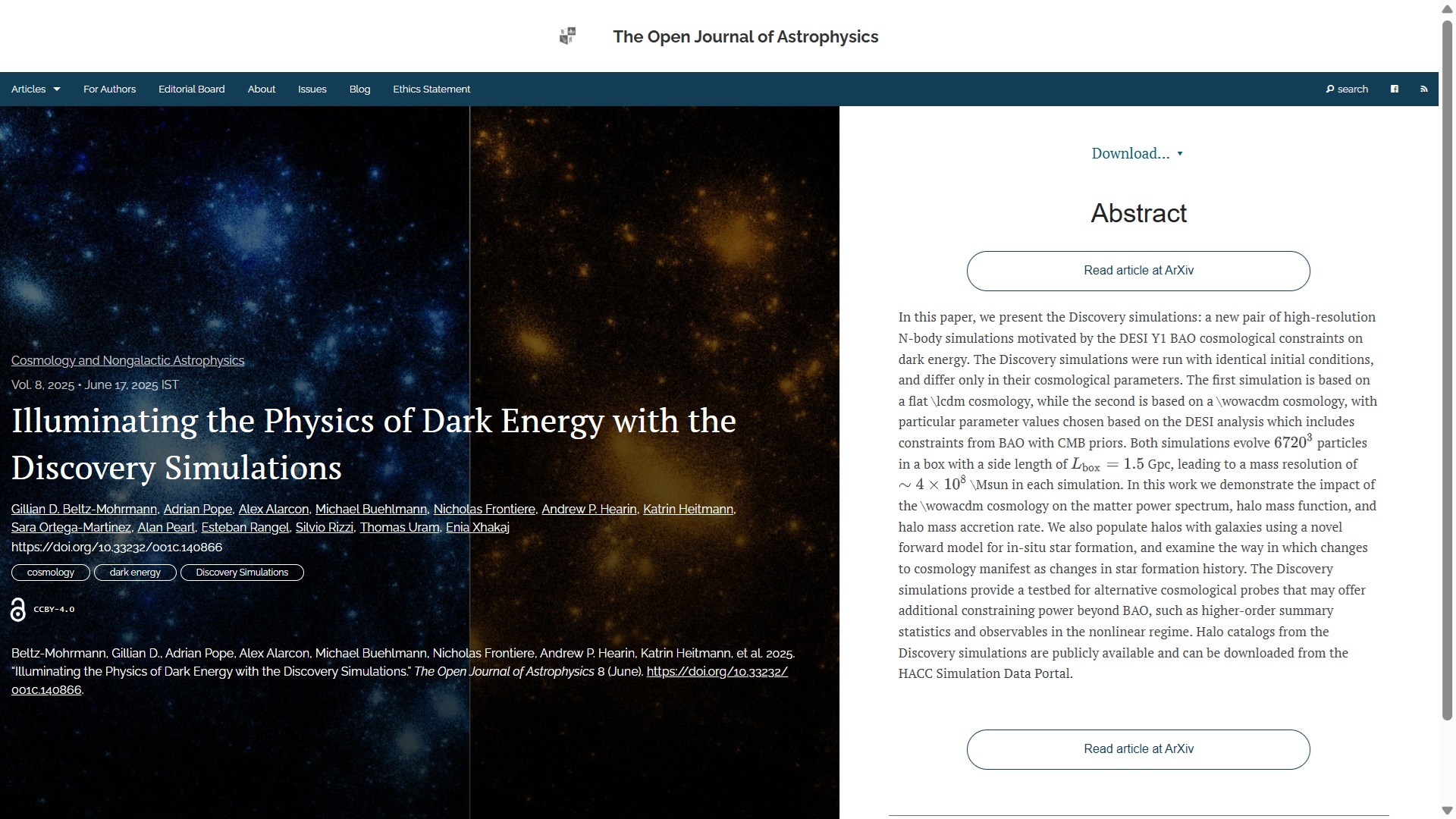
The first paper to report is “Illuminating the Physics of Dark Energy with the Discovery Simulations” by Gillian D. Beltz-Mohrmann (Argonne National Laboratory, USA) and 12 others based in the USA and Spain. This describes new high-resolution cosmological simulations providing a testbed for alternative cosmological probes that may offer additional constraining power beyond Baryon Accoustic Oscillations. It is filed in the folder marked Cosmology and NonGalactic Astrophysics.

The overlay is here:
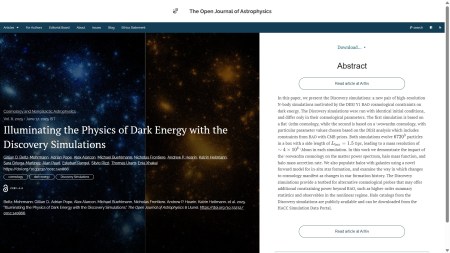
You can read the final accepted version on arXiv here.

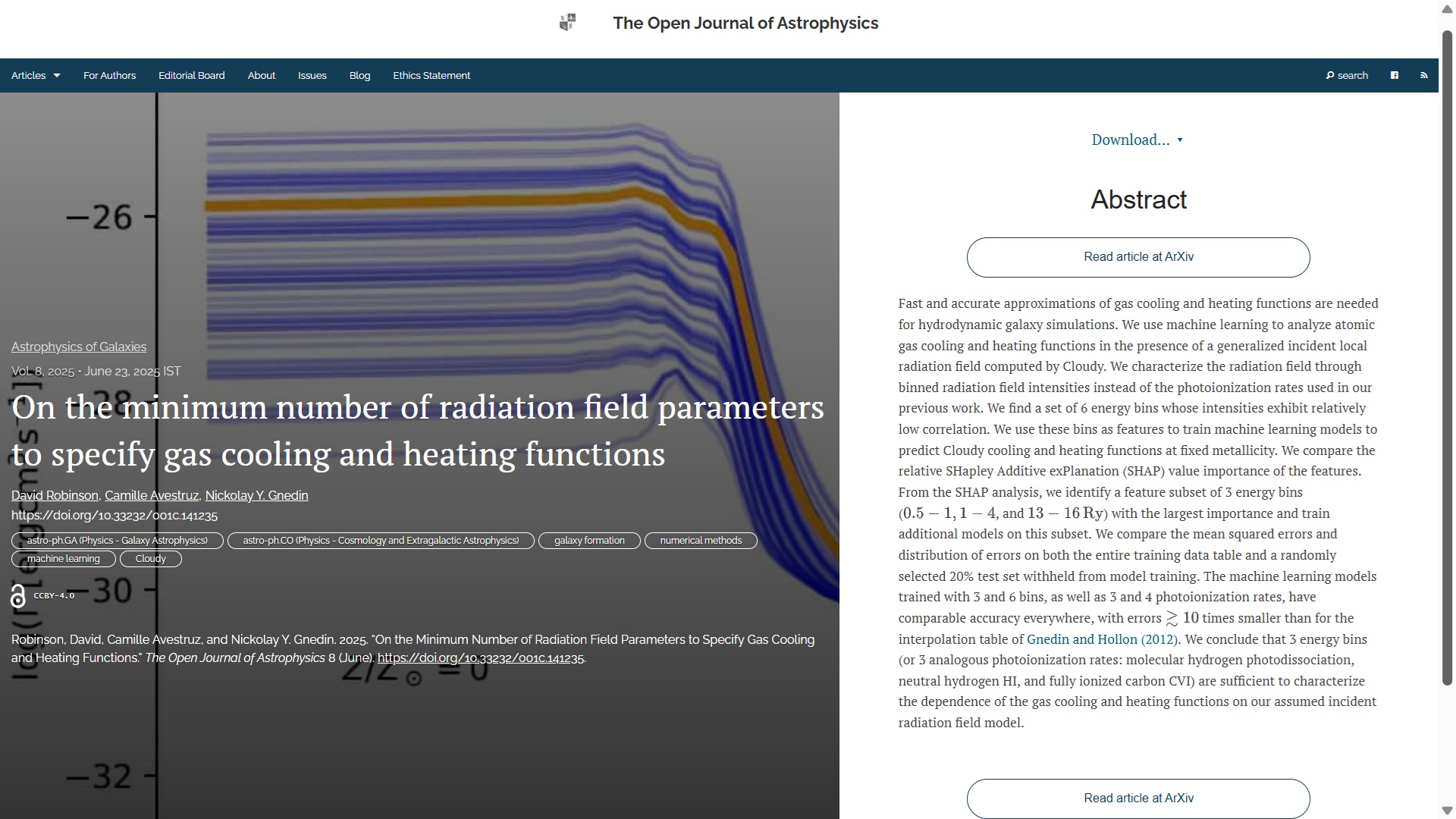
The second paper is in the folder marked Astrophysics of Galaxies. It is “LIGHTS. The extended point spread functions of the LIGHTS survey at the LBT” by Nafise Sedighi (Instituto de Astrofísica de Canarias, Spain) and 15 others based in Spain, USA, Iran, Italy and the UK. It describes the procedure used to construct the extended Point Spread Functions (PSFs) of the LIGHTS survey in images taken with the Large Binocular Cameras (LBCs) of the Large Binocular Telescope (LBT).

The overlay is here:


You can find the officially-accepted version of the paper on arXiv here.

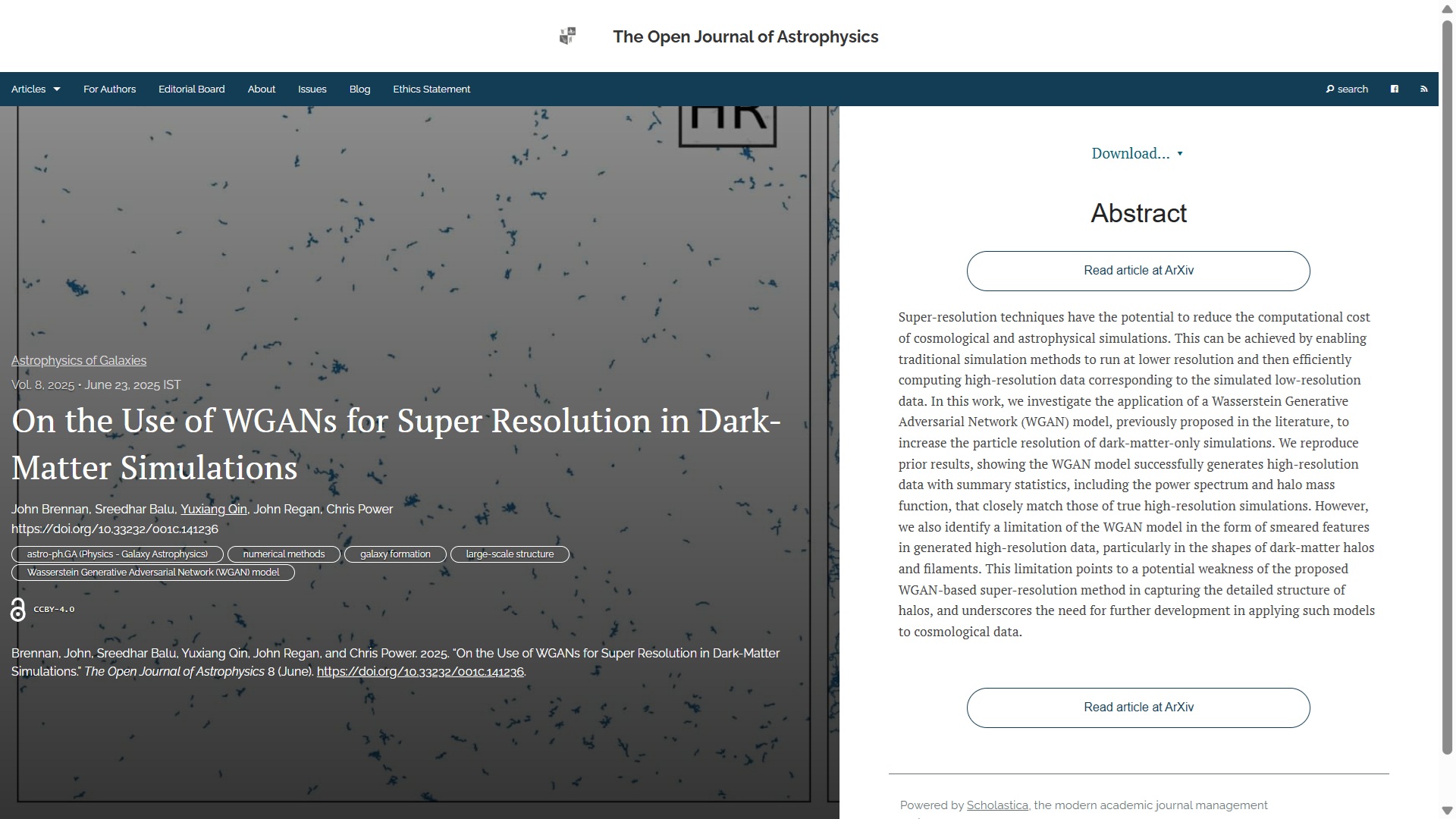
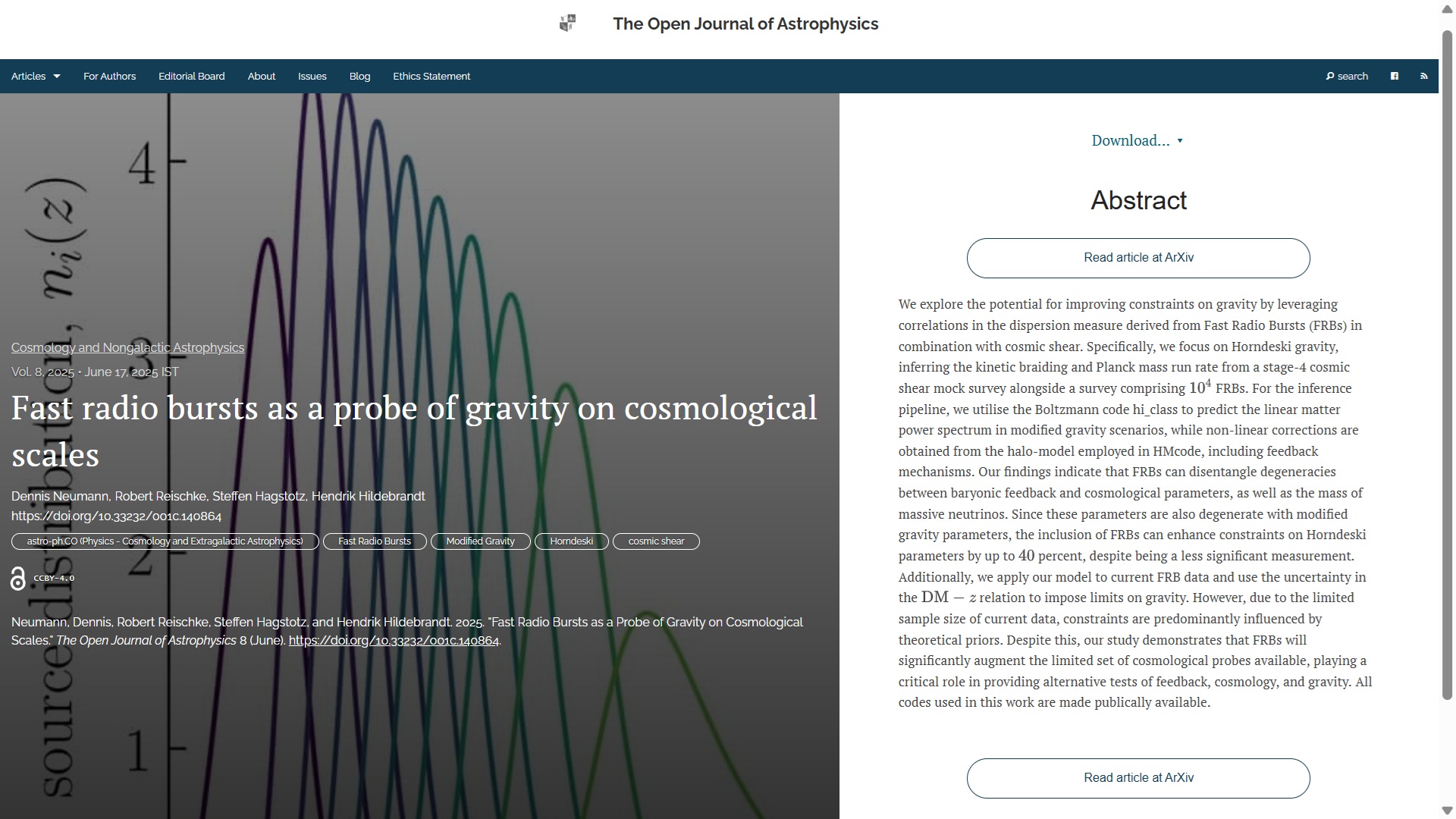
Finally this week we have “Fast radio bursts as a probe of gravity on cosmological scales” by Dennis Neumann (Leiden University, Netherlands), Robert Reischke (Universität Bonn, Germany), Steffen Hagstotz (Ludwig-Maximilians Universität München, Germany) and Hendrik Hildebrandt (Ruhr University Bochum, Germany). This is about using dispersion measures derived from Fast Radio Bursts (FRBs) in combination with cosmic shear to investigate modified gravity theories, specifically Horndeski gravity. It is in the folder marked Cosmology and NonGalactic Astrophysics.

The overlay is here:

You can find the officially-accepted version on arXiv here.

That’s all the papers for this week. I’ll revert to the usual schedule for updates next week, and post the next one on Saturday 28th June.


Weekly Update from the Open Journal of Astrophysics – 14/06/2025

Posted in OJAp Papers, Open Access, The Universe and Stuff with tags , , , , , , , , , , , , on June 14, 2025 by telescoper

It’s Saturday so once again it’s time for the weekly update of papers published at the Open Journal of Astrophysics. Since the last update we have published two new papers, which brings the number in Volume 8 (2025) up to 71, and the total so far published by OJAp  is now up to 306.

The two papers published this week, with their overlays, are as follows. You can click on the images of the overlays to make them larger should you wish to do so.

The first paper to report is “Analysis of optical spectroscopy and photometry of the type I X-ray bursting system UW CrB2” by Mark Kennedy (University College Cork, Ireland) and 21 others based in Ireland, UK, USA, Finland, Netherlands and Australia. This one was published on Tuesday June 10th in the folder High-Energy Astrophysical Phenomena.  This describes optical photometry and spectroscopy of the low-mass X-ray binary UW Coronae Borealis taken over 2 years

The overlay is here:


You can read the final accepted version on arXiv here.

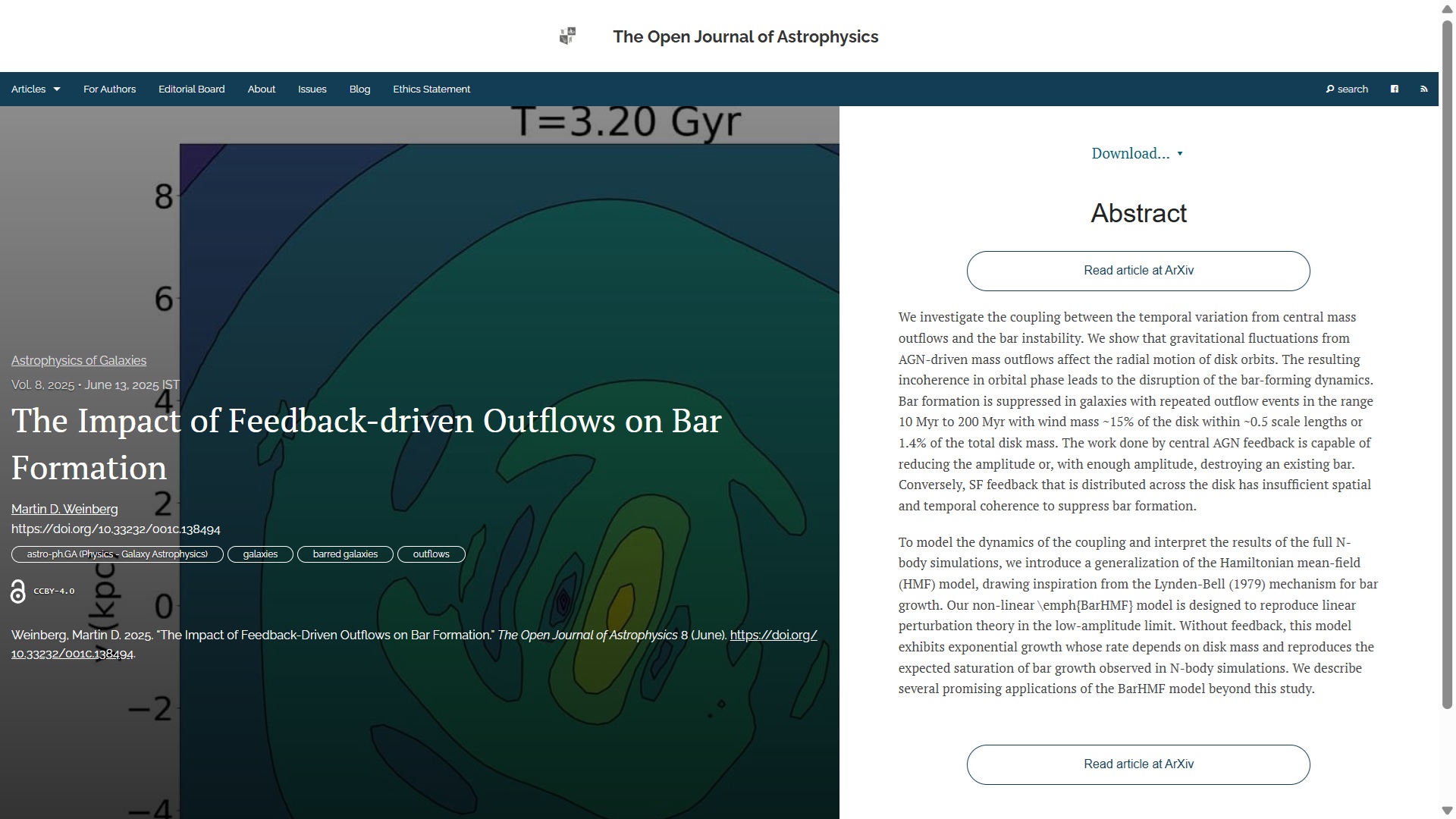
The second paper is “The Impact of Feedback-driven Outflows on Bar Formation” by Martin D. Weinberg (University of Massachusetts, Amherst, USA). This paper uses a generalization of the Hamiltonian Mean-Field model to of the disruption of bar formation in galaxies by stellar feedback. It was published on Friday 13th June 2025 in the folder marked Astrophysics of Galaxies.

The overlay is here:


You can find the officially-accepted version of the paper on arXiv here.

That’s all the papers for this week. I’ll post another update next weekend.


The magnetic moment of the muon revisited

Posted in The Universe and Stuff with tags , , , , on June 10, 2025 by telescoper

A couple of years ago I posted an item about a measurement of the anomalous magnetic moment of the muon, a quantity usually known as (g-2). At the time this appeared to be in conflict with the predictions of the standard model (SM)of particle physics but the general opinion among experts was that the problem was likely to lie with the calculations rather than the experiment.

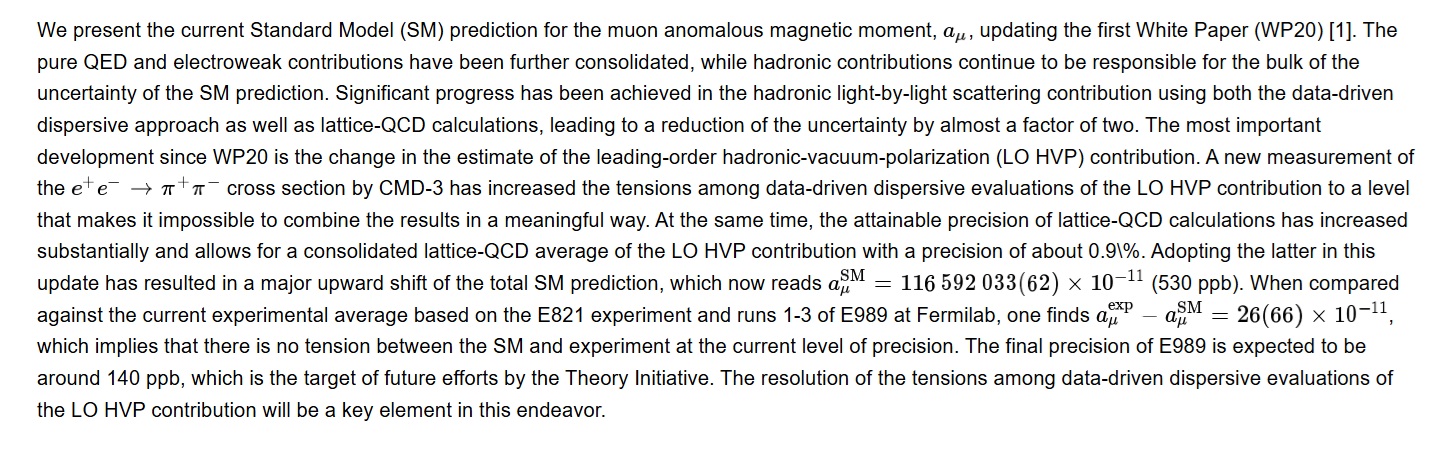
Well, catching up on things I missed during examination marking season, I refer you to a substantial paper (188 pages long) that appeared on arXiv on 27th May 2025, with the abstract:

If this is too small to read I direct yourself to the salient point, namely that “there is no tension between the SM and experiment at the current level of precision”.

It seems the Standard Model survives to fight another day…

The Cosmic Poltergeist

Posted in Film, The Universe and Stuff with tags , , on June 8, 2025 by telescoper

Last night I stayed up long past my usual bedtime to watch the film Poltergeist. This film, about the haunting of a family house by malevolent spirits, was a huge hit when it came out in cinemas back 1982, and I was interested to see how well it has endured. I think it stans up pretty well actually. The special effects could be done better nowadays, but it is still credibly scary.

The idea of a poltergeist is not new, but the film cleverly combines the old legends with new technology, in the way that the first manifestation of an evil presence is through a TV set. It is the youngest child of the house in question, Carol Anne, who is able to detect the ghosts when all we can see on the screen is static. The implication is that the young are the most receptive to paranormal phenomena.

Most of the static produced in a TV set when it is not tuned to a broadcast frequency is produced by thermal noise in the receiver, but around 1% of it comes from the cosmic microwave background (CMB). I’ve used static on a TV screen as a gimmick in public lectures on several occasions, with the joke that it may only be 1% but the birth of the Universe is far more interesting than most things you can see on TV!

The CMB is a ghost of the Big Bang. Watching Poltergeist last night, it occurred to me that when cosmologists study this relic radiation, we are all a bit like Carol Anne, trying to make sense of an eery presence that is always with us, but is barely perceptible. Such studies involve extensive use of spectral analysis.

This line of thinking led me to my new theory of the Universe. Perhaps it was built on the remains of an earlier, deceased Universe which is now trying to make contact this one in order to wreak revenge for the violation of its grave…

Weekly Update from the Open Journal of Astrophysics – 07/06/2025

Posted in OJAp Papers, Open Access, The Universe and Stuff with tags , , , , , , , , , , , on June 7, 2025 by telescoper

It’s Saturday so once again it’s time for the weekly update of papers published at the Open Journal of Astrophysics. Since the last update we have published two new papers, which brings the number in Volume 8 (2025) up to 69 and the total so far published by OJAp  is now up to 304.

The two papers published this week, with their overlays, are as follows. You can click on the images of the overlays to make them larger should you wish to do so.

The first paper to report is “Chemical Abundances in the Leiptr Stellar Stream: A Disrupted Ultra-faint Dwarf Galaxy?” by Kaia R. Atzberger (Ohio State University) and 13 others based in the USA, Germany, the UK, Sweden, Australia, Canada and Brazil. This one was published on 2nd June 2025 and is in the folder marked Astrophysics of Galaxies. It presents a spectroscopic study of stars in a stellar stream suggesting that the stream originated by the accretion of a dwarf galaxy by the Milky Way.

The overlay is here:


You can read the final accepted version on arXiv here.

The second paper is “Scaling Laws for Emulation of Stellar Spectra” by Tomasz Różański (Australian Nastional University) and Yuan-Sen Ting (Ohio State University, USA). This was published yesterday, i.e. on 6th June 2025, and is in the folder Instrumentation and Methods for Astrophysics. The paper discusses certain scaling models and their use to achieve optimal performance for neural network emulators in the inference of stellar parameters and element abundances from spectroscopic data.

The overlay is here:

You can find the officially-accepted version of the paper on arXiv here.

That’s the papers for this week. I’ll post another update next weekend.

As a postscript I have a small announcement about our social media. Owing to the imminent demise of Astrodon, we have moved the Mastodon profile of the Open Journal of Astrophysics to a new instance, Fediscience. You can find us here. The old profile currently redirects to the new one, but you might want to update your links as the old server will eventually go offline.

Firearms Units

Posted in The Universe and Stuff on June 2, 2025 by telescoper

Disturbed by the news of a shooting incident in Carlow yesterday that resulted a man’s death, I thought I’d check what the rules are for owning firearms in Ireland. I found a summary here. This is the introduction:

Spot the deliberate mistake!

I don’t possess an airgun, but I understand the pellets they fire range have a mass of at least 0.675 grammes. If, as seems likely, it is the kinetic energy of the pellet that is limited to 1 joule, then what is the maximum allowed muzzle velocity for an unlicensed airgun? Give your answer in metres per second.

The Shaw Prize for Astronomy 2025

Posted in The Universe and Stuff with tags , , , , on June 1, 2025 by telescoper
Dick Bond (left) and George Efstathiou (right)

I’m a few days late on this, as the announcement on 27th May came at a very busy time, but it’s a pleasure to pass on the news that the 2025 Shaw Prize for Astronomy has been awarded to Dick Bond and George Efstathiou. Congratulations to both on a very well deserved award!

The full citation can be found here, but the first paragraph reads:

The Shaw Prize in Astronomy 2025 is awarded in equal shares to John Richard Bond, Professor of the Canadian Institute for Theoretical Astrophysics and University Professor at the University of Toronto, Canada and George Efstathiou, Professor of Astrophysics at the University of Cambridge, UK for their pioneering research in cosmology, in particular for their studies of fluctuations in the cosmic microwave background. Their predictions have been verified by an armada of ground-, balloon- and space-based instruments, leading to precise determinations of the age, geometry, and mass-energy content of the universe.

One of the first papers I was given to read when I started my postgraduate studies in 1985 was the pioneering Bond & Efstathiou (1984) “Cosmic background radiation anisotropies in universes dominated by nonbaryonic dark matter”. Here is the abstract:

This work was hugely influential and prescient in many ways. It does remind me, though, that in the 1980s, before the detection of large-scale anisotropies by the Cosmic Background Explorer (COBE) announced in 1992, the prevailing mentality was to find models in which the predicted cosmic microwave background anistropies were as small as possible. The COBE fluctuations turned out to be rather larger than those predicted in the model discussed in the paper, which was one reason why the standard cosmological model now has a lower density of dark matter than then.

On a more technical level, the paper also reminds us that it was to be a while until the angular power spectrum, as opposed to the correlation function, became the standard tool it is now for quantifying the statistical properties of these temperature fluctuations.

The Shaw Prize wasn’t awarded for just this paper, of course, but I think it’s emblematic of the sustained importance and influence of the work of the Laureates over many years.

Weekly Update from the Open Journal of Astrophysics – 31/05/2025

Posted in OJAp Papers, Open Access, The Universe and Stuff with tags , , , , , , , , , , , , , , , on May 31, 2025 by telescoper

Once again it’s time for the weekly Saturday morning update of papers published at the Open Journal of Astrophysics. Since the last update we have published five new papers, which brings the number in Volume 8 (2025) up to 67; the total so far published by OJAp has passed the 300 mark and is now up to 302. If we keep up at the same rate for the rest of the year as we did for the first five months now completed, we will publish around 160 papers altogether in 2025.

In chronological order of publication, the five papers published this week, with their overlays, are as follows. You can click on the images of the overlays to make them larger should you wish to do so.

The first paper to report is “Which is the most eccentric binary known? Insights from the 2023/4 pericenter passages of Zeta Boötis and Eta Ophiuchi” by Idel Waisberg, Ygal Klein and Boaz Katz (Weizmann Institute of Science, Israel).  This is a report of interferometric observations of two very eccentric binary star systems, published on Tuesday 27th May 2025 in the folder Solar and Stellar Astrophysics. The overlay is here:

You can read the final accepted version on arXiv here.

The second paper to report is “On the full non-Gaussian Surprise statistic and the cosmological concordance between DESI, SDSS and Pantheon+” by Pedro Riba Mello & Miguel Quartin (Universidade Federal do Rio de Janeiro, Brazil), and Bjoern Malte Schaefer & Benedikt Schosser (Heidelberg, Germany). This paper is in the folder Cosmology and NonGalactic Astrophysics and was published on Tuesday 27th May 2025. The paper presents an application of the “Surprise Statistic”, based on the Kullback-Leibler divergence, as a measure of the difference between results inferred from different data sets.

The overlay is here:


You can find the officially-accepted version of the paper on arXiv here.

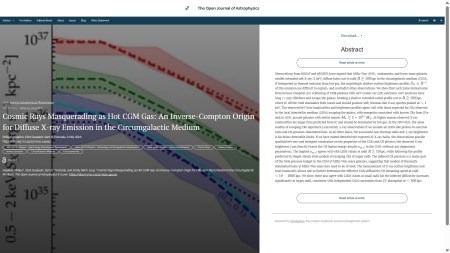
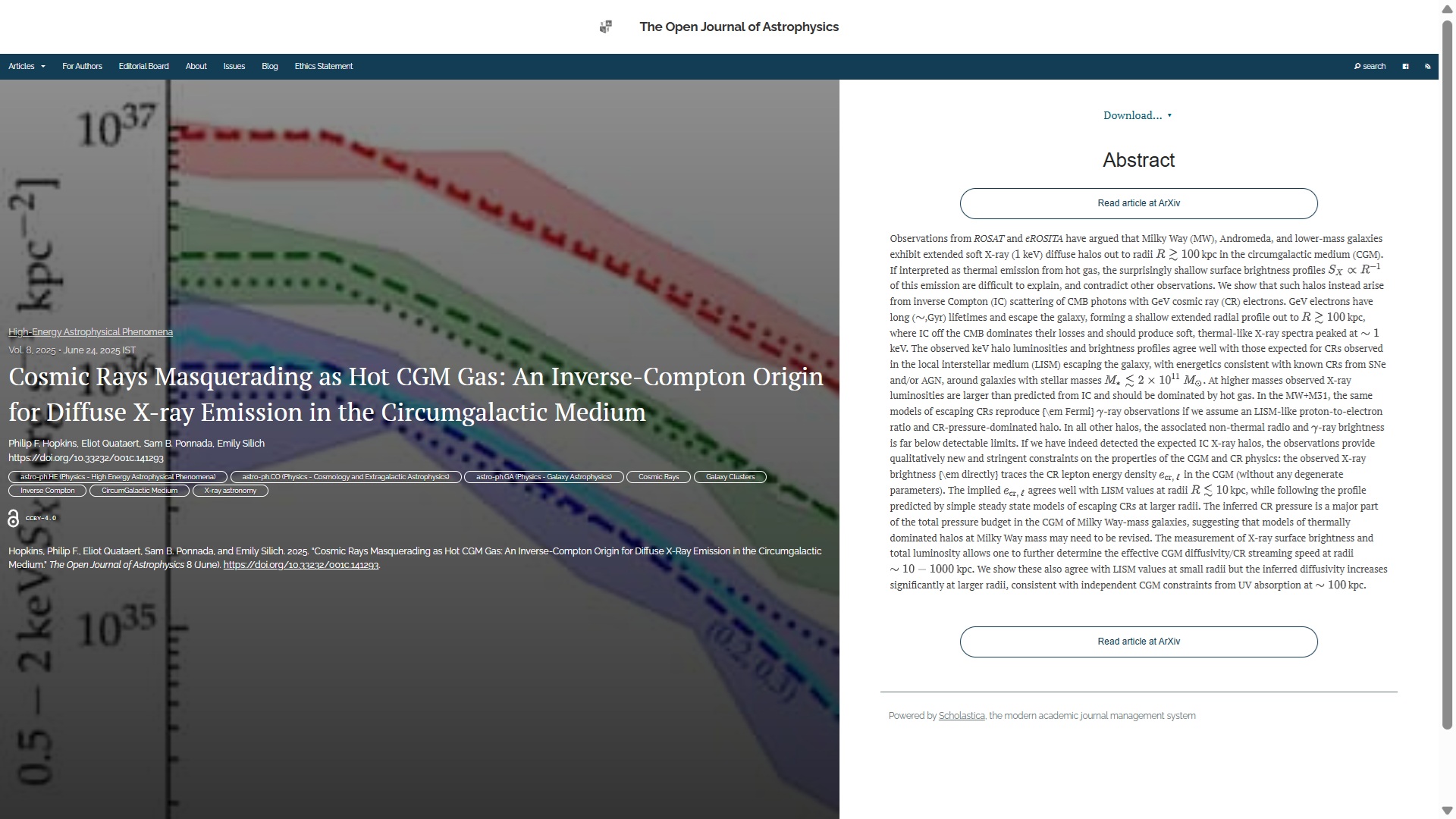
The third paper we published last week, and our 300th overall, is “Cosmic Ray Feedback in Massive Halos: Implications for the Distribution of Baryons” by Eliot Quataert (Princeton, USA) and Philip F. Hopkins (Caltech, USA).  This was published on Thursday 29th May in the folder Cosmology and NonGalactic Astrophysics. The paper discusses the effects of cosmic rays produced by massive black holes on the structure of the baryonic component of galaxies and how these might affect cosmological parameter estimation. The overlay is here:


You can read the officially accepted version of this paper on arXiv here.

The next one to report is “Mixing neutron star material into the jets in the common envelope jets supernova r-process scenario” by Noam Soker (Technion, Israel). This was published on Thursday 27th May in the folder High-Energy Astrophysical Phenomena; it presents a discussion of the chemical enrichment of an evolved star consequent upon its ingestion of a neutron star.

The overlay is here:

You can find the officially accepted version on arXiv here.

Last, but by no means least, for this week we have “Dark Energy Survey Year 6 Results: Synthetic-source Injection Across the Full Survey Using Balrog” by Dhayaa Anbajagane (Kavli Institute, Chicago) et al. (81 authors) on behalf of the Dark Energy Survey Collaboration. It was also  published on Thursday 27th May  2025, but in the folder Cosmology and NonGalactic Astrophysics. It is about testing the Dark Energy Survey analysis pipeline using synthetic sources.

The overlay is here:


You can find the officially accepted version on arXiv here.

That’s all the papers for this week. I’ll post another update next weekend.