Archive for astronomy

Euclid Paper Day!

Posted in Barcelona, Euclid, Maynooth, The Universe and Stuff with tags , , , , , , , , on May 24, 2024 by telescoper

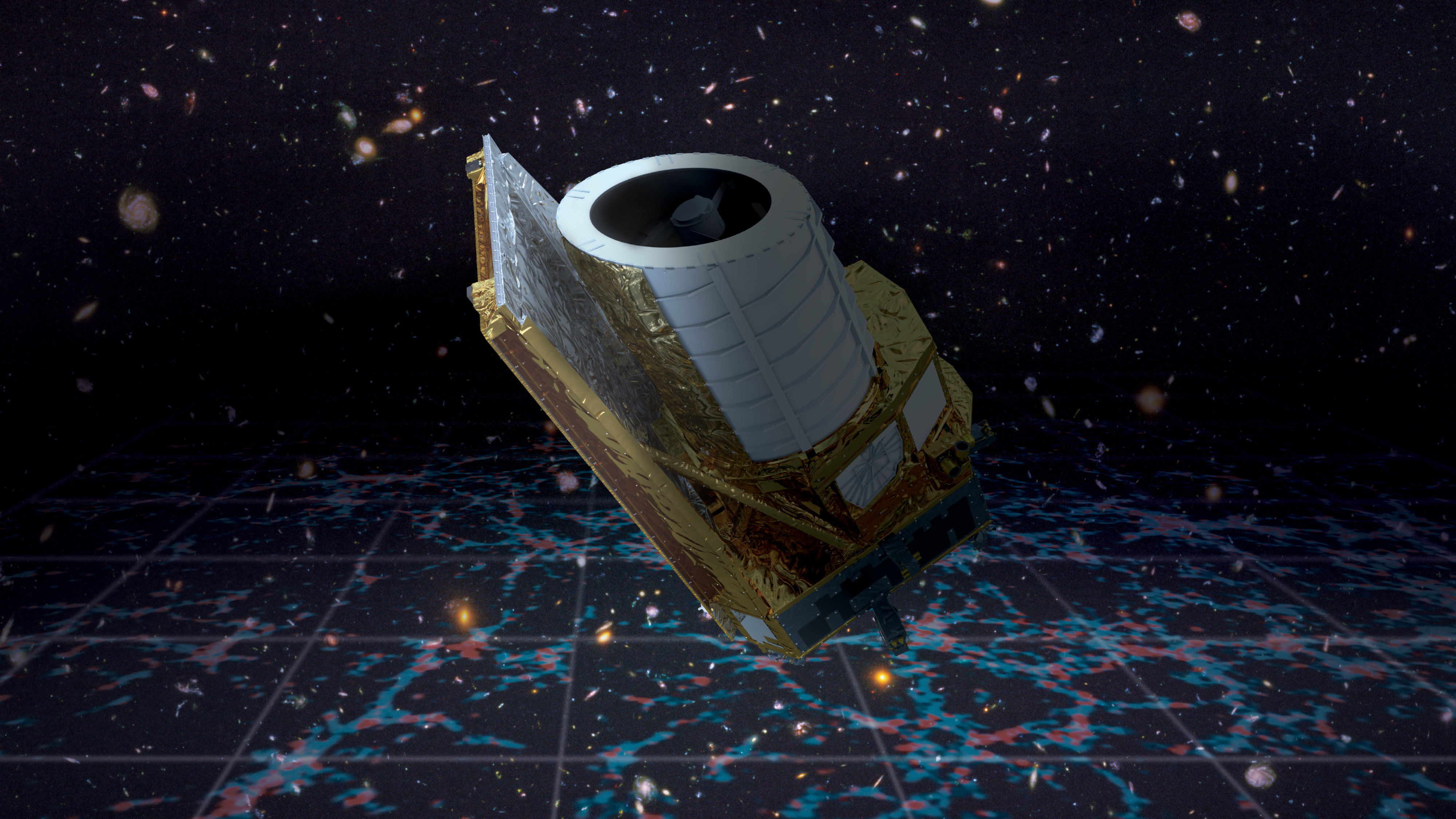
This morning’s arXiv update brought the expected deluge of preprints from Euclid. You can find details of all fifteen of the new articles here. Ten of them relate to the Early Release Observations of which five were announced yesterday and five last November. These are essentially byproducts of the testing and calibration phase of the Euclid mission rather than the main cosmological survey. ESA is making a series of short videos about these results which I will share on here from time to time.

Of more direct relevance to cosmologists such as myself are the following five reference papers:

The overview paper, led by Yannick Mellier (Euclid Consortium Lead), giving a general description of the mission capabilities and science goals, will be the main reference paper and just about every active member of the Euclid Consortium is on the author list (including myself). That’s over a thousand people, not quite at the level of the Large Hadron Collider but getting there. I do think we need to find a better way of giving credit to work in large collaborations than through authorship, but until someone comes up with a workable scheme, and people responsible for hiring researchers adopt it, we’re stuck with what we’ve got. At least I can say that I’ve read that paper (which is 94 pages long, including the author list)

Papers II-IV are technical articles relating to Euclid’s instruments and their calibration, which will also be important references for the survey part of the Euclid mission. Paper V is about the Flagship simulations and the mock catalogues produced therefrom; I discussed these a while ago here. It is led by Francisco Castander of Institut de Ciencies de l’Espai, who organized the meeting I attended recently here in Barcelona.

These papers now now be peer-reviewed and, assuming they are accepted, published in a special issue of Astronomy & Astrophysics (A&A).

Gearing up for Thursday’s Euclid News

Posted in Euclid, Maynooth, The Universe and Stuff with tags , , , , , , , on May 21, 2024 by telescoper

It’s a hectic time ahead of a Big Event on Thursday 23rd May, which will include the publication of five new Early Release Observations (EROs). I’m not at liberty to say what they are until after 12 noon (CEST) on Thursday except that they’re very pretty. You can watch the live stream here:

Including the five released on November 7th 2023 that will bring the total to ten. All the ERO pictures will be available on the ESA archive here.

Thursday will also see the release of ten scientific papers related to the EROs; they will appear on arXiv on Friday 24th May. These will be the first science results from the Euclid mission.

But that’s not all! Thursday will also see the publication of five papers from the Euclid Consortium (of which I am the sole member based in Ireland). These will be the principal technical reference papers aimed at the astronomical community about the Euclid mission, covering the instruments, cosmology and other astronomy science possibilities, as well as the cosmological simulations used to assist the analysis of the mission. One of these, the main overview paper for the mission, has over a thousand authors (one of whom is your truly).

Thursday’s announcements are likely to significant level of press interest. That’s not only due to the European Space Agency’s own social media feeds and the like, but also local activities in Ireland. For example, there’s this from Science Foundation Ireland using this, from the Little Book of Irish Research:

I have also written a piece for RTÉ Brainstorm, as a kind of update on the one I wrote last year on the occasion of the launch; this will go live after the embargo is lifted on Thursday.

.Astronomy

Posted in Barcelona, Euclid, The Universe and Stuff with tags , , , , , , , , on April 24, 2024 by telescoper

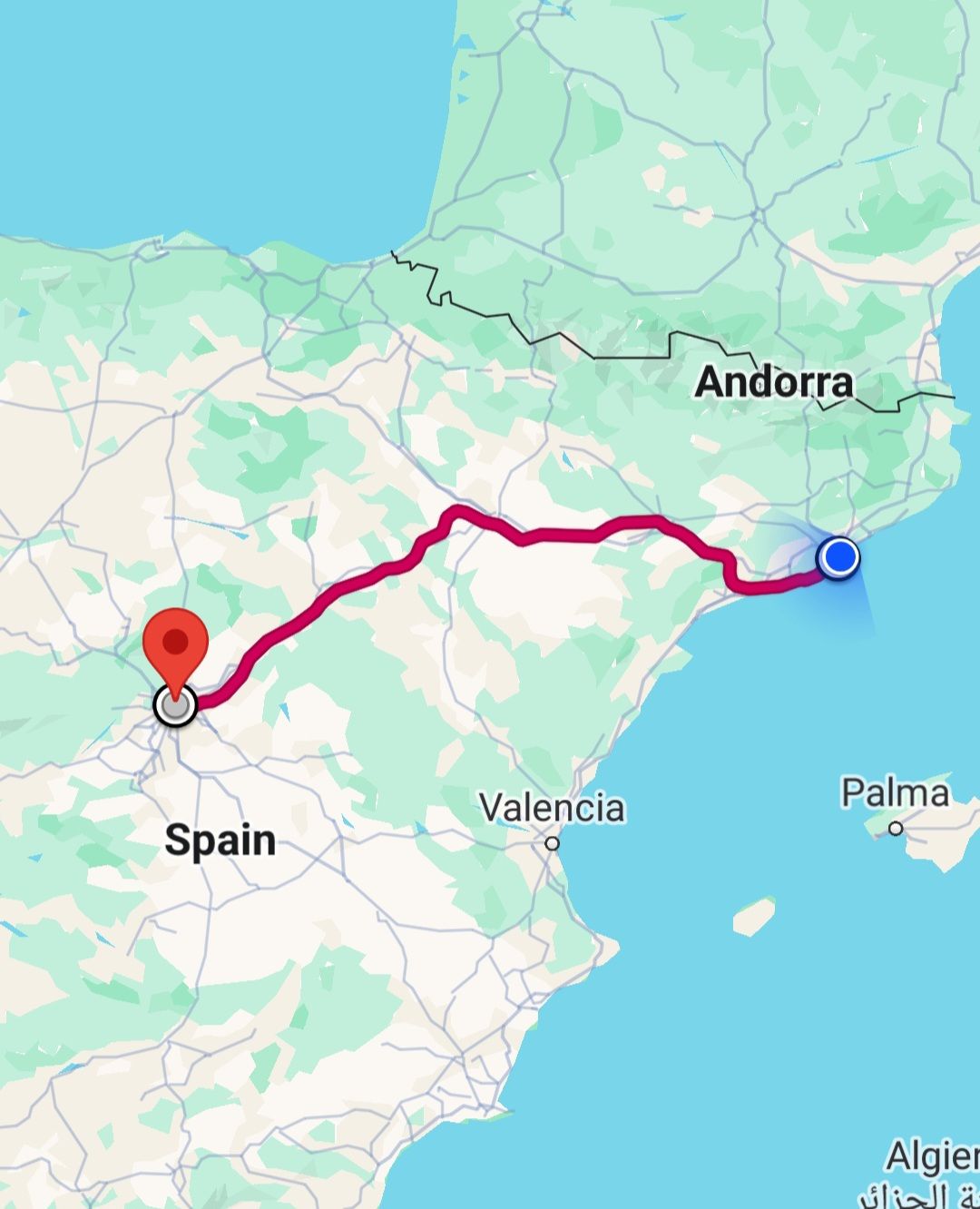
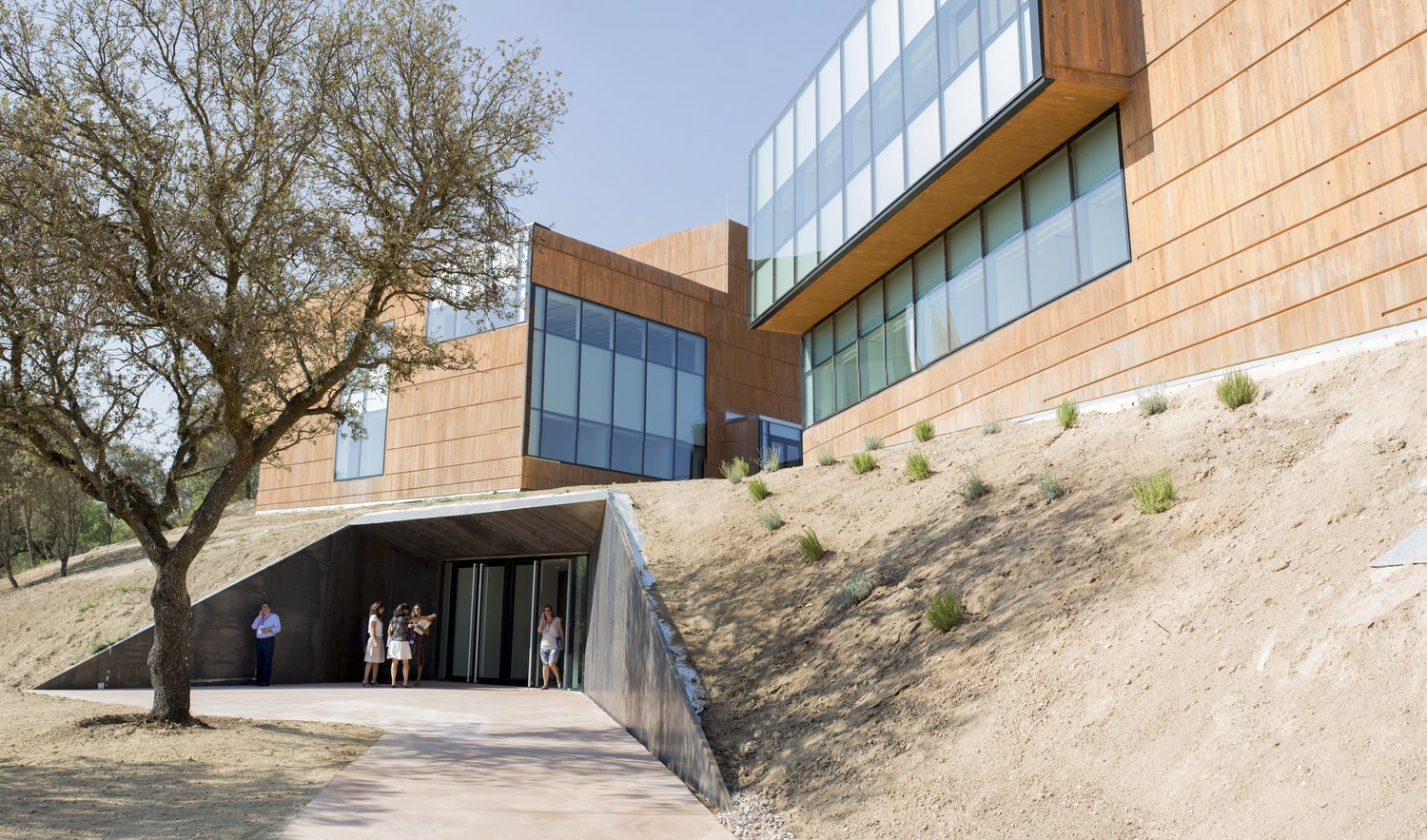
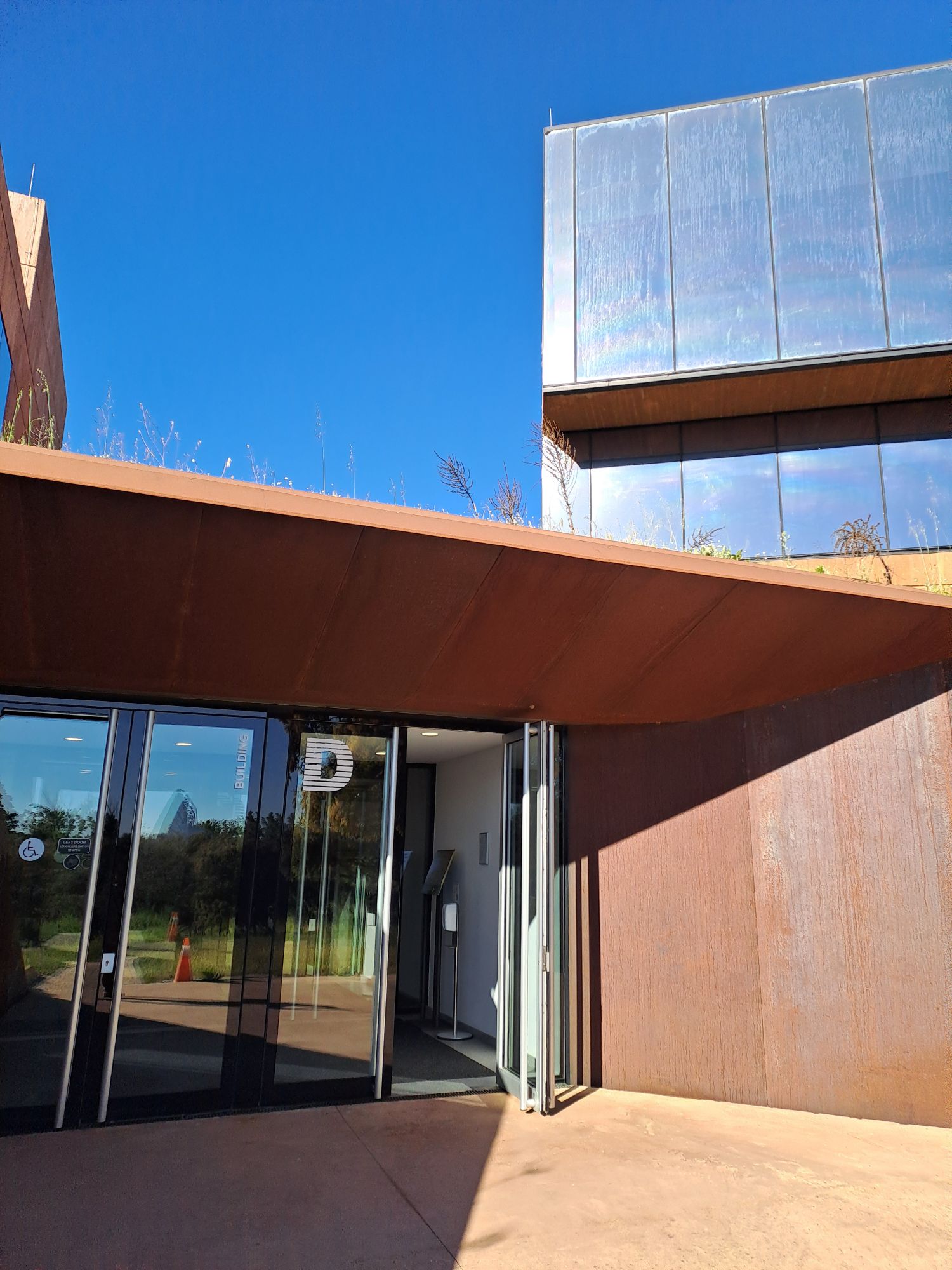
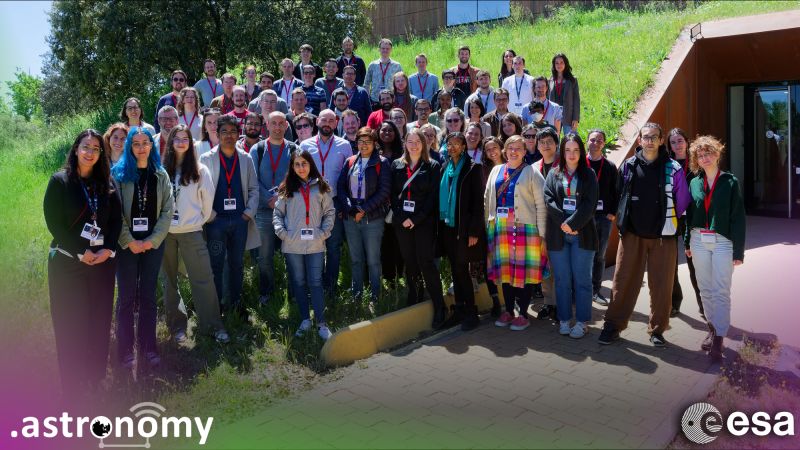
So here I am at the European Space Astronomy Centre (ESAC) just outside Madrid for a conference called .Astronomy 13. It is (obviously) the thirteenth such conference but the first that I have attended. I’m giving a plenary talk in half-an-hour or so. I travelled from Barcelona by train yesterday evening, which was a comfortable and uneventful trip, the (approximately) 504 km from Barcelona to Madrid Atocha station taking about 2 hours and 30 minutes that cost about 30 euros. I stayed overnight in Madrid and took a shuttle bus from to ESAC. The only glitch in my travels so far was that I got on the Metro Line 6 (the equivalent of the Circle Line), but chose the wrong platform and went the long way round. I still got there in time to get the shuttle.

Incidentally, ESAC hosts the Euclid Science Operations Centre (SOC) which plays a central role in the processing of data from Euclid and is also responsible for the development and operations of the Euclid Archive from which data will be distributed to the global astronomical community.

UPDATE: Back in Barcelona. The return by train was just as smooth an uneventful as the outbound journey, and in fact arrived back about five minutes ahead of schedule. Thanks to the organizers for inviting me – I’m sorry I couldn’t stay for longer as I like the idea of the .Astronomy meetings. Perhaps we should have one in Ireland sometime?

Enjoy the Eclipse, but watch out for the cosmologists and druids!

Posted in Biographical, The Universe and Stuff with tags , , , , , on April 7, 2024 by telescoper

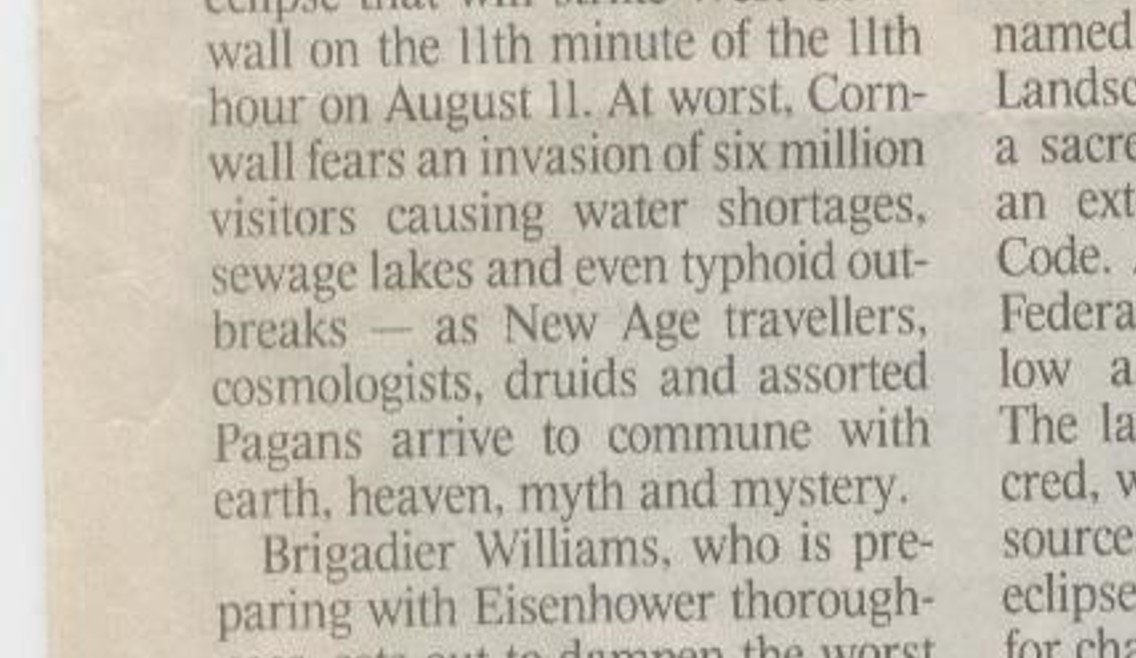
Ahead of tomorrow’s total eclipse of the Sun visible from a large part of the USA, I can’t resist sharing this excerpt from The Times warning about the consequences of a mass influx of people to Cornwall for the total eclipse of the Sun that was visible on August 11th 1999, almost 25 years ago. No doubt there are similar things going around about tomorrow’s eclipse:

I did write a letter to the Times complaining that, as a cosmologist, I felt this was very insulting… to druids. They didn’t publish it.

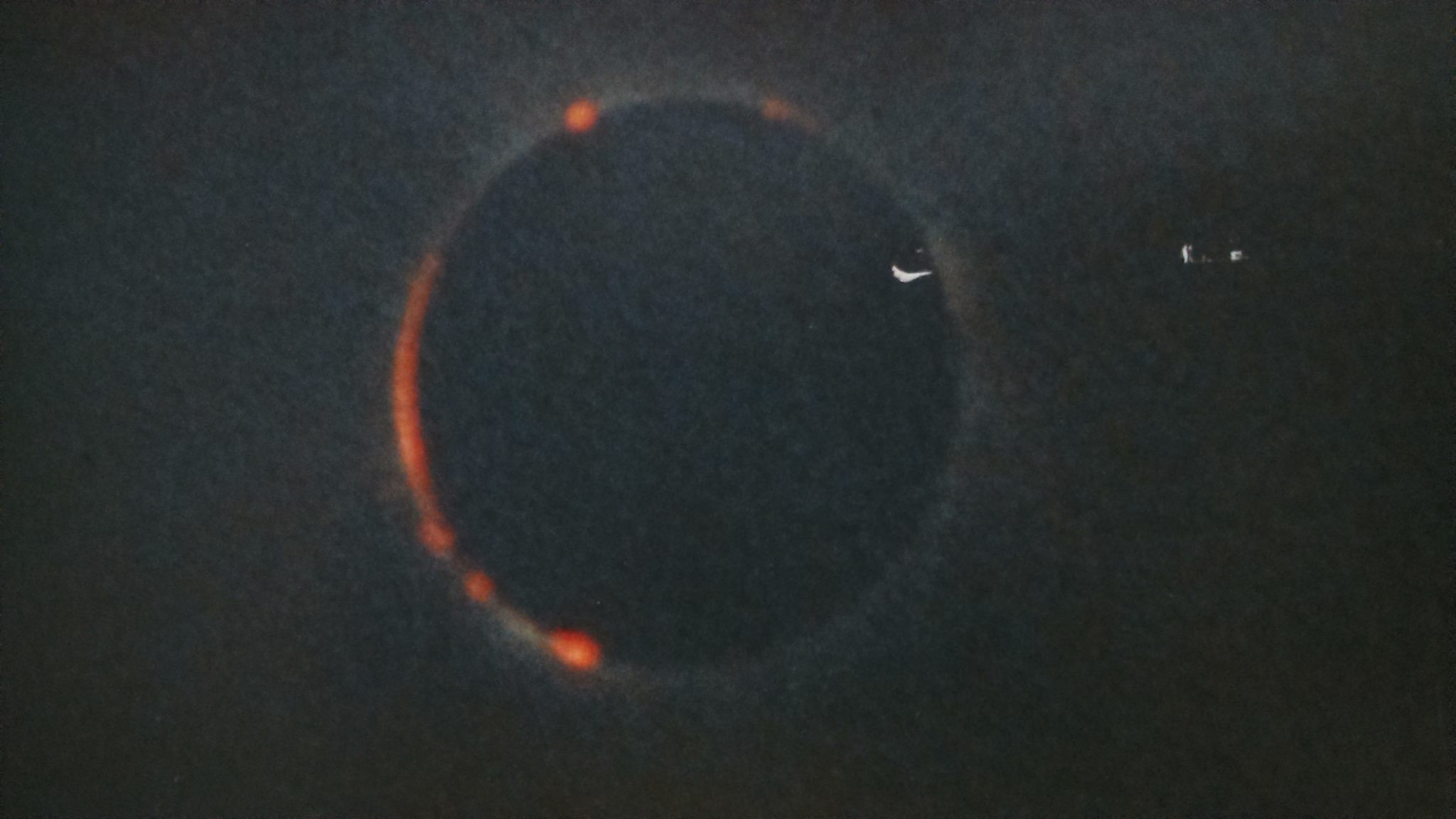
Anyway, I did get to see the total solar eclipse of 1999, not from Cornwall (where it was overcast and rainy) but from the island of Alderney (one of the Channel Islands). There was quite a lot of cloud cover in the morning of the big event so I was expecting to be disappointed. Indeed, the very start of the eclipse was hidden by cloud and there were groans from the large crowd assembled to watch it. A few seconds later, however, the clouds parted and we got a wonderful view. I remember very well that it seemed to get much colder during totality and an eery wind started to blow. Another thing is that all the birds thought it was night already and started to roost, although it was only around 11am.

You might think astronomers would be a bit indifferent to eclipses because they are well understood and totally predictable. But to experience an eclipse in person has a very powerful effect (or did on me anyway). We may be scientists but we don’t respond entirely rationally to everything. Nor should we.

Here’s a (not very good) scan of a (slightly damaged) picture from that eclipse:

Anyway, tomorrow (i.e. 8th April 2024) the total solar eclipse crosses North America with parts of 15 states able to view it: the eclipse will first appear along Mexico’s Pacific Coast at around 11:07 a.m. PDT, then travel across a swath of the U.S., from Texas to Maine, and into Canada. About 31.6 million people live in the path of totality. The path will range between 108 and 122 miles wide. An additional 150 million people live within 200 miles of the path of totality.

Do make the effort to see it if you can. It’s a remarkable experience that will live long in your memory. But watch out for the cosmologists and druids!

Cosmology Talks: Cosmological Constraints from BAO

Posted in The Universe and Stuff, YouTube with tags , , , , , , , , , on April 5, 2024 by telescoper

Here’s another video in the Cosmology Talks series curated by Shaun Hotchkiss. This one very timely after yesterday’s announcement. Here is the description on the YouTube page:

The Dark Energy Spectroscopic Instrument (DESI) has produced cosmological constraints! And it is living up to its name. Two researchers from DESI, Seshadri Nadathur and Andreu Font-Ribera, tell us about DESI’s measurements of the Baryon Acoustic Oscillations (BAO) released today. These results use one full year of DESI data and are the first cosmological constraints from the telescope that have been released. Mostly, it is what you might expect: tighter constraints. However, in the realm of the equation of state of dark energy, they find, even with BAO alone, that there is a hint of evidence for evolving dark energy. When they combine their data with CMB and Supernovae, who both also find small hints of evolving dark energy on their own, the evidence for dark energy not being a cosmological constant jumps as high as 3.9σ with one combination of the datasets. It seems there still is “concordance cosmology”, it’s just not ΛCDM for these datasets. The fact that all three probes are tentatively favouring this is intriguing, as it makes it unlikely to be due to systematic errors in one measurement pipeline.

My own take is that the results are very interesting but I think we need to know a lot more about possible systematics before jumping to conclusions about time-varying dark energy. Am I getting conservative in my old age? These results from DESI do of course further underline the motivation for Euclid (another Stage IV survey), which may have an even better capability to identify departures from the standard model.

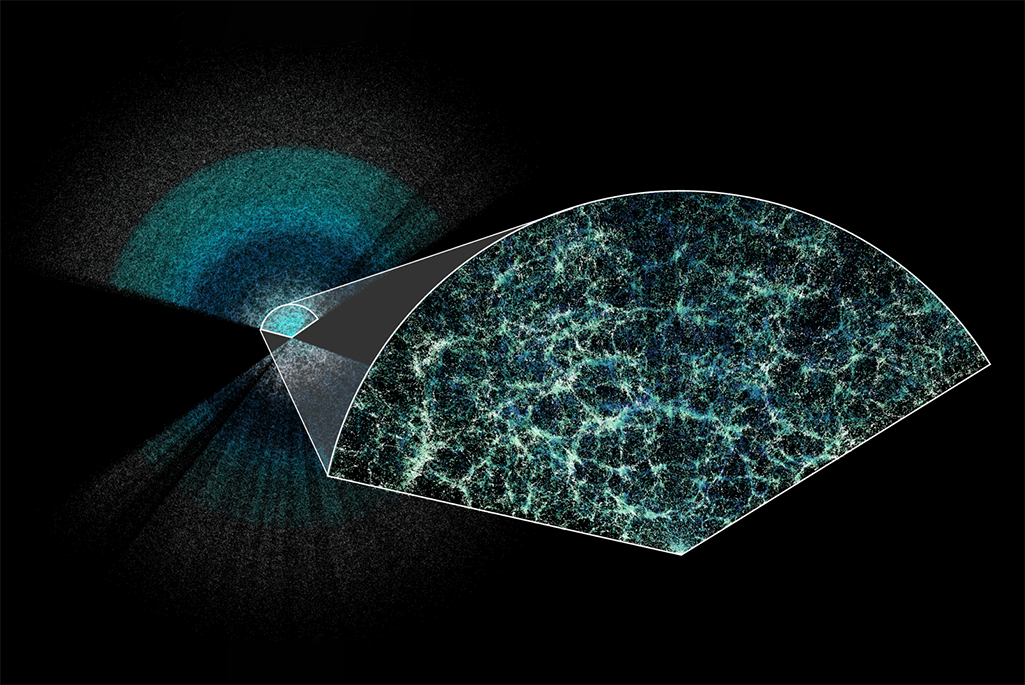
P.S. Here’s a nice graphic showing the cosmic web showing revealed by the DESI survey:

Don’t call me FRAS

Posted in Biographical, Open Access with tags , , , , on March 22, 2024 by telescoper

Some time ago I mentioned on this blog that I was resigning my Fellowship of the Institute of Physics as a consequence of the IOP’s blatant dishonesty over its publication policy. In a subsequent post giving further details of my fundamental disagreements with IOP Publishing’s profiteering, I stated that

I will decide in the next few days whether or not to resign also from the Royal Astronomical Society for the same reason.

After giving the matter a lot of thought, I have indeed now decided to resign my Fellowship of the Royal Astronomical Society, of which I have been a Fellow since 1990. The main reason for this decision is that I feel it would be inconsistent to remain FRAS after resigning as FInstP when I have the same problem with both institutions, i.e. the way they fund themselves through exploitative publishing practices.

Here is the email I sent to the Royal Astronomical Society earlier today.

Dear Membership Officer,

After much deliberation about the new policy of the Royal Astronomical Society to charge exorbitant fees for publishing in its journals (especially Monthly Notices of the Royal Astronomical Society), I have decided that I cannot in good conscience remain a member of a society that funds itself this way. I therefore resign my Fellowship of the Royal Astronomical Society with immediate effect. Kindly remove me from your membership list. I have cancelled the Direct Debit relating to my subscription.

Regards,

Peter Coles

Other, subsidiary, reasons for resignation include the expense, and the fact that Astronomy & Geophysics, the house magazine of the RAS, one of the few direct benefits of membership, even if it doesn’t have a crossword, only ever arrives in Ireland 6-8 weeks late (if it arrives at all). In any case, since I now live in Ireland, it is much more appropriate for me to participate in the activities of the Astronomical Society of Ireland than the Royal Astronomical Society, which is a UK institution.

As I am no longer a Fellow of the Royal Astronomical Society, I am no longer eligible to remain a member of the RAS Dining Club, of which I have been a member for 15 years, so I have resigned from that too. It has been in any case difficult and expensive for me to attend the dinners since I moved to Ireland. No more dinners at the Athenaeum for me!

The Euclid Survey(s)

Posted in Euclid, The Universe and Stuff with tags , , , , , , , , , on February 27, 2024 by telescoper

Since it’s been a couple of weeks since Euclid commenced its routine survey operations, I thought I would share this little video from the European Space Agency that shows how the surveying will proceed over the next six years with explanatory text adapted from here:

This animation shows the location of the fields on the sky that will be covered by Euclid’s wide (blue) and deep (yellow) surveys. The sky is shown in the Galactic coordinate system, with the bright horizontal band corresponding to the plane of our Milky Way.

The wide survey will cover more than one third of the sky as shown in blue. Other regions are avoided because they are dominated by Milky Way stars and interstellar matter, or by diffuse dust in the Solar System – the so-called zodiacal light. The wide survey is complemented by a deep survey, taking about 10% of the total observing time and repeatedly observing just three patches of the sky called the Euclid Deep Fields, highlighted in yellow.

The Euclid Deep Field North – towards the top left – has an area of 20 square degrees and is located very close to the Northern Ecliptic Pole. The proximity to the ecliptic pole ensures maximum coverage throughout the year; the exact position was chosen to obtain maximum overlap with one of the deep fields surveyed by NASA’s Spitzer Space Telescope.

The Euclid Deep Field Fornax – in the lower right of the image – spans 10 square degrees and is located in the southern constellation Fornax, the furnace. It encompasses the much smaller Chandra Deep Field South, a 0.11 square degree region of the sky that has been extensively surveyed in the past couple of decades with the Chandra and XMM-Newton X-ray observatories, as well as the Hubble Space Telescope and major ground-based telescopes.

The third and largest of the fields is the Euclid Deep Field South – between the Large Magellanic Cloud and the Euclid Deep Field Fornax. It covers 20 square degrees in the southern constellation of Horologium, the pendulum clock. This field has not been covered to date by any deep sky survey and so has a huge potential for new, exciting discoveries. It has been planned to be observed from the ground by the Vera C. Rubin Observatory.

P.S. According to my latest calculations, I shall have retired by the time the Wide survey is completed.

PHANGS for the galaxies…

Posted in The Universe and Stuff with tags , , , , , , , on January 31, 2024 by telescoper

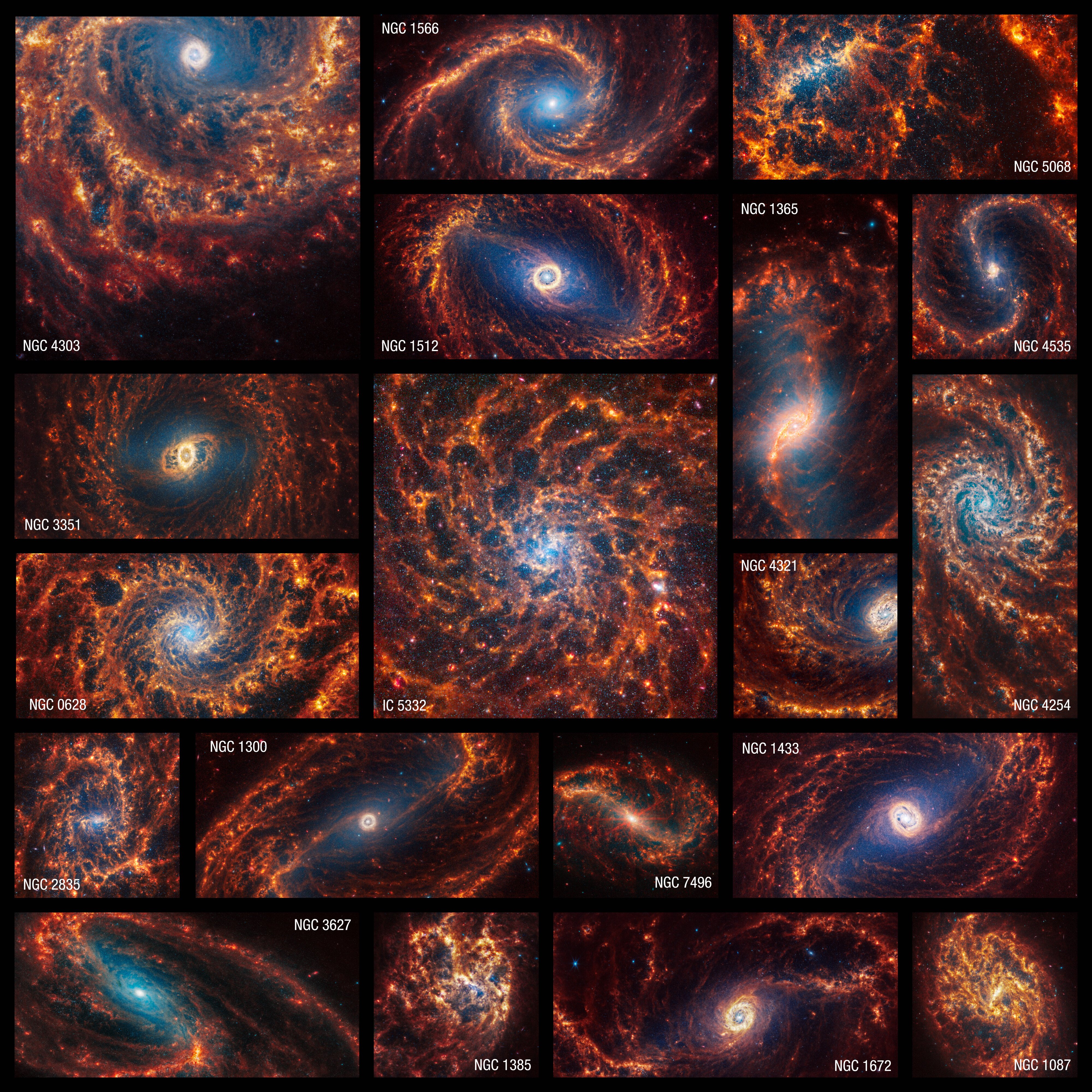
I couldn’t resist sharing this wonderful set of images from JWST courtesy of the PHANGS* team showing exquisite details of 19 face-on spiral galaxies as seen in the infra-red:

More information about the remarkable structures seen in these images, as well as higher resolution versions of the images themselves, can be found on the European Space Agency website here.

*For those of you not in the know, PHANGS stands for Particularly Horrible Acronym Not Generated Sensibly Physics at High Angular resolution in Nearby GalaxieS.

Celestial Echoes: The Night Sky in Irish Folklore

Posted in History, Irish Language, The Universe and Stuff with tags , , , , on August 29, 2023 by telescoper
The Milky Way over a shipwreck in Co Wexford, photographed by Adrian Hendroff, winner of this year’s Reach for the Skies photography competition.

I mentioned last week that I attended a public lecture by journalist Seán Mac an tSíthigh called Celestial Echoes: the Night Sky in Irish folklore. The talk was largely about some of the names given to celestial objects and the stories attached to those names. Much of the material was drawn from an extensive National Folklore Collection held at University College, Dublin. Unfortunately, however, the index to this collection is not very good at names for stars and constellations. In some cases it isn’t obvious what those names that are recorded actually refer to and in some cases the words themselves are obscure. The lecturer stressed that many of these words would have been known by the parents or grandparents of people in the audience, but have since been lost. There’s an article here that makes a similar point in a wider context. One prominent source of folklore, for example, is the traditional style of mackerel fishing, done at night so that the phosphorescence produced by the fish could be seen, which basically no longer exists so the folk names of stars and constellations used by the fishermen for navigation have been forgotten. Some other names have obviously been influenced by the Greco-Roman constellation names, etc.

I didn’t take many notes during this very enjoyable talk, but I did jot down a few words and phrases that I thought I’d pass on here. Given that my knowledge of modern Irish is very limited and many of the words used are dialect or archaic words that you won’t find in dictionaries, I’ll restrict myself to just a few of the things that caught my ear. Many of these are very similar in Scots Gaelic. Apologies in advance for misspellings, mistranslations or other forms of incompetence!

Before we start let me just mention that the Irish word for “star” is réalta (plural réaltai), which can also mean “a light”. There is also a diminutive, réiltín. Astronomy is réalteolaíocht and astrophysics is réaltfhisic. I’ve always liked the way astrophysics looks like “real physics”!

  • The Milky Way is usually Bealach na Bó Finne (the Way of the White/Fair Cow). The legend that goes with this name is of a cow that produces an endless supply of milk. The Milky Way can also have the more literal name Claí Mór na Réaltaí (the Great Wall of Stars); in Irish mór means “big or great” and must be cognate with the Welsh mawr. Another folk name is An Láir Bhán (the White Mare).
  • Orion is An Bodach which can mean a man, specifically an old man, or a ghost.
  • Betelgeuse is An Spor Dearg (the Red Spur); Rigel is An Spor Liath (the Grey Spur).
  • The Orion Nebula is An Sparán (the purse, pouch); cf. Scots sporran.
  • In modern Irish, the Pleaides is An Tréidín (the Little Flock or Herd) but there are a variety of other terms including Buaile an Bhodaigh (the ghost’s milking place) and Na Cearrbhaigh (the Gamblers, because they look like people playing cards..).
  • The constellation of Leo is An Corrán (the Hook, Sickle).
  • Polaris is An Réalta Thuaidh (the North Star) but also Réalta Eolais (guiding star)
  • Sirius is An Réalta Mhadra (the Dog Star).
  • Ursa Minor is An Dragbhoth (the Fiery House).
  • Ursa Major is An Mathghamhain Mór (the Great Bear); a more modern alternative word for “bear” is mathúin. The Plough is An Camchéachta
  • The Aurora Borealis can be Soilse na Speire Thuaidh (lights of the Northern sky) or na Gealáin Thuaidh or na Saighneáin.
  • A Comet is réalta (an) eireabaill, (star with a tail) réalta mhongach (long-haired or maned star) or réalta (na) scuaibe (star with a brush). There is an (extremely exaggerated) account of a comet in the famous book (and mainstay of the Irish language leaving certificate) by Peig Sayers; given the timing it may have been Halley’s Comet near its 1910 perihelion.

That’s enough for now. I have a few more, but they’ll have to wait…

Astronomical Observatories on Indigenous Land

Posted in Euclid, Politics, The Universe and Stuff with tags , , , , , , , , on July 15, 2023 by telescoper

I’ve been meaning to post about for some time about the use of telescopes all around the world that reside in observatories on lands previously and/or presently occupied by indigenous peoples. The creation of these astronomical facilities has been accompanied by neglect (and sometimes violent displacement) of tribal communities native to the land on which they now stand. Though we exploit native lands for science, the astronomical community makes little reference to the people who are directly impacted by the advancement of astronomy through colonialism of this sort.

I know I’m not alone in thinking that, at the very least as a community we should do much more to acknowledge our use of astronomical facilities built on land that in many cases was basically “stolen” by colonial settlers. There was a talk about this issue at the recent Euclid Consortium Meeting in Copenhagen, and it came up at the National Astronomy Meeting in Cardiff in the context of the broad issue of the decolonization of astronomy.

Anyway, just for a start I have included here a small gallery of images of modern astronomical observatories of various kinds, with captions giving the names not of the observatory, but of the indigenous peoples upon whose land it is built:

There are many more than these, but hopefully you get the point. The question is: what to do about it?