Archive for astronomy

Another Edgeworth Connection

Posted in History, The Universe and Stuff with tags , , , , , , , , , on November 3, 2024 by telescoper

A week or so ago I posted an item about the Edgeworth family that included a reference to Kenneth Edgeworth, an amateur astronomer of some note who first posited the existence of what is now known as the Kuiper belt. Here’s another interesting connection. Kenneth Edgeworth was born in 1880 in Daramona House in Street in County Westmeath. The owner of this house was Edgeworth’s uncle, another astronomer called William Edward Wilson who built an observatory next to Daramona House.

Here are pictures of (left) house and (right) the observatory, neither of look in particularly good condition!

After independence, many of the large houses owned by the rich Anglo-Irish families who had run Ireland until then fell into disrepair or were destroyed.

Anyway, on top of the two-storey observatory building there used to be a dome that housed a 24″ Grubb reflecting telescope. Here’s an old picture showing what it looked like in better times, around 1900:

The dome is no longer there, and neither is the telescope. The latter was donated to the University of London in 1925 eventually housed in the Observatory at Mill Hill, now run by University College London. Here is an excerpt from the history of the University of London Observatory:

W.E. Wilson established an observatory at Daramona, Street, County Westmeath, in 1871 and equipped it with a 12-inch equatorial reflector by Grubb. Wilson (born in 1851, elected FRS in 1896, an original member of the BAA, awarded an honorary DSc by the University of Dublin in 1901, High Sheriff of Co. Westmeath in 1894), observed the transit of Venus in 1882 and solar eclipses at Oran in 1870 and Spain in 1900, published many papers in Proc. R. Soc, Proc. R. Dublin Soc., Proc. R. Irish Acad., etc., and died in 1908) enlarged his observatory in 1881 and installed a 24-inch reflector by Grubb on the mounting previously used for the 12-inch reflector. Ten years later a new mounting was constructed. It is this mounting which was moved to Mill Hill in 1928. Dr. Wilson used his telescope to make some of the best photographs of his time of star clusters and nebulae, and he worked extensively on problems of solar physics and the solar constant. The telescope may be used in Newtonian and Cassegrain forms; the focal length of the mirror is 10 feet and the equivalent focal length at the Cassegrain focus is approximately 42 feet. The telescope was moved in 1928 from Ireland to University College, where minor modifications were made to the focussing arrangements and plate-holder, and an electric motor was added to rewind the driving clock automatically.

The Wilson telescope was retired from active service in 1974 and moved to the World Museum in Liverpool where, as far as I know, it remains on display to this day.

Pastamarkers: astronomy meets gastronomy

Posted in The Universe and Stuff with tags , , , , on October 24, 2024 by telescoper

It’s time to share a paper on arXiv at the interface between astronomy and gastronomy. Here is the abstract:

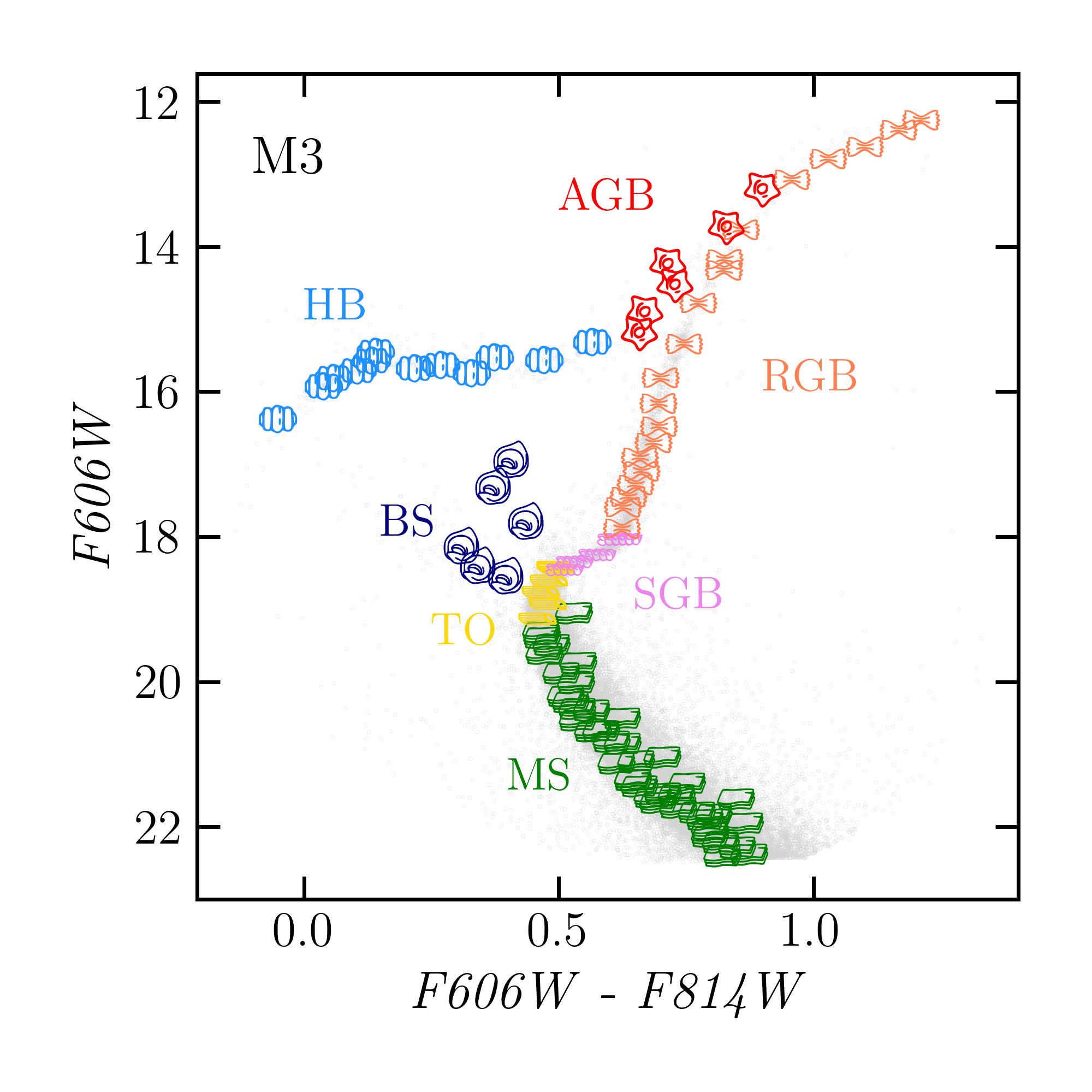
We aim at facilitating the visualization of astrophysical data for several tasks, such as uncovering patterns, presenting results to the community, and facilitating the understanding of complex physical relationships to the public. We present pastamarkers, a customized Python package fully compatible with matplotlib, that contains unique pasta-shaped markers meant to enhance the visualization of astrophysical data. We prove that using different pasta types as markers can improve the clarity of astrophysical plots by reproducing some of the most famous plots in the literature.

arXiv:2403.20314

Here’s an example of a colour-magnitude diagram plotted with pasta markers, with the main sequence as Lasagne, etc.

You can download the pastamarkers package here.

R.I.P. Peter Thomas (1961-2024)

Posted in R.I.P. with tags , , , , , on July 25, 2024 by telescoper

Once again I have to use this blog to pass on some very sad news. Professor Peter Thomas of Sussex University passed away last weekend at the age of 62.

Peter Thomas (left) joined the University of Sussex as a lecturer in the Astronomy Centre in 1989 and remained there for his entire career. I know from my own time as Head of School that he was an excellent colleague. who made huge contributions to the University and indeed to his research discipline of cosmology.

Peter studied Mathematics at Cambridge University, graduating in 1983 and then did Part III (also known as the Certificate of Advanced Study) which he obtained in 1984. He stayed in Cambridge to do a PhD in the Institute of Astronomy under the supervision of Andy Fabian on Cooling Flows and Galaxy Formation, which he completed in 1987. He then spent a couple of years in Toronto as a Postdoctoral Fellow at the Canadian Institute for Theoretical Astrophysics (CITA) before taking up his lectureship at Sussex in 1989. His main research interests were in in the areas of galaxy formation, including numerical and semi-analytic models, and computer simulations of the formation of clusters of galaxies.  He was a widely known and very highly respected researcher in the field of theoretical cosmology and extragalactic astrophysics.

I was a PDRA in the Astronomy Centre at Sussex when Peter joined in 1989; he was Professor in the Department of Physics & Astronomy when I returned there as Head of School of Mathematical and Physical Sciences in 2013, a position he himself subsequently held. He was a much-valued member of staff who made huge contributions to the Astronomy Centre, the Department of Physics & Astronomy, the School of Mathematical and Physical Sciences, and the University of Sussex as a whole. I also remember him as a colleague on various panels for PPARC and then STFC on which he served diligently.

Having known Peter for 35 years, and being of similar age, it was a shock to hear that he passed away. I understand that he had been suffering from cancer for over a year. I send my deepest condolences to his family, friends and colleagues. I understand that his funeral will be a private family affair, but there will be a more public occasion to celebrate his life at a later date.

Call for Editors at the Open Journal of Astrophysics

Posted in Open Access with tags , , , , , , , , , , , , , on July 7, 2024 by telescoper

Just over halfway into 2024 the number of papers submitted to the Open Journal of Astrophysics continues to rise, as demonstrated by this nice graphic which shows the submission stats for the last five years:

The increasing number of articles is of course very welcome indeed, but it is increasing the load on our Editorial Board and that includes me! We’re therefore looking for volunteers to join the team, in any area of astrophysics. As a reminder, here are the areas we cover, corresponding to the sections of astro-ph on the arXiv:

  1. astro-ph.GA – Astrophysics of Galaxies. Phenomena pertaining to galaxies or the Milky Way. Star clusters, HII regions and planetary nebulae, the interstellar medium, atomic and molecular clouds, dust. Stellar populations. Galactic structure, formation, dynamics. Galactic nuclei, bulges, disks, halo. Active Galactic Nuclei, supermassive black holes, quasars. Gravitational lens systems. The Milky Way and its contents
  2. astro-ph.CO – Cosmology and Nongalactic Astrophysics. Phenomenology of early universe, cosmic microwave background, cosmological parameters, primordial element abundances, extragalactic distance scale, large-scale structure of the universe. Groups, superclusters, voids, intergalactic medium. Particle astrophysics: dark energy, dark matter, baryogenesis, leptogenesis, inflationary models, reheating, monopoles, WIMPs, cosmic strings, primordial black holes, cosmological gravitational radiation
  3. astro-ph.EP – Earth and Planetary Astrophysics. Interplanetary medium, planetary physics, planetary astrobiology, extrasolar planets, comets, asteroids, meteorites. Structure and formation of the solar system
  4. astro-ph.HE – High Energy Astrophysical Phenomena. Cosmic ray production, acceleration, propagation, detection. Gamma ray astronomy and bursts, X-rays, charged particles, supernovae and other explosive phenomena, stellar remnants and accretion systems, jets, microquasars, neutron stars, pulsars, black holes
  5. astro-ph.IM – Instrumentation and Methods for Astrophysics. Detector and telescope design, experiment proposals. Laboratory Astrophysics. Methods for data analysis, statistical methods. Software, database design
  6. astro-ph.SR – Solar and Stellar Astrophysics. White dwarfs, brown dwarfs, cataclysmic variables. Star formation and protostellar systems, stellar astrobiology, binary and multiple systems of stars, stellar evolution and structure, coronas. Central stars of planetary nebulae. Helioseismology, solar neutrinos, production and detection of gravitational radiation from stellar systems.

We are looking for experienced scientists in any of these areas, and it would indeed be useful to have people who can cover a range of subjects (as some of our existing editors do), but there are two specific topics that have seen a big increase recently: (a) galaxy formation simulations (especially involving hydrodynamics) covered by astro-ph.CO; and (b) galactic dynamics, covered by astro-ph.GA. The latter increase is driven Gaia data, an immensely rich source for discovery science.

Since we don’t charge authors or readers we can not offer payment to Editors but it is nevertheless a way of providing a service to the community.

Please get in touch either through the Open Journal website here, or through a message Mastodon here, BlueSky here, or Facebook here. You could even send a message through this form:

← Back

Thank you for your response. ✨

R.I.P. Jasper Wall

Posted in R.I.P., The Universe and Stuff with tags , , , , on June 1, 2024 by telescoper

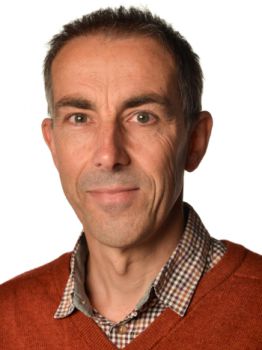
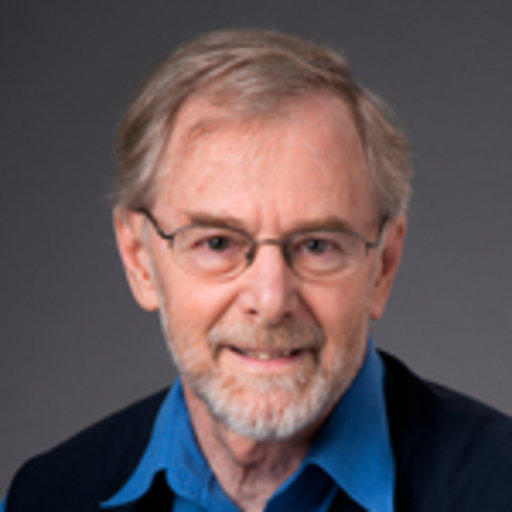
I have been asked to use the medium of this blog to pass on the sad news of the passing of Jasper Wall (left) who died on 28th March at White Rock, British Columbia, Canada.

Jasper Wall (who was Canadian by birth) began his career in Radio Astronomy in Toronto with Alan Yen. This included building a 320-MHz receiver, and carrying out absolute background measurements using a pyramidal horn. He subsequently chose Australia to continue his research, working on a receiver for Parkes Radio Telescope at CSIRO where he and John Bolton began a sky survey at hitherto unprecedented high frequency of 2.7 GHz. Wall’s survey discovered the extensive ‘flat-spectrum’ quasar population, the key to the relativistic beaming model of radio sources. His research at Parkes lasted over eight years and the statistical results of this work strongly favoured a “Big Bang” universe rather than the “Steady State” preferred by John Bolton, Fred Hoyle and Tommy Gold.

Wall was also part of the team which in 1969 brought the Apollo 11 moon landing via the Parkes Radio Telescope to an estimated 650 million TV viewers world wide. In 1974-1978 he was a member of Martin Ryle’s group at the MRAO Cambridge UK, continuing his research in active galaxy systems at both radio and optical wavelengths, plus submm and X-ray observations. He taught statistics to astronomy students at Cambridge, leading to his 2003 book with co-author Charles Jenkins, Practical Statistics for Astronomers.

Later on in his career, he became more involved in science administration. Joining the Royal Greenwich Observatory in 1979 as Head of Astrophysics and Astrometry Division, he continued research in optical and radio astronomy. In 1986 he became Director of the Isaac Newton Group of Telescopes on La Palma for four years, and then Director of the Royal Greenwich Observatory from 1995 until its closure in 1998. He was a Professor at Oxford University from 1998 to 2002, after which he retired, returned to Canada and took up an emeritus position at the University of British Columbia, where he continued to teach and supervise students.

Euclid Paper Day!

Posted in Barcelona, Euclid, Maynooth, The Universe and Stuff with tags , , , , , , , , on May 24, 2024 by telescoper

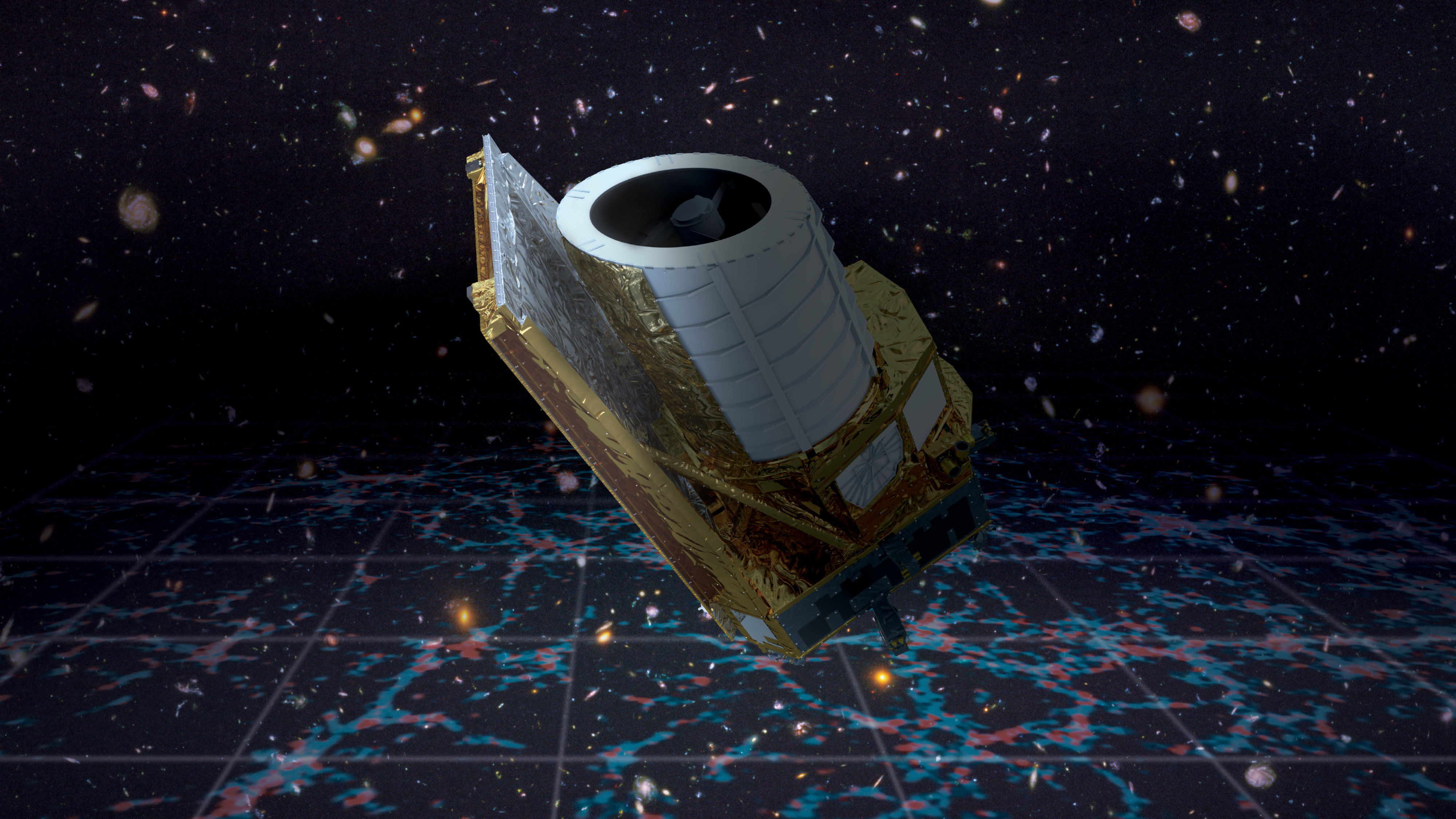
This morning’s arXiv update brought the expected deluge of preprints from Euclid. You can find details of all fifteen of the new articles here. Ten of them relate to the Early Release Observations of which five were announced yesterday and five last November. These are essentially byproducts of the testing and calibration phase of the Euclid mission rather than the main cosmological survey. ESA is making a series of short videos about these results which I will share on here from time to time.

Of more direct relevance to cosmologists such as myself are the following five reference papers:

The overview paper, led by Yannick Mellier (Euclid Consortium Lead), giving a general description of the mission capabilities and science goals, will be the main reference paper and just about every active member of the Euclid Consortium is on the author list (including myself). That’s over a thousand people, not quite at the level of the Large Hadron Collider but getting there. I do think we need to find a better way of giving credit to work in large collaborations than through authorship, but until someone comes up with a workable scheme, and people responsible for hiring researchers adopt it, we’re stuck with what we’ve got. At least I can say that I’ve read that paper (which is 94 pages long, including the author list)

Papers II-IV are technical articles relating to Euclid’s instruments and their calibration, which will also be important references for the survey part of the Euclid mission. Paper V is about the Flagship simulations and the mock catalogues produced therefrom; I discussed these a while ago here. It is led by Francisco Castander of Institut de Ciencies de l’Espai, who organized the meeting I attended recently here in Barcelona.

These papers now now be peer-reviewed and, assuming they are accepted, published in a special issue of Astronomy & Astrophysics (A&A).

Gearing up for Thursday’s Euclid News

Posted in Euclid, Maynooth, The Universe and Stuff with tags , , , , , , , on May 21, 2024 by telescoper

It’s a hectic time ahead of a Big Event on Thursday 23rd May, which will include the publication of five new Early Release Observations (EROs). I’m not at liberty to say what they are until after 12 noon (CEST) on Thursday except that they’re very pretty. You can watch the live stream here:

Including the five released on November 7th 2023 that will bring the total to ten. All the ERO pictures will be available on the ESA archive here.

Thursday will also see the release of ten scientific papers related to the EROs; they will appear on arXiv on Friday 24th May. These will be the first science results from the Euclid mission.

But that’s not all! Thursday will also see the publication of five papers from the Euclid Consortium (of which I am the sole member based in Ireland). These will be the principal technical reference papers aimed at the astronomical community about the Euclid mission, covering the instruments, cosmology and other astronomy science possibilities, as well as the cosmological simulations used to assist the analysis of the mission. One of these, the main overview paper for the mission, has over a thousand authors (one of whom is your truly).

Thursday’s announcements are likely to significant level of press interest. That’s not only due to the European Space Agency’s own social media feeds and the like, but also local activities in Ireland. For example, there’s this from Science Foundation Ireland using this, from the Little Book of Irish Research:

I have also written a piece for RTÉ Brainstorm, as a kind of update on the one I wrote last year on the occasion of the launch; this will go live after the embargo is lifted on Thursday.

.Astronomy

Posted in Barcelona, Euclid, The Universe and Stuff with tags , , , , , , , , on April 24, 2024 by telescoper

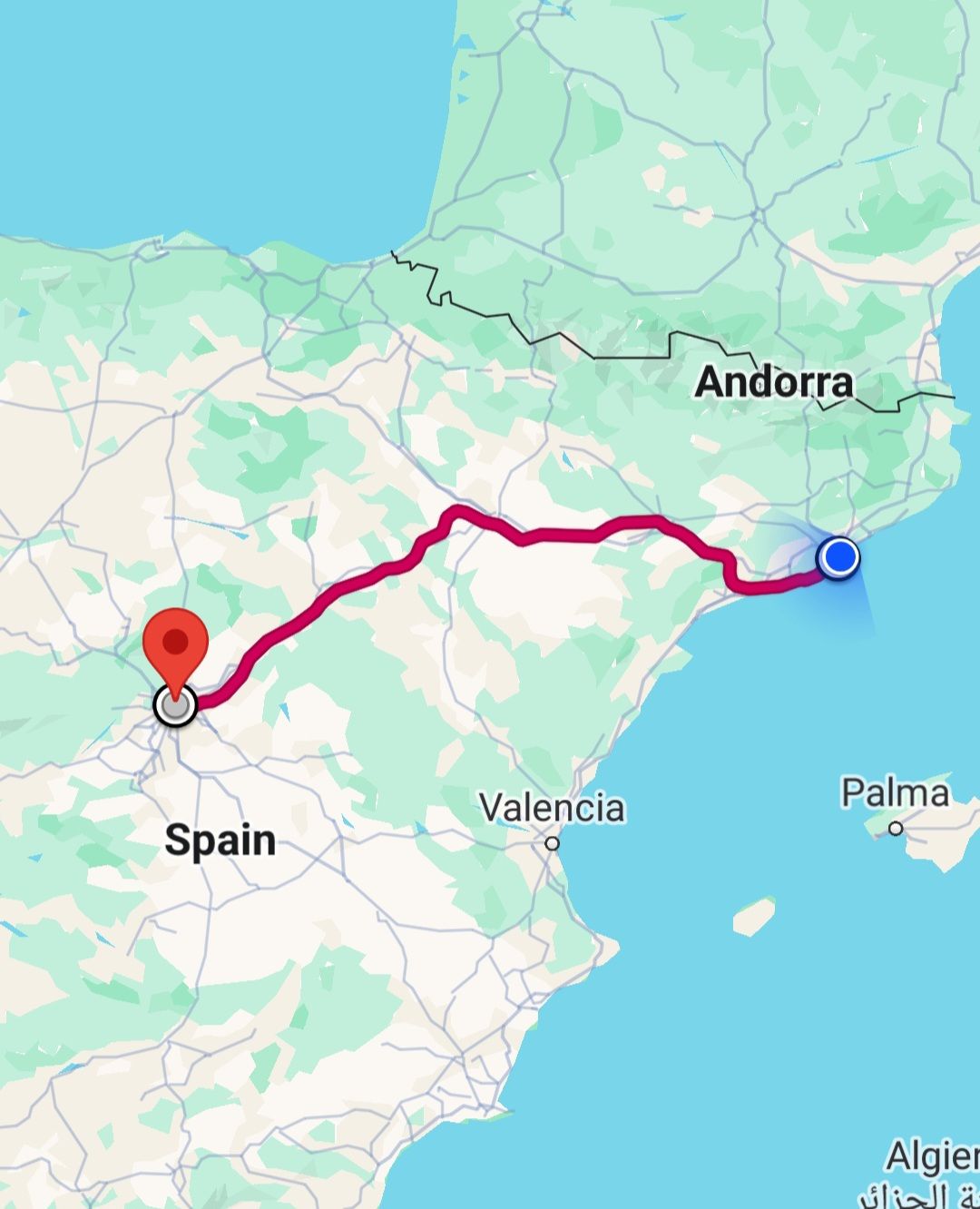
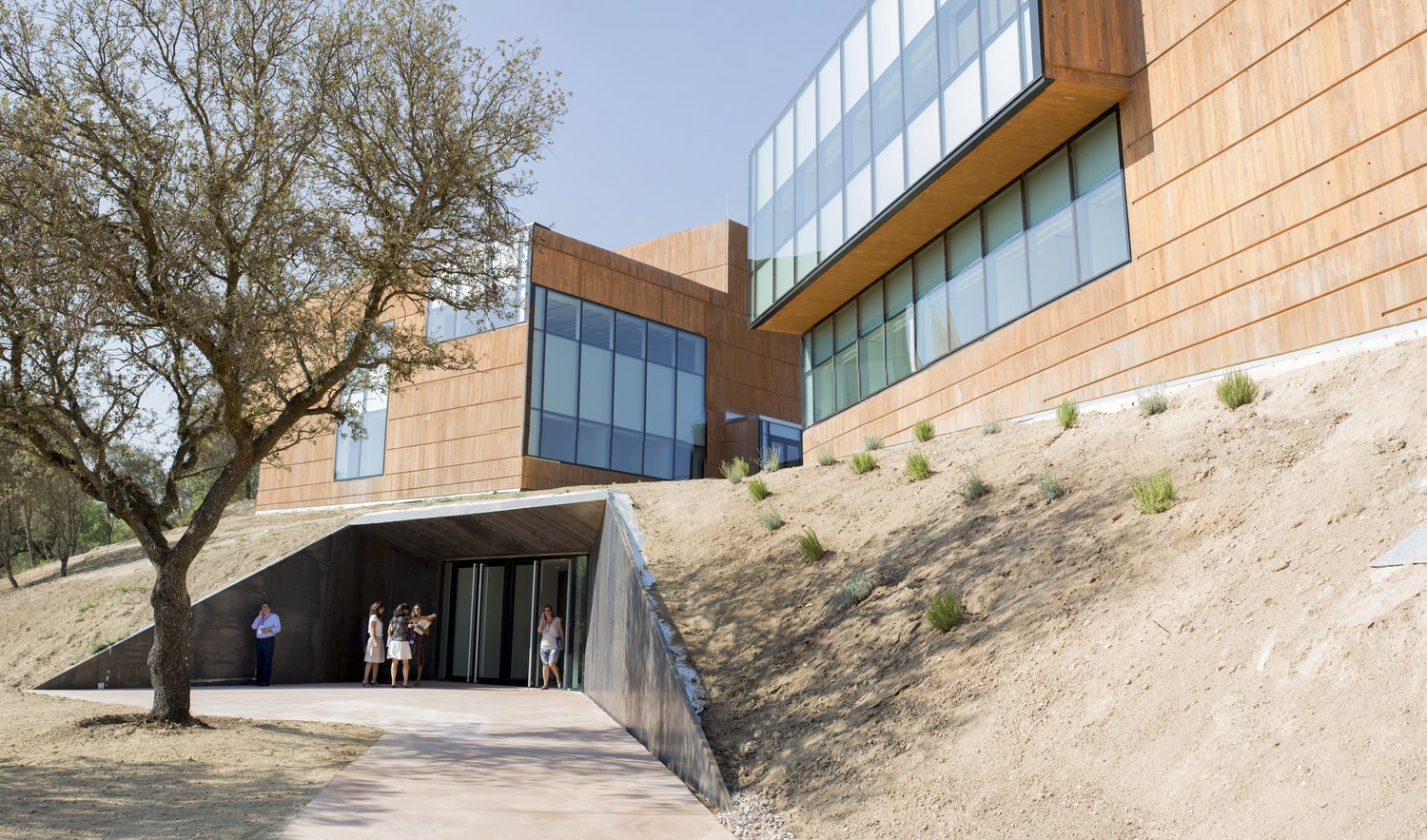
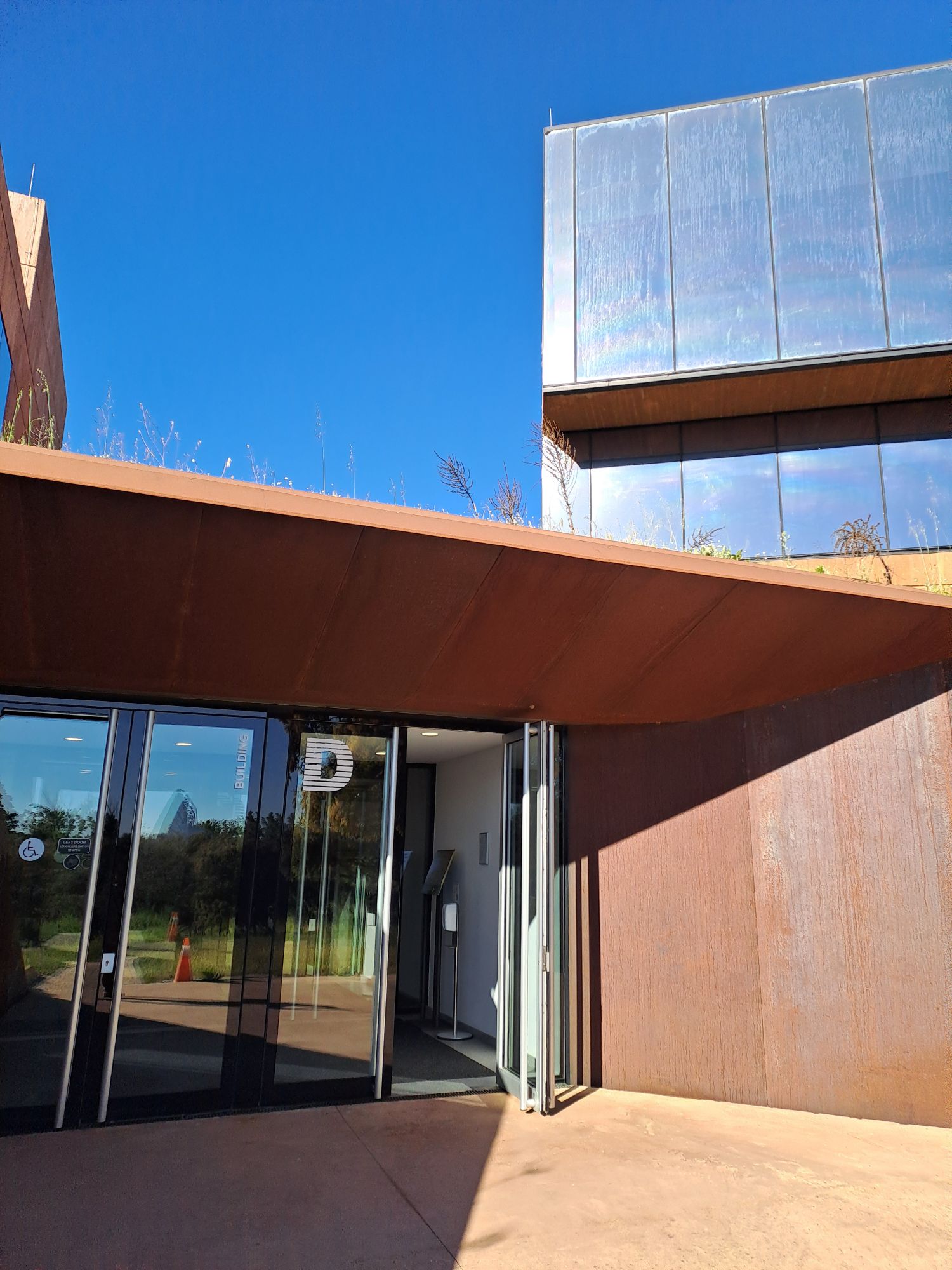
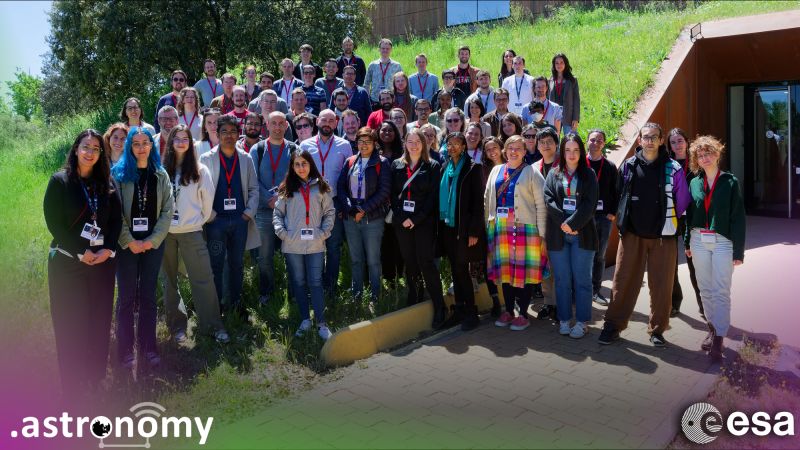
So here I am at the European Space Astronomy Centre (ESAC) just outside Madrid for a conference called .Astronomy 13. It is (obviously) the thirteenth such conference but the first that I have attended. I’m giving a plenary talk in half-an-hour or so. I travelled from Barcelona by train yesterday evening, which was a comfortable and uneventful trip, the (approximately) 504 km from Barcelona to Madrid Atocha station taking about 2 hours and 30 minutes that cost about 30 euros. I stayed overnight in Madrid and took a shuttle bus from to ESAC. The only glitch in my travels so far was that I got on the Metro Line 6 (the equivalent of the Circle Line), but chose the wrong platform and went the long way round. I still got there in time to get the shuttle.

Incidentally, ESAC hosts the Euclid Science Operations Centre (SOC) which plays a central role in the processing of data from Euclid and is also responsible for the development and operations of the Euclid Archive from which data will be distributed to the global astronomical community.

UPDATE: Back in Barcelona. The return by train was just as smooth an uneventful as the outbound journey, and in fact arrived back about five minutes ahead of schedule. Thanks to the organizers for inviting me – I’m sorry I couldn’t stay for longer as I like the idea of the .Astronomy meetings. Perhaps we should have one in Ireland sometime?

Enjoy the Eclipse, but watch out for the cosmologists and druids!

Posted in Biographical, The Universe and Stuff with tags , , , , , on April 7, 2024 by telescoper

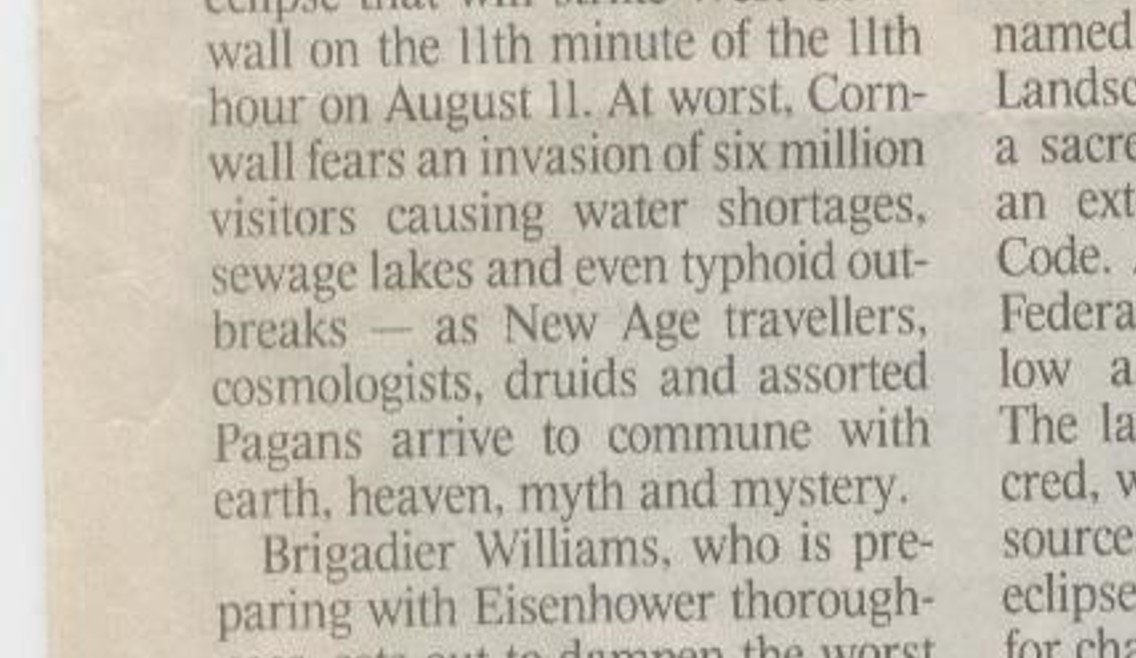
Ahead of tomorrow’s total eclipse of the Sun visible from a large part of the USA, I can’t resist sharing this excerpt from The Times warning about the consequences of a mass influx of people to Cornwall for the total eclipse of the Sun that was visible on August 11th 1999, almost 25 years ago. No doubt there are similar things going around about tomorrow’s eclipse:

I did write a letter to the Times complaining that, as a cosmologist, I felt this was very insulting… to druids. They didn’t publish it.

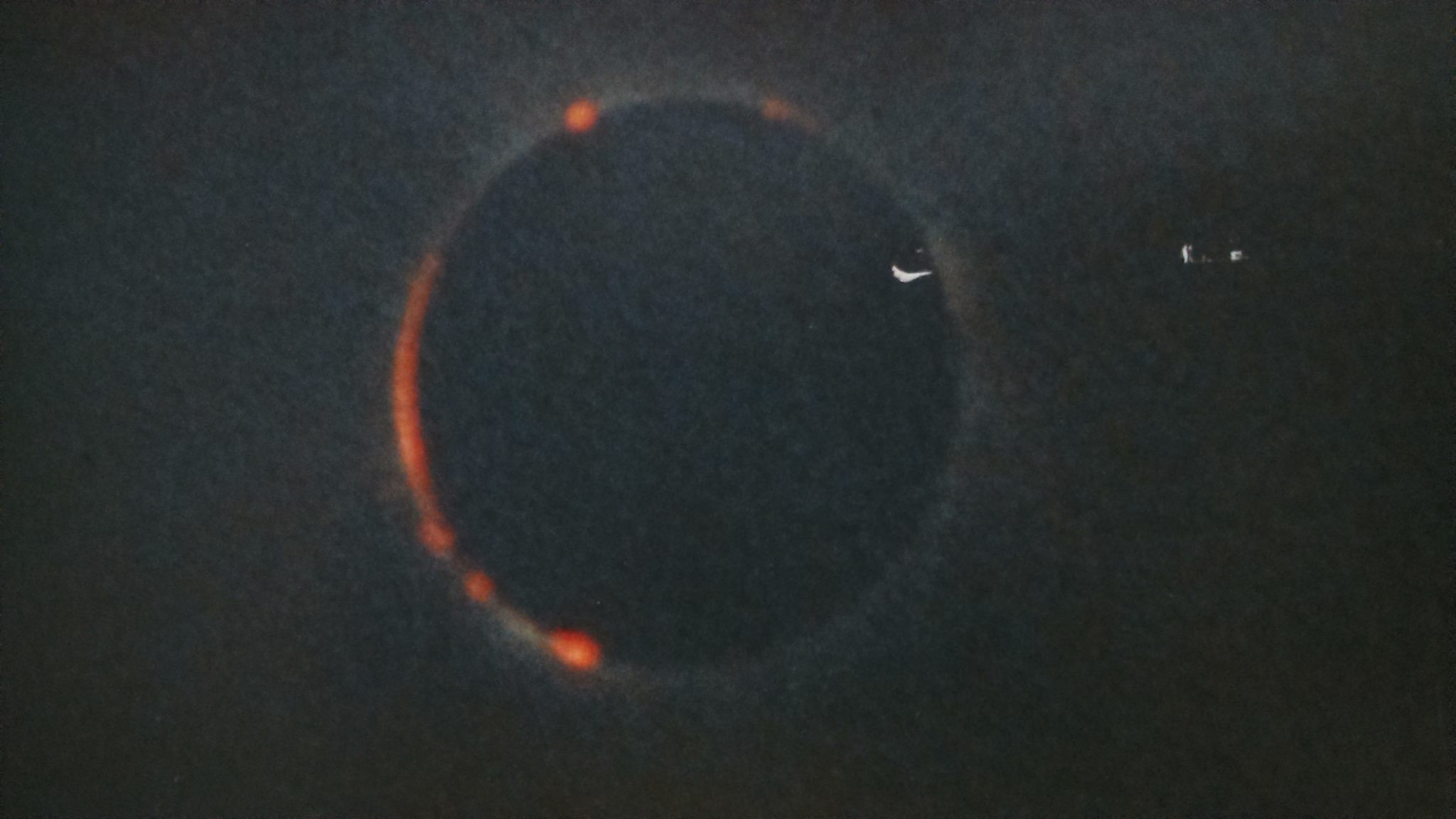
Anyway, I did get to see the total solar eclipse of 1999, not from Cornwall (where it was overcast and rainy) but from the island of Alderney (one of the Channel Islands). There was quite a lot of cloud cover in the morning of the big event so I was expecting to be disappointed. Indeed, the very start of the eclipse was hidden by cloud and there were groans from the large crowd assembled to watch it. A few seconds later, however, the clouds parted and we got a wonderful view. I remember very well that it seemed to get much colder during totality and an eery wind started to blow. Another thing is that all the birds thought it was night already and started to roost, although it was only around 11am.

You might think astronomers would be a bit indifferent to eclipses because they are well understood and totally predictable. But to experience an eclipse in person has a very powerful effect (or did on me anyway). We may be scientists but we don’t respond entirely rationally to everything. Nor should we.

Here’s a (not very good) scan of a (slightly damaged) picture from that eclipse:

Anyway, tomorrow (i.e. 8th April 2024) the total solar eclipse crosses North America with parts of 15 states able to view it: the eclipse will first appear along Mexico’s Pacific Coast at around 11:07 a.m. PDT, then travel across a swath of the U.S., from Texas to Maine, and into Canada. About 31.6 million people live in the path of totality. The path will range between 108 and 122 miles wide. An additional 150 million people live within 200 miles of the path of totality.

Do make the effort to see it if you can. It’s a remarkable experience that will live long in your memory. But watch out for the cosmologists and druids!

Cosmology Talks: Cosmological Constraints from BAO

Posted in The Universe and Stuff, YouTube with tags , , , , , , , , , on April 5, 2024 by telescoper

Here’s another video in the Cosmology Talks series curated by Shaun Hotchkiss. This one very timely after yesterday’s announcement. Here is the description on the YouTube page:

The Dark Energy Spectroscopic Instrument (DESI) has produced cosmological constraints! And it is living up to its name. Two researchers from DESI, Seshadri Nadathur and Andreu Font-Ribera, tell us about DESI’s measurements of the Baryon Acoustic Oscillations (BAO) released today. These results use one full year of DESI data and are the first cosmological constraints from the telescope that have been released. Mostly, it is what you might expect: tighter constraints. However, in the realm of the equation of state of dark energy, they find, even with BAO alone, that there is a hint of evidence for evolving dark energy. When they combine their data with CMB and Supernovae, who both also find small hints of evolving dark energy on their own, the evidence for dark energy not being a cosmological constant jumps as high as 3.9σ with one combination of the datasets. It seems there still is “concordance cosmology”, it’s just not ΛCDM for these datasets. The fact that all three probes are tentatively favouring this is intriguing, as it makes it unlikely to be due to systematic errors in one measurement pipeline.

My own take is that the results are very interesting but I think we need to know a lot more about possible systematics before jumping to conclusions about time-varying dark energy. Am I getting conservative in my old age? These results from DESI do of course further underline the motivation for Euclid (another Stage IV survey), which may have an even better capability to identify departures from the standard model.

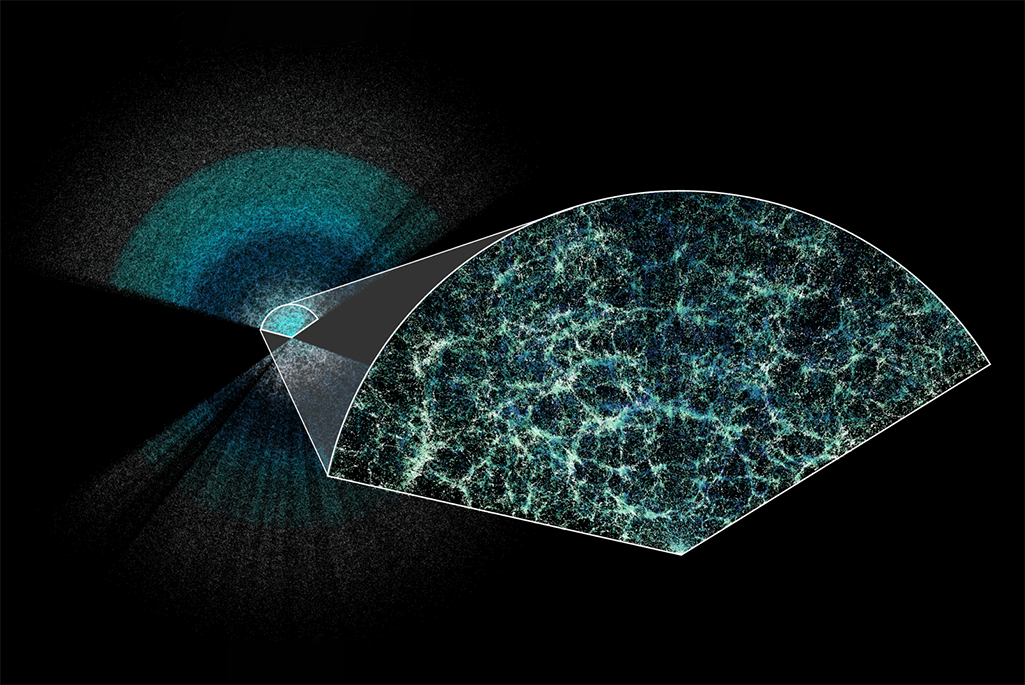
P.S. Here’s a nice graphic showing the cosmic web showing revealed by the DESI survey: