Archive for Cosmology

The Shaw Prize for Astronomy 2025

Posted in The Universe and Stuff with tags , , , , on June 1, 2025 by telescoper
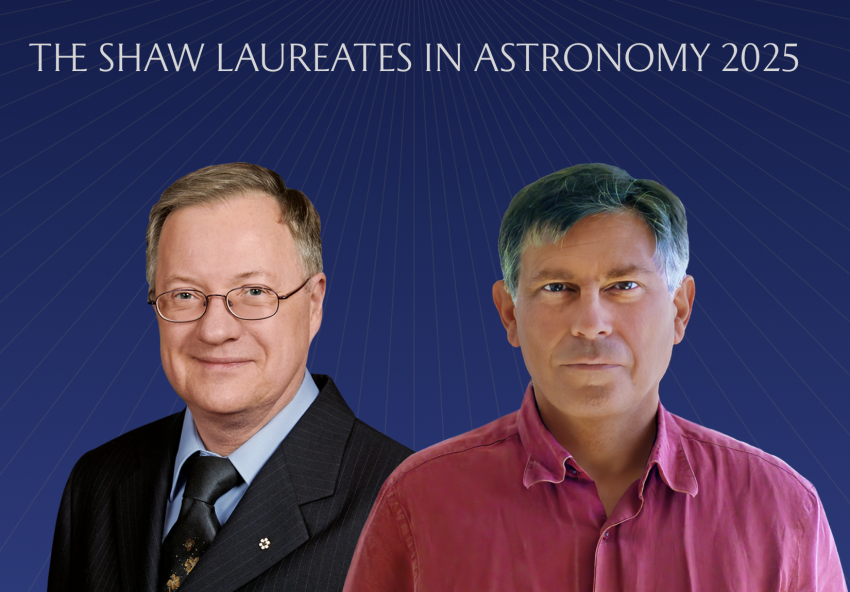
Dick Bond (left) and George Efstathiou (right)

I’m a few days late on this, as the announcement on 27th May came at a very busy time, but it’s a pleasure to pass on the news that the 2025 Shaw Prize for Astronomy has been awarded to Dick Bond and George Efstathiou. Congratulations to both on a very well deserved award!

The full citation can be found here, but the first paragraph reads:

The Shaw Prize in Astronomy 2025 is awarded in equal shares to John Richard Bond, Professor of the Canadian Institute for Theoretical Astrophysics and University Professor at the University of Toronto, Canada and George Efstathiou, Professor of Astrophysics at the University of Cambridge, UK for their pioneering research in cosmology, in particular for their studies of fluctuations in the cosmic microwave background. Their predictions have been verified by an armada of ground-, balloon- and space-based instruments, leading to precise determinations of the age, geometry, and mass-energy content of the universe.

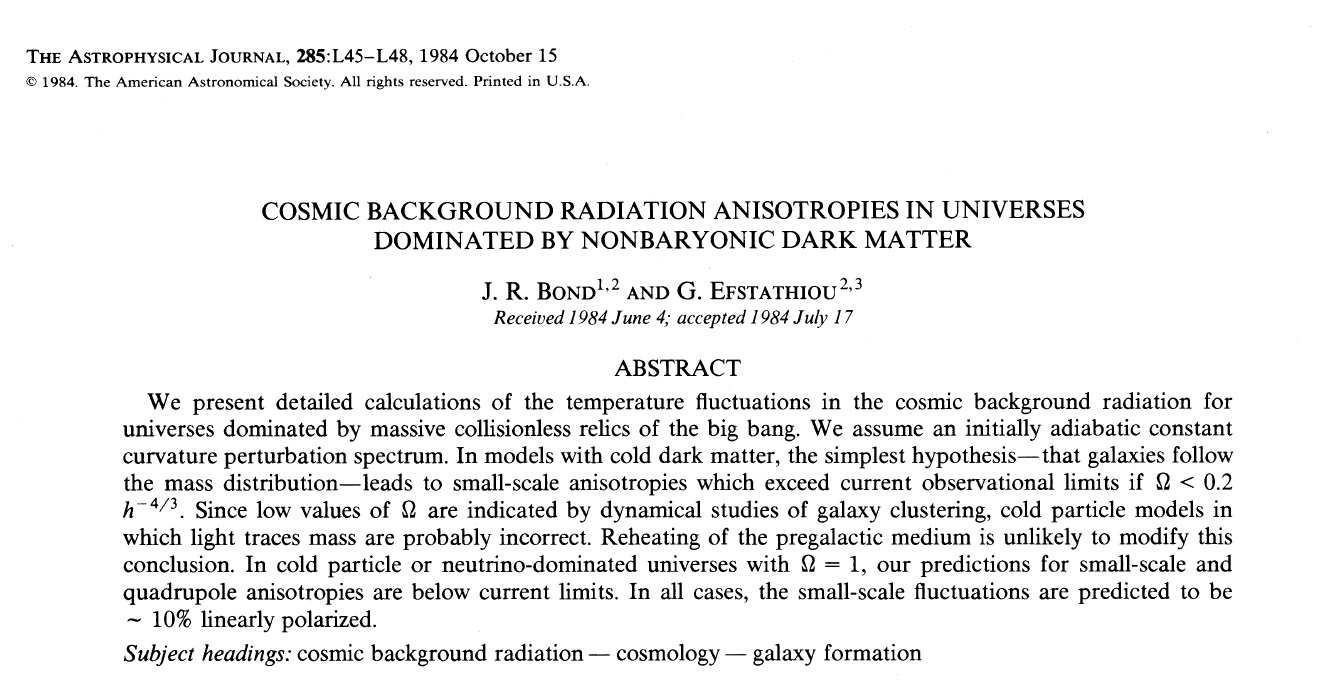
One of the first papers I was given to read when I started my postgraduate studies in 1985 was the pioneering Bond & Efstathiou (1984) “Cosmic background radiation anisotropies in universes dominated by nonbaryonic dark matter”. Here is the abstract:

This work was hugely influential and prescient in many ways. It does remind me, though, that in the 1980s, before the detection of large-scale anisotropies by the Cosmic Background Explorer (COBE) announced in 1992, the prevailing mentality was to find models in which the predicted cosmic microwave background anistropies were as small as possible. The COBE fluctuations turned out to be rather larger than those predicted in the model discussed in the paper, which was one reason why the standard cosmological model now has a lower density of dark matter than then.

On a more technical level, the paper also reminds us that it was to be a while until the angular power spectrum, as opposed to the correlation function, became the standard tool it is now for quantifying the statistical properties of these temperature fluctuations.

The Shaw Prize wasn’t awarded for just this paper, of course, but I think it’s emblematic of the sustained importance and influence of the work of the Laureates over many years.

Congratulations, Dr Gallagher!

Posted in Biographical, Maynooth, The Universe and Stuff with tags , , , on May 26, 2025 by telescoper

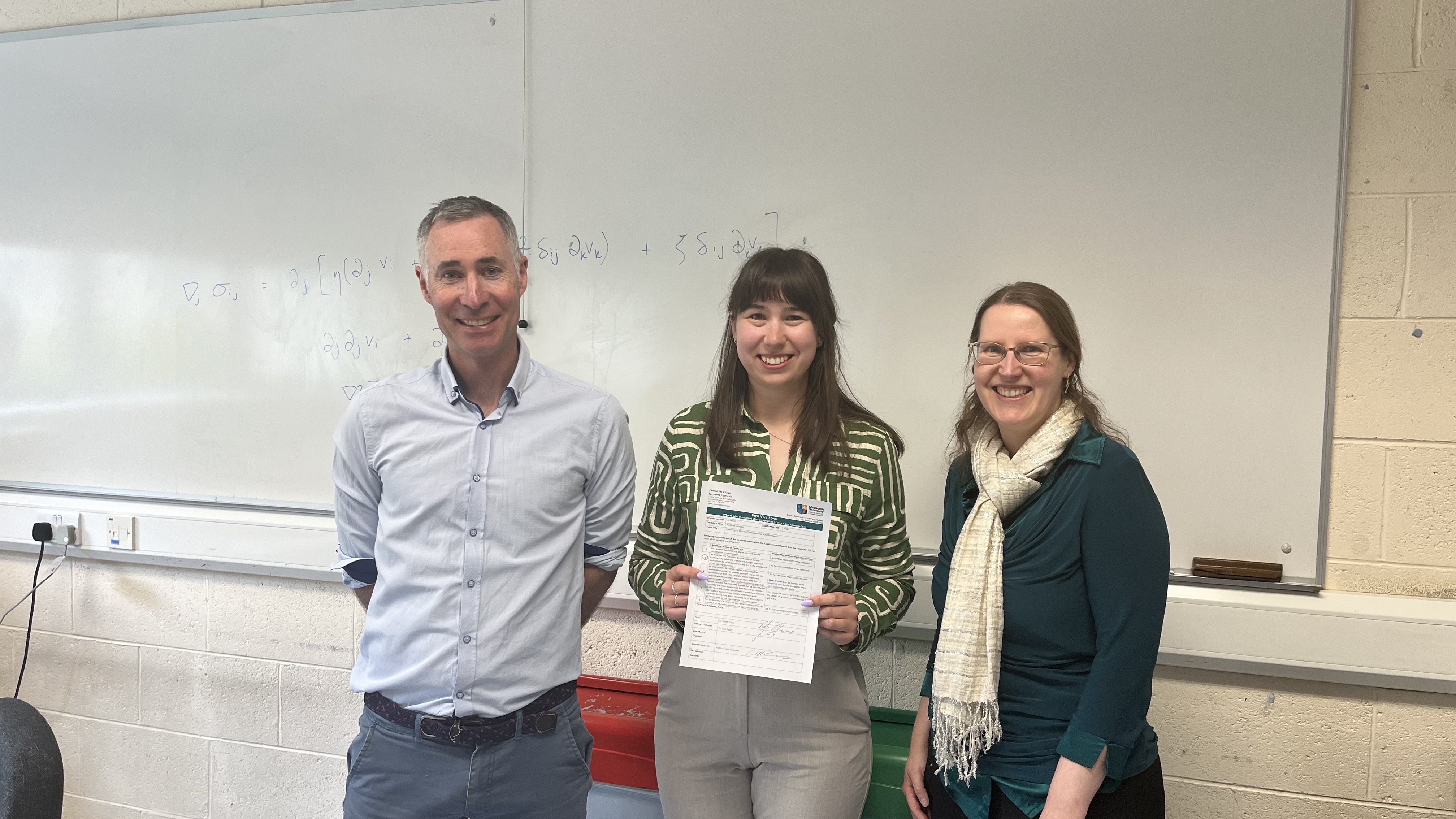
This week is off to a good start! This morning my postgraduate research student Aoibhinn Gallagher passed a viva voce examination on her thesis Cosmological Structure Formation Using Wave Mechanics. There will be a few formalities to deal with, some minor corrections to make, various forms to fill in, and the result has to be approved by the examination board, and so on, but basically that’s a job well done. Congratulations, Dr Gallagher!

Left to Right: Dr John Regan (internal examiner), Aoibhinn Gallagher (PhD candidate), and Prof. Cora Uhlemann (external examiner).

P.S. You can get an idea of some of the content of Aoibhinn’s thesis here.

R.I.P. Jayant Narlikar (1938-2025)

Posted in Biographical, R.I.P., The Universe and Stuff with tags , , , , , , on May 20, 2025 by telescoper
Professor Jayant Vishnu Narlikar (1938-2025)

I heard this morning of the death at the age of 86 of renowned Indian cosmologist Jayant Vishnu Narlikar. I understand he died peacefully in his sleep in Pune after a brief illness.

Scientifically, Jayant Narlikar is probably best known for his work with Fred Hoyle on a conformal gravity theory and as an advocate of the Steady State theory of cosmology. In India however his fame extended far beyond the world of research, as an educator and science popularist, as well as Founder-Director of the Inter-University Centre for Astronomy and Astrophysics (IUCAA) in Pune. Those who met him – as I was lucky enough to do – will also remember him as a kind and gracious man, and a self-effacing inspirer of young scientists. During my visit I gave a talk there, which Narlikar attended, and we had a very nice conversation afterwards from which I learnt a huge amount.

The Directorship at IUCAA came with a house which had a very nice lawn, on which I remember playing croquet with Donald Lynden-Bell and others, but that’s another story. Another random thing I remember is that I remember is that Narlikar’s username on the IUCAA email system was “jvn” and he was often referred to informally by that name.

Although he never really abandoned the Steady State cosmology, despite the weight of evidence in favour if the Big Bang, it is to Narlikar’s great credit that he didn’t try to impose his own scientific ideas on those working at IUCAA. In fact he assembled an excellent group of cosmologists and astrophysicists and encourage them to do whatever they liked.

I first visited IUCAA in 1994 to work with Varun Sahni. In those days Westerners mainly went to Pune to visit an ashram (usually the one run by the guru Rajneesh). I remember when I arrived on the train from Mumbai and tried to get a taxi to the IUCAA campus, the driver asked me “which ashram?” I had long hair and a beard at that time, so I looked a potential hippy. I said, “No ashram. Professor Narlikar”. He knew exactly where to take me; “Narlikar” was a household name in India, where the newspapers are awash with tributes today (e.g. here) and where his loss will be keenly felt.

Rest in peace Jayant Narlikar (1938-2025)

A galaxy at redshift z=14.44?

Posted in OJAp Papers, The Universe and Stuff with tags , , , , , on May 19, 2025 by telescoper

This morning’s arXiv mailing presented me with a distraction from examination marking in the form of a paper by Naidu et al. with this abstract:

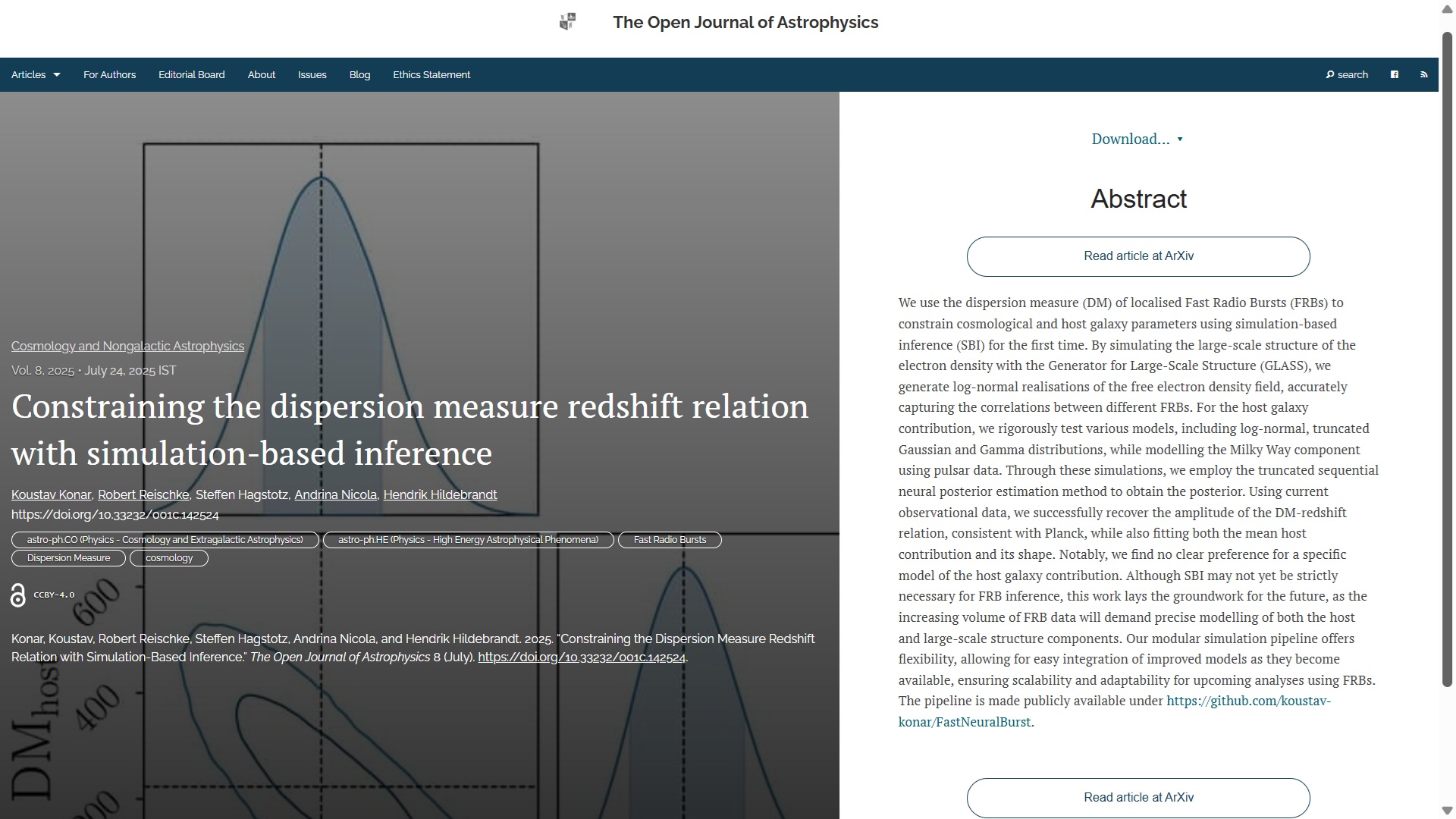
This paper has been submitted to the Open Journal of Astrophysics. In the relatively recent past, papers like this about record-breaking galaxies would normally be submitted to Nature so perhaps we’re at last starting to see a change of culture?

I usually feel a bit conflicted in situations when a paper has been submitted for editorial review there. In this case I am posting it here for two reasons: one is that I am not the Editor responsible for this paper; the other is that the arXiv submission specifically says

Submitted to the Open Journal of Astrophysics. Comments greatly appreciated and warmly welcomed!

In order to generate flagging it here to encourage people to comment, either through the box below or by contacting the authors.

For reference, here is the key plot showing the spectrum from which the redshift is determined. It is rather noisy, but the Lyman break seems reasonably convincing and there are some emission lines that appear to offer corroborative evidence:

You might want to read this article (another OJAp paper) which contains this plot showing how galaxies at redshift z>10 challenge the standard model:

Please read the paper and comment if you wish!

The CosmoVerse: The White Paper

Posted in The Universe and Stuff with tags , , , on May 16, 2025 by telescoper

Newly announced on arXiv there is a review article with the title The CosmoVerse White Paper: Addressing observational tensions in cosmology with systematics and fundamental physics. The abridged form of the abstract reads:

The standard model of cosmology has provided a good phenomenological description of a wide range of observations both at astrophysical and cosmological scales for several decades. This concordance model is constructed by a universal cosmological constant and supported by a matter sector described by the standard model of particle physics and a cold dark matter contribution, as well as very early-time inflationary physics, and underpinned by gravitation through general relativity. There have always been open questions about the soundness of the foundations of the standard model. However, recent years have shown that there may also be questions from the observational sector with the emergence of differences between certain cosmological probes. In this White Paper, we identify the key objectives that need to be addressed over the coming decade together with the core science projects that aim to meet these challenges. These discordances primarily rest on the divergence in the measurement of core cosmological parameters with varying levels of statistical confidence. These possible statistical tensions may be partially accounted for by systematics in various measurements or cosmological probes but there is also a growing indication of potential new physics beyond the standard model. After reviewing the principal probes used in the measurement of cosmological parameters, as well as potential systematics, we discuss the most promising array of potential new physics that may be observable in upcoming surveys. We also discuss the growing set of novel data analysis approaches that go beyond traditional methods to test physical models.

arXiv:2504.01669v2

Here’s a plot demonstrating one of the tensions discussed in this paper, and widely on this blog, the Hubble Tension:


This is a very comprehensive review article consisting of over 400 pages and having over 400 authors. I expect all of you to read it over the weekend. There will be a test on Monday.

*One of whom happens to be a PhD student of mine.

Weekly Update from the Open Journal of Astrophysics – 26/04/2025

Posted in OJAp Papers, Open Access, The Universe and Stuff with tags , , , , , , , , , , , on April 26, 2025 by telescoper

It’s Satuday morning once again, and time for another update of papers published at the Open Journal of Astrophysics. Since the last update we have published two papers, which brings the number in Volume 8 (2025) up to 44 and the total so far published by OJAp up to 279.

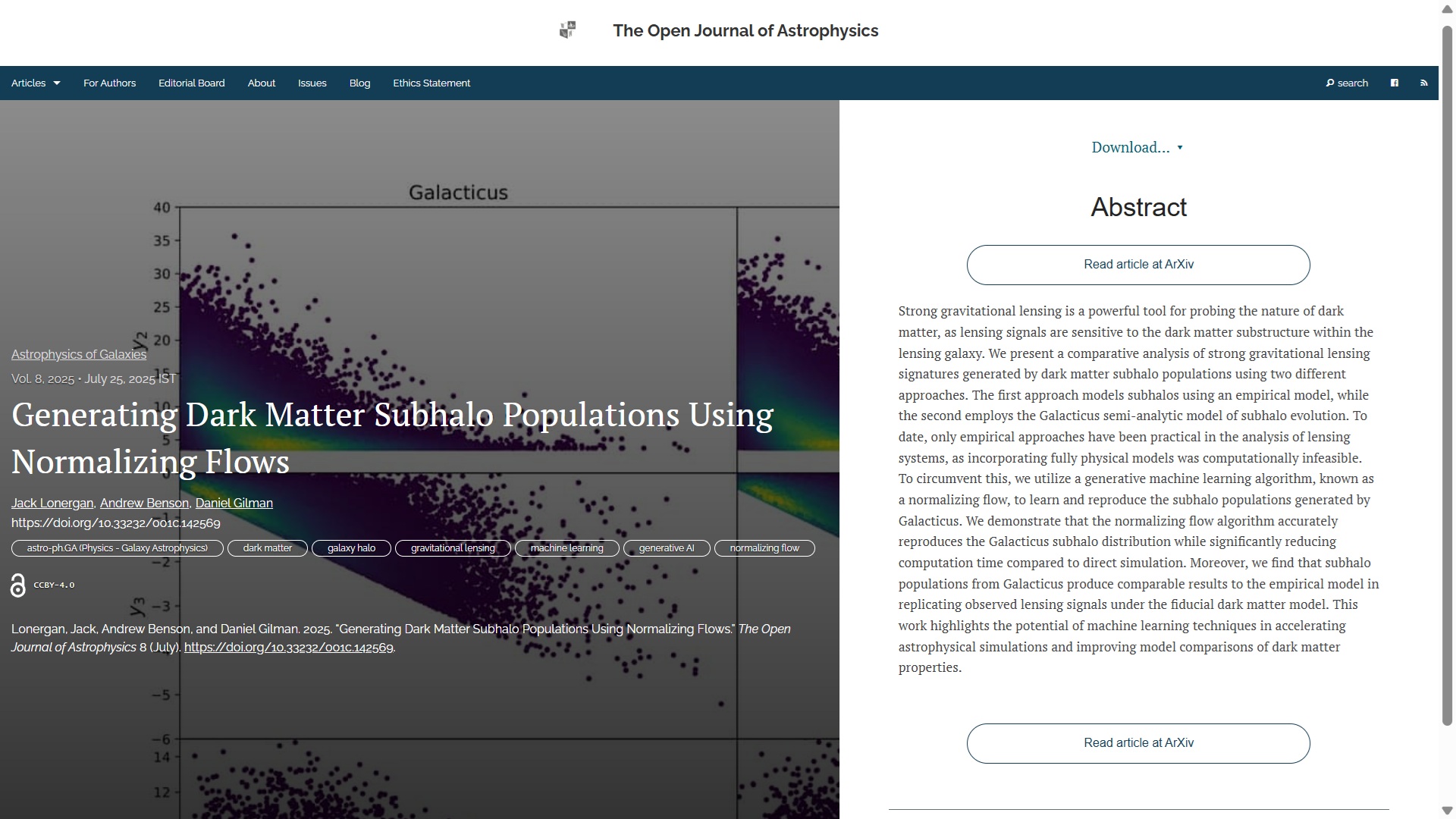
The first paper to report is “Approximating non-Gaussian Bayesian partitions with normalising flows: statistics, inference and application to cosmology” by Tobias Röspel, Adrian Schlosser & Björn Malte Schäfer (Universität Heidelberg, Germany) which was published on April 23rd 2025 in the folder Cosmology and NonGalactic Astrophysics. It is an introduction to normalizing flows – a machine learning technique for transforming distributions – and its application to the extraction of cosmological parameters from supernova data.

The overlay is here:

You can find the officially accepted version on arXiv here.

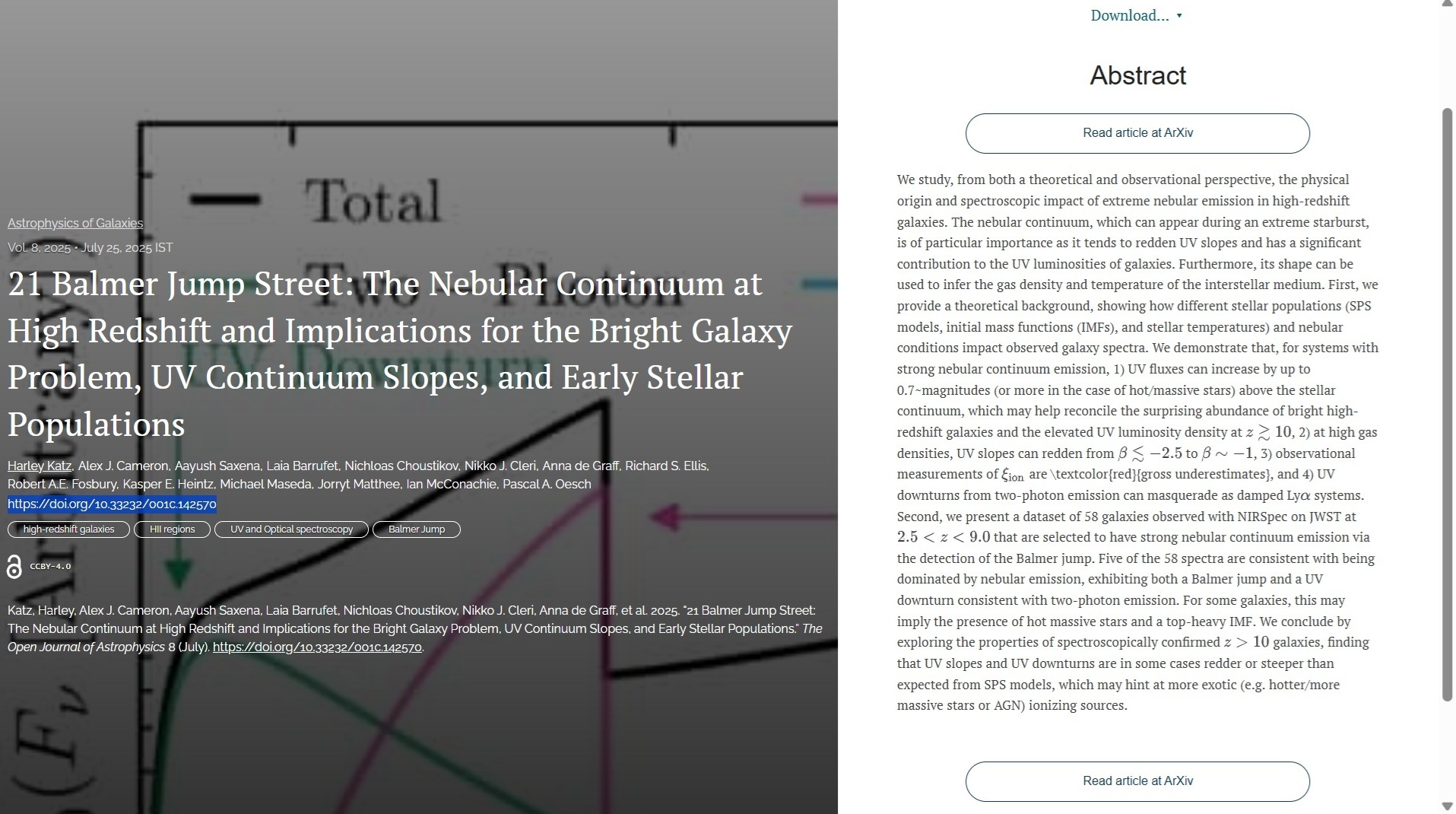
The other paper this week is “Dwarf Galaxies in the TNG50 Field: connecting their Star-formation Rates with their Environments” by Joy Bhattacharyya & Annika H.G. Peter (Ohio State University, USA) and Alexie Leauthaud (UC Santa Cruz, USA).  This one was published on 24th April 2025 in the older Astrophysics of Galaxies and it studies dwarf galaxies with properties similar to the Large and Small Magellanic Clouds that form in different environments in the TNG50 simulation of the IllustrisTNG project.

The overlay is here:


and you can find the final accepted version on arXiv here.


That’s all for this week. I’ll have another update next Saturday.

That was the Dean’s Lecture that was..

Posted in Biographical, Maynooth, The Universe and Stuff with tags , , on April 15, 2025 by telescoper

As it was foretold, last night we had a very special event in Maynooth in the form of a public lecture with the title The Universe from Beginning to End by Nobel Laureate Prof. Brian Schmidt. Brian actually arrived on Sunday and is still here today; he will be returning to Australia from Dublin this evening. It was really great of him to take the time to visit us here in Maynooth not just for the lecture but to chat informally with staff and students. He also did some interviews with the media, e.g. here and here.

The talk, which was for a lay audience, was extremely well attended. In fact we had to move it to a larger venue than we originally intended. I don’t know the official attendance figures but I would guess somewhere between 400 and 500 people came. The talk was excellent, and there were lots of very good questions from the audience afterwards which Brian dealt with very engagingly. The talk was recorded and if it becomes available publicly I will provide a link.

At the end I even found myself on the list to have dinner with Brian in a local restaurant. All in all, it was an excellent day.

R.I.P. Jerry Ostriker (1937-2025)

Posted in R.I.P., The Universe and Stuff with tags , , , , , , on April 9, 2025 by telescoper

Once again I find myself using this blog to pass on sad news. This time it is of the death of renowned astrophysicist Jerry Ostriker (pictured left in 2012), who passed away on Monday 6th April 2025 just a week before his 88th birthday.

Jeremiah Paul Ostriker (to give his full name) was an extremely energetic, versatile and influential theorist who worked on a wide range of problems in diverse areas of astrophysics and produced a number of classic papers. Close to my own specialism I would quote two in particular: one written with Jim Peebles in 1973 about the stability of galactic disks; and the other with Martin Rees in 1977 about the role of gas cooling and fragmentation in determining the size of galaxies and clusters. He also did much to establish the use of hydrodynamic simulations in cosmology and was an early adopter of the current standard cosmological model, including a cosmological constant. He worked on many other things too, including pulsars and galactic nuclei.

I only met Jerry Ostriker a few times, mainly at conferences – where he was never shy to contribute to discussions after talks – but also once back in the 1990s when I was a visitor Princeton (where he was Professor). I didn’t have much time to talk to him then as he always seemed to be on the go, so I never really got to know him personally. After spending most of his career in Princeton, including a spell as Provost, in 2001 Ostriker moved to Cambridge for a short stint as Plumian Professor, before returning to Princeton.

There is a very nice obituary of Jerry Ostriker by Dennis Overbye in the New York Times.

Rest in peace, Jerry Ostriker

The Universe from Beginning to End

Posted in Maynooth, The Universe and Stuff with tags , , , on April 2, 2025 by telescoper

It’s not every day that you get the chance to attend a lecture by a Nobel Laureate, but 14th April 2025 will be such a day in Maynooth because the annual Dean’s Lecture for the Faculty of Science and Engineering at Maynooth University will be given by Professor Brian Schmidt who was one of the three winners of the 2011 Nobel Prize for Physics.

The description of his lecture is as follows:

Astronomers have pieced together the story of our Universe that begins more than 13 Billion years ago in a Big Bang. In the 2025 Dean’s Lecture, Nobel Prize Winner Prof Brian Schmidt will describe the journey that science has thus far taken to understand our Universe, describing what we know about the Cosmos and how we know it, as well as reflecting on some of the mysteries that remain. A chance to learn a bit about everything from Dark Energy to Black Holes, and an opportunity for the audience to ask questions at the end of the lecture.

The lecture is intended to be accessible to a wide audience and will be in person. It is free to attend but you need to register because space in the lecture venue is limited. To register and also find out more about the event please visit Eventbrite below:

I am delighted that Brian is taking time out of his busy schedule to visit us in Maynooth and am looking forward not only to his lecture but also for the chance for him to meet and talk to our students.

Last Chance to apply for the Professorial Position in Observational Astrophysics or Cosmology at Maynooth University!

Posted in Maynooth, The Universe and Stuff with tags , , , , on March 31, 2025 by telescoper

A couple of months ago I announced here a vacancy for a Professor of Observational Astrophysics or Cosmology at Maynooth. The position is on the AAS Jobs Register here. The deadline is 31st March 2025 which is today so if you were thinking of applying then this is your last chance! Applications close at 23.30 Irish Time; the clocks went forward yesterday so it’s actually 00.30 tomorrow CEST so you still have time. The application portal is here.

The strategic case for this Chair revolves around broader developments in the area of astrophysics and cosmology at Maynooth. Currently there are two groups active in research in these areas, one in the former Department of Experimental Physics (which is largely focussed on astronomical instrumentation) and the other, in the former Department of Theoretical Physics, which is theoretical and computational. We want to promote closer collaboration between these research strands. The idea with the new position is that the holder will nucleate and lead a research programme in the area between these existing groups as well as getting involved in outreach and public engagement.

It is intended that the position to appeal not only to people undertaking observational programmes using ground-based facilities (e.g. those provided by ESO, which Ireland recently joined), or those exploiting data from space-based experiments, such as Euclid, as well as people working on multi-messenger astrophysics, gravitational waves, and so on.

P. S. For those of you reading this from outside Ireland the job is tenured and includes a defined benefit pension way better than the equivalent UK system.