Archive for Dark Energy Spectroscopic Instrument

Weekly Update from the Open Journal of Astrophysics – 25/10/2025

Posted in OJAp Papers, Open Access, The Universe and Stuff with tags , , , , , , , , , , , , , , , , , , , , on October 25, 2025 by telescoper

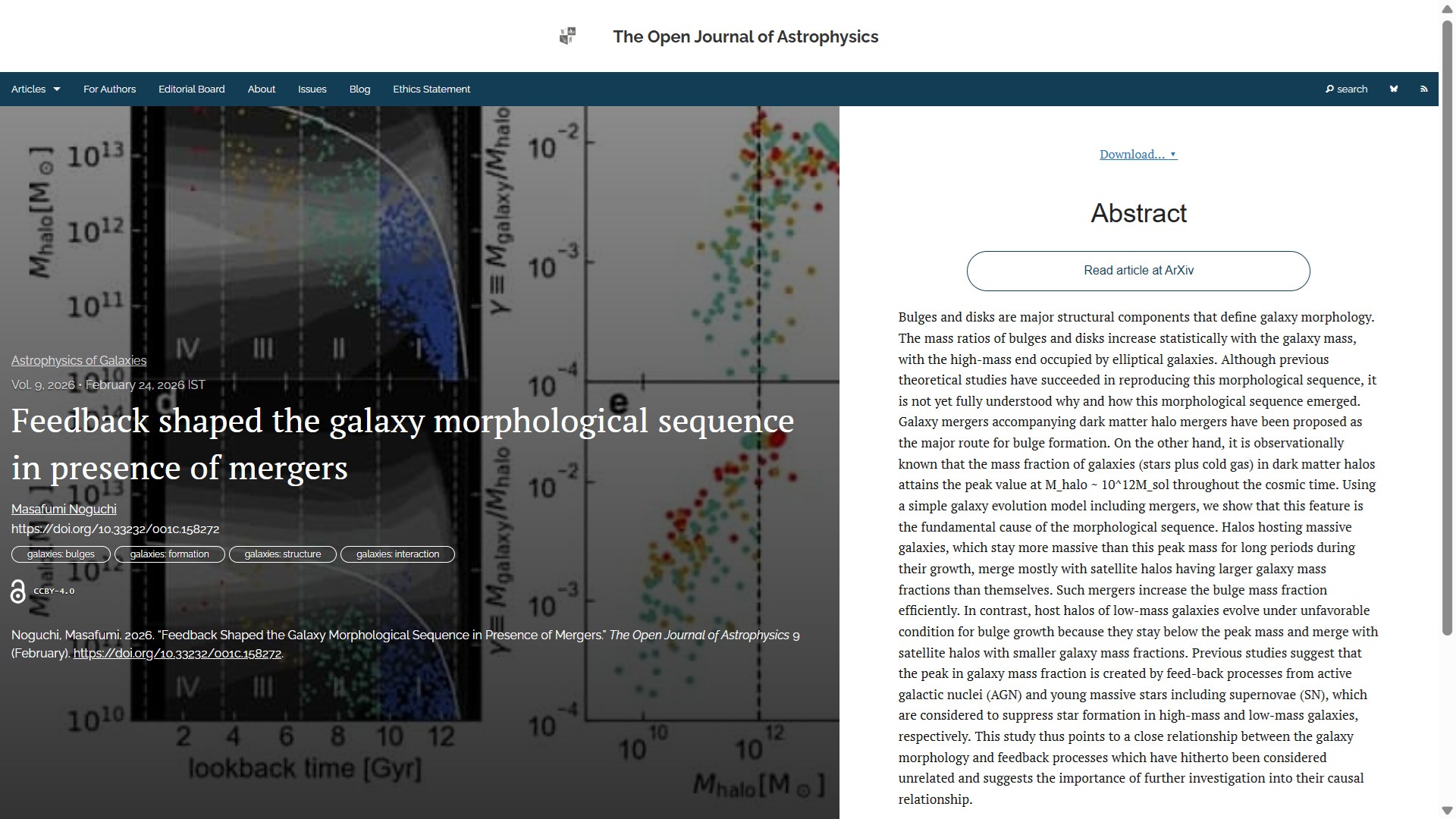
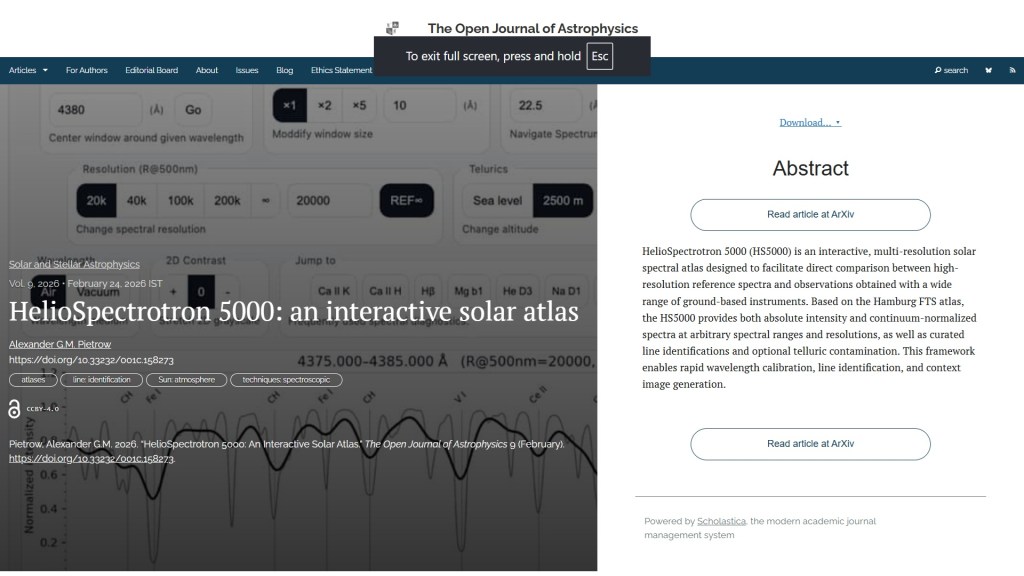
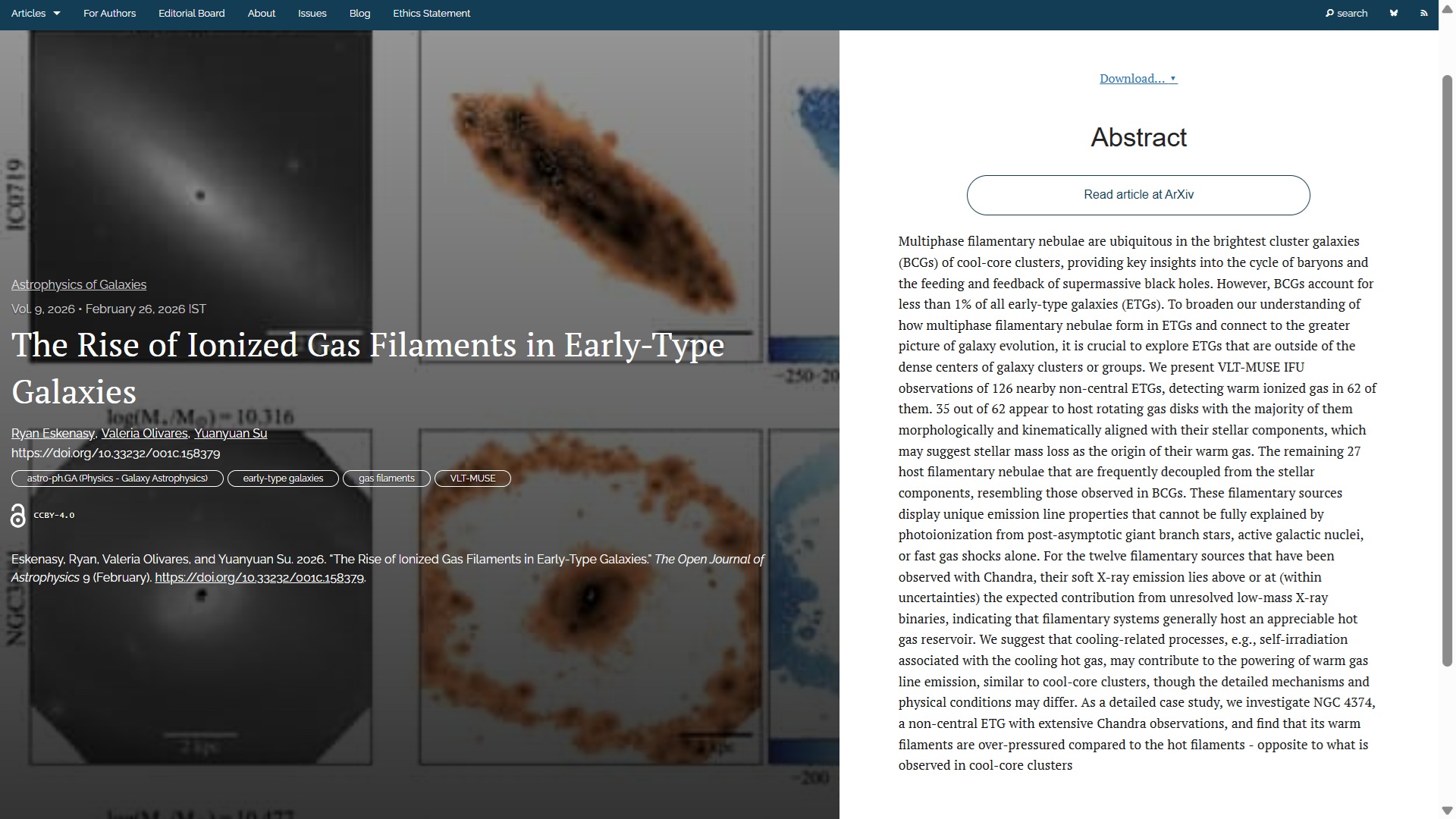
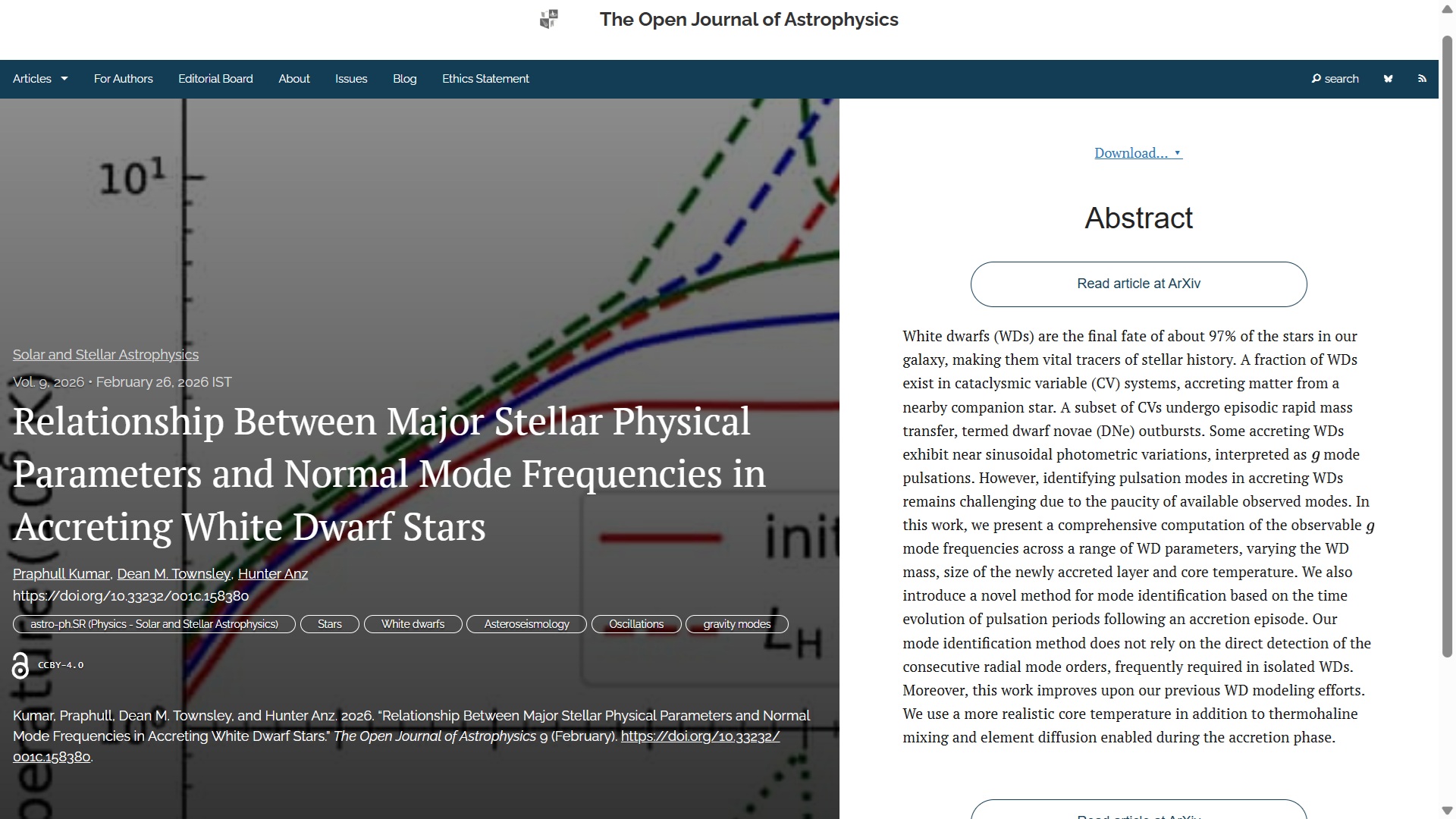
It may be a Bank Holiday weekend here in Ireland, but it’s still time for the usual Saturday update of the week’s new papers at the Open Journal of Astrophysics (although a bit later in the day than usual). Since the last update we have published another five papers, which brings the number in Volume 8 (2025) up to 161, and the total so far published by OJAp up to 396.

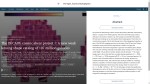
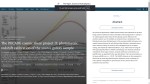
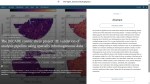
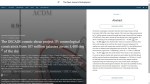
This week’s update  is rather unusual because there are four papers in a series (or, more precisely, mathematically speaking, a sequence) all published on the same day (Wednesday October 22nd 2025), in the same folder (Cosmology and NonGalactic Astrophysics), with the same first author (Dhayaa Anbajagane of the University of Chicago), with long author lists and many co-authors in common. These papers all relate to the DECADE cosmic shear project. Instead of doing them one by one, therefore, I’ve decided to put all four overlays together and provide links to all the papers afterwards. As I’m trying to encourage people to follow our feed on the Fediverse via Mastodon (where I announce papers as they are published, including the all-important DOI),  I’ll include links to each announcement there too.

  1. The DECADE cosmic shear project I: A new weak lensing shape catalog of 107 million galaxies“, accepted version on arXiv here.
  2. The DECADE cosmic shear project II: photometric redshift calibration of the source galaxy sample“, accepted version on arXiv here.
  3. The DECADE cosmic shear project III: validation of analysis pipeline using spatially inhomogeneous data“, accepted version on arXiv here.
  4. The DECADE cosmic shear project IV: cosmological constraints from 107 million galaxies across 5,400 deg2 of the sky“, accepted version on arXiv here.

The fediverse announcements follow:

Open Journal of Astrophysics

New Publication at the Open Journal of Astrophysics: "The DECADE cosmic shear project I: A new weak lensing shape catalog of 107 million galaxies" by Dhayaa Anbajagane (University of Chicago, USA) et al. (54 authors)

doi.org/10.33232/001c.146158

October 22, 2025, 12:42 pm 2 boosts 0 favorites

Open Journal of Astrophysics

New Publication at the Open Journal of Astrophysics: "The DECADE cosmic shear project II: photometric redshift calibration of the source galaxy sample" by Dhayaa Anbajagane (University of Chicago, USA) et al. (53 authors)

doi.org/10.33232/001c.146159

October 22, 2025, 1:07 pm 2 boosts 0 favorites

Open Journal of Astrophysics

New Publication at the Open Journal of Astrophysics: "The DECADE cosmic shear project III: validation of analysis pipeline using spatially inhomogeneous data" by Dhayaa Anbajagane (University of Chicago, USA) et al. (53 authors)

doi.org/10.33232/001c.146160

October 22, 2025, 1:57 pm 1 boosts 0 favorites

Open Journal of Astrophysics

New Publication at the Open Journal of Astrophysics: "The DECADE cosmic shear project IV: cosmological constraints from 107 million galaxies across 5,400 deg^2 of the sky" by Dhayaa Anbajagane (University of Chicago, USA) et al. (75 authors)

doi.org/10.33232/001c.146161

October 22, 2025, 2:47 pm 1 boosts 0 favorites


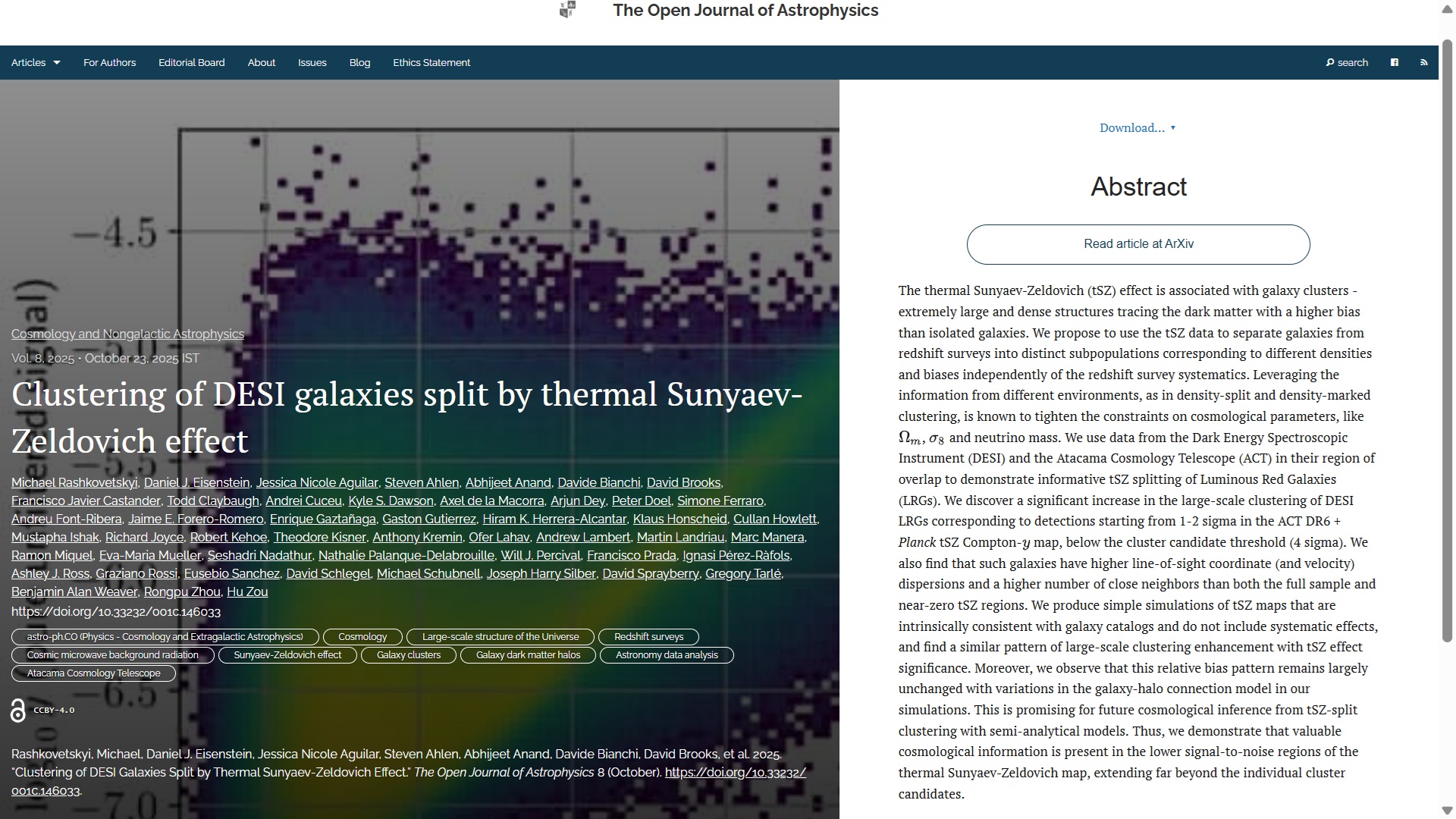
The fifth and final paper for this week is “Clustering of DESI galaxies split by thermal Sunyaev-Zeldovich effect” by Michael Rashkovetskyi of the Harvard-Smithsonian Center for Astrophysics, or CfA for short, and 48 others. This one was published on Wednesday 23rd October in the folder Cosmology and NonGalactic Astrophysics. This paper explores how the clustering properties of galaxies mapped by the Dark energy Spectroscopic Instrument (DESI) relate to the local thermal Sunyaev-Zeldovich emission mapped by the Atacama Cosmology Telescope (ACT). The overlay is here:

The officially accepted version can be found on arXiv here, and the fediverse announcement is here:

Open Journal of Astrophysics

New Publication at the Open Journal of Astrophysics: "Clustering of DESI galaxies split by thermal Sunyaev-Zeldovich effect" by Michael Rashkovetskyi (Cfa Harvard-Smithsonian, USA) et al. (49 authors)

doi.org/10.33232/001c.146033

October 23, 2025, 8:28 am 1 boosts 0 favorites


That concludes the papers for this week. With one week to go and our total at 396, I still think we might reach the 400 total by the end of October.

Cosmology Results from DESI

Posted in Astrohype, The Universe and Stuff with tags , , , , , , on March 20, 2025 by telescoper

Yesterday evening (10pm Irish Time) saw the release of new results from the Dark Energy Spectroscopic Instrument (DESI), completing a trio of major announcements of cosmological results in the space of two days (the Atacama Cosmology Telescope and the Euclid Q1 release being the others). I didn’t see the DESI press conference but you can read the press release here.

There were no fewer than eight DESI papers on the astro-ph section of the arXiv this morning. Here are the titles with links:

You can see from the titles that the first seven of these relate to the second data release (DR2; three years of data) from DESI; the last one listed here is a description of the first data release (DR1), which is now publicly available.

Obviously there is a lot of information to digest in these papers so here are two members of the DESI collaboration talking with Shaun Hotchkiss on Cosmology Talks about the key messages from the analysis of Baryon Acoustic Oscillations (the BAO in the titles of the new papers):

A lot has been made in the press coverage of these results about the evidence that the standard cosmological model is incomplete; see, e.g., here. Here are a few comments.

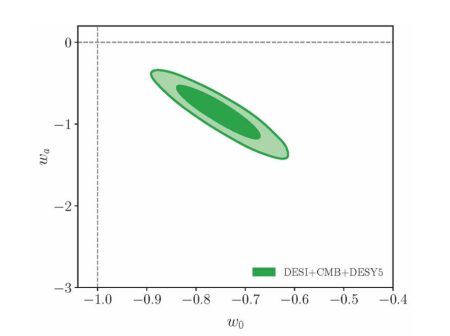
As I see it, taken on their own, the DESI BAO results are broadly consistent with the ΛCDM model as specified by the parameters determined by the Cosmic Microwave Background (CMB) inferred from Planck. Issues do emerge, however, when these results are combined with other data sets. The most intriguing of these arises with the dark energy contribution. The simplest interpretation of dark energy is that it is a cosmological constant (usually called Λ) which – as explained here – corresponds to a perfect fluid with an equation-of-state p=wρc2 with w=-1. In this case the effective mass density of the dark energy ρ remains constant as the universe expands. To parametrise departures from this constant behaviour, cosmologists have replaced this form with the form w(a)=w0+wa(1-a) where a(t) is the cosmic scale factor. A cosmological constant Λ would correspond to a point (w0=-1, wa=0) in the plane defined by these parameters, but the only requirement for dark energy to result in cosmic acceleration is that w<-1/3, not that w=-1.

The DESI team allow (w0, wa) to act as free parameters and let the DESI data constrain them, either alone or in combinations with other data sets, finding evidence for departures from the “standard values”. Here’s an example plot:

The DESI data don’t include the standard point (at the intersection of the two dashed lines) but the discrepancy gets worse when other data (such as supernovae and CMB) are folded in, as in this picture. The weight of evidence suggests a dark energy contribution which is decreasing with time.

These results are certainly intriguing, and a lot of credit is due to the DESI collaboration for working so hard to identify and remove possible systematics in the analysis (see the papers above) but what do they tell us about ΛCDM?

My view is that we’ve never known what the dark energy actually is or why it is so large that it represents 70% of the overall energy density of the Universe. The Λ in ΛCDM is really just a place-holder, not there for any compelling physical reason but because it is the simplest way of accounting for the observations. In other words, it’s what it is because of Occam’s Razor and nothing more. As with any working hypothesis, the standard cosmological model will get updated whenever new information comes to light (as it is doing now) and/or if we get new physical insights into the origin of dark energy.

Do the latest observations cast doubt on the standard model? I’d say no. We’re seeing an evolutionary change from “We have no idea what the dark energy is but we think it might be a cosmological constant” to “We still have no idea what the dark energy is but we think it might not be a cosmological constant”.

Cosmology Talks: Recent DESI Power Spectrum Results

Posted in The Universe and Stuff with tags , , , , , on December 12, 2024 by telescoper

Some weeks ago I posted an item about recent results that have emerged from the DESI (Dark Energy Spectroscopic Instrument) Collaboration. I have been a bit busy since then but I just saw that there is one of those Cosmology Talks about these results which I thought I would pass on. The contributors are Arnaud de Mattia, Hector Gil-Marín and Pauline Zarrouk and they are talking about the analsysis they have done using the “full shape” of the galaxy power spectrum. It’s quite a long video, but very illuminating.

New Results from DESI

Posted in Barcelona, The Universe and Stuff with tags , , , , , , , on November 20, 2024 by telescoper
The Mayall Telescope at Kitt Peak, in which DESI is housed. This PR image was taken during a meteor shower, which is not ideal observing conditions. Picture Credit: KPNO/NOIRLab/NSF/AURA/R. Sparks

I’ve just got time between meetings to mention that a clutch of brand new papers has emerged from the DESI (Dark Energy Spectroscopic Instrument) Collaboration. There is a press release discussing the results from the Lawrence Berkeley Laboratory here and one from the ICCUB in Barcelona here; several members of the group I visited there during sabbatical are working on DESI. Congratulations to them.

I haven’t had time to read them yet, but a quick skim suggests that the results are consistent with the standard cosmological model.

The latest batch contains three Key Publications:

together with the companion supporting papers:

The links lead to the arXiv version of these papers. These articles can also be found, along with previously released publications by the DESI Collaboration, here.

Anyone who has read the latest papers is welcome to comment through the box below!

Evolving Dark Energy or Supernovae Systematics?

Posted in The Universe and Stuff with tags , , , , , , , on August 15, 2024 by telescoper

A few months ago I posted an item about the release new results from the Dark Energy Spectroscopic Instrument (DESI). That was then followed by a presentation explaining the details which you can find here to find out more about the techniques involved. At the time the new DESI results garnered a lot of media attention much of it about claims that the measurements provided evidence for “New Physics”, such as evolving dark energy. Note that the DESI results themselves did not imply this. Only when combined with supernova measurements did this suggestion arise.

Now there’s a new preprint out by George Efstathiou of Cambridge. The abstract is here:

Recent results from the Dark Energy Spectroscopic Instrument (DESI) collaboration have been interpreted as evidence for evolving dark energy. However, this interpretation is strongly dependent on which Type Ia supernova (SN) sample is combined with DESI measurements of baryon acoustic oscillations (BAO) and observations of the cosmic microwave background (CMB) radiation. The strength of the evidence for evolving dark energy ranges from ~3.9 sigma for the Dark Energy 5 year (DES5Y) SN sample to ~ 2.5 sigma for the Pantheon+ sample. Here I compare SN common to both the DES5Y and Pantheon+ compilations finding evidence for an offset of ~0.04 mag. between low and high redshifts. Correcting for this offset brings the DES5Y sample into very good agreement with the Planck LCDM cosmology. Given that most of the parameter range favoured by the uncorrected DES5Y sample is discrepant with many other cosmological datasets, I conclude that the evidence for evolving dark energy is most likely a result of systematics in the DES5Y sample.

Here are a couple of figures from the paper illustrating the difference in parameter constraints using the uncorrected (left) and corrected (right) Dark Energy (Survey) 5 year Supernova sample.

The y-axis shows a parameter wa, which is zero in the standard model with non-evolving dark energy; the non-zero value implied by the left hand panel using the uncorrected data.

Just as with the Hubble Tension I blogged about yesterday, the evidence for a fundamental revision of our standard model may be nothing of the sort but some kind of systematic error. I think we can expect a response from the Dark Energy Survey (DES) team. Grab your popcorn.

Presentation of the BAO DESI results at ICCUB Uni Barcelona – by Licia Verde & Héctor Gil Marin

Posted in The Universe and Stuff with tags , , , , on April 8, 2024 by telescoper

Last week, when I wrote about the new results from the Dark Energy Spectroscopic Instrument (DESI) I mentioned that there would be a seminar here at ICCUB about that very topic. Well, the seminar, by Licia Verde & Héctor Gil Marin, was recorded and here it is:

Cosmology Talks: Cosmological Constraints from BAO

Posted in The Universe and Stuff, YouTube with tags , , , , , , , , , on April 5, 2024 by telescoper

Here’s another video in the Cosmology Talks series curated by Shaun Hotchkiss. This one very timely after yesterday’s announcement. Here is the description on the YouTube page:

The Dark Energy Spectroscopic Instrument (DESI) has produced cosmological constraints! And it is living up to its name. Two researchers from DESI, Seshadri Nadathur and Andreu Font-Ribera, tell us about DESI’s measurements of the Baryon Acoustic Oscillations (BAO) released today. These results use one full year of DESI data and are the first cosmological constraints from the telescope that have been released. Mostly, it is what you might expect: tighter constraints. However, in the realm of the equation of state of dark energy, they find, even with BAO alone, that there is a hint of evidence for evolving dark energy. When they combine their data with CMB and Supernovae, who both also find small hints of evolving dark energy on their own, the evidence for dark energy not being a cosmological constant jumps as high as 3.9σ with one combination of the datasets. It seems there still is “concordance cosmology”, it’s just not ΛCDM for these datasets. The fact that all three probes are tentatively favouring this is intriguing, as it makes it unlikely to be due to systematic errors in one measurement pipeline.

My own take is that the results are very interesting but I think we need to know a lot more about possible systematics before jumping to conclusions about time-varying dark energy. Am I getting conservative in my old age? These results from DESI do of course further underline the motivation for Euclid (another Stage IV survey), which may have an even better capability to identify departures from the standard model.

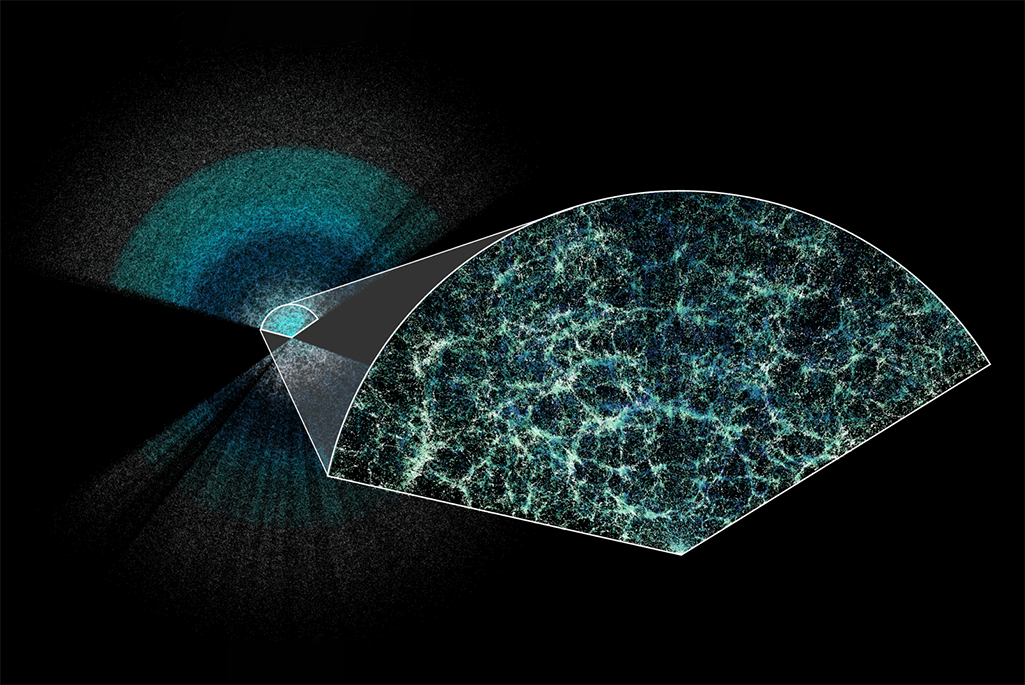
P.S. Here’s a nice graphic showing the cosmic web showing revealed by the DESI survey:

DESI Year 1 Results: Baryon Acoustic Oscillations

Posted in Barcelona, Euclid, The Universe and Stuff with tags , , , , on April 4, 2024 by telescoper

There has been a lot of excitement around the ICCUB today – the press have been here and everything – ahead of the release of the Year 1 results from the Dark Energy Spectroscopic Instrument (DESI). The press release from the Lawrence Berkeley Laboratory in California can be found here.

The papers were just released at 5pm CEST and can be found here. The key results pertain to Baryon Acoustic Oscillations (BAOs) which can be used to track the expansion rate and geometry of the Universe. This is one of the techniques that will be used by Euclid.

There’s a lot of technical information to go through and I have to leave fairly soon. Fortunately we have seminar tomorrow that will explain everything at a level I can understand:

I will update this post with a bit more after the talk, but for the time being I direct you to the high-level cosmological implications are discussed in this paper (which is Paper VI from DESI).

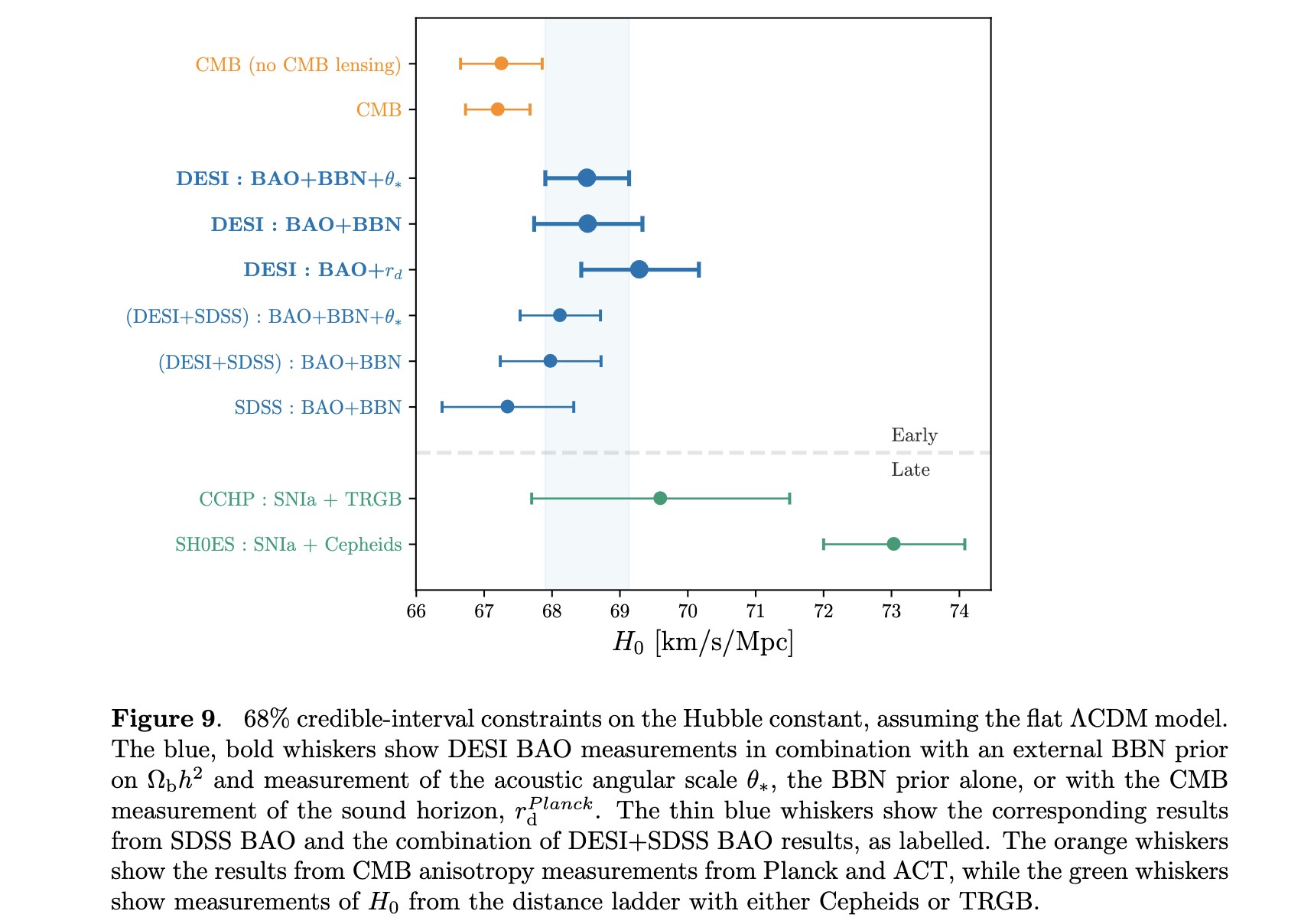
If your main interest is in the Hubble Tension then I direct you to this Figure:

Depending on the other data sets included, the value obtained is around 68.5 ± 0.7 in the usual units, closer to the (lower) Planck CMB value than the (higher) Supernovae values but not exactly in agreement; the error bars are quite small too.

You might want to read my thoughts about distances estimated from angular diameters compared with distances measured using luminosity distances here.

If you’re wondering whether there is any evidence for departures from the standard cosmology, another pertinent comment is:

In summary, DESI data, both alone and in combination with other cosmological probes, do not show any evidence for a constant equation of state parameter different from −1 when a flat wCDM model is assumed.

DESI 2024 VI: Cosmological Constraints from the Measurements of Baryon Acoustic Oscillations

More complicated models of time-varying dark energy might work, but there’s no strong evidence from the current data.

That’s all from me for now, but feel free to comment through the box below with any hot takes!

UPDATE: As expected there has been quite a lot of press coverage about this – see the examples below – mostly concentrating on the alleged evidence for “new physics”. Personally I think the old physics is fine!

Two New Publications at the Open Journal of Astrophysics

Posted in OJAp Papers, Open Access, The Universe and Stuff with tags , , , , , , , , on October 20, 2023 by telescoper

It’s Friday so it’s a good time to catch up with the week’s action at the Open Journal of Astrophysics, where there have been two new publications so far this week. These papers take us up to a total of 40  in Volume 6 (2023) and 105 in total since we started publishing.

The title of the first paper is “Halo Properties from Observable Measures of Environment: I. Halo and Subhalo Masses” and its primary classification is Astrophysics of Galaxies. it is an exploration using neural networks of how the peak masses of dark matter halos and subhaloes correlate with observationally-accessible measures of their dependence on environment.

The authors based in the United States of America: Haley Bowden and Peter Behroozi of the University of Arizona, and Andrew Hearin of the Argonne National Laboratory

Here is a screen grab of the overlay which includes the abstract:


You can click on the image of the overlay to make it larger should you wish to do so. You can find the officially accepted version of the paper on the arXiv here.

The second paper was published on 18th October 2023.  The primary classification for this one is Cosmology and Nongalactic Astrophysics and is “Mitigating the noise of DESI mocks using analytic control variates”. For those of you not up with the lingo, DESI stands for the Dark Energy Spectroscopic Instrument and you can read more about it here.

The lead author for this one is Boryana Hadzhiyska of the Lawrence Berkeley Laboratory and the University of California, Berkeley (USA) and there are 32 other authors. This paper presents a method for reducing the effects of sample variance on cosmological simulations using analytical approximations and tests it using DESI data.

Here is a screen grab of the overlay which includes the abstract:


You can click on the image of the overlay to make it larger should you wish to do so. You can find the officially accepted version of the paper on the arXiv here.

Cosmology Talks: DESI detects BAOs!

Posted in The Universe and Stuff with tags , , , , on May 15, 2023 by telescoper

It’s been too long since I last posted one of the cosmology talks curated on YouTube by Sean Hotchkiss so I will endeavour to put that right by posting one today.

In this video, Jeongin Moon, David Valcin and Christoph Saulder talk about the first cosmologically relevant results from DESI (the Dark Energy Spectroscopic Instrument), including the first detection of the BAOs (Baryon Acoustic Oscillations) therefrom. It’s pretty impressive for a first detection with only two months worth of data, so the final result with the full data set should be spectacular!

You can of course read the paper related to these results (by Moon et al.) on the arXiv here.