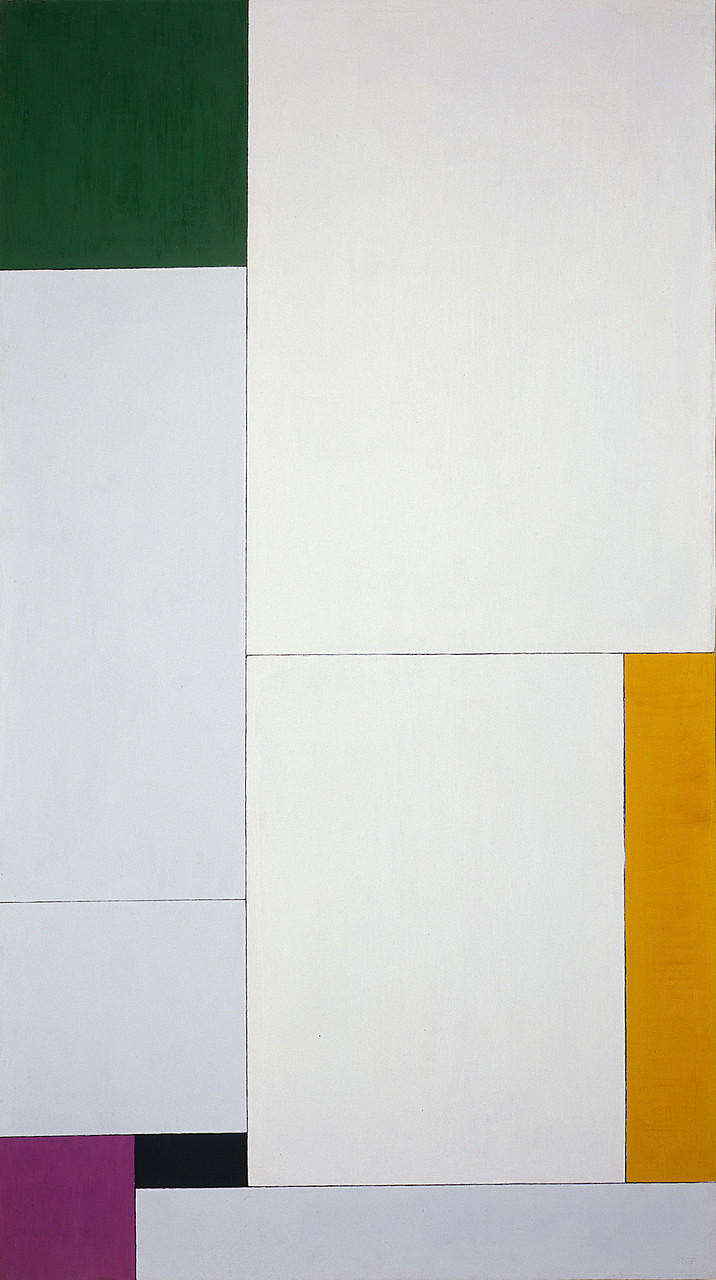
Composition Derived from the Equationwith Green, Orange, Violet (Black) by Georges Vantongerloo (1930, Oil on Canvas, 119.4 x 68.2 cm, Guggenheim Museum, New York)
I leave it as an exercise to the reader to determine how this painting is derived from the stated equation.
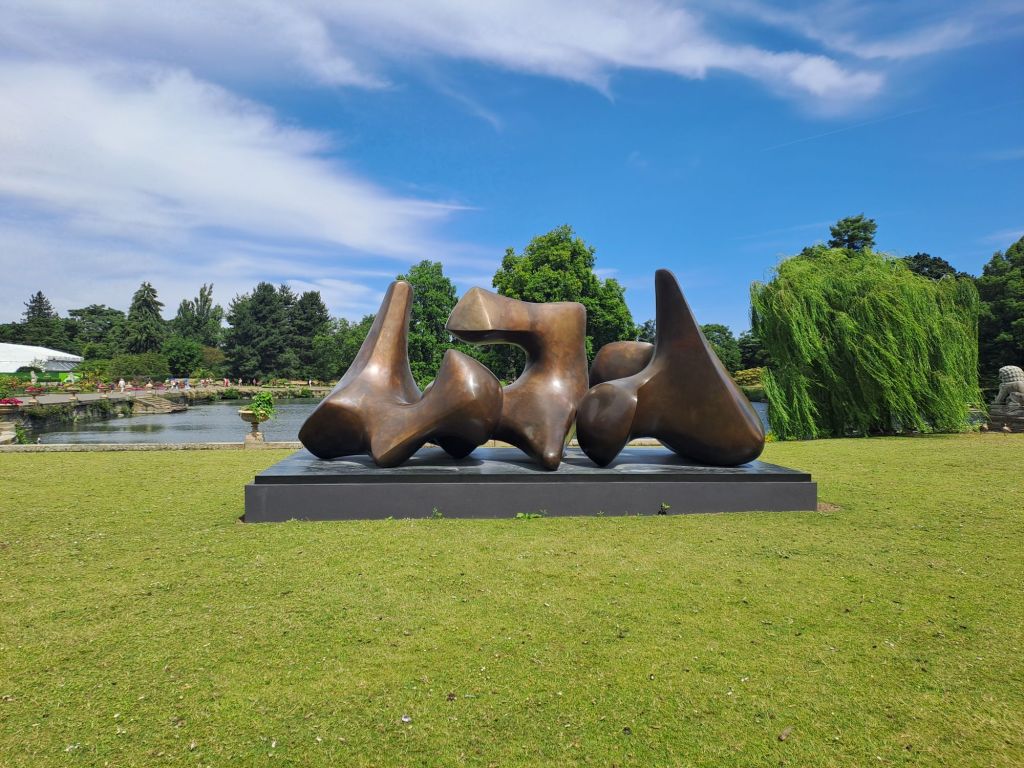
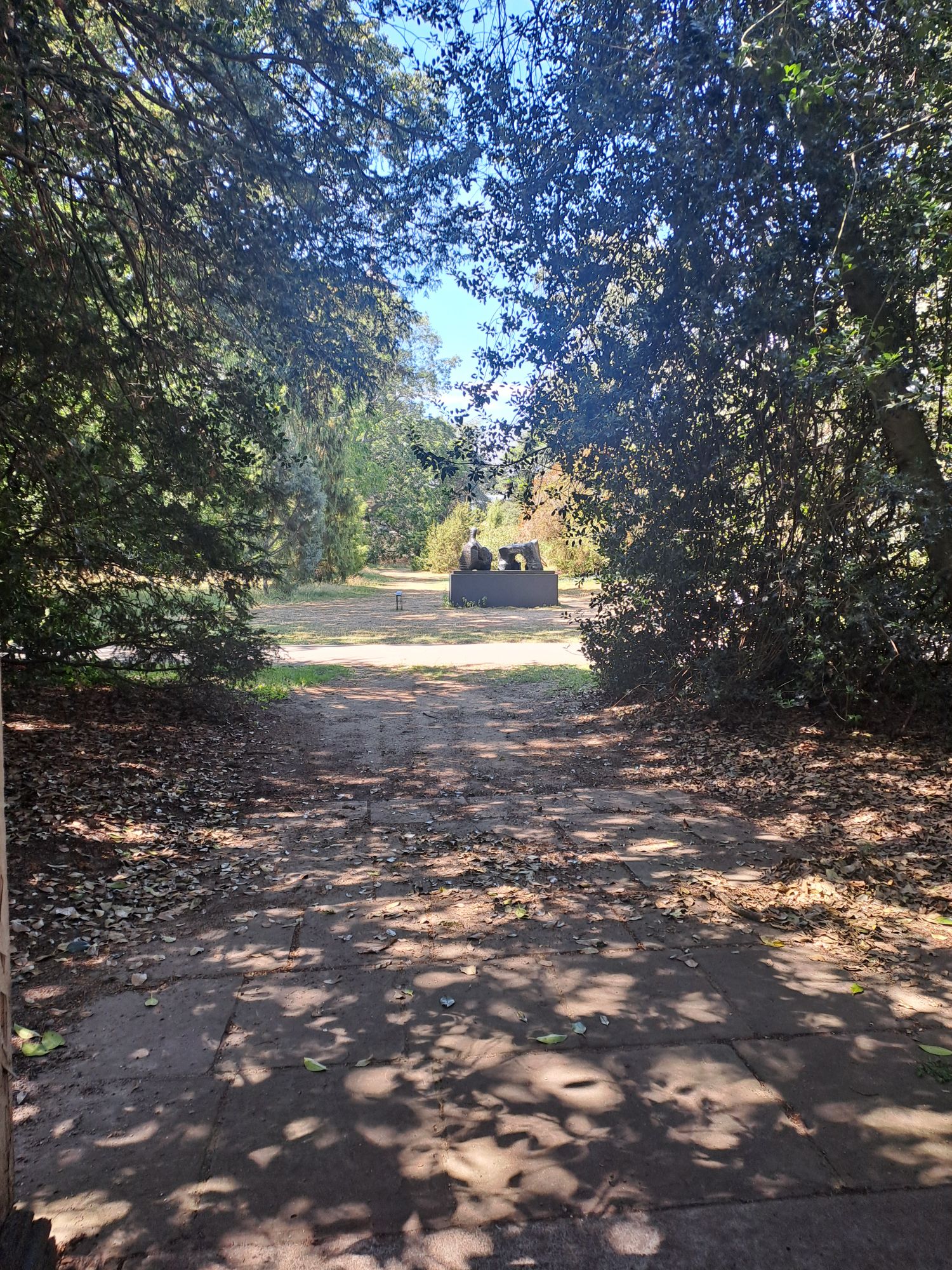
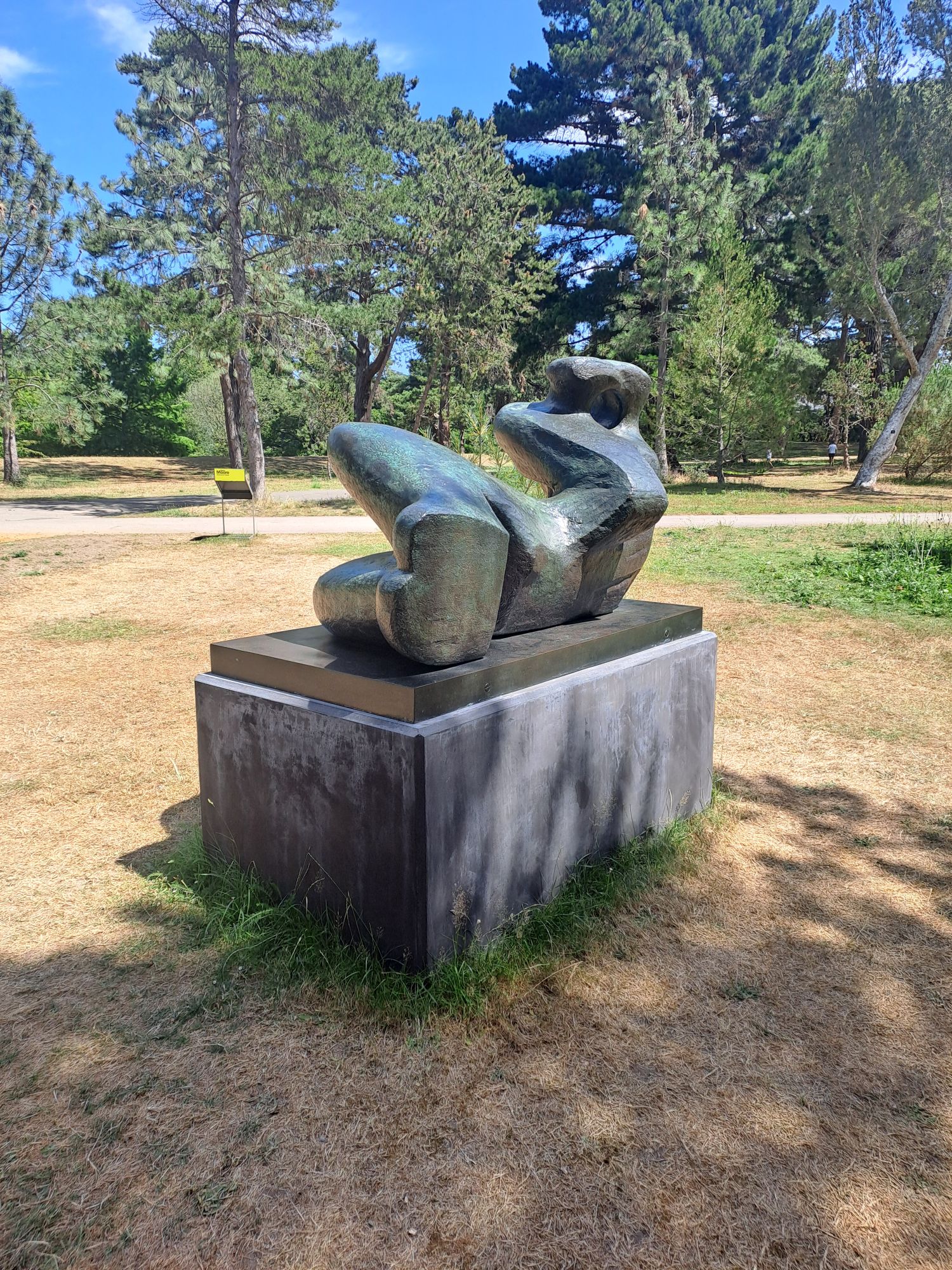
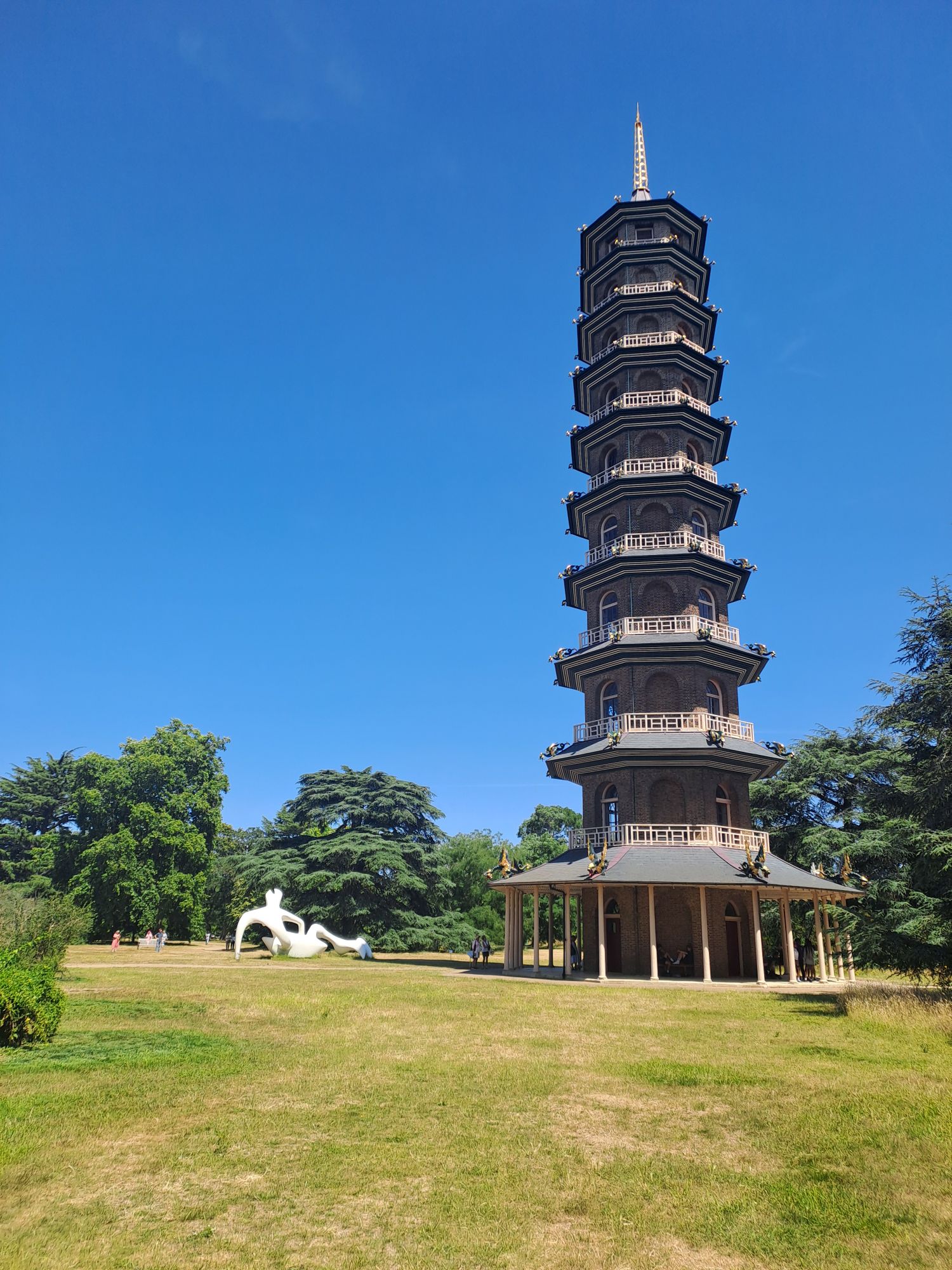
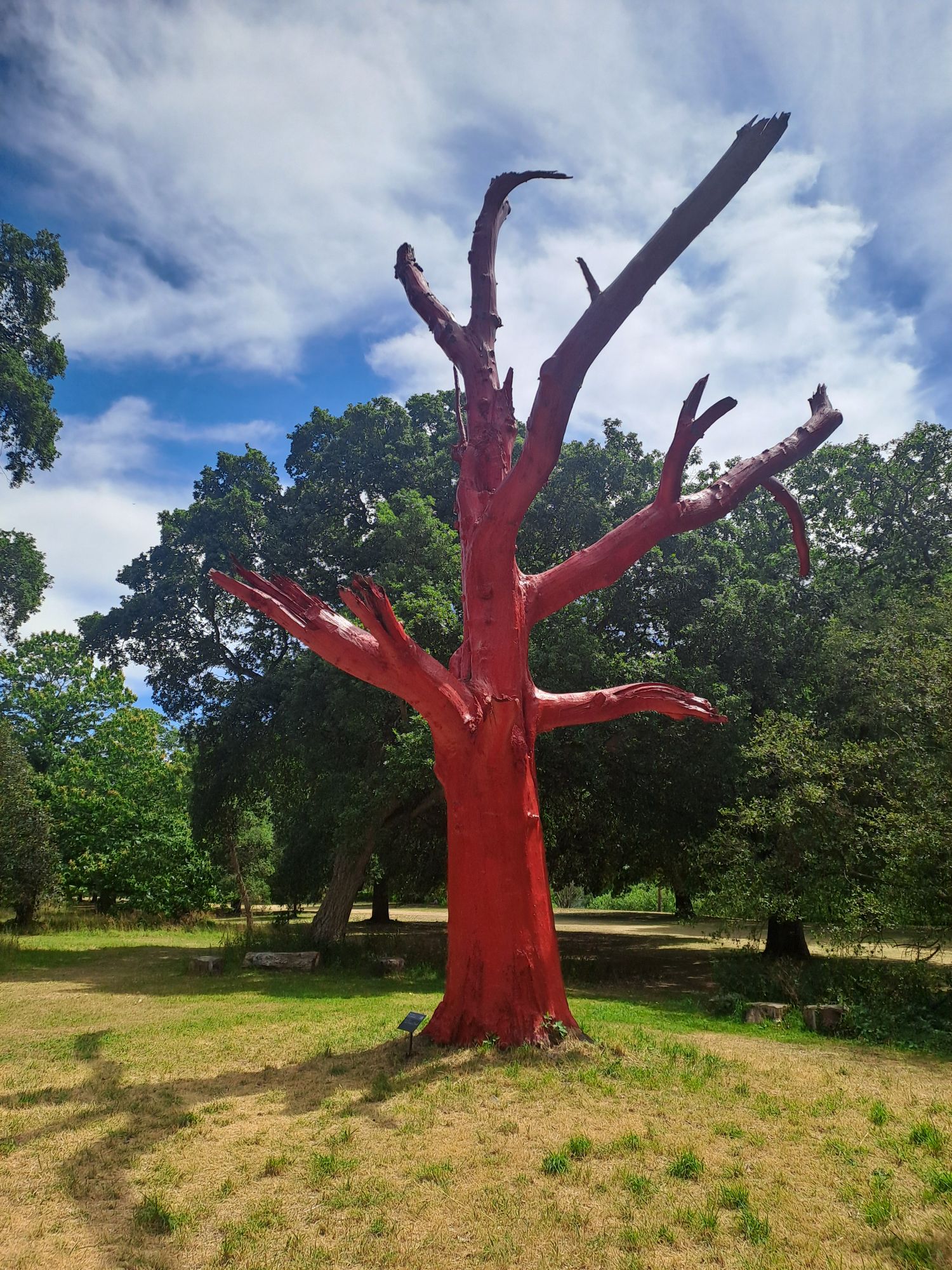
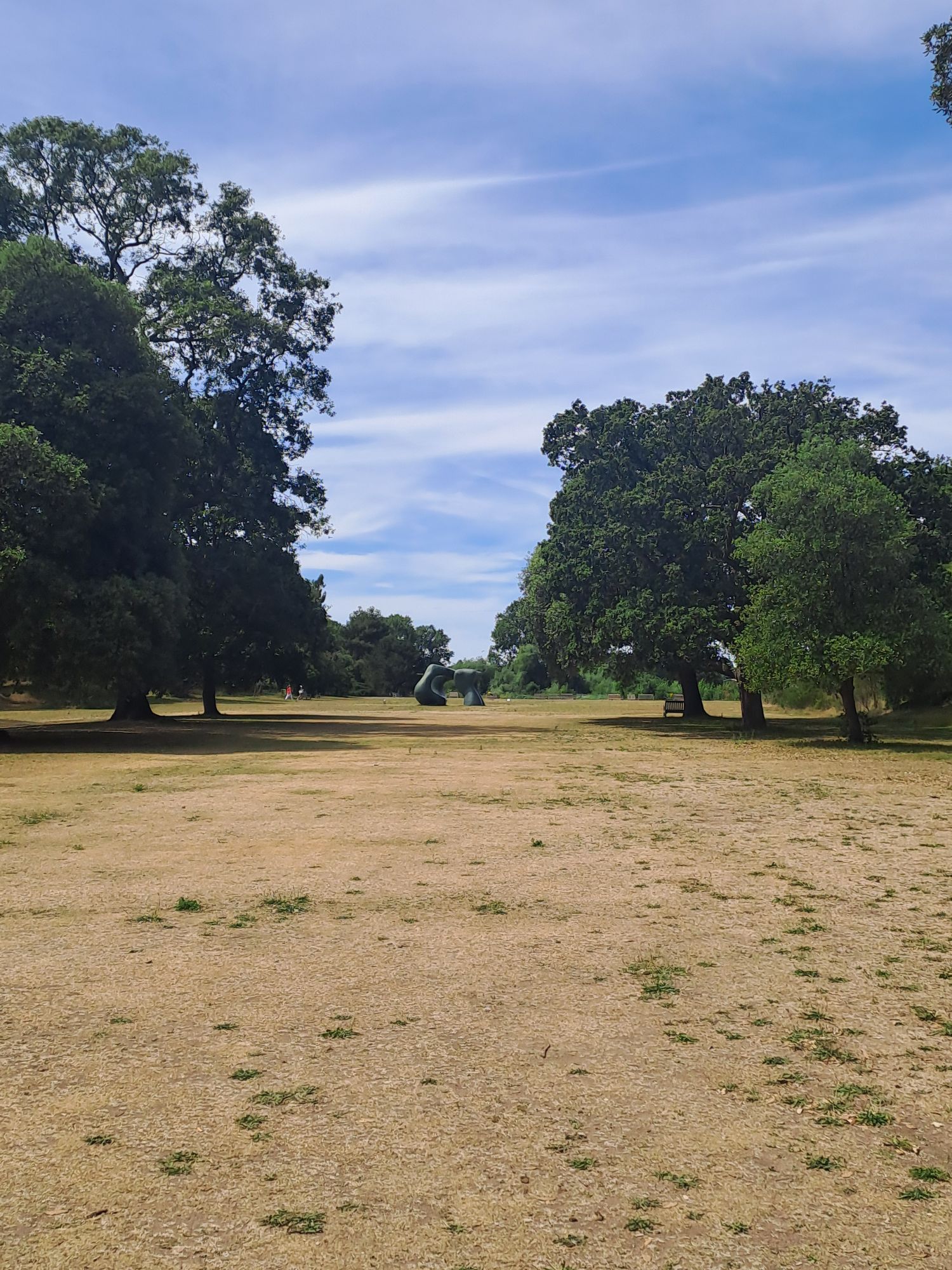
Another warm day in London found us taking the shortish trip by Tube to Kew to see not only the magnificent botanical gardens but also the large collection of sculptures by Henry Moore dispersed throughout. Here are a few snaps I took on the way around. As you can see in the pictures, the gardens are looking a bit parched.
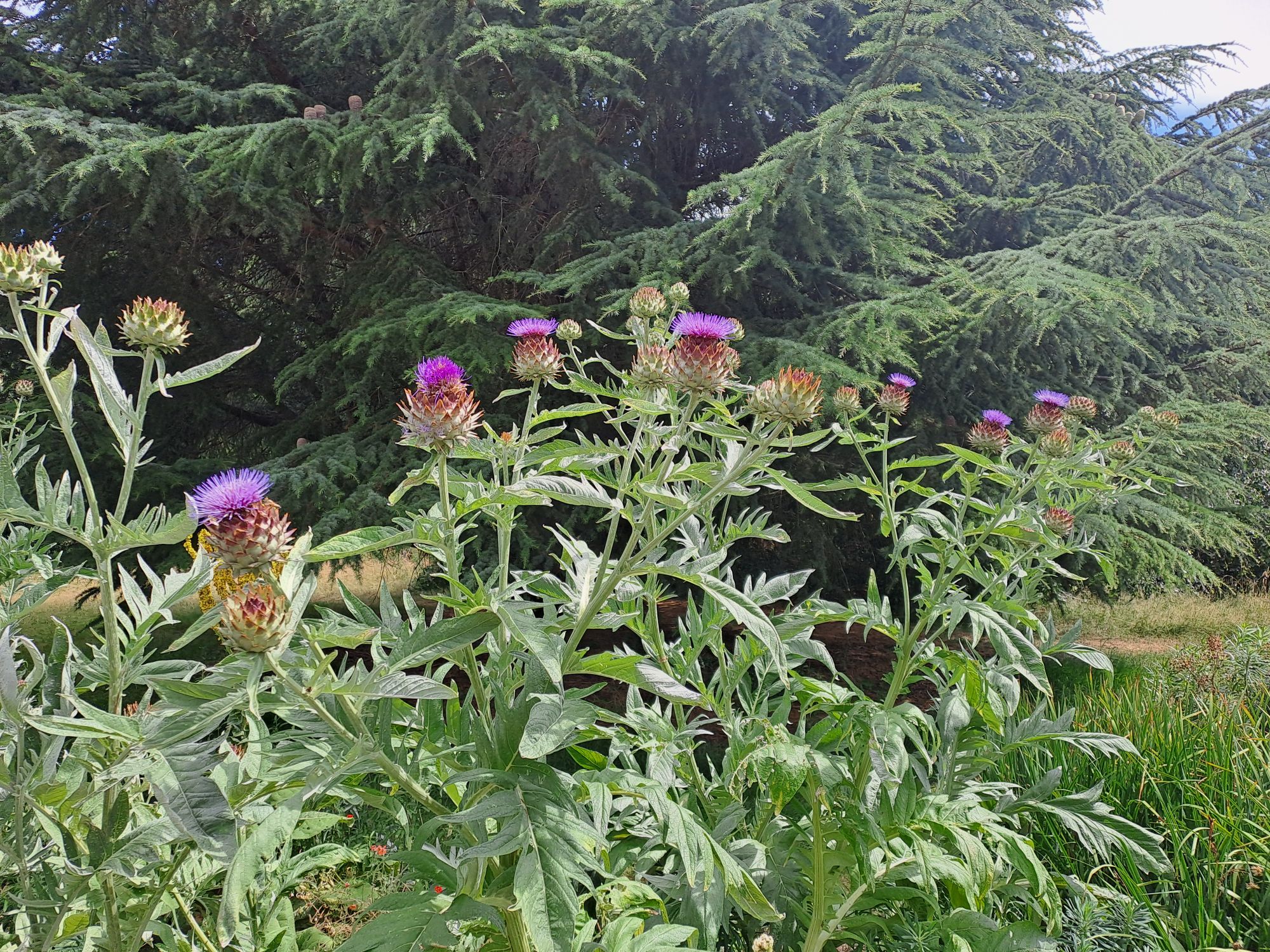
Cynara Cardunculus, in Kew Gardens, a large thistle plant which is very pollinator-friendly
It’s more than 30 years since I was last at Kew Gardens, so I didn’t remember the way round very well. We ended up spending about four hours there, including a stop for tea at the Orangery which, I’m delighted to say, was served properly, in a pot, with nice cups and saucers and milk in a little jug. The last time I saw works by Henry Moore in an outdoor setting was back in 2011; see this post.
Though not many people have gardens as extensive as Kew, they are very helpful in assisting domestic gardeners with hints and suggestions of things to plant in different spaces: dry, damp, sunlit, shady, you name it.
Anyway, it was a really lovely day for all kinds of reasons. I know it’s corny but I was reminded of that song by Lou Reed:
just a perfect day you make me forget myself I thought I was someone else someone good
After picking up his things from the hotel we went to Paddington where I saw my weekend companion onto the train for Heathrow. I’m a bit sad to be on my own again, but it won’t be long until the next time…and the next place.
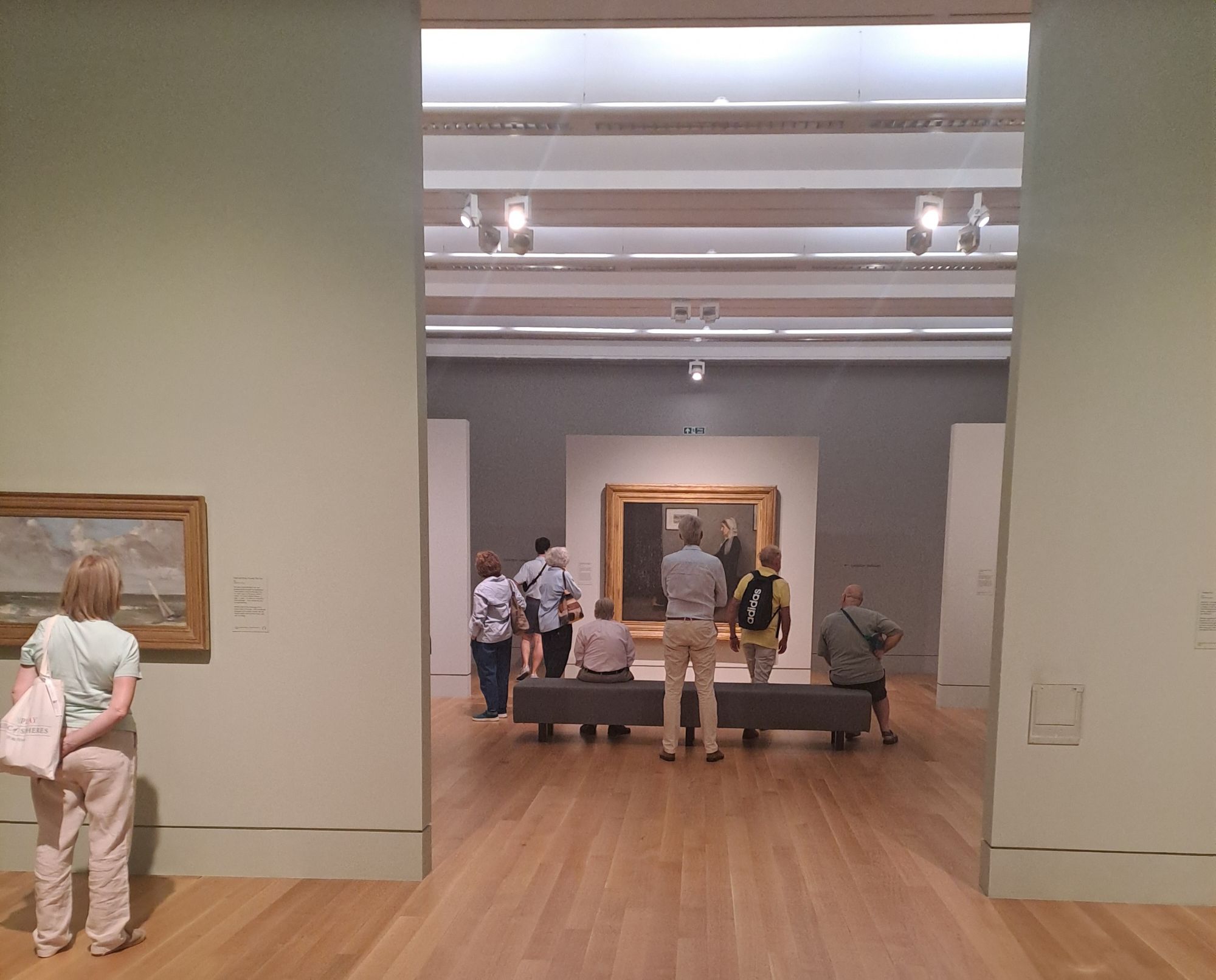
Back to the hotel for a short siesta after spending most of the day at Tate Britain, where there is a special exhibition of works by and about James McNeill Whistler. The main collection at Tate Britain is free, but the Whistler exhibition costs £24 to see. It’s well worth it though.
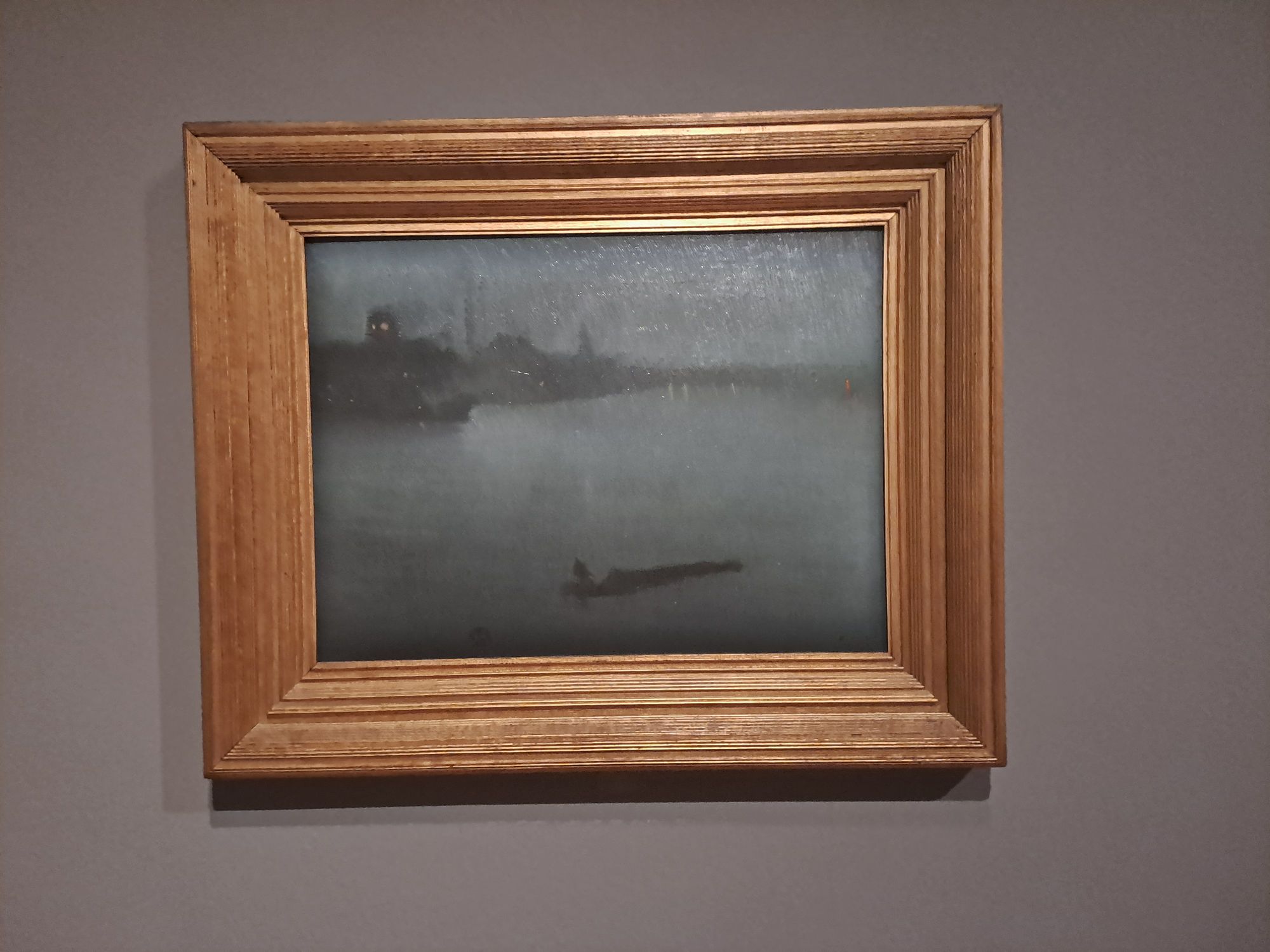
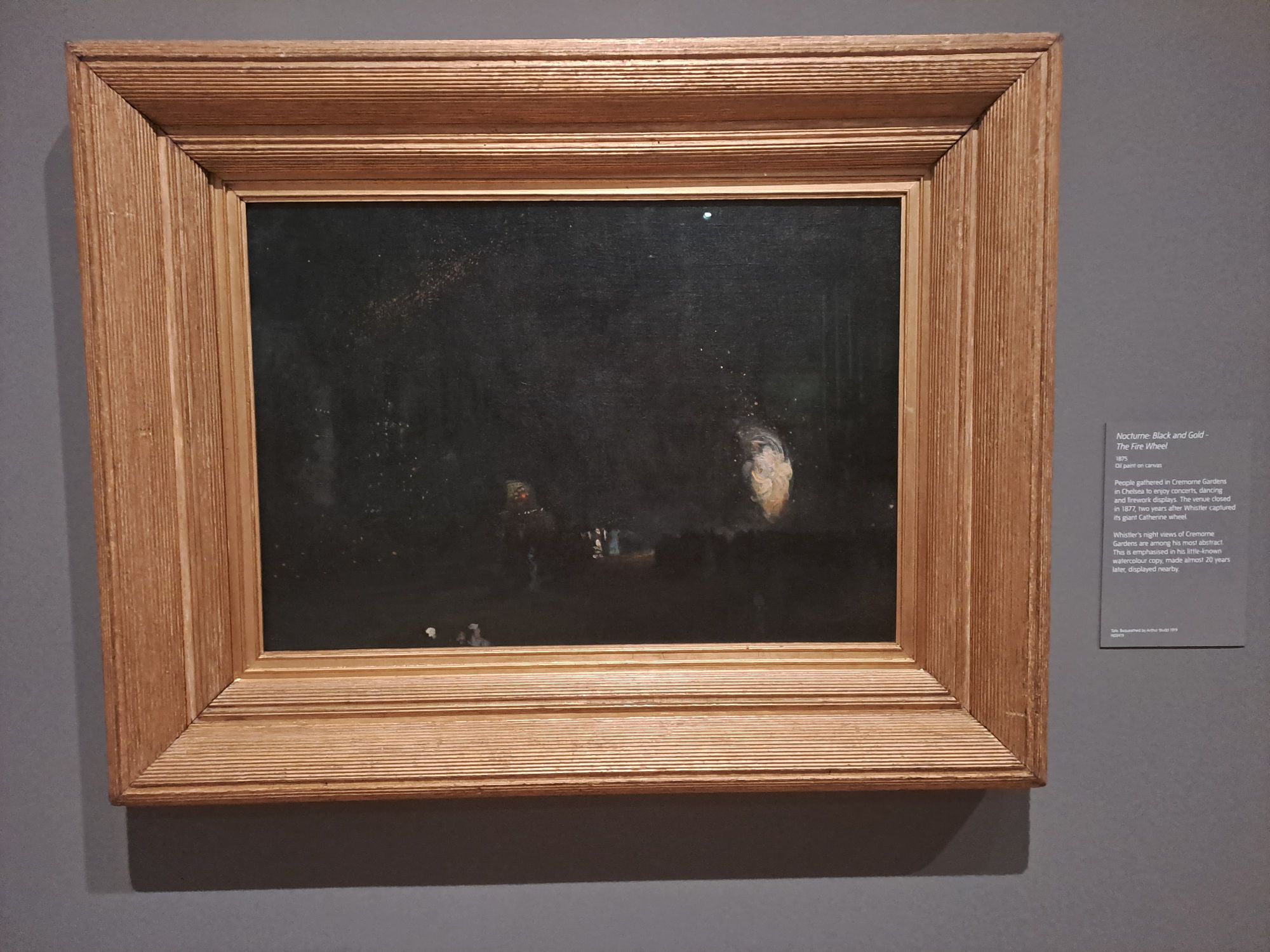
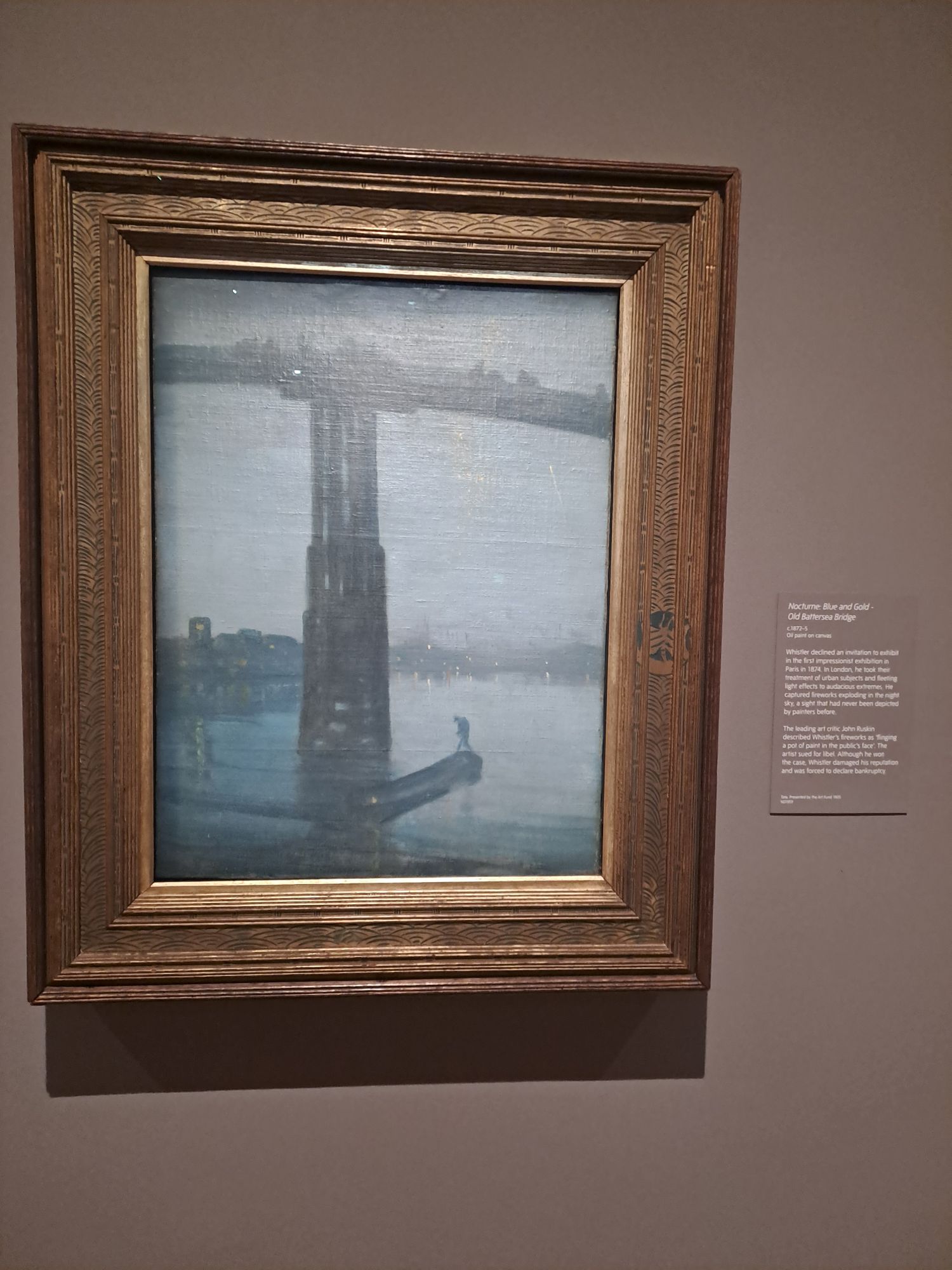
The first picture shows Whistler’s famous portrait of his mother, who seems to be holding court. My favourite pieces, however, the Nocturnes, two of which I have mentioned on this blog before. There are three shown below, but photographs don’t do them justice at all. The appearance of the paint when seen close up is quite remarkable, a sort of translucent quality to it even when the picture is very dark. Whistler was one of the first artists to really master painting in the dark without using moonlight or other obvious illumination.
The last of these is particularly interesting to me. When the great American songwriter Billy Strayhorn saw the beautifully evocative painting (above) of one of the bridges over the River Thames, it inspired him to write an equally evocative song to be performed by his longstanding musical collaborator and friend Duke Ellington. The song was written in 1941, but it was only years later that he realized that he had named it after the wrong bridge. The painting was of Battersea Bridge; but he had named the song Chelsea Bridge, a much less romantic location. Chelsea Bridge is an intriguing tune, based on minor sixth chords voiced via their third inversions, it sounds almost atonal but very evocative, just like the painting.
In one of the video segments played during the exhibition we hear the actor Anton Lesser quoting Whistler with words the effect that he saw colours like notes on a keyboard; he started naming his paintings after musical works, e.g. “Symphony in White” before he got to his masterpieces, the Nocturnes.
I wrote about another of the Nocturnes here. Nocturne in Black and Gold, in the same series as the third picture above, is famous for having been at the centre of a libel case. The influential art critic John Ruskin hated it and accused Whistler of “flinging a pot of paint in the public’s face”. Whistler sued for damages (though he couldn’t really afford to). He won the case against Ruskin, but the outcome was financially disastrous for him because he was awarded only one farthing in damages and was bankrupted.
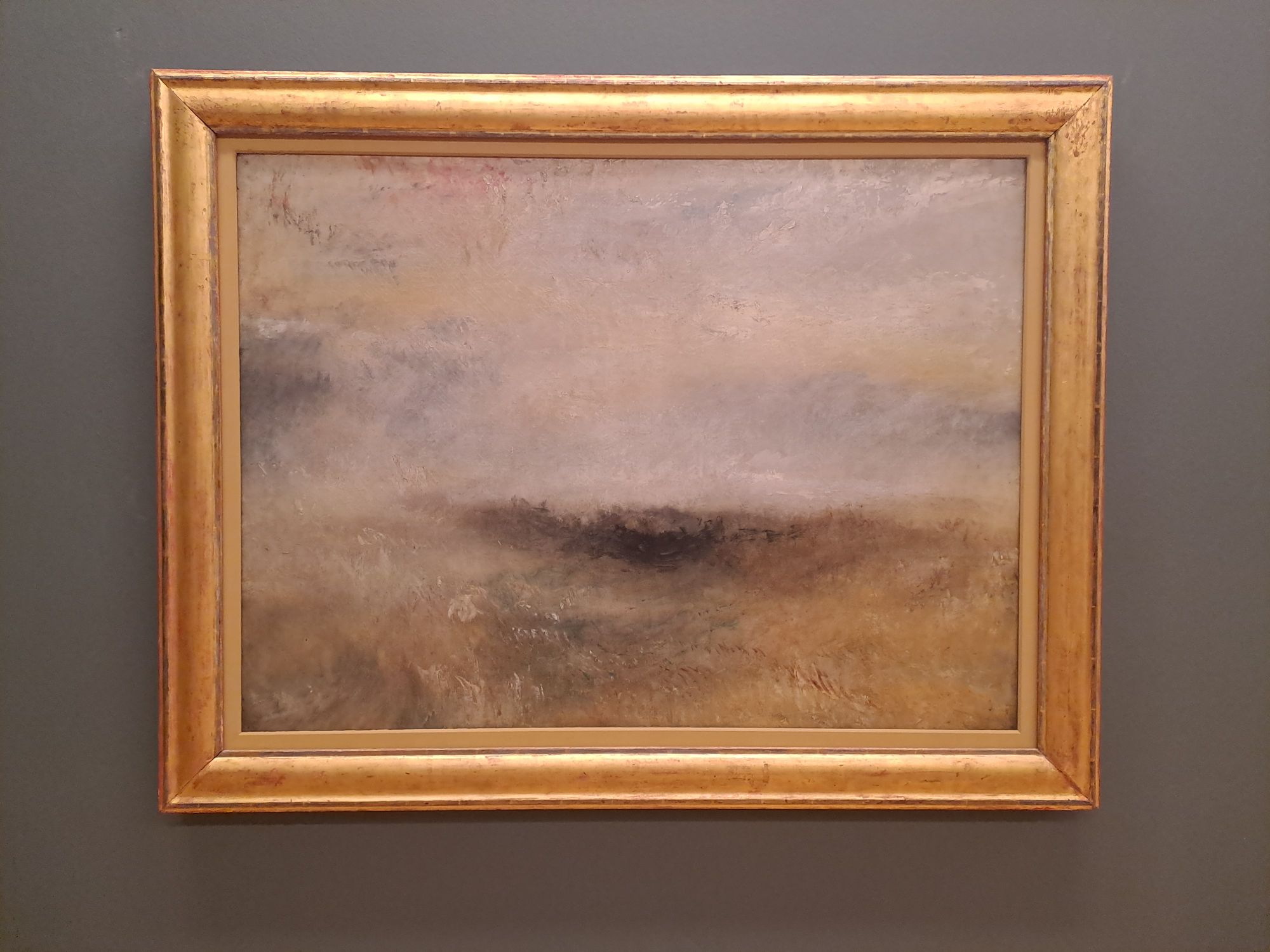
Tate Britain has an extensive permanent collection of primarily English art from about 1600 onwards, not least a huge collection of works by J.M.W. Turner. It’s fascinating to see so many of these together, charting this extraordinary artist’s evolution from brilliant if conventional upstart to pioneering impressionist. Along the way Turner’s interest in conventional themes began to wane in favour of the interplay between sea and clouds, to the extent that his works began to look like abstracts. There is in my mind a strong influence on Whistler. This one, ostensibly a seascape with a distant shore, reminds me of Rothko.
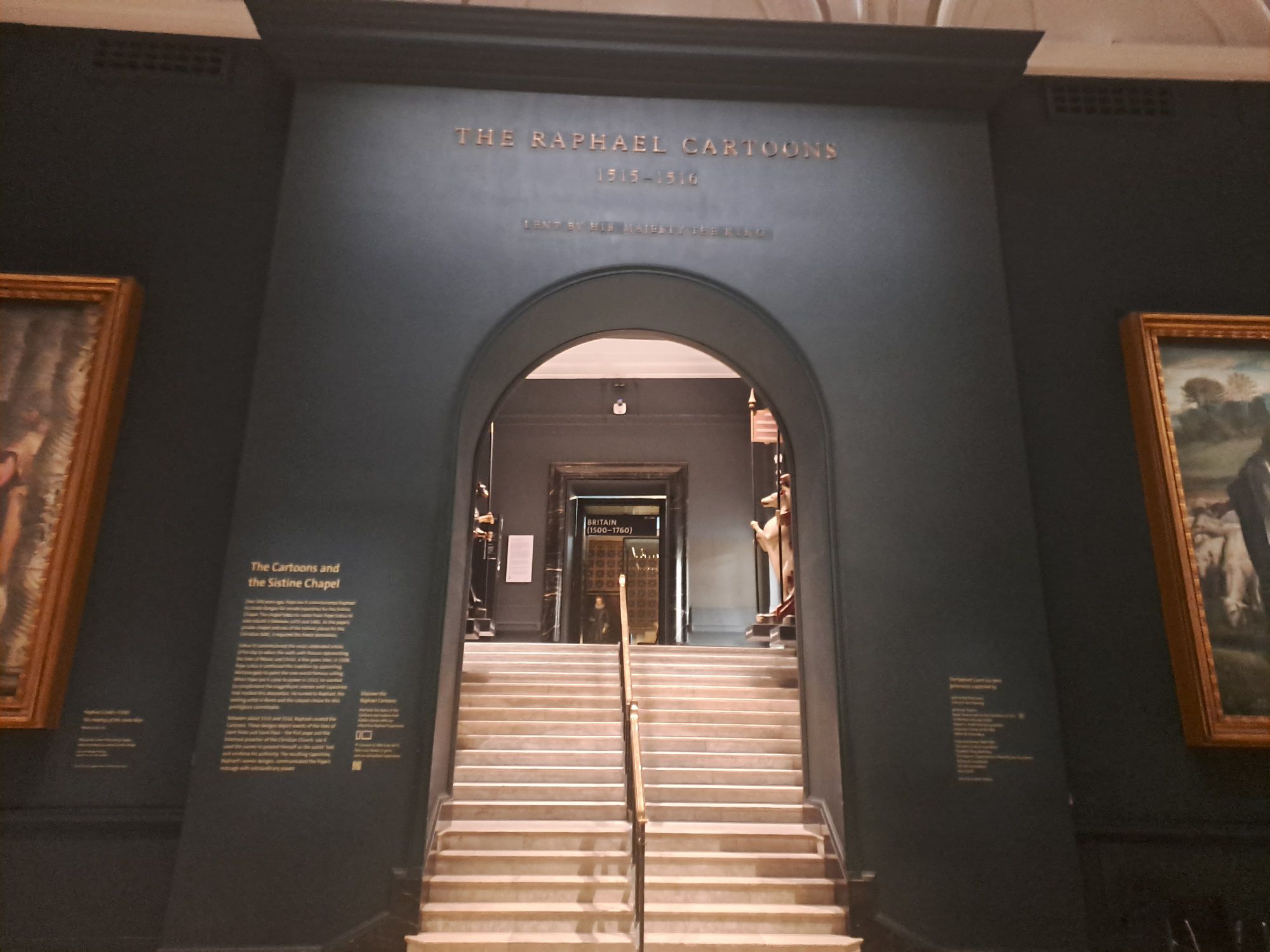
I can’t remember when I was last in the Victoria and Albert Museum but it’s long enough ago for me to have forgotten how big it is. It being free to get in and very near to why I am we are staying it was an easy decision to head there this morning before going to the Pride festivities. In fact it was so enjoyable and so extensive we were a bit late leaving. It’s definitely well worth a visit if you’re in London.
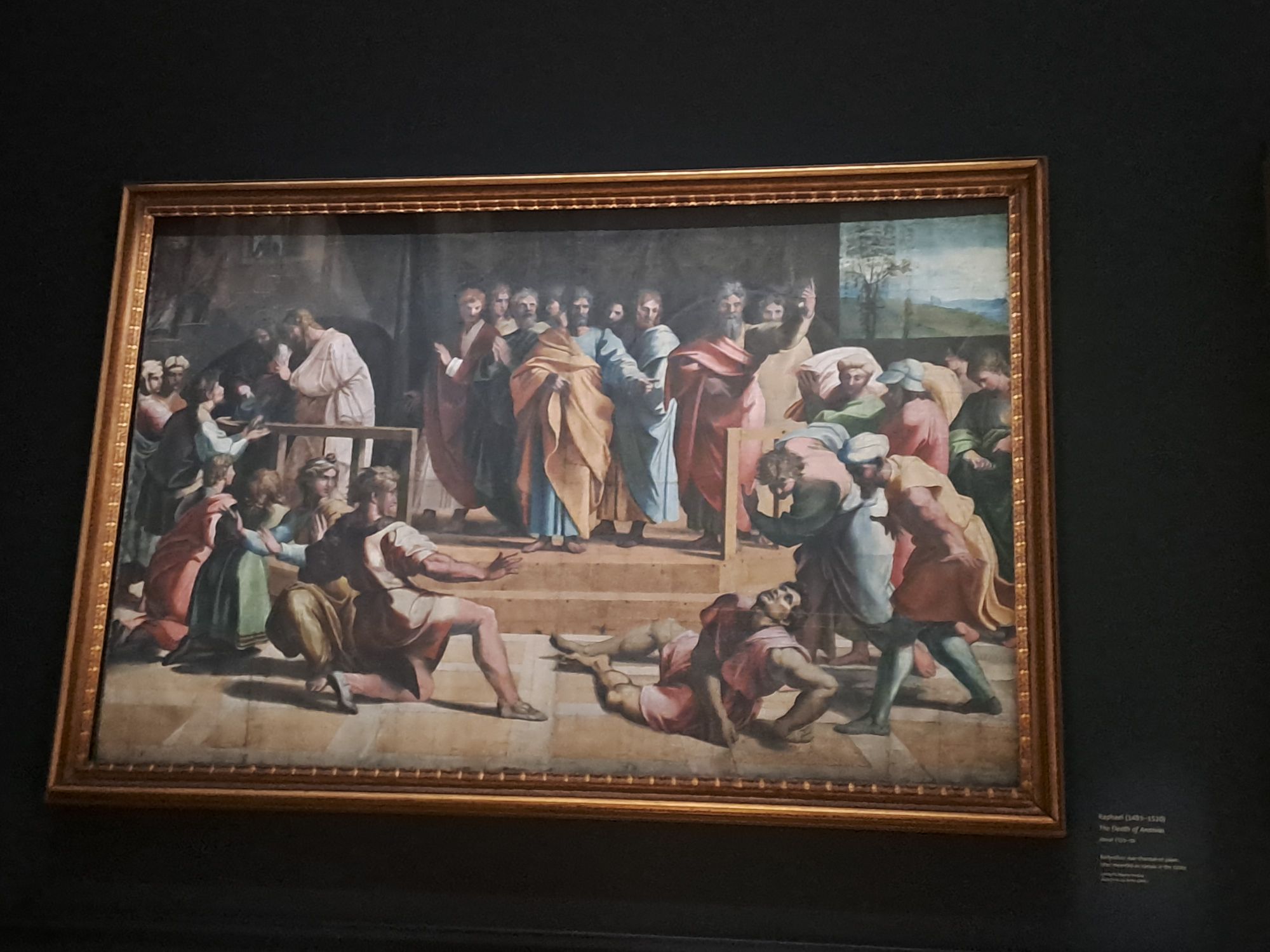
I remember the Raphael Cartoons from when I was last at the V&A. They’re very well done – an example is on the right below – but I didn’t find them very funny. In fact I couldn’t see the joke in any of them!
Just so you don’t think I’m a complete ignoramus, the “cartoons” are complete designs for tapestries – they would be placed underneath the loom as a template for the weavers to follow. Incidentally, the Bayeux “Tapestry” – currently on display in the British Museum – is not a tapestry at all. Being stitched rather than woven, it’s an embroidery not a tapestry. The Raphael cartoons were made for tapestries that hang on the walls in the Sistine Chapel in the Vatican, intended to complement Michelangelo’s famous ceiling. I still don’t know who did the floor.
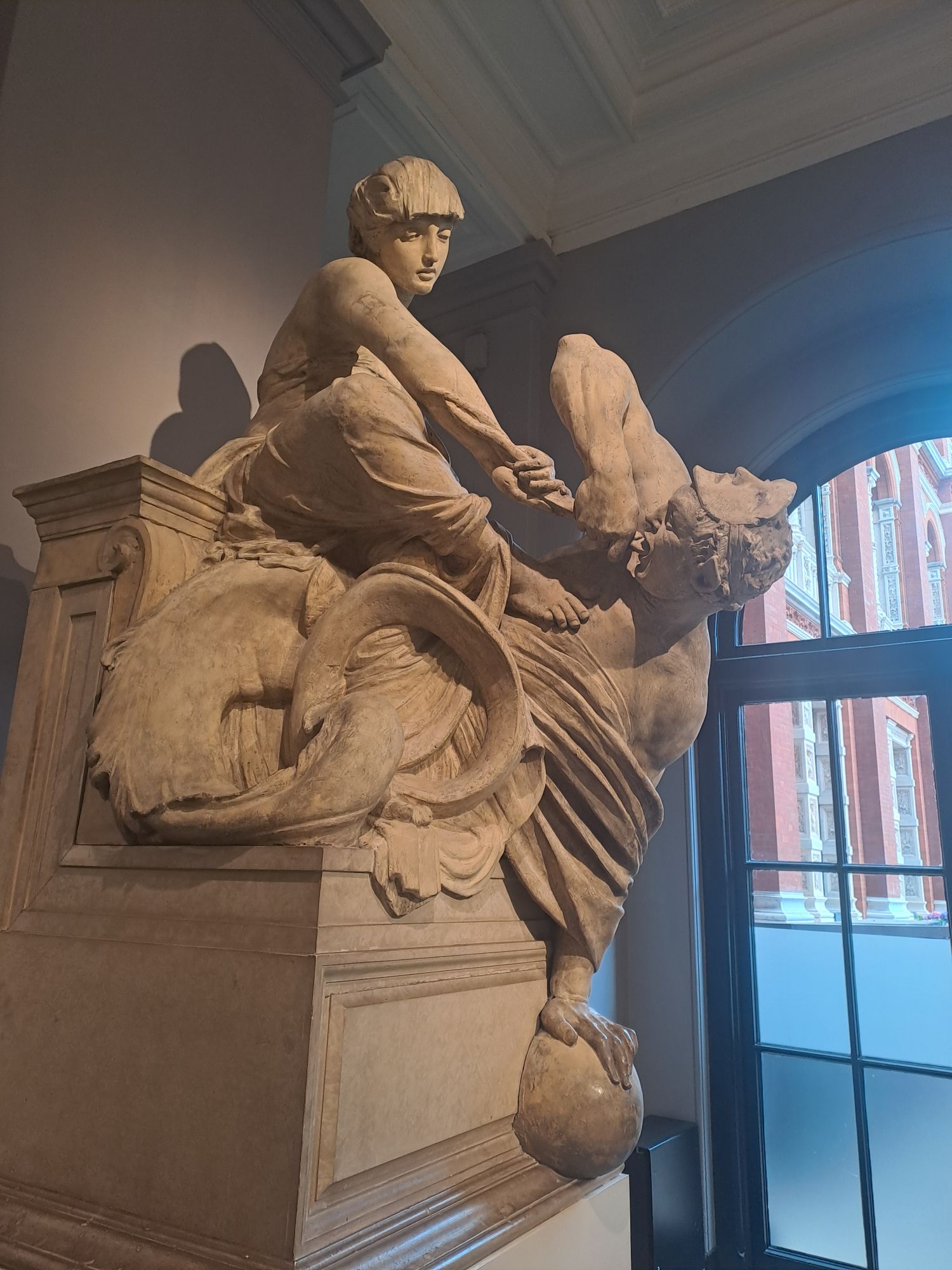
I’m not very good at taking pictures in galleries, especially when I’ve got company as I had today, but in the light of yesterday’s post I couldn’t resist this:
It’s a plaster study by Alfred Stevens for a sculpture that would form part of the memorial to the Duke of Wellington in St Paul’s Cathedral. It’s called Truth and Falsehood (there is another called Valour and Cowardice).
In this work Truth tears out the double tongue of Falsehood and pushes aside the mask concealing his grotesque features. His serpent-tails are exposed beneath the drapery.
Another thing I was reminded of by today’s visit is the prominent role played in the early days of the Victoria & Albert Museum in South Kensington by the artist Frederic Leighton, who featured in a recent post.
I spent today in London, wandering about and visiting various locations I haven’t seen for a while, including the Science Museum (near where I’m staying) and Tate Modern (not near where I’m staying). The Science Museum has changed quite a bit since my last visit there many moons ago, but it still reminded me of Toby Esterhase’s description in Smiley’s People:
In the Science Museum, top floor. All those airplanes. Lot of kiddies eating crisps.
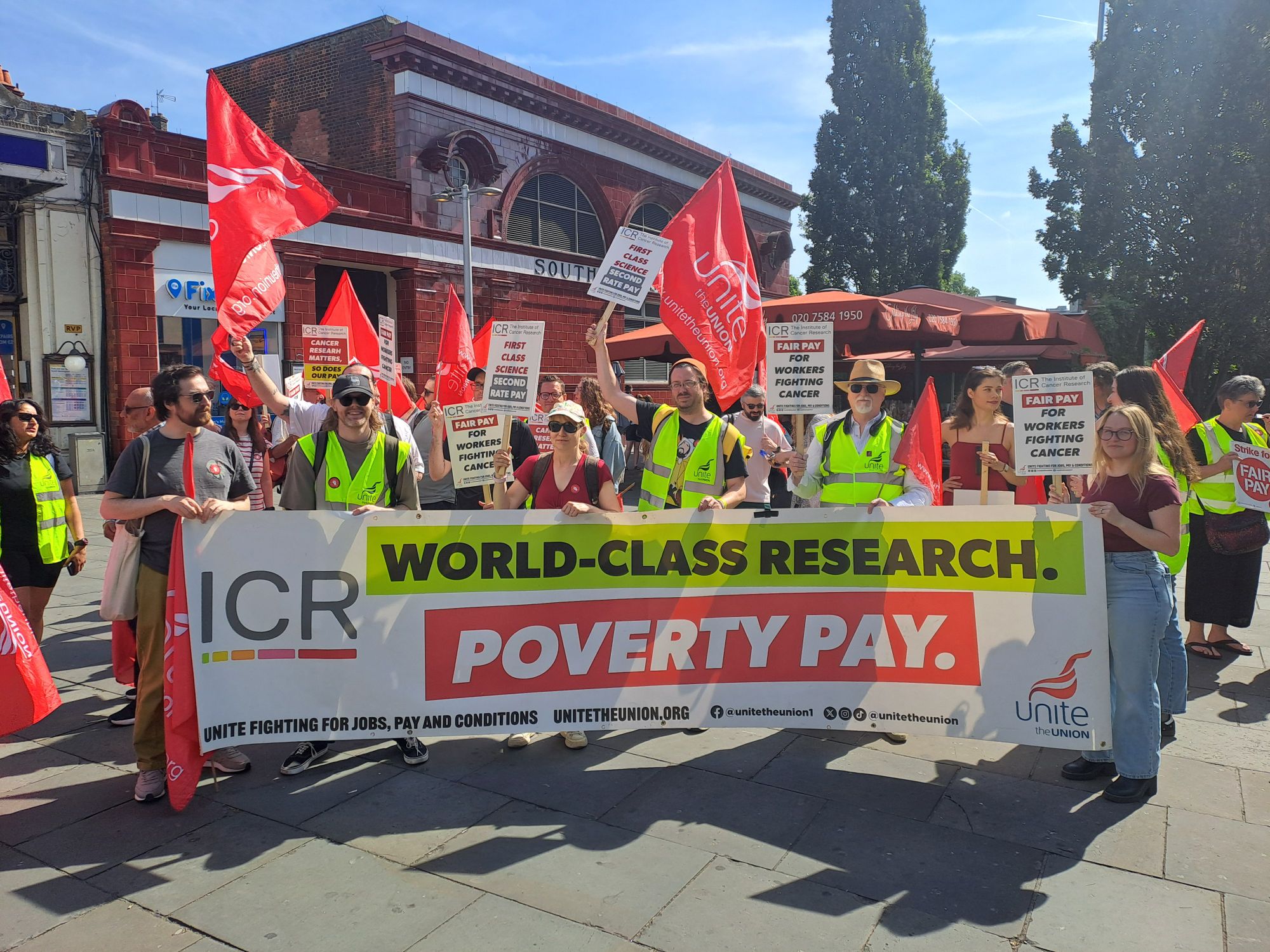
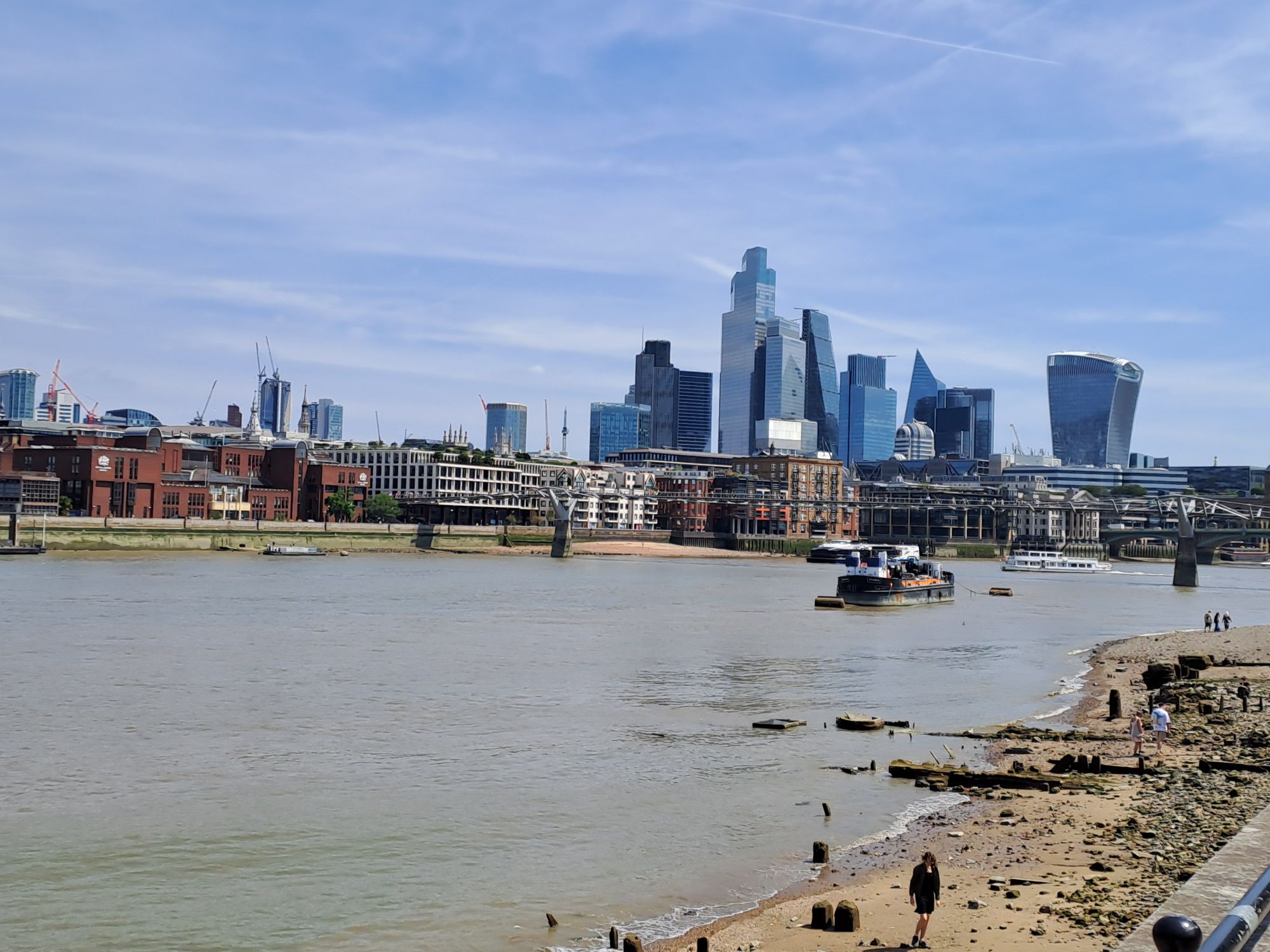
There was indeed a lot of kiddies, this being peak season for school trips, and the aeroplanes are still there. On the way from the Science Museum to Tate Modern, I bumped into some members of the union Unite from the Institute of Cancer Research who were at outside South Kensington tube station protesting about pay and conditions, and promised to send a message of solidarity on social media, which I hereby do.
Unite MembersOn the way to Tate Modern
Tate Modern was really good, if also busy with a lot of kiddies. I particularly enjoyed The Tanks, in one of which there is an eerily lit exhibition of Giacometti scupltures and another an installation by Nora Chipaumire called Gadzi, which includes sculpted and audio elements between which you can sit or move around. One of the interesting things about installations like this is watching what other people do: some were sitting on the large loudspeakers playing the music, others moving around to experience changes in the sonic experience.
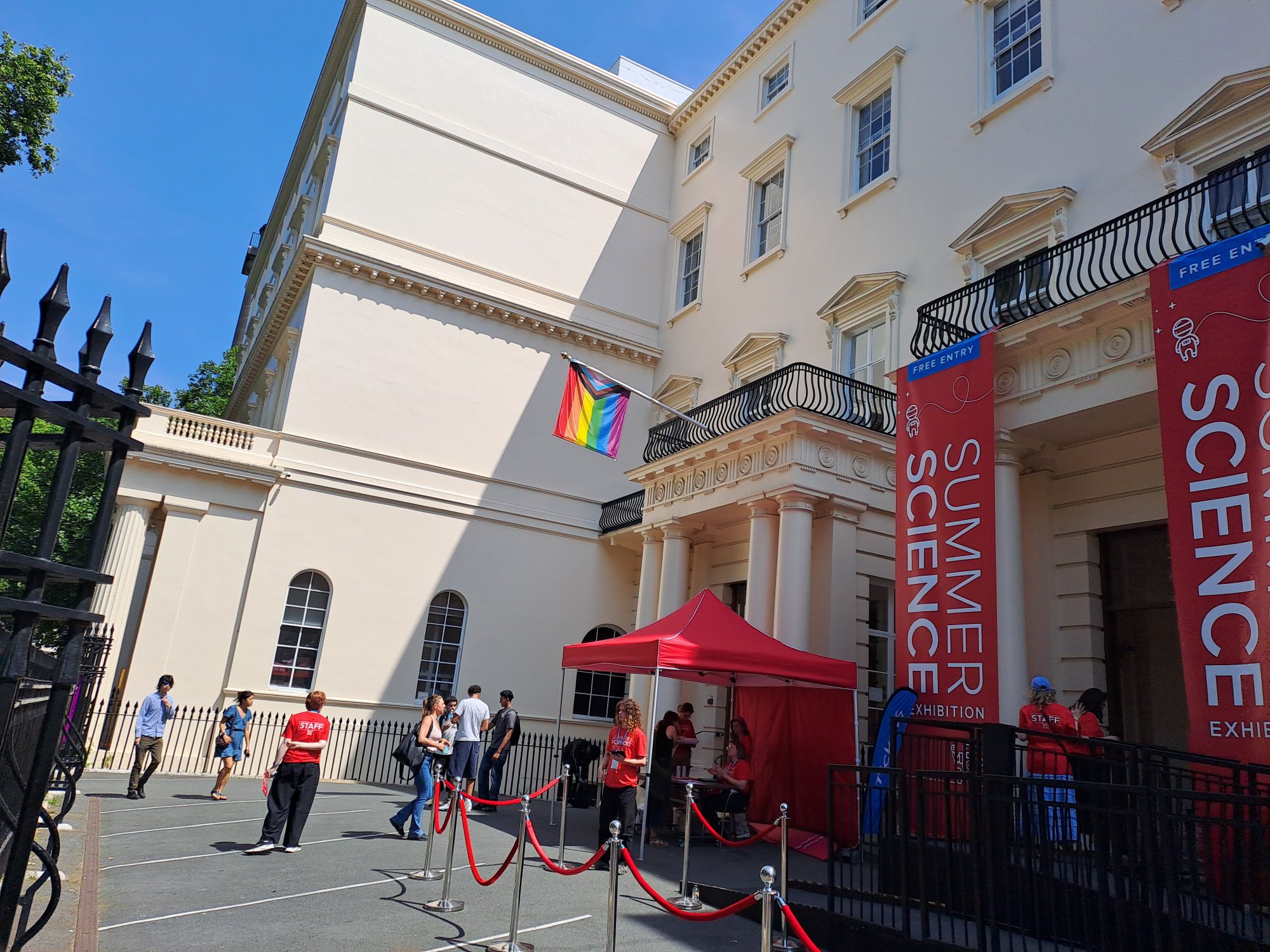
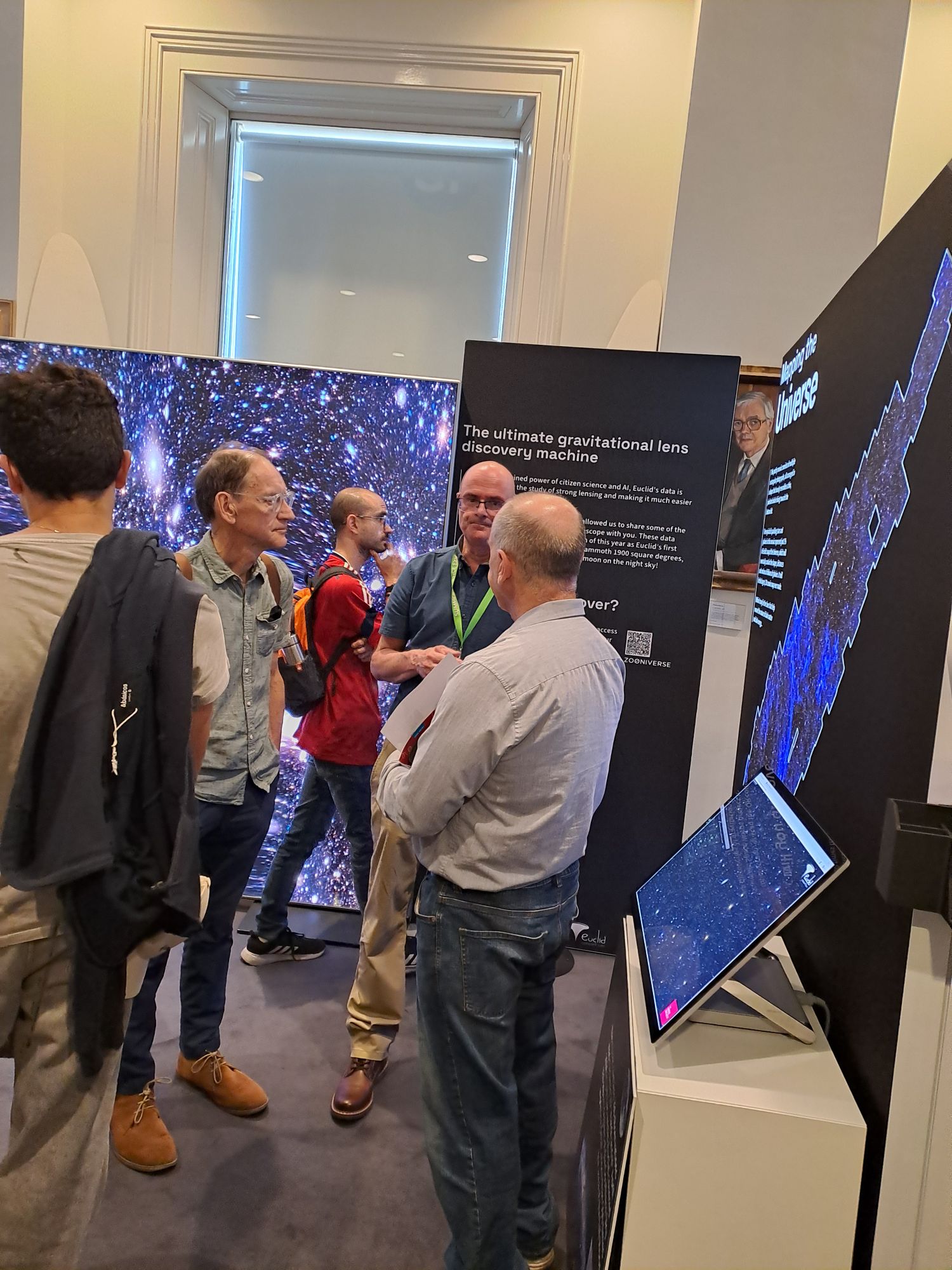
After Tate Modern I dropped in at the HQ of the Elon Musk Appreciation Society Royal Society in Carlton House Terrace. This is the time of year for the annual Summer Science Exhbition. Note the Pride Progress flag flying outside. Inside was another lot of kiddies but quite a few adults too. Out of the thirteen exhibits, three were directly relevant to my own science area: one from the Simons Observatory, one from Durham University about galaxy formation simulations, and also one from Euclid. Here is Andy Taylor from Edinburgh at the latter, explaining B-modes to visitors:
The Pride Progress flag reminds me to explain, as if you hadn’t realized, that tomorrow (4th July) is the day of the Pride in London parade. Having a meeting to attend this week and another thing to do in London next week, it proved impossible to resist staying over the weekend. Now I’ll have to finish this blog as I have to meet a certain person off the train who is coincidentally flying in especially tonight to stay with me for this very special weekend.
P.S. It was very warm today, and set to get even warmer going into next week…
Flaming June by Frederic Leighton (1895, Oil on Canvas, 120 ×120cm, Museo de Arte de Ponce, Puerto Rico)
Since this June has seen a heatwave across Europe and even here in Ireland, I was reminded of the expression “Flaming June” which I thought until relatively recently was some sort of folk expression or quotation from a poem, but it is instead the title of this Pre-Raphaelite painting by Frederic Leighton of a lady wearing what looks like a dress made out of old curtains. Apparently the oleander branch seen in the upper right symbolizes the fragile link between sleep and death. It looks to me like she must be attending a seminar. You can read more about this painting here.
As well as a hugely popular artist in his lifetime (though his reputation has not endured), Leighton holds the record for the shortest ever peerage: he was made Baron Leighton just the day before he died. The title he had been given was to be hereditary but as he had no offspring the title became extinct at his death.
Today brought sad news of the death of artist David Hockney at the age of 88. Hockney was one of the leaders in the pop art movement, which involved assimilating and distilling ideas from popular culture and his career spanned painting, drawing, photography, printmaking and stage design. The last exhibition I saw by him consisted of wonderful drawings done on an IPad. That was about 15 years ago; he remained remarkably active and productive well into old age.
Throughout his career, Hockney’s work was often inspired by his fascination with light, especially its interplay with water, as well as his unique sense of space and unusual use of colour. His most famous early expressions of these were realised in California, where he became obsessed with the bright sunshine and the plethora of swimming pools.
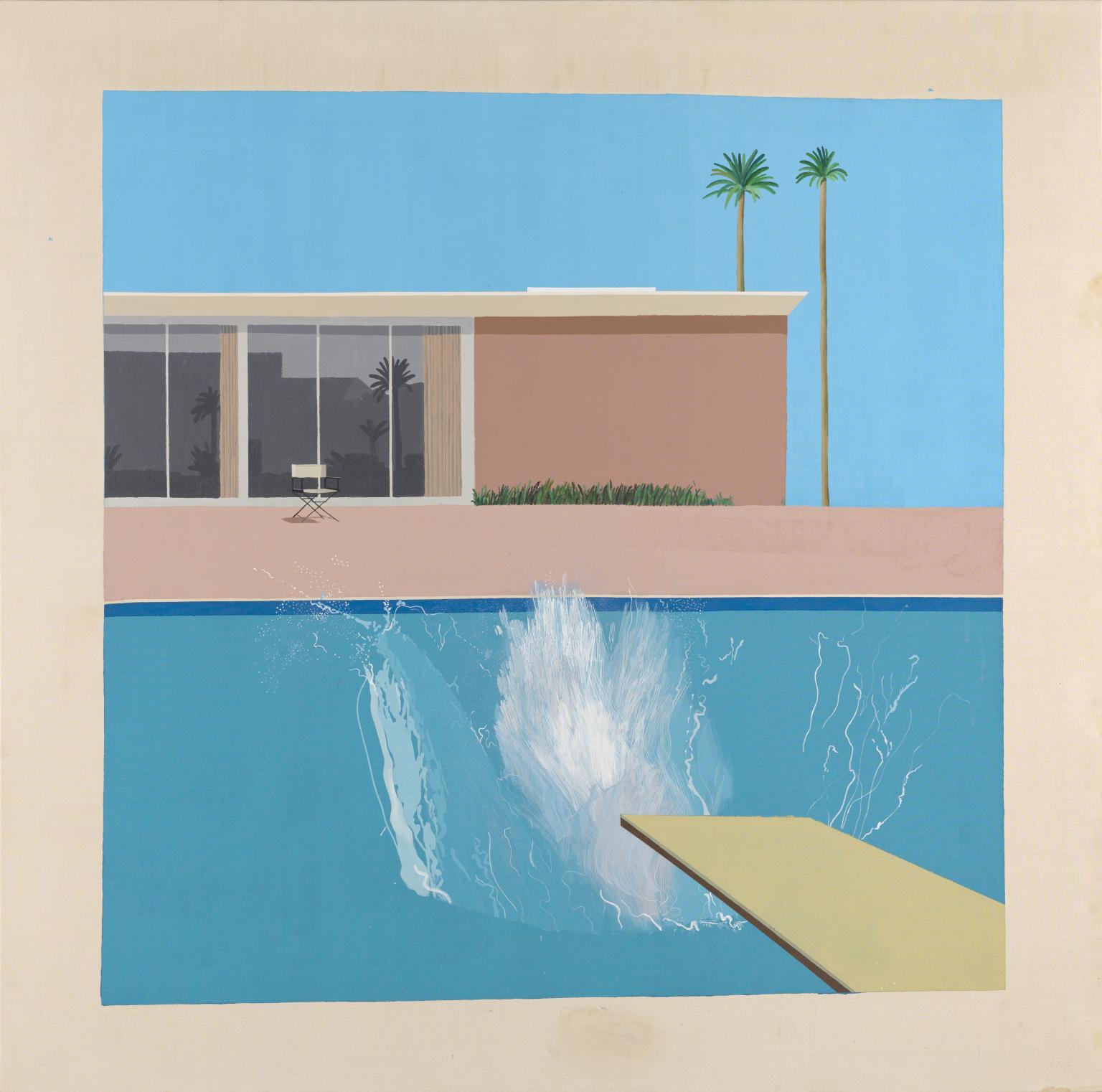
As Hockney’s fame grew his work became very collectible, commanding huge prices at auction, so much of it ended up in private collections. This large-scale work, A Bigger Splash, painted in 1967, followed a smaller painting, The Splash (1966). The earlier work fetched around $30M at auction and is in a private collection, but A Bigger Splash can be seen at Tate Britain. The spare composition and distinctive palette are his instantly recognisable trademarks.
A Bigger Splash by David Hockney (1967, Acrylic on Canvas, 242.5 × 243.9 cm, Tate Britain, London)
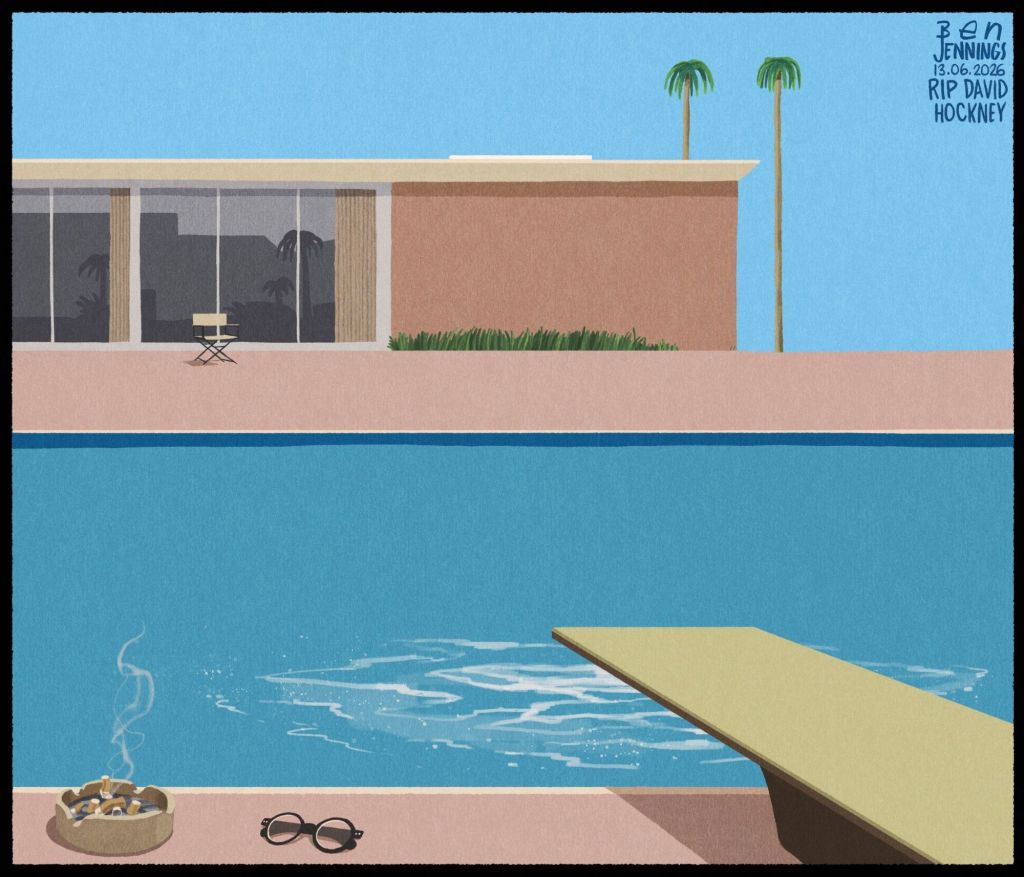
Update: here’s a very poignant cartoon by Ben Jennings.
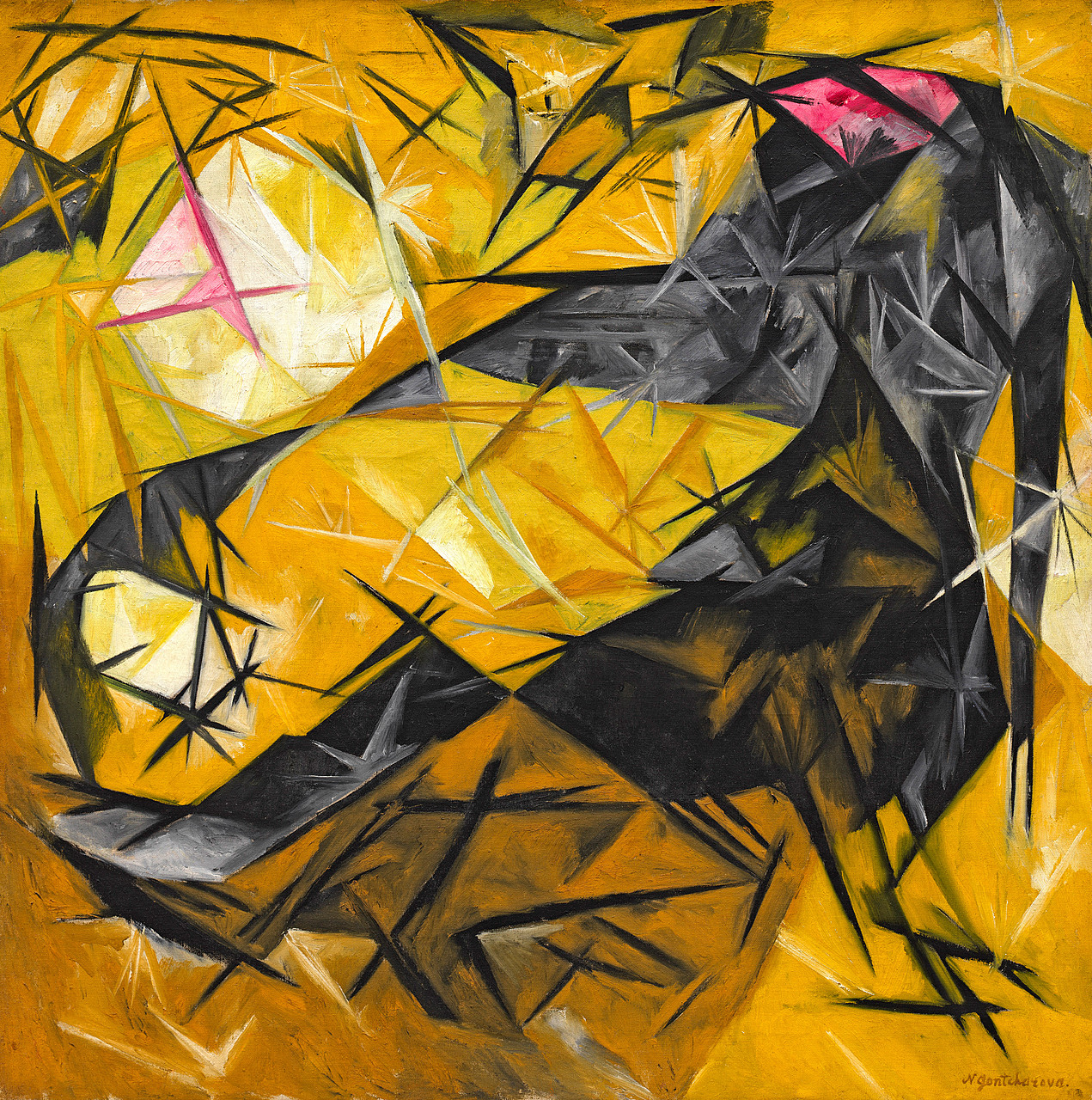
Cats (Rayist percep. in rose, black, and yellow) by Natalia Goncharova (1913, Oil on Canvas, 85.1 x 85.7 cm, Guggenheim Museum, New York).
This is a Rayist (or Rayonist) composition in which the artist tries to capture rays of light reflected off objects in the material world. Dynamic lines are added to suggest crystalline forms and the movement of light and energy. The style was influenced by scientific discoveries on the discovery of X-rays and radioactivity suggesting a reality beyond the direct perception of the naked eye.
The views presented here are personal and not necessarily those of my employer (or anyone else for that matter).
Feel free to comment on any of the posts on this blog but comments may be moderated; anonymous comments and any considered by me to be vexatious and/or abusive and/or defamatory will not be accepted. I do not necessarily endorse, support, sanction, encourage, verify or agree with the opinions or statements of any information or other content in the comments on this site and do not in any way guarantee their accuracy or reliability.


 In the Dark