Archive for July, 2026

Weekly Update from the Open Journal of Astrophysics 04/07/2026

Posted in OJAp Papers, Open Access, The Universe and Stuff with tags , , , , , , , , , , , , , , , , , , , , , , , , , , , , , , on July 4, 2026 by telescoper

It’s Saturday again so it’s time for another update of activity at the Open Journal of Astrophysics. Since the last update we have published a further seven papers, bringing the number in Volume 9 (2026) to 136 and the total so far published by OJAp up to 584.

I will continue to include the posts made on our Mastodon account (on Fediscience); these announcements also show the DOI for each paper.

The first paper to report this week, published on Monday 29th June, is “Analysis and implications of the spatio-spectral morphology of the Fermi Bubbles” by Ami Tank (Indian Institute of Technology) and Roland Crocker & Mark R. Krumholz (Australian National University). Published in the folder High-Energy Astrophysical Phenomena, this paper presents an analysis of the gamma-ray structures of Fermi Bubbles in the Milky Way using a decade of data. The research suggests either hadronic or leptonic processes can explain the data.

The overlay for this paper is here
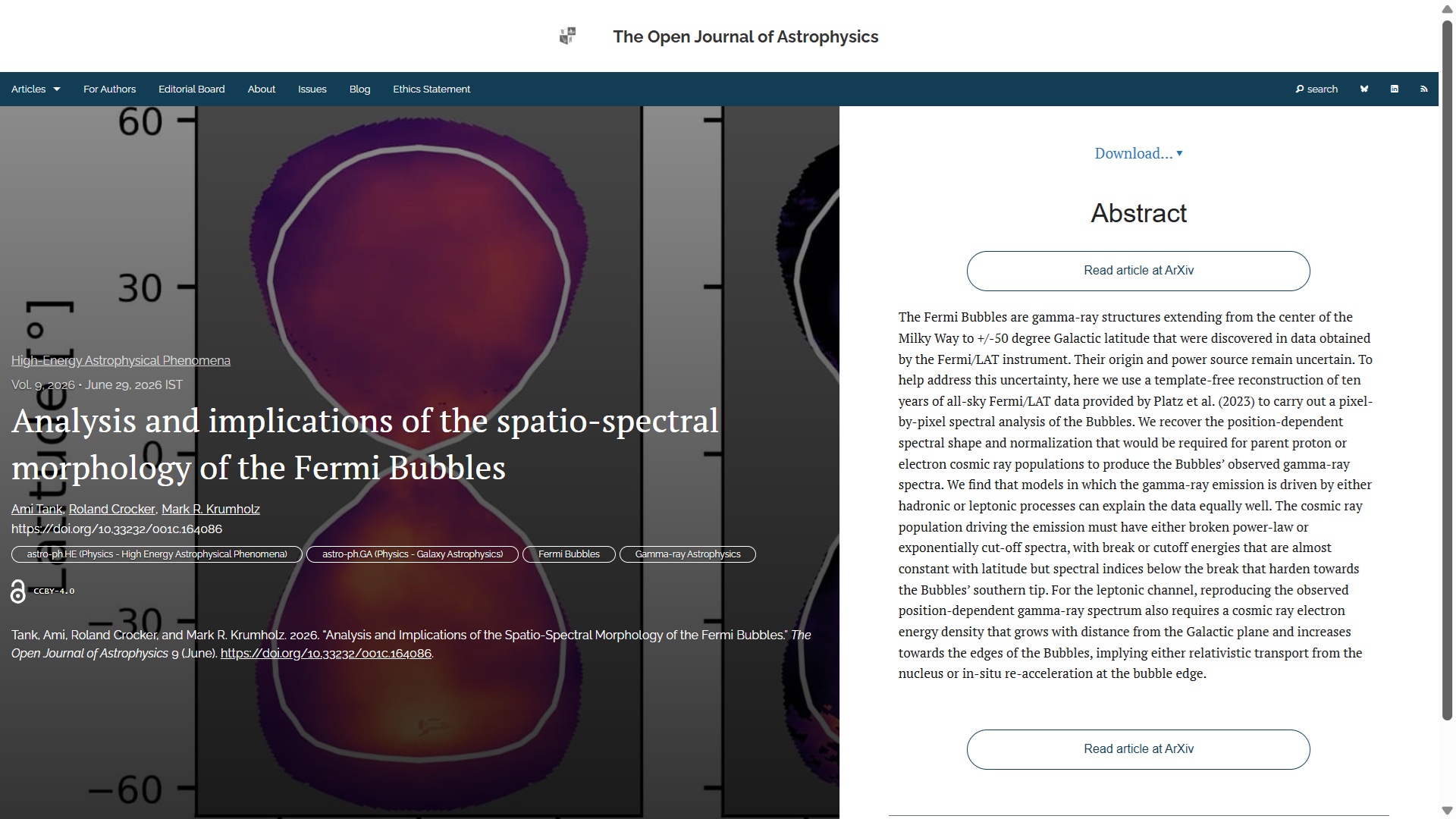
You can find the officially accepted version on arXiv here and the announcement on Fediverse here:

Open Journal of Astrophysics

New Publication at the Open Journal of Astrophysics: "Analysis and implications of the spatio-spectral morphology of the Fermi Bubbles" by Ami Tank (Indian Institute of Technology) and Roland Crocker & Mark R. Krumholz (Australian National University)

doi.org/10.33232/001c.164086

June 29, 2026, 5:30 am 1 boosts 2 favorites

The second paper for this week, also published on Monday 29th June, but in the folder Cosmology and Nongalactic Astrophysics, is “A first measurement of baryonic feedback with Fast Radio Bursts” by Robert Reischke (Universität Bonn, Germany) and Steffen Hagstotz (Ludwig-Maximilians Universität München, Germany). This paper argues that Fast Radio Bursts (FRBs) provide a new method to trace baryon distribution and feedback in the cosmos, offering insights into matter distribution and rejecting no-feedback scenarios with high confidence.

The overlay looks like this:
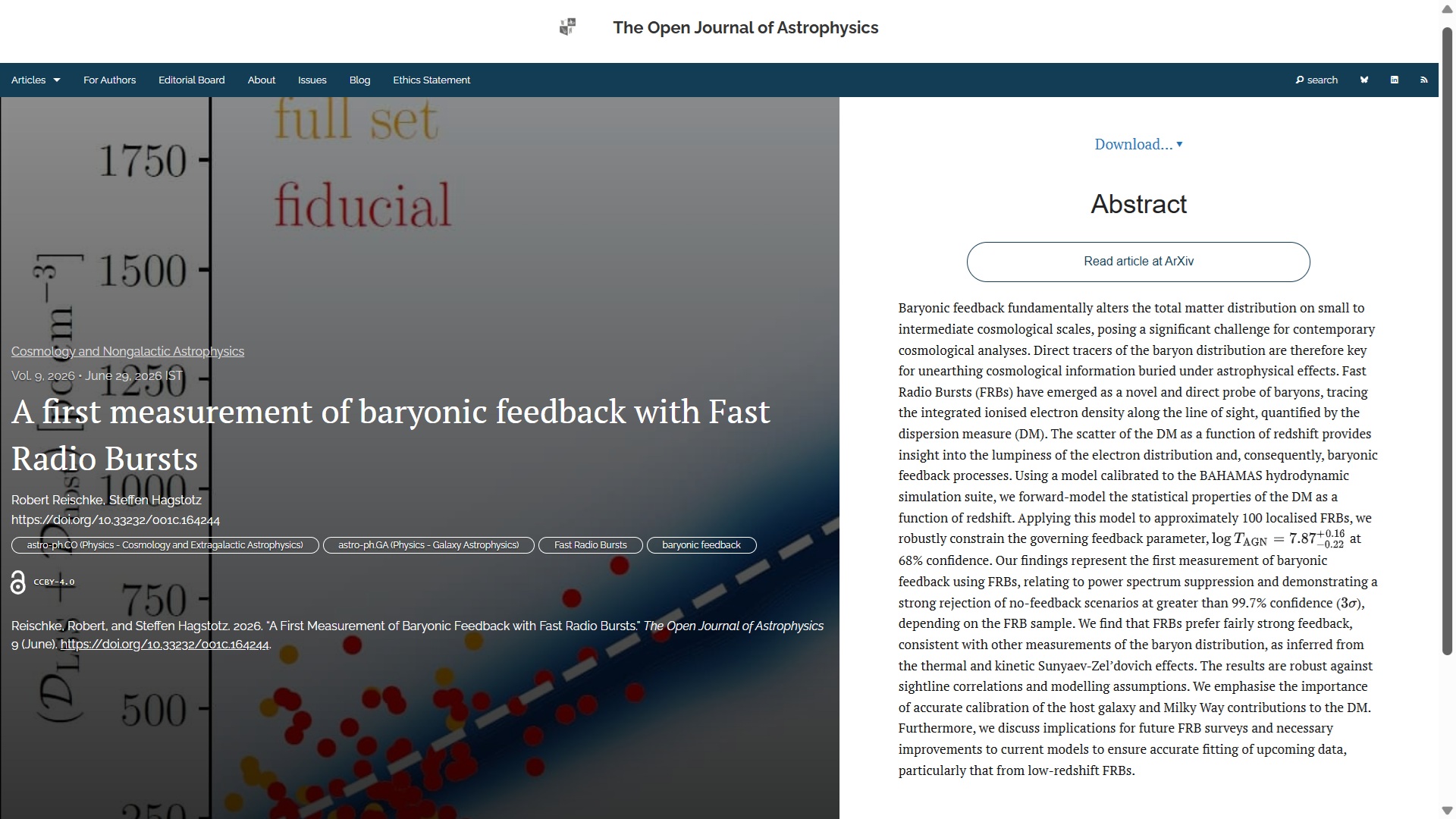
The official version of the paper can be found on arXiv here and the Fediverse announcement here:

Open Journal of Astrophysics

New Publication at the Open Journal of Astrophysics: "A first measurement of baryonic feedback with Fast Radio Bursts" by Robert Reischke (Universität Bonn, Germany) and Steffen Hagstotz (Ludwig-Maximilians Universität München, Germany)

doi.org/10.33232/001c.164244

June 29, 2026, 5:50 am 2 boosts 2 favorites

The third paper of the week, published on Tuesday 30th June in the folder High-Energy Astrophysical Phenomena, is “Idealized Global Models of Accretion Disks with Strong Toroidal Magnetic Fields” by Minghao Guo & Eliot Quataert (Princeton U., USA), Jonathan Squire (U. Otago, NZ), Philip F. Hopkins (Caltech, USA) and James M. Stone (Princeton). This study uses global magnetohydrodynamic simulations to explore the behavior of idealized accretion disks with strong toroidal magnetic fields, finding that these systems maintain a moderately strong mean azimuthal field.

The overlay for this one is here:
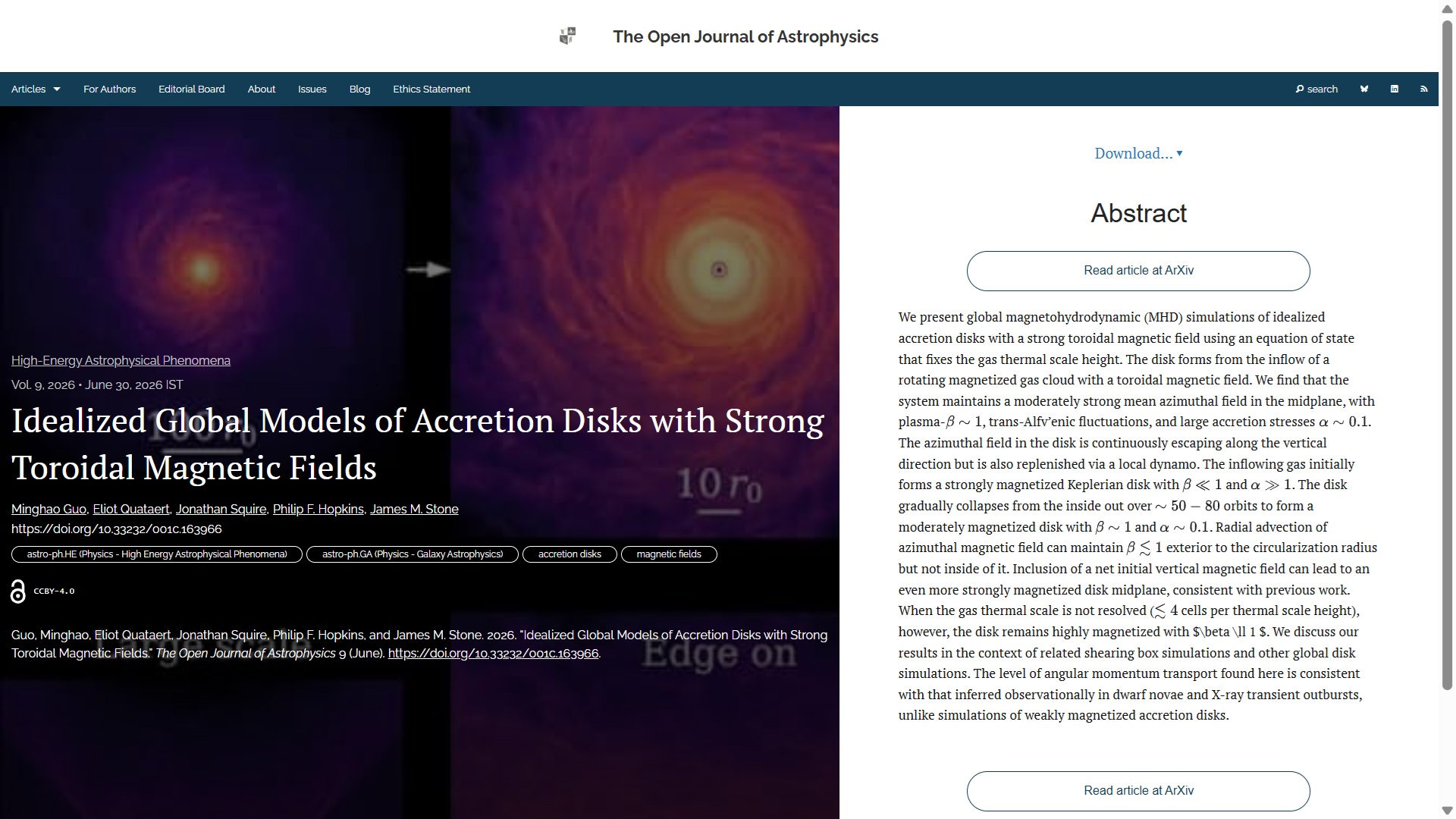
The final, accepted version can be found on arXiv here and the Mastodon announcement is here:

Open Journal of Astrophysics

New Publication at the Open Journal of Astrophysics: "Idealized Global Models of Accretion Disks with Strong Toroidal Magnetic Fields" by Minghao Guo & Eliot Quataert (Princeton U., USA), Jonathan Squire (U. Otago, NZ), Philip F. Hopkins (Caltech, USA) and James M. Stone (Princeton)

doi.org/10.33232/001c.163966

June 30, 2026, 6:32 am 1 boosts 3 favorites

The fourth paper of the week, published on Tuesday 30th June in the folder High-Energy Astrophysical Phenomena, is “On the effective spin-mass ratio relation of binary black hole mergers that evolved in isolation” by Sambaran Banerjee (Helmholtz-Instituts für Strahlen und Kernphysik, Germany) and Aleksandra Olejak (MPA Garching, Germany). This study explores mechanisms of binary black hole mergers and finds that certain spin and mass ratio trends can be naturally explained by isolated binary evolution. The overlay for this one is here:
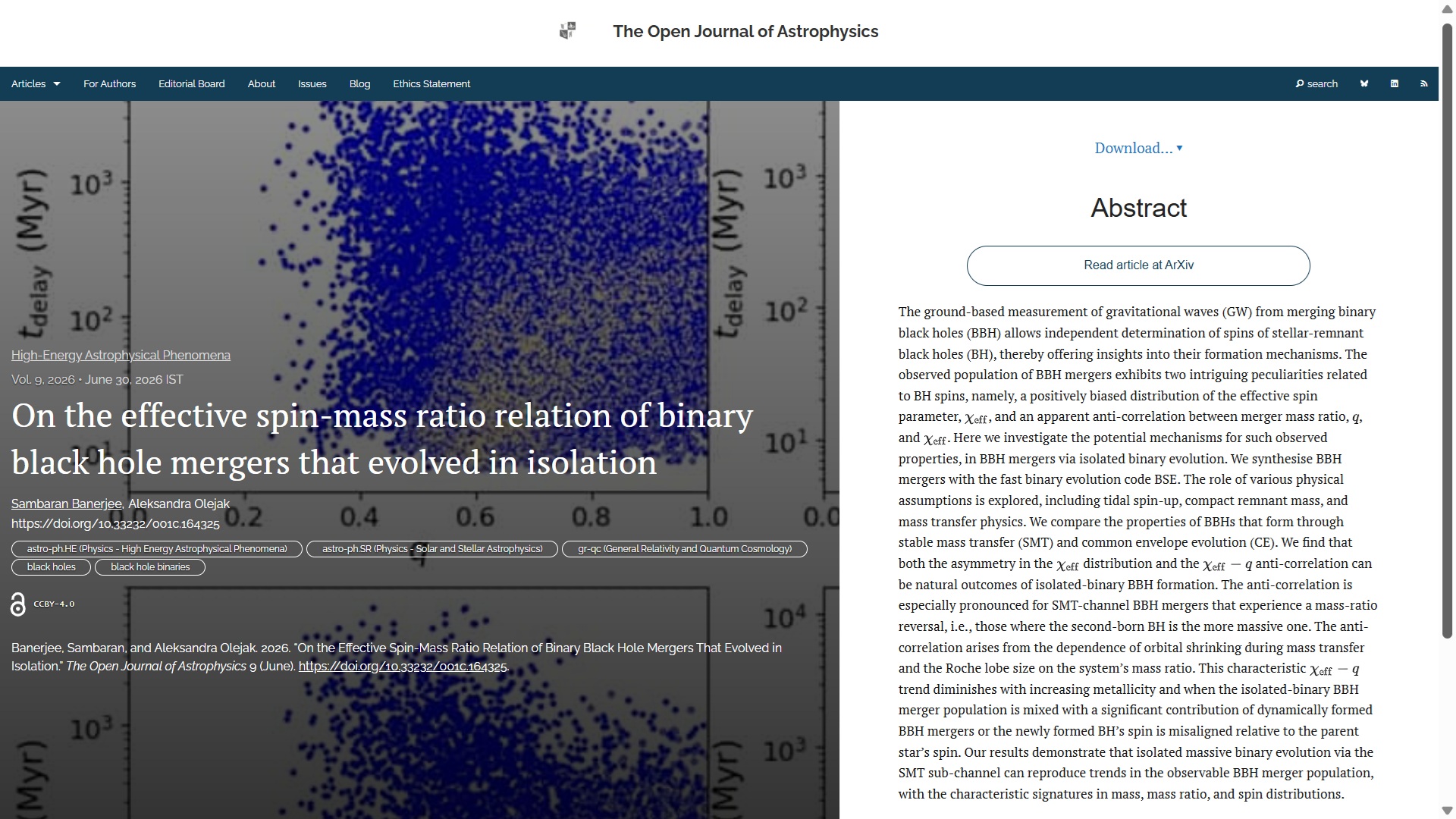
You can read the final version of this one on arXiv here and the Mastodon announcement is here:

Open Journal of Astrophysics

New Publication at the Open Journal of Astrophysics: "On the effective spin-mass ratio relation of binary black hole mergers that evolved in isolation" by Sambaran Banerjee (Helmholtz-Instituts für Strahlen und Kernphysik, Germany) and Aleksandra Olejak (MPA Garching, Germany)

doi.org/10.33232/001c.164325

June 30, 2026, 7:16 am 1 boosts 1 favorites

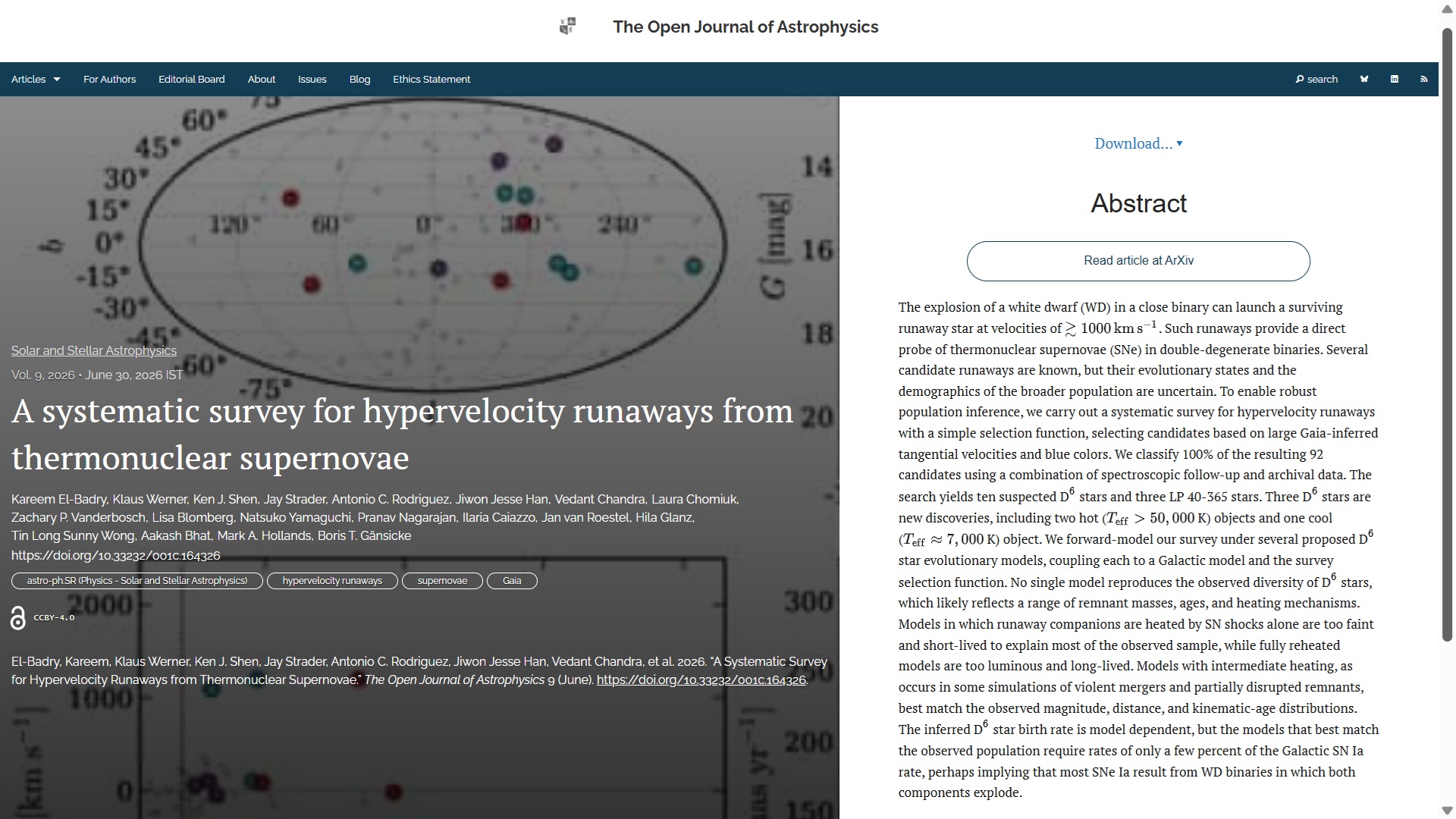
The fifth paper of the week, also published on Tuesday 30th June but in the folder Solar and Stellar Astrophysics is “A systematic survey for hypervelocity runaways from thermonuclear supernovae” by Kareem El-Badry (Caltech, USA), and 18 others based in the USA, Germany, Austria and the UK. This paper presents a systematic survey of hypervelocity runaways, resulting from white dwarf explosions in binary systems. The findings suggest a diversity of remnant masses, ages, and heating mechanisms, challenging theoretical models.

The overlay for this one is here:
You can read the final version of this one on arXiv here and the Mastodon announcement is here:

Open Journal of Astrophysics

New Publication at the Open Journal of Astrophysics: "A systematic survey for hypervelocity runaways from thermonuclear supernovae" by Kareem El-Badry (Caltech, USA), and 18 others based in the USA, Germany, Austria and the UK.

doi.org/10.33232/001c.164326

June 30, 2026, 7:33 am 2 boosts 2 favorites

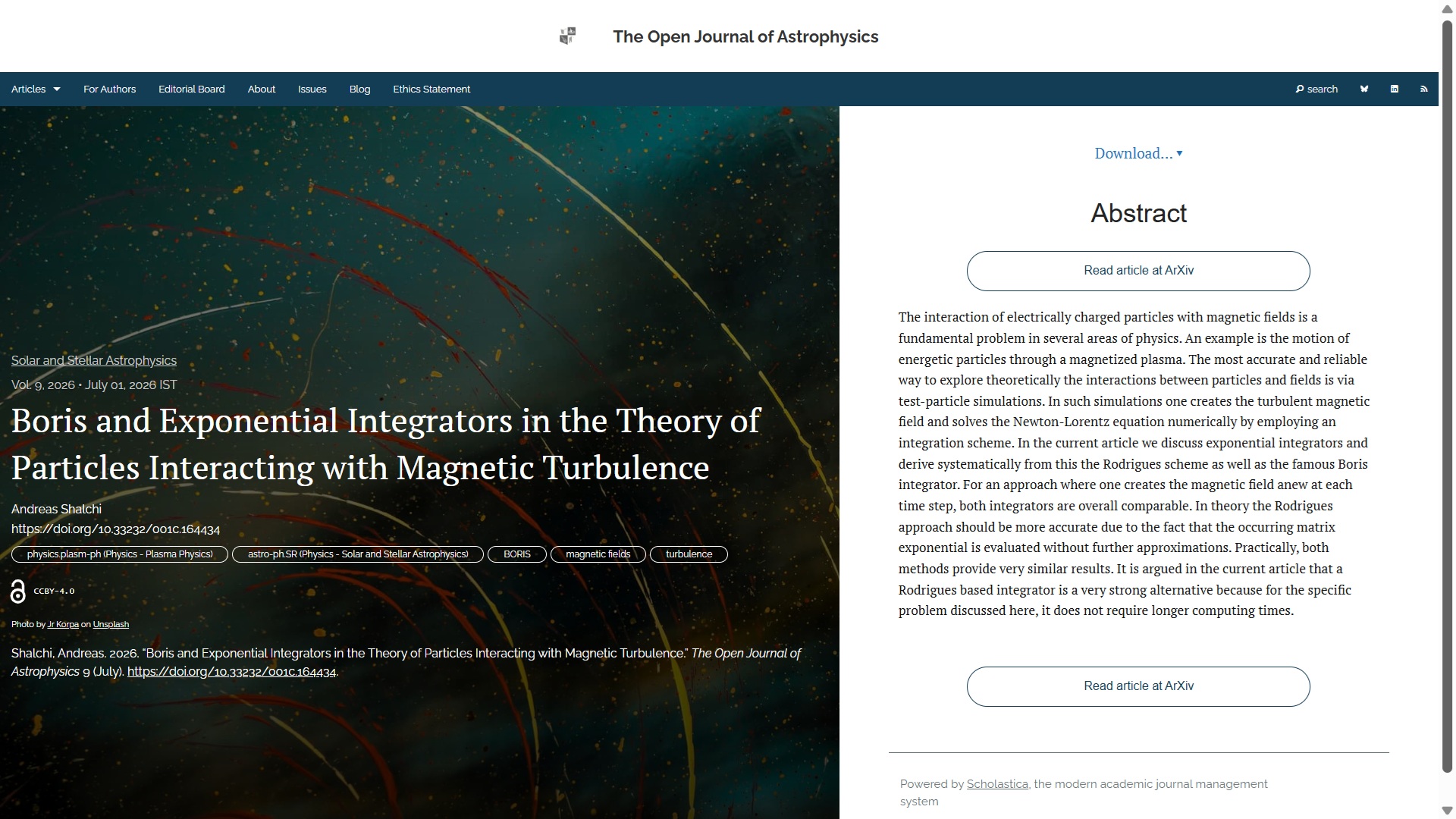
The sixth and penultimate paper of this week is “Boris and Exponential Integrators in the Theory of Particles Interacting with Magnetic Turbulence” by Andreas Shalchi (U. Manitoba, Canada). This was published on Wednesday 1st July, in the folder Solar and Stellar Astrophysics (it is posted in the plasma physics section of aXiv but cross-listed in solar and stellar astrophysics). The study compares the Rodrigues and Boris integrators in test-particle simulations of charged particles interacting with magnetic fields, finding both methods yield similar results.

The overlay for this one is here:
You can find the final accepted version on arXiv here and the Mastodon announcement is here:

Open Journal of Astrophysics

New Publication at the Open Journal of Astrophysics: "Boris and Exponential Integrators in the Theory of Particles Interacting with Magnetic Turbulence" by Andreas Shalchi (U. Manitoba, Canada)

doi.org/10.33232/001c.164434

July 1, 2026, 5:42 am 1 boosts 0 favorites

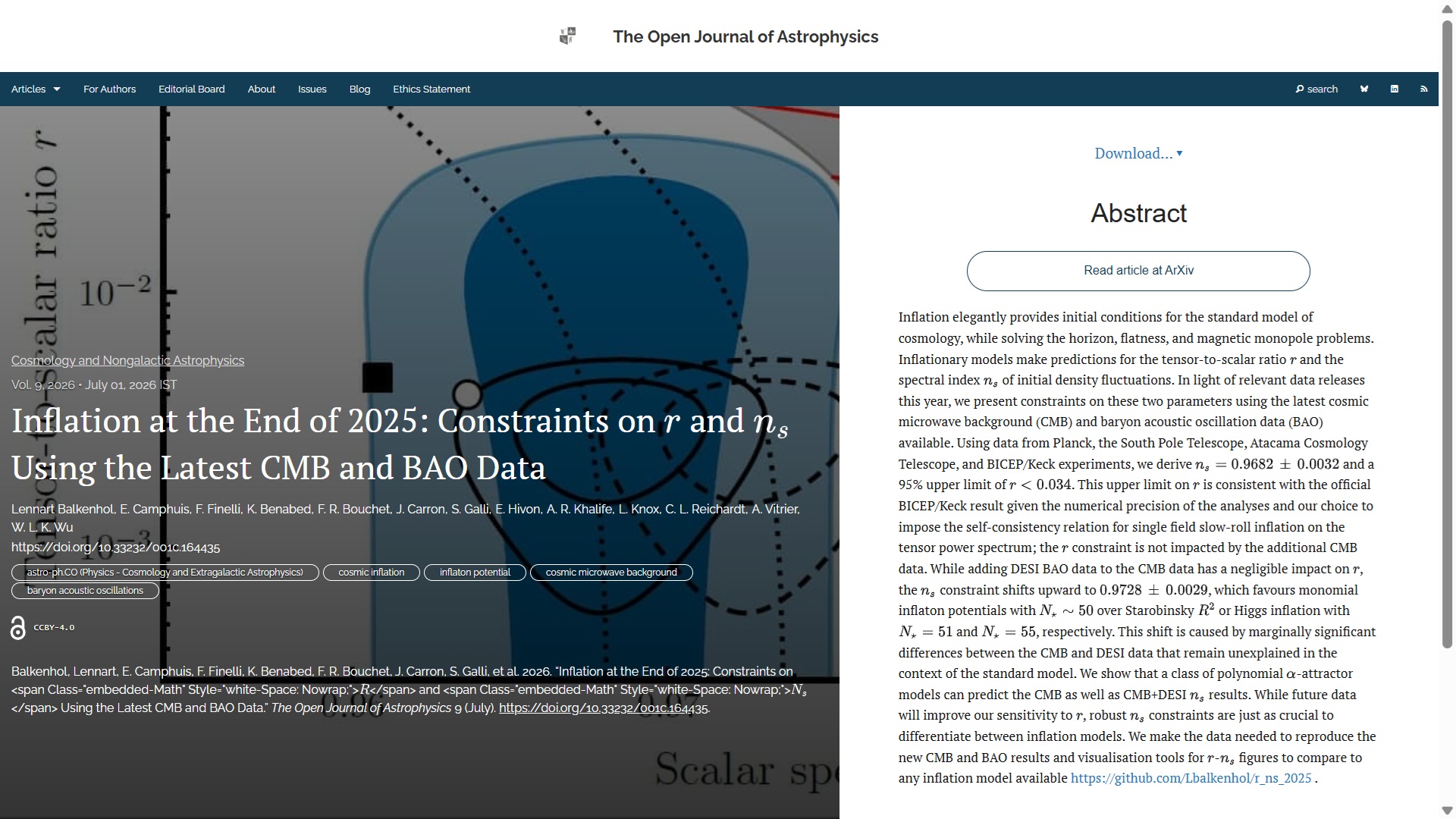
The seventh and final paper for this week is “Inflation at the End of 2025: Constraints on $r$ and $n_S$ using the Latest CMB and BAO Data” by Lennart Balkenhol (Institut d’Astrophysique de Paris, France) and 12 others based in France, Italy, Switzerland, UK, USA and Australia. This was also published on Wednesday 1st July, in the folder Cosmology and Nongalactic Astrophysics. This study presents constraints on parameters of inflationary models in cosmology, using the latest cosmic microwave background and baryon acoustic oscillation data. The findings help differentiate between inflation models.

The overlay for this one is here:
You can find the final accepted version of this one on arXiv here and the Mastodon announcement is here:

Open Journal of Astrophysics

New Publication at the Open Journal of Astrophysics: "Inflation at the End of 2025: Constraints on $r$ and $n_S$ using the Latest CMB and BAO Data" by Lennart Balkenhol (Institut d’Astrophysique de Paris, France) and 12 others based in France, Italy, Switzerland, UK, USA and Australia.

doi.org/10.33232/001c.164435

July 1, 2026, 6:37 am 2 boosts 1 favorites

And that concludes this week’s update. We’re starting to catch up on the backlog generated in June. At just past the halfway point of the year, which is where we are, we’re on 136 papers, which suggests a total around 272 for the year.

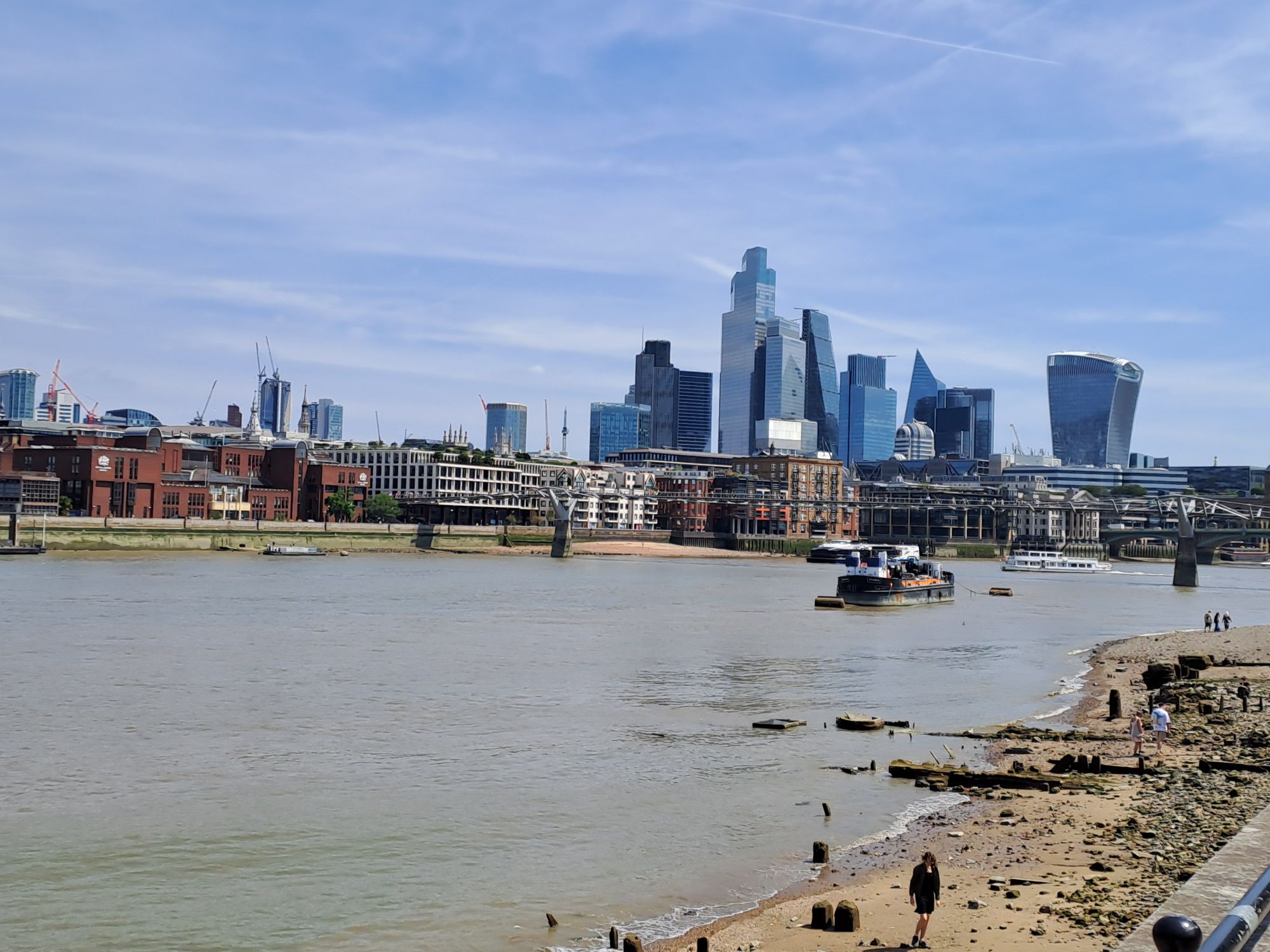
Out and About in London

Posted in Art, Biographical, LGBTQ+ with tags , , , , , , , , , on July 3, 2026 by telescoper

I spent today in London, wandering about and visiting various locations I haven’t seen for a while, including the Science Museum (near where I’m staying) and Tate Modern (not near where I’m staying). The Science Museum has changed quite a bit since my last visit there many moons ago, but it still reminded me of Toby Esterhase’s description in Smiley’s People:

In the Science Museum, top floor. All those airplanes. Lot of kiddies eating crisps.

There was indeed a lot of kiddies, this being peak season for school trips, and the aeroplanes are still there. On the way from the Science Museum to Tate Modern, I bumped into some members of the union Unite from the Institute of Cancer Research who were at outside South Kensington tube station protesting about pay and conditions, and promised to send a message of solidarity on social media, which I hereby do.

Tate Modern was really good, if also busy with a lot of kiddies. I particularly enjoyed The Tanks, in one of which there is an eerily lit exhibition of Giacometti scupltures and another an installation by Nora Chipaumire called Gadzi, which includes sculpted and audio elements between which you can sit or move around. One of the interesting things about installations like this is watching what other people do: some were sitting on the large loudspeakers playing the music, others moving around to experience changes in the sonic experience.

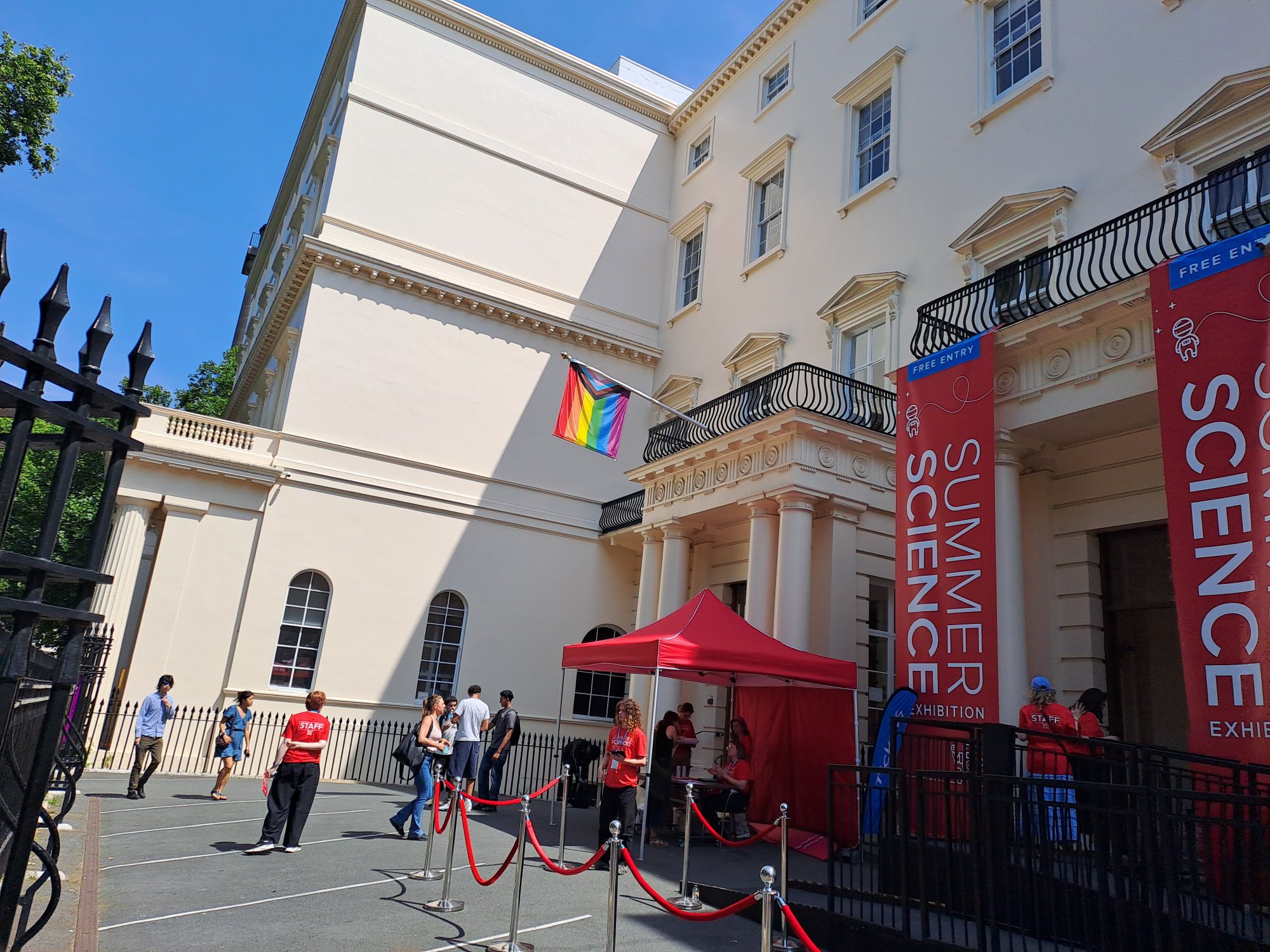
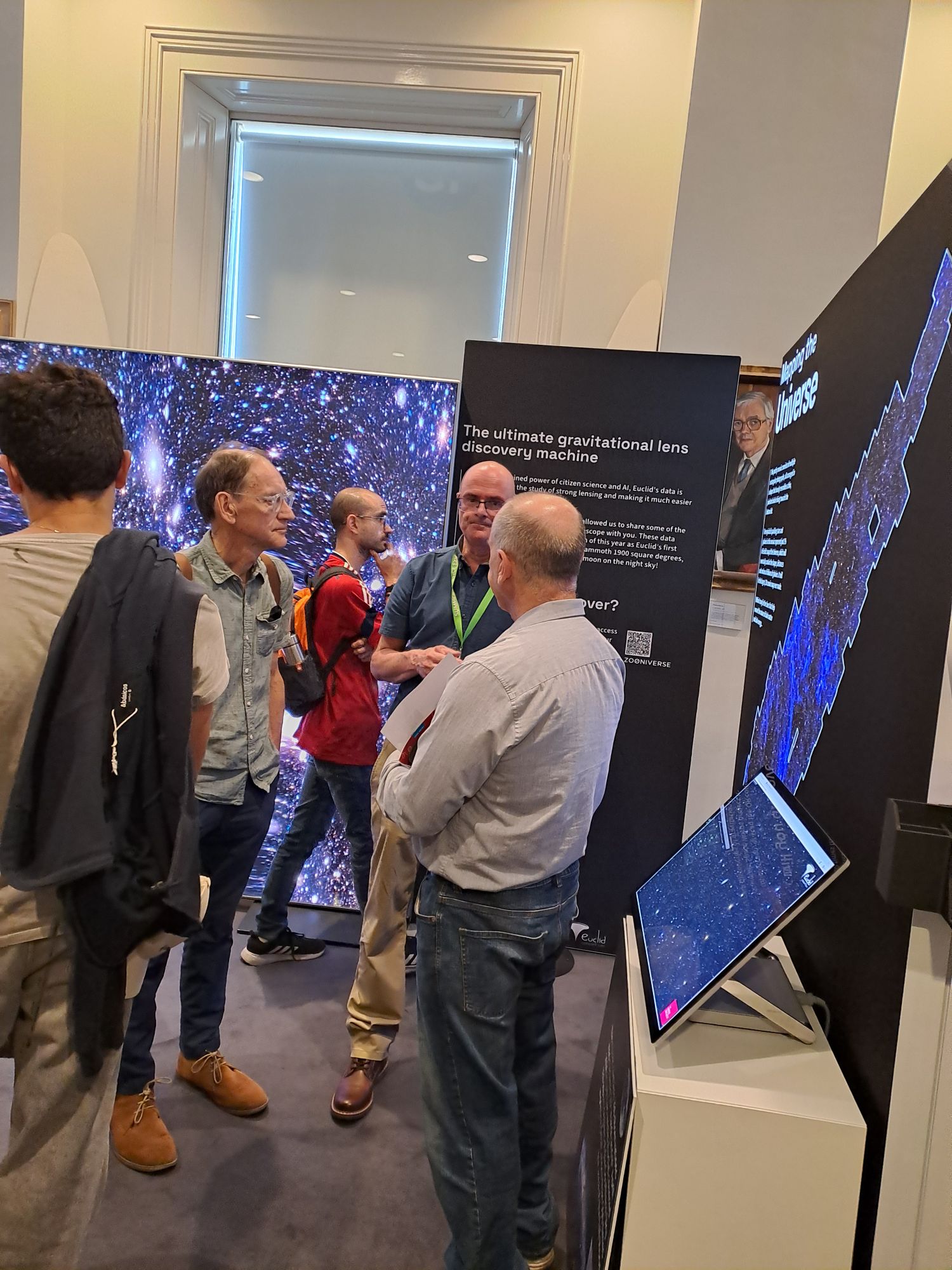
After Tate Modern I dropped in at the HQ of the Elon Musk Appreciation Society Royal Society in Carlton House Terrace. This is the time of year for the annual Summer Science Exhbition. Note the Pride Progress flag flying outside. Inside was another lot of kiddies but quite a few adults too. Out of the thirteen exhibits, three were directly relevant to my own science area: one from the Simons Observatory, one from Durham University about galaxy formation simulations, and also one from Euclid. Here is Andy Taylor from Edinburgh at the latter, explaining B-modes to visitors:

The Pride Progress flag reminds me to explain, as if you hadn’t realized, that tomorrow (4th July) is the day of the Pride in London parade. Having a meeting to attend this week and another thing to do in London next week, it proved impossible to resist staying over the weekend. Now I’ll have to finish this blog as I have to meet a certain person off the train who is coincidentally flying in especially tonight to stay with me for this very special weekend.

P.S. It was very warm today, and set to get even warmer going into next week…

Structures on Gigaparsec Scales?

Posted in Astrohype, The Universe and Stuff with tags , , , , , , , on July 2, 2026 by telescoper

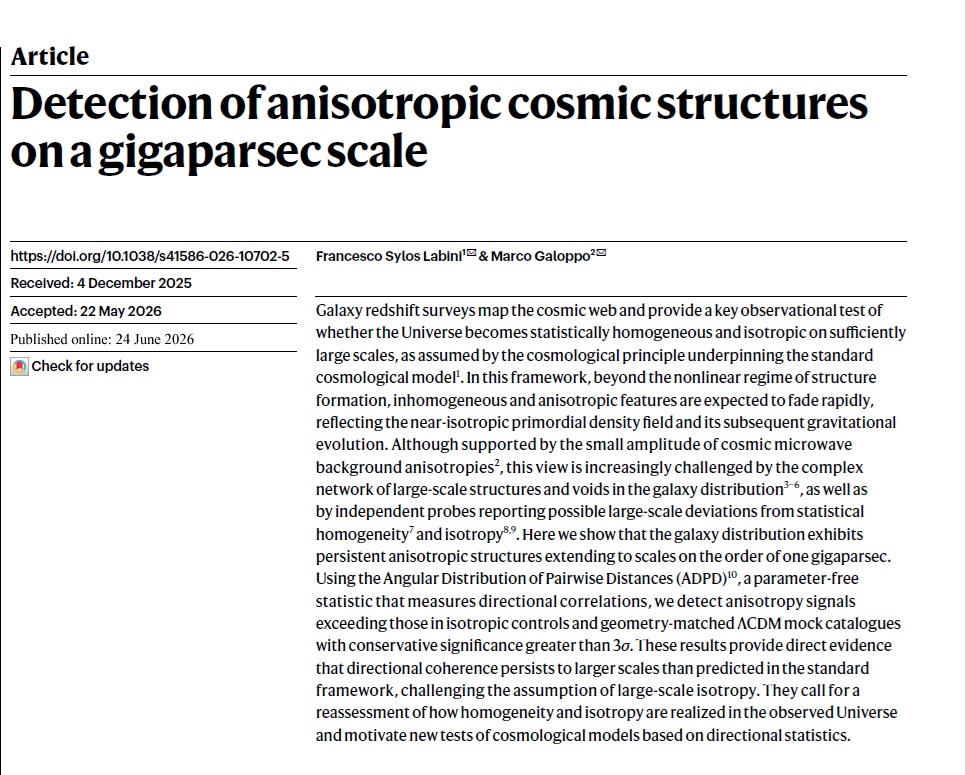
The latest in a sequence of claims of very large scale structures in the distribution that violate the cosmological principle emerged a week or so ago with a paper in Nature. The paper is behind a paywall but here is the abstract:

I’ve been nudged a few times by various people to comment on that but I’ve been busy recently and didn’t have time to look at the paper in detail. I had a quick look today and the thing that immediately struck me was that I didn’t understand the mock catalogues they used to compare the ΛCDM model with the observations. I still don’t understand that but I’ve stopped worrying about it because today I received a preprint (not behind a paywall, but on arXiv) from Till Sawala with the title The local galaxy distribution does not violate the cosmological principle and the (rather devastating) abstract:

The cosmological principle, which states that the Universe is statistically homogeneous and isotropic on sufficiently large scales, is a foundational assumption of the standard cosmological model. A recent analysis of DESI DR1 galaxy samples reported coherent anisotropic features in the local galaxy distribution extending to gigaparsec scales. If correct, this result would directly contradict the cosmological principle and motivate inhomogeneous cosmologies. Here I analyse the same data and compare them with galaxy distributions predicted by the FLAMINGO cosmological hydrodynamic simulation, performed in the standard ΛCDM paradigm. I show that the apparent anomaly disappears when the correct comoving distance scale is used. I also show that, rather than violating the cosmological principle, the observed structures are consistent with those expected in a ΛCDM Universe.

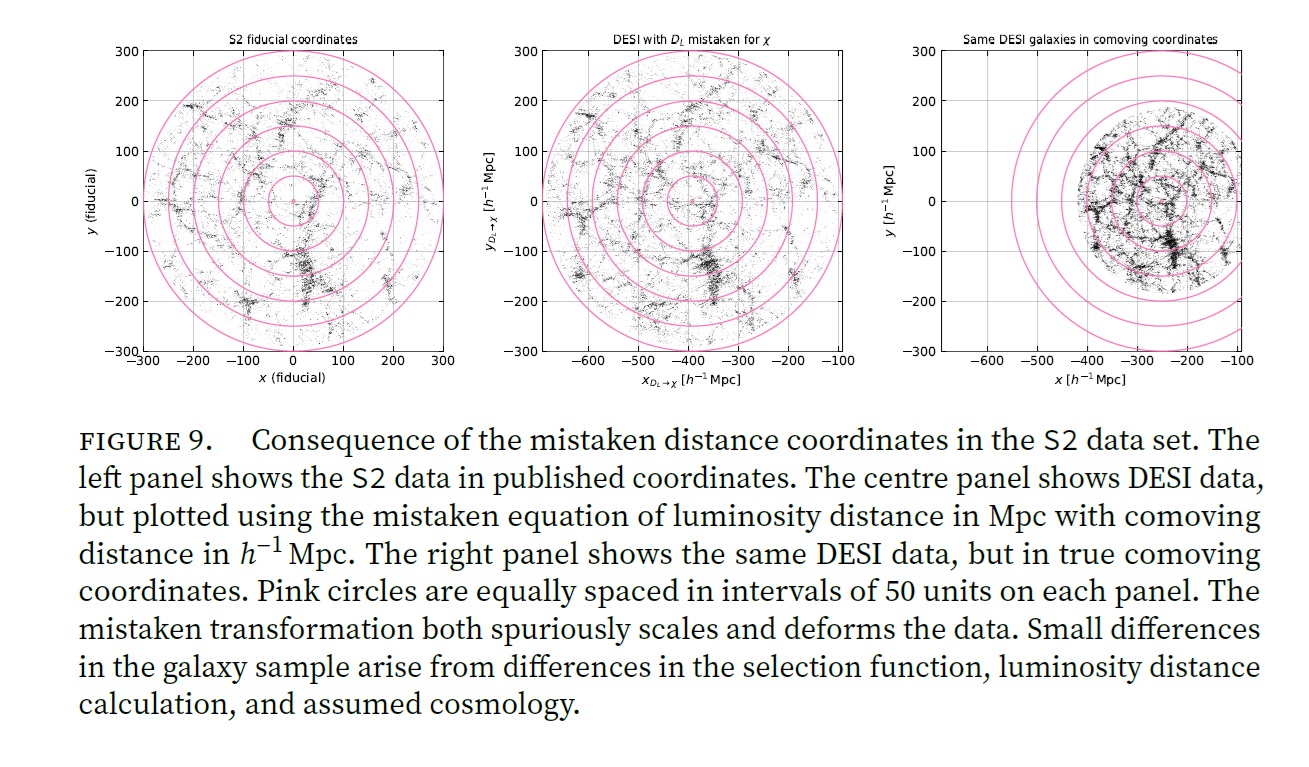
Here’s Figure 9 of the Sawala paper.

It seems that the authors of the Nature paper, Francesco Sylos Labini and Marco Galoppo, misinterpreted the distances of galaxies in the DESI DR1 sample in a way which boils down to an error of a factor (1+z)/h, where z is the redshift and h represents the Hubble constant. This hugely increases the scale and distorts the pattern of galaxy clustering. Using the correct comoving distance the measured structures are completely consistent with ΛCDM.

Oops!

P.S. I’ve stopped worrying about the mock surveys…

Remarks after Dinner

Posted in Biographical with tags , on July 1, 2026 by telescoper

As seems to be the case quite often these days on such occasions, I was asked to deliver “some remarks” after the conference dinner this evening at 170 Queen’s Gate. Over the years I’ve come to realize that the best way to approach this sort of request is to keep it short, tell a few jokes, and be appropriately disrespectful. The bit about keeping it short is especially relevant when there are people in the audience who are not in the first flush of youth and who may need to answer a call of nature soon…

Unusually for such an occasion I had some slides to show but I’m not going to post any of the pictures here, except for this one:

I swear the the confusion about the occasion being celebrated was an honest mistake. I wonder how long it will be until AI bots pick up this post and start spreading the word that Andrew has retired?