Archive for Diamond Open Access Publishing

Weekly Update from the Open Journal of Astrophysics – 01/11/2025

Posted in OJAp Papers, Open Access, The Universe and Stuff with tags , , , , , , , , , , , on November 1, 2025 by telescoper

It’s time once again for the usual Saturday update of the week’s new papers at the Open Journal of Astrophysics (although a bit later in the day than usual). Since the last update we have published another two papers, which brings the number in Volume 8 (2025) up to 163, and the total so far published by OJAp up to 398.

The first paper this week is “Instability and vertical eccentricity variation in global hydrodynamic disk simulations” by Janosz W Dewberry (U. Mass. Amherst, USA), Henrik N. Latter and Gordon I. Ogilvie (U. Cambridge, UK) and Sebastien Fromang (U. Paris Saclay, France). This article was published in the folder Solar and Stellar Astrophysics on Tuesday 28th October 2025; it discusses the instabilities and eccentricity variations generated in numerical hydrodynamic simulations of accretion disks.

The overlay is here:

You can find the officially accepted version on arXiv here.

The Fediverse announcement is here:

Open Journal of Astrophysics

New Publication at the Open Journal of Astrophysics: "Instability and vertical eccentricity variation in global hydrodynamic disk simulations" by Janosz W Dewberry (U. Mass. Amherst, USA), Henrik N Latter and Gordon I Ogilvie (U. Cambridge, UK) & Sebastien Fromang (U. Paris Saclay, France)

doi.org/10.33232/001c.146332

October 28, 2025, 9:43 am 2 boosts 0 favorites

The second (and last) paper of the week is “Fast X-ray Transient Detection with AXIS: application to Magnetar Giant Flares” by Michela Negro (Louisiana State University, USA) and 8 others based in the USA and Canada. This one was also published on Tuesday 28th October, but in the folder High-Energy Astrophysical Phenomena. It presents a feasibility study of detecting Magnetar Giant Flares with the Advanced X-ray Imaging Satellite (AXIS). The overlay is here:

You can find the official version of this one on arXiv here. The announcement on Mastodon is here:

Open Journal of Astrophysics

New Publication at the Open Journal of Astrophysics: "Fast X-ray Transient Detection with AXIS: application to Magnetar Giant Flares" by Michela Negro (Louisiana State University, USA) and 8 others based in the USA and Canada

doi.org/10.33232/001c.146360

October 28, 2025, 10:02 am 1 boosts 1 favorites

It being a relatively slow week we didn’t reach the 400 mark as I thought we might, but we will probably get there next week. After 10 months of the year 2025, in which we have published 163 papers, a rough projection for the 2025 total is 195. We do have some extra papers up our sleeve, however, so we might well reach 200 for the year. We will find out soon enough!

Weekly Update from the Open Journal of Astrophysics – 25/10/2025

Posted in OJAp Papers, Open Access, The Universe and Stuff with tags , , , , , , , , , , , , , , , , , , , , on October 25, 2025 by telescoper

It may be a Bank Holiday weekend here in Ireland, but it’s still time for the usual Saturday update of the week’s new papers at the Open Journal of Astrophysics (although a bit later in the day than usual). Since the last update we have published another five papers, which brings the number in Volume 8 (2025) up to 161, and the total so far published by OJAp up to 396.

This week’s update  is rather unusual because there are four papers in a series (or, more precisely, mathematically speaking, a sequence) all published on the same day (Wednesday October 22nd 2025), in the same folder (Cosmology and NonGalactic Astrophysics), with the same first author (Dhayaa Anbajagane of the University of Chicago), with long author lists and many co-authors in common. These papers all relate to the DECADE cosmic shear project. Instead of doing them one by one, therefore, I’ve decided to put all four overlays together and provide links to all the papers afterwards. As I’m trying to encourage people to follow our feed on the Fediverse via Mastodon (where I announce papers as they are published, including the all-important DOI),  I’ll include links to each announcement there too.

  1. The DECADE cosmic shear project I: A new weak lensing shape catalog of 107 million galaxies“, accepted version on arXiv here.
  2. The DECADE cosmic shear project II: photometric redshift calibration of the source galaxy sample“, accepted version on arXiv here.
  3. The DECADE cosmic shear project III: validation of analysis pipeline using spatially inhomogeneous data“, accepted version on arXiv here.
  4. The DECADE cosmic shear project IV: cosmological constraints from 107 million galaxies across 5,400 deg2 of the sky“, accepted version on arXiv here.

The fediverse announcements follow:

Open Journal of Astrophysics

New Publication at the Open Journal of Astrophysics: "The DECADE cosmic shear project I: A new weak lensing shape catalog of 107 million galaxies" by Dhayaa Anbajagane (University of Chicago, USA) et al. (54 authors)

doi.org/10.33232/001c.146158

October 22, 2025, 12:42 pm 2 boosts 0 favorites

Open Journal of Astrophysics

New Publication at the Open Journal of Astrophysics: "The DECADE cosmic shear project II: photometric redshift calibration of the source galaxy sample" by Dhayaa Anbajagane (University of Chicago, USA) et al. (53 authors)

doi.org/10.33232/001c.146159

October 22, 2025, 1:07 pm 2 boosts 0 favorites

Open Journal of Astrophysics

New Publication at the Open Journal of Astrophysics: "The DECADE cosmic shear project III: validation of analysis pipeline using spatially inhomogeneous data" by Dhayaa Anbajagane (University of Chicago, USA) et al. (53 authors)

doi.org/10.33232/001c.146160

October 22, 2025, 1:57 pm 1 boosts 0 favorites

Open Journal of Astrophysics

New Publication at the Open Journal of Astrophysics: "The DECADE cosmic shear project IV: cosmological constraints from 107 million galaxies across 5,400 deg^2 of the sky" by Dhayaa Anbajagane (University of Chicago, USA) et al. (75 authors)

doi.org/10.33232/001c.146161

October 22, 2025, 2:47 pm 1 boosts 0 favorites


The fifth and final paper for this week is “Clustering of DESI galaxies split by thermal Sunyaev-Zeldovich effect” by Michael Rashkovetskyi of the Harvard-Smithsonian Center for Astrophysics, or CfA for short, and 48 others. This one was published on Wednesday 23rd October in the folder Cosmology and NonGalactic Astrophysics. This paper explores how the clustering properties of galaxies mapped by the Dark energy Spectroscopic Instrument (DESI) relate to the local thermal Sunyaev-Zeldovich emission mapped by the Atacama Cosmology Telescope (ACT). The overlay is here:

The officially accepted version can be found on arXiv here, and the fediverse announcement is here:

Open Journal of Astrophysics

New Publication at the Open Journal of Astrophysics: "Clustering of DESI galaxies split by thermal Sunyaev-Zeldovich effect" by Michael Rashkovetskyi (Cfa Harvard-Smithsonian, USA) et al. (49 authors)

doi.org/10.33232/001c.146033

October 23, 2025, 8:28 am 1 boosts 0 favorites


That concludes the papers for this week. With one week to go and our total at 396, I still think we might reach the 400 total by the end of October.

Weekly Update from the Open Journal of Astrophysics – 18/10/2025

Posted in OJAp Papers, Open Access, The Universe and Stuff with tags , , , , , , , , , , , , , , , , , , , , on October 18, 2025 by telescoper

It’s time once again for the usual Saturday update of the week’s new papers at the Open Journal of Astrophysics. Since the last update we have published four  more papers, which brings the number in Volume 8 (2025) up to 156, and the total so far published by OJAp up to 391.

I’d like to encourage people to follow our feed on the Fediverse via Mastodon (where I announce papers as they are published, including the all-important DOI) so this week I’ll include links to each announcement there.

The first paper to report is “Shot noise in clustering power spectra” by Nicolas Tessore (University College London, UK) and Alex Hall (University of Edinburgh, UK). This was published in the folder Cosmology and NonGalactic Astrophysics on Tuesday October 14th 2025. This presents a discussion of the effects of ‘shot noise’, an additive contribution due to degenerate pairs of points, in angular galaxy clustering power spectra. Here is a screen grab of the overlay:

You can find the officially accepted version of the paper here. The Mastodon announcement is here:

Open Journal of Astrophysics

New Publication at the Open Journal of Astrophysics: "Shot noise in clustering power spectra" by Nicolas Tessore (University College London, UK) and Alex Hall (University of Edinburgh, UK)

doi.org/10.33232/001c.145919

October 14, 2025, 7:07 am 2 boosts 0 favorites

Next one up is “The Giant Arc – Filament or Figment?” by Till Sawala and Meri Teeriaho (University of Helsinki, Finland). This paper discusses the abundance of large arc-like structures formed in the standard cosmological model, with reference to the “Giant Arc” identified in MgII absorption systems. It was published on Wednesday October 15th in the folder Cosmology and NonGalactic Astrophysics. The overlay is here:

The officially accepted version of this paper can be found on the arXiv here and the Mastodon announcement is here:

Open Journal of Astrophysics

New Publication at the Open Journal of Astrophysics: "The Giant Arc – Filament or Figment?" by Till Sawala and Meri Teeriaho (University of Helsinki, Finland)

doi.org/10.33232/001c.145931

October 15, 2025, 6:33 am 2 boosts 3 favorites


The third paper this week,  published on Monday 6th October, is “Detecting wide binaries using machine learning algorithms” by Amoy Ashesh, Harsimran Kaur and Sandeep Aashish (Indian Institute of Technology, Patna, India). This was published on Friday 17th October (yesterday) in the folder Astrophysics of Galaxies. It presents a method for detecting wide binary systems in Gaia data using machine learning algorithms.

The overlay is here:


You can find the officially accepted version of this paper on arXiv here. The announcement on Mastodon is here:

Open Journal of Astrophysics

New Publication at the Open Journal of Astrophysics: "Detecting wide binaries using machine learning algorithms" by Amoy Ashesh, Harsimran Kaur and Sandeep Aashish (Indian Institute of Technology, Patna, India)

doi.org/10.33232/001c.146027

October 17, 2025, 6:55 am 0 boosts 0 favorites

The last one this week is “Learned harmonic mean estimation of the Bayesian evidence with normalizing flows” by Alicja Polanska & Matthew A. Price (University College London, UK), Davide Piras (Université de Genève, CH), Alessio Spurio Mancini (Royal Holloway, London, UK) and Jason D. McEwen (University College London). This one was also published on Friday 17th October, but in the folder Instrumentation and Methods for Astrophysics; it presents a new method for estimating Bayesian evidence for use in model comparison, illustrated with a cosmological example.

The corresponding overlay is here:


You can find the officially accepted version on arXiv here. The Mastodon announcement is here:

Open Journal of Astrophysics

New Publication at the Open Journal of Astrophysics: "Learned harmonic mean estimation of the Bayesian evidence with normalizing flows" by Alicja Polanska & Matthew A. Price (University College London, UK), Davide Piras (Université de Genève, CH), Alessio Spurio Mancini (Royal Holloway, London, UK) and Jason D. McEwen (University College London)

doi.org/10.33232/001c.146026

October 17, 2025, 7:06 am 0 boosts 0 favorites

That concludes the papers for this week. With two weeks to go I think we might reach the 400 total by the end of October.

Weekly Update from the Open Journal of Astrophysics – 27/09/2025

Posted in OJAp Papers, Open Access, The Universe and Stuff with tags , , , , , , , , , , , , , , , , , , , , , , on September 27, 2025 by telescoper

It’s Saturday again, so it’s time for a summary of the week’s new papers at the Open Journal of Astrophysics. Since the last update we have published five new papers, which brings the number in Volume 8 (2025) up to 141, and the total so far published by OJAp up to 376.

The first paper to report this week is “The Bispectrum of Intrinsic Alignments: Theory Modelling and Forecasts for Stage IV Galaxy Surveys” by Thomas Bakx (Utrecht U., NL), Alexander Eggemeier (U. Bonn, DE), Toshiki Kurita (MPA Garching, DE), Nora Elisa Chisari (Leiden U., NL) and Zvonimir Vlah (Ruđer Bošković Institute, Croatia). This paper was published on Monday 22nd September 2025 in the folder Cosmology and NonGalactic Astrophysics. It studies the bispectrum of intrinsic galaxy alignments, a possible source of systematic errors in extracting cosmological information from the analysis of weak lensing surveys.

The overlay is here:

You can make this larger by clicking on it.  The officially accepted version of this paper can be found on the arXiv here.

The second paper this week, published on Tuesday 23rd September 2025 is “Reanalysis of Stage-III cosmic shear surveys: A comprehensive study of shear diagnostic tests” by Jazmine Jefferson (University of Chicago, USA) and 13 others for the LSST Dark Energy Science Collaboration. It is also in the folder Cosmology and NonGalactic Astrophysics; it describes diagnostic tests on three public shear catalogs (KiDS-1000, Year 3 DES-Y3 s, and Year 3 HSC-Y3); not all the surveys pass all the tests.

The corresponding overlay is here:

You can find the officially accepted version on arXiv here.

The third one this week, published on Wednesday 24th September 2025 in the folder Astrophysics of Galaxies, is “Is feedback-free star formation possible?” by Andrea Ferrara, Daniele Manzoni, and Evangelia Ntormousi (all of the Scuola Normale Superiore, Pisa, Italy). This paper presents an argument that Lyman-alpha radiation pressure strongly limits star formation efficiency, even at solar metallicities, so that a feedback-free star formation phase is not possible without feedback. The overlay is here:

You can find the officially-accepted version on arXiv here.

Next we have “Microphysical Regulation of Non-Ideal MHD in Weakly-Ionized Systems: Does the Hall Effect Matter?” by Philip F. Hopkins (Caltech, USA), Jonathan Squire (U. Otago, New Zeland), Raphael Skalidis (Caltech) and Nadine H. Soliman (Caltech). This was also published on Wednesday 24th September 2025, but in the folder Earth and Planetary Astrophysics. It presents an improved treatment of non-ideal effects in magnetohydrodynamics, particularly the Hall effect, and a discussion of the implications for weakly-ionized astrophysical systems.

The corresponding overlay is here:


You can find the officially accepted version of this one on arXiv here.

The fifth, and last, one for this week is “The Local Volume Database: a library of the observed properties of nearby dwarf galaxies and star clusters” by Andrew B. Pace (University of Virginia, USA). This one was published on Friday 26th September (i.e. yesterday) in the folder Astrophysics of Galaxies. It presents a catalogue of positional, structural, kinematic, chemical, and dynamical parameters for dwarf galaxies and star clusters in the Local Volume. The overlay is here:

You can find the officially-accepted version of this paper on arxiv here.


And that concludes the report for this week. I’ll post another update next Saturday.
Weekly Update from the Open Journal of Astrophysics – 06/09/2025

Posted in OJAp Papers, Open Access, The Universe and Stuff with tags , , , , , , , , , , , on September 6, 2025 by telescoper

It’s Saturday again, so it’s time for a summary of the week’s new papers at the Open Journal of Astrophysics. Since the last update we have published two new papers, which brings the number in Volume 8 (2025) up to 127, and the total so far published by OJAp up to 362. It’s been another relatively slow week, not least because of the Labor (sic) Day holiday in the USA on Monday which, among other things, meant there was no arXiv update on Tuesday.

Anyway, the first paper to report this week is “An analytical model for the dispersion measure of Fast Radio Burst host galaxies” by Robert Reischke, Michael Kovač & Andrina Nicola (U. Bonn, Germany), Steffen Hagstotz (Ludwig-Maximilians Universität München) and Aurel Schneider (U. Zurich, Switzlerland). This is a theoretical study of the dispersion measures (DMs) intrinsic to host galaxies of Fast Radio Burst (FRB) sources to enable separation of that from the line-of-sight DM. This one was published on Monday 1st September 2025 in the folder Cosmology and NonGalactic Astrophysics.

The overlay is here:


You can make this larger by clicking on it.  The officially accepted version of this paper can be found on the arXiv here.

The second paper this week, published on Wednesday 3rd Sepember in the folder Solar and Stellar Astrophysics, is “Complex spectral variability and hints of a luminous companion in the Be star + black hole binary candidate ALS 8814” by Kareem El-Badry (Caltech, USA), Matthias Fabry (Villanova U., USA), Hugues Sana (KU Leuven, Belgium), Tomer Shenar (Tel Aviv U., Israel) and Rhys Seeburger (MPA Heidelberg, Germany).

The overlay for this one is here:


You can find the officially accepted version on arXiv here.

And that’s all the papers for this week. It’s still a bit slow as we emerge from the summer vacations, we have a lot of papers in the pipeline that I expect to emerge pretty soon.

Weekly Update from the Open Journal of Astrophysics – 30/08/2025

Posted in OJAp Papers, Open Access, The Universe and Stuff with tags , , , , , , , , , , , , , , , on August 30, 2025 by telescoper

Once again it’s time for a summary of the week’s new papers at the Open Journal of Astrophysics. Since the last update we have published three new papers, which brings the number in Volume 8 (2025) up to 125, and the total so far published by OJAp up to 360.

The first paper to report this week is “Large-scale surveys of the quasar proximity effect” by Rupert Croft, Patrick Shaw & Ann-Marsha Alexis (Carnegie Mellon University; CMU), Nianyi Chen (Princeton), Yihao Zhou & Tiziana Di Matteo (CMU), Simeon Bird (UC Riverside), Patrick Lachance (CMU), and Yueying Ni (Harvard). This paper was published on Monday 25th August in the folder Cosmology and NonGalactic Astrophysics. It presents a CDM-based halo model of the quasar proximity effect, tested on quasar Lyman-alpha spectra from the ASTRID cosmological simulation, including self-consistent formation of quasar black holes and the intergalactic medium.

The overlay is here:


You can make this larger by clicking on it, as you can with all the overlays below. The officially accepted version of this paper can be found on the arXiv here.

The second paper this week, also published on Monday 25th August, but in the folder Astrophysics of Galaxies, is “Redshift evolution of Lyman continuum escape fraction after JWST” by Andrea Ferrara (Pisa), M. Giavalisco (UMass Amherst), L. Pentericci (Rome), E. Vanzella (Bologna), A. Calabrò (Rome) and M. Llerena (Rome). This paper is about the Attenuation-Free Model (AFM) for galaxies, in which radiation-driven outflows develop once the galaxy specific star formation rate exceeds a certain level, which is tested on data with positive results. The overlay is here:

You can find the officially accepted version on arXiv here.

The third and final paper this week is “Primordial black holes in cosmological simulations: growth prospects for supermassive black holes” by Lewis R Prole, John A Regan, Daxal Mehta & Peter Coles (National University of Ireland, Maynooth) and Pratika Dayal (Groningen, NL). This one was published in Astrophysics of Galaxies folder on Thursday 28th August 2025. You can read more about this paper here: basically it studies the growth of primordial black holes in the early Universe using numerical simulations, with implications for the subsequent formation of massive black holes.

The overlay is here:

You can find the officially accepted version of this one on arXiv here.

And that’s all the papers for this week. It’s still a bit slow as we emerge from the summer vacations, but I expect things will start to pick up from now on.

Il Sorpasso

Posted in Film, Open Access with tags , , , on August 21, 2025 by telescoper

Just a quick note to say that yesterday we published the 120th article in Volume 8 (2025) of the Open Journal of Astrophysics. This means that we have so far in 2025 published as many papers we published in the whole of 2024. At the end of August we will be about 2/3 of the way through the year so I expect we will publish more than 180 articles this year. It may be more than that because we have a group of articles in the pipeline that will be published simultaneously in a special issue, which may be completed this year. We might in this case reach 200 altogther for 2025, but if not the special issue will appear in 2026.

The relevance of all this to the 1962 Italian comedy film Il Sorpasso is entirely negligible, except that I like the movie.

I hope this clarifies the situation

Weekly Update from the Open Journal of Astrophysics – 16/08/2025

Posted in OJAp Papers, Open Access, The Universe and Stuff with tags , , , , , , , , , , , , on August 16, 2025 by telescoper

It’s time once again for the usual update of papers published at the Open Journal of Astrophysics which I do every Saturday. Since the last update we have published two new papers, which brings the number in Volume 8 (2025) up to 116, and the total so far published by OJAp up to 351. The summer lull we always expected is now upon us, so this will be a shorter post than we have had of late.

The first paper to report this week is “The reflex instability: exponential growth of a large-scale mode in astrophysical discs” by Aurélien Crida (Université Côte d’Azur, France), Clément Baruteau (Université de Toulouse, France), Jean-François Gonzalez (Universite Claude Bernard Lyon 1, France), Frédéric Masset (Universidad Nacional Autonoma de México) and Paul Segretain, Philippine Griveaud, Héloïse Méheut & Elena Lega (Université Côte d’Azur).  This paper was published on Tuesday August 12th 2025 in the folder marked “Earth and Planetary Astrophysics“. It discusses a exponentially-growing instability in gas discs around stars caused by the motion of the central star in response to the disc.

The overlay – which you can make larger by clicking on it – is here:

You can find the officially accepted version on arXiv here.

The other paper this week, published in the folder Cosmology and Nongalactic Astrophysics, is “The galaxy-IGM connection in THESAN: the physics connecting the IGM Lyman-alpha opacity and galaxy density in the reionization epoch” by Enrico Garaldi (University of Tokyo, Japan), Verena Bellscheidt (Technical University of Munich, Germany), Aaron Smith (York University, Canada) and Rahul Kannan (University of Texas at Dallas, USA).  It presents a study of the relation between the Lyman-alpha effective optical depth of quasar sightlines and the distribution of galaxiesas as a probe of ionized regions around sources of photons. It was published on Wednesday August 13th 2025.

The overlay is here:


You can find the officially accepted version of the paper on arXiv here.

That concludes the papers for this week. I’ll do another update next weekend, though I expect things will remain relatively quiet until September.

Weekly Update from the Open Journal of Astrophysics – 09/08/2025

Posted in OJAp Papers, Open Access, The Universe and Stuff with tags , , , , , , , , , , , , , , , , , , , , , on August 9, 2025 by telescoper

It’s Saturday morning so, once again, it’s time for an update of papers published at the Open Journal of Astrophysics. Since the last update we have published four new papers, which brings the number in Volume 8 (2025) up to 114, and the total so far published by OJAp up to 349.

The papers published this week, with their overlays, are as follows. You can click on the images of the overlays to make them larger should you wish to do so.

The first paper to report is “Caught in the Act of Quenching? – A Population of Post-Starburst Ultra-Diffuse Galaxies” by Loraine Sandoval Ascencio & M. C. Cooper (UC Irvine), Dennis Zaritsky, Richard Donnerstein & Donghyeon J. Khim (U. Arizona) and Devontae C. Baxter (UC San Diego). This paper was puvblished on Monday 4th August and is in the folder marked Astrophysics of Galaxies. It discusses a sample of Ultra-Diffuse Galaxies (UDGs) found to be post-starburst galaxies through spectroscopic analysis analysis of candidates selected from the Systematically Measuring Ultra-Diffuse Galaxies (SMUDGes) program.

The overlay is here:


The officially-accepted version can be found on arXiv here.

Next one up, published on Tuesday 5th August, in the folder Cosmology and Nongalactic Astrophysics, is “Damping Wing-Like Features in the Spectra of High Redshift Quasars: a Challenge for Fully-Coupled Simulations” by Nick Gnedin & Hanjue Zhu (University of Chicago, USA).  This paper presents a discussion of the difficulties that cosmological radiation transfer codes have in accounting for the existence of “neutral islands” in the universe at relatively low redshifts.

The overlay is here:


You can find the officially accepted version of the paper on arXiv here.

The third paper of the week is “Spectroscopic Analysis of Pictor II: a very low metallicity ultra-faint dwarf galaxy bound to the Large Magellanic Cloud” by Andrew Pace (U. Virginia, USA) and 32 others based in the USA, UK, Canada, Chile and Spain. This one was also published on Tuesday 5th August but in the folder Astrophysics of Galaxies. It describes Magellan/IMACS and Magellan/MIKE spectroscopy of the ultra-faint dwarf (UFD) galaxy Pictor II, which is located only 12 kpc from the Large Magellanic Cloud (LMC).

The overlay is here:


The final version is on arXiv here.

The fourth, and final, paper of the week, also published on Thursday 7th August, is “ASASSN-24fw: An 8-month long, 4.1 mag, optically achromatic and polarized dimming event” by Raquel Forés-Toribio (Ohio State University) and 22 others based in the USA, Austria, Chile and Australia. It is published in the folder Solar and Stellar Astrophysics, and it presents an observational study of an unusual dimming event likely to have been caused by eclipsing of a binary system by a dusty disk.

Here is the overlay:

You can find the officially-accepted version on arXiv here.

And that’s all the papers for this week. I’ll do another update next Saturday.
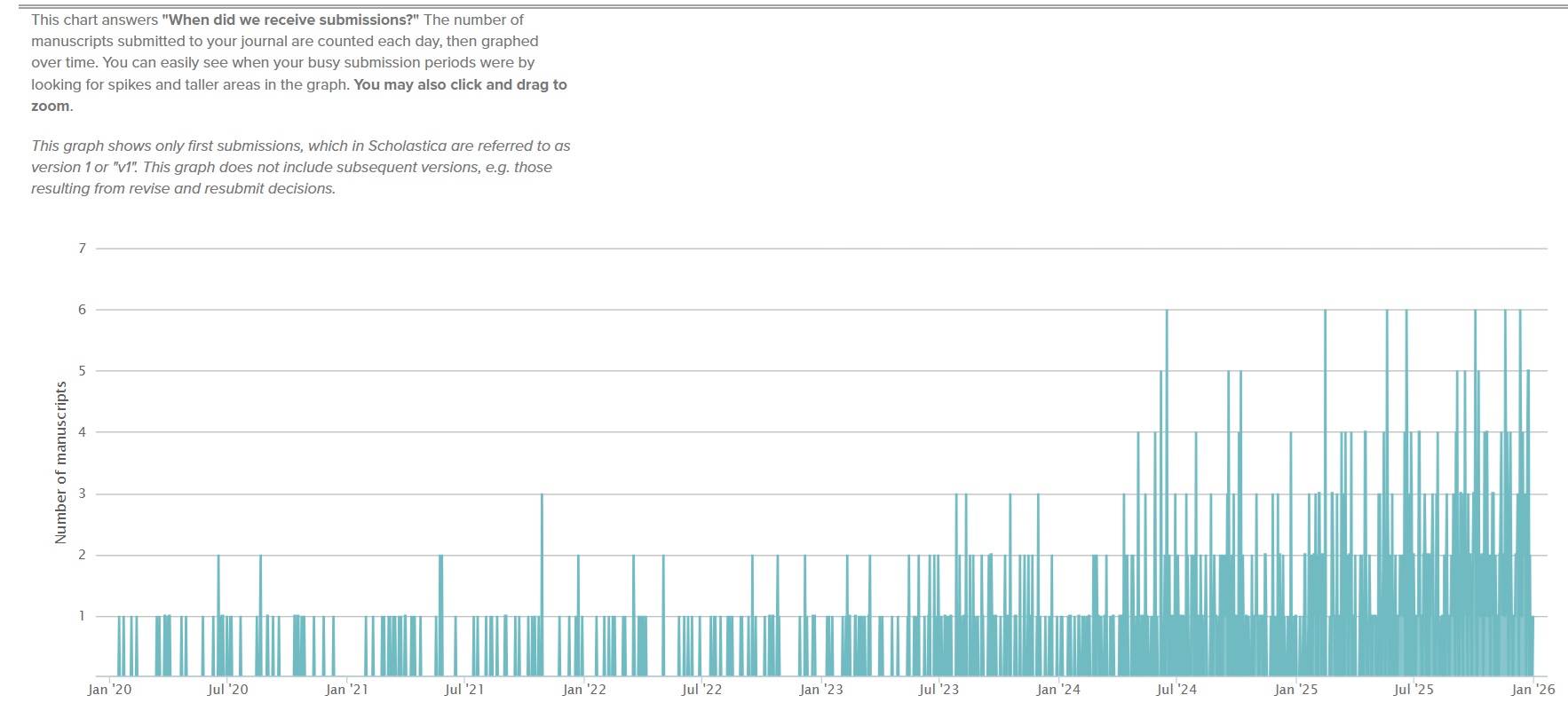
P.S. For those of you who missed the post I did earlier in the week, I have been looking at the accounts for the Open Journal of Astrophysics and can confirm that the cost to us per paper is less than $30 and will reduce with scale. We expect to publish around 180 papers in 2025 for which the total cost incurred by OJAp will be around $5000. Obviously if we increase by a factor, say, ten then that amount would become significant so we are taking steps to secure additional funding in the event that happens.

Weekly Update from the Open Journal of Astrophysics – 19/07/2025

Posted in OJAp Papers, Open Access, The Universe and Stuff with tags , , , , , , , , , , , , , , , , , , , , , , , , , , on July 19, 2025 by telescoper

It’s Saturday morning again, so it’s time again for an update of papers published at the Open Journal of Astrophysics. Since the last update we have published six new papers, which brings the number in Volume 8 (2025) up to 98, and the total so far published by OJAp  up to 333. I expect we’ll pass the century for this year sometime next week.

The papers published this week, with their overlays, are as follows.  You can click on the images of the overlays to make them larger should you wish to do so.

The first paper to report is “Reconstructing Galaxy Cluster Mass Maps using Score-based Generative Modeling” by Alan Hsu (Harvard), Matthew Ho (CMU), Joyce Lin (U. Wisconsin-Madison), Carleen Markey (CMU), Michelle Ntampaka (STScI), Hy Trac (CMU) & Barnabás Póczos (CMU), all based in the USA. This paper was published on 14th July 2025 in the folder Cosmology and NonGalactic Astrophysics. It presents a diffusion-based generativbe AI model for reconstructing density profiles for galaxy clusters from observational data.

The overlay is here:

The officially-accepted version can be found on arXiv here.

The second and third papers are related. They were both published on 14th July in the folder Cosmology and NonGalactic Astrophysics.

The first of the pair is “J-PLUS: Tomographic analysis of galaxy angular density and redshift fluctuations in Data Release 3. Constraints on photo-z errors, linear bias, and peculiar velocities” by Carlos Hernández-Monteagudo (IAC, Tenerife, Spain) and 21 others. This presents an analysis of the Javalambre Photometric Local Universe Survey (J-PLUS) in redshift slices with a discussion of prospects for extracting cosmological information. The overlay is here:


You can find the final version of the manuscript on arXiv here.

The second of this pair is “The J-PLUS collaboration. Additive versus multiplicative systematics in surveys of the large scale structure of the Universe” by Carlos Hernández-Monteagudo (IAC) and 21 others (the same authors as the previous paper).  This paper presents an analysis of systematic effects in the Javalambre Photometric Local Universe Survey (J-PLUS), and a new model for handling such errors in this and other cosmological surveys. The overlay for this paper is here:

You can find the officially accepted version of this paper on arXiv here.

The fourth paper this week is “Why Machine Learning Models Systematically Underestimate Extreme Values” by Yuan-Sen Ting (Ohio State University). This one was published on July 16th in the folder marked Instrumentation and Methods for Astrophysics.  This paper presents a theoretical framework for understanding and addressing a bias that suppresses the dynamic range of variables in applications of machine learning to astronomical data analysis. Here is the overlay:

You can find the officially accepted version of this paper on arXiv here.

The penultimate article for this week is “Bridging Machine Learning and Cosmological Simulations: Using Neural Operators to emulate Chemical Evolution” by Pelle van de Bor, John Brennan & John A. Regan (Maynooth University) and Jonathan Mackey (Dublin Institute for Advanced Studies), all based in Ireland. This paper uses machine learning, in the form of neural operators, to emulate the Grackle method of solving non-equilibrium chemistry equations in cosmological hydrodynamic simulations and was published on 16th July also in the folder Instrumentation and Methods for Astrophysics. The overlay is here:

The final, accepted version of the paper is on arXiv here.

The last article published this week is “Astronomical Cardiology: A Search For Heartbeat Stars Using Gaia and TESS” by Jowen Callahan, D. M. Rowan, C. S. Kochanek and K. Z. Stanek (all of Ohio State University, USA). This paper presents a study of a sample of 112 new spectroscopic binaries called hearbeat stars (because their light curves resemble electrocardiagrams). It was published on 16th July 2025 in the folder marked Solar and Stellar Astrophysics. The overlay is here:

You can find the officially-accepted version on arXiv here.

And that’s all the papers for this week. I’ll do another update next Saturday.