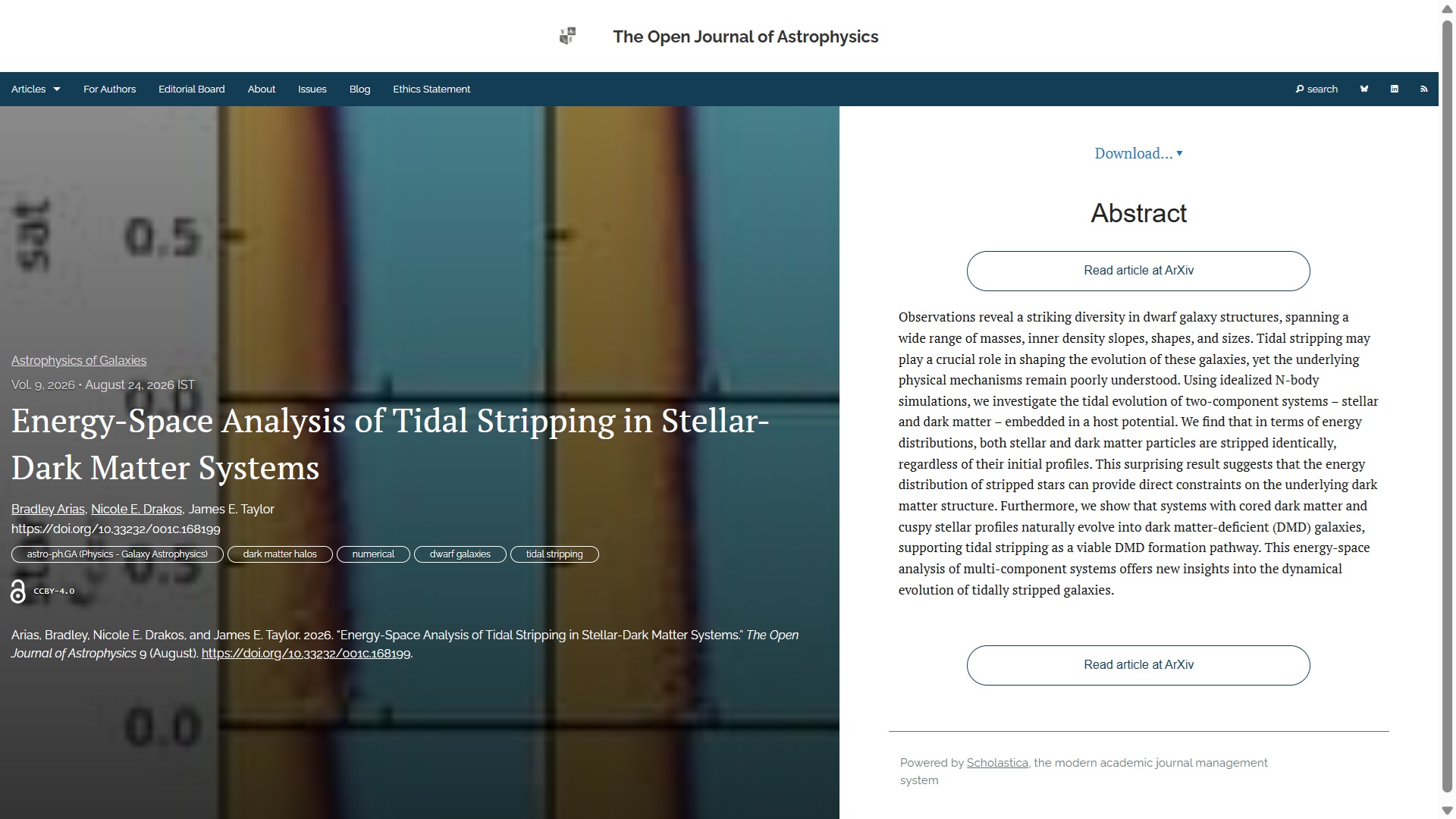
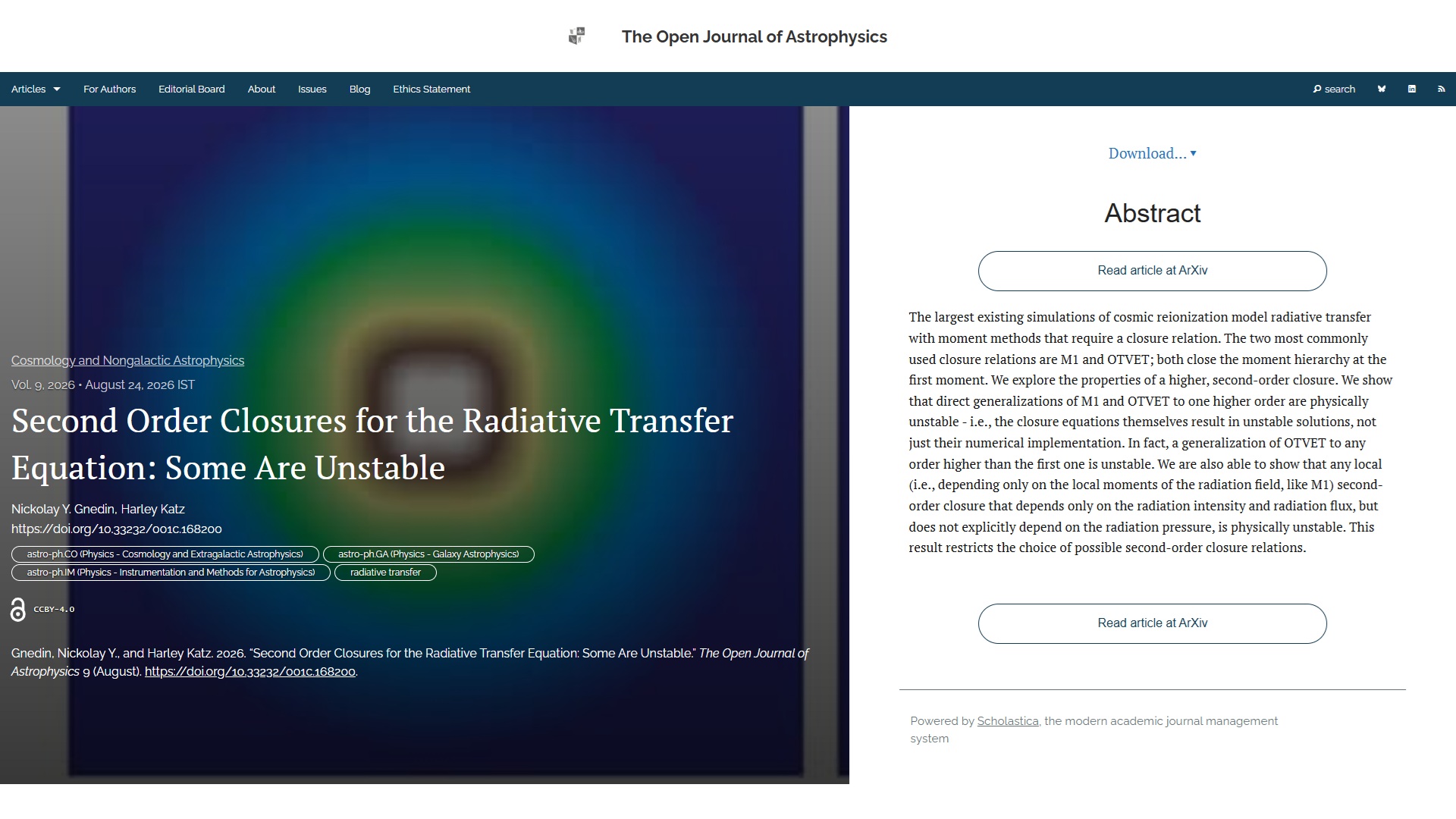
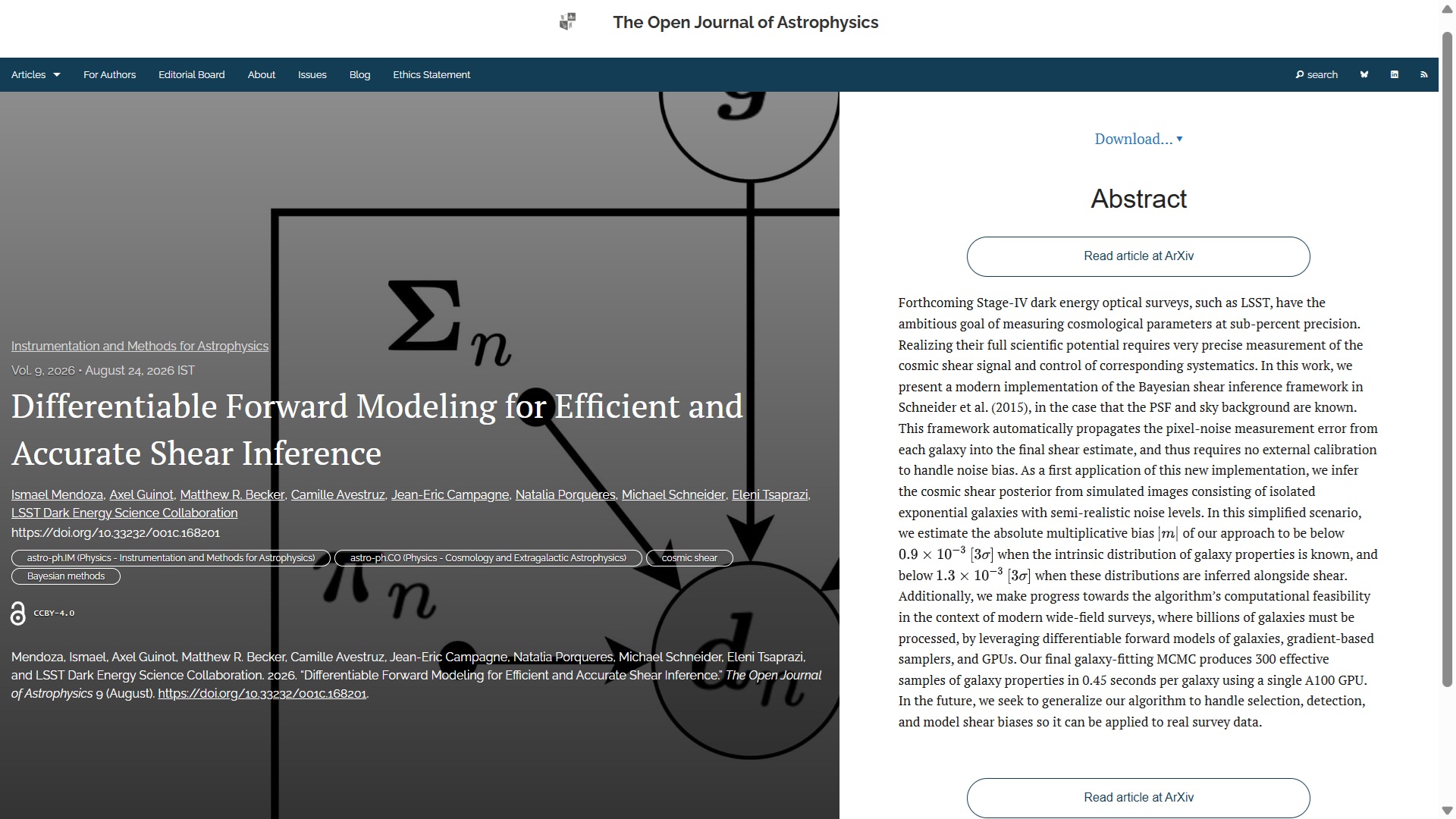
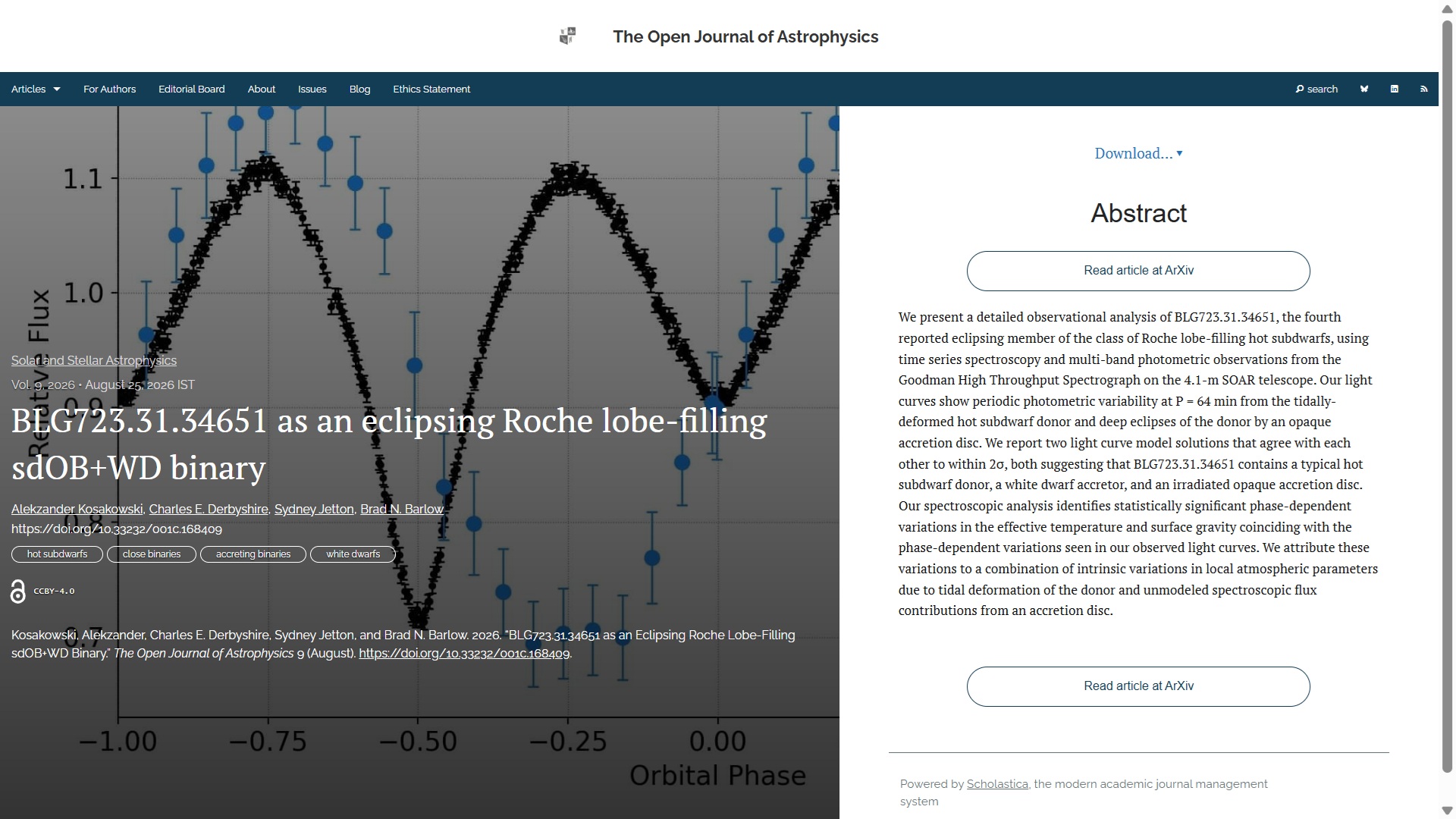
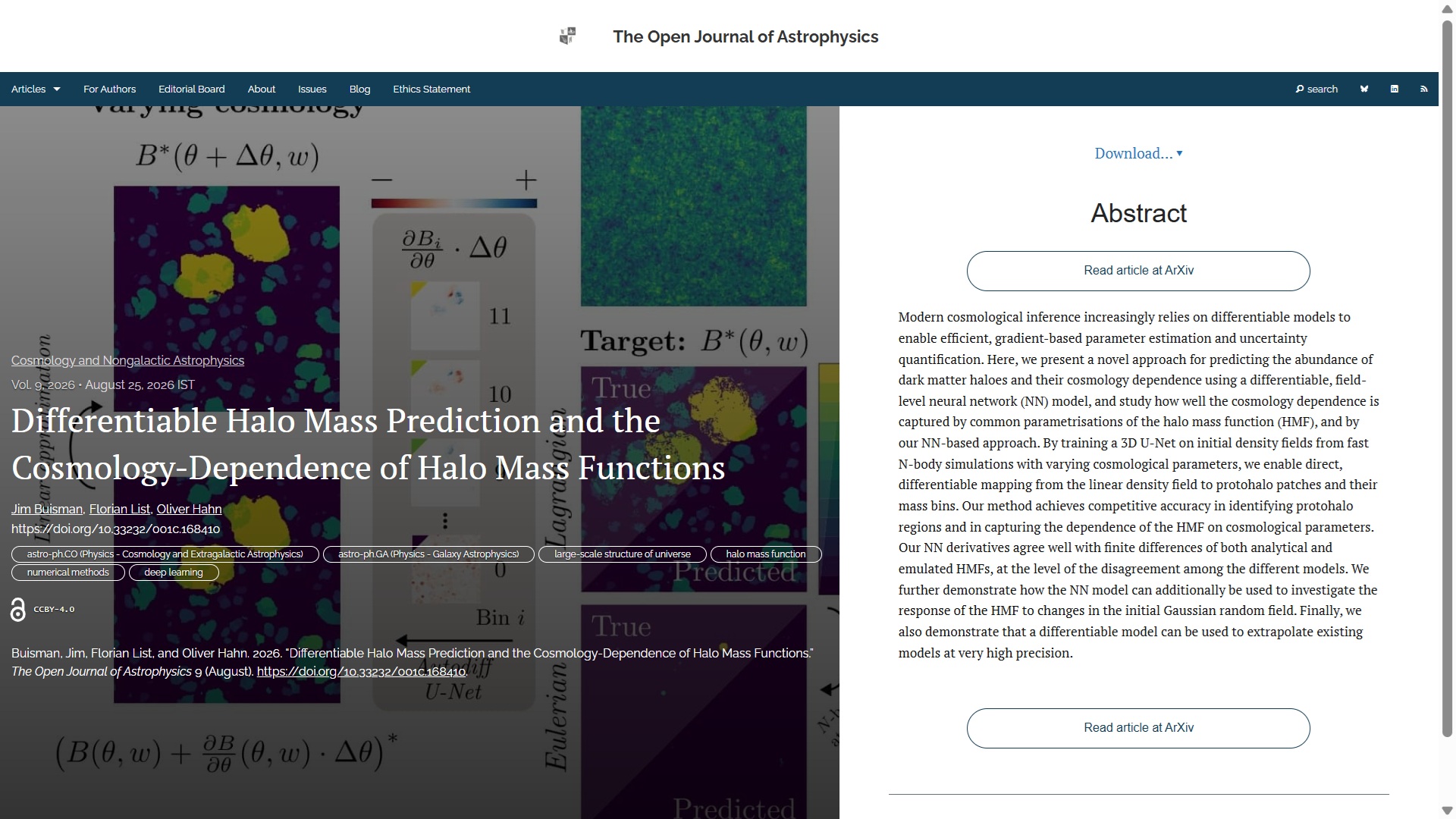
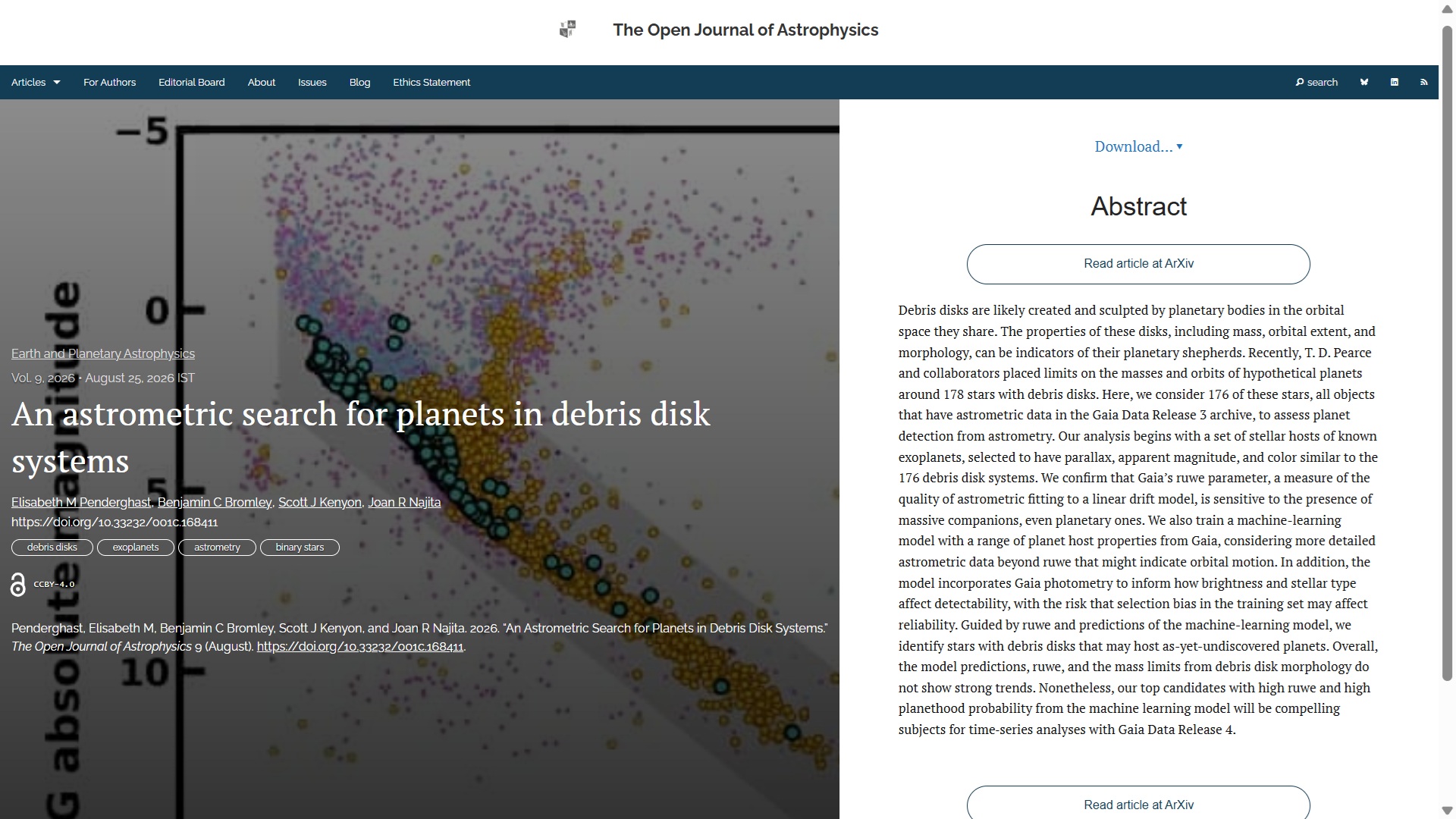
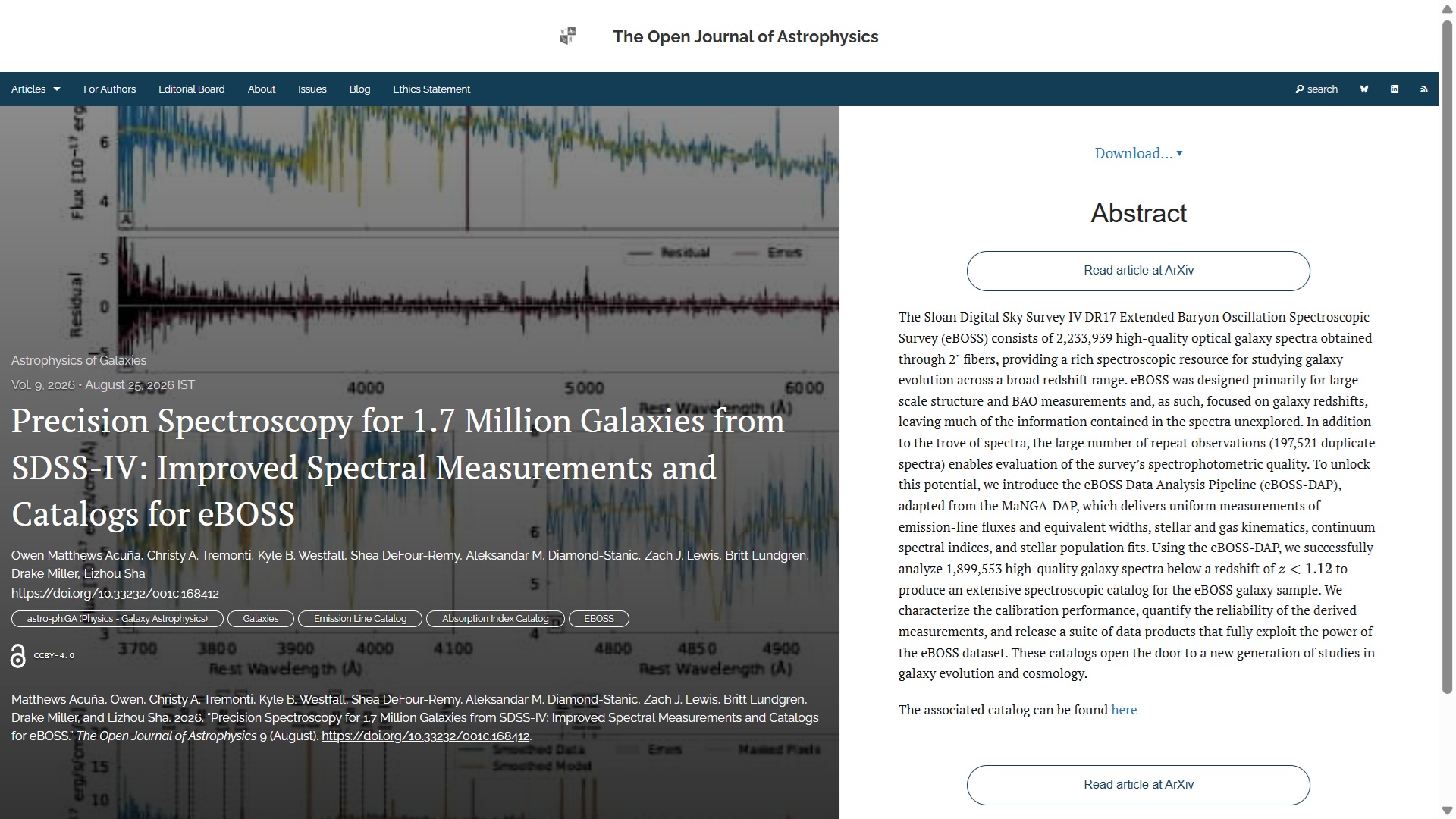
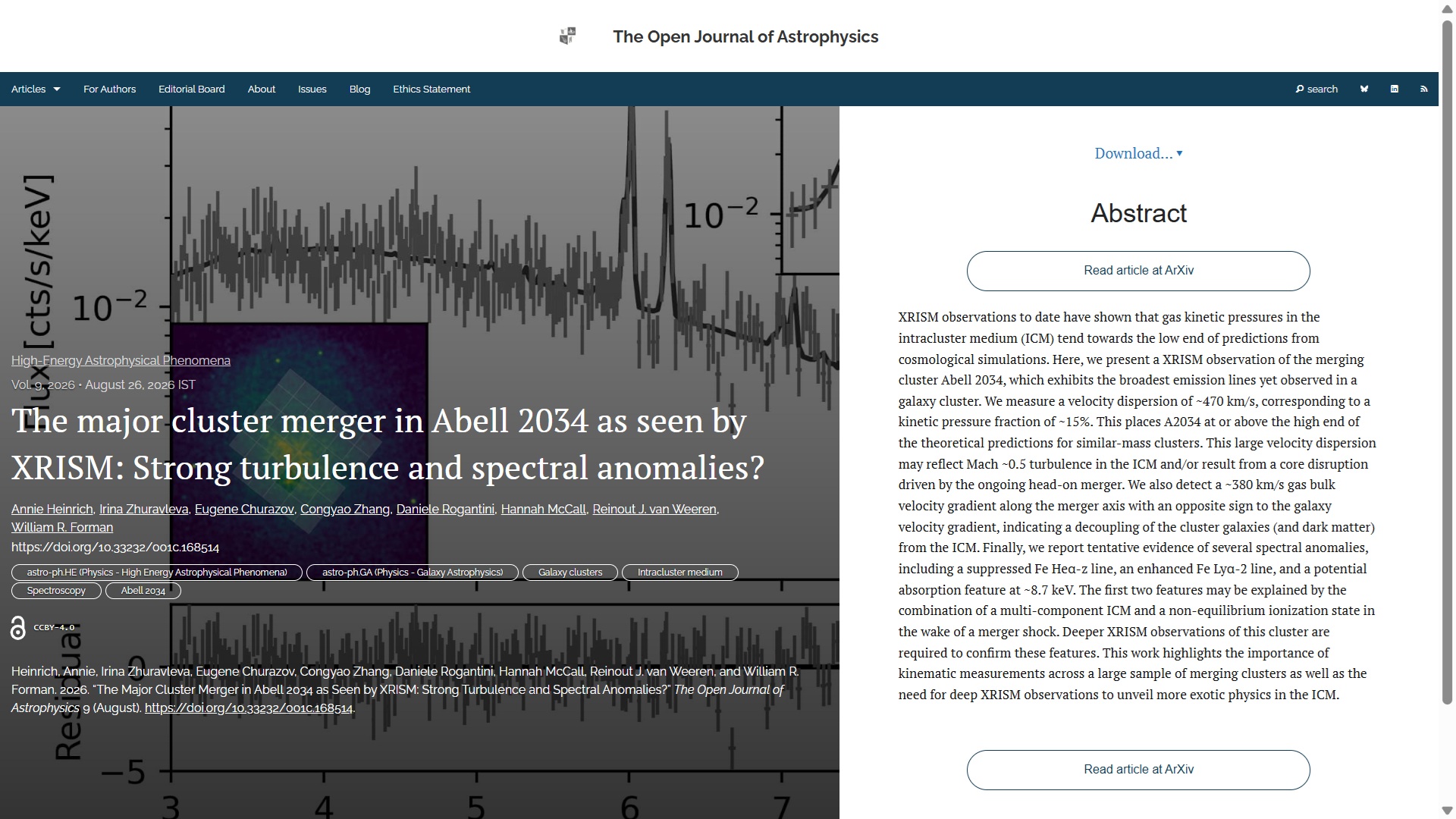
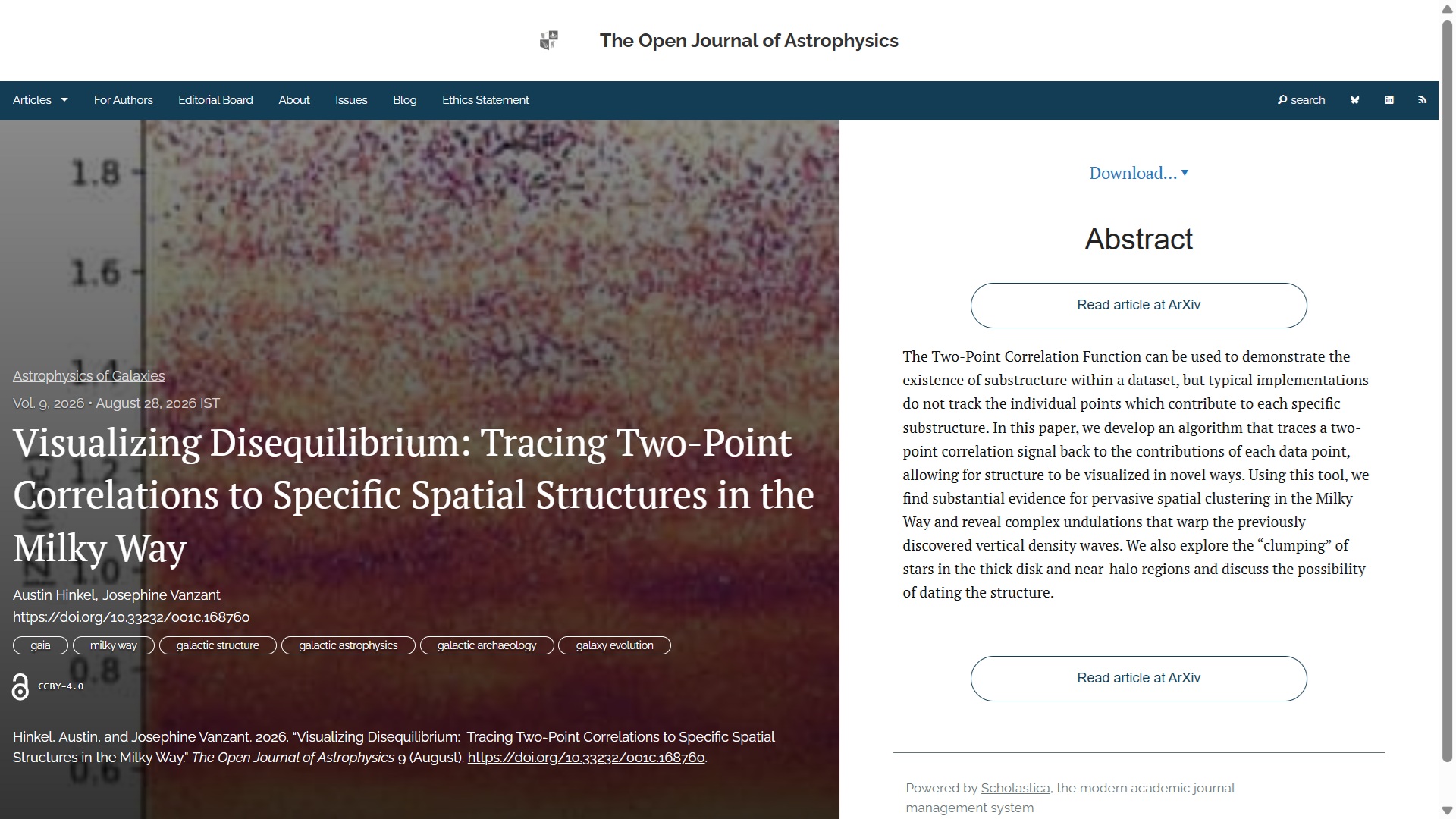
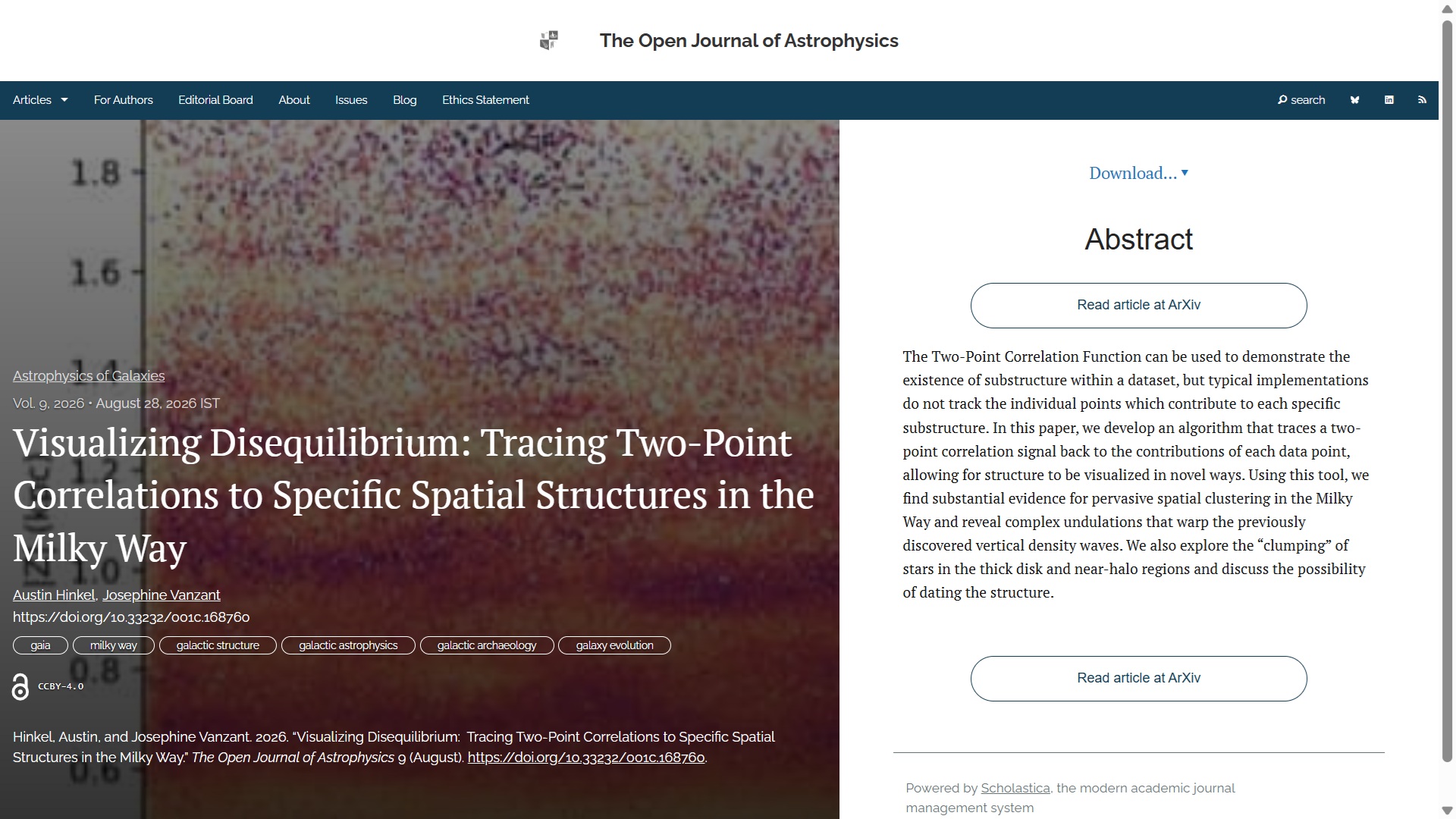
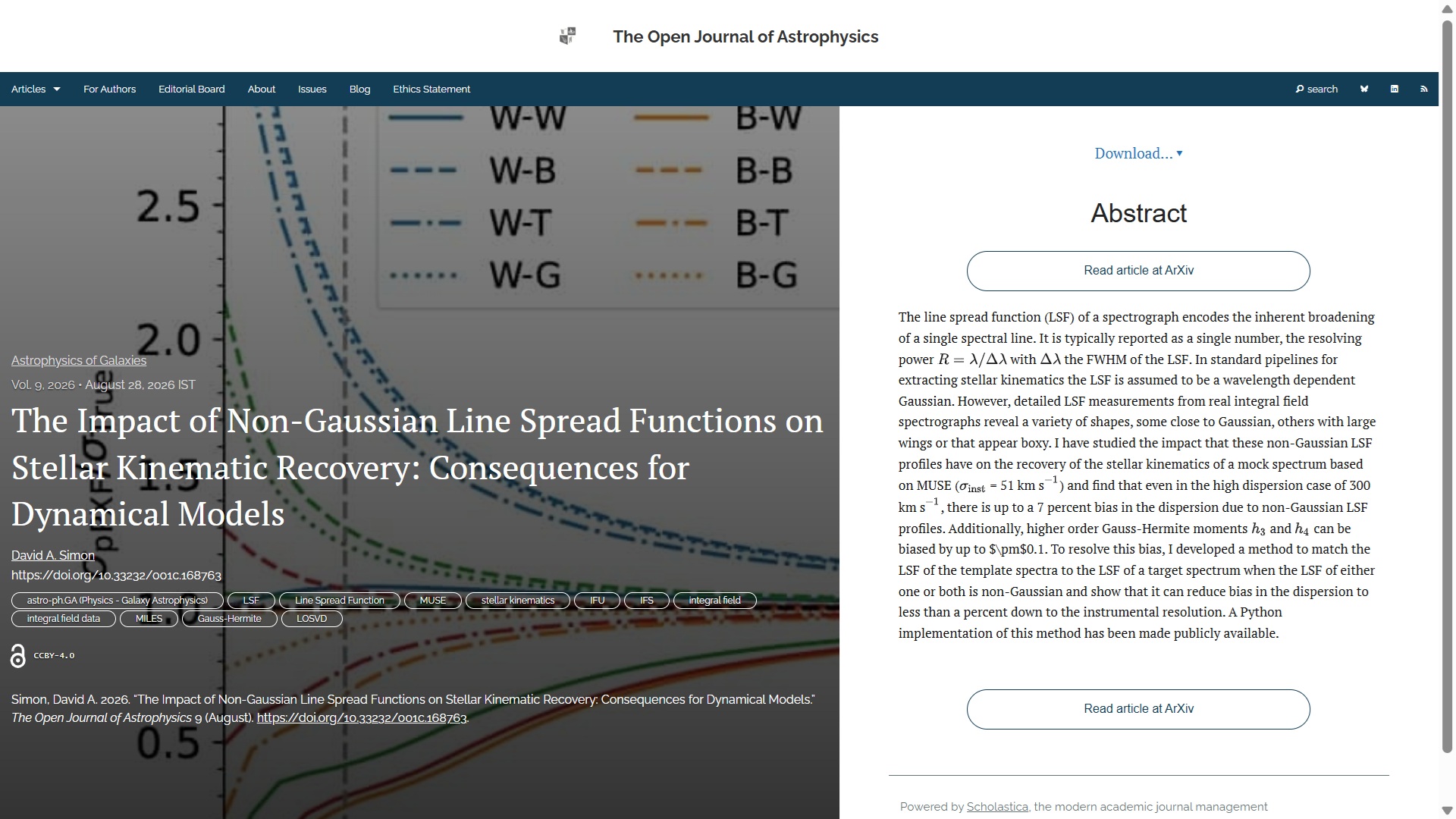
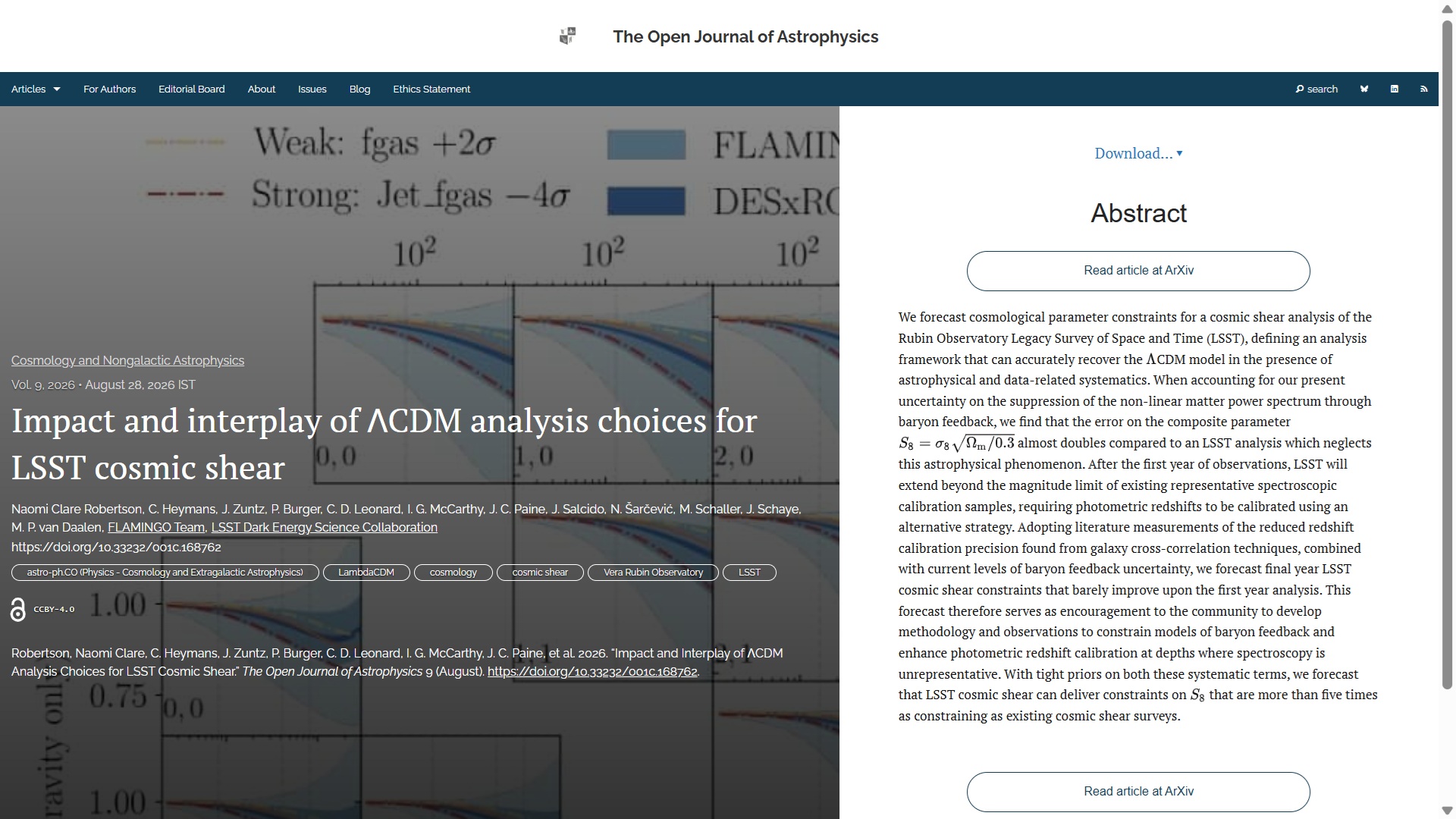
It’s Saturday once more, so it’s time for another update of activity at the Open Journal of Astrophysics. Since the last update we have published a further four papers, bringing the number in Volume 9 (2026) to 51 and the total so far published by OJAp up to 499. I hoped we would reach 500 this week, but that milestone will have to wait. We have however passed the 50 mark for this year, so we have now published more papers so far in 2026 than we published in all of 2023.
I will continue to include the posts made on our Mastodon account (on Fediscience) to encourage you to visit it. Mastodon is a really excellent service, and a more than adequate replacement for X/Twitter (which nobody should be using); these announcements also show the DOI for each paper.
New Publication at the Open Journal of Astrophysics: "Effect of temperature on the structure of porous dust aggregates formed by coagulation" by Lucas Kolanz, Davide Lazzati and Job Guidos (Oregon State University, USA)
The second paper for this week is “Intrinsic alignment of disks and ellipticals across hydrodynamical simulations” by M. L. van Heukelum and N. E. Chisari (Utrecht University, The Netherlands). This is one of two papers published on Tuesday 10th March. This one is in the folder Astrophysics of Galaxies: it examines the inconsistent correlations between galaxy positions and shapes, comparing disk and elliptical shapes in different simulations. The results highlight the importance of sub-grid physics at non-linear scales.
The overlay for this one is here:
The official version of the paper can be found on arXiv here and the Fediverse announcement here:
New Publication at the Open Journal of Astrophysics: "Intrinsic alignment of disks and ellipticals across hydrodynamical simulations" by M. L. van Heukelum and N. E. Chisari (Utrecht University, The Netherlands)
Next one up is “A Comparison of Galacticus and COZMIC WDM Subhalo Populations” by Jack Lonergan (U. Southern California), Andrew Benson (Carnegie Observatories) and Xiaolong Du (UCLA), all based in the USA. This paper was published on 10th March 2026 in the folder Cosmology and Nongalactic Astrophysics. The study compares warm dark matter subhalo populations using the Galacticus model and COZMIC simulations, finding both can reliably reproduce these distributions, with Galacticus offering computational efficiency.Abstractfor A Comparison of Galacticus and COZMIC WDM Subhalo Populations.
The overlay for this one is here:
The final, accepted version can be found on arXiv here and the Mastodon announcement is here:
New Publication at the Open Journal of Astrophysics: "A Comparison of Galacticus and COZMIC WDM Subhalo Populations" by Jack Lonergan (U. Southern California), Andrew Benson (Carnegie Observatories) and Xiaolong Du (UCLA), all based in the USA.
And finally for this week we have “Simulation-Based Inference for Probabilistic Galaxy Detection and Deblending” by Ismael Mendoza (U. Maryland, USA) and 7 others (all based in the USA) on behalf of the LSST Dark Energy Science Collaboration. This was published on Thursday March 12th in the folder Instrumentation and Methods for Astrophysics. The article introduces the Bayesian Light Source Separator (BLISS), for detecting and measuring galaxy properties in wide-field cosmological surveys. BLISS demonstrates improved performance, particularly for faint and blended objects.
The overlay is here:
The finally accepted version of this paper can be found here and the Mastodon announcement is here:
New Publication at the Open Journal of Astrophysics: "Simulation-Based Inference for Probabilistic Galaxy Detection and Deblending" by Ismael Mendoza (U. Maryland, USA) and 7 others (all based in the USA) on behalf of the LSST Dark Energy Science Collaboration
P.S. Thank you once again to the many people who have responded to the latest call for editors. I’ve been sending out invitations and getting people onboard as quickly as I can, but I still have a number to get to, so please bear with me!
Today (Friday 13th March 2026) is 40 years to the day since the Giotto spacecraft started to send back images of Halley’s comet;it reached its closest approach on 14th March 1986. This guest post by my colleague in the Department of Physics at Maynooth, Dr Emma Whelan, was written to mark this anniversary and the connection with the eminent Irish astrophysicist Susan McKenna-Lawlor.
–o–
This week, as I mull over the importance of International Women’s Day, I am also thinking about the significance to Irish women scientists of the 40th anniversary of the historic flyby of Halley’s Comet by the European Space Agency’s first deep space mission Giotto. On 14 March 1986, Giotto passed within about 600 km of the nucleus of Halley’s comet at a relative speed of roughly 68 km/s. Despite being bombarded by dust particles in the comet’s coma, the spacecraft successfully returned unprecedented data. Maynooth University space scientist and former Head of the Department of Experimental Physics, Prof. Susan McKenna-Lawlor, made a key contribution to this mission and was the Principal Investigator for Giotto’s instrument, the Energetic Particle Analyser otherwise known as EPONA. EPONA was designed to measure high-energy charged particles in the vicinity of Halley’s comet. By analysing the flux and energy of these particles, the experiment helped scientists understand the interaction between the solar wind and a comet.
Giotto represents not only a major milestone in the history of ESA, but also an important moment in the history of the contribution of Irish Women to the field of Astrophysics and the involvement of Maynooth University women scientists, in Space Science. The Department of Physics now has a thriving Physics with Astrophysics degree (MH204) with many women (students, technicians, administrators and academics) making important contributions to the success of this programme. Prof. McKenna-Lawlor’s leadership in developing and operating the instrument represented one of Ireland’s earliest direct contributions to an international space mission. Her work helped establish Ireland’s reputation in space science and encouraged future Irish participation in European and international space research, especially by young women who were inspired by seeing an Irish woman succeeding in a field where women were very rarely visible.
Launched in July 1985, Giotto’s primary objective was to encounter and study Halley’s Comet during its 1986 return to the inner Solar System. ESA have compiled a movie of its encounter which can be viewed here. At the time, Halley’s Comet was the most famous comet known, having been observed for centuries, yet very little was understood about comets and in particular the detailed structure of their nuclei and the physical processes occurring as they approach the Sun. Giotto provided the first close-up measurements of a comet and fundamentally changed scientific understanding of these Solar System bodies. One of Giotto’s most significant results was the first direct image of a comet’s nucleus. The images revealed that Halley’s nucleus is a dark, irregular object roughly 15 km long, far darker than expected, reflecting only a small fraction of sunlight. This confirmed the long-standing “dirty snowball” model proposed by astronomer Fred Whipple, in which a comet consists of volatile ices mixed with dust and rocky material. Giotto’s observations also showed jets of gas and dust erupting from localised regions on the nucleus, demonstrating that cometary activity is driven by sunlight heating specific surface areas rather than uniformly across the surface.
In addition to imaging, Giotto carried instruments designed to study the plasma, dust, and the energetic particle environment around the comet. These measurements revealed the complex interaction between the comet’s expanding atmosphere and the solar wind. Scientists were able to observe the formation of structures such as bow shocks and ion tails, helping to explain how cometary material becomes ionised and carried away through space. These results provided critical insights into the physics of cometary comae and their interaction with the heliosphere. The results from EPONA were crucial in identifying regions where energetic particles were produced by the interaction between the solar wind and the cometary plasma. These measurements contributed to the understanding of shock waves and particle acceleration processes occurring near the comet.
Prof. McKenna-Lawlor (pictured above, in 2017) was born in Dublin in 1935 and received a BSc, MSc and PhD from University College Dublin. She was a research assistant at The Dublin Institute for Advanced Studies and became a lecturer at the Department of Experimental Physics in Maynooth in the early 1970s. She has received numerous awards including the Russian Tsiokovsky Gold Medal for “Outstanding Contributions to Cosmonautics” in 1988. She has written several books on the history of Irish Astronomy including “Whatever Shines Should be Observed” that documents the pioneering contributions of five 19th-century Irish women to astronomy, photography, and science. The title is derived from the motto of the Royal Astronomical Society. In more recent times she was involved with ESA’s Rosetta mission which landed its Philae probe on comet 67P/Churyumov-Gerasimenko on November 12, 2014.
It’s Saturday once more, so it’s time for another update of activity at the Open Journal of Astrophysics. After a bumper week last week, this week has been slower on the publication side. Since the last update we have published a further two papers, bringing the number in Volume 9 (2026) to 47 and the total so far published by OJAp up to 495.
I will continue to include the posts made on our Mastodon account (on Fediscience) to encourage you to visit it. Mastodon is a really excellent service, and a more than adequate replacement for X/Twitter (which nobody should be using); these announcements also show the DOI for each paper.
New Publication at the Open Journal of Astrophysics: "Comments on “Little ado about everything” by A. Lapi et al. and on cosmological back-reaction" by Julian Adamek (Universität Zürich, Switzerland)
The second (and last) paper for this week is “Linear map-making with LuSEE-Night” by Hugo Camacho (Brookhaven National Laboratory, USA) and 34 others based in the USA, France, and the Netherlands. This was published on Thursday 5th March in the folder Instrumentation and Methods for Astrophysics. The paper discusses LuSEE-Night (the Lunar Surface Electromagnetics Experiment), a proposed lunar radio telescope using four antennas to map the sub-50 MHz sky with a 5-degree resolution, using the Wiener filter algorithm to manage systematic effects.
The overlay for this one is here:
The official version of the paper can be found on arXiv here and the Fediverse announcement here:
New Publication at the Open Journal of Astrophysics: "Linear map-making with LuSEE-Night" by Hugo Camacho (Brookhaven National Laboratory, USA) and 34 others based in the USA, France, and the Netherlands.
That concludes this week’s (brief) update. Based on the number of papers accepted and waiting to be published it is likely we will pass 50 for the year and 500 in total by next week.
P.S. Thank you once again to the many people who have responded to the latest call for editors. I’ve been sending out invitations and getting people onboard as quickly as I can, but I still have a number to get to so please bear with me!
This extraordinary planetary nebula in the constellation Draco has captivated astronomers for decades with its elaborate and multilayered structure. Observations with ESA’s Gaia mission place the nebula at a distance of about 4300 light-years.
Planetary nebulae, so-called because of their round shape when viewed through early telescopes, are in fact expanding gas thrown off by stars in their final stages of evolution. It was the Cat’s Eye Nebula itself where this fact was first discovered in 1864 – examining the spectrum of its light reveals the emission from individual molecules that’s characteristic of a gas, distinguishing planetary nebulae from stars and galaxies.
Here, the nebula is showcased through the combined eyes of the NASA/ESA Hubble Space Telescope and ESA’s Euclid, highlighting the remarkable complexity of stellar death.
Though primarily designed to map the distant Universe, Euclid captures the Cat’s Eye Nebula as part of its deep imaging surveys. In Euclid’s wide, near-infrared and visible light view, the arcs and filaments of the nebula’s bright central region are situated within a halo of colourful fragments of gas zooming away from the star.
This ring was ejected from the star at an earlier stage, before the main nebula at the centre formed. The whole nebula stands out against a backdrop teeming with distant galaxies, demonstrating how local astrophysical beauty and the farthest reaches of the cosmos can be seen together in modern astronomical surveys.
Within this broad view of the nebula and its surroundings, Hubble captures the very core of the billowing gas with high-resolution visible-light images, adding extra detail in the centre of this image. The data reveal a tapestry of concentric shells, jets of high-speed gas and dense knots sculpted by shock interactions, features that appear almost surreal in their intricacy. These structures are believed to record episodic mass loss from the dying star at the nebula’s centre, creating a kind of cosmic “fossil record” of its final evolutionary stages.
Combining the focused view of Hubble with Euclid’s deep field observations not only highlights the nebula’s exquisite structure but also places it within the broader context of the Universe that both space telescopes explore. Together, these missions provide a rich and complementary view of NGC 6543 – revealing the delicate interplay between stellar end-of-life processes and the vast surrounding space.
–o–
For more information, see here. There’s also this video which shows the Nebula in context in Euclid’s extraordinarily impressive wide field capability and Hubble’s superb resolution in the optical band:
P.S. I put the following on my office door in Maynooth University to demonstrate the true scale (!) of my own involvement in Euclid.
It’s Saturday once more, so it’s time for another update of activity at the Open Journal of Astrophysics. It has been a busy week. Since the last update we have published a further nine papers, bringing the number in Volume 9 (2026) to 45 and the total so far published by OJAp up to 493.
I will continue to include the posts made on our Mastodon account (on Fediscience) to encourage you to visit it. Mastodon is a really excellent service, and a more than adequate replacement for X/Twitter (which nobody should be using); these announcements also show the DOI for each paper.
The first four papers this week were all published on Monday 23rd February.
New Publication at the Open Journal of Astrophysics: "A Bayesian Exploration of The Mass of the Ursa Major III: Kinematics, Rotation and their influence on the Mass to Light Ratio" by Tim R. Adams (U. Sydney, Australia), Brendon J. Brewer (U. Auckland, New Zealand) and Geraint F. Lewis (Sydney)
The second paper is “The Impact of Baryonic Effects on the Dynamical Masses Inferred Using Satellite Kinematics” by Josephine F.W. Baggen, Frank C. van den Bosch, and Kaustav Mitra (Yale U., USA). This paper, also in the folder Astrophysics of Galaxies, presents a model to assess the impact of stars and gas on satellite kinematics, showing that these baryonic effects can reduce the satellite velocity dispersion and increase inferred central galaxy masses.
The overlay for this one is here:
The official version of the paper can be found on arXiv here and the Fediverse announcement here:
New Publication at the Open Journal of Astrophysics: "The Impact of Baryonic Effects on the Dynamical Masses Inferred Using Satellite Kinematics" by Josephine F.W. Baggen, Frank C. van den Bosch, and Kaustav Mitra (Yale U., USA)
The third paper this week, and the third published on Monday 23rd February, and the third in the folder Astrophysics of Galaxies, is “MEGATRON: Disentangling Physical Processes and Observational Bias in the Multi-Phase ISM of High-Redshift Galaxies” by Nicholas Choustikov (U. Oxford, UK) and 12 others based in UK, USA, France, Korea and Belgium. The study uses MEGATRON simulations to analyze the interstellar medium (ISM) of high-redshift galaxies, finding it denser and less metal-enriched than local galaxies with implications for line ratios as diagnostics
The overlay is here:
The official version can be found on arXiv here and the Fediverse announcement is here:
New Publication at the Open Journal of Astrophysics: "MEGATRON: Disentangling Physical Processes and Observational Bias in the Multi-Phase ISM of High-Redshift Galaxies" by Nicholas Choustikov (U. Oxford, UK) and 12 others based in UK, USA, France, Korea and Belgium
New Publication at the Open Journal of Astrophysics: "Redshift Assessment Infrastructure Layers (RAIL): Rubin-era photometric redshift stress-testing and at-scale production" by the RAIL Team (31 authors) and the Dark Energy Science Collaboration
Moving on to Tuesday 24th February, the fifth paper this week, is “Feedback shaped the galaxy morphological sequence in presence of mergers” by Masafumi Noguchi (Tohoku University, Japan). This article was published in the folder Astrophysics of Galaxies. This study suggests that galaxy morphology, specifically the mass ratios of bulges and disks, is influenced by galaxy mergers and feedback processes from active galactic nuclei and supernovae.
The overlay is here:
The accepted version can be found on arXiv here, and the fediverse announcement is here:
New Publication at the Open Journal of Astrophysics: "Feedback shaped the galaxy morphological sequence in presence of mergers" by Masafumi Noguchi (Tohoku University, Japan)
The sixth paper this week is “HelioSpectrotron 5000: an interactive solar atlas” by Alexander G.M. Pietrow (AIP Potsdam, Germany). This was published on Tuesday 24th February in the folder Solar and Stellar Astrophysics. This describes HelioSpectrotron~5000 (HS5000), which is an interactive solar spectral atlas that allows comparison between high-resolution spectra and ground-based instrument observations, aiding in wavelength calibration and line identification. The software can be found here; I had a play with it yesterday and it’s very easy to use!
The overlay is here:
You can find the officially accepted version on arXiv here and the Mastodon announcement is here:
New Publication at the Open Journal of Astrophysics: "HelioSpectrotron 5000: an interactive solar atlas" by Alexander G.M. Pietrow (AIP Potsdam, Germany)
The seventh paper of this week was published on Thursday 26th February is “The Rise of Ionized Gas Filaments in Early-Type Galaxies” by Ryan Eskenasy (U. Kentucky, USA), Valeria Olivares (Universidad de Santiago de Chile) and Yuanyuan Su (U. Kentucky, USA). This article, in the folder Astrophysics of Galaxies, is an exploration of the formation of multiphase filamentary nebulae in early-type galaxies (ETGs), using VLT-MUSE IFU observations of 126 non-central ETGs, focussing on the hot gas components thereof.
The overlay is here:
The officially accepted version of this paper can be found on the arXiv here and the Mastodon announcement is here:
New Publication at the Open Journal of Astrophysics: "The Rise of Ionized Gas Filaments in Early-Type Galaxies" by Ryan Eskenasy (U. Kentucky, USA), Valeria Olivares (Universidad de Santiago de Chile) and Yuanyuan Su (U. Kentucky, USA)
New Publication at the Open Journal of Astrophysics: "Relationship Between Major Stellar Physical Parameters and Normal Mode Frequencies in Accreting White Dwarf Stars" by Praphull Kumar, Dean M. Townsley and Hunter Anz (U. Alabama, USA)
The ninth, and final, paper for this week is “A Semi-Supervised Learning Method for the Identification of Bad Exposures in Large Imaging Surveys” by Yufeng Luo (U. Wyoming, USA) and 8 others from the DESI Legacy Imaging Surveys Team. This was published on Friday 27th February, i.e yesterday, in the folder Instrumentation and Methods for Astrophysics. The paper describes a machine-learning approach for detecting poor-quality exposures in large astronomical imaging surveys, proving efficient and accurate in identifying problematic exposures.
The overlay is here:
The official version on arXiv can be found here and the Mastodon announcement follows:
New Publication at the Open Journal of Astrophysics: "A Semi-Supervised Learning Method for the Identification of Bad Exposures in Large Imaging Surveys" by Yufeng Luo (U. Wyoming, USA) and 8 others from the DESI Legacy Imaging Surveys Team
And that concludes this week’s update. We have now published 45 papers in two complete months of 2026, on which basis we can estimate about 270 papers in the year. For the record, in the first two months of 2025 we published 21 papers.
P.S. Thank you to the many people who responded to the latest call for editors. I’ve been sending out invitations and getting people onboard as quickly as I can, but I still have a number to get to so please bear with me!
It’s Saturday once more so time for another update of activity at the Open Journal of Astrophysics. Since the last update we have published a further six papers, bringing the number in Volume 9 (2026) to 36 and the total so far published by OJAp up to 484.
I will continue to include the posts made on our Mastodon account (on Fediscience) to encourage you to visit it. Mastodon is a really excellent service, and a more than adequate replacement for X/Twitter (which nobody should be using); these announcements also show the DOI for each paper.
The first paper to report this week is “SKA-Low simulations for a cosmic dawn/epoch of reionisation deep field” by Anna Bonaldi, Philippa Hartley, Simon Purser & Omkar Bait (SKAO, UK), Eunseong Lee (U. Manchester, UK), Robert Braun (SKAO), Florent Mertens (Sorbonne Université, France), Andrea Bracco (Osservatorio Astrofisico di Arcetri, IT), Wendy Williams (SKAO) and Cath Trott (Curtin U., Australia). This paper presents a simulation of an SKA-Low cosmic dawn/epoch of reionisation observation to advance foreground-mitigation approaches: the simulation includes various sky components and modelled errors, allowing for efficacy assessment. It was published on Monday 16th February in the folder Cosmology and Nongalactic Astrophysics.
The overlay is here:
You can find the officially accepted version on arXiv here and the announcement on Fediverse here:
New Publication at the Open Journal of Astrophysics: "SKA-Low simulations for a cosmic dawn/epoch of reionisation deep field" by Anna Bonaldi, Philippa Hartley, Simon Purser & Omkar Bait (SKAO, UK), Eunseong Lee (U. Manchester, UK), Robert Braun (SKAO), Florent Mertens (Sorbonne Université, France), Andrea Bracco (Osservatorio Astrofisico di Arcetri, IT), Wendy Williams (SKAO) and Cath Trott (Curtin U., Australia)
The second paper is “V717 Andromedae: An Active Low Mass Ratio Contact Binary” by Surjit S. Wadhwa (Western Sydney U. Australia), Marko Grozdanovic (Astronomical Observatory Belgrade, Serbia), and Nicholas F.H Tothill, Miroslav D. Filipovic, Ain Y. De Horta (Western Sydney U.). This was also published on Monday 1th February, but in the folder Solar and Stellar Astrophysics. The article discusses the contact binary V717 Andromedae, an extreme low mass ratio system with high inclination and moderate contact, showing signs of chromospheric activity but stable and not a merger candidate
The overlay for this one is here:
The official version of the paper can be found on arXiv here and the Fediverse announcement here:
New Publication at the Open Journal of Astrophysics: "V717 Andromedae: An Active Low Mass Ratio Contact Binary" by Surjit S. Wadhwa (Western Sydney U. Australia), Marko Grozdanovic (Astronomical Observatory Belgrade, Serbia), and Nicholas F.H Tothill, Miroslav D. Filipovic, Ain Y. De Horta (Western Sydney U.)
New Publication at the Open Journal of Astrophysics: "DIPLODOCUS II: Implementation of transport equations and test cases relevant to micro-scale physics of jetted astrophysical sources" by Christopher N Everett (Oxford U., UK), Marc Klinger-Plaisier (U. Amsterdam, NL) and Garret Cotter (Oxford)
The fourth paper this week, also published on Tuesday 17th February, but in the folder Cosmology and Nongalactic Astrophysics is “Revisiting the Great Attractor: The Local Group’s streamline trajectory, cosmic velocity and dynamical fate” by Richard Stiskalek (Oxford U., UK), Harry Desmond (U. Portsmouth, UK), Stuart McAlpine (Stockholm, SE), Guilhem Lavaux (Sorbonne Université, FR), Jens Jasche (Stockholm) and Michael J. Hudson (U. Waterloo, Canada). This paper revisits the so-called “Great Attractor” concept, finding that it doesn’t dominate the Local Group’s cosmic velocity; multiple structures contribute to the motion, with no single attractor accounting for the flow.
Here is the overlay:
The official version can be found on arXiv here and the Fediverse announcement is here:
New Publication at the Open Journal of Astrophysics: "Revisiting the Great Attractor: The Local Group’s streamline trajectory, cosmic velocity and dynamical fate" by Richard Stiskalek (Oxford U., UK), Harry Desmond (U. Portsmouth, UK), Stuart McAlpine (Stockholm, SE), Guilhem Lavaux (Sorbonne Université, FR), Jens Jasche (Stockholm) and Michael J. Hudson (U. Waterloo, Canada)
The fifth paper this week, is “JWST observations of three long-period AM CVn binaries: detection of the donors and hints of magnetically truncated disks” by Kareem El-Badry (Caltech), Antonio C. Rodriguez (CfA Harvard), Matthew J. Green (U. Oklahoma) & Kevin B. Burdge (MIT); all based in the USA. The article was published on Thursday 19th February 2026 in the folder Solar and Stellar Astrophysics. The paper describes high-cadence infrared spectroscopy used to analyze three long-period, eclipsing AM CVn (AM Canum Venaticorum) binaries; findings suggest the presence of magnetized white dwarf accretors, with surface magnetic fields of 30-100 kG.
The overlay is here:
The accepted version can be found on arXiv here, and the fediverse announcement is here:
New Publication at the Open Journal of Astrophysics: "JWST observations of three long-period AM CVn binaries: detection of the donors and hints of magnetically truncated disks" by Kareem El-Badry (Caltech), Antonio C. Rodriguez (CfA Harvard), Matthew J. Green (U. Oklahoma) & Kevin B. Burdge (MIT); all in USA
Finally for this week we have “Ultra-long Gamma-ray Bursts from Micro-Tidal Disruption Events: The Case of GRB 250702B” by Paz Beniamini (Open University, IL), Hagai B. Perets (Technion, IL) and Jonathan Granot (Open University, IL); all based in Israel. The paper was published on Friday 18th February 2026 in the folder High-Energy Astrophysical Phenomena.
The overlay is here:
You can find the officially accepted version on arXiv here and the Mastodon announcement is here:
New Publication at the Open Journal of Astrophysics: "Ultra-long Gamma-ray Bursts from Micro-Tidal Disruption Events: The Case of GRB 250702B" by Paz Beniamini (Open University, IL), Hagai B. Perets (Technion, IL) and Jonathan Granot (Open University, IL)
And that concludes this week’s update. I will do another next Saturday, by which time I expect we will have published a similar number of papers to this week.
I searched for a free stock image using “quarks” as a search term and found this photo by Anh Nguyen on Pexels.com.
On most Friday afternoons there is a seminar in the Physics Department at Maynooth University, and I got it into my mind that there was one this afternoon and set aside an hour to attend it. It turns out that there isn’t a seminar so I have time to write a quick blog post before I head to Dublin for a concert.
We’ve (almost) reached the end of Week 3 of the Semester which means we’re about a quarter of the way through the term. Yesterday we did the first Lab Test of four in Computational Physics, which went off without any major problems. The first class test in Particle Physics will be next week and I hope that goes equally well.
Today’s the day students officially received their provisional first semester results. When I arrived at my particle physics lecture this morning the students were discussing their exam marks. Most seemed relatively happy, which is good because this is the final year for most of these students so their grades matter more now than in previous years.
This morning’s lecture was quite amusing. I was discussing electrostatic interactions between quarks in nucleons and in the course of that I asked the class to calculate (2/3)×(-1/3) +(-1/3)×(-1/3)+(-1/3)×(2/3). It took a surprisingly long time to arrive at the right answer! To make matters worse, when I announced the correct answer I got the sign wrong*.
It’s been a long week.
Anyway, next week I’ll be starting on the Dirac Equation, and on the basis of today’s events I wonder about the wisdom of having a lecturer who can’t do minus signs teach relativistic quantum mechanics to students who struggle to do simple arithmetic with fractions!
An interesting paper has appeared on the arXiv by Lewis, Shah & Alfred with the title Astrophysics Wrapped 2025: Year-in-Review of Every Astrophysics arXiv Paper from 2025 and abstract as follows:
Over the past few years, Astrophysics has experienced an unprecedented increase in research output, as is evident from the year-over-year increase in the number of research papers put onto the arXiv. As a result, keeping up with progress happening outside our respective sub-fields can be exhausting. While it is impossible to be informed on every single aspect of every sub-field, this paper aims to be the next best thing. We present a summary of statistics for every paper uploaded onto the Astrophysics arXiv over the past year – 2025. We analyse a host of metadata ranging from simple metrics like the number of pages and the most used keywords, as well as deeper, more interesting statistics like the distribution of journals to which papers are submitted, the most used telescopes, the most studied astrophysical objects including GW, GRB, FRB events, exoplanets and much more. We also indexed the authors’ affiliations to put into context the global distribution of research and collaboration. Combining this data with the citation information of each paper allows us to understand how influential different papers have been on the progress of the field this year. Overall, these statistics highlight the general current state of the field, the hot topics people are working on and the different research communities across the globe and how they function. We also delve into the costs involved in publications and what it means for the community. We hope that this is helpful for both students and professionals alike to adapt their current trajectories to better benefit the field.
The paper does what is says in the abstract and is well worth reading because it gives some fascinating insights into what’s hot in astrophysics, at least in terms of arXiv submissions which is probably a very good measure of activity because it is a truth universally acknowledged that every paper of interest in astrophysics is on ar|Xiv. I don’t intend to duplicate the whole paper here, as I think you should go and read it yourselves, but will pick out a couple of points.
One, near the start of the paper, is the following:
We begin with some general, overarching statistics from the year. As mentioned before, there were 18660 research papers published this year on the arXiv under the Astrophysics category in comparison to 16333 articles published in 2024. On average, there were 1555 papers per month, or about 72 papers per day, excluding weekends and accounting for the fact that arXiv uploads 5 days a week.
This is a huge level of activity by any standard, especially as it does not include replacements or cross-submissions. As Editor of the Open Journal of Astrophysics it comes as no surprise to learn that the section `Astrophysics of Galaxies’ is the highest submitted primary subject category with 4761 papers submitted over the year and an average of 397 papers per month under this category. Interestingly, ‘Cosmology and Nongalactic Astrophysics’ papers have the highest number of citations across all indices, by some margin, despite having a lower number of papers submitted under this category. This tells us that while there might be fewer papers under this category, these papers are cited more on average, than the papers from any of the other categories. These are the two most popular categories for submissions at OJAp too.
For more interesting data on geographical distribution, citation rates, etc, read the text!
I also want to pick up on an issue mentioned near the end of the abstract, namely the absurd system of funding “Gold” Open Access by Article Processing Charges. Here is a quote:
We estimate the total amount of money spent in publishing to paid journals, assuming every paper is published under Gold Open Access. Our calculation takes into account the publishing fees for different journals, the cost per page where applicable, as well as discounted rates for authors from certain ‘member’ countries for specific journals. In total, we estimate the community spent 17 million USD on publishing fees this year. Counting only the papers that were published and ignoring the zero cost of open source journals, this rounds out to an absolutely ridiculous 2,400 USD per publication. If every astrophysics paper published on the arXiv in 2025 were to be published under the same standards (average cost from the previous calculation applied to every paper), that would mean a total cost of 45 million USD on publishing. These numbers are similar to those obtained in Coles (2025). Astrophysics is, according to our calculations, a multi-million dollar business, but for whom? Certainly not for the people who make it possible. Definitely not for the scientists and not for the general public.
(I added the link to my own post at the OJAp blog which is referred to in the article).
I agree wholeheartedly with the conclusion. The figure of 45 million dollars for the money wasted on APCs is nothing short of a scandal. Why does the astrophysics community put up with being fleeced in this way?
Here is another excerpt:
While it is nice to have the Open Journal of Astrophysics singled out for praise, the earlier statistics do put the situation in perspective. In 2025 OJAp published 213 papers using our arXiv overlay model. That’s only just over 1% of the overall arXiv submissions on astro-ph! As a community we need to be publishing via a Diamond Open Acess model by default. Given the scale of the problem The Open Journal of Astrophysics can’t achieve that goal on its own, but at least we’re showing that there is a way forward.
It’s Saturday once more so time for another update of activity at the Open Journal of Astrophysics. Since the last update we have published a further six papers, bringing the number in Volume 9 (2026) to 30 and the total so far published by OJAp up to 478.
I will continue to include the posts made on our Mastodon account (on Fediscience) to encourage you to visit it. Mastodon is a really excellent service, and a more than adequate replacement for X/Twitter (which nobody should be using); these announcements also show the DOI for each paper.
New Publication at the Open Journal of Astrophysics: "Faraday Depolarization Study of a Radio Galaxy Using LOFAR Two-metre Sky Survey: Data Release 2" by Samantha Sneha Paul and Abhik Ghosh (Banwarilal Bhalotia College, India)
The second paper is “Rapid cosmological inference with the two-loop matter power spectrum” by Thomas Bakx (Utrecht U., NL), Henrique Rubira (Ludwig-Maximilians-Universität, DE), Nora Elisa Chisari (Utrecht) and Zvonimir Vlah (Ruđer Bošković Institute, Croatia). This was also published on Tuesday February 10th in the folder Cosmology and Nongalactic Astrophysics. This paper uses the COBRA method to compute the two-loop effective field theory power spectrum of dark matter density fluctuations, providing more precise cosmological constraints than the one-loop EFT.
The overlay for this one is here:
The official version of the paper can be found on arXiv here and the Fediverse announcement here:
New Publication at the Open Journal of Astrophysics: "Rapid cosmological inference with the two-loop matter power spectrum" by Thomas Bakx (Utrecht U., NL), Henrique Rubira (Ludwig-Maximilians-Universität, DE), Nora Elisa Chisari (Utrecht) and Zvonimir Vlah (Ruđer Bošković Institute, Croatia)
Next, published on Wednesday 11th February in the folder Astrophysics of Galaxies, is “Interpreting nebular emission lines in the high-redshift Universe” by Aswin P. Vijayan (U. Sussex, UK) and 9 others based in the UK, Taiwan, China and The Netherlands. This article examines the reliability of diagnostics used to estimate star formation rate and gas-phase oxygen abundance in high-redshift galaxies. It finds that variations in stellar populations and star-dust geometry. The overlay is here:
The official version can be found on arXiv here and the Fediverse announcement is here:
New Publication at the Open Journal of Astrophysics: "Interpreting nebular emission lines in the high-redshift Universe" by Aswin P. Vijayan (U. Sussex, UK) and 9 others based in the UK, Taiwan, China and The Netherlands
The fourth paper this week, also published on Wednesday 11th February, but in the folder Instrumentation and Methods for Astrophysics is “Derivative-Aligned Anticipation of Forbush Decreases from Entropy and Fractal Markers” by Juan D. Perez-Navarro & David Sierra Porta (Universidad Tecnológica de Bolívar, Colombia). The paper presents a feature-based framework for predicting Forbush decreases, i.e. rapid, temporary drops in galactic cosmic ray (GCR) intensity (up to tens of percent) caused by solar wind disturbances, typically Coronal Mass Ejections (CMEs) or high-speed streams from coronal holes, in neutron-monitor records using various computational methods. The approach is reproducible, operates on native station units, and is stable.
Here is the overlay:
The official version can be found on arXiv here and the Fediverse announcement is here:
New Publication at the Open Journal of Astrophysics: "Derivative-Aligned Anticipation of Forbush Decreases from Entropy and Fractal Markers" by Juan D. Perez-Navarro & David Sierra Porta (Universidad Tecnológica de Bolívar, Colombia)
The fifth paper, the penultimate for this week, is “Supermassive black hole growth from stellar binary encounters” by Aubrey L Jones and Benjamin C Bromley (University of Utah, USA). This paper explores the growth of supermassive black holes (SMBHs) through stellar accretion via the Hill’s mechanism, predicting capture rates and identifying potential growth drivers in 91 galaxies. It was published on Thursday 11th February 2026 in the folder Astrophysics of Galaxies.
The overlay is here:
The accepted version can be found on arXiv here, and the fediverse announcement is here:
New Publication at the Open Journal of Astrophysics: "Supermassive black hole growth from stellar binary encounters" by Aubrey L Jones and Benjamin C Bromley (University of Utah, USA)
Finally for this week we have “Dynamics in the Cores of Self-Interacting Dark Matter Halos: Reduced Stalling and Accelerated Core Collapse” by Frank C. van den Bosch and Shashank Dattathri (Yale University, USA). This study uses simulations to explore core dynamics in self-interacting dark matter (SIDM) halos. Findings suggest strong self-interactions prevent core stalling and buoyancy, leading to accelerated core collapse. This was published yesterday, on Friday 13th February 2026, in the folder Astrophysics of Galaxies.
The overlay is here:
You can find the published version of the article here, and the Mastodon announcement is here:
New Publication at the Open Journal of Astrophysics: "Dynamics in the Cores of Self-Interacting Dark Matter Halos: Reduced Stalling and Accelerated Core Collapse" by Frank C. van den Bosch and Shashank Dattathri (Yale University, USA)
The views presented here are personal and not necessarily those of my employer (or anyone else for that matter).
Feel free to comment on any of the posts on this blog but comments may be moderated; anonymous comments and any considered by me to be vexatious and/or abusive and/or defamatory will not be accepted. I do not necessarily endorse, support, sanction, encourage, verify or agree with the opinions or statements of any information or other content in the comments on this site and do not in any way guarantee their accuracy or reliability.